Woodcut Prints and Multiples

to
478
3,288
506
320
180
256
Overall Width
to
Overall Height
to
2,154
567
245
211
204
108
57
44
41
27
7
3
1
1
170
137
57
51
47
54
735
3,184
583
28
99
427
289
155
206
376
144
158
117
30
3,169
1,265
97
2,332
1,202
894
846
620
467
456
402
389
366
349
266
241
213
211
186
174
145
133
104
4,895
35,678
19,951
17,714
10,694
379
2,254
1,864
1,648
Medium: Woodcut
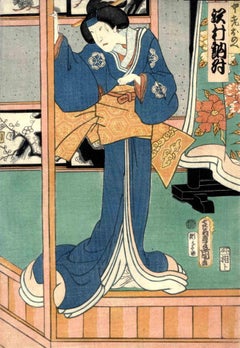
Sawamura Tosho - Woodcut Print by Utagawa Kunisada - 1862
Located in Roma, IT
Sawamura Tosho is an original modern artwork realized by Utagawa Kunisada in 1862. Woodcut print Oban from a tryptich Signature Kio Toyokuni ga (77 Toyokuni). Publisher: Soshuya. ...
Category

19th Century Modern Woodcut Prints and Multiples

Materials

Woodcut

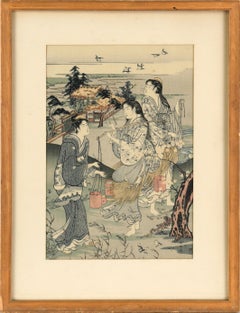
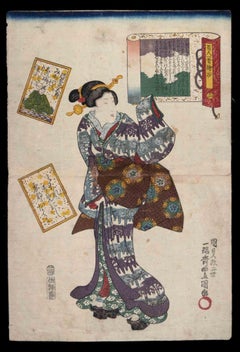
Bijinga - Woodcut print by Utagawa Kunisada - 1844
Located in Roma, IT
Bijinga is an original artwork realized in 1844 by Utagawa Kunisada (1786-1865). From the series "Hyakunin isshu esho" (Girl's pictures and 100 poets' card games), 14th sheet. You...
Category

1840s Modern Woodcut Prints and Multiples

Materials

Woodcut

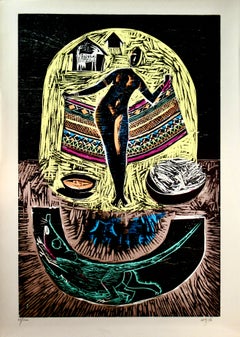
"Lendas Africanas Da Bahia" from the suite.
Located in San Francisco, CA
This artwork titled " Lendas Africanas Da Bahia" from the suite, 1978, is an original colors woodcut by renown Brazilian/Argentinian artist Hector Julio Paride Barnabo Carybe, 1911-1997. It is hand signed and numbered 83/200 in pencil by the artist. The Wood block mark (image) is 23.65 x 15.75 inches, sheet size is 26.75 x 19 inches. It is in excellent condition, has never been framed. It will be shipped in a 8 inches diameter heavy duty tube. About the artist: Héctor Julio Páride Bernabó (7 February 1911 – 2 October 1997) was an Argentine-Brazilian artist, researcher, writer, historian and journalist. His nickname and artistic name, Carybé, a type of piranha, comes from his time in the scouts. He died of heart failure after the meeting of a candomblé community's lay board of directors, the Cruz Santa Opô Afonjá Society, of which he was a member. Quick Facts Born, Died ... Carybé Born Héctor Julio Páride Bernabó 7 February 1911 Lanús, Argentina Died 2 October 1997 (aged 86) Salvador, Bahia, Brazil Nationality Brazilian Known for Painter, engraver, draughtsman, illustrator, potter, sculptor, mural painter, researcher, historian and journalist Close He produced thousands of works, including paintings, drawings, sculptures and sketches. He was an Obá de Xangô, an honorary position at Ilê Axé Opô Afonjá. Orixá Panels in the Afro-Brazilian Museum in Salvador Some of Carybé's work can be found in the Afro-Brazilian Museum in Salvador: 27 cedar panels representing different orixás or divinities of the Afro-Brazilian religion candomblé. Each panel shows a divinity with their associated implements and animal. The work was commissioned by the former Banco da Bahia S.A., now Banco BBM S.A., which originally installed them in its branch on Avenida Sete de Setembro in 1968. Murals at Miami International Airport American Airlines, Odebrecht and the Miami-Dade Aviation Department partnered to install two of Carybé's murals at Miami International Airport. They have been displayed in the American Airlines terminal at John F. Kennedy International Airport in New York since 1960. The 16.5 x 53-foot murals were accredited when Carybé won the first and the second prize in a contest of public art pieces for JFK airport. As its terminal at that airport was due for demolition, American Airlines donated the murals to Miami-Dade County, and Odebrecht invested in a project to remove, restore, transport and install the murals at Miami International Airport. The mural "Rejoicing and Festival of the Americas" portrays colorful scenes from popular festivals throughout the Americas, and "Discovery and Settlement of the West" depicts the pioneers’ journey into the American West. Carybé's Woodcuts in Gabriel García Márquez's Books Carybé illustrated four books by the Colombian writer Gabriel García Márquez, including One Hundred Years of Solitude, The Autumn of the Patriarch, Chronicle of a Death Foretold, and Love in the Time of Cholera "Carybé: um mestre da cultura baiana". ArqBahia Arquitetura, design, arte e lifestyle (in Brazilian Portuguese). 26 April 2023.. In particular, the woodcuts in One Hundred Years of Solitude are well-known for providing a visual image of the fictional town of Macondo, where the story takes place. The illustrations depict the colorful and winding houses, the railway bridge, and the hot and humid climate of the region, contributing to the reader's immersion in the story. Carybé's woodcuts are, therefore, an important part of Gabriel García Márquez's literary legacy, bringing a visual dimension to his stories that further enriches the reader's experience. Timeline 1911 — Birth in Lanús, Argentina. 1919 — Moved to Brazil. 1921 — The name Carybé is first given to him by the Clube do Flamengo scouts group, in Rio de Janeiro. 1925 — Beginning of his artistic endeavours, going to the pottery workshop of his elder brother, Arnaldo Bernabó, in Rio de Janeiro. 1927–1929 — Studies at the National School of Fine Arts, in Rio de Janeiro. 1930 — Worked for the newspaper Noticias Gráficas, in Buenos Aires, Argentina. 1935–1936 — Works with the writer Julio Cortázar and as a draughtsman for the El Diario newspaper. 1938 — Sent to Salvador by newspaper Prégon. 1939 — First collective exhibition, with the artist Clemente Moreau, at the Buenos Aires City Museum of Fine Arts, Argentina; illustrates the book Macumba, Relatos de la Tierra Verde, by Bernardo Kardon, published by Tiempo Nuestro. 1940 — Illustrates the book Macunaíma, by Mário de Andrade. 1941 — Draws the Esso Almanach, the payment for which allows him to set on a long journey through Uruguay, Brazil, Bolivia, and Argentina. 1941–1942 — Study trip around several South American countries. 1942 — Illustration for the book La Carreta by Henrique Amorim, published by El Ateneo (Buenos Aires, Argentina). 1943 — Together with Raul Brié, translates the book Macunaíma, by Mário de Andrade, into Spanish; produces the illustrations for the works Maracatu, Motivos Típicos y Carnavalescos, by Newton Freitas, published by Pigmaleon, Luna Muerta, by Manoel Castilla, published by Schapire, and Amores de Juventud, by Casanova Callabero; also publishes and illustrates Me voy al Norte, for the quarterly magazine Libertad Creadora; awarded First Prize by the Cámara Argentina del Libro (Argentine Book Council) for the illustration of the book Juvenília, by Miguel Cané (Buenos Aires, Argentina). 1944 — Illustrates the books The Complete Poetry of Walt Whitmann and A Cabana do Pai Tomás, both published by Schapire ; as well as and Los Quatro Gigantes del Alma by Mira y Lopez, Salvador BA; attends capoeira classes, visits candomblé meetings and makes drawings and paintings. 1945 — Does the illustrations for Daniel Defoe's Robinson Crusoe, for the Viau publishing house. 1946 — Helps in setting up the Tribuna da Imprensa newspaper, in Rio de Janeiro. 1947 — Works for the O Diário Carioca newspaper, in Rio de Janeiro. 1948 — Produces texts and illustrations for the book Ajtuss, Ediciones Botella al Mar (Buenos Aires, Argentina). 1949–1950 — Invited by Carlos Lacerda to work at the Tribuna da Imprensa, in Rio de Janeiro. 1950 — Invited by the Education Secretary Anísio Teixeira, moves to Bahia, and produces two panels for the Carneiro Ribeiro Education Center (Park School), in Salvador, Bahia. 1950–1997 — Settles in Salvador, Bahia. 1950–1960 — Actively participate in the plastic arts renewal movement, alongside Mário Cravo Júnior, Genaro de Carvalho, and Jenner Augusto. 1951 — Produces texts and illustrations for the works of the Coleção Recôncavo, published by Tipografia Beneditina and illustrations for the book, Bahia, Imagens da Terra e do Povo, by Odorico Tavares, published by José Olímpio in Rio de Janeiro; for the latter work he receives the gold medal at the 1st Biennial of Books and Graphic Arts. 1952 — Makes roughly 1,600 drawings for the scenes of the movie O Cangaceiro, by Lima Barreto; also works as the art director and as an extra on the film (São Paulo, SP). 1953 — Illustrations for the book A Borboleta Amarela, by Rubem Braga, published by José Olímpio (Rio de Janeiro, RJ). 1955 — Illustrates the work O Torso da Baiana, edited by the Modern Art Museum of Bahia. 1957 — Produces etchings, with original designs, for the special edition of Mário de Andrade's Macunaíma, published by the Sociedade dos 100 Bibliófilos do Brasil. 1958 — Makes an oil painting mural for the Petrobras Office in New York, USA; illustrates the book As Três Mulheres de Xangô, by Zora Seljan, published by Editora G. R. D. (Rio de Janeiro, RJ); Receives a scholarship grant in New York, USA. 1959 — Takes part in the competition for the New York International Airport panels project, in New York, USA, winning first and second prizes. 1961 — Illustrates the book Jubiabá, by Jorge Amado, published by Martins Fontes (São Paulo, SP). 1963 — Awarded the title of Honorary Citizen of Salvador, Bahia. 1965 — Illustrates A Muito Leal e Heróica Cidade de São Sebastião do Rio de Janeiro, published by Raymundo Castro Maya (Rio de Janeiro, RJ). 1966 — With Jorge Amado, co-authors Bahia, Boa Terra Bahia, published by Image (Rio de Janeiro, RJ); writes and illustrates the book Olha o Boi, published by Cultrix (São Paulo, SP). 1967 — Receives the Odorico Tavares Prize – Best Plastic Artist of 1967, in a competition ran by the state government to stimulate the development of plastic arts in Bahia; makes the Orixás Panels for the Banco da Bahia (currently at the UFBA Afro-Brazilian Museum) (Salvador, BA). 1968 — Illustrates the books Carta de Pero Vaz de Caminha ao Rei Dom Manuel, published by Sabiá (Rio de Janeiro) and Capoeira Angolana, by Waldeloir Rego, published by Itapoã (Bahia). 1969 — Produces the illustrations for the book Ninguém Escreve ao Coronel, by Gabriel Garcia Marquez, published by Sabiá (Rio de Janeiro, RJ). 1970 — Illustrates the books O Enterro do Diabo and Os Funerais de Mamãe Grande, published by Sabiá (Rio de Janeiro, RJ), Agotimé her Legend, by Judith Gleason, published by Grossman Publishers (New York, USA). 1971 — Illustrates the books One Hundred Years of Solitude, by Gabriel Garcia Marquez and A Casa Verde by Mario Vargas Llosa, both published by Sabiá (Rio de Janeiro, RJ); produces texts and illustrations for the book Candomblé da Bahia, published by Brunner (São Paulo, SP). 1973 — Illustrations for Gabriel Garcia Marquez's A Incrível e Triste História de Cândida Erendira e sua Avó Desalmada (Rio de Janeiro, RJ); paints the mural for the Legislative Assembly and the panel for the Bahia State Secretary of the Treasury. 1974 — Produces woodcuts for the book Visitações da Bahia, published by Onile. 1976 — Illustrates the book O Gato Malhado e a Andorinha Sinhá: uma história de amor, by Jorge Amado (Salvador, BA); receives the title of Knight of the Order of Merit of Bahia. 1977 — Certified with the Honor for Afro-Brazilian Cult Spiritual Merit, Xangô das Pedrinhas ao Obá de Xangô Carybé (Magé, RJ). 1978 — Makes the concrete sculpture Oxóssi, in the Catacumba Park; illustrates the book A Morte e a Morte de Quincas Berro D´Água, by Jorge Amado, published by Edições Alumbramento (Rio de Janeiro, RJ). 1979 — Produces woodcuts for the book Sete Lendas Africanas da Bahia, published by Onile. 1980 — Designs the costumes and scenery for the ballet Quincas Berro D´Água, at the Teatro Municipal in Rio de Janeiro. 1981 — Publication of the book Iconografia dos Deuses Africanos no Candomblé da Bahia (Ed. Raízes), following thirty years of research. 1982 — Receives the title of Honorary Doctor of the Federal University of Bahia. 1983 — Makes the panel for the Brazilian Embassy in Lagos, Nigeria. 1984 — Receives the Jerônimo Monteiro Commendation – Level of Knight (Espírito Santo); receives the Castro Alves Medal of Merit, granted by the UFBA Academy of Arts and Letters; makes the bronze sculpture Homenagem à mulher baiana (Homage to the Bahian woman), at the Iguatemi Shopping Center (Salvador, BA). 1985 — Designs the costumes and sets for the spectacle La Bohème, at the Castro Alves Theater; illustrates the book Lendas Africanas dos Orixás, by Pierre Verger, published by Currupio. 1992 — Illustrates the book O sumiço da santa: uma história de feitiçaria, by Jorge Amado (Rio de Janeiro, RJ). 1995 — Illustration of the book O uso das plantas na sociedade iorubá, by Pierre Verger (São Paulo, SP). 1996 — Making of the short film Capeta Carybé, by Agnaldo Siri Azevedo, adapted from the book O Capeta Carybé, by Jorge Amado, about the artist Carybé, who was born in Argentina and became the most Bahian of all Brazilians. 1997 — Illustration of the book Poesias de Castro Alves. Exhibitions ммIndividual Exhibitions: 1943 — Buenos Aires (Argentina) — First individual exhibition, at the Nordiska Gallery 1944 — Salta (Argentina) — at the Consejo General de Educacion 1945 — Salta (Argentina) — Amigos del Arte, Buenos Aires (Argentina) — Motivos de América, at the Amauta Gallery, Rio de Janeiro RJ — individual exhibition at the IAB/RJ 1947 — Salta (Argentina) — Agrupación Cultural Femenina 1950 — Salvador BA — First individual exhibit in Bahia, at the Bar Anjo Azul; São Paulo SP — MASP. 1952 — São Paulo SP — MAM/SP 1954 — Salvador BA — Oxumaré Gallery 1957 — New York (USA) — Bodley Gallery; Buenos Aires (Argentina) — Bonino Gallery * 1958 - New York (USA) — Bodley Gallery 1962 — Salvador BA - MAM/BA 1963 — Rio de Janeiro RJ — Bonino Gallery 1965 — Rio de Janeiro RJ — Bonino Gallery 1966 — São Paulo SP — Astrea Gallery 1967 — Rio de Janeiro RJ — Santa Rosa Gallery 1969 — London (England) — Varig Airlines 1970 — Rio de Janeiro RJ — Galeria da Praça 1971 — Rio de Janeiro RJ — MAM/RJ, São Paulo SP — A Galeria; Belo Horizonte MG, Brasília DF, Curitiba PR, Florianopolis SC, Porto Alegre RS, Rio de Janeiro RJ and São Paulo SP — The Orixás Panel (exhibition tour), at the Casa da Cultura in Belo Horizonte, MAM/DF, the Public Library of Paraná, the Legislative Assembly of Santa Catarina State, the Legislative Assembly of Rio Grande do Sul, MAM/RJ and MAM/SP 1972 — The Orixás Panel in Fortaleza CE — at the Ceará Federal University Art Museum, and in Recife PE — at the Santa Isabel Theater 1973 — São Paulo SP — A Galeria 1976 — Salvador BA — at the Church of the Nossa Senhora do Carmo Convent 1980 — São Paulo SP — A Galeria 1981 — Lisbon (Portugal) — Cassino Estoril 1982 — São Paulo SP — Renot Art Gallery, São Paulo SP — A Galeria 1983 — New York (USA) — Iconografia dos Deuses Africanos no Candomblé da Bahia, The Caribbean Cultural Center 1984 — Philadelphia (USA) — Art Institute of Philadelphia; Mexico — Museo Nacional de Las Culturas; São Paulo SP — Galeria de Arte André 1986 — Lisbon (Portugal) — Cassino Estoril; Salvador BA — As Artes de Carybé, Núcleo de Artes Desenbanco 1989 — Lisbon (Portugal) — Cassino Estoril; São Paulo SP — MASP 1995 — São Paulo SP — Documenta Galeria de Arte, São Paulo SP — Casa das Artes Galeria, Campinas SP — Galeria Croqui, Curitiba PR — Galeria de Arte Fraletti e Rubbo, Belo Horizonte MG — Nuance Galeria de Arte, Foz do Iguaçu PR — Ita Galeria de Arte, Porto Alegre RS — Bublitz Decaedro Galeria de Artes, Cuiabá MT — Só Vi Arte Galeria, Goiânia GO — Época Galeria de Arte, São Paulo SP — Artebela Galeria Arte Molduras, Fortaleza CE — Galeria Casa D'Arte, Salvador BA — Oxum Casa de Arte Collective Exhibitions: 1939 — Buenos Aires (Argentina) — Carybé and Clemente Moreau Exhibition, at the Museo Municipal de Belas Artes 1943 — Buenos Aires (Argentina) — 29th Salon de Acuarelistas y Grabadores — first prize 1946 — Buenos Aires (Argentina) — Drawings by Argentine Artists, at the Kraft Gallery 1948 — Washington (USA) — Artists of Argentina, at the Pan American Union Gallery 1949 — Buenos Aires (Argentina) — Carybé and Gertrudis Chale, at the Viau Gallery; Salvador BA — Bahian Showroom of Fine Arts, at the Hotel Bahia 1950 — Salvador BA — 2nd Bahian Showroom of Fine Arts; São Paulo SP — MAM/SP 1951 — São Paulo SP — 1st São Paulo Art Biennial, Trianon Pavilion. 1952 — Salvador BA — 3rd Bahian Showroom of Fine Arts, at Belvedere da Sé; São Paulo SP — MAM/SP 1953 — Recife PE — Mario Cravo Júnior and Carybé, at the Santa Isabel Theater; São Paulo SP — 2nd São Paulo Art Biennial, at MAM/SP 1954 — Salvador BA — 4th Bahian Showroom of Fine Arts, at the Hotel Bahia. — Bronze medal 1955 — São Paulo SP — 3rd São Paulo Art Biennial, at MAM/SP — first prize for drawing 1956 — Salvador BA — Modern Artists of Bahia, at the Oxumaré Gallery; Venice (Italy) — 28th Venice Biennial 1957 — Rio de Janeiro RJ — 6th National Modern Art Show — exemption from the jury; São Paulo SP — Artists from Bahia, at the MAM/SP 1958 — San Francisco (USA) — Works by Brazilian Artists, at the Fine Arts Museums of San Francisco, Washington and New York (USA) — Works by Brazilian Artists, at the Pan American Union and the MoMA 1959 — Seattle (USA) — 30th International Exhibition, at the Seattle Art Museum; Salvador BA — Modern Artists of Bahia, at the Dentistry School. 1961 — São Paulo SP — 6th São Paulo Art Biennial, at MAM/SP — special room 1963 — Lagos (Nigeria) — Brazilian Contemporary Artists, at the Nigerian Museum; São Paulo SP — 7th São Paulo Art Biennial Bienal, at the Fundação Bienal 1964 — Salvador BA — Christmas Exhibition, at the Galeria Querino 1966 — Baghdad (Iraq) — collective exhibition sponsored by the Calouste Gulbenkian Foundation; Madrid (Spain) — Artists of Bahia, at the Hispanic Culture Institute; Rome (Italy) — Piero Cartona Palace; Salvador BA — 1st National Biennial of Plastic Arts (Bienal da Bahia) — special room; Salvador BA — Draughtsmen of Bahia, at the Convivium Gallery 1967 — Salvador BA — Christmas Exhibition at the Panorama Art Gallery; São Paulo SP — Artists of Bahia, at the A Gallery 1968 — São Paulo SP — Bahian Artists, at the A Gallery 1969 — London (England) — Tryon Gallery; São Paulo SP — 1st Panorama of Current Brazilian Art at the MAM/SP; São Paulo SP — Carybé, Carlos Bastos...
Category

Late 20th Century Modern Woodcut Prints and Multiples

Materials

Woodcut

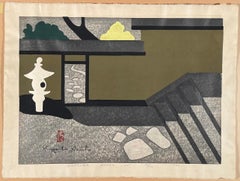
KATSURA KYOTO I
Located in Portland, ME
Saito, Kiyoshi. KATSURA KYOTO I. Color Woodblock, 1962. Edition of 200. Titled, dated and numbered 84/200 in pencil. Signed in the block (prints from thi...
Category

1960s Woodcut Prints and Multiples

Materials

Adhesive, Woodcut

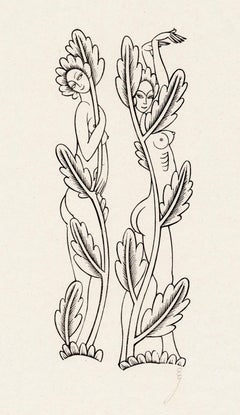
Naked Girl in Spray, Head Thrown Back — 1930s Modernist Female Nude
Located in Myrtle Beach, SC
Eric Gill, 'Naked Girl in Spray, Head Thrown Back to Left, Four Leaves' and 'Naked Girl in Spray, Head Upright, Hands Over Head', wood engraving, 1930, edit...
Category

1930s Art Deco Woodcut Prints and Multiples

Materials

Woodcut

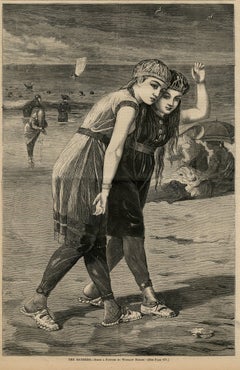
The Bathers
Located in Fairlawn, OH
The Bathers Woodengraving, 1873 As published in Harper's Weekly, August 2, 1873 (p. 668) Provenance: Wunderlich & Co., Inc., New York, NY (Their stock no. 84.003.8 in pencil recto a...
Category

1870s American Realist Woodcut Prints and Multiples

Materials

Woodcut

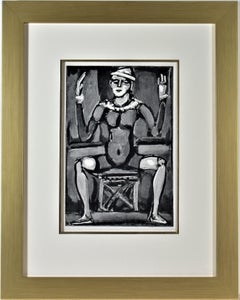
Clown Assis, from Cirque de l Etoile Filante
Located in San Francisco, CA
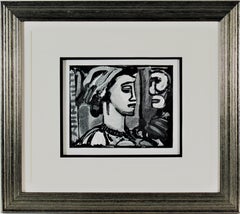
This artwork "Clown Assis, from Cirque de l'Etoile Filante" 1932, is a wood engraving by French artist Georges Rouault 1871-1958 (Block engraved by Georges Aubert) It is signed in t...
Category

Early 20th Century Modern Woodcut Prints and Multiples

Materials

Woodcut

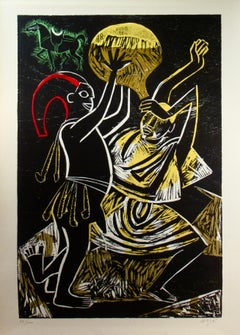
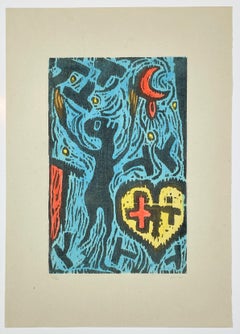
"Lendas Africanas Da Bahia" from the suite.
Located in San Francisco, CA
This artwork titled " Lendas Africanas Da Bahia" from the suite, 1978, is an original colors woodcut by renown Brazilian/Argentinian artist Hector Julio Paride Barnabo Carybe, 1911-1997. It is hand signed and numbered 83/200 in pencil by the artist. The Wood block mark (image) is 23.65 x 15.75 inches, sheet size is 26.75 x 19 inches. It is in excellent condition, has never been framed. It will be shipped in a 8 inches diameter heavy duty tube. About the artist: Héctor Julio Páride Bernabó (7 February 1911 – 2 October 1997) was an Argentine-Brazilian artist, researcher, writer, historian and journalist. His nickname and artistic name, Carybé, a type of piranha, comes from his time in the scouts. He died of heart failure after the meeting of a candomblé community's lay board of directors, the Cruz Santa Opô Afonjá Society, of which he was a member. Quick Facts Born, Died ... Carybé Born Héctor Julio Páride Bernabó 7 February 1911 Lanús, Argentina Died 2 October 1997 (aged 86) Salvador, Bahia, Brazil Nationality Brazilian Known for Painter, engraver, draughtsman, illustrator, potter, sculptor, mural painter, researcher, historian and journalist Close He produced thousands of works, including paintings, drawings, sculptures and sketches. He was an Obá de Xangô, an honorary position at Ilê Axé Opô Afonjá. Orixá Panels in the Afro-Brazilian Museum in Salvador Some of Carybé's work can be found in the Afro-Brazilian Museum in Salvador: 27 cedar panels representing different orixás or divinities of the Afro-Brazilian religion candomblé. Each panel shows a divinity with their associated implements and animal. The work was commissioned by the former Banco da Bahia S.A., now Banco BBM S.A., which originally installed them in its branch on Avenida Sete de Setembro in 1968. Murals at Miami International Airport American Airlines, Odebrecht and the Miami-Dade Aviation Department partnered to install two of Carybé's murals at Miami International Airport. They have been displayed in the American Airlines terminal at John F. Kennedy International Airport in New York since 1960. The 16.5 x 53-foot murals were accredited when Carybé won the first and the second prize in a contest of public art pieces for JFK airport. As its terminal at that airport was due for demolition, American Airlines donated the murals to Miami-Dade County, and Odebrecht invested in a project to remove, restore, transport and install the murals at Miami International Airport. The mural "Rejoicing and Festival of the Americas" portrays colorful scenes from popular festivals throughout the Americas, and "Discovery and Settlement of the West" depicts the pioneers’ journey into the American West. Carybé's Woodcuts in Gabriel García Márquez's Books Carybé illustrated four books by the Colombian writer Gabriel García Márquez, including One Hundred Years of Solitude, The Autumn of the Patriarch, Chronicle of a Death Foretold, and Love in the Time of Cholera "Carybé: um mestre da cultura baiana". ArqBahia Arquitetura, design, arte e lifestyle (in Brazilian Portuguese). 26 April 2023.. In particular, the woodcuts in One Hundred Years of Solitude are well-known for providing a visual image of the fictional town of Macondo, where the story takes place. The illustrations depict the colorful and winding houses, the railway bridge, and the hot and humid climate of the region, contributing to the reader's immersion in the story. Carybé's woodcuts are, therefore, an important part of Gabriel García Márquez's literary legacy, bringing a visual dimension to his stories that further enriches the reader's experience. Timeline 1911 — Birth in Lanús, Argentina. 1919 — Moved to Brazil. 1921 — The name Carybé is first given to him by the Clube do Flamengo scouts group, in Rio de Janeiro. 1925 — Beginning of his artistic endeavours, going to the pottery workshop of his elder brother, Arnaldo Bernabó, in Rio de Janeiro. 1927–1929 — Studies at the National School of Fine Arts, in Rio de Janeiro. 1930 — Worked for the newspaper Noticias Gráficas, in Buenos Aires, Argentina. 1935–1936 — Works with the writer Julio Cortázar and as a draughtsman for the El Diario newspaper. 1938 — Sent to Salvador by newspaper Prégon. 1939 — First collective exhibition, with the artist Clemente Moreau, at the Buenos Aires City Museum of Fine Arts, Argentina; illustrates the book Macumba, Relatos de la Tierra Verde, by Bernardo Kardon, published by Tiempo Nuestro. 1940 — Illustrates the book Macunaíma, by Mário de Andrade. 1941 — Draws the Esso Almanach, the payment for which allows him to set on a long journey through Uruguay, Brazil, Bolivia, and Argentina. 1941–1942 — Study trip around several South American countries. 1942 — Illustration for the book La Carreta by Henrique Amorim, published by El Ateneo (Buenos Aires, Argentina). 1943 — Together with Raul Brié, translates the book Macunaíma, by Mário de Andrade, into Spanish; produces the illustrations for the works Maracatu, Motivos Típicos y Carnavalescos, by Newton Freitas, published by Pigmaleon, Luna Muerta, by Manoel Castilla, published by Schapire, and Amores de Juventud, by Casanova Callabero; also publishes and illustrates Me voy al Norte, for the quarterly magazine Libertad Creadora; awarded First Prize by the Cámara Argentina del Libro (Argentine Book Council) for the illustration of the book Juvenília, by Miguel Cané (Buenos Aires, Argentina). 1944 — Illustrates the books The Complete Poetry of Walt Whitmann and A Cabana do Pai Tomás, both published by Schapire ; as well as and Los Quatro Gigantes del Alma by Mira y Lopez, Salvador BA; attends capoeira classes, visits candomblé meetings and makes drawings and paintings. 1945 — Does the illustrations for Daniel Defoe's Robinson Crusoe, for the Viau publishing house. 1946 — Helps in setting up the Tribuna da Imprensa newspaper, in Rio de Janeiro. 1947 — Works for the O Diário Carioca newspaper, in Rio de Janeiro. 1948 — Produces texts and illustrations for the book Ajtuss, Ediciones Botella al Mar (Buenos Aires, Argentina). 1949–1950 — Invited by Carlos Lacerda to work at the Tribuna da Imprensa, in Rio de Janeiro. 1950 — Invited by the Education Secretary Anísio Teixeira, moves to Bahia, and produces two panels for the Carneiro Ribeiro Education Center (Park School), in Salvador, Bahia. 1950–1997 — Settles in Salvador, Bahia. 1950–1960 — Actively participate in the plastic arts renewal movement, alongside Mário Cravo Júnior, Genaro de Carvalho, and Jenner Augusto. 1951 — Produces texts and illustrations for the works of the Coleção Recôncavo, published by Tipografia Beneditina and illustrations for the book, Bahia, Imagens da Terra e do Povo, by Odorico Tavares, published by José Olímpio in Rio de Janeiro; for the latter work he receives the gold medal at the 1st Biennial of Books and Graphic Arts. 1952 — Makes roughly 1,600 drawings for the scenes of the movie O Cangaceiro, by Lima Barreto; also works as the art director and as an extra on the film (São Paulo, SP). 1953 — Illustrations for the book A Borboleta Amarela, by Rubem Braga, published by José Olímpio (Rio de Janeiro, RJ). 1955 — Illustrates the work O Torso da Baiana, edited by the Modern Art Museum of Bahia. 1957 — Produces etchings, with original designs, for the special edition of Mário de Andrade's Macunaíma, published by the Sociedade dos 100 Bibliófilos do Brasil. 1958 — Makes an oil painting mural for the Petrobras Office in New York, USA; illustrates the book As Três Mulheres de Xangô, by Zora Seljan, published by Editora G. R. D. (Rio de Janeiro, RJ); Receives a scholarship grant in New York, USA. 1959 — Takes part in the competition for the New York International Airport panels project, in New York, USA, winning first and second prizes. 1961 — Illustrates the book Jubiabá, by Jorge Amado, published by Martins Fontes (São Paulo, SP). 1963 — Awarded the title of Honorary Citizen of Salvador, Bahia. 1965 — Illustrates A Muito Leal e Heróica Cidade de São Sebastião do Rio de Janeiro, published by Raymundo Castro Maya (Rio de Janeiro, RJ). 1966 — With Jorge Amado, co-authors Bahia, Boa Terra Bahia, published by Image (Rio de Janeiro, RJ); writes and illustrates the book Olha o Boi, published by Cultrix (São Paulo, SP). 1967 — Receives the Odorico Tavares Prize – Best Plastic Artist of 1967, in a competition ran by the state government to stimulate the development of plastic arts in Bahia; makes the Orixás Panels for the Banco da Bahia (currently at the UFBA Afro-Brazilian Museum) (Salvador, BA). 1968 — Illustrates the books Carta de Pero Vaz de Caminha ao Rei Dom Manuel, published by Sabiá (Rio de Janeiro) and Capoeira Angolana, by Waldeloir Rego, published by Itapoã (Bahia). 1969 — Produces the illustrations for the book Ninguém Escreve ao Coronel, by Gabriel Garcia Marquez, published by Sabiá (Rio de Janeiro, RJ). 1970 — Illustrates the books O Enterro do Diabo and Os Funerais de Mamãe Grande, published by Sabiá (Rio de Janeiro, RJ), Agotimé her Legend, by Judith Gleason, published by Grossman Publishers (New York, USA). 1971 — Illustrates the books One Hundred Years of Solitude, by Gabriel Garcia Marquez and A Casa Verde by Mario Vargas Llosa, both published by Sabiá (Rio de Janeiro, RJ); produces texts and illustrations for the book Candomblé da Bahia, published by Brunner (São Paulo, SP). 1973 — Illustrations for Gabriel Garcia Marquez's A Incrível e Triste História de Cândida Erendira e sua Avó Desalmada (Rio de Janeiro, RJ); paints the mural for the Legislative Assembly and the panel for the Bahia State Secretary of the Treasury. 1974 — Produces woodcuts for the book Visitações da Bahia, published by Onile. 1976 — Illustrates the book O Gato Malhado e a Andorinha Sinhá: uma história de amor, by Jorge Amado (Salvador, BA); receives the title of Knight of the Order of Merit of Bahia. 1977 — Certified with the Honor for Afro-Brazilian Cult Spiritual Merit, Xangô das Pedrinhas ao Obá de Xangô Carybé (Magé, RJ). 1978 — Makes the concrete sculpture Oxóssi, in the Catacumba Park; illustrates the book A Morte e a Morte de Quincas Berro D´Água, by Jorge Amado, published by Edições Alumbramento (Rio de Janeiro, RJ). 1979 — Produces woodcuts for the book Sete Lendas Africanas da Bahia, published by Onile. 1980 — Designs the costumes and scenery for the ballet Quincas Berro D´Água, at the Teatro Municipal in Rio de Janeiro. 1981 — Publication of the book Iconografia dos Deuses Africanos no Candomblé da Bahia (Ed. Raízes), following thirty years of research. 1982 — Receives the title of Honorary Doctor of the Federal University of Bahia. 1983 — Makes the panel for the Brazilian Embassy in Lagos, Nigeria. 1984 — Receives the Jerônimo Monteiro Commendation – Level of Knight (Espírito Santo); receives the Castro Alves Medal of Merit, granted by the UFBA Academy of Arts and Letters; makes the bronze sculpture Homenagem à mulher baiana (Homage to the Bahian woman), at the Iguatemi Shopping Center (Salvador, BA). 1985 — Designs the costumes and sets for the spectacle La Bohème, at the Castro Alves Theater; illustrates the book Lendas Africanas dos Orixás, by Pierre Verger, published by Currupio. 1992 — Illustrates the book O sumiço da santa: uma história de feitiçaria, by Jorge Amado (Rio de Janeiro, RJ). 1995 — Illustration of the book O uso das plantas na sociedade iorubá, by Pierre Verger (São Paulo, SP). 1996 — Making of the short film Capeta Carybé, by Agnaldo Siri Azevedo, adapted from the book O Capeta Carybé, by Jorge Amado, about the artist Carybé, who was born in Argentina and became the most Bahian of all Brazilians. 1997 — Illustration of the book Poesias de Castro Alves. Exhibitions ммIndividual Exhibitions: 1943 — Buenos Aires (Argentina) — First individual exhibition, at the Nordiska Gallery 1944 — Salta (Argentina) — at the Consejo General de Educacion 1945 — Salta (Argentina) — Amigos del Arte, Buenos Aires (Argentina) — Motivos de América, at the Amauta Gallery, Rio de Janeiro RJ — individual exhibition at the IAB/RJ 1947 — Salta (Argentina) — Agrupación Cultural Femenina 1950 — Salvador BA — First individual exhibit in Bahia, at the Bar Anjo Azul; São Paulo SP — MASP. 1952 — São Paulo SP — MAM/SP 1954 — Salvador BA — Oxumaré Gallery 1957 — New York (USA) — Bodley Gallery; Buenos Aires (Argentina) — Bonino Gallery * 1958 - New York (USA) — Bodley Gallery 1962 — Salvador BA - MAM/BA 1963 — Rio de Janeiro RJ — Bonino Gallery 1965 — Rio de Janeiro RJ — Bonino Gallery 1966 — São Paulo SP — Astrea Gallery 1967 — Rio de Janeiro RJ — Santa Rosa Gallery 1969 — London (England) — Varig Airlines 1970 — Rio de Janeiro RJ — Galeria da Praça 1971 — Rio de Janeiro RJ — MAM/RJ, São Paulo SP — A Galeria; Belo Horizonte MG, Brasília DF, Curitiba PR, Florianopolis SC, Porto Alegre RS, Rio de Janeiro RJ and São Paulo SP — The Orixás Panel (exhibition tour), at the Casa da Cultura in Belo Horizonte, MAM/DF, the Public Library of Paraná, the Legislative Assembly of Santa Catarina State, the Legislative Assembly of Rio Grande do Sul, MAM/RJ and MAM/SP 1972 — The Orixás Panel in Fortaleza CE — at the Ceará Federal University Art Museum, and in Recife PE — at the Santa Isabel Theater 1973 — São Paulo SP — A Galeria 1976 — Salvador BA — at the Church of the Nossa Senhora do Carmo Convent 1980 — São Paulo SP — A Galeria 1981 — Lisbon (Portugal) — Cassino Estoril 1982 — São Paulo SP — Renot Art Gallery, São Paulo SP — A Galeria 1983 — New York (USA) — Iconografia dos Deuses Africanos no Candomblé da Bahia, The Caribbean Cultural Center 1984 — Philadelphia (USA) — Art Institute of Philadelphia; Mexico — Museo Nacional de Las Culturas; São Paulo SP — Galeria de Arte André 1986 — Lisbon (Portugal) — Cassino Estoril; Salvador BA — As Artes de Carybé, Núcleo de Artes Desenbanco 1989 — Lisbon (Portugal) — Cassino Estoril; São Paulo SP — MASP 1995 — São Paulo SP — Documenta Galeria de Arte, São Paulo SP — Casa das Artes Galeria, Campinas SP — Galeria Croqui, Curitiba PR — Galeria de Arte Fraletti e Rubbo, Belo Horizonte MG — Nuance Galeria de Arte, Foz do Iguaçu PR — Ita Galeria de Arte, Porto Alegre RS — Bublitz Decaedro Galeria de Artes, Cuiabá MT — Só Vi Arte Galeria, Goiânia GO — Época Galeria de Arte, São Paulo SP — Artebela Galeria Arte Molduras, Fortaleza CE — Galeria Casa D'Arte, Salvador BA — Oxum Casa de Arte Collective Exhibitions: 1939 — Buenos Aires (Argentina) — Carybé and Clemente Moreau Exhibition, at the Museo Municipal de Belas Artes 1943 — Buenos Aires (Argentina) — 29th Salon de Acuarelistas y Grabadores — first prize 1946 — Buenos Aires (Argentina) — Drawings by Argentine Artists, at the Kraft Gallery 1948 — Washington (USA) — Artists of Argentina, at the Pan American Union Gallery 1949 — Buenos Aires (Argentina) — Carybé and Gertrudis Chale, at the Viau Gallery; Salvador BA — Bahian Showroom of Fine Arts, at the Hotel Bahia 1950 — Salvador BA — 2nd Bahian Showroom of Fine Arts; São Paulo SP — MAM/SP 1951 — São Paulo SP — 1st São Paulo Art Biennial, Trianon Pavilion. 1952 — Salvador BA — 3rd Bahian Showroom of Fine Arts, at Belvedere da Sé; São Paulo SP — MAM/SP 1953 — Recife PE — Mario Cravo Júnior and Carybé, at the Santa Isabel Theater; São Paulo SP — 2nd São Paulo Art Biennial, at MAM/SP 1954 — Salvador BA — 4th Bahian Showroom of Fine Arts, at the Hotel Bahia. — Bronze medal 1955 — São Paulo SP — 3rd São Paulo Art Biennial, at MAM/SP — first prize for drawing 1956 — Salvador BA — Modern Artists of Bahia, at the Oxumaré Gallery; Venice (Italy) — 28th Venice Biennial 1957 — Rio de Janeiro RJ — 6th National Modern Art Show — exemption from the jury; São Paulo SP — Artists from Bahia, at the MAM/SP 1958 — San Francisco (USA) — Works by Brazilian Artists, at the Fine Arts Museums of San Francisco, Washington and New York (USA) — Works by Brazilian Artists, at the Pan American Union and the MoMA 1959 — Seattle (USA) — 30th International Exhibition, at the Seattle Art Museum; Salvador BA — Modern Artists of Bahia, at the Dentistry School. 1961 — São Paulo SP — 6th São Paulo Art Biennial, at MAM/SP — special room 1963 — Lagos (Nigeria) — Brazilian Contemporary Artists, at the Nigerian Museum; São Paulo SP — 7th São Paulo Art Biennial Bienal, at the Fundação Bienal 1964 — Salvador BA — Christmas Exhibition, at the Galeria Querino 1966 — Baghdad (Iraq) — collective exhibition sponsored by the Calouste Gulbenkian Foundation; Madrid (Spain) — Artists of Bahia, at the Hispanic Culture Institute; Rome (Italy) — Piero Cartona Palace; Salvador BA — 1st National Biennial of Plastic Arts (Bienal da Bahia) — special room; Salvador BA — Draughtsmen of Bahia, at the Convivium Gallery 1967 — Salvador BA — Christmas Exhibition at the Panorama Art Gallery; São Paulo SP — Artists of Bahia, at the A Gallery 1968 — São Paulo SP — Bahian Artists, at the A Gallery 1969 — London (England) — Tryon Gallery; São Paulo SP — 1st Panorama of Current Brazilian Art at the MAM/SP; São Paulo SP — Carybé, Carlos Bastos...
Category

Late 20th Century Modern Woodcut Prints and Multiples

Materials

Woodcut

Cutting Board, Modern Woodcut by Shunji Sakuyama
Located in Long Island City, NY
Shunji Sakuyama, Japanese (1940 - ) - Cutting Board, Year: 1975, Medium: Woodcut on Arches, signed, numbered and dated in pencil, Edition: 47/50, Image Size: 13 x 17 inches, Size...
Category

1970s Modern Woodcut Prints and Multiples

Materials

Woodcut

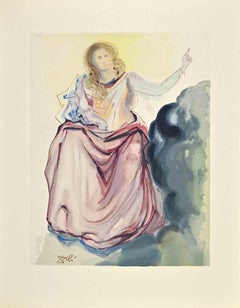
Beatrice Solves Dante’s Doubts - Woodcut - 1963
Located in Roma, IT
Beatrice Solves Dante’s Doubts -  "The Divine Comedy" - Song 4 -  Paradise is a woodcut print realized in 1963 for a series illustrating the Medieval poem of the "Divine Comedy" by D...
Category

1960s Surrealist Woodcut Prints and Multiples

Materials

Woodcut

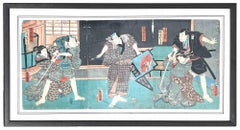
Kabuki Scene- Woodcut Print by Utagawa Kunisada - 1850s
Located in Roma, IT
Kabuki Scene is an original artwork realized in the mid 19th century by the Japanese master Utagawa Kunisada (1786-1865). Color woodcut print. The artwork is a rare triptych (each ...
Category

Mid-19th Century Modern Woodcut Prints and Multiples

Materials

Woodcut

Allegro, Ukiyo-e landscape and sunset woodblock print, 2018
Located in New York, NY
Keiji Shinohara was born and raised in Osaka, Japan. After 10 years as an apprentice to the renowned Keiichiro Uesugi in Kyoto, he became a Master Printmaker and moved to the United ...
Category

2010s Impressionist Woodcut Prints and Multiples

Materials

Woodcut

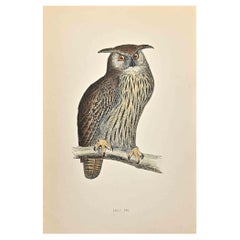
Eagle Owl - Woodcut Print by Alexander Francis Lydon - 1870
Located in Roma, IT
Eagle Owl is a modern artwork realized in 1870 by the British artist Alexander Francis Lydon (1836-1917) . Woodcut print, hand colored, published by London...
Category

1870s Modern Woodcut Prints and Multiples

Materials

Woodcut

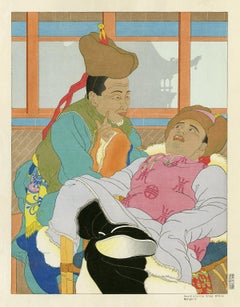
A Very Funny Story, Mongols — Mid-Century Woodblock Print
Located in Myrtle Beach, SC
Paul Jacoulet, 'Une Histoire très Drôle, Mongols', color woodblock print, 1949. A fine impression, with fresh colors, on the artist's handmade, personally watermarked Japan paper, in...
Category

1940s Showa Woodcut Prints and Multiples

Materials

Woodcut

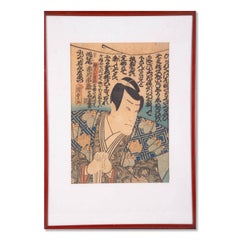
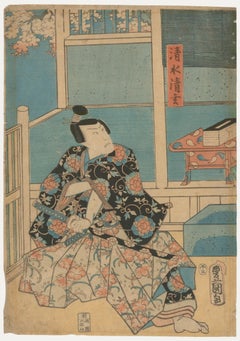
Utagawa Kunisada III (1848-1920) Ukiyo-E Woodblock Print "Portrait Of Samurai"
Located in New York, NY
Title: Portrait Of Samurai Medium: Woodblock Print Style: Ukiyo-e Size: 13 1/2"" x 9 1/2"" Frame Size: 18 1/2"" x 14 1/2"" Signature: Kunisada Provenance: Collection from E...
Category

Early 20th Century Other Art Style Woodcut Prints and Multiples

Materials

Washi Paper, Woodcut

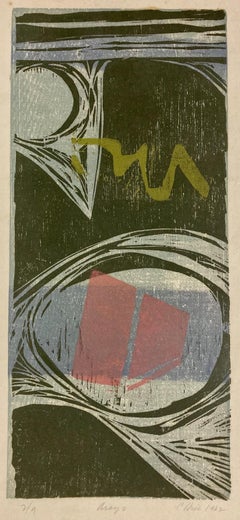
Clinton Hill, Arroyo, 1962, woodcut, landscape/abstraction
Located in New York, NY
Clinton Hill (1922-2003), lived in SoHo, New York, and was a frequent Gallery visitor. Born in Idaho and raised on a working ranch, he joined the US Navy during World War II and beca...
Category

Mid-20th Century Abstract Woodcut Prints and Multiples

Materials

Woodcut

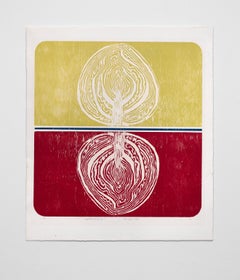
Joyce T. Nagel Woodcut "Vegetable Forms No. 1" Signed Dated Ltd Ed
Located in Detroit, MI
"Vegetable Forms No. 1" is a bright fresh woodcut print of a mirrored halved cabbage. Nature's intricate design is fully appreciated and apparent in the captured tight crinkled and folded leaves. #7/7 Signed and Dated Joyce Tilley Nagel...
Category

1970s American Modern Woodcut Prints and Multiples

Materials

Woodcut

The Gathering (top left), male nude by Fernando Reyes
Located in Palm Springs, CA
The Gathering (TL) Color woodcut, signed and titled in pencil Edition: WP/III (Workshop Proof) This vibrant abstract woodcut by Fernando Reyes showcases his signature blend of bold ...
Category

21st Century and Contemporary Contemporary Woodcut Prints and Multiples

Materials

Woodcut

Les Hommes, male nude figurative color woodcut by Fernando Reyes
Located in Palm Springs, CA
Signed on the front, and signed, titled and numbered a/p cvII (blue/green variant) on the reverse, This is an artist proof, unique color variant, aside from the edition of 15. An abs...
Category

21st Century and Contemporary Contemporary Woodcut Prints and Multiples

Materials

Woodcut

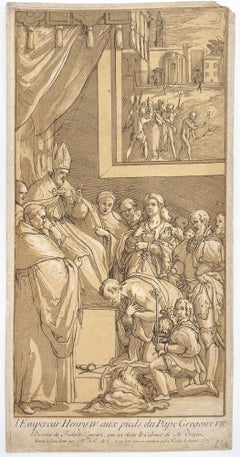
L Empereur Henri IV aux pieds du Pape Grégoire VII
Located in Middletown, NY
(after Federico Zuccari) The image depicts an event which occurred during the Investiture Controversy in 1077. Here we see the Holy Roman Emperor Henry IV humbling himself before Pop...
Category

Early 18th Century Old Masters Woodcut Prints and Multiples

Materials

Laid Paper, Woodcut

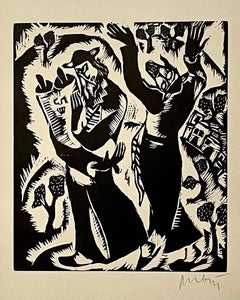
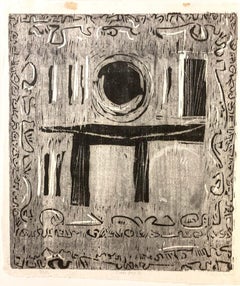
Rare 1923 Cubist Reuven Rubin Woodcut Woodblock Print Israeli Hasidic Judaica
Located in Surfside, FL
This is from the original first edition 1923 printing. there was a much later edition done after these originals. These are individually hand signed in pencil by artist as issued. This listing is for the one print. the other documentation is included here for provenance and is not included in this listing. The various images inspired by the Jewish Mysticism and rabbis and mystics of jerusalem and Kabbalah is holy, dramatic and optimistic Rubin succeeded to evoke the spirit of life in Israel in those early days. They are done in a modern art style influenced by German Expressionism, particularly, Ernst Barlach, Ernst Ludwig Kirchner, and Franz Marc, as introduced to Israel by Jakob Steinhardt, Hermann Struck and Joseph Budko. Reuven Rubin 1893 -1974 was a Romanian-born Israeli painter and Israel's first ambassador to Romania. Rubin Zelicovich (later Reuven Rubin) was born in Galati to a poor Romanian Jewish Hasidic family. He was the eighth of 13 children. In 1912, he left for Ottoman-ruled Palestine to study art at Bezalel Academy of Art and Design in Jerusalem. Finding himself at odds with the artistic views of the Academy's teachers, he left for Paris, France, in 1913 to pursue his studies at the École Nationale Supérieure des Beaux-Arts. He was of the well known Jewish artists in Paris along with Marc Chagall and Chaim Soutine, At the outbreak of World War I, he was returned to Romania, where he spent the war years. In 1921, he traveled to the United States with his friend and fellow artist, Arthur Kolnik. In New York City, the two met artist Alfred Stieglitz, who was instrumental in organizing their first American show at the Anderson Gallery. Following the exhibition, in 1922, they both returned to Europe. In 1923, Rubin emigrated to Mandate Palestine. Rubin met his wife, Esther, in 1928, aboard a passenger ship to Palestine on his return from a show in New York. She was a Bronx girl who had won a trip to Palestine in a Young Judaea competition. He died in 1974. Part of the early generation of artists in Israel, Joseph Zaritsky, Arieh Lubin, Reuven Rubin, Sionah Tagger, Pinchas Litvinovsky, Mordecai Ardon, Yitzhak Katz, and Baruch Agadati; These painters depicted the country’s landscapes in the 1920s rebelled against the Bezalel school of Boris Schatz. They sought current styles in Europe that would help portray their own country’s landscape, in keeping with the spirit of the time. Rubin’s Cezannesque landscapes from the 1920s were defined by both a modern and a naive style, portraying the landscape and inhabitants of Israel in a sensitive fashion. His landscape paintings in particular paid special detail to a spiritual, translucent light. His early work bore the influences of Futurism, Vorticism, Cubism and Surrealism. In Palestine, he became one of the founders of the new Eretz-Yisrael style. Recurring themes in his work were the bible, the prophet, the biblical landscape, folklore and folk art, people, including Yemenite, Hasidic Jews and Arabs. Many of his paintings are sun-bathed depictions of Jerusalem and the Galilee. Rubin might have been influenced by the work of Henri Rousseau whose naice style combined with Eastern nuances, as well as with the neo-Byzantine art to which Rubin had been exposed in his native Romania. In accordance with his integrative style, he signed his works with his first name in Hebrew and his surname in Roman letters. In 1924, he was the first artist to hold a solo exhibition at the Tower of David, in Jerusalem (later exhibited in Tel Aviv at Gymnasia Herzliya). That year he was elected chairman of the Association of Painters and Sculptors of Palestine. From the 1930s onwards, Rubin designed backdrops for Habima Theater, the Ohel Theater and other theaters. His biography, published in 1969, is titled My Life - My Art. He died in Tel Aviv in October 1974, after having bequeathed his home on 14 Bialik Street and a core collection of his paintings to the city of Tel Aviv. The Rubin Museum opened in 1983. The director and curator of the museum is his daughter-in-law, Carmela Rubin. Rubin's paintings are now increasingly sought after. At a Sotheby's auction in New York in 2007, his work accounted for six of the ten top lots. Along with Yaacov Agam and Menashe Kadishman he is among Israel's best known artists internationally. Education 1912 Bezalel Academy of Arts and Design, Jerusalem 1913-14 École des Beaux Arts, Paris and Académie Colarossi, Paris Select Group Exhibitions Eged - Palestine Painters Group Eged - Palestine Painters Group, Allenby Street, Tel Aviv 1929 Artists: Chana Orloff, Abraham Melnikoff, Rubin, Reuven Nahum Gutman, Sionah Tagger,Arieh Allweil, Jewish Artists Association, Levant Fair, Tel Aviv, 1929 Artists: Ludwig Blum,Eliyahu Sigad, Shmuel Ovadyahu, Itzhak Frenel Frenkel,Ozer Shabat, Menahem Shemi...
Category

1920s Abstract Woodcut Prints and Multiples

Materials

Woodcut

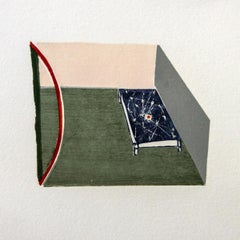
Room with a red arch - XXI Century, Contemporary Linocut Woodcut Print, Colorful
Located in Warsaw, PL
Maria Stelmaszczyk is a Polish artist born in 1983. PROVENANCE Exhibited at Katarzyna Napiorkowska Gallery. The Gallery is a primary representative for this artist. The Gallery o...
Category

Early 2000s Contemporary Woodcut Prints and Multiples

Materials

Paper, Woodcut, Linocut

"Plovers at Tamagawa" from "Six Jewel Rivers" - Woodblock Print on Paper
Located in Soquel, CA
"Plovers at Tamagawa" from "Six Jewel Rivers" - Woodblock Print on Paper This print, sometimes titled "Chidori No Tamagawa" "Plovers at Tamagawa", is from the series Mu Tamagawa ("Six Views of Tama River", also known as "Six Jewel Rivers" or "Six Crystal Rivers") by Kubo Shunman...
Category

Late 18th Century Edo Woodcut Prints and Multiples

Materials

Paper, Ink, Woodcut

La Grande Preugne - by Skadi Engeln Contemporary Abstract Wood Print
Located in DE
Skadi Engeln, a Berlin- and France-based artist, studied sculpture at FH Ottersberg with Robert van de Laar and painting with Michael Kohr and Hermanus Westendorp. Her work has been exhibited in numerous solo and group shows in cities like Berlin, Düsseldorf, Paris, New York, and more, and is part of international collections. Engeln explores landscape as a dynamic, ever-changing entity dissolving into light, water, and weather, only to reassemble itself. Like painting, landscapes blur the line between the visible and the hidden, revealing deeper truths in their transitions. The horizon plays a central role in her work, both separating and connecting what lies above and below, the seen and the concealed. Rather than decoding these layers, she preserves their mystery and beauty. Since 2001, she has focused on abstract landscape painting. Her recent works depict landscapes veiled by lines, stripes, and distortions, creating a sense of distance, like reflections in a train window...
Category

2010s Contemporary Woodcut Prints and Multiples

Materials

Paper, Woodcut

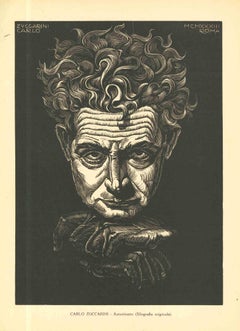
Self-Portrait - Original Woodcut by Carlo Zuccarini - Early 20th Century
Located in Roma, IT
Self-Portrait is an original woodcut print by Carlo Zuccarini in the early 20th Century. Good conditions. The artwork is depicted through strong strokes in a well-balanced composition
Category

Early 20th Century Modern Woodcut Prints and Multiples

Materials

Woodcut

Jose Luis Cuevas, Ghosts of the Historic Center V , 2005, Woodcut, 22x29.9 in
Located in Miami, FL
Jose Luis Cuevas (Mexico, 1934-2017) 'Fantasmas del Centro Histórico V', 2005 woodcut on paper Guarro Biblos 250g. 20.9 x 16 in. (53 x 40.5 cm.) Edition of 60 Unframed
Category

Early 2000s Contemporary Woodcut Prints and Multiples

Materials

Paper, Woodcut

The Lovely Discussion - Woodcut by Mathilde Hérouard - 1920s
Located in Roma, IT
Woodcut print realized by Mathilde Hérouard in the 1920s. Mounted on paper. Signed in the plate. Very good condition.
Category

1920s Modern Woodcut Prints and Multiples

Materials

Woodcut

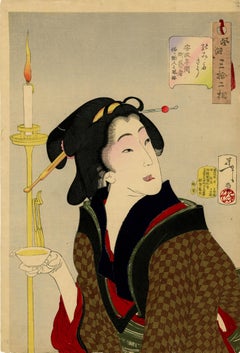
Thirsty: The Appearance of a Town Geisha - a So-Called Wine-Server - in the Anse
Located in Fairlawn, OH
Thirsty: The Appearance of a Town Geisha - a So-Called Wine-Server - in the Ansei Era Color woodcut, 1888 Signed; Seal: Taiso (see photo) Plate 22 from the series "Thirty-two Aspects...
Category

1880s Showa Woodcut Prints and Multiples

Materials

Woodcut

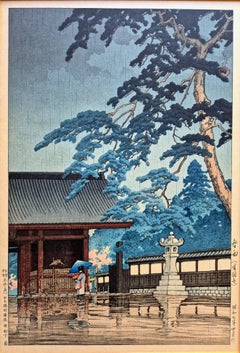
Kawase Hasui -- Spring Rain at Gokoku Temple
Located in BRUCE, ACT
Kawase Hasui Spring Rain at Gokoku-ji Temple, 1932 Woodblock Print 1st Publication: 1932 Sheet size: 39 × 26 cm Date of this edition: 1932, 1st edition Publisher: Doi Teiichi Note...
Category

1930s Woodcut Prints and Multiples

Materials

Woodcut

Late 19th Century Japanese Woodblock - Martial Stance
Located in Corsham, GB
Japanese woodblock print by Toyokuni, depicting a man crouching low to the ground with two samurai swords. Signed and inscribed with characters. On paper.
Category

Late 19th Century Woodcut Prints and Multiples

Materials

Woodcut

Set of three woodcuts by Victor Mira colorful abstract forms
Located in New York, NY
These lively, colorful works are full of movement and Mira's characteristic mysterious, mythical figures and shapes. Victor Mira Set of three woodcuts on buff, textured paper, 1983...
Category

1980s Abstract Woodcut Prints and Multiples

Materials

Woodcut

Der Wald (portfolio of 9) 1 of 12 - grouping, woodblock prints on art paper
Located in Bloomfield, ON
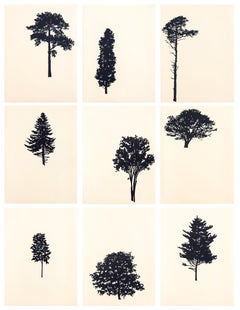
Der Wald or The Forest consists of nine wood block prints in a single portfolio. In each of the nine images a single tree is printed cleanly in solid black on manila colored archival...
Category

2010s Contemporary Woodcut Prints and Multiples

Materials

Archival Paper, Woodcut

Miró, Composition (Dupin 1290), Miró Graveur (after)
Located in Southampton, NY
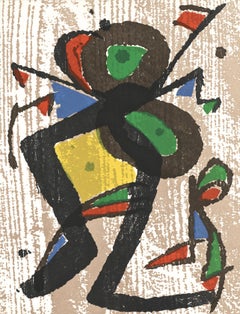
Woodcut on vélin paper. Inscription: Unsigned and unnumbered, as issued. Good condition. Notes: From the volume, miró graveur 1. 1928- 1960, 1984. Published by Daniel Lelong, éditeur...
Category

1980s Surrealist Woodcut Prints and Multiples

Materials

Woodcut

Harvest #2
Located in New York, NY
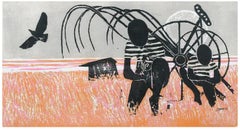
Color woodcut. Signed by the artist in pencil, lower right. Titled "Harvest 2" in pencil, lower center. Numbered "2nd 5/12 Special Edition" in pencil, lower left. Framed dimensi...
Category

1960s Modern Woodcut Prints and Multiples

Materials

Woodcut, Color

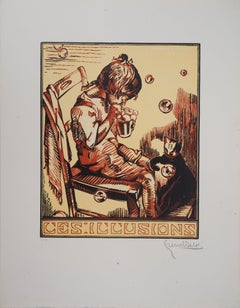
Illusion : Boy, Cat and Soap Bubbles - Original woodcut, Handsigned
Located in Paris, IDF
Gabriel BELOT Illusion : Boy, Cat and Soap Bubbles, 1922 Original woodcut Handsigned in pencil Numbered /154 On vellum 32.5 x 25.5 cm (c. 13 x 10 in) Bears the blind stamp of the ed...
Category

1920s Art Deco Woodcut Prints and Multiples

Materials

Woodcut

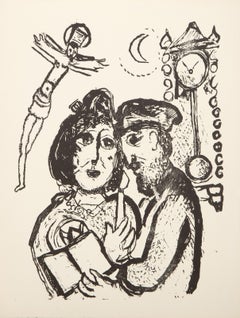
Gravure XXII from Poemes, Surrealist Woodcut Print by Marc Chagall
Located in Long Island City, NY
Marc Chagall, Russian (1887 - 1985) - Gravure XXII from Poemes, Year: 1968, Medium: Woodcut, Size: 14.5 x 11.25 in. (36.83 x 28.58 cm), Printer: Atelier Lacouriere et Frelaut, Paris...
Category

1960s Surrealist Woodcut Prints and Multiples

Materials

Woodcut

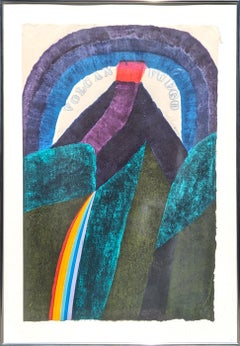
“Volcano Fuego” Modern Colorful Abstract Landscape Woodcut Print Ed. 74/75
Located in Houston, TX
Colorful abstract landscape woodcut print by modern artist Carol Summers. The work features a color blocked depiction of a volcano with a rainbow. Signed, titled, and editioned withi...
Category

1970s Contemporary Woodcut Prints and Multiples

Materials

Woodcut

Clinton Hill, Title Page II, 1956, woodcut, landscape/abstraction
Located in New York, NY
Clinton Hill (1922-2003), lived in SoHo, New York, and was a frequent Gallery visitor. Born in Idaho and raised on a working ranch, he joined the US Navy during World War II and beca...
Category

Mid-20th Century Abstract Woodcut Prints and Multiples

Materials

Woodcut

Otto Robert Moritz von Gruenewaldt, Pheasant, 1920, highly decorated bird!
Located in New York, NY
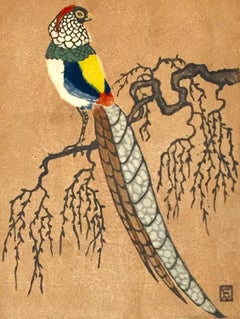
Von Guenewaldt was known for his woodcuts of exotic animals, birds especially. They are technically refined with a lovely color range, and in a generally arts and crafts style. Our p...
Category

Early 20th Century Aesthetic Movement Woodcut Prints and Multiples

Materials

Woodcut

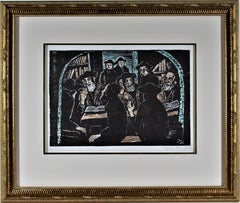
Rabbis Studying the Thorah
Located in San Francisco, CA
Artist: Jakob Steinhardt (German/Israeli, 1887-1968) Title: Rabbis Studying the Thorah Year: Circa 1960 Medium: Color woodcut Paper: Wove Image size...
Category

Mid-20th Century Expressionist Woodcut Prints and Multiples

Materials

Woodcut

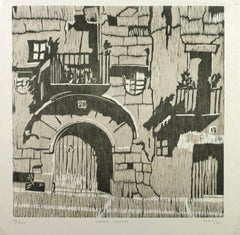
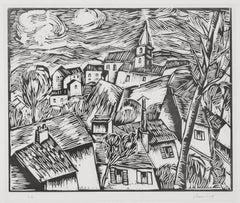
Maison Typique Doorways
Located in Houston, TX
Delightful French woodcut titled "Maison Typique", 1981. Signed and dated lower right. 66/200 Original artwork on paper displayed on a white mat with...
Category

1980s Woodcut Prints and Multiples

Materials

Woodcut

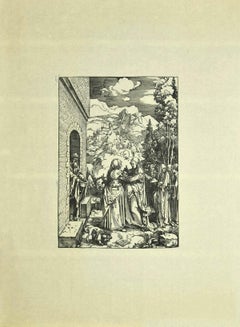
The Visitation - Woodcut Print After Albrecht Dürer - Early 20th Century
Located in Roma, IT
The Visitation is a vintage woodcut print realized after Albrecht Durer in the early 1900. The artwork is in good conditions on a cream colored paper. Posthumous edition of the ear...
Category

Early 20th Century Woodcut Prints and Multiples

Materials

Woodcut

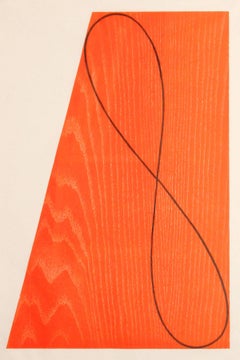
Untitled
Located in New York, NY
Associated with the Minimalist art movement of the 1960s, Mangold developed a reductive vocabulary based on geometric forms, monochromatic color, and an emphasis on the flatness of t...
Category

1990s Abstract Woodcut Prints and Multiples

Materials

Woodcut

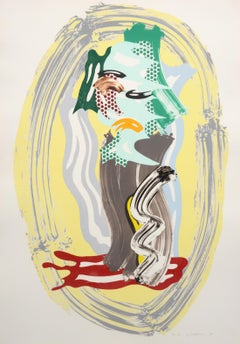
Roy Lichtenstein GREEN FACE Lithograph Screenprint, 58.5"H
Located in Lake Worth Beach, FL
Artist/Designer; Manufacturer: Roy Lichtenstein (American, 1923-1997) Marking(s); notes: signed, blind stamp, marking(s); PP 1/2 aside from the edition of 60; 1989 Materials: lithogr...
Category

1980s Pop Art Woodcut Prints and Multiples

Materials

Screen, Lithograph, Woodcut

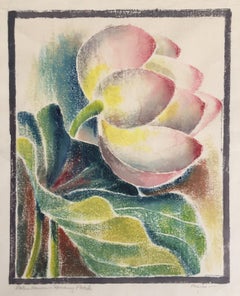
LOTUS FLOWER - ROEDING PARK - Provincetown Style
By Mary Travis
Located in Santa Monica, CA
MARY TRAVIS (Active 1935 - 40) LOTUS FLOWER ROEDING PARK. c.1935-40 White line color woodcut. Signed and titled in pencil. Small edition. 10” x 8”. Full sheet. tears in upper margin. Travis worked in Berkeley, California and was probably a follower of William S...
Category

1930s American Modern Woodcut Prints and Multiples

Materials

Woodcut

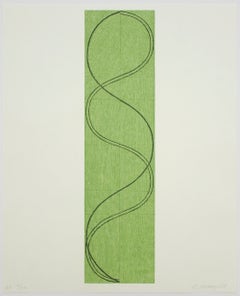
Green Column/Figure
Located in New York, NY
Associated with the Minimalist art movement of the 1960s, Mangold developed a reductive vocabulary based on geometric forms, monochromatic color, and an emphasis on the flatness of t...
Category

21st Century and Contemporary Woodcut Prints and Multiples

Materials

Etching, Woodcut

CARNIVAL
Located in Portland, ME
Schanker, Louis CARNIVAL. Color woodcut, 1948. Edition of 30. Signed, titled and numbered 24/30 in pencil. 14 1/4 x 21 inches (image), 18 x 24 inches (sheet). Hinging residue, verso,...
Category

1940s Woodcut Prints and Multiples

Materials

Woodcut

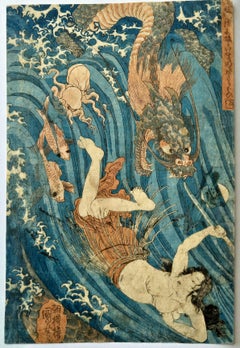
Utagawa Kuniyoshi -- The Diving Woman Recovers the Stolen Jewel from the Dragon
Located in BRUCE, ACT
Utagawa Kuniyoshi The Diving Woman Recovers the Stolen Jewel from the Dragon King's Palace Circa 1844-45 Woodblock print Oban Signed Chooro Kuniyoshi ga, censor's seal Tanaka Publi...
Category

1840s Woodcut Prints and Multiples

Materials

Woodcut

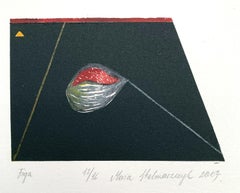
A fig - Contemporary Linocut Woodcut Print, Geometric
Located in Warsaw, PL
MARIA STELMASZCZYK (born in 1983) Studies at the Faculty of Graphic Arts and Painting Laboratory of Woodcut Techniques and Artistic Book at the Academy of Fine Arts Władysław Strzemi...
Category

Early 2000s Contemporary Woodcut Prints and Multiples

Materials

Paper, Linocut, Woodcut

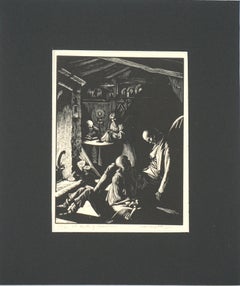
Early 20th Century Wuthering Heights Genre Woodcut -- Death of Earnshaw #28/30
Located in Soquel, CA
Wonderful genre woodcut of a scene from Emily Bronte's "Wuthering Heights" titled "Death of Earnshaw" by Clare Leighton (British/American, 1898 - 198...
Category

1950s Other Art Style Woodcut Prints and Multiples

Materials

Paper, Ink, Woodcut

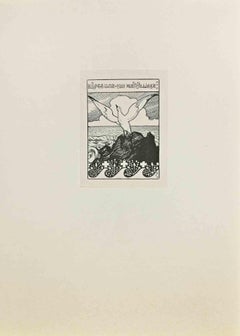
Ex-Libris - D. Logeman-Van Der Willigen - Woodcut Print - Mid-20th Century
Located in Roma, IT
 Ex-Libris  - D.Logeman-Van Der Willigen is an artwork realized in Mid 20th Century. Woodcut B./W. print on paper. The work is glued on cardboard. Total dimensions: 21 x 15 cm. Ex...
Category

Mid-20th Century Modern Woodcut Prints and Multiples

Materials

Woodcut

From the suite La Passion
Located in San Francisco, CA
This artwork from the suite "La Passion" 1932, published 1939 is a wood engraving by French artist Georges Rouault, 1871-1958. (Block engraved by Georges Aubert) It is signed and dat...
Category

Early 20th Century Modern Woodcut Prints and Multiples

Materials

Woodcut

Sidney Chafetz, The Stroller (Wallace Stevens)
Located in New York, NY
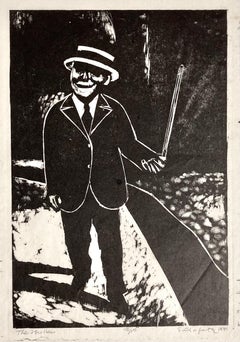
Sidney Chafetz was known for his clever compositions and his many portraits, all made in the most 'difficult to control' medium of woodcut.. This charmi...
Category

1970s American Modern Woodcut Prints and Multiples

Materials

Woodcut

pool ground yellow
Located in Columbia, MO
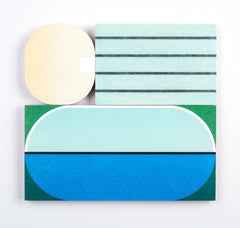
Kristen Martincic earned her BFA from Bowling Green State University and her MFA from the University of Nebraska-Lincoln. The artist, who currently lives and works in Columbia, Misso...
Category

21st Century and Contemporary Contemporary Woodcut Prints and Multiples

Materials

Birch, Acrylic, Woodcut

Harvesting Young Cedars - Woodcut by Utagawa Hiroshige - 19th Century
Located in Roma, IT
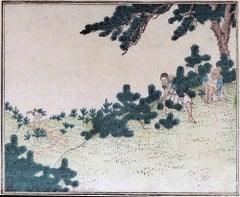
Harvesting Young Cedars is a lovely original woodcut print from the work of the famous Japanese master Utagawa Hiroshige from an early 19th century edition. It represents an agricult...
Category

19th Century Modern Woodcut Prints and Multiples

Materials

Woodcut

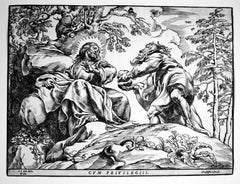
The Temptation of Christ by the Devil (2nd State)
Located in Chicago, IL
Woodcut after Peter Paul Rubens (Siegen 1577-1640 Antwerp) Reference: Le Blanc 6 Hollstein 6 II/III Notes: 1. A very fine impression of the 2nd state (of three) of this majo...
Category

17th Century Baroque Woodcut Prints and Multiples

Materials

Woodcut

Bougival
Located in Fairlawn, OH
Bougival Woodcut, 1914 Signed and numbered in pencil Edition 30, this numberd 22 Printed on laid Van Gelder Zonen paper Published by Henri Kanweiler, Paris Printed by Paul Birault, P...
Category

1910s Fauvist Woodcut Prints and Multiples

Materials

Woodcut

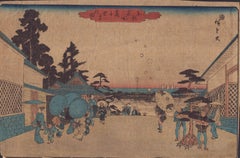
Hiroshige (1797-1858) - View of Kasumigaseki (Kasumigaseki no zu) 東都名所
Located in BRUCE, ACT
Artist: 広重 Hiroshige (1797-1858) Series: Famous Places in the Eastern Capital (Tôto meisho) (東都名所) Title: View of Kasumigaseki (Kasumigaseki no zu) 霞がせきの図 Size: O-ban 大判 24.2 x 36...
Category

1840s Woodcut Prints and Multiples

Materials

Woodcut

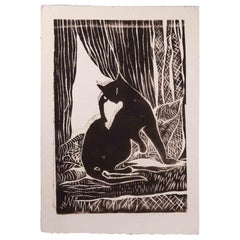
Black Cat by the Window - Woodcut Print by Giselle Halff - Early 20th century
Located in Roma, IT
Black Cat by the Window is a woodcut print on paper realized by Giselle Halff in the early 20th century. Good conditions. The delicate and beautiful fine strokes of the artwork sho...
Category

Early 20th Century Modern Woodcut Prints and Multiples

Materials

Woodcut

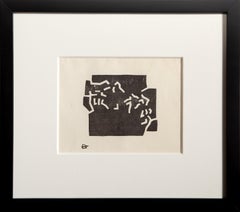
Egokarri (Greeting Card for 1969) Woodcut on thin wove paper by Eduardo Chillida
Located in Long Island City, NY
Eduardo Chillida, Spanish (1924 - 2002) - Egokarri (Greeting Card for 1969), Year: 1968, Medium: Woodcut on thin wove paper, signed in the plate, Edition: 300 (unnumbered), Image Si...
Category

1960s Modern Woodcut Prints and Multiples

Materials

Woodcut

Find Original Woodcut Prints for Your Home

Original woodcut prints and other types of fine art prints can help enhance any room in your home while supporting your effort to tie an interior design together.

Woodcut is a type of relief print that is made by carving a block of wood with a knife or gouge. The surface is then inked with a roller and pressed onto paper. Unlike with intaglio techniques, the section of the surface that has not been incised is what appears in the print. 

Woodcut printmaking is one of the oldest printing techniques, first used in 9th-century China, mastered by Albrecht Dürer during the Northern Renaissance and famously associated with the ukiyo-e artists of 17th- and 18th-century Japan. (For concision, power and delight, it’s hard to beat a Japanese woodblock print, the product of an artistic tradition that is aging very well indeed.)  

Elsewhere, German Expressionists like Emil Nolde and Ernst Ludwig Kirchner embraced the medium for its bold, graphic power in the 1920s, and artists continue to use it today.

OK, so what is the difference between a woodcut print and an intaglio print?

“[Intaglio] is the opposite of relief printing — woodcut, linoleum cut, letterpress, and rubber or metal stamping,” says Rhea Fontaine of Paulson Fontaine Press. “With relief printing, the raised areas of the printing surface are inked and printed, while the areas that have been cut away do not pick up the ink. Often these prints are made by hand.”

Find original woodcut prints by Katsushika Hokusai, Suzuki Harunobu, M.C. Escher, Mino Maccari and many other artists on 1stDibs.