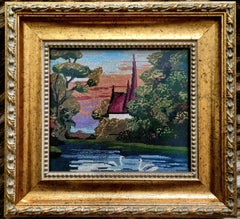
Romantic Art

ROMANTIC STYLE

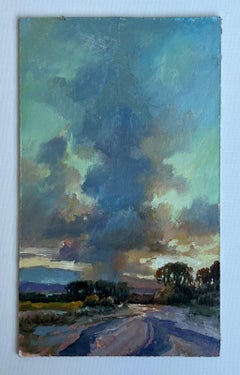
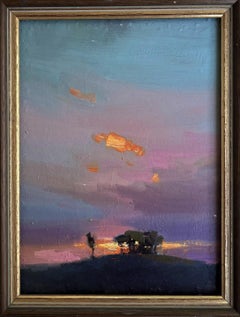
In emphasizing emotion and imagination, romantic art shifted away from the restraint of classicism and neoclassicism that had dominated art in Europe since the Renaissance. Romanticism achieved its greatest popularity in art, literature, music and philosophy between 1780 and 1830, although its expression of individual experiences ranging from awe to passion informed culture in the decades after.

Landscape painting was especially popular during the romantic period, as were nature studies of wild animals and fantasies of exotic lands. Romanticism varied across Europe as it reacted to the rise of industrialization, a more personal relationship with faith that was distanced from the church and the rationalist thinking of the Enlightenment.

British painters such as John Constable and J.M.W. Turner responded dramatically to the light and atmosphere of the natural world, while William Blake conveyed humanity’s connection to the divine in his visionary art. In Germany, the late-18th-century Sturm und Drang, or Storm and Drive, movement, with its probing of the unconscious, inspired a sense of mystery in work by romantic artists such as Caspar David Friedrich and Philipp Otto Runge. In France, where the French Revolution had turned tradition upside down, Théodore Géricault and Eugène Delacroix used lush brushwork to paint monumental canvases with tumultuous scenes of nature and history.

The romantic movement and its subject matter were a significant influence on the Pre-Raphaelites, Symbolists and the American painters of the Hudson River School, as well as on other cultural movements in the 19th and 20th centuries that saw artists build on this perspective in which art was guided by emotion rather than reason.

Find a collection of romantic paintings, sculptures, prints and multiples and more art on 1stDibs.

to
230
431
195
161
92
103
Overall Width
to
Overall Height
to
26
421
285
250
24
10
44
8
18
6
8
5
18
34
25
114,404
65,108
54,854
27,074
14,941
9,340
6,501
5,763
4,196
3,053
2,593
2,320
2,255
723
514
381
35
608
370
174
161
155
103
93
84
75
70
52
49
42
41
37
36
32
28
28
28
625
456
276
255
165
32
11
11
10
9
460
122
522
443
Style: Romantic
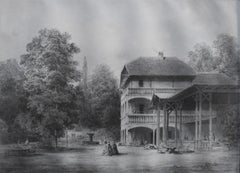
19th Century Romantic school, A Pavilion in a garden, original drawing
Located in Paris, FR
Romantic School, circa 1860 A pavilion in a garden , an animated view Pen and black ink, black ink wash on paper 19.5 x 26.5 cm In good condition, slightly undulating. Framed : 39 x ...
Category

1860s Romantic Art

Materials

Ink

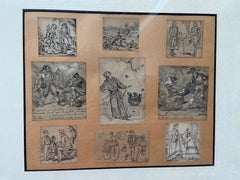
French School 19th century, Set of nine humoristic drawings, pencil on paper
Located in Paris, FR
France, 19th century Set of nine humoristic drawings, various subjects in the same mount Black pencil, for some of them with highlights of white gouache various dimensions : 6 x 5.5 ...
Category

1850s Romantic Art

Materials

Carbon Pencil

Crows Series, Watercolour on paper, Rare Art by Indian Bengal Artist "In Stock"
Located in Kolkata, West Bengal
Rare Collectible by Bengal School Artist Artist : Dipen Bose Medium : Watercolour on paper Size : 7.5 x 5 inches Paintings on both sides of the paper. ...
Category

1960s Romantic Art

Materials

India Ink, Watercolor

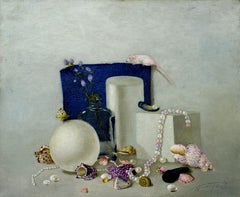
Still life with mouse. 2012. Oil on linen, 36x44 cm
Located in Riga, LV
Still life with mouse. 2012. Oil on linen, 36x44 cm
Category

2010s Romantic Art

Materials

Canvas, Linen, Oil

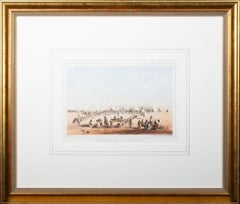
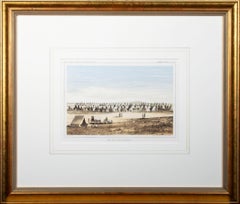
Distribution of Goods to the Assiniboines original John Mix Stanley lithograph
Located in Milwaukee, WI
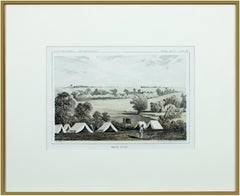
In the mid-nineteenth century, the United States government set out to survey and document its newly acquired lands and territories west of the Mississippi. The goals of these surveys were manifold: to produce topographical maps, to document flora and fauna, and to document natural resources to build the emerging US economy. These surveys, and the images from them, also functioned to build the new sense of American identity with the landscape, condensing vistas into the 'picturesque' tradition of European image making. Thus, the entire span of US territory could be seen as a single, cohesive whole. This lithograph comes from one of six surveys commissioned by the Army's Topographic Bureau in 1853, which sought to find the best route to construct a transcontinental railroad. The result was a thirteen-volume report including maps, lithographs, and technical data entitled 'Explorations and Surveys to ascertain the most practicable and economical route for a Railroad from the Mississippi river to the Pacific Ocean.' When it came to depicting the Assiniboine people, as seen in the present print, Stanley chose to juxtapose their encampment, marked by tipis in the distance, with the encampment of the Isaac Stevens survey party. In the foreground, commemorating this moment, Isaac Stevens can be seen presenting trade goods, which are known to include thirty two dressed skins and two robes. The survey leader Isaac Stevens noted being grateful for the generosity of the Assiniboine, commenting: "I felt very grateful indeed to those Indians, for their kindness to my men, their proffer of kind feeling and hospitality to myself and the survey." This description and this image, however, are arguably depicted through rose-colored glasses: to the Assiniboine people, this meeting may well have included stressful diplomatic relationships and have indicated a threat to the sovereignty over the territories agreed to be theirs by the 1851 Treaty of Fort Laramie. 5.75 x 8.75 inches, image 6.5 x 9.25 inches, stone 17 x 19.75 inches, frame Artist 'Stanley Del.' lower left Entitled 'Distribution of Goods to the Assiniboines' lower center margin Publisher 'Sarony, Major & Knapp. Lith.s 449 Broadway N.Y.' lower right Inscribed 'U.S.P.R.R. EXP. & SURVEYS — 47th & 49th PARALLELS' upper left Inscribed 'GENERAL REPORT — PLATE XIV' upper right Framed to conservation standards using 100 percent rag matting with French accents; glazed with UV5 Plexiglas to inhibit fading; housed in a gold reverse ogee moulding. Print in overall good condition; some localized foxing and discoloration; frame in excellent condition. John Mix Stanley...
Category

1850s Romantic Art

Materials

Lithograph

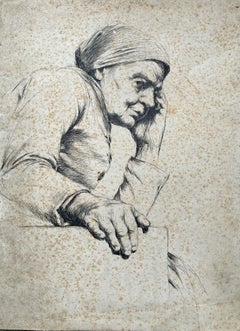
Woman with Turban (by leader of "Southern Art Renaissance") - Antique
Located in New Orleans, LA
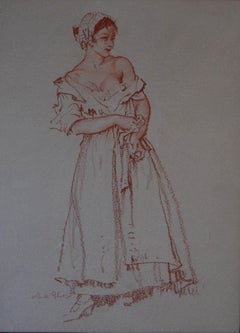
Many of you clicking on this are probably doing so because you know of Ellsworth Woodward, who with his brother William Woodward around the turn of the 20th century sparked an arts r...
Category

1890s Romantic Art

Materials

Ink

WOP 2 - 00620
Located in Phoenix, AZ
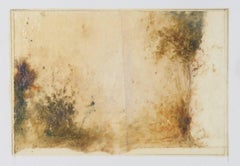
mixed media on paper; unframed Neoromantic painter Hiro Yokose fuses multiple layers of wax and oil paint to create mysterious, veiled landscapes illuminated with flashes of light i...
Category

Early 2000s Romantic Art

Materials

Paint, Paper, Mixed Media, Archival Paper

WOP 2 - 00637
Located in Phoenix, AZ
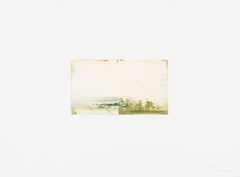
mixed media on paper image size: 7 inches x 12 inches Neoromantic painter Hiro Yokose fuses multiple layers of wax and oil paint to create mysterious, veiled landscapes illuminate...
Category

2010s Romantic Art

Materials

Paper, Mixed Media, Oil

Louis-Eugène Lambert (1825-1900) The Mountain and the mouse, drawing signed
Located in Paris, FR
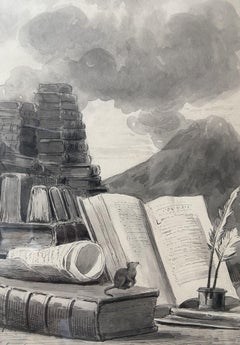
Louis-Eugène Lambert (1825-1900) La Montagne qui accouche d'une souris (The Mountain and the mouse) Pen and black ink, ink wash on paper Signed lower ...
Category

1870s Romantic Art

Materials

Ink

19th century color lithograph still life vase flowers
Located in Milwaukee, WI
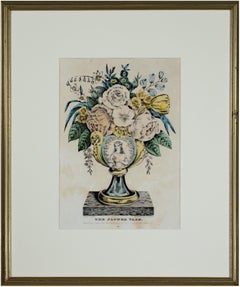
The present hand-colored lithograph is one of several decorative images of flower-filled vases published by Nathaniel Currier. This example contains roses, tulips, forget-me-nots, and others all within a vase with gold eagle head handles and an image of a beautiful young woman the belly. 16 x 11 inches, artwork 22.5 x 18.25 inches, frame Entitled bottom center Signed in the stone, lower left "Lith. and Pub. by N. Currier" Inscribed lower right "152 Nassau St. Cor. of Spruce N.Y." Copyrighted bottom center "Entered according to Act of Congress in the year 1848 by N. Currier in the Clerk's office of the Southern District of N.Y." with the number 249 Framed to conservation standards using 100 percent rag matting, housed in a lemon gold moulding. Nathaniel Currier was a tall introspective man with a melancholy nature. He could captivate people with his piercing stare or charm them with his sparkling blue eyes. Nathaniel was born in Roxbury, Massachusetts on March 27th, 1813, the second of four children. His parents, Nathaniel and Hannah Currier, were distant cousins who lived a humble yet spartan life. When Nathaniel was eight years old, tragedy struck. Nathaniel’s father unexpectedly passed away leaving Nathaniel and his eleven-year-old brother Lorenzo to provide for the family. In addition to their mother, Nathaniel and Lorenzo had to care for six-year-old sister Elizabeth and two-year-old brother Charles. Nathaniel worked a series of odd jobs to support the family, and at fifteen, he started what would become a life-long career when he apprenticed in the Boston lithography shop of William and John Pendleton. A Bavarian gentleman named Alois Senefelder invented lithography just 30 years prior to young Nat Currier’s apprenticeship. While under the employ of the brothers Pendleton, Nat was taught the art of lithography by the firm’s chief printer, a French national named Dubois, who brought the lithography trade to America. Lithography involves grinding a piece of limestone flat and smooth then drawing in mirror image on the stone with a special grease pencil. After the image is completed, the stone is etched with a solution of aqua fortis leaving the greased areas in slight relief. Water is then used to wet the stone and greased-ink is rolled onto the raised areas. Since grease and water do not mix, the greased-ink is repelled by the moisture on the stone and clings to the original grease pencil lines. The stone is then placed in a press and used as a printing block to impart black on white images to paper. In 1833, now twenty-years old and an accomplished lithographer, Nat Currier left Boston and moved to Philadelphia to do contract work for M.E.D. Brown, a noted engraver and printer. With the promise of good money, Currier hired on to help Brown prepare lithographic stones of scientific images for the American Journal of Sciences and Arts. When Nat completed the contract work in 1834, he traveled to New York City to work once again for his mentor John Pendleton, who was now operating his own shop located at 137 Broadway. Soon after the reunion, Pendleton expressed an interest in returning to Boston and offered to sell his print shop to Currier. Young Nat did not have the financial resources to buy the shop, but being the resourceful type he found another local printer by the name of Stodart. Together they bought Pendleton’s business. The firm ‘Currier & Stodart’ specialized in "job" printing. They produced many different types of printed items, most notably music manuscripts for local publishers. By 1835, Stodart was frustrated that the business was not making enough money and he ended the partnership, taking his investment with him. With little more than some lithographic stones, and a talent for his trade, twenty-two year old Nat Currier set up shop in a temporary office at 1 Wall Street in New York City. He named his new enterprise ‘N. Currier, Lithographer’ Nathaniel continued as a job printer and duplicated everything from music sheets to architectural plans. He experimented with portraits, disaster scenes and memorial prints, and any thing that he could sell to the public from tables in front of his shop. During 1835 he produced a disaster print Ruins of the Planter's Hotel, New Orleans, which fell at two O’clock on the Morning of the 15th of May 1835, burying 50 persons, 40 of whom Escaped with their Lives. The public had a thirst for newsworthy events, and newspapers of the day did not include pictures. By producing this print, Nat gave the public a new way to “see” the news. The print sold reasonably well, an important fact that was not lost on Currier. Nat met and married Eliza Farnsworth in 1840. He also produced a print that same year titled Awful Conflagration of the Steamboat Lexington in Long Island Sound on Monday Evening, January 18, 1840, by which melancholy occurrence over One Hundred Persons Perished. This print sold out very quickly, and Currier was approached by an enterprising publication who contracted him to print a single sheet addition of their paper, the New York Sun. This single page paper is presumed to be the first illustrated newspaper ever published. The success of the Lexington print launched his career nationally and put him in a position to finally lift his family up. In 1841, Nat and Eliza had their first child, a son they named Edward West Currier. That same year Nat hired his twenty-one year old brother Charles and taught him the lithography trade, he also hired his artistically inclined brother Lorenzo to travel out west and make sketches of the new frontier as material for future prints. Charles worked for the firm on and off over the years, and invented a new type of lithographic crayon which he patented and named the Crayola. Lorenzo continued selling sketches to Nat for the next few years. In 1843, Nat and Eliza had a daughter, Eliza West Currier, but tragedy struck in early 1847 when their young daughter died from a prolonged illness. Nat and Eliza were grief stricken, and Eliza, driven by despair, gave up on life and passed away just four months after her daughter’s death. The subject of Nat Currier’s artwork changed following the death of his wife and daughter, and he produced many memorial prints and sentimental prints during the late 1840s. The memorial prints generally depicted grief stricken families posed by gravestones (the stones were left blank so the purchasers could fill in the names of the dearly departed). The sentimental prints usually depicted idealized portraits of women and children, titled with popular Christian names of the day. Late in 1847, Nat Currier married Lura Ormsbee, a friend of the family. Lura was a self-sufficient woman, and she immediately set out to help Nat raise six-year-old Edward and get their house in order. In 1849, Lura delivered a son, Walter Black Currier, but fate dealt them a blow when young Walter died one year later. While Nat and Lura were grieving the loss of their new son, word came from San Francisco that Nat’s brother Lorenzo had also passed away from a brief illness. Nat sank deeper into his natural quiet melancholy. Friends stopped by to console the couple, and Lura began to set an extra place at their table for these unexpected guests. She continued this tradition throughout their lives. In 1852, Charles introduced a friend, James Merritt Ives, to Nat and suggested he hire him as a bookkeeper. Jim Ives was a native New Yorker born in 1824 and raised on the grounds of Bellevue Hospital where his father was employed as superintendent. Jim was a self-trained artist and professional bookkeeper. He was also a plump and jovial man, presenting the exact opposite image of his new boss. Jim Ives met Charles Currier through Caroline Clark, the object of Jim’s affection. Caroline’s sister Elizabeth was married to Charles, and Caroline was a close friend of the Currier family. Jim eventually proposed marriage to Caroline and solicited an introduction to Nat Currier, through Charles, in hopes of securing a more stable income to support his future wife. Ives quickly set out to improve and modernize his new employer’s bookkeeping methods. He reorganized the firm’s sizable inventory, and used his artistic skills to streamline the firm’s production methods. By 1857, Nathaniel had become so dependent on Jims’ skills and initiative that he offered him a full partnership in the firm and appointed him general manager. The two men chose the name ‘Currier & Ives’ for the new partnership, and became close friends. Currier & Ives produced their prints in a building at 33 Spruce Street where they occupied the third, fourth and fifth floors. The third floor was devoted to the hand operated printing presses that were built by Nat's cousin, Cyrus Currier, at his shop Cyrus Currier & Sons in Newark, NJ. The fourth floor found the artists, lithographers and the stone grinders at work. The fifth floor housed the coloring department, and was one of the earliest production lines in the country. The colorists were generally immigrant girls, mostly German, who came to America with some formal artistic training. Each colorist was responsible for adding a single color to a print. As a colorist finished applying their color, the print was passed down the line to the next colorist to add their color. The colorists worked from a master print displayed above their table, which showed where the proper colors were to be placed. At the end of the table was a touch up artist who checked the prints for quality, touching-in areas that may have been missed as it passed down the line. During the Civil War, demand for prints became so great that coloring stencils were developed to speed up production. Although most Currier & Ives prints were colored in house, some were sent out to contract artists. The rate Currier & Ives paid these artists for coloring work was one dollar per one hundred small folios (a penny a print) and one dollar per one dozen large folios. Currier & Ives also offered uncolored prints to dealers, with instructions (included on the price list) on how to 'prepare the prints for coloring.' In addition, schools could order uncolored prints from the firm’s catalogue to use in their painting classes. Nathaniel Currier and James Merritt Ives attracted a wide circle of friends during their years in business. Some of their more famous acquaintances included Horace Greeley, Phineas T. Barnum, and the outspoken abolitionists Rev. Henry Ward, and John Greenleaf Whittier (the latter being a cousin of Mr. Currier). Nat Currier and Jim Ives described their business as "Publishers of Cheap and Popular Pictures" and produced many categories of prints. These included Disaster Scenes, Sentimental Images, Sports, Humor, Hunting Scenes, Politics, Religion, City and Rural Scenes, Trains, Ships, Fire Fighters, Famous Race Horses, Historical Portraits, and just about any other topic that satisfied the general public's taste. In all, the firm produced in excess of 7500 different titles, totaling over one million prints produced from 1835 to 1907. Nat Currier retired in 1880, and signed over his share of the firm to his son Edward. Nat died eight years later at his summer home 'Lion’s Gate' in Amesbury, Massachusetts. Jim Ives remained active in the firm until his death in 1895, when his share of the firm passed to his eldest son, Chauncey. In 1902, faced will failing health from the ravages of Tuberculosis, Edward Currier sold his share of the firm to Chauncey Ives...
Category

1840s Romantic Art

Materials

Watercolor, Lithograph

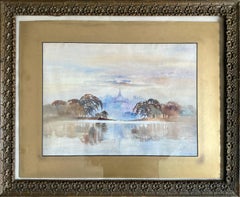
"Lake Scene" - Framed Early 20th Century Watercolor Seascape Painting
Located in New Orleans, LA
(I apologize for the reflections on the glass.) A lovely, gentle watercolor of a quiet lake with the fall trees reflected in the water. In the misty distance rises a cathedral above ...
Category

1920s Romantic Art

Materials

Watercolor

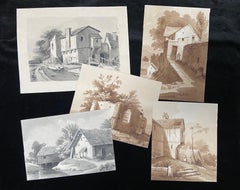
France 19th century, A Set of 5 drawings, landscapes and farms, Ink wash
Located in Paris, FR
France middle of 19th century A set of 5 drawings Landscapes, farms and ruins Brown ink and brown ink wash on paper, Black ink and black ink wash on paper Dimensions vary : A big fa...
Category

1840s Romantic Art

Materials

Ink

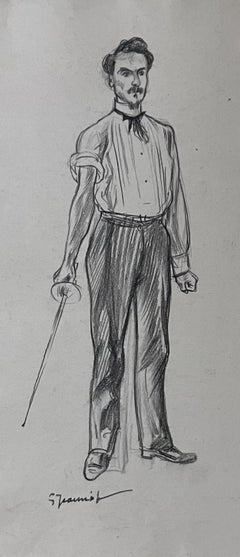
Pierre-Georges Jeanniot (1848–1934), Henri Rochefort for a duel, drawing
Located in Paris, FR
Pierre-Georges Jeanniot (1848–1934) Portrait of Henri Rochefort ready for a duel, Pencil on paper Signed and titled lower left 28 x 21 cm In good condition : the left and right borders irregularly cut In a modern cardboard mount : 45.5 x 35 cm The subject of this drawing is, in a way, almost as interesting as the artist who portrayed him in this duel pose. As a reminder, Henri Rochefort, whose full name was Victor Henri de Rochefort-Luçay, was born in Paris on January 31, 1831, and died in Aix-les-Bains on July 1, 1913. He was a French journalist, playwright, and politician. A great polemicist in the pages of his newspapers (La Lanterne, La Marseillaise, L'Intransigeant), he defended radical, even extremist political views (anticlerical, nationalist, pro-Commune, Boulangist, socialist, and anti-Dreyfusard), which earned him the nickname “the man of twenty duels and thirty trials” and convictions, notably to the prison in Nouméa, from which he managed to escape in 1874, a unique feat.. Pierre-Georges Jeanniot (1848–1934) was a Swiss-French Impressionist painter, designer, watercolorist, and engraver who was born in Geneva, Switzerland, and died in France. His work often depicts the modern life in Paris. He started out pursuing a military career, as an infantry officer (1866–1881). He was a lieutenant with the Twenty-third Infantry from 1868 to 1870. He fought in the Franco-Prussian War, was wounded at Rezonville, and was awarded the Légion d'Honneur. He subsequently served with the Ninety-fourth Infantry and the Seventy-third Infantry. At the time he left the army he held the rank of major, with the Chasseurs à Pieds. He never ceased drawing. He was known for the first time in 1872 at the art exhibition Salon de Paris, where he presented a watercolor painting called Intérieur de forêt. The next year he presented the painting Le Vernan à Nass-sous-Sainte-Anne. From then on he was a regular contributor to the Salon de Paris, where he presented new works with views of Toulouse, Paris, Troyes, the edges of the Seine, and some portraits. In 1881, after the army offered him the rank of commandant, he resigned to devote himself exclusively to painting. He took up residence in Paris. His works from this period represent mainly scenes of military life that allowed him to forge a reputation. Jeanniot established himself permanently in 1882 and obtained his first award the following year (medal third class of the Salon de Paris) with his les Flanqueurs (1883, Musée du Luxembourg). In 1886, La ligne de feu, souvenirs de la bataille de Rezonville, remembering the Battle of Mars-La-Tour (Museum of Pau), assured his notoriety. From then on, he started to show a certain artistic independence. He then mostly portrayed Parisian women during the "Belle Epoque", women in bathing suits...
Category

1870s Romantic Art

Materials

Carbon Pencil

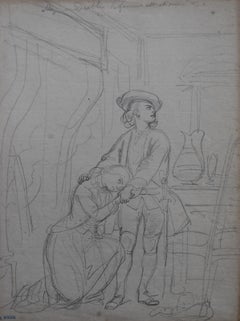
Achille Devéria (1800-1857) Allez au diable, la fille est à moi Original Drawing
Located in Paris, FR
Achille Devéria (1800-1857) "Allez au diable, la femme est à moi" (Go to hell, This woman is mine) pencil on paper annotated on the upper border "Alle...
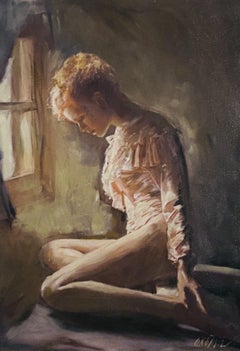
Category

1850s Romantic Art

Materials

Carbon Pencil

The Eighth Prelude , Painting, Oil on Canvas
Located in Yardley, PA
Oil on canvas, framed to Guild of Framers Museum Standard. Size is approximately 11â€
Category

2010s Romantic Art

Materials

Oil

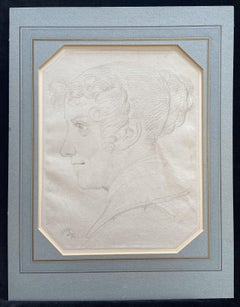
Achille Devéria (1800-1857) A young woman seen in profile, original drawing
Located in Paris, FR
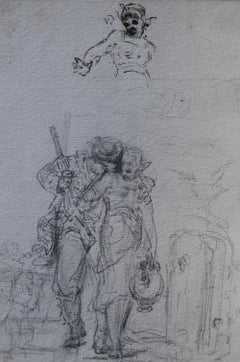
Achille Devéria (1800-1857) A young woman seen in profile Black Chalk on paper with cut edges Bears the stamp of the Achille Deveria Estate Sale of 1...
Category

1840s Romantic Art

Materials

Carbon Pencil

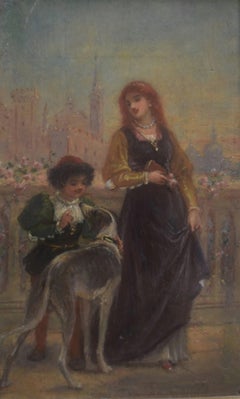
French School 19th C, A Renaissance scene with a Lady and a boy, oil on panel
Located in Paris, FR
French School of the 19th century, Attributed to Achille Deveria (1800-1857) A Lady and a boy with a dog, a Renaissance style scene Oil on wood panel 22 x 13 cm A label on the revers...
Category

1840s Romantic Art

Materials

Oil

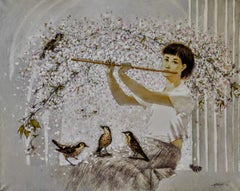
Flute tune. 2008. Oil on linen, 80x100 cm
Located in Riga, LV
Flute tune. 2008. Oil on linen, 80x100 cm
Category

Early 2000s Romantic Art

Materials

Canvas, Linen, Oil

Maple River original color lithograph by John Mix Stanley
Located in Milwaukee, WI
In the mid-nineteenth century, the United States government set out to survey and document its newly acquired lands and territories west of the Mississippi. The goals of these surveys were manifold: to produce topographical maps, to document flora and fauna, and to document natural resources to build the emerging US economy. These surveys, and the images from them, also functioned to build the new sense of American identity with the landscape, condensing vistas into the 'picturesque' tradition of European image making. Thus, the entire span of US territory could be seen as a single, cohesive whole. This lithograph comes from one of six surveys commissioned by the Army's Topographic Bureau in 1853, which sought to find the best route to construct a transcontinental railroad. The result was a thirteen-volume report including maps, lithographs, and technical data entitled 'Explorations and Surveys to ascertain the most practicable and economical route for a Railroad from the Mississippi river to the Pacific Ocean.' Along with the image, Stanley also noted in the report of the Maple River: "It would be an excellent plan for an emigrant travelling through the country, before reaching one of these rivers on which he expects to camp, to catch a few frogs, for the purpose of fishing in these streams, which abound pike, picarel, and large catfish. Frogs are by far the best bait that can be used." This note from the artist perhaps describes some of the actions of the figures in the camp in the foreground of the image. 5.75 x 8.75 inches, image 6.5 x 9.25 inches, stone 13.25 x 16.25 inches, frame Artist 'Stanley Del.' lower left Entitled 'Maple River' lower center margin Publisher 'Sarony, Major & Knapp. Lith.s 449 Broadway N.Y.' lower right Inscribed 'U.S.P.R.R. EXP. & SURVEYS — 47th & 49th PARALLELS' upper left Inscribed 'GENERAL REPORT — PLATE VIII' upper right Framed to conservation standards using 100 percent rag matting and Museum Glass to inhibit fading; housed in a brass-surface aluminium moulding. John Mix...
Category

1850s Romantic Art

Materials

Lithograph

French school of the nineteenth century, LW (?) Harbor scene, drawing signed
Located in Paris, FR
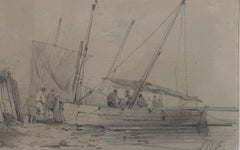
French school of the nineteenth century, LW (?) Harbor scene, animation around a skiff Pencil on paper Signed LW (?) Bottom right 15 x 21 cm Framed : 27 x 34.5 cm This very fine ...
Category

1840s Romantic Art

Materials

Carbon Pencil

White Irises / botanical watercolor
Located in Burlingame, CA
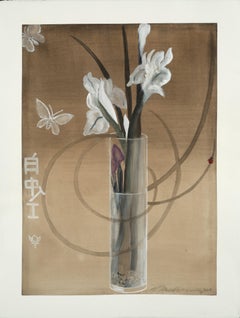
'White Irises' is a sophisticated subdued, ivory-cream with warm brown to bronze still life flower composition. The botanical watercolor created b...
Category

21st Century and Contemporary Romantic Art

Materials

Watercolor, Archival Paper

19th Century french school, Villefranche-sur Mer, the harbour, watercolor
Located in Paris, FR
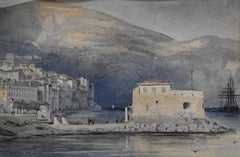
French School circa 1850 Villefranche sur mer, the Harbour Watercolor on paper 16 x 24 cm In good condition Framed 29 x 38 cm This very fine wat...
Category

1850s Romantic Art

Materials

Watercolor

"Evolution of Dawn: Clouds and Nature s Rebirth
Located in Zofingen, AG
Oil on cardboard . The painting "Evolution of Dawn: Clouds and Nature's Rebirth" invites us to immerse ourselves in a magnificent landscape where every color and detail penetrates ...
Category

21st Century and Contemporary Romantic Art

Materials

Paint, Lights, Oil

Grandeur of the Sunset: Landscape with the Perfect Blend of Contrast and Harmony
Located in Zofingen, AG
In this painting, an oil landscape unveils the magnificence of the sunset and the beauty of nature. The main focus is on the expansive sky, stretching across a significant portion of...
Category

21st Century and Contemporary Romantic Art

Materials

Oil

WOP 2 - 00621
Located in Phoenix, AZ
mixed media on paper; unframed Neoromantic painter Hiro Yokose fuses multiple layers of wax and oil paint to create mysterious, veiled landscapes illuminated with flashes of light i...
Category

Early 2000s Romantic Art

Materials

Paint, Paper, Mixed Media, Archival Paper

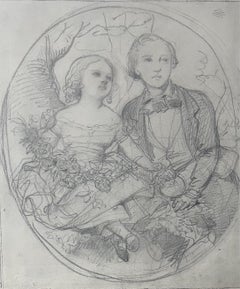
Eugène Devéria (1805-1865) Two Children in a tondo, Drawing
Located in Paris, FR
Eugène Devéria (1805-1865) Two Children in a tondo Portrait in an oval, study for a portrait Black pencil on paper 23 x 19 cm Stamp of the workshop o...
Category

1840s Romantic Art

Materials

Pencil

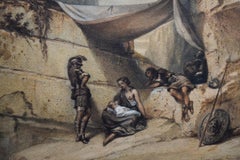
Romantic school, Woman and Infant with guards, watercolor signed dated 1847
Located in Paris, FR
Romantic school, mid 19th century Antique Scene, Woman and Infant surrounded by guards watercolor, pen and black ink and heightenings of white gouache on...
Category

1840s Romantic Art

Materials

Watercolor

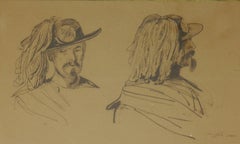
Denis Auguste Raffet (1804-1860) Studies of a Tiroler Kaiserjäger, drawing
Located in Paris, FR
Denis Auguste Raffet (1804-1860) Studies of a Tiroler Kaiserjäger, Signed and dated 1849 lower right Ink on paper 16.5 x 25.5 cm In a nice period frame : 33 x 42 cm Raffet had the occasion to draw studies of austrian soldiers as he took part as observer to the first Italian Independance War (1848-1849). It was the the first of many conflicts between the Kingdom of Sardinia , which later became the Kingdom of Italy , and the Austrian Empire. The Kaiserjäger (imperial hunters) were founded in 1815 by Emperor Franz I. It was a great honor to enter the Kaiserjäger as they were the only ones to be honored with the term "imperial". However, only Tyrolese, Voralbergers and Welschtirolers were allowed. They wore this characteristic hat as a parade headdress, it was made of matte black, waterproof felt. It consisted of a crown and brim adorned with a circular, green cord, the Jäger emblem and a plume of black rooster feathers. The hat cord was made of sheep's wool, and had a button and an acorn covered with a green wool. These two studies clearly evoke the interest of the artist for this part of their uniform. Denis Auguste Marie Raffet (2 March 1804 – 16 February 1860) was a French illustrator and lithographer. He was a student of Nicolas Toussaint Charlet, and was a retrospective painter of the Empire. At an early age he was apprenticed to a wood turner, but took up the study of art at evening classes. At the age of 18 he entered the workshop of Cabanel, where he applied his skill to the decoration of china, and where he met Rudor, from whom he received instruction in lithography, in the practice of which he was to rise to fame. He then entered the École des Beaux-Arts, but returned to lithography in 1830 when he produced on stone his famous designs of Lützen, Waterloo, Le bal, La revue, and Les adieux de la garrison, by which his reputation became immediately established. Raffet's chief works were his lithographs of the Napoleonic campaigns, from Egypt to Waterloo, vigorous designs inspired by ardent patriotic enthusiasm. In this endeavor he was a contemporary of other French artist-lithographers of Napoleon and the French army including Hippolyte Bellangé, Horace Vernet, and Nicolas Toussaint Charlet. As an illustrator his activity was prodigious, the list of works illustrated by his crayon amounting to about forty-five, among which are Béranger's poems, the History of the Revolution by Adolphe Thiers, the History of Napoleon by de Norvins, the great Walter Scott by Auguste Defauconpret, the French Plutarch and Frédéric Bérat's Songs. He went to Rome in 1849, and was present at the siege of Rome, which he made the subject of some lithographs, and followed the Italian campaign of 1859, of which he left a record in his Episodes de la campagne d'Italie de 1859. His portraits in pencil...
Category

1840s Romantic Art

Materials

Ink

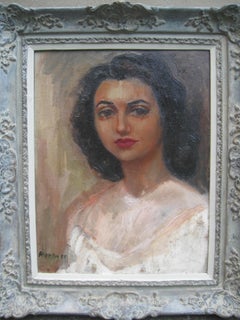
Mid 20th Century Portrait of a Young Woman oil
Located in Frome, Somerset
A fine shoulder length portrait of a young woman circa 1940's-1950's Continental School. A fine shoulder length portrait of a young woman circa 1940's-1950's Continental School. oil ...
Category

Mid-20th Century Romantic Art

Materials

Oil

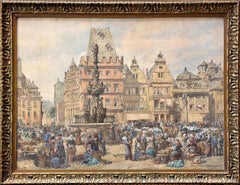
Watercolor On Paper "Hauptmarkt Trier" British Romantic Artist Signed Dated 1886
Located in Eltville am Rhein, DE
Samuel John Hodson London 1835 - 1908 Main Market in Trier, 1886 Watercolor Signed and dated lower right Size: 50 x 67 cm Frame: 60 x 77 cm Viewing and pickup by appointment Auth...
Category

1880s Romantic Art

Materials

Watercolor

French Romantic School, Le Baiser (The Kiss) Study, charcoal and Ink drawing
Located in Paris, FR
French Romantic School circa 1830 "Le Baiser" The Kiss, A hunter and a girl flirting, study of the girl in the upper register pencil, pen and black ink 19.5 x 13 cm (view) Framed ...
Category

1830s Romantic Art

Materials

Charcoal, Ink

#4423
Located in Phoenix, AZ
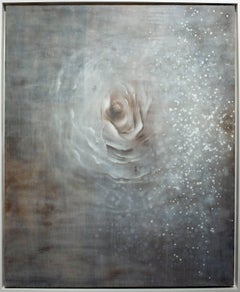
oil and wax on canvas 62 x 50 inches framed Neo-romantic painter Hiro Yokose fuses multiple layers of wax and oil paint to create mysterious, veiled landscapes illuminated with fl...
Category

Early 2000s Romantic Art

Materials

Canvas, Cotton Canvas, Wax, Oil

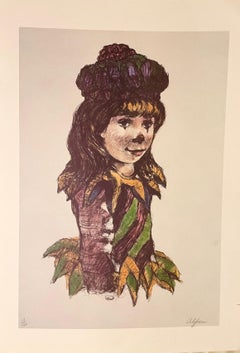
Harlequin Clown entitled "Little Queen" by Philippe Alfieri
Located in Chesterfield, MI
Harlequin Clown entitled "Little Queen" by Italian/American artist Philippe Alfieri (1921-2009); limited edition lithograph titled & signed by the artist
Category

20th Century Romantic Art

Materials

Lithograph

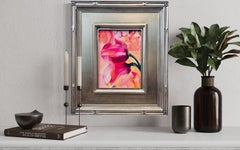
The Softest Hour - 2025, Floral, Rhythmic, Romantic, Framed, Tulips, Nostalgic
Located in Woodstock, GA
"The Softest Hour" is a delicate, heartfelt portrait of two tulips rendered with a quiet grace. Small in size, yet rich in atmosphere, this floral painting captures a fleeting moment...
Category

21st Century and Contemporary Romantic Art

Materials

Canvas, Acrylic

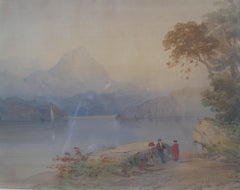
Thomas Miles Richardson (Snr), (1784-1848). Swiss Lake with the Matterhorn .
Located in Frome, Somerset
A fine watercolor by Thomas Miles Richardson senior, (1784-1848). A view of a Swiss lake and Alps with the Matterhorn mountain. One of the fine En...
Category

Early 19th Century Romantic Art

Materials

Watercolor

In Praise Of Solitude, Painting, Oil on Canvas
Located in Yardley, PA
Oil on canvas, approximately 16â€
Category

2010s Romantic Art

Materials

Oil

#5091
Located in Phoenix, AZ
oil and wax on layered canvas Neo-romantic painter Hiro Yokose fuses multiple layers of wax and oil paint to create mysterious, veiled landscapes illuminated with flashes of light i...
Category

Early 2000s Romantic Art

Materials

Canvas, Wax, Oil

Cloud Chasing
Located in Palm Desert, CA
Big skies evoke the excitement of a child, chasing fantastical cloud shapes as they blossom and curl against a deep azure sky. This painting is oil on a linen canvas that is 30 x 40 ...
Category

21st Century and Contemporary Romantic Art

Materials

Canvas, Linen, Oil

Cloud Chasing
Cloud Chasing
$3,600 Sale Price
20% Off
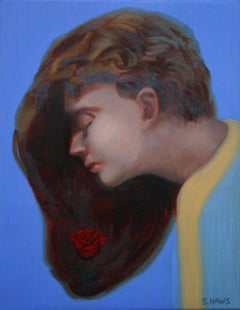
Red Rose, Painting, Oil on Canvas
Located in Yardley, PA
"Red Rose" is a painting about wondering if you are actually of value. The red rose is about beauty that is there but not always recognized or perceived. We are all beautiful even if...
Category

2010s Romantic Art

Materials

Oil

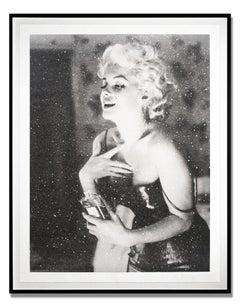
Marilyn Chanel, 2023
Located in Toronto, ON
72" x 58" 8/20 Limited Edition Silkscreen of 20 with Diamond Dust on Coventry Paper with Hand-Deckled edges Hand Signed by Russell Young
Category

21st Century and Contemporary Romantic Art

Materials

Screen

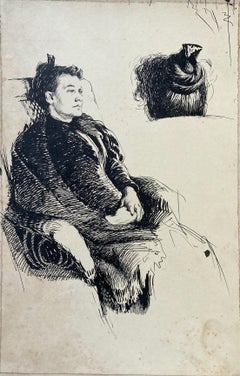
Study for a Seated Woman (by leader of "Southern Art Renaissance")
Located in New Orleans, LA
Many of you clicking on this wonderful pen-and-ink are probably doing so because you know of Ellsworth Woodward, who with his brother William Woodward around the turn of the 20th century sparked an arts renaissance in the South, the arts and culture in general having been mostly moribund since the dispiriting defeat experienced in the Civil War. I won't bog you down with lots of detail here since all you have to do is Google his name to bring up a wealth of information about him. He is most famous for his leadership of the arts program at Newcomb College in New Orleans, and its famous Newcomb Pottery...
Category

1890s Romantic Art

Materials

Ink

#3669
Located in Phoenix, AZ
oil and wax on canvas over panel Neoromantic painter Hiro Yokose fuses multiple layers of wax and oil paint to create mysterious, veiled landscapes illuminated with flashes of ligh...
Category

Early 2000s Romantic Art

Materials

Canvas, Wax, Oil, Panel, Wood Panel

Twentieth Century Figurative Semi Nude Model Conte Crayon Drawing
Located in ludlow, GB
Twentieth Century Figurative Semi Nude of Model Conte Crayon Drawing. One of the most important British Painters of the Twentieth Century, Will...
Category

20th Century Romantic Art

Materials

Conté

Camp Red River Hunters original lithograph by John Mix Stanley
Located in Milwaukee, WI
In the mid-nineteenth century, the United States government set out to survey and document its newly acquired lands and territories west of the Mississippi. The goals of these surveys were manifold: to produce topographical maps, to document flora and fauna, and to document natural resources to build the emerging US economy. These surveys, and the images from them, also functioned to build the new sense of American identity with the landscape, condensing vistas into the 'picturesque' tradition of European image making. Thus, the entire span of US territory could be seen as a single, cohesive whole. This lithograph comes from one of six surveys commissioned by the Army's Topographic Bureau in 1853, which sought to find the best route to construct a transcontinental railroad. The result was a thirteen-volume report including maps, lithographs, and technical data entitled 'Explorations and Surveys to ascertain the most practicable and economical route for a Railroad from the Mississippi river to the Pacific Ocean.' In particular, the print comes from the northern survey, commanded by Isaac Stevens, which explored the regions between the 47th and 49th parallels. In this image, Stanley shows an encampment of the people known as the Red River of the North hunters. They were generations of European and mixed-race trappers who lived on the frontier and had Indian wives and mixed-race children. They had come to the area for bison hunting, as the herds were still vast on the prairies. In the image, the figures and their encampment are dwarfed by the vast landscape around them, indicating the sublimity of these new American territories. 5.75 x 8.75 inches, image 6.5 x 9.25 inches, stone 17 x 20 inches, frame Artist 'Stanley Del.' lower left Entitled 'Camp Red River Hunters' lower center margin Publisher 'Sarony, Major & Knapp. Lith.s 449 Broadway N.Y.' lower right Inscribed 'U.S.P.R.R. EXP. & SURVEYS — 47th & 49th PARALLELS' upper left Inscribed 'GENERAL REPORT — PLATE XII' upper right Framed to conservation standards using 100 percent rag matting with French accents; glazed with UV5 Plexiglas to inhibit fading; housed in a gold reverse ogee moulding. Print in overall good condition; some localized foxing and discoloration; minor surface abrasions to frame. John Mix Stanley...
Category

1850s Romantic Art

Materials

Lithograph

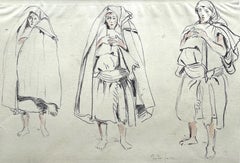
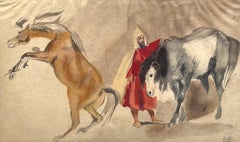
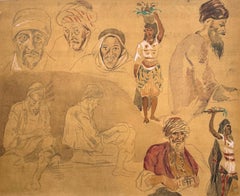
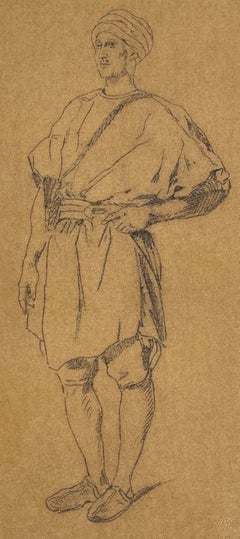
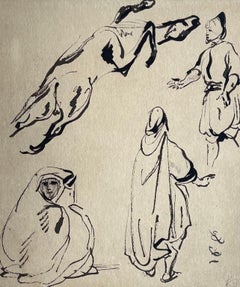
Delacroix, Composition, Trente et un Dessins et Aquarelles du Maroc (after)
Located in Southampton, NY
Lithograph on fine vélin paper, mounted on archival mat-board, as issued. Unsigned and unnumbered, as issued. Good Condition; never framed or matted. Notes: From the folio, Eugène De...
Category

1920s Romantic Art

Materials

Lithograph

Delacroix, Composition, Trente et un Dessins et Aquarelles du Maroc (after)
Located in Southampton, NY
Lithograph on fine vélin paper, mounted on archival mat-board, as issued. Unsigned and unnumbered, as issued. Good Condition; never framed or matted. Notes: From the folio, Eugène De...
Category

1920s Romantic Art

Materials

Lithograph

Delacroix, Composition, Trente et un Dessins et Aquarelles du Maroc (after)
Located in Southampton, NY
Lithograph on fine vélin paper, mounted on archival mat-board, as issued. Unsigned and unnumbered, as issued. Good Condition; never framed or matted. Notes: From the folio, Eugène De...
Category

1920s Romantic Art

Materials

Lithograph

Delacroix, Composition, Trente et un Dessins et Aquarelles du Maroc (after)
Located in Southampton, NY
Lithograph on fine vélin paper, mounted on archival mat-board, as issued. Unsigned and unnumbered, as issued. Good Condition; never framed or matted. Notes: From the folio, Eugène De...
Category

1920s Romantic Art

Materials

Lithograph

Delacroix, Composition, Trente et un Dessins et Aquarelles du Maroc (after)
Located in Southampton, NY
Lithograph on fine vélin paper, mounted on archival mat-board, as issued. Unsigned and unnumbered, as issued. Good Condition; never framed or matted. Notes: From the folio, Eugène De...
Category

1920s Romantic Art

Materials

Lithograph

Delacroix, Composition, Trente et un Dessins et Aquarelles du Maroc (after)
Located in Southampton, NY
Lithograph on fine vélin paper, mounted on archival mat-board, as issued. Unsigned and unnumbered, as issued. Good Condition; never framed or matted. Notes: From the folio, Eugène De...
Category

1920s Romantic Art

Materials

Lithograph

Delacroix, Composition, Trente et un Dessins et Aquarelles du Maroc (after)
Located in Southampton, NY
Lithograph on fine vélin paper, mounted on archival mat-board, as issued. Unsigned and unnumbered, as issued. Good Condition; never framed or matted. Notes: From the folio, Eugène De...
Category

1920s Romantic Art

Materials

Lithograph

Delacroix, Composition, Trente et un Dessins et Aquarelles du Maroc (after)
Located in Southampton, NY
Lithograph on fine vélin paper, mounted on archival mat-board, as issued. Unsigned and unnumbered, as issued. Good Condition; never framed or matted. Notes: From the folio, Eugène De...
Category

1920s Romantic Art

Materials

Lithograph

Delacroix, Composition, Trente et un Dessins et Aquarelles du Maroc (after)
Located in Southampton, NY
Lithograph on fine vélin paper, mounted on archival mat-board, as issued. Unsigned and unnumbered, as issued. Good Condition; never framed or matted. Notes: From the folio, Eugène De...
Category

1920s Romantic Art

Materials

Lithograph

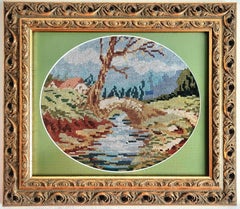
Summer Landscape - Wiehler Handmade Gobelin Tapestry Green Red Beige White Pink
Located in Sofia, BG
Summer Landscape Wiehler Handmade Gobelin Tapestry by Maestro Vera Petrova - Sapundjieva, Bulgarian artist 1912 - 1985 About the artwork TECHNIQUE: Wie...
Category

1940s Romantic Art

Materials

Tapestry

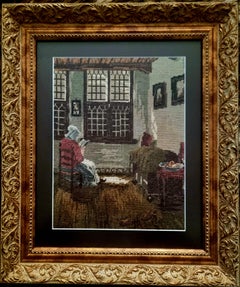
Holy Woman - Wiehler Handmade Gobelin Tapestry Brown White Pink Blue Black Grey
Located in Sofia, BG
Holy Woman Wiehler Handmade Gobelin Tapestry by Maestro Vera Petrova - Sapundjieva, Bulgarian artist 1912 - 1985 About the artwork TECHNIQUE: Wiehler ...
Category

1930s Romantic Art

Materials

Tapestry

Into The Light , Painting, Oil on Canvas
Located in Yardley, PA
‘Into The Light’. Rublev and Michael Harding Oils on primed gessoed cotton canvas, hand made frame of the highest quality to suit, to Guild of F...
Category

2010s Romantic Art

Materials

Oil

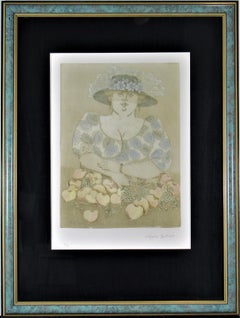
Woman with Fruits
Located in San Francisco, CA
This artwork "Woman with Fruits" c.1980 is an original color aquatint by noted 20th century Bolivian Artist Norha Beltran. It is hand signed and numbered...
Category

Late 20th Century Romantic Art

Materials

Aquatint

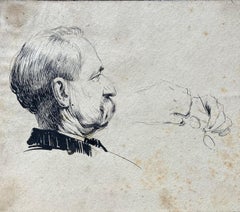
Gentleman with Mustache (by leader of "Southern Art Renaissance") - Antique
Located in New Orleans, LA
Many of you clicking on this are probably doing so because you know of Ellsworth Woodward, who with his brother William Woodward around the turn of the 20th century sparked an arts renaissance in the South, the arts and culture in general having been mostly moribund since the dispiriting defeat experienced in the Civil War. I won't bog you down with lots of detail here since all you have to do is Google his name to bring up a wealth of information about him. He is most famous for his leadership of the arts program at Newcomb College in New Orleans, and its famous Newcomb Pottery...
Category

1890s Romantic Art

Materials

Ink

The Lake - Wiehler Handmade Gobelin Tapestry Green Red Beige White Pink
Located in Sofia, BG
The lake - Landscape 1942 Wiehler Handmade Gobelin Tapestry by Maestro Vera Petrova - Sapundjieva, Bulgarian artist 1912 - 1985 About the artwork TECH...
Category

1940s Romantic Art

Materials

Tapestry

Untitled #5250
Located in Phoenix, AZ
oil on canvas Neo-romantic painter Hiro Yokose fuses multiple layers of wax and oil paint to create mysterious, veiled landscapes illuminated with flashes of light in the sky and ...
Category

2010s Romantic Art

Materials

Canvas, Oil

Romantic art for sale on 1stDibs.

Find a wide variety of authentic Romantic art available for sale on 1stDibs. Works in this style were very popular during the 21st Century and Contemporary, but contemporary artists have continued to produce works inspired by this movement. If you’re looking to add art created in this style to introduce contrast in an otherwise neutral space in your home, the works available on 1stDibs include elements of blue, purple, orange, pink and other colors. Many Pop art paintings were created by popular artists on 1stDibs, including Hiro Yokose, Francisco Goya, Leo Primavesi, and Dipen Bose. Frequently made by artists working with Paint, and Oil Paint and other materials, all of these pieces for sale are unique and have attracted attention over the years. Not every interior allows for large Romantic art, so small editions measuring 3 inches across are also available. Prices for art made by famous or emerging artists can differ depending on medium, time period and other attributes. On 1stDibs, the price for these items starts at $119 and tops out at $1,300,000, while the average work sells for $2,213.

Still Thinking About These?

All Recently Viewed