Romantic Art

ROMANTIC STYLE

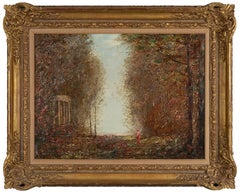
In emphasizing emotion and imagination, romantic art shifted away from the restraint of classicism and neoclassicism that had dominated art in Europe since the Renaissance. Romanticism achieved its greatest popularity in art, literature, music and philosophy between 1780 and 1830, although its expression of individual experiences ranging from awe to passion informed culture in the decades after.

Landscape painting was especially popular during the romantic period, as were nature studies of wild animals and fantasies of exotic lands. Romanticism varied across Europe as it reacted to the rise of industrialization, a more personal relationship with faith that was distanced from the church and the rationalist thinking of the Enlightenment.

British painters such as John Constable and J.M.W. Turner responded dramatically to the light and atmosphere of the natural world, while William Blake conveyed humanity’s connection to the divine in his visionary art. In Germany, the late-18th-century Sturm und Drang, or Storm and Drive, movement, with its probing of the unconscious, inspired a sense of mystery in work by romantic artists such as Caspar David Friedrich and Philipp Otto Runge. In France, where the French Revolution had turned tradition upside down, Théodore Géricault and Eugène Delacroix used lush brushwork to paint monumental canvases with tumultuous scenes of nature and history.

The romantic movement and its subject matter were a significant influence on the Pre-Raphaelites, Symbolists and the American painters of the Hudson River School, as well as on other cultural movements in the 19th and 20th centuries that saw artists build on this perspective in which art was guided by emotion rather than reason.

Find a collection of romantic paintings, sculptures, prints and multiples and more art on 1stDibs.

to
233
443
208
164
115
108
Overall Width
to
Overall Height
to
26
445
299
268
24
11
45
9
18
6
11
5
19
35
25
114,993
65,178
57,703
27,335
14,958
9,491
6,373
5,779
4,194
3,071
2,530
2,343
2,226
649
556
392
37
629
372
177
166
155
115
103
95
85
70
56
51
46
44
42
39
35
29
28
28
658
489
297
276
191
35
14
11
11
10
492
124
561
458
Style: Romantic
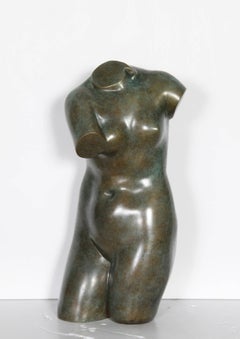
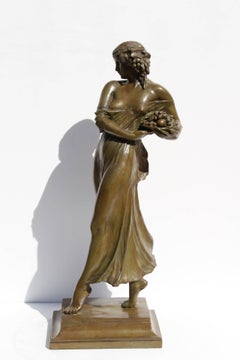
Woman Carrying Grapes, Art Nouveau Bronze by Mario Korbel
By Mario Joseph Korbel
Located in Long Island City, NY
This bronze sculpture by Mario Joseph Korbel is a stunning portrayal of a woman in the Romanticist style. Korbel began studying sculpture in his homeland of Czech Republic, and cont...
Category

20th Century Romantic Art

Materials

Bronze

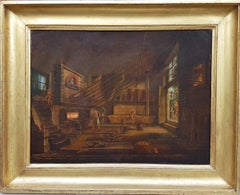
Painting french school romantic 19th century oil on canvas Interior of a bakery
Located in PARIS, FR
French school of the first half of the 19th century Oil on canvas 45.5 x 60 cm (59.5 x 74 cm with frame) Beautiful 19th century carved and gilded wooden frame Good condition (a few r...
Category

19th Century Romantic Art

Materials

Oil

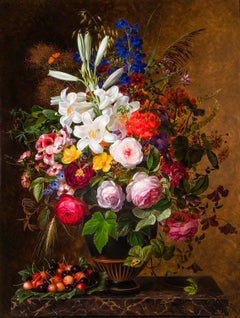
Lilies, Orange and Pink Pelargonium, Roses, and other Flowers in a Greek Vase
By Johan Laurentz Jensen
Located in New York, NY
From 1833 to 1835 Johan Laurentz Jensen lived in France and Italy; while in Rome, he was considered the most prominent painter in an extensive colony of Scandinavian artists there. I...
Category

19th Century Romantic Art

Materials

Oil, Panel

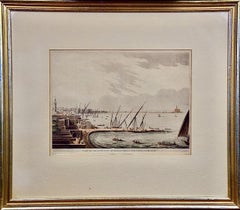
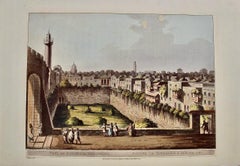
Alexandria, Egypt Lighthouse: A Hand-colored Aquatint Engraving by L. Mayer
Located in Alamo, CA
This is a hand-colored aquatint and engraving entitled "Part of the New City of Alexandria, with the Light House", published in London by R. Bowyer from 1802-1805. The print was crea...
Category

Early 19th Century Romantic Art

Materials

Engraving, Aquatint

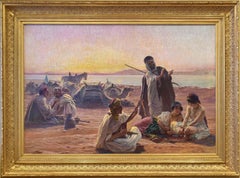
Romantic Sunset Desert Dance Oil Painting on Canvas, 19th Century
Located in New York, NY
Otto Pilny was a Swiss Orientalist painter working at the turn of the 20th century. Specializing in exoticized oil paintings of the Middle East, his work often features desert scenes...
Category

Late 19th Century Romantic Art

Materials

Oil, Canvas

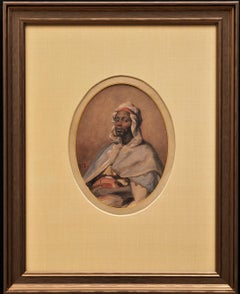
“Orientalist Portrait of an Arab Man” Jean-Horace Vernet (French 1789-1863)
Located in SANTA FE, NM
“Orientalist Portrait of an Arab Man” Half-length, turned to the left, oval Jean-Horace Vernet (French 1789-1863) Circa 1830s Watercolor heightened with touches of white on paper Sig...
Category

1830s Romantic Art

Materials

Watercolor

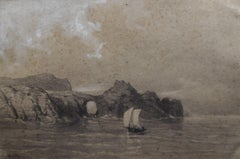
Auguste Mayer (1805-1890) A seascape with a boat, signed drawing
Located in Paris, FR
Auguste Mayer (1803-1890 A seascape with a boat signed with the initials on the lower left Pencil and heightenings of white gouache on paper 17.5 x 26 cm...
Category

1860s Romantic Art

Materials

Gouache, Carbon Pencil

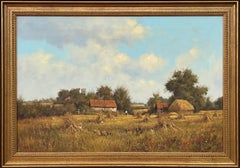
Farm Scene with Haystacks in the English Countryside by Realist Landscape Artist
Located in Preston, GB
Farm Scene with Haystacks in the English Countryside by British Landscape Artist, James Wright. Signed, Original, Oil on Canvas, housed in a gilt frame ...
Category

1990s Romantic Art

Materials

Canvas, Oil

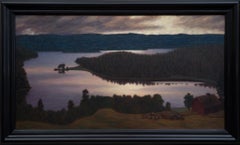
Hilding Werner (1880-1944) - Moonlight Over Krokvattnet (near Glafsfjorden)
Located in Stockholm, SE
Hilding Werner (1880-1944) was a Swedish artist known for his portraits, romantic landscape paintings of Värmland, and caricature drawings. We are privi...
Category

Early 20th Century Romantic Art

Materials

Canvas, Oil

French still life 19th roses vase BRUYAS
Located in PARIS, FR
Marc BRUYAS Lyon, 1821 - 1896 Oil on canvas 32 x 23 cm (42 x 33 cm with frame) Signed and dated lower left “Bruyas / December 1863” Beautiful carved and gilded wooden frame from the...
Category

1860s Romantic Art

Materials

Oil

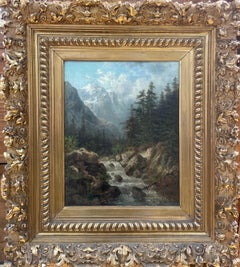
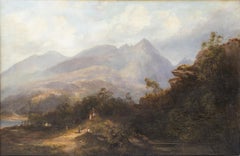
"Alpine River Landscape"
Located in Edinburgh, GB
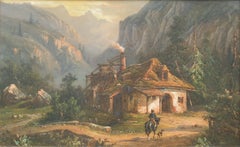
Georg Garbe (19th Century) "Alpine River Landscape" This captivating 19th-century oil painting on canvas by Georg Garbe presents a breathtaking Alpine landscape, featuring a rushing ...
Category

19th Century Romantic Art

Materials

Canvas, Oil

French Marine Romantic Painting 19th Circle of KUWASSEG Boat Sea Port Channel
Located in PARIS, FR
French School, mid-19th century Ship Approaching the Port Oil on canvas 33 x 46 cm (53 x 66 cm with frame) Collector's label on the back "Ronarch" (Admiral Pierre Alexis Ronarc'h (18...
Category

Mid-19th Century Romantic Art

Materials

Oil

Scandinavian Sunset Watercolor from 1897
Located in Stockholm, SE
Hilding Werner (1880–1944) Sweden Solnedgång (Sunset), 1897 watercolour on paper signed and dated lower left H. Werner 1897 Inscribed Solnedgång (“Sunset”) on the reverse. the shee...
Category

1890s Romantic Art

Materials

Paper, Watercolor

Pool of Bethesda, Jerusalem: A Hand-colored Aquatint Engraving by L. Mayer
Located in Alamo, CA
This is a hand-colored aquatint and engraving entitled "Pool of Bethesda, Jerusalem", published in London by R. Bowyer in 1804. The print was created by Thomas Milton (1743-1827) from drawings by Luigi Mayer. This beautiful, detailed, original engraving is printed on deluxe J. Whatman paper with very wide left and right margins. There is a watermark "1801" indicating the year the paper was made. The sheet measures 11.25" high and 16" wide. There is a small faint spot in the upper margin on the left and a tiny faint spot in the right upper corner and another in the left lower corner. The engraving is otherwise in excellent condition with vibrant colors throughout the image. "The Pool of Bethesda...
Category

Early 19th Century Romantic Art

Materials

Engraving, Aquatint

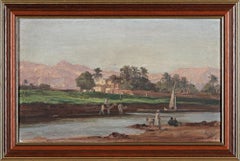
Georg Macco "Oriental Landscape With Arabs" Oil on Canvas, Signed
By Georg Macco
Located in Eltville am Rhein, DE
Georg Macco Aachen 1863 - 1933 Genoa Oriental Landscape Oil on canvas Signed lower right Size: 28 x 46 cm Frame: 37 x 55 cm Original condition (see photos) Viewing and collection ...
Category

Early 1900s Romantic Art

Materials

Oil

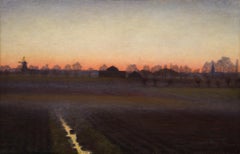
Twilight Landscape with Windmill and Church, 1891
Located in Stockholm, SE
"Twilight Landscape with Windmill and Church" is a captivating work by Swedish artist Albert Larsson, painted in 1891 when Larsson was 22 years old. The painting captures a landscape steeped in the quietude of dusk, with a sky ablaze in hues of red and orange, signalling the end of the day. The silhouettes of trees are rendered with astonishing detail against the twilight sky, showcasing Larsson's early mastery of light and shadow. Dominating the pastoral scene is a traditional windmill, its blades stilled against the sky, alongside the spire of a church that pierces the horizon. These structures, together with the meticulously painted trees, are testaments to the human presence within the natural world, suggesting a harmony between the two. A notable feature is the small water-filled furrow in the field, which catches the fading light of the sky, creating a pathway of reflection leading the eye through the composition. This detail highlights Larsson's skill in using light to draw attention to elements within his paintings. Albert Larsson, born on November 4, 1869, in Malmö and passing on August 31, 1952, in Lund, was an artist deeply influenced by his education in Copenhagen at the Art Academy and later at Peder Severin Krøyer...
Category

1890s Romantic Art

Materials

Canvas, Oil

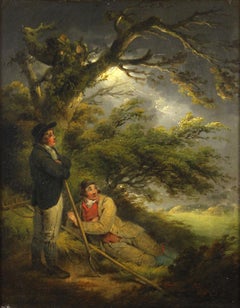
Sheltering from the storm / - Romantic landscape illuminated by lightning bolt -
Located in Berlin, DE
George Morland (1763 London - 1804 Brighton). Sheltering from the Storm. Oil on canvas, relined, 37.5 x 29.5 cm (visible size), 53.5 x 45.5 cm (...
Category

1790s Romantic Art

Materials

Oil

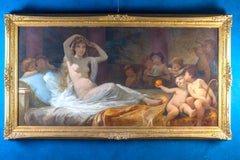
Venus with Putti Oil on Canvas with Gilt-wood Frame
Located in Rome, IT
French 19' century painting oil on canvas . Young Venus nude figure surrounded by delicious playing putti . Finely carved and gilt-wood frame of the same period . Measurements w...
Category

Mid-19th Century Romantic Art

Materials

Oil

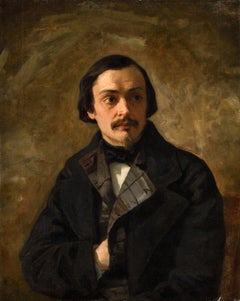
Attributed To Eugène Delacroix (Saint-Maurice 1798 - Paris 1863) - Portrait
Located in Paris, Île-de-France
Attributed to Eugène Delacroix (Saint-Maurice 1798 – Paris 1863) Portrait of a Man Wearing a Frock Coat Oil on canvas, 75 x 60 cm (29 1/2 x 23 5/8 in) Signed Provenance: Private ...
Category

Mid-19th Century Romantic Art

Materials

Oil

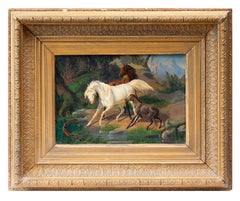
Wild horses surprised by a snake
Located in GB
Ferdinand Sigmund Lachenwitz was a German painter active in the mid-nineteenth century, working within the traditions of Romanticism and academic realism. Born in 1820, he was traine...
Category

Mid-19th Century Romantic Art

Materials

Canvas, Oil

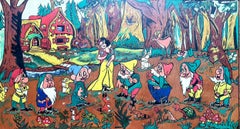
Snow White and the Seven Dwarfs
Located in Cotignac, FR
Snow White and the Seven Dwarfs in a landscape, Mid century oil on wood panel. This vibrant and charming painting vividly portrays a whimsical forest scene featuring Snow White and ...
Category

Mid-20th Century Romantic Art

Materials

Oil, Wood Panel

"Alpine Landscape with Mother and Children" Antique Oil Painting Europe Nature
Located in Austin, TX
Oil on canvas Canvas Size: 29 x 44 in. Frame Size: 36 x 51 in. Unsigned A marvelous antique oil on canvas painting, exemplary of Romantic Dutch painting that depicts a sweeping, dra...
Category

18th Century Romantic Art

Materials

Canvas, Oil

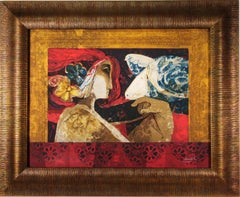
Woman with Birds
Located in San Francisco, CA
Artist: Alvar Title: Woman with Birds Year: c.1980 Medium: Color lithograph Paper: Wove Image size: 18.5 x 24.5 inches Framed size: 26.5 x 32.65 inc...
Category

Late 20th Century Romantic Art

Materials

Lithograph

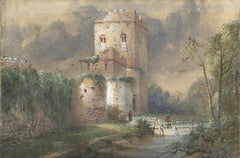
Unknown title (castle with wall, stream and footbridge)
Located in Fairlawn, OH
Unknown title (castle with wall, stream and footbridge) Watercolor on laid paper, mounted to support of old Albumin photograph mount Signed and dated lower left (see photo) The watercolor is mounted on support that is the backing for a vintage albumin photograph of Moulin Huet, Guernsey, Channel Islands, c. 1850's Condition: Mounted to verso of albumin photograph mount (see photo) Glue residue outside of image/sheet on recto Colors fresh No other issues to note David Cox (29 April 1783 – 7 June 1859) was an English landscape painter, one of the most important members of the Birmingham School of landscape artists and an early precursor of Impressionism. He is considered one of the greatest English landscape painters, and a major figure of the Golden age of English watercolour. Although most popularly known for his works in watercolour, he also painted over 300 works in oil towards the end of his career, now considered "one of the greatest, but least recognised, achievements of any British painter. His son, known as David Cox the Younger (1809-1885), was also a successful artist. Early life in Birmingham, 1783–1804 Cox's birthplace in Deritend, Birmingham, illustrated by Samuel Lines Cox was born on 29 April 1783 on Heath Mill Lane in Deritend, then an industrial suburb of Birmingham. His father was a blacksmith and whitesmith about whom little is known, except that he supplied components such as bayonets and barrels to the Birmingham gun trade. Cox's mother was the daughter of a farmer and miller from Small Heath to the east of Birmingham. Early biographers record that "she had had a better education than his father, and was a woman of superior intelligence and force of character." Cox was initially expected to follow his father into the metal trade and take over his forge, but his lack of physical strength led his family to seek opportunities for him to develop his interest in art, which is said to have first become apparent when the young Cox started painting paper kites...
Category

1840s Romantic Art

Materials

Watercolor

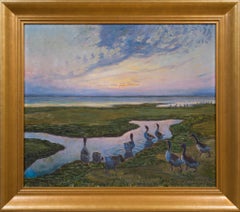
Geese in the Marshland, Falsterbo, 1918
Located in Stockholm, SE
This luminous oil painting by William Gislander captures a tranquil evening scene in the coastal wetlands of Falsterbo, southern Sweden. A group of geese gathers at the edge of a mea...
Category

1910s Romantic Art

Materials

Canvas, Oil

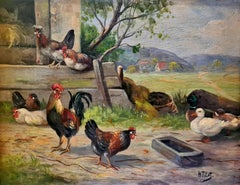
French Oil On Panel Rural Landscape, Chickens and Ducks in a Farmyard.
Located in Cotignac, FR
French oil on wood panel view of a sunny farmyard with chickens and ducks by H Tikat. The painting is signed bottom right. A very charming rural view of a hen house in a farmyard wi...
Category

Early 20th Century Romantic Art

Materials

Oil, Wood Panel

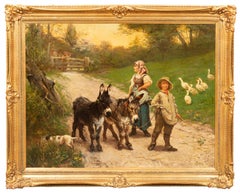
‘Peasant Children walking the Donkeys’ by Edgar Bundy (1862 – 1922), dated 1885
Located in Knokke, BE
Edgar Bundy Brighton 1862 – 1922 London British Painter ‘Peasant Children walking the Donkeys’ Signature: signed lower right and dated ‘Edgar Bundy 1885'
Medium: oil on canvas
 Dim...
Category

Late 19th Century Romantic Art

Materials

Canvas, Oil

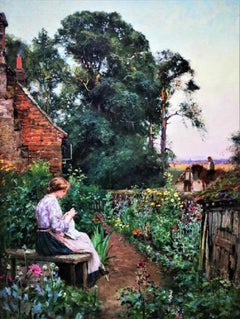
"Girl in the Cottage Garden”, Summer English country landscape, oil on canvas
Located in Naples, Florida
Henry John Yeend King (1855-1924) was a landscape and rustic genre painter. He began his artistic career by working for three years in a glassworks. King went on to study painting under William Bromley in London, and also with Bonnat and Cormon in Paris. He exhibited from 1874 to 1924 at The Royal Academy and The New Watercolour Society. He was elected to the Royal Society of British Artists in 1879, the Royal Institute in 1886, later becoming Vice President. He was also a member of the Royal Institute of Oil Painters. In 1898 his picture 'Milking Time' was purchased by the Tate Gallery in London. Yeend King was a fine late-Victorian oil painter...
Category

20th Century Romantic Art

Materials

Oil, Canvas

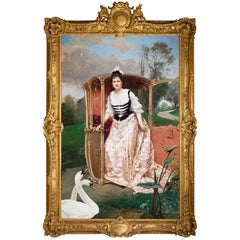
Raimundo de Madrazo y Garreta Palatial Oil on Canvas Portrait Isabelle McCreery
By Raimundo de Madrazo y Garreta
Located in LA, CA
Raimundo De Madrazo y Garreta (Spanish School, 1841-1920) an exceptional and palatial oil on canvas "Portrait of Isabelle McCreery” depic...
Category

19th Century Romantic Art

Materials

Oil

A Walk Through the Forest
Located in Sheffield, MA
Thomas Edwin Mostyn British, 1864-1930 A Walk Through the Forest Oil on canvas 20 by 27 in, w/ frame 28 by 35 in Signed "Mostyn" lower right He was a figure painter, portrait paint...
Category

Late 19th Century Romantic Art

Materials

Canvas, Oil

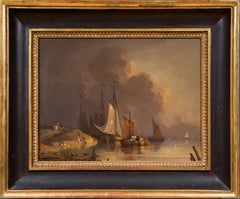
Evening Calm, Fishing Boats at Anchor, c. 1835
Located in Stockholm, SE
Evening Calm, Fishing Boats at Anchor is a painting Per Wickenberg, capturing a serene twilight along a sheltered coast. Fishing boats rest quietly at anchor, their sails lowered and...
Category

1830s Romantic Art

Materials

Canvas, Oil

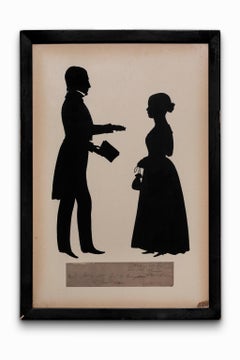
August Edouart Silhouette Cut Paper 1840 "Rev Mrs E H Cumpston"
By August Edouart
Located in Detroit, MI
SALE ONE WEEK ONLY "The Rev. and Mrs. E. H. Cumpston" a silhouette cut by August Edouart is in very good condition and cut by the artist sometime between 1839 - 1849. On the lower f...
Category

1850s Romantic Art

Materials

Paper

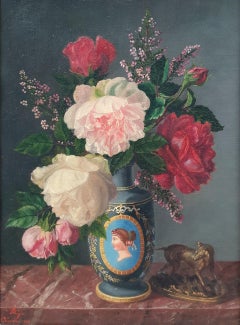
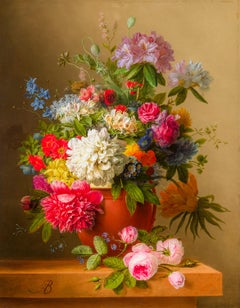
Still Life of Peonies, Roses, Honeysuckle, Poppies, and other Flowers
Located in New York, NY
This painting demonstrates the source of Arnoldus Bloemers’ enduring popularity. A profusion of peonies, honeysuckle, and poppies share the confines of a terracotta urn sitting on a ...
Category

19th Century Romantic Art

Materials

Oil

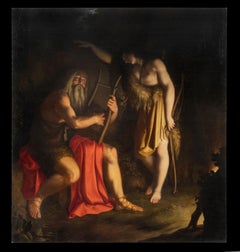
Mythological figurative painting of 19th century Italian Romanticism
Located in Florence, IT
The painting depicts "Ossian tells Malvina about the exploits of his son Oscar" and is dated at lower right "Filippo Bellati did the year 1811" and the unframed measurements are 233 ...
Category

1810s Romantic Art

Materials

Canvas, Oil

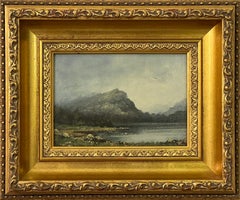
Painting of Lake Mountains in England by 20th Century British Landscape Artist
Located in Preston, GB
Painting of Lake & Mountains in England by 20th Century British Landscape Artist, James Wright Signed, Original, Oil on Canvas, housed in a beautiful ornate gold frame. Provenance: Part of the English Heritage...
Category

1990s Romantic Art

Materials

Canvas, Oil

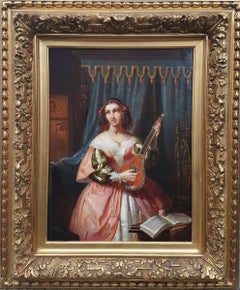
WAPPERS Painting Belgian 19th romantic Oil on panel wood mandoline woman player
Located in PARIS, FR
Gustave WAPPERS (Attributed to) Anvers, 1803 - Paris, 1874 Oil on panel Trace of monogram lower right 42.5 x 31.5 cm (59.5 x 49.5 cm with the frame) XIXth century frame in carved woo...
Category

Mid-19th Century Romantic Art

Materials

Oil

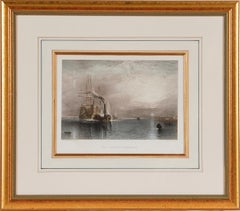
The Fighting Temeraire: A Framed 19th C. Engraving After J. M. W. Turner
By J.M.W. Turner
Located in Alamo, CA
This beautiful 19th century framed engraving "The Fighting Temeraire" by James Tibbetts Willmore is based on an original painting by the renowned British artist J.M.W. Turner. It was published by James S. Virtue & Co. in London between 1859-1875. It depicts the once mighty British warship the HMS Temeraire being towed away down the river Thames by a much smaller steamboat to a ship-breaking yard to be broken up for scrap. The Temeraire was first launched in 1798 and represented the pinnacle of British ship-building. 180-feet long, constructed of English oak and armed with 98 guns, she was one of the largest warships of the period. The Temeraire became a symbol of British pride and military power that endured throughout the 19th century. The man-of-war served during the French Revolutionary and Napoleonic Wars and was among the last serving ships to have been at the Battle of Trafalgar in 1805. It became one of the many older ships put out of service in the 1830s and 1840s. The once mighty and feared ship symbolizes a once magnificent, but now obsolete, technology. Turner seems to lament her inglorious final journey, being towed by a less magnificent, but modern steam powered tugboat. The Turner painting was created in 1838 and is now held in the National Gallery in London. Willmore's engraving, created in 1859, captures the dramatic scene with great detail and skill. The image has become an iconic representation of the decline of Britain's naval power and the transition from sail to steam in the 19th century. The sunset in the background is symbolic of the sun going down on British naval power and tradition. The painting conveys profound and diverse themes that are central to the human experience: those of mortality and change, technology and progress, heroism and brutality. The painting demonstrates Turner’s skill as an artist. His ability to produce scenes of great beauty that are dramatic, but are also symbolic, stimulating both thoughtful analysis, as well as emotion. Turner's painting was voted by the British public in a 2005 BBC radio sponsored survey to be the British people's favorite painting of all time. In 2020 it was included on a new British banknote...
Category

Mid-19th Century Romantic Art

Materials

Engraving

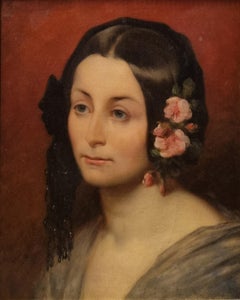
Romantic painting Portrait woman with flowers French mid 19th
Located in PARIS, FR
French school around 1850 Oil on oil 41 x 33 cm (54 x 47 cm with frame) Inscription on the back “Lefevre” Based on the model's hairstyle, the portrait can be dated around 1850. The ...
Category

Mid-19th Century Romantic Art

Materials

Oil

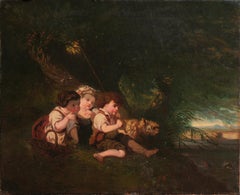
Children Landing a Catfish , 19th Century American School, Large Nocturnal Oil
Located in Santa Cruz, CA
A substantial, mid-to-late 19th century, unsigned, American School nocturnal landscape showing a view of three children, accompanied by their terrier, fishing by lamp-light and start...
Category

Late 19th Century Romantic Art

Materials

Canvas, Oil

Venus, NeoClassical Bronze Sculpture from Alva Studios
By Alva Studios
Located in Long Island City, NY
Artist: Alva Studios Title: Venus Year: 1928 Medium: Bronze Sculpture Size: 17 in. x 7 in. x 5 in. (43.18 cm x 17.78 cm x 12.7 cm)
Category

1920s Romantic Art

Materials

Bronze

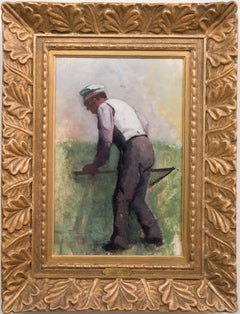
Harvest Scene With Farmer and Scythe, 1886
Located in Stockholm, SE
"Harvest Scene With Farmer and Scythe, 1886" is a captivating painting by the Swedish artist Alfred Thörne. Created during his travels through Germany, France, Italy, and Belgium bet...
Category

1880s Romantic Art

Materials

Canvas, Oil

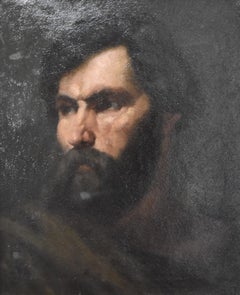
French Romantic School, 19th Century, Manly head of bearded man, oil on canvas
Located in Paris, FR
French Romantic School 19th Century Manly head of bearded man oil on canvas 46 x 37.8 cm In fairly good condition, some inpaintings visible under UV light, mainly in the backgrounds ...
Category

1850s Romantic Art

Materials

Canvas, Oil

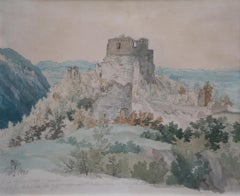
Ruins of the Imperial Castle Outside Split in Croatia
Located in Stockholm, SE
Gustaf Wilhelm Palm (1810–1890) Sweden Ruins of the Imperial Castle Outside Split in Croatia pencil and watercolour unframed: 23.6 x 29.2 cm (9 1/4 x 11 1/2 in) framed: 40 x 45 cm...
Category

1840s Romantic Art

Materials

Paper, Watercolor

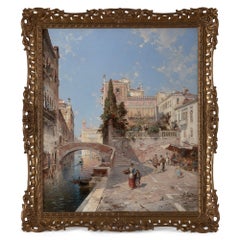
A Venetian scene of the Palazzo Dario by F. R. Unterberger
Located in London, GB
A Venetian scene of the Palazzo Dario by F. R. Unterberger Austrian, c.1898-1900 Frame: height 97cm, width 85cm, depth 7cm Canvas: 83cm, width 70cm, depth...
Category

1890s Romantic Art

Materials

Canvas, Oil

Garçon donnant l avoine à un cheval dételé — 19th Century French Romanticism
Located in Myrtle Beach, SC
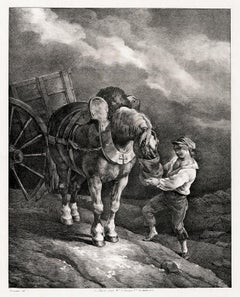
Théodore Géricault, 'Garçon donnant l'avoine à un cheval dételé' (Boy Giving Oats to a Hitched Horse), lithograph, 1822, 2nd state of 2, Delteil 89...
Category

1820s Romantic Art

Materials

Lithograph

UNCONSCIOUS RIVALS- Angelo Granati - Italy Oil on canvas painting
Located in Napoli, IT
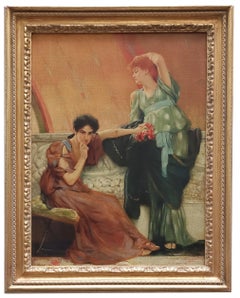
Unconscious Rivals- Angelo Granati Italia 2004 - This is his reinterpretation of a greatest old master painting by Lawrence Alma-Tadema. Oil on canvas cm.80x60. The painting is a true form of the romantic style of Alma-Tadema. It is an image of two women; one sitting, the other standing and apparently waiting for someone...
Category

Early 2000s Romantic Art

Materials

Canvas, Oil

Sailing Away From Shore. Oil on Board.
Located in Cotignac, FR
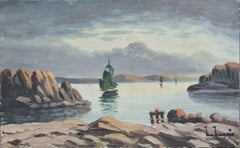
An oil on panel idyllic seascape by Boggio. The painting is signed bottom right. An idealised seascape scene, boats under sail on a tranquil sea moving away from a rocky outcrop all...
Category

Mid-20th Century Romantic Art

Materials

Oil, Board

Fishing Off Hastings, England: A Framed 19th C. Engraving After J. M. W. Turner
By J.M.W. Turner
Located in Alamo, CA
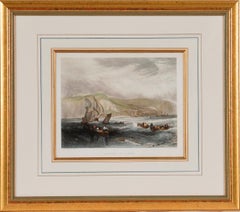
This beautiful 19th century framed engraving "Line Fishing Off Hastings" by William Miller is based on an original painting by the renowned British artist J.M.W. Turner, which depicts a scene of fishermen at work off the coast of the town of Hastings in East Sussex, England. The Miller engraving faithfully reproduces Turner's painting, capturing the same atmospheric quality and sense of motion. In the foreground of the image, a group of fishermen are shown in a small boat, with one man using a fishing line to catch fish. In the background, there is a larger ship, along with a view of the town of Hastings and the cliffs beyond. Overall, the Miller engraving "Line Fishing Off Hastings" is a beautiful and detailed representation of Turner's original painting, and provides a glimpse into life in a 19th century fishing community. This colorful 19th century engraving is presented in a gold-colored wood frame and a cream-colored French mat highlighted with a light blue band and thinner mustard and gold-colored bands. There is a gold-colored fillet which further embellishes the engraving. The frame measures 18" high, 20.5" wide and 1" deep. The engraving, frame and mat are in excellent condition. Joseph Mallord William (J.M.W.) Turner (1775-1851) was an English painter who is widely considered one of the greatest landscape painters in Western art history. Born in London, he showed a remarkable talent for art from a young age, and studied at the Royal Academy of Arts from the age of 14. He quickly gained recognition for his watercolor landscapes, which were highly innovative and expressive. Turner's style evolved over time, and he became increasingly interested in the effects of light and color. He traveled extensively throughout Europe, and his experiences of the natural world, particularly the sea and the sky, had a profound influence on his art. His paintings are known for their luminosity, atmospheric effects, and dramatic use of color. Despite facing criticism and ridicule from some of his contemporaries, Turner continued to push the boundaries of art, experimenting with new techniques and styles throughout his career. He was a prolific artist, creating thousands of paintings, sketches, and watercolors, and his legacy continues to inspire artists today. William Miller (1796-1882) was an English engraver and publisher, best known for his work in reproducing the paintings of J.M.W. Turner. Miller was born in Bristol and began his career as an engraver at a young age, working for a variety of publications and artists. In the early 1820s, Miller began working with Turner, engraving many of the artist's most famous works, including "The Fighting Temeraire...
Category

Mid-19th Century Romantic Art

Materials

Engraving

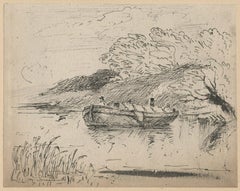
The River Barge
Located in Fairlawn, OH
The River Barge Pen and ink on paper on laid paper, mounted in English drum mount , c. 1810 Unsigned Condition: Slight sun staining to sheet and mount in the window (see photo) Image/sheet size: 5 1/4 x 6 11/16 inches Sight: : 5-3/4 x 7-1/4" Frame: 13-3/8 x 14-3/8" Provenance: Colnaghi, London (see photo of label) David Cox (29 April 1783 – 7 June 1859) was an English landscape painter, one of the most important members of the Birmingham School of landscape artists and an early precursor of Impressionism. He is considered one of the greatest English landscape painters, and a major figure of the Golden age of English watercolour. Although most popularly known for his works in watercolour, he also painted over 300 works in oil towards the end of his career, now considered "one of the greatest, but least recognised, achievements of any British painter. His son, known as David Cox the Younger (1809-1885), was also a successful artist. Early life in Birmingham, 1783–1804 Cox's birthplace in Deritend, Birmingham, illustrated by Samuel Lines Cox was born on 29 April 1783 on Heath Mill Lane in Deritend, then an industrial suburb of Birmingham. His father was a blacksmith and whitesmith about whom little is known, except that he supplied components such as bayonets and barrels to the Birmingham gun trade. Cox's mother was the daughter of a farmer and miller from Small Heath to the east of Birmingham. Early biographers record that "she had had a better education than his father, and was a woman of superior intelligence and force of character." Cox was initially expected to follow his father into the metal trade and take over his forge, but his lack of physical strength led his family to seek opportunities for him to develop his interest in art, which is said to have first become apparent when the young Cox started painting paper kites while recovering from a broken leg. By the late 18th century Birmingham had developed a network of private academies teaching drawing and painting, established to support the needs of the town's manufacturers of luxury metal goods, but also encouraging education in fine art, and nurturing the distinctive tradition of landscape art of the Birmingham School. Cox initially enrolled in the academy of Joseph Barber in Great Charles Street, where fellow students included the artist Charles Barber and the engraver William Radclyffe, both of whom would become important lifelong friends. At the age of about 15 Cox was apprenticed to the Birmingham painter Albert Fielder, who produced portrait miniatures and paintings for the tops of snuffboxes from his workshop at 10 Parade in the northwest of the town. Early biographers of Cox record that he left his apprenticeship after Fielder's suicide, with one reporting that Cox himself discovered his master's hanging body, but this is probably a myth as Fielder is recorded at his address in Parade as late as 1825. At some time during mid-1800 Cox was given work by William Macready the elder at the Birmingham Theatre, initially as an assistant grinding colours and preparing canvases for the scene painters, but from 1801 painting scenery himself and by 1802 leading his own team of assistants and being credited in plays' publicity. London, 1804–1814 In 1804 Cox was promised work by the theatre impresario Philip Astley and moved to London, taking lodgings in 16 Bridge Row, Lambeth. Although he was unable to get employment at Astley's Amphitheatre it is likely that he had already decided to try to establish himself as a professional artist, and apart from a few private commissions for painting scenery his focus over the next few years was to be on painting and exhibiting watercolours. While living in London, Cox married his landlord's daughter, Mary Agg and the couple moved to Dulwich in 1808. David Cox Travellers on a Path, pencil and brown wash. In 1805 he made his first of many trips to Wales, with Charles Barber, his earliest dated watercolours are from this year. Throughout his lifetime he made numerous sketching tours to the Home Counties, North Wales, Yorkshire, Derbyshire and Devon. Cox exhibited regularly at the Royal Academy from 1805. His paintings never reached high prices, so he earned his living mainly as a drawing master. His first pupil, Colonel the Hon.H. Windsor (the future Earl of Plymouth) engaged him in 1808, Cox went on to acquire several other aristocratic and titled pupils. He also went on to write several books, including: Ackermanns' New Drawing Book (1809); A Series of Progressive Lessons (1811); Treatise on Landscape Painting (1813); and Progressive Lessons on Landscape (1816). The ninth and last edition of his series Progressive Lessons, was published in 1845. By 1810 he was elected President of the Associated Artists in Water Colour. In 1812, following the demise of the Associated Artists, he was elected as associate of the Society of Painters in Water Colour (the old Water Colour Society). He was elected a Member of the Society in 1813, and exhibited there every year (except 1815 and 1817) until his death. Hereford, 1814–1827 In the summer of 1813 Cox was appointed as the drawing master of the Royal Military College in Farnham, Surrey, but he resigned shortly afterwards, finding little sympathy with the atmosphere of a military institution. Soon after that he applied to a newspaper advertisement for a position as drawing master for Miss Crouchers' School for Young Ladies in Hereford and in Autumn 1814 moved to the town with his family. Cox taught at the school in Widemarsh Street until 1819, his substantial salary of £100 per year requiring only two-day's work per week, allowing time for painting and the taking of private pupils. Cox's reputation as both a painter and a teacher had been building over previous years, as indicated by his election as a member of the Society of Painters in Water Colours and his inclusion in John Hassell's 1813 book Aqua Pictura, which claimed to present works by "all of the most approved water coloured draftsmen". The depression that accompanied the end of the Napoleonic Wars had caused a contraction in the art market, however, and by 1814 Cox had been very short of money, requiring a loan from one of his pupils to pay even for the move to Hereford. Despite its financial advantages and its proximity to the scenery of North Wales and the Wye Valley, the move to Hereford marked a retreat in terms of his career as a painter: he sent few works to the annual exhibition of the Society of Painters in Water Colours during his first years away from London and not until 1823 would he again contribute more than 20 pictures. Between 1823 and 1826 he had Joseph Murray Ince as a pupil. London, 1827–1841 He made his first trip to the Continent, to Belgium and the Netherlands in 1826 and subsequently moved to London the following year. He exhibited for the first time with the Birmingham Society of Artists in 1829, and with the Liverpool Academy in 1831. In 1839, two of Cox's watercolours were bought from the Old Water Colour Society exhibition by the Marquis of Conynha for Queen Victoria. Birmingham, 1841–1859 Greenfield House in Harborne, Birmingham – where Cox lived from 1841 until his death in 1859 . In May 1840 Cox wrote to one of his Birmingham friends: "I am making preparations to sketch in oil, and also to paint, and it is my intention to spend most of my time in Birmingham for the purpose of practice". Cox had been considering a return to painting in oils since 1836 and in 1839 had taken lessons in oil painting from William James Müller, to whom he had been introduced by mutual friend George Arthur Fripp. Hostility between the Society of Painters in Water Colours and the Royal Academy made it difficult for an artist to be recognised for work in both watercolour and oil in London, however, and it is likely that Cox would have preferred to explore this new medium in the more supportive environment of his home town. By the early 1840s his income from sales of his watercolours was sufficient to allow him to abandon his work as a drawing master, and in June 1841 he moved with his wife to Greenfield House in Harborne, then a village on Birmingham's south western outskirts. It was this move that would enable the higher levels of freedom and experimentation that were to characterise his later work. The elderly Cox pictured by Samuel Bellin in 1855. In Harborne, Cox established a steady routine – working in watercolour in the morning and oils in the afternoon. He would visit London every spring to attend the major exhibitions, followed by one or more sketching excursions, continuing the pattern that he had established in the 1830s. From 1844 these tours evolved into a yearly trip to Betws-y-Coed in North Wales to work outdoors in both oil and watercolour, gradually becoming the focus for an annual summer artists colony that continued until 1856 with Cox as its "presiding genius". Cox's experience of trying to exhibit his oils in London was short and unsuccessful: in 1842 he made his only submission to the Society of British Artists; one oil painting was exhibited at each of the British Institution and the Royal Academy in 1843; and two oil paintings were exhibited at the Royal Academy in 1844 – the last that would be exhibited in London during his lifetime. Cox showed regularly at the Birmingham Society of Arts and its successor, the Birmingham Society of Artists, becoming a member in 1842. Cox suffered a stroke on 12 June 1853 that temporarily paralysed him, and permanently affected his eyesight, memory and coordination. By 1857 however, his eyesight had deteriorated. An exhibition of his work was arranged in 1858 by the Conversazione Society Hampstead, and in 1859 a retrospective exhibition was held at the German Gallery Bond Street, London. Cox died several months later. He was buried in the churchyard of St Peters, Harborne, Birmingham, under a chestnut tree, alongside his wife Mary. Work Early work In the spring of 1811 Cox made a small number of notable works in oils during a visit to Hastings with his family. It is not known why he didn't continue working in this medium at the time, but the five known surviving examples were described in 1969 as "surely some of the most brilliant examples of the genre in England". Mature work Cox reached artistic maturity after his move to Hereford in 1814. Although only two major watercolours can confidently be traced to the period between Cox's arrival in the town and the end of the decade, both of these – Butcher's Row, Hereford of 1815 and Lugg Meadows, near Hereford of 1817 – mark advances on his earlier work. Later work Cox's later work produced after his move to Birmingham in 1841 was marked by simplification, abstraction and a stripping down of detail. His art of the period combined the breadth and weight characteristic of the earlier English watercolour school, together with a boldness and freedom of expression comparable to later impressionism. His concern with capturing the fleeting nature of weather, atmosphere and light was similar to that of John Constable, but Cox stood apart from the older painter's focus on capturing material detail, instead employing a high degree of generalisation and a focus on overall effect. The quest for character over precision in representing nature was an established characteristic of the Birmingham School of landscape artists with which Cox had been associated early in his life, and as early as 1810 Cox's work had been criticised for its "sketchiness of finish" and "cloudy confusion of objects", which were held to betray "the coarseness of scene-painting". During the 1840s and 1850s Cox took this "peculiar manner" to new extremes, incorporating the techniques of the sketch into his finished works to a far greater degree. Cox's watercolour technique of the 1840s was sufficiently different from his earlier methods to need explanation to his son in 1842, despite the fact that his son had been helping him teach and paint since 1827. The materials used for his later works in watercolour also differed from his earlier periods: he used black chalk instead of graphite pencil as his primary drawing medium, and the rough and absorbent "Scotch" wrapping paper for which he became well-known – both of these were related to his development of a rougher and freer style. Influence and legacy By the 1840s Cox, alongside Peter De Wint and Copley Fielding, had become recognised as one of the leading figures of the English landscape watercolour style of the first half of the 19th century. This judgement was complicated by reaction to the rougher and bolder style of Cox's later Birmingham work, which was widely ignored or condemned. While by this time De Wint and Fielding were essentially continuing in a long-established tradition, Cox was creating a new one. A group of young artists working in Cox's watercolour style emerged well before his death, including William Bennett, David Hall McKewan and Cox's son David Cox Jr. By 1850 Bennett in particular had become recognised as "perhaps the most distinguished among the landscape painters" for his Cox-like vigorous and decisive style. Such early followers concentrated on the example of Cox's more moderate earlier work and steered clear of what were then seen as the excesses of Cox's later years. During a period dominated by sleek and detailed picturesque landscape, however, they were still condemned by publications such as The Spectator as "the 'blottesque' school", and failed to establish themselves as a cohesive movement. John Ruskin in 1857 condemned the work of the Society of Painters in Water-colours as "a kind of potted art, of an agreeable flavour, suppliable and taxable as a patented commodity", excluding only the late work of Cox, about which he wrote "there is not any other landscape which comes near these works of David Cox in simplicity or seriousness". An 1881 book, A Biography of David Cox: With Remarks on His Works and Genius, was based on a manuscript by Cox's friend William Hall, edited and expanded by John Thackray Bunce, editor of the Birmingham Daily Post. There are two Blue Plaque memorials commemorating him at 116 Greenfield Road, Harborne, Birmingham, and at 34 Foxley Road, Kennington, London, SW9, where he lived from 1827. It can also be seen at the David Cox exhibition in Birmingham. His pupils included Birmingham architectural artist, Allen Edward...
Category

1810s Romantic Art

Materials

Ink

I Ask You For A Caress And You Only Tickle Me 1860s Romantic French Oil Painting
Located in Sutton Poyntz, Dorset
Charles Zacharie Landelle. French ( b.1821 - d.1908 ). “Je Te Demande Une Caresse Et Tu Me Chatouilles”. (“I Ask You For A Caress And You Only Tickle Me”). Oil On Panel. Signed Lower...
Category

Mid-19th Century Romantic Art

Materials

Oil, Wood Panel

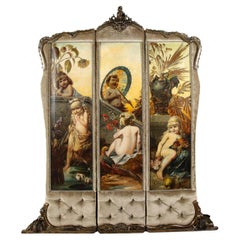
Palatial and Opulent Belle Epoque Giltwood Oil on Canvas Three-Panel Screen
Located in Queens, NY
A Palatial and Opulent Belle epoque giltwood oil on canvas three-panel screen, circa 1890. "Allegory of Youth" Comprising of three exquisite hand-painted triptych oil on canvas panels of cherubs and putti amongst a peacock, all by Ferdinand Wagner II (German, 1847-1927). Each panel depicting different playful and joyous scenes of putti and cherubs. All three-in-one panels within individually carved giltwood and upholstered frames. One panel signed at the lower left: Ferd.Wagner. A truly magnificent and one of a kind piece, perfect for any room in the home. Overall: 101" high 85" wide x 5" deep Very good condition. Ready to place. Ferdinand Wagner II (German, 1847-1927) was the son of Passau Ferdinand Wagner Senior, a teacher at a vocational art school who began training him professionally at a young age. After traveling to Italy in 1867-1868, he continued with his art studies at The Munich Academy of Arts led by Peter Von Cornelius and Julius Schnorr Von Carolsfeld. Wagner II was influenced by the Munich School of master painters and by his art teacher, Karl von Piloty, who had been teaching at the Munich Art Academy since 1856. Piloty’s approach to historical paintings was influenced by the French art academic Paul Delaroche and by the fine artworks by Rubens and the Venetians. After his return to Germany he was commissioned to decorate the former the Tenormayer Wine Tavern in Munich, subsequently he received numerous other commissions as a decorator. Ferdinand Wagner II wall paintings and ceiling frescos...
Category

19th Century Romantic Art

Materials

Oil

First Steps by Bernard J. Blommers (1845 – 1914), signed B/Blommers
Located in Knokke, BE
Bernard Blommers 1845 – The Hague – 1914 Dutch Painter 'First Steps' Signature: signed lower right 'B/Blommers' Medium: oil on canvas, ca. 1865 Dimensions: image size 56,5 x 76,5 c...
Category

19th Century Romantic Art

Materials

Canvas, Oil

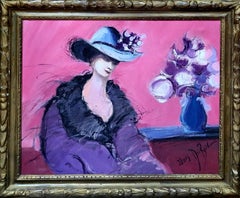
La Femme au Chapeau Bleu, Large French Fauvist Figurative Oil on Canvas.
By Jean-Louis Dubuc
Located in Cotignac, FR
Large scale colourful figurative portrait of a fashionable lady in a blue hat by French artist Jean-Louis Dubuc. The painting is signed bottom right and titled to the rear cross stre...
Category

Late 20th Century Romantic Art

Materials

Canvas, Oil, Acrylic

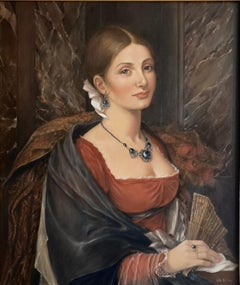
Lucia - Portrait Oil Painting Colors Brown White Red Green Black Pale
Located in Sofia, BG
"Lucia" is a painting by the South African - French artist Leith Ridley. A bit of fun and colour based on the face of portrait of a young woman in a black hat by Petrus Christus in ...
Category

2010s Romantic Art

Materials

Canvas, Oil

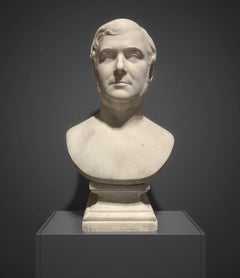
Busto in Marmo Firmato Ritratto Virile Scultura Francese
Located in Pistoia, IT
Francisque-Joseph Duret (Paris, 1804-1865), busto virile in marmo bianco. Francisque Joseph Duret (19 ottobre 1804 – 26 maggio 1865) è stato uno scultore francese, figlio e allievo ...
Category

1840s Romantic Art

Materials

Marble

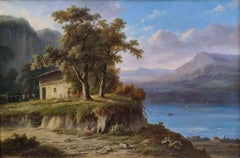
Romantic Lanscape Painting COENE Mountains Lake Belgian 19th
Located in PARIS, FR
Jean-Baptiste COENE Vilvoorde, 1805 - Brussels, circa 1880 Lively landscape by a mountain lake Oil on canvas 38 x 55 cm (53 x 70 cm with frame) Signed and dated lower left "J. Coene ...
Category

1870s Romantic Art

Materials

Oil

A View of Scarborough, England: A Framed 19th C. Engraving After J. M. W. Turner
By J.M.W. Turner
Located in Alamo, CA
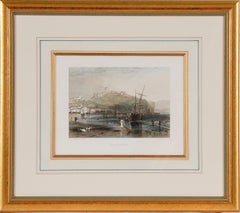
This beautiful 19th century framed engraving "Scarborough" by W. Chapman is based on an original painting by the renowned British artist J.M.W. Turner. It was published in London by ...
Category

Mid-19th Century Romantic Art

Materials

Engraving

Man on Persian Rug, Orientalist Bronze Sculpture by Franz Bergmann
Located in Long Island City, NY
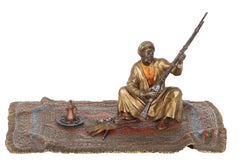
Franz Bergmann, Austrian (1861 -1936) - Man on Persian Rug, Year: circa 1900, Medium: Cold painted Bronze sculpture, stamp signed on bottom, Size: 4.5 x 10 x 7 in. (11.43 x 25.4 x...
Category

Early 1900s Romantic Art

Materials

Bronze

THOMASSIN Attributed Austrian landscapes romantic pair painting Brazil 19th
By Desiré Thomassin
Located in PARIS, FR
Désiré THOMASSIN (Attributed to) Vienna, 1858 – Munich, 1933 Oil on panel 32 x 50 cm (42 x 60 cm with frame) Inscription on the back “Thomassin / Braz...
Category

Mid-19th Century Romantic Art

Materials

Oil

Russian German Romantic Painting BREDOW Fairytale Landscape river 19th
Located in PARIS, FR
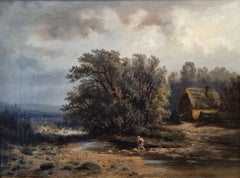
Albert BREDOW Garnsee, 1827 – Charlottenburg, 1899 Landscape with a young girl crossing a river near a cottage Oil on canvas Signed lower left "ABredow" 35 cm x 45 cm (48 x 60 cm wit...
Category

Mid-19th Century Romantic Art

Materials

Oil

Romantic art for sale on 1stDibs.

Find a wide variety of authentic Romantic art available for sale on 1stDibs. Works in this style were very popular during the 21st Century and Contemporary, but contemporary artists have continued to produce works inspired by this movement. If you’re looking to add art created in this style to introduce contrast in an otherwise neutral space in your home, the works available on 1stDibs include elements of blue, purple, orange, pink and other colors. Many Pop art paintings were created by popular artists on 1stDibs, including Hiro Yokose, Francisco Goya, Leo Primavesi, and Dipen Bose. Frequently made by artists working with Paint, and Oil Paint and other materials, all of these pieces for sale are unique and have attracted attention over the years. Not every interior allows for large Romantic art, so small editions measuring 3 inches across are also available. Prices for art made by famous or emerging artists can differ depending on medium, time period and other attributes. On 1stDibs, the price for these items starts at $119 and tops out at $1,300,000, while the average work sells for $2,213.