Romantic Art

ROMANTIC STYLE

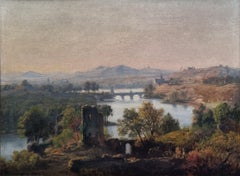
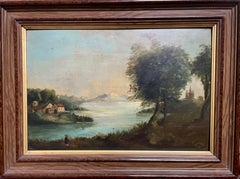
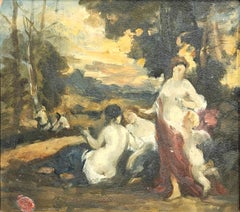
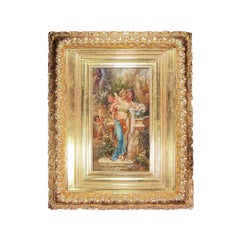
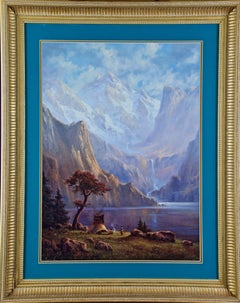
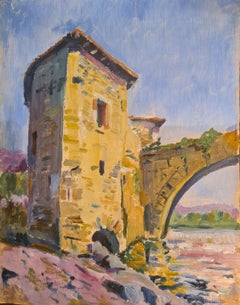
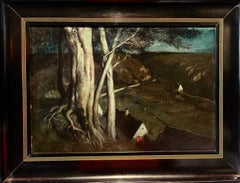
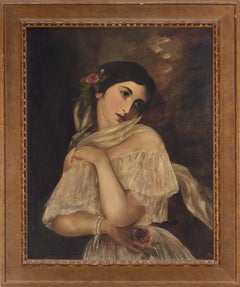
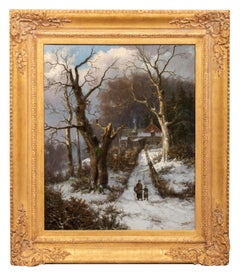
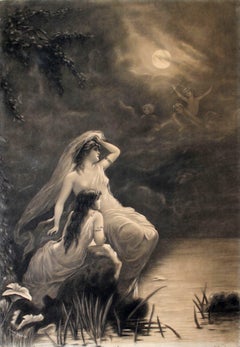
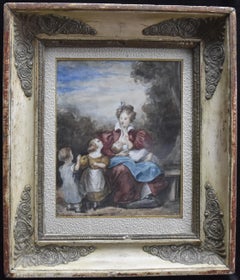
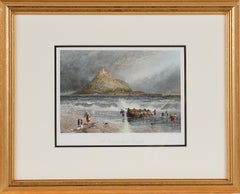
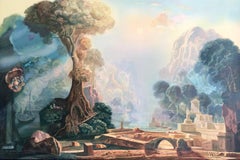
In emphasizing emotion and imagination, romantic art shifted away from the restraint of classicism and neoclassicism that had dominated art in Europe since the Renaissance. Romanticism achieved its greatest popularity in art, literature, music and philosophy between 1780 and 1830, although its expression of individual experiences ranging from awe to passion informed culture in the decades after.

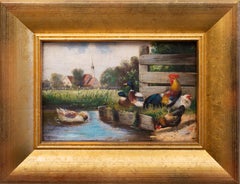
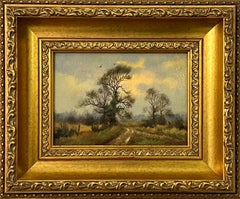
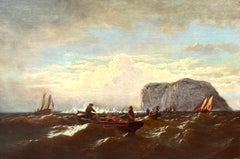
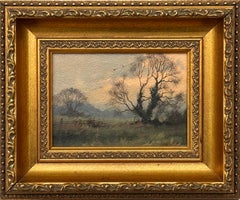
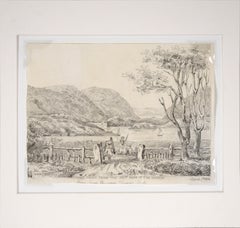
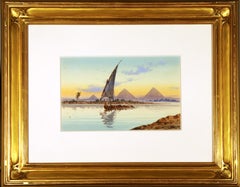
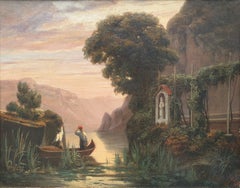
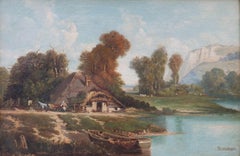
Landscape painting was especially popular during the romantic period, as were nature studies of wild animals and fantasies of exotic lands. Romanticism varied across Europe as it reacted to the rise of industrialization, a more personal relationship with faith that was distanced from the church and the rationalist thinking of the Enlightenment.

British painters such as John Constable and J.M.W. Turner responded dramatically to the light and atmosphere of the natural world, while William Blake conveyed humanity’s connection to the divine in his visionary art. In Germany, the late-18th-century Sturm und Drang, or Storm and Drive, movement, with its probing of the unconscious, inspired a sense of mystery in work by romantic artists such as Caspar David Friedrich and Philipp Otto Runge. In France, where the French Revolution had turned tradition upside down, Théodore Géricault and Eugène Delacroix used lush brushwork to paint monumental canvases with tumultuous scenes of nature and history.

The romantic movement and its subject matter were a significant influence on the Pre-Raphaelites, Symbolists and the American painters of the Hudson River School, as well as on other cultural movements in the 19th and 20th centuries that saw artists build on this perspective in which art was guided by emotion rather than reason.

Find a collection of romantic paintings, sculptures, prints and multiples and more art on 1stDibs.

to
250
426
192
162
92
102
Overall Width
to
Overall Height
to
25
421
282
246
24
10
44
8
15
6
8
5
18
34
24
114,109
65,199
54,667
27,040
14,920
9,322
6,482
5,769
4,186
3,053
2,599
2,318
2,251
718
511
375
35
604
366
174
161
153
103
92
84
74
70
52
49
42
41
37
34
32
29
28
28
618
449
275
254
162
32
11
11
10
9
456
122
519
438
Style: Romantic
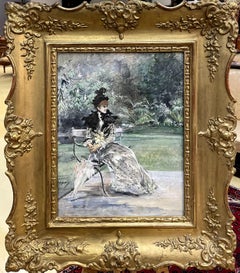
"Woman with an umbrella sitting on a bench"
Located in Edinburgh, GB
Unidentified Artist (1929) "Woman with an Umbrella Sitting on a Bench" This elegant 1929 oil painting on canvas presents a refined portrait of a fashionable woman seated on a park be...
Category

20th Century Romantic Art

Materials

Canvas, Oil

UNCONSCIOUS RIVALS- Angelo Granati - Italy Oil on canvas painting
Located in Napoli, IT
Unconscious Rivals- Angelo Granati Italia 2004 - This is his reinterpretation of a greatest old master painting by Lawrence Alma-Tadema. Oil on canvas cm.80x60. The painting is a true form of the romantic style of Alma-Tadema. It is an image of two women; one sitting, the other standing and apparently waiting for someone...
Category

Early 2000s Romantic Art

Materials

Canvas, Oil

Lilly Martin Spencer (American, 1822-1902) A Portrait of a Mother and Child
Located in Queens, NY
Lilly Martin Spencer (American, 1822-1902) A Portrait of a Mother and Child 19th Century. Oil on canvas, signed Lilly Martin Spencer was one of the most popular and American female genre painters in the mid-nineteenth century. She primarily painted domestic scenes, paintings of women and children...
Category

19th Century Romantic Art

Materials

Oil

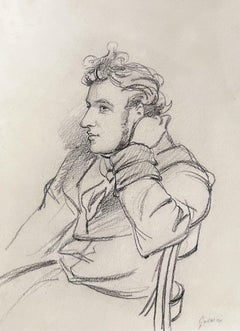
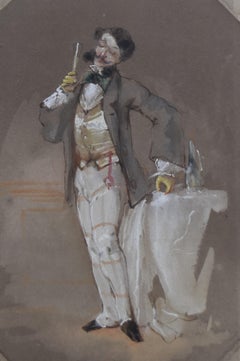
French School 19th Century, Portrait of a young man, drawing signed
Located in Paris, FR
French School 19 th Century Portrait of a young man Signed (signature not deciphered) on the lower right Pencil, black chalk and heightenings of white and red chalks on paper Oval vi...
Category

1880s Romantic Art

Materials

Chalk, Acrylic Polymer, Pencil

Alexandria, Egypt Lighthouse: A Hand-colored Aquatint Engraving by L. Mayer
Located in Alamo, CA
This is a hand-colored aquatint and engraving entitled "Part of the New City of Alexandria, with the Light House", published in London by R. Bowyer from 1802-1805. The print was crea...
Category

Early 19th Century Romantic Art

Materials

Engraving, Aquatint

Palm Trees in Mist, Los Angeles
Located in Los Angeles, CA
Archival pigment print Hand printed by Sarah Hadley on Canson Baryta Photo paper Hadley's photographs have been exhibited at the Milan Photo Fair (Italy)...
Category

2010s Romantic Art

Materials

Archival Ink, Archival Paper, Photographic Paper

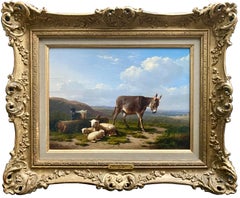
The Little Donkey by Eugène Joseph Verboeckhoven (1798 – 1881), dated 1856
Located in Knokke, BE
Eugène Joseph Verboeckhoven Waasten 1798 – 1881 Schaarbeek Belgian Painter 'The Little Donkey' Signature: signed lower left and dated 'Eugene Verboeckhoven 1856' Medium: oil on pan...
Category

Mid-19th Century Romantic Art

Materials

Canvas, Oil, Wood Panel

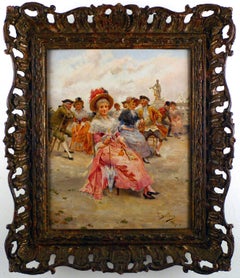
"Elegant Figures Seated in a Park" 19th Century Oil on Panel by M. Alonso Pérez
Located in Madrid, ES
MARIANO ALONSO PÉREZ Spanish, 1857 - 1930 ELEGANT FIGURES SEATED IN A PARK signed, located and dated "Alonso Pérez, Paris ´91" (lower right) oil o...
Category

Early 1900s Romantic Art

Materials

Oil, Wood Panel

Mary Adshead - Music Song - 1920s British tempera design panels
Located in London, GB
MARY ADSHEAD (1904-1995) Music & Song A pair, both signed and dated 1927 Tempera on canvas Each 51 by 40.5 cm., 20 by 16 in. (each frame size 65 by 52 cm., 25 ½ by 21 ½ in.) Mar...
Category

Early 20th Century Romantic Art

Materials

Tempera

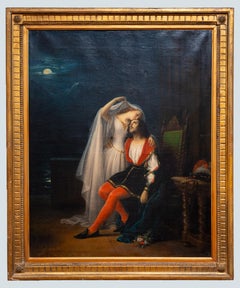
French Mid 19th Century Portrait of an Italian Brigand. Oil on Canvas.
Located in Cotignac, FR
Mid 19th Century oil on canvas portrait of an Italian brigand, unsigned, in painted wood and gilt frame. The painting is a fine and fascinating rendition with plenty of wonderful character and detail to the costume, accessories, landscape and seascape. Very atmospheric and imposing much like the character it portrays. There is a trade stamp to the back of the canvas for the Paris firm of Susse Freres. The canvas is on a fine quality stretcher with 'keys'. There is an artist's name or title written on the top of the rear stretcher (see photo). Bands of brigands who populated the hills of southern Italy were steady fodder for the Romantic imagination, and their exploits were reported both factually, fancifully and artistically The painting dates from a period when France, under its then leader Napoleon III, was involved in the conflicts in the Italian states and the unification and eventual creation of the nation of Italy. An earlier and similar portrait exists of the infamous brigand Mazzocchi by Achille-Etna Michallony . Léon Cogniet...
Category

1860s Romantic Art

Materials

Oil, Cotton Canvas

Granite Pylon, Karnac
Located in Fairlawn, OH
Granite Pylon, Karnac Original gold toned albumin photograph, c. 1862 Unsigned as is usual From: Upper Egypt and Ethiopia, c. 1862, Vol 1, (36 plates) Published by William Mackenzie,...
Category

1860s Romantic Art

Materials

Photographic Paper

BADER valley CHARMEY Switzerland landscape mountain Swiss painter 19th
Located in PARIS, FR
Augustin BADER (active between 1830 and 1860) Oil on canvas 38 x 46 cm (51.5 x 59.5 cm with the frame) Signed lower left "Bader" Old stamp on the verso "Par Augustin Bader / à Fribur...
Category

Mid-19th Century Romantic Art

Materials

Oil

WAPPERS Painting Belgian 19th romantic Oil on panel wood mandoline woman player
Located in PARIS, FR
Gustave WAPPERS (Attributed to) Anvers, 1803 - Paris, 1874 Oil on panel Trace of monogram lower right 42.5 x 31.5 cm (59.5 x 49.5 cm with the frame) XIXth century frame in carved woo...
Category

Mid-19th Century Romantic Art

Materials

Oil

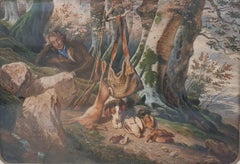
Watercolor French school mid 18th romantic Hunt dog hunter game forest
Located in PARIS, FR
A. GUILLAUME (Active in the 1830s) Watercolor on paper 32.5 x 47 cm (60 x 74.5 cm with frame) Signed and dated lower left (on the rock) “A. Guill. / 1838 » Beautiful 19th century fra...
Category

1830s Romantic Art

Materials

Watercolor

PORTRAIT OF REBECCA AT THE FOUNTAIN - In the Manner of Guffens - Oil on paint
Located in Napoli, IT
Portrait of rebecca at the fountain - I. Di Matteo Italia 1998 - Oil on canvas cm. 80x60 This magnificent painting by I. De Matteo is the rein...
Category

1990s Romantic Art

Materials

Canvas, Oil

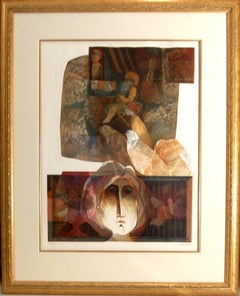
From the Barcelona suite
Located in San Francisco, CA
Artist: Alvar Title: From Barcelona Suite Year: 1979 Medium: Color lithograph with embossing Edition: Numberd 145/185 in pencil Paper: Arches Image siz...
Category

1970s Romantic Art

Materials

Lithograph

Mid Century Figurative -- Boys Playing Dice
By R. Hauslar
Located in Soquel, CA
Exceptional detail in this painting of boys playing dice by R. Hauslar (German, 20th Century). A Hausler interpretation of a work by the famous Bartolome ...
Category

1950s Romantic Art

Materials

Masonite, Oil

Lying tiger
Located in PARIS, FR
Oil on canvas 25 x 45,5 cm (34,7 x 55,2 cm with frame) = 9.8 × 17.9 in (13.7 × 21.7 in with frame) Signed lower left Stamp of sale on the back of the canvas In 1838, Eugène Delacro...
Category

19th Century Romantic Art

Materials

Canvas, Oil

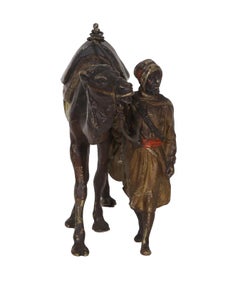
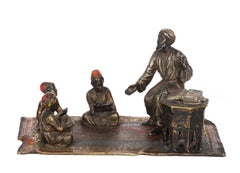
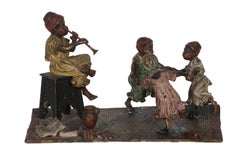
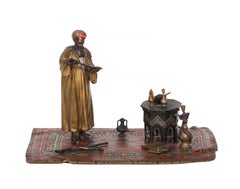
Arab Man with Three Monkeys, Orientalist Bronze Sculpture by Franz Bergmann
Located in Long Island City, NY
Franz Bergmann, Austrian (1861 -1936) - Arab Man with Three Monkeys, Year: circa 1900, Medium: Bronze sculpture, Austria inscribed on base, Size: 3.5 x 6.5 x 5 in. (8.89 x 16.51 x...
Category

Early 1900s Romantic Art

Materials

Bronze

French school 19th romantic Historical scene Duke GUISE DURANTI Oil Sketch
Located in PARIS, FR
19th century French school Oil on canvas 33 x 41 cm (53 x 45 cm with the frame) Original canvas with the stamp of the merchant "Vallé & Bourniche / Successeurs de Bellot" active in P...
Category

1830s Romantic Art

Materials

Oil

Still Life Bouquet with Calla Lilies and Amaryllis in Chinese Vase
Located in Soquel, CA
Elegant still life with calla lilies and amaryllis by an unknown artist. Completed in a classical style, two calla lilies and two amaryllis flowers sit in a vase with Chinese designs...
Category

Late 19th Century Romantic Art

Materials

Canvas, Oil

Cutting the Bread by Gerard Portielje (Antwerp 1856 – 1929 Remich, Luxembourg)
Located in Knokke, BE
Gerard Portielje Antwerp 1856 – 1929 Remich, Luxembourg Belgian Painter 'Cutting the Bread' Signature: signed lower left 'Gerard Portielje', artist’...
Category

Late 19th Century Romantic Art

Materials

Oil, Panel

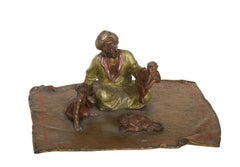
Boy on Persian Rug, Orientalist Bronze Sculpture by Franz Bergmann
Located in Long Island City, NY
Franz Bergmann, Austrian (1861 -1936) - Boy on Persian Rug, Year: circa 1900, Medium: Cold painted Bronze sculpture, stamp signed on bottom, Size: 4 x 7 x 7.5 in. (10.16 x 17.78 x...
Category

Early 1900s Romantic Art

Materials

Bronze

A Forest in Winter by Hendrik Barend Koekkoek (Amsterdam 1849 – 1909 London)
Located in Knokke, BE
Hendrik Barend Koekkoek Amsterdam 1849 – 1909 London Dutch Painter 'Figures Strolling through a Forest in Winter' Signature: signed lower right 'H B Koekkoek', c. 1882-1900 Medium: oil on canvas Dimensions: image size 76,5 x 64 cm, frame size 103 x 89,5 cm Biography: Hendrik Barend Koekkoek, often signing as Hendrik Barend (H.B.) Koekkoek, in the realm of 19th-century art, emerges as a captivating painter born in Amsterdam on November 23, 1849. A scion of the esteemed Koekkoek family, he gained renown for his landscapes and woodland scenes, following in the artistic footsteps of his father, marine painter Hermanus Koekkoek. Barend Hendrik Koekkoek’s life unfolds with a certain mystery, his artistic journey shaped by training from his father and, likely, his uncle Marinus Adrianus. In 1878, he tied the knot with Carolina Allardina Cornelia Pierson and ventured into the artistic scenes of Hilversum and Brussels, simultaneously opening an art dealership in Amsterdam. Around 1882, the call of London beckoned, echoing the path paved by his brother Hermanus Koekkoek the Younger. In England, he painted landscapes near Guildford, akin to his cousin Pieter Hendrik Koekkoek. The latter part of his life remains shrouded in obscurity. Barend Hendrik Koekkoek’s artistic style, steeped in the romantic tradition of the Koekkoek family, adorned canvases with landscapes, woodlands, and marine scenes. His London sojourn witnessed the creation of winter landscapes with towering trees, showcased in exhibitions across Dutch cities. He breathed his last in London before 1909. His artistic legacy lives on in institutions like the Paul Tétar van...
Category

Late 19th Century Romantic Art

Materials

Canvas, Oil

Sunset Desert Dance
Located in New York, NY
Otto Pilny was a Swiss Orientalist painter working at the turn of the 20th century. Specializing in exoticized oil paintings of the Middle East, his work often features desert scenes...
Category

Late 19th Century Romantic Art

Materials

Canvas, Oil

Disegno neoclassico mitologico inglese del XIX secolo
Located in Florence, IT
Disegno matita su carta, 45 x 68 cm; con cornice dorata 72 x 94 cm. La scena si svolge sulla costa, nel punto in cui il mare tempestoso lambisce la terraferma, che si presenta rocci...
Category

Early 1800s Romantic Art

Materials

Paper, Pencil

Ca. 1820 Portrait of a Woman with Kashmir shawl.
Located in Firenze, IT
Ca. 1820 Portrait of a Woman. Léon Cogniet (1794-1880, Paris), attributed. French school of 19th century. Tecnicque: oils on canvas. Dimensions: 70cm x 61cm 20th century wooden frame. Old attribution to Léon Cogniet (1794-1880, Paris) is inscribed on the wooden frame. Portrait of the restoration period, post Napoleonic wars. Stylistically the painting is found in the transition period from the late Empire period to the beginning of Romanticism. The new artistic trends can be seen in the increased naturalism, representation of the landscape/nature, in the contrasts, and in a greater emotionality of the person represented. Detailed but loose is the way to describe the winter dress...
Category

1820s Romantic Art

Materials

Canvas, Oil

Two Cats Dancing, Orientalist Bronze Sculpture by Franz Bergmann
Located in Long Island City, NY
Franz Bergmann, Austrian (1861 -1936) - Two Cats Dancing, Year: circa 1900, Medium: Cold painted Bronze sculpture, Size: 2.25 x 1.5 x 1.5 in. (5.72 x 3.81 x 3.81 cm)
Category

Early 1900s Romantic Art

Materials

Bronze

“Male Portrait” Isabelline Spain, Blas González García-Valladolid
Located in Valladolid, ES
Beautiful and timeless portrait .It represents a half-length male portrait, with the sitter seated in a chair, slightly in profile. He is a young man, belonging to a prominent politi...
Category

1870s Romantic Art

Materials

Canvas

Venus, NeoClassical Bronze Sculpture from Alva Studios
By Alva Studios
Located in Long Island City, NY
Artist: Alva Studios Title: Venus Year: 1928 Medium: Bronze Sculpture Size: 17 in. x 7 in. x 5 in. (43.18 cm x 17.78 cm x 12.7 cm)
Category

1920s Romantic Art

Materials

Bronze

Three Putti, Art Nouveau Bronze by Affortunato Gory
By Affortunato Gory
Located in Long Island City, NY
This Bronze sculpture, by the French Art Deco/Art Nouveau artist Affortunato Gory (d. 1925) , is a beautiful moment of three putti joyously dancing together. Their arms are joined a...
Category

Early 20th Century Romantic Art

Materials

Bronze

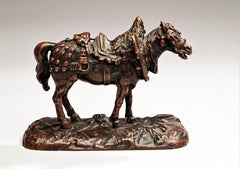
"Equos" Bronze Sculpture Lost Wax Method Florence Cesello 10" x 8"
Located in Houston, TX
"Equos" A small study inspired by Classical equestrian examples, the artist in this piece balances the potential energy within the form of the horse with an emotional calm. Noun...
Category

2010s Romantic Art

Materials

Bronze

Egyptian Buffalo Farmers 19th Century American Orientalist Framed Watercolor
By Edwin Lord Weeks
Located in Sutton Poyntz, Dorset
Edwin Lord Weeks. American ( b.1849 - d.1903 ). Egyptian Buffalo And Farmers, Egypt. Watercolor On Paper. Monogram Lower Right. Image size 5.1 inches x 8.3 inches ( 13cm x 21cm ). F...
Category

Mid-19th Century Romantic Art

Materials

Paper, Watercolor

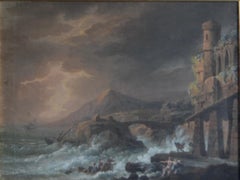
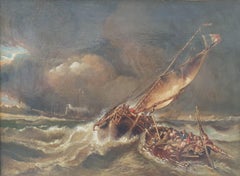
Antique 19th Century Marine Seascape Coastal Maritime English Channel Painting
Located in Portland, OR
A good antique marine oil painting by James Webb (1825-1895), circa 1860, ex-Sothebys. The painting depicts a stormy or squally sea, most likely the English channel, the rocky cliff...
Category

Mid-19th Century Romantic Art

Materials

Oil, Board

Palatial and Opulent Belle Epoque Giltwood Oil on Canvas Three-Panel Screen
Located in Queens, NY
A Palatial and Opulent Belle epoque giltwood oil on canvas three-panel screen, circa 1890. "Allegory of Youth" Comprising of three exquisite hand-painted triptych oil on canvas panels of cherubs and putti amongst a peacock, all by Ferdinand Wagner II (German, 1847-1927). Each panel depicting different playful and joyous scenes of putti and cherubs. All three-in-one panels within individually carved giltwood and upholstered frames. One panel signed at the lower left: Ferd.Wagner. A truly magnificent and one of a kind piece, perfect for any room in the home. Overall: 101" high 85" wide x 5" deep Very good condition. Ready to place. Ferdinand Wagner II (German, 1847-1927) was the son of Passau Ferdinand Wagner Senior, a teacher at a vocational art school who began training him professionally at a young age. After traveling to Italy in 1867-1868, he continued with his art studies at The Munich Academy of Arts led by Peter Von Cornelius and Julius Schnorr Von Carolsfeld. Wagner II was influenced by the Munich School of master painters and by his art teacher, Karl von Piloty, who had been teaching at the Munich Art Academy since 1856. Piloty’s approach to historical paintings was influenced by the French art academic Paul Delaroche and by the fine artworks by Rubens and the Venetians. After his return to Germany he was commissioned to decorate the former the Tenormayer Wine Tavern in Munich, subsequently he received numerous other commissions as a decorator. Ferdinand Wagner II wall paintings and ceiling frescos...
Category

19th Century Romantic Art

Materials

Oil

Residue Of Yesterday, Daniel Ludwig, Nude Painting, Original Oil Painting
Located in Deddington, GB
Daniel Ludwig. Residue of Yesterday- this work of art is an original oil painting on linen. Size: H:76 cm x W:61 cm Daniel Ludwig is an American figurative artist who lives and wor...
Category

21st Century and Contemporary Romantic Art

Materials

Linen, Oil

Hand coloured photograph of semi nude human female sculpture, Oak Frame
Located in London, GB
Katie Eleanor, "Cleansing a Shrike (Blackbird’s Birdbath)", 2018 Handcoloured portrait of a bird-like spirit, immobilised in marble, cleansing in a sprin...
Category

2010s Romantic Art

Materials

Glass, Oak, Paint, Watercolor, Photographic Paper, Archival Pigment

Portrait of a Young Woman (1911)
Located in Stockholm, SE
Carl Magnus Lindqvist (1884-1977) Sweden Portrait of a Young Woman (1911) oil on canvas mounted on masonite signed and dated unframed 43 x 35 cm (16.9 x 13.8 in) framed 49.5 x 41 c...
Category

1910s Romantic Art

Materials

Canvas, Masonite, Oil

French Romantic school 19th Century The artist s inspiration Oil on canvas
Located in Paris, FR
French Romantic school of the 19th Century The artist's inspiration Oil on canvas transferred on wood It is in good condition, but the material has irregularities due to the canvas...
Category

1850s Romantic Art

Materials

Oil

19th century color lithograph landscape figures horseback house scene trees sky
Located in Milwaukee, WI
The present print is one of several examples produced for Nathaniel Currier by his longtime collaborator Frances F. "Fanny" Palmer. Harry T. Peters wrote of her: "There is no more interesting and appealing character among the group of artists who worked for Currier & Ives than Fanny Palmer. In an age when women, well-bred women in particular, did not generally work for a living Fanny Palmer for years did exacting, full-time work in order to support a large and dependent family ... Her work ... had great charm, homeliness, and a conscientious attention to detail." One of a series of four prints showing American country life in different seasons, the image presents the viewer with a picturesque view of a successful American farm. In the foreground, a gentleman rides a horse with a young boy before a respectable Italianate country house. Two women and a young girl pick flowers in the garden and several farm workers attend to their duties. Beyond are other homes and a city on the coast. 16.63 x 23.75 inches, artwork 28.13 x 33.38 inches, frame Entitled bottom center "American Country Life - May Morning" Signed in the stone, lower left "F.F. Palmer, Del." Signed in the stone, lower right "Lith. by N. Currier" Copyrighted lower center "Entered according to Act of Congress in the year 1855 by N. Currier in the Clerk's office of the Southern District of N.Y." Inscribed bottom center "New York, Published by N. Currier 152 Nassau Street" Framed to conservation standards using silk-lined 100 percent rag matting and Museum Glass with a gold gilded liner, all housed in a stained wood moulding. Nathaniel Currier was a tall introspective man with a melancholy nature. He could captivate people with his piercing stare or charm them with his sparkling blue eyes. Nathaniel was born in Roxbury, Massachusetts on March 27th, 1813, the second of four children. His parents, Nathaniel and Hannah Currier, were distant cousins who lived a humble yet spartan life. When Nathaniel was eight years old, tragedy struck. Nathaniel’s father unexpectedly passed away leaving Nathaniel and his eleven-year-old brother Lorenzo to provide for the family. In addition to their mother, Nathaniel and Lorenzo had to care for six-year-old sister Elizabeth and two-year-old brother Charles. Nathaniel worked a series of odd jobs to support the family, and at fifteen, he started what would become a life-long career when he apprenticed in the Boston lithography shop of William and John Pendleton. A Bavarian gentleman named Alois Senefelder invented lithography just 30 years prior to young Nat Currier’s apprenticeship. While under the employ of the brothers Pendleton, Nat was taught the art of lithography by the firm’s chief printer, a French national named Dubois, who brought the lithography trade to America. Lithography involves grinding a piece of limestone flat and smooth then drawing in mirror image on the stone with a special grease pencil. After the image is completed, the stone is etched with a solution of aqua fortis leaving the greased areas in slight relief. Water is then used to wet the stone and greased-ink is rolled onto the raised areas. Since grease and water do not mix, the greased-ink is repelled by the moisture on the stone and clings to the original grease pencil lines. The stone is then placed in a press and used as a printing block to impart black on white images to paper. In 1833, now twenty-years old and an accomplished lithographer, Nat Currier left Boston and moved to Philadelphia to do contract work for M.E.D. Brown, a noted engraver and printer. With the promise of good money, Currier hired on to help Brown prepare lithographic stones of scientific images for the American Journal of Sciences and Arts. When Nat completed the contract work in 1834, he traveled to New York City to work once again for his mentor John Pendleton, who was now operating his own shop located at 137 Broadway. Soon after the reunion, Pendleton expressed an interest in returning to Boston and offered to sell his print shop to Currier. Young Nat did not have the financial resources to buy the shop, but being the resourceful type he found another local printer by the name of Stodart. Together they bought Pendleton’s business. The firm ‘Currier & Stodart’ specialized in "job" printing. They produced many different types of printed items, most notably music manuscripts for local publishers. By 1835, Stodart was frustrated that the business was not making enough money and he ended the partnership, taking his investment with him. With little more than some lithographic stones, and a talent for his trade, twenty-two year old Nat Currier set up shop in a temporary office at 1 Wall Street in New York City. He named his new enterprise ‘N. Currier, Lithographer’ Nathaniel continued as a job printer and duplicated everything from music sheets to architectural plans. He experimented with portraits, disaster scenes and memorial prints, and any thing that he could sell to the public from tables in front of his shop. During 1835 he produced a disaster print Ruins of the Planter's Hotel, New Orleans, which fell at two O’clock on the Morning of the 15th of May 1835, burying 50 persons, 40 of whom Escaped with their Lives. The public had a thirst for newsworthy events, and newspapers of the day did not include pictures. By producing this print, Nat gave the public a new way to “see” the news. The print sold reasonably well, an important fact that was not lost on Currier. Nat met and married Eliza Farnsworth in 1840. He also produced a print that same year titled Awful Conflagration of the Steamboat Lexington in Long Island Sound on Monday Evening, January 18, 1840, by which melancholy occurrence over One Hundred Persons Perished. This print sold out very quickly, and Currier was approached by an enterprising publication who contracted him to print a single sheet addition of their paper, the New York Sun. This single page paper is presumed to be the first illustrated newspaper ever published. The success of the Lexington print launched his career nationally and put him in a position to finally lift his family up. In 1841, Nat and Eliza had their first child, a son they named Edward West Currier. That same year Nat hired his twenty-one year old brother Charles and taught him the lithography trade, he also hired his artistically inclined brother Lorenzo to travel out west and make sketches of the new frontier as material for future prints. Charles worked for the firm on and off over the years, and invented a new type of lithographic crayon which he patented and named the Crayola. Lorenzo continued selling sketches to Nat for the next few years. In 1843, Nat and Eliza had a daughter, Eliza West Currier, but tragedy struck in early 1847 when their young daughter died from a prolonged illness. Nat and Eliza were grief stricken, and Eliza, driven by despair, gave up on life and passed away just four months after her daughter’s death. The subject of Nat Currier’s artwork changed following the death of his wife and daughter, and he produced many memorial prints and sentimental prints during the late 1840s. The memorial prints generally depicted grief stricken families posed by gravestones (the stones were left blank so the purchasers could fill in the names of the dearly departed). The sentimental prints usually depicted idealized portraits of women and children, titled with popular Christian names of the day. Late in 1847, Nat Currier married Lura Ormsbee, a friend of the family. Lura was a self-sufficient woman, and she immediately set out to help Nat raise six-year-old Edward and get their house in order. In 1849, Lura delivered a son, Walter Black Currier, but fate dealt them a blow when young Walter died one year later. While Nat and Lura were grieving the loss of their new son, word came from San Francisco that Nat’s brother Lorenzo had also passed away from a brief illness. Nat sank deeper into his natural quiet melancholy. Friends stopped by to console the couple, and Lura began to set an extra place at their table for these unexpected guests. She continued this tradition throughout their lives. In 1852, Charles introduced a friend, James Merritt Ives, to Nat and suggested he hire him as a bookkeeper. Jim Ives was a native New Yorker born in 1824 and raised on the grounds of Bellevue Hospital where his father was employed as superintendent. Jim was a self-trained artist and professional bookkeeper. He was also a plump and jovial man, presenting the exact opposite image of his new boss. Jim Ives met Charles Currier through Caroline Clark, the object of Jim’s affection. Caroline’s sister Elizabeth was married to Charles, and Caroline was a close friend of the Currier family. Jim eventually proposed marriage to Caroline and solicited an introduction to Nat Currier, through Charles, in hopes of securing a more stable income to support his future wife. Ives quickly set out to improve and modernize his new employer’s bookkeeping methods. He reorganized the firm’s sizable inventory, and used his artistic skills to streamline the firm’s production methods. By 1857, Nathaniel had become so dependent on Jims’ skills and initiative that he offered him a full partnership in the firm and appointed him general manager. The two men chose the name ‘Currier & Ives’ for the new partnership, and became close friends. Currier & Ives produced their prints in a building at 33 Spruce Street where they occupied the third, fourth and fifth floors. The third floor was devoted to the hand operated printing presses that were built by Nat's cousin, Cyrus Currier, at his shop Cyrus Currier & Sons in Newark, NJ. The fourth floor found the artists, lithographers and the stone grinders at work. The fifth floor housed the coloring department, and was one of the earliest production lines in the country. The colorists were generally immigrant girls, mostly German, who came to America with some formal artistic training. Each colorist was responsible for adding a single color to a print. As a colorist finished applying their color, the print was passed down the line to the next colorist to add their color. The colorists worked from a master print displayed above their table, which showed where the proper colors were to be placed. At the end of the table was a touch up artist who checked the prints for quality, touching-in areas that may have been missed as it passed down the line. During the Civil War, demand for prints became so great that coloring stencils were developed to speed up production. Although most Currier & Ives prints were colored in house, some were sent out to contract artists. The rate Currier & Ives paid these artists for coloring work was one dollar per one hundred small folios (a penny a print) and one dollar per one dozen large folios. Currier & Ives also offered uncolored prints to dealers, with instructions (included on the price list) on how to 'prepare the prints for coloring.' In addition, schools could order uncolored prints from the firm’s catalogue to use in their painting classes. Nathaniel Currier and James Merritt Ives attracted a wide circle of friends during their years in business. Some of their more famous acquaintances included Horace Greeley, Phineas T. Barnum, and the outspoken abolitionists Rev. Henry Ward, and John Greenleaf Whittier (the latter being a cousin of Mr. Currier). Nat Currier and Jim Ives described their business as "Publishers of Cheap and Popular Pictures" and produced many categories of prints. These included Disaster Scenes, Sentimental Images, Sports, Humor, Hunting Scenes, Politics, Religion, City and Rural Scenes, Trains, Ships, Fire Fighters, Famous Race Horses, Historical Portraits, and just about any other topic that satisfied the general public's taste. In all, the firm produced in excess of 7500 different titles, totaling over one million prints produced from 1835 to 1907. Nat Currier retired in 1880, and signed over his share of the firm to his son Edward. Nat died eight years later at his summer home 'Lion’s Gate' in Amesbury, Massachusetts. Jim Ives remained active in the firm until his death in 1895, when his share of the firm passed to his eldest son, Chauncey. In 1902, faced will failing health from the ravages of Tuberculosis, Edward Currier sold his share of the firm to Chauncey Ives...
Category

Mid-19th Century Romantic Art

Materials

Watercolor, Lithograph

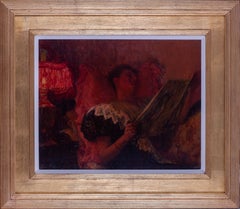
19th Century, British, lady reading by lamplight in red tones by La Thangue
By Henry Herbert La Thangue
Located in Petworth, West Sussex
A beautiful composition by the great British artist Henry Herbert La Thangue of a girl reading in warm red tones by lamplight. The details of the work are as follows: HENRY HERBER...
Category

19th Century Romantic Art

Materials

Canvas, Oil

Old Barn Scene of a Farm in the English Countryside by British Landscape Artist
Located in Preston, GB
Old Barn Scene of a Farm in the English Countryside by 20th Century British Landscape Artist, James Wright. Signed, vintage original, oil on heavy grain linen, reframed in a high qu...
Category

1980s Romantic Art

Materials

Canvas, Oil

Winter Tree with Crows at Dusk
By Georg Emil Libert
Located in Stockholm, SE
This Romantic winter landscape presents a scene of profound stillness and introspection. Gnarled, leafless trees dominate the foreground, their twisted silhouettes starkly etched aga...
Category

Late 19th Century Romantic Art

Materials

Canvas, Oil

"Mother and Child in a Countryside Setting"
Located in Edinburgh, GB
Adolf Luben (1837–1905) "Mother and Child in a Countryside Setting" This charming 19th-century oil painting on canvas by Adolf Luben captures a heartwarming rural scene, depicting a...
Category

19th Century Romantic Art

Materials

Canvas, Oil

‘Cats Playing around a Mirror’ by Joseph Bail (1862 – 1921), French Painter
Located in Knokke, BE
Joseph Bail Limonest 1862 – 1921 Paris French Painter ‘Cats Playing around a Mirror’ Signature: signed lower right ‘Bail Joseph’
 Medium: oil on canvas
 Dimensions: image size 45,5...
Category

19th Century Romantic Art

Materials

Canvas, Oil

"Tender Moments", Píno Daeni, 30x24, Original Oil/Canvas, Romantic Impressionism
Located in Dallas, TX
"Tender Moments" is an original oil painting by the renowned artist Pino Daeni. Measuring 30x24 inches, this piece embodies the essence of Romantic Impressionism, inviting viewers to...
Category

Early 2000s Romantic Art

Materials

Canvas, Oil

Romantic Italian painter - 19th century figure painting - Lady and Musketeer
Located in Varmo, IT
Italian Romantic painter (19th century) - Lady and Musketeer. 40.5 x 40.5 cm without frame, 42 x 42 cm with frame. Oil on canvas, in wooden frame (not signed). Condition report: L...
Category

Mid-19th Century Romantic Art

Materials

Canvas, Oil

Susan, Lady Belasyse /// Memoirs of Count Grammont Royal Portrait Engraving Art
Located in Saint Augustine, FL
Artist: Anthony Hamilton (British-French, 1645-1719) Title: "Susan, Lady Belasyse" (Plate 45) Portfolio: Memoirs of Grammont Year: 1808 (First edition) Medium: Original Stipple Engra...
Category

Early 1800s Romantic Art

Materials

Engraving, Intaglio

Woodlands, Romantic Oil on Canvas Painting by Josef Kugler
Located in Long Island City, NY
Josef Kugler, Austrian (1913 - 2011) - Woodlands, Year: circa 1968, Medium: Oil on Canvas, signed lower right, Size: 24.25 x 36 in. (61.6 x 91.44 cm), ...
Category

1960s Romantic Art

Materials

Oil

"Miniature"
Located in Edinburgh, GB
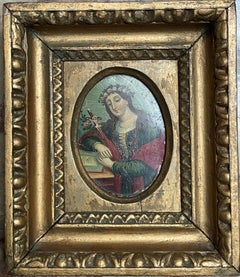
Antique Oil Painting on Metal – 19th Century Miniature Artist: Unidentified Medium: Oil on Metal Dimensions: Framed: 19 x 17 cm Artwork: 10 x 6 cm Style: Classical / Romanticism / M...
Category

19th Century Romantic Art

Materials

Metal

"Winter Wonderland"
Located in Edinburgh, GB
Unidentified Artist (19th Century) "Winter Wonderland" (1885) This charming 19th-century oil painting captures a winter landscape, depicting three figures trudging through the snow, engaged in animated conversation. The scene is set against a serene rural backdrop, where bare trees and a distant village silhouette convey the stark beauty of winter. The soft glow of the sky, transitioning from warm hues to cool whites, enhances the tranquil yet brisk atmosphere of a cold winter’s day. Plot & Interpretation The three travelers appear to be peasants or laborers, possibly returning home or embarking on a journey. Their layered winter clothing, fur hats, and backpacks suggest they are seasoned wanderers or workers, braving the elements. The gesturing figure in the middle seems to be engaged in storytelling or giving directions, adding a sense of movement and interaction. The snow-covered ground and delicate shadows create depth, emphasizing the hardship and resilience of rural life in the 19th century. Materials & Condition Medium: Oil on canvas Framed Dimensions: 47 x 46 cm Canvas Dimensions: 24 x 34 cm Frame: Ornate giltwood frame, enhancing the painting’s classical aesthetic Condition: Well-preserved with minor age-related patina, in line with its 1885 dating Historical Context & Artistic Style Likely influenced by Northern European realism, particularly Russian, German, or Scandinavian schools that depicted harsh winters and rural peasant life. Comparable to the works of Adolf von Meckel, Vasily Perov, or Carl...
Category

19th Century Romantic Art

Materials

Canvas, Oil

19th Century French School, Studies of horses and small scenes, original drawing
Located in Paris, FR
19th Century French School, Studies of horses and small scenes, pencil on paper 14.5 x 21 cm Framed : 25.5 x 32.7 cm This study sheet, which brings together studies of horses and...
Category

1850s Romantic Art

Materials

Pencil

Young Lady With Coiffure - Ellsworth Woodward Antique Graphite Drawing
Located in New Orleans, LA
Many of you clicking on this drawing are probably doing so because you know of Ellsworth Woodward, who with his brother William Woodward around the turn of the 20th century sparked an arts renaissance in the South, the arts and culture in general having been mostly moribund since the dispiriting defeat experienced in the Civil War. I won't bog you down with lots of detail here since all you have to do is Google his name to bring up a wealth of information about him. He is most famous for his leadership of the arts program at Newcomb College in New Orleans, and its famous Newcomb Pottery...
Category

1890s Romantic Art

Materials

Graphite

Portrait of a Young Girl – Original Oil on Canvas by Guy Seradour
By Guy Seradour
Located in Stockholm, SE
In this exquisite original oil on canvas, French artist Guy Seradour portrays a young girl with a masterful and sympathetic eye. The subject’s youthful innocence and quiet grace are ...
Category

Mid-20th Century Romantic Art

Materials

Canvas, Oil

Orientale
Located in New York, NY
Signed, lower right: Fantin Provenance: Gustave Tempelaere (1840–1904), Paris; possibly by descent to his son: Julien Tempelaere (1876–1961) and with F. & J. Tempelaere, Paris, prob...
Category

1890s Romantic Art

Materials

Canvas, Paper, Oil

Figures in a Landscape, Oil Painting 1799 by Adolf Harper
By Adolf Friedrich Harper
Located in Long Island City, NY
An oil painting by Adolf Friedrich Harper from 1799. A rare antique painting from the romanticism era. Framed in ornate gold wood frame, signed in lower left corner. Artist: Adol...
Category

18th Century Romantic Art

Materials

Canvas, Oil

Portrait of a Lady (by leader of "Southern Art Renaissance") - 20th Century
Located in New Orleans, LA
Many of you clicking on this watercolor are probably doing so because you know of Ellsworth Woodward, who with his brother William Woodward around the turn of the 20th century sparke...
Category

Early 1900s Romantic Art

Materials

Watercolor

Prelude de Lohengrin (2e planche) (The Appearance of the Holy Grail)
Located in Fairlawn, OH
Prelude de Lohengrin (2e planche) (The appearance of the Holy Grail) Lithograph, 1898 Signed and dated in the stone lower left (see photo) Printed on chine collee paper Condition...
Category

1890s Romantic Art

Materials

Lithograph

Doorway in the Temple of Kalabshe, Nubia
Located in Fairlawn, OH
Doorway in the Temple of Kalabshe, Nubia Original gold toned albumin photograph, c. 1862 Unsigned as is usual From: Upper Egypt and Ethiopia, c. 1862, Vol 1, (36 plates) Published by...
Category

1860s Romantic Art

Materials

Photographic Paper

Little Devils Bridge over the Russ, above Alt Dorft Swiss
Located in Fairlawn, OH
Little Devils Bridge over the Russ, above Alt Dorft Swiss From: Liber Studiorum Etching and mezzotint, 1809 Signed in the plate by JMW Turner and Charles Turner who applied the mezz...
Category

Early 1800s Romantic Art

Materials

Mezzotint

Romantic art for sale on 1stDibs.

Find a wide variety of authentic Romantic art available for sale on 1stDibs. Works in this style were very popular during the 21st Century and Contemporary, but contemporary artists have continued to produce works inspired by this movement. If you’re looking to add art created in this style to introduce contrast in an otherwise neutral space in your home, the works available on 1stDibs include elements of blue, purple, orange, pink and other colors. Many Pop art paintings were created by popular artists on 1stDibs, including Hiro Yokose, Francisco Goya, Leo Primavesi, and Dipen Bose. Frequently made by artists working with Paint, and Oil Paint and other materials, all of these pieces for sale are unique and have attracted attention over the years. Not every interior allows for large Romantic art, so small editions measuring 3 inches across are also available. Prices for art made by famous or emerging artists can differ depending on medium, time period and other attributes. On 1stDibs, the price for these items starts at $119 and tops out at $1,300,000, while the average work sells for $2,213.

Recently Viewed

View All