Ifpda International Fine Print Dealers Association

International Fine Print Dealers Association (IFPDA)

Launched in 1987, the International Fine Print Dealers Association has continually set the bar for quality and ethics while promoting prints as original works of art to generations of collectors, curators and art lovers. With over 160 members in 13 countries, the IFPDA is a worldwide community of leading dealers and editions publishers who represent the full spectrum of printmaking. Each year, the IFPDA hosts the IFPDA Print Fair in New York, the only major fair dedicated to fine-art prints.

to
432
4,082
698
3,326
1,304
1,088
851
850
459
411
403
396
390
323
299
260
244
239
183
179
177
167
129
121
92
85
60
58
47
39
32
28
25
24
22
20
16
15
11
11
9
8
8
7
7
6
6
6
6
5
4
4
4
3
2
2
2
2
2
2
1
1
99
84
58
57
53
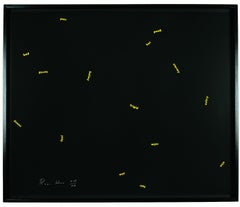
From: You Are The Weather
By Roni Horn
Located in New York, NY
Two-color silkscreen on Arches, 20 x 24” (50,7 x 60,4 cm), in wooden frame, 20 3/4 x 24 3/4” (54,4 x 64,5 cm), printed by Atelier für Siebdruck, Lorenz Boegli, Zurich, Ed. 60/XX, sig...
Category

1990s Ifpda International Fine Print Dealers Association

Materials

Screen

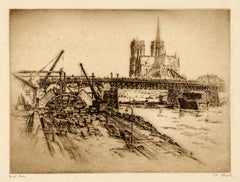
L Abside de Notre Dame — Vintage 1920s Paris, Realism
By Anton Schutz
Located in Myrtle Beach, SC
Anton Schutz, 'L' Abside de Notre Dame' (The Apse of Notre Dame), etching, 1st state, c. 1927. Signed, titled, and annotated 'First State', in pencil. A supe...
Category

1920s Realist Ifpda International Fine Print Dealers Association

Materials

Etching

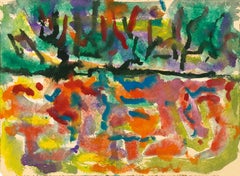
Woodland Reflection — Mid-Century Modern
Located in Myrtle Beach, SC
Irving Lehman, Untitled (Woodland Reflection), watercolor, c. 1955. Unsigned, with the artist's estate stamp verso: 'Original Artwork By: IRVING G. LEHMAN Russian/American 1900-1982'...
Category

Mid-20th Century American Modern Ifpda International Fine Print Dealers Association

Materials

Watercolor

Standing Male Nude (recto) Study of the Head of the Standing Male Nude (verso)
By William Merritt Chase
Located in Fairlawn, OH
Standing Male Nude (recto) Study of the Head of the Standing Male Nude (verso) Unsigned Provenance: Estate of the artist Helen Chase Storm (the arti...
Category

1870s American Impressionist Ifpda International Fine Print Dealers Association

Materials

Graphite

Salient in February — Mid 20th-Century Surrealism
By Edward August Landon
Located in Myrtle Beach, SC
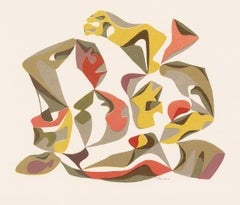
Edward Landon 'Salient in February', color serigraph, 1945, edition 40, Ryan 166. Signed in pencil. Titled, dated, and annotated 'ED. 40' in pencil. A fine impression, with fresh col...
Category

Mid-20th Century Surrealist Ifpda International Fine Print Dealers Association

Materials

Screen

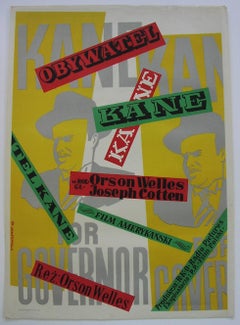
Henryk. Citizen Kane
By Henryk Tomaszewski
Located in New York, NY
Tomaszewski, Henryk. Citizen Kane. 1952, 2nd edition Offset. Film poster. One of the finest poster and graphic artists, an illustrator and teacher, pione...
Category

1950s Modern Ifpda International Fine Print Dealers Association

Materials

Offset

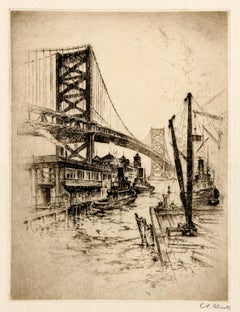
Delaware River Bridge — Mid-Atlantic Regionalism
By Anton Schutz
Located in Myrtle Beach, SC
Anton Schutz, 'Delaware Bridge' (Delaware, New Jersey), etching, c. 1927. Signed in pencil. A superb, richly-inked impression, with skillfully wiped plate tone, on BFK Rives, cream wove paper, the full sheet with margins (1 1/2 to 2 1/8 inches), in excellent condition. Archivally matted to museum standards, unframed. Image size 11 7/8 x 8 7/8 inches (302 x 225 mm); sheet size 15 7/8 x 12 1/4 inches (403 x 311 mm). ABOUT THIS IMAGE The Benjamin Franklin Bridge, originally named the Delaware River...
Category

1920s Realist Ifpda International Fine Print Dealers Association

Materials

Etching

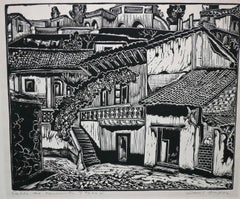
CALLE EX CONVENTO, TASCO.
Located in Portland, ME
Pappe, Carl. CALLE EX CONVENTO, TASCO. Woodcut, c.1940s-60s. Edition unstated. This print is one of a series of 16 images, all of scenes in Taxco, distinguished by the strength of the carving and the richness of the blacks. 12 x 14 1/4 inches (image), 13 1/2 x 15 3/4 (sheet). Titled and signed in pencil. In excellent condition. Carl Pappe...
Category

1940s Ifpda International Fine Print Dealers Association

Materials

Woodcut

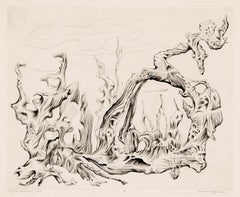
European Landscape —Mid-century American Surrealism
By Lawrence Kupferman
Located in Myrtle Beach, SC
Lawrence Kupferman, 'European Landscape', drypoint, edition 50, 1942. Signed, dated, titled, and numbered '7/50' in pencil. A superb, finely nuanced impression, on cream wove paper; the full sheet with margins (1 to 1 3/4 inches); in excellent condition. Image size 10 7/8 x 13 3/8 inches; sheet size 13 1/8 x 16 1/2 inches. Archivally matted to museum standards, unframed. An impression of this work is included in the permanent collection of the Syracuse University Art Museum. ABOUT THE ARTIST Lawrence Kupferman (1909 - 1982) was born in the Dorchester neighborhood of Boston and grew up in a working-class family. He attended the Boston Latin School and participated in the high school art program at the Museum of Fine Arts, Boston. In the late 1920s, he studied drawing under Philip Leslie Hale at the Museum School—an experience he called 'stultifying and repressive'. In 1932 he transferred to the Massachusetts College of Art, where he first met his wife, the artist Ruth Cobb. He returned briefly to the Museum School in 1946 to study with the influential expressionist German-American painter Karl Zerbe. Kupferman held various jobs while pursuing his artistic career, including two years as a security guard at the Museum of Fine Arts, Boston. During the 1930s he worked as a drypoint etcher for the Federal Art Project, creating architectural drawings in a formally realistic style—these works are held in the collections of the Fogg Museum and the Smithsonian American Art Museum. In the 1940s he began incorporating more expressionistic forms into his paintings as he became progressively more concerned with abstraction. In 1946 he began spending summers in Provincetown, Massachusetts, where he met and was influenced by Mark Rothko, Hans Hofmann, Jackson Pollock, and other abstract painters. At about the same time he began exhibiting his work at the Boris Mirski Gallery in Boston. In 1948, Kupferman was at the center of a controversy involving hundreds of Boston-area artists. In February of that year, the Boston Institute of Modern Art issued a manifesto titled 'Modern Art and the American Public' decrying 'the excesses of modern art,' and announced that it was changing its name to the Institute of Contemporary Art (ICA). The poorly conceived statement, intended to distinguish Boston's art scene from that of New York, was widely perceived as an attack on modernism. In protest, Boston artists such as Karl Zerbe, Jack Levine, and David Aronson formed the 'Modern Artists Group' and organized a mass meeting. On March 21, 300 artists, students, and other supporters met at the Old South Meeting House and demanded that the ICA retract its statement. Kupferman chaired the meeting and read this statement to the press: “The recent manifesto of the Institute is a fatuous declaration which misinforms and misleads the public concerning the integrity and intention of the modern artist. By arrogating to itself the privilege of telling the artists what art should be, the Institute runs counter to the original purposes of this organization whose function was to encourage and to assimilate contemporary innovation.” The other speakers were Karl Knaths...
Category

1940s Surrealist Ifpda International Fine Print Dealers Association

Materials

Drypoint

Untitled (Still Life)
Located in Fairlawn, OH
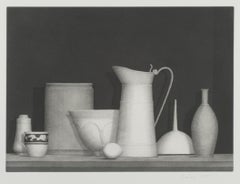
Untitled (Still Life) Etching, aquatint and soft ground, 2001 Signed in pencil (see photo) Edition: 260 Published by the Print Club of Cleveland, Publication 80, 2002 Printed by Felix Harlan at Harlan and Weaver, New York William Bailey, Modernist Figurative Painter, Dies at 89 He swathed his nudes and still lifes of eggs, vases, bottles and bowls in a breathless, deceptively serene atmosphere heavy with mystery. The painter William Bailey in 2009. He was never given a career survey in a major museum, but his influence, particulary on students at Yale, was deep.Credit...Ford Bailey By William Grimes for the New York Times April 18, 2020 William Bailey, whose pristine, idealized still lifes and female nudes made him one of the leading figures in the return of figurative art in the 1980s, died on April 13 at his home in Branford, Conn. He was 89. His death was confirmed by his daughter, Alix Bailey. Beyond his painting, Mr. Bailey influenced generations of students in his many years as a teacher at the Yale School of Art. In some of his best-known work, Mr. Bailey arranged simple objects — the eggs, bowls, bottles and vases that he once called “my repertory company” — along a severe horizontal shelf, or on a plain table, swathing them in a breathless, deceptively serene atmosphere heavy with mystery. His muted ochres, grays and powdery blues conjured up a still, timeless world inhabited by Platonic forms, recognizable but uncanny, in part because he painted from imagination rather than “They are at once vividly real and objects in dream, and it is the poetry of this double life that elevates all this humble crockery to the realm of pictorial romance,” Hilton Kramer wrote in The New York Times in 1979. Mr. Bailey’s female figures, some clothed in a simple shift or robe and others partly or entirely nude, are disconcertingly impassive, implacable and unreadable, fleshly presences breathing an otherworldly air. The critic Mark Stevens, writing in Newsweek in 1982, credited Mr. Bailey with helping to “restore representational art to a position of consequence in modern painting.” But his version of representation was entirely idiosyncratic, seemingly traditional but in fact “a modernism so contrarian,” the artist Alexi Worth wrote in a catalog essay for the Betty Cuningham Gallery in 2010, “that it feels, despite its historical sophistication, almost like a brand of outsider art.” William Harrison Bailey...
Category

Early 2000s Contemporary Ifpda International Fine Print Dealers Association

Materials

Etching

Tunnel /Target
By June Wayne
Located in Santa Monica, CA
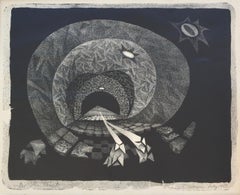
JUNE WAYNE (1918 - 2011) THE TUNNEL II, 1951 (B.69; G.14; Conway 67) Lithograph, signed, numbered, dated July 1951 and titled incorrectly The Target. Edition 35. 15 3/4 x 19 3/4 inc...
Category

1950s American Modern Ifpda International Fine Print Dealers Association

Materials

Lithograph

Tunnel /Target
Tunnel /Target
$975 Sale Price
39% Off
Commuters — Early 20th-Century Modernism
By George Josimovich
Located in Myrtle Beach, SC
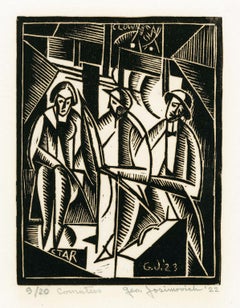
George Josimovich, 'Commuters', linocut, 1922-23, edition 20. Signed, dated '22, titled, and annotated '9/20' in pencil. Initialed in the block 'G.J....
Category

1920s American Modern Ifpda International Fine Print Dealers Association

Materials

Linocut

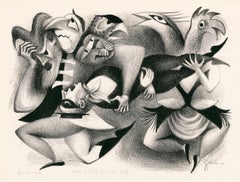
Judgment of Souls — Surrealist Fantasy
Located in Myrtle Beach, SC
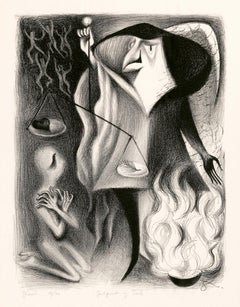
Zena Kavin, 'Judgment of Souls', lithograph, c. 1935, edition 20. Signed, titled, and numbered '17/20' in pencil. A fine, richly-inked impression, on cream wove paper, with full marg...
Category

1930s American Modern Ifpda International Fine Print Dealers Association

Materials

Lithograph

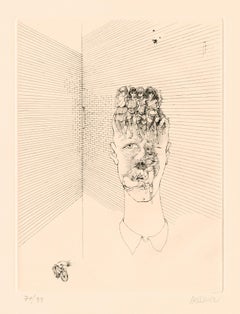
Blue Eyes — Erotic Surrealism
By Hans Bellmer
Located in Myrtle Beach, SC
Hans Bellmer, 'Blue Eyes', engraving and drypoint, edition 99, 1971. Flahutez 89. Signed and numbered '74/99' in pencil. A fine impression, on Arches cream wove paper; the full sheet...
Category

1960s Surrealist Ifpda International Fine Print Dealers Association

Materials

Engraving, Drypoint

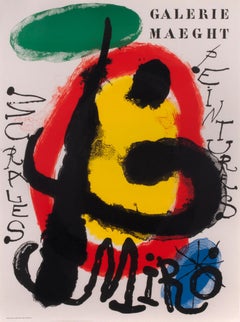
Galerie Maeght Murales et Peintures
By Joan Miró
Located in Fairlawn, OH
Galerie Maeght Murales et Peintures Color lithograph poster, 1961 Unsigned as issued Large edition Published by Maeght Editeur Imprimeur Reference #13 from J. Corredor-Matheos, "Miro's Posters', 1980 Condition: Framed Colors fresh Image/sheet size: 25 x 19 inches Frame size: 34 x 27...
Category

1960s Abstract Ifpda International Fine Print Dealers Association

Materials

Lithograph

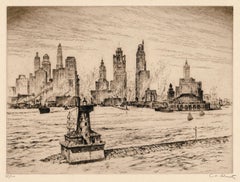
Chicago Harbor — Urban Realism
By Anton Schutz
Located in Myrtle Beach, SC
Anton Schutz, 'Chicago Harbor', etching, edition 100, c. 1927. Signed and numbered '87/100' in pencil. Annotated '580 Chicago Harbor', in another hand, in the bottom left margin. A f...
Category

1920s American Realist Ifpda International Fine Print Dealers Association

Materials

Etching

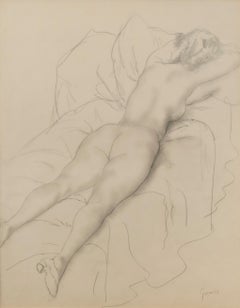
Reclining Female Nude
By Emil Ganso
Located in Fairlawn, OH
Reclining Female Nude Charcoal on paper, c. 1933 Signed lower right (see photo) Provenance: Weyhe Gallery, New York (Ganso's dealer 1925-1941) Joseph Mark Erdelac, Cleveland, noted c...
Category

1930s American Modern Ifpda International Fine Print Dealers Association

Materials

Graphite

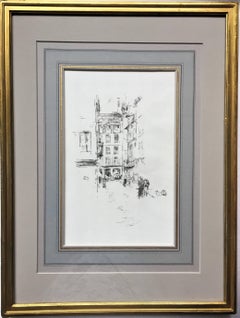
Rue Furstenberg
By James Abbott McNeill Whistler
Located in Plano, TX
Rue Furstenberg. 1894. Lithograph. Way 59; Levy 90; Tedeschi, Stratis and Spink catalog 97. Only state. 8 7/8 x 6 1/4 (sheet 14 1/4 x 8 7/8). A fine ...
Category

Late 19th Century Impressionist Ifpda International Fine Print Dealers Association

Materials

Lithograph

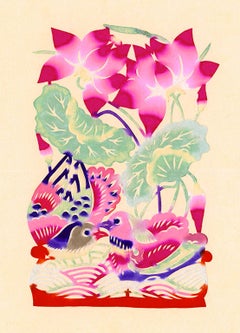
Birds Flowers — Hopei Folk Art, Mid-Century Chinese Cut paper and Watercolor
Located in Myrtle Beach, SC
'Birds & Flowers', Chinese Hopei Folk Art, 1956. Paper-cut with watercolor, mounted on cream, wove backing paper, with fresh, vivid colors, in excellent condition. Matted to museum s...
Category

Mid-20th Century Folk Art Ifpda International Fine Print Dealers Association

Materials

Watercolor

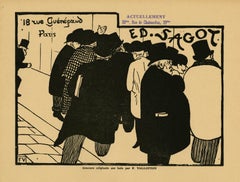
Les Amateurs d Estampes
By Félix Vallotton
Located in Fairlawn, OH
Les Amateurs d'Estampes Woodcut, 1892 Initialed in the plate lower left Titled below image: "Gravure originale sur bois par F. Vallotton" Reference: Valloton and Goerg 107c, with the...
Category

1890s Post-Impressionist Ifpda International Fine Print Dealers Association

Materials

Woodcut

Victim of Misfortune and Folly — Surrealist Fantasy
Located in Myrtle Beach, SC
Zena Kavin, 'Victim of Misfortune and Folly, lithograph, c. 1935, edition 20. Signed, titled, and numbered '17/20' in pencil. A fine, richly-inked impression, on cream wove paper, wi...
Category

1930s American Modern Ifpda International Fine Print Dealers Association

Materials

Lithograph

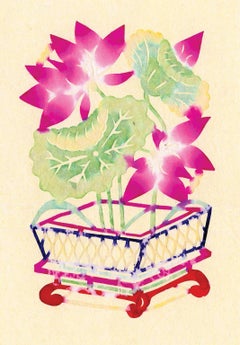
Flowers 1 — Hopei Folk Art, Mid-Century Chinese Cut Paper and Watercolor
Located in Myrtle Beach, SC
'Flowers', Chinese Hopei Folk Art, 1956. Paper-cut with watercolor, mounted on cream, wove backing paper, with fresh, vivid colors, in excellent condition. Matted to museum standards...
Category

Mid-20th Century Folk Art Ifpda International Fine Print Dealers Association

Materials

Watercolor

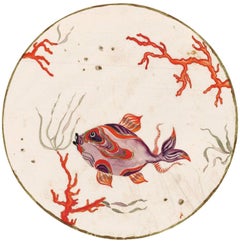
Fish and Coral Gouache by Ena Rottenberg
By Ena Rottenberg
Located in New York, NY
Original gouache of a fish and coral by Wiener Werkstatte artist, Ena Rottenberg. Signed with her initials on the lower right edge of the image. Likely a design for a porcelain plate...
Category

1920s Art Deco Ifpda International Fine Print Dealers Association

Materials

Gouache, Parchment Paper

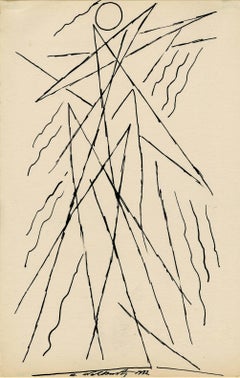
Abstraction
By Abraham Walkowitz
Located in Fairlawn, OH
Signed and dated in ink lower center Provenance: Charlotte Bergman, noted collector and patron of Walkowitz. See photo for additional information.
Category

1930s Modern Ifpda International Fine Print Dealers Association

Materials

Ink, Pen

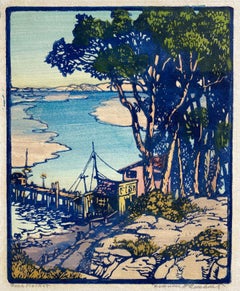
FISH MARKET
By Frances H. Gearhart
Located in Santa Monica, CA
FRANCES H. GEARHART (1869 – 1958) FISH MARKET 1930 Color block print, Signed and titled in pencil. Image 11 x 9 inches. Full sheet with deckle edges 14 3/...
Category

1930s Ifpda International Fine Print Dealers Association

Materials

Woodcut

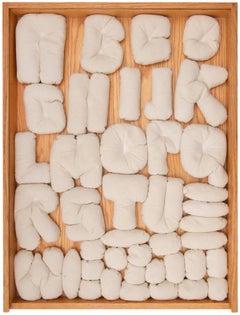
Soft Alphabet
By Claes Oldenburg
Located in London, GB
Complete set of 41 sewn cotton, sand-filled bags, contained in a wooden box with screenprinted box lid, 1978, signed and numbered from the edition 13 of 16 (there are also 2 artist’s...
Category

1970s Pop Art Ifpda International Fine Print Dealers Association

Materials

Cotton, Wood

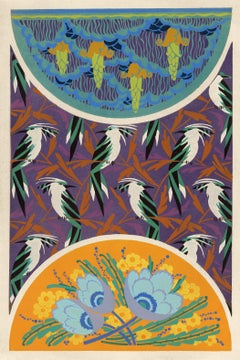
Plate 7 from "Formes et Couleurs"
Located in New York, NY
Plate 7 from "Formes et couleurs; vingt planches en couleurs contenant soixante-sept motifs décoratifs" by Auguste H. Thomas. Paris: A. Levy, Librarie Centrale des Beaux-Arts, circa ...
Category

1930s Ifpda International Fine Print Dealers Association

Materials

Paper

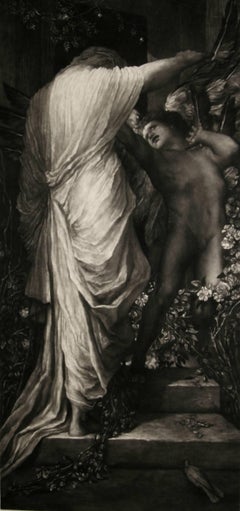
Love and Death.
By Sir Frank Short
Located in Plano, TX
Love and Death (after George Frederic Watts, R.A., H.R.C.A. 1817 - 1904). 1900. Mezzotint. Hardie 71 between i and ii. 24 1/2 x 12 (sheet 27 1/4 x 13 3/ 8). Edition 350 in state one. London, Published May 1st 1900 by Robert Dunthorne ,5 Vigo Street, London W. Rubbing and discoloration from a previous mat in the margins, well outside the image. A rich proof printed on Japon paper. Signed in pencil by Watts and by Short. Housed in an archival folder ------------------------------------------------------------------------------------------------------- Winged Love...
Category

Early 1900s Victorian Ifpda International Fine Print Dealers Association

Materials

Mezzotint

Love and Death.
Love and Death.
$1,000 Sale Price
33% Off
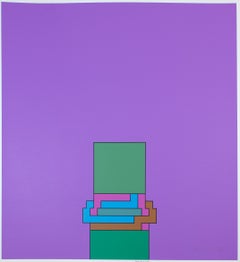
The Heavenly Suite (purple)
By Robyn Denny
Located in London, GB
Screenprint
Category

1970s Ifpda International Fine Print Dealers Association

Materials

Screen

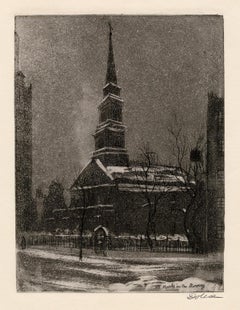
St. Marks on the Bowery - Famed New York City Landmark
By Leon Dolice
Located in Myrtle Beach, SC
'St. Mark's Church on the Bowery', aquatint with etching, edition not stated but small, 1932. Signed in pencil. Signed in the plate lower left and titled in the plate lower right. A superb, atmospheric impression, on cream wove paper, with full margins (1 1/8 to 2 inches), in excellent condition. Matted to museum standards, unframed. Image size 9 3/4 x 7 3/8 inches (248 x 187 mm); sheet size 13 1/8 x 10 inches (333 x 254 mm). Impressions of this work are held in the collections of the Princeton University Art Museum and the Five College Museums. ABOUT THE ARTIST Born in Vienna, Leon Dolice left a secure position in the family business to pursue his artistic interests. He began his art education in his teens and early twenties when he traveled through Europe to study the works of the Old Masters. He immigrated to America in 1920 and made his home in Manhattan. As a printmaker, he chose as his subjects the architecture, back streets, dock scenes, and other aspects of New York City life that were being overtaken by the modern world. In 1950, learning of the coming demolition of the Third Avenue El, Dolice created a series of Third Avenue and other New York City landmarks that were threatened with extinction. His images from that period provide a record of a New York that has passed into history. During his lifetime, Dolice exhibited throughout Europe and the United States. Retrospectives of his work include a one-man show of his graphic work at Tribeca Gallery, New York; the traveling exhibition ‘Vintage New York’ with the New Rochelle Council on the Arts; and the Hofstra Museum, Hempstead. Dolice's works are in the permanent collections of the Museum of the City of New York, the National Gallery of Art, the New York Historical Society, Georgetown University, the Philadelphia Print Club, and the New York Public Library, as well as private and corporate collections. ABOUT ST. MARKS CHURCH St. Mark's Church in-the-Bowery is a parish of the Episcopal Church located at 131 East 10th Street, at the intersection of Stuyvesant Street and Second Avenue in the East Village neighborhood of Manhattan in New York City. The property has been the site of continuous Christian worship since the mid-17th century, making it New York City's oldest site of continuous religious practice. The structure is the second-oldest church building in Manhattan. In 1651, Petrus Stuyvesant, Director General of New Netherland, purchased land for a bowery or farm from the Dutch West India Company and, by 1660, built a family chapel at the present-day site of St. Mark's Church. Stuyvesant died in 1672 and was interred in a vault under the chapel. Stuyvesant's great-grandson, Petrus "Peter" Stuyvesant, sold the chapel property to the Episcopal Church for $1 in 1793, stipulating that a new chapel be erected to serve Bowery Village, the community which had coalesced around the Stuyvesant family chapel. In 1795, the cornerstone of the present-day St. Mark's Church was laid, and the fieldstone Georgian-style church, built by the architect and mason John McComb Jr., was completed and consecrated on May 9, 1799.[4] Alexander Hamilton provided legal aid in incorporating St. Mark's Church as the first Episcopal parish independent of Trinity Church in New York City. By 1807, the church had as many as two hundred worshipers at its summer services, with 70 during the winter. While the 19th century saw St. Mark's Church grow through its many construction projects, the 20th century was marked by community service and cultural expansion. Today, the rectory houses the Neighborhood Preservation Center, the Greenwich Village Society for Historic Preservation, and the Historic Districts Council, as well as other preservation and community organizations such as the Poetry Project, the Millennium Film Workshop, and the Danspace Project. St Mark's has supported an active artistic community since the 19th century. In 1919, poet Kahlil Gibran was appointed a member of the St. Mark's Arts Committee, and the next year, the two prominent Indian statues, "Aspiration" and "Inspiration" by sculptor Solon Borglum...
Category

1930s American Modern Ifpda International Fine Print Dealers Association

Materials

Etching, Aquatint

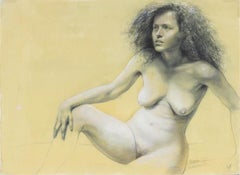
Untitled Female Nude
By Steven Assael
Located in Fairlawn, OH
Untitled (Female Nude) Graphite and sgrafitto on yellow paper, 1987 Signed lower right Note: Steven Assael is represented by Forum Gallery in New York. In 1977 he won the Charles Ro...
Category

1980s American Realist Ifpda International Fine Print Dealers Association

Materials

Graphite

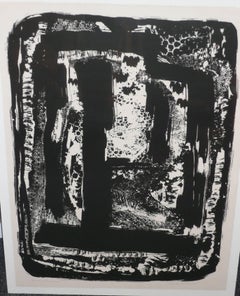
UNTITLED
By Louise Nevelson
Located in Portland, ME
Nevelson, Louise. UNTITLED. Baro 36. Tamarind Number 801. Lithograph, 1963. Edition of 20, plus 2 Printer's Proofs, 1 Trial Proof, and 3 Artist's Proofs. Inscribed "Tamarind Impressi...
Category

1960s Abstract Ifpda International Fine Print Dealers Association

Materials

Lithograph

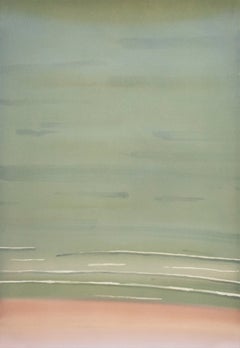
Morning
By Alex Katz
Located in New York, NY
1994, color aquatint, 48 x 36 inches, edition of 40 Although best known for his portraits, Katz has depicted landscapes both inside the studio and out of doors since the beginning o...
Category

1990s Ifpda International Fine Print Dealers Association

Materials

Etching, Aquatint, Intaglio

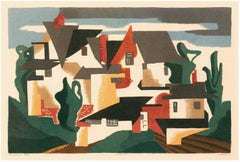
The French Farm — Mid-Century Modernism
By Edward August Landon
Located in Myrtle Beach, SC
Edward Landon, 'The French Farm', color serigraph, 1942, Ryan 86. Signed, titled, and annotated 'Edition 50' in pencil. A superb impression, with fresh colors, on cream, wove paper; ...
Category

Mid-20th Century American Modern Ifpda International Fine Print Dealers Association

Materials

Screen

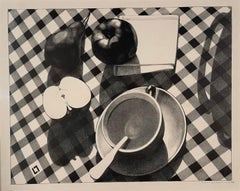
STILL LIFE WITH APPLES
By Louis Lozowick
Located in Portland, ME
Lozowick, Louis. Amer., (1892-1973), STILL LIFE NO.2 (STILL LIFE WITH APPLES), Lithograph, 1929, Ed. C. 50. Flint 36, 10 5/16 x 13 3/16, 262 x ...
Category

1920s Ifpda International Fine Print Dealers Association

Materials

Lithograph

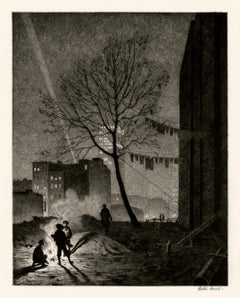
Tree, Manhattan — Classic American Realism
By Martin Lewis
Located in Myrtle Beach, SC
Martin Lewis, 'Tree, Manhattan', drypoint, 1930, edition 91 (including 10 trial proofs), McCarron 87. Signed in pencil. A superb, atmospheric impression, in warm black ink, on cream...
Category

1930s American Realist Ifpda International Fine Print Dealers Association

Materials

Drypoint

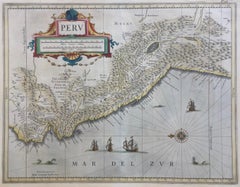
PERU
By Johannes Jansson
Located in Santa Monica, CA
JOHANNES JANSSON (1588 - 1664) PERU, engraving with early coloring. Platemark 15 1/8 x 19 3/8 inches, sheet 17 x 20 1/2 A nice example of one of the earliest maps of Peru. From the ...
Category

1630s Old Masters Ifpda International Fine Print Dealers Association

Materials

Engraving

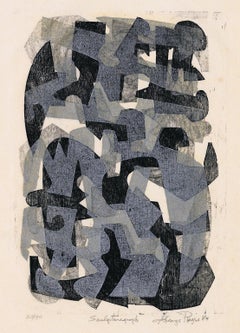
Sculpturegraph — Modernist Abstraction, Contemporary African American Artist
Located in Myrtle Beach, SC
George Rogers, 'Sculpturegraph' (Black, Gray, and Silver), color sculpturegraph, edition 40, 1984. Signed, dated, titled, and numbered '25/40' in pencil. A superb, richly-inked, pain...
Category

1980s American Modern Ifpda International Fine Print Dealers Association

Materials

Monoprint

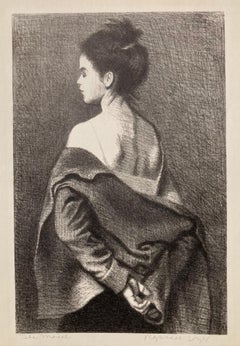
The Model
By Raphael Soyer
Located in Santa Monica, CA
RAPHAEL SOYER (1899 - 1987) THE MODEL 1944 (Cole 64) Lithograph Signed in pencil, edition 250, 11 ¾ x 7 ¾ Full margins, sheet 15 ¾ x 12 with deckle edge. Very slight toning to the ...
Category

1940s American Realist Ifpda International Fine Print Dealers Association

Materials

Lithograph

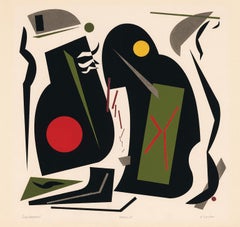
Counterpoint — Mid-Century Modernist Abstraction
By Edward August Landon
Located in Myrtle Beach, SC
Edward Landon, 'Counterpoint', color serigraph, 1942, edition 25, Ryan 45. Signed, titled, and annotated 'Edition 25' in pencil. A fine impression, with fresh colors, on cream, wove paper; the full sheet with margins (7/8 to 2 1/2 inches). A 1 1/2 inch crease across the top left sheet corner, well away from the image, otherwise in excellent condition. Scarce. Image size 13 9/16 x 14 5/16 inches (344 x 364 mm); sheet size 14 15/16 x 17 inches (379 x 432 mm). Matted to museum standards, unframed. Literature: 'A Spectrum of Innovation: Color in American Printmaking', David Acton, New York, London, 1990. 'American Screenprints', Reba and Dave Williams, New York, 1987. 'The American Scene: Prints from Hopper to Pollock', Stephen Coppel, The British Museum, 2008. Impressions of this work are held in the following museum collections: Albright-Knox Art Gallery, National Gallery of Art, Smithsonian American Art Museum. ABOUT THE ARTIST Born in Hartford, Connecticut, Edward Landon dropped out of high school to study art at the Hartford Art School. In 1930 and 1931 he was a student of Jean Charlot at the Art Students League in New York, after which he traveled to Mexico to study privately for a year with Carlos Merida. In 1933 he settled near Springfield, Massachusetts, painted murals in the local trade school, and exhibited with the Springfield Art League. His painting 'Memorial Day' won first prize at the fifteenth annual exhibition of the League at the Springfield Museum of Fine Arts. Landon became an active member of the Artists Union of Western Massachusetts, serving as president from 1934-1938. Landon acquired Anthony Velonis’s instructional pamphlet on the technique of serigraphy in the late 1930s. With colleagues Phillip Hicken, Donald Reichert, and Pauline Stiriss, he began experimenting with screen printing techniques. The artists' groundbreaking work in screen printing as a fine art medium was the subject of the group’s landmark exhibition at the Springfield Museum of Fine Arts in 1940. Landon became one of the founding members of the National Serigraph Society and served as editor of its publication, 'Serigraph Quarterly,' in the late 1940s and as its president in 1952 and 1953. The Norlyst Gallery in Manhattan held a one-person show of his prints in 1945. Awarded a Fulbright Fellowship in 1950, Landon traveled to Norway, where he researched the history of local artistic traditions and produced the book 'Scandinavian Design: Picture and Rune Stones...
Category

Mid-20th Century American Modern Ifpda International Fine Print Dealers Association

Materials

Screen

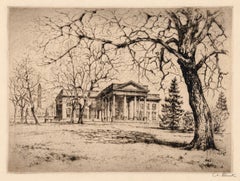
The White House — Vintage Washington D.C.
By Anton Schutz
Located in Myrtle Beach, SC
Anton Schutz, 'White House', etching, edition not stated, c. 1928. Signed in pencil. A fine, richly-inked impression, with skillfully-controlled plate tone, on cream wove Japan paper; the full sheet with margins (1 to 2 1/8 inches), in excellent condition. Matted to museum standards, unframed. Image size 8 7/8 x 11 7/8 inches; sheet size 11 1/4 x 15 3/8 inches. ABOUT THE ARTIST Etcher, painter, and architect Anton Schutz was born in Germany in 1894. He studied at the University of Munich, earning a double degree in mechanical engineering...
Category

1920s American Realist Ifpda International Fine Print Dealers Association

Materials

Etching

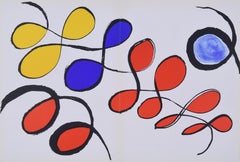
Derriere Le Miroir-No. 190-Page 14-15
By Alexander Calder
Located in Fairlawn, OH
Derriere Le Miroir-No. 190-Page 14-15 Color lithograph, 1971 Unsigned (as issued) From: Derriere Le Miroir, No. 190, 1971 Publisher: Aime Maeght, Paris Printer: L’Imprimerie Arts, Pa...
Category

1970s Abstract Ifpda International Fine Print Dealers Association

Materials

Lithograph

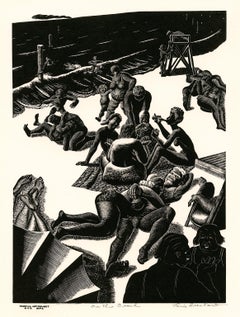
On the Beach (Coney Island, New York) — 1930s Graphic Modernism, WPA
By Lou Barlow
Located in Myrtle Beach, SC
Lou Barlow (Louis Breslow), 'On the Beach' (Coney Island) wood engraving, c. 1937, edition c. 25. Signed and titled in pencil. Stamped 'FEDERAL ART PROJECT NYC WPA' in the bottom left margin. A fine, richly-inked impression, with all the fine lines printing clearly, on cream wove paper, with full margins (1 1/2 to 3 inches), in excellent condition. Matted to museum standards, unframed. Scarce. Image size 11 x 8 1/8 inches; sheet size 16 x 11 3/8 inches. Created during the Great Depression for the Works Progress Administration (WPA), Federal Art Project, New York City. Impressions of this work are in the permanent collections of the Amon Carter Museum of Art, Illinois State Museum, and the New York Public Library. ABOUT THE IMAGE Due to Coney Island's proximity to Manhattan, Brooklyn, and other New York boroughs, it began attracting vacationers in the 1830s and 1840s. Most of the vacationers were wealthy and went by carriage roads and steamship services that reduced travel time from a formerly half-day journey to two hours. By the late 1870s, the development of Coney Island's amusement park attractions and hotels drew people from all social classes. When the Brooklyn Rapid Transit Company electrified the steam railroads and connected Brooklyn to Manhattan via the Brooklyn Bridge at the beginning of the 20th century, Coney Island turned rapidly from a resort to an accessible location for day-trippers seeking to escape the summer heat in New York City's tenements. In 1915, the Sea Beach Line was upgraded to a subway line, and the opening of the Stillwell Avenue station in 1919 ushered in Coney Island's busiest era. On the peak summer days, over a million people would travel to Coney Island. In 1937, New York City purchased a 400-foot-wide strip of land along the shoreline to allow the boardwalk to be moved 300 feet inland. At this point, Coney Island was so crowded on summer weekends that parks commissioner Robert Moses...
Category

1930s American Modern Ifpda International Fine Print Dealers Association

Materials

Woodcut

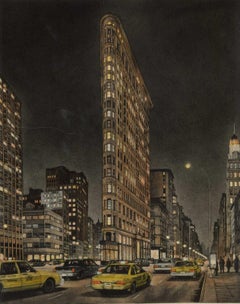
Destinations (Flatiron Bidg, 5th Avenue and Broadway at 23rd Street)
By Frederick Mershimer
Located in New Orleans, LA
In "Destinations", Frederick Mershimer creates an image of taxis rushing by the Fuller Building, better known as Flatiron Building. The building is only six feet wide at its rounded...
Category

1990s Contemporary Ifpda International Fine Print Dealers Association

Materials

Mezzotint, Aquatint

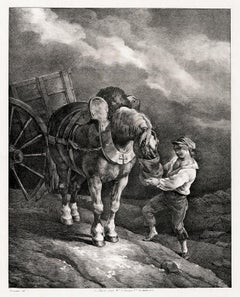
Garçon donnant l avoine à un cheval dételé — 19th Century French Romanticism
By Jean Louis Andre Theodore Gericault
Located in Myrtle Beach, SC
Théodore Géricault, 'Garçon donnant l'avoine à un cheval dételé' (Boy Giving Oats to a Hitched Horse), lithograph, 1822, 2nd state of 2, Delteil 89...
Category

1820s Romantic Ifpda International Fine Print Dealers Association

Materials

Lithograph

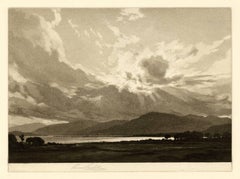
Sunset - Ardgour
By Percival Gaskell
Located in Myrtle Beach, SC
Percival Gaskell, 'Sunset - Ardgour", aquatint, edition not stated, c. 1920. A superb, atmospheric impression, in brown/black ink, on cream wove paper; the full sheet with margins (2 to 3 inches), in excellent condition. Signed, titled, and numbered '2' in pencil. Matted to museum standards, unframed. Ardgour is a district of Lochaber on Ardnamurchan peninsula on the western shore of Loch Linnhe...
Category

1920s Post-Impressionist Ifpda International Fine Print Dealers Association

Materials

Aquatint

Navajo Medicine Ceremony of the Night Chant — Native American Subject
By Ira Moskowitz
Located in Myrtle Beach, SC
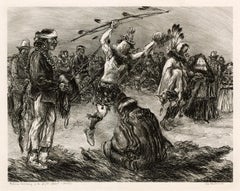
Ira Moskowitz, 'The Three Gods of Healing (Navajo Medicine Ceremony of the Night Chant)', lithograph, 1945, edition 30, Czestochowski 148. Signed and titled in pencil. Signed and dat...
Category

1940s American Modern Ifpda International Fine Print Dealers Association

Materials

Lithograph

Arrangement with Blue Major — Musically Inspired Modernist Abstraction
By Edward August Landon
Located in Myrtle Beach, SC
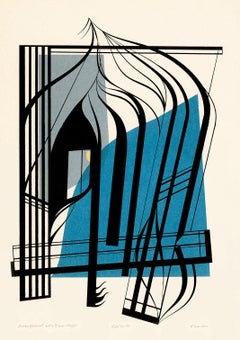
Edward Landon, 'Arrangement with Blue Major', color serigraph, edition 40, 1942, Ryan 9. Signed, titled, and annotated 'Edition 40' in pencil. A superb impression, with fresh colors, on cream, wove paper; the full sheet with margins (3/4 to 1 5/8 inches), in excellent condition. Image size 15 x 9 3/4 inches (381 x 248 mm); sheet size 17 15/16 x 11 3/4 inches (456 x 298 mm). Matted to museum standards, unframed. 'Arrangement with Blue Major' was selected for the landmark ‘Artists for Victory’ exhibition at the Metropolitan Museum of Art in 1942. Impressions of this work are also in the collections of the Asheville Art Museum, Five Colleges and Historic Deerfield Museum Consortium, Georgetown University (Special Collections), Mount Holyoke College Art Museum, Rutgers University, Smith College Museum of Art, and the Springfield Museum of Fine Arts. ABOUT THE ARTIST Born in Hartford, Connecticut, Edward Landon dropped out of high school to study art at the Hartford Art School. In 1930 and 1931, he was a student of Jean Charlot at the Art Students League in New York, after which he traveled to Mexico to study privately for a year with Carlos Merida. In 1933 he settled near Springfield, Massachusetts, painted murals in the local trade school, and exhibited with the Springfield Art League. His painting 'Memorial Day' won first prize at the fifteenth annual exhibition of the League at the Springfield Museum of Fine Arts. Landon became an active member of the Artists Union of Western Massachusetts, serving as president from 1934-1938. Landon acquired Anthony Velonis’s instructional pamphlet on the technique of serigraphy in the late 1930s. With colleagues Phillip Hicken, Donald Reichert, and Pauline Stiriss, he began experimenting with screen printing techniques. The artists' groundbreaking work in screen printing as a fine art medium was the subject of the group’s landmark exhibition at the Springfield Museum of Fine Arts in 1940. Landon became one of the founding members of the National Serigraph Society and served as editor of its publication, 'Serigraph Quarterly,' in the late 1940s and as its president in 1952 and 1953. The Norlyst Gallery in Manhattan held a one-person show of his prints in 1945. Awarded a Fulbright Fellowship in 1950, Landon traveled to Norway, where he researched the history of local artistic traditions and produced the book 'Scandinavian Design: Picture and Rune Stones...
Category

Mid-20th Century Abstract Ifpda International Fine Print Dealers Association

Materials

Screen

CALIFORNIA VISTA
By Harold Lukens Doolittle
Located in Santa Monica, CA
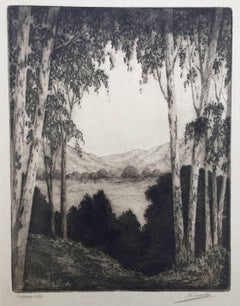
HAROLD L. DOOLITTLE (1883 – 1974) CALIFORNIA VISTA, 1923 Aquatint signed and titled in pencil. 8 7/8 x 6 7/8 inches. Sheet 11 x 14 inches. Good condi...
Category

1920s American Realist Ifpda International Fine Print Dealers Association

Materials

Aquatint

{La Primavera in Italia} Springtime in Italy
Located in Plano, TX
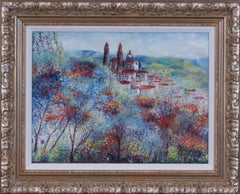
A colorful burst of spring set in the hills of an Italian town. Oil on canvas board measures 12 x 16; frame dimensions are 16 3/4 x 20 3/4 x 1 1/2. Housed in a decorative silver-colo...
Category

Late 20th Century Impressionist Ifpda International Fine Print Dealers Association

Materials

Oil

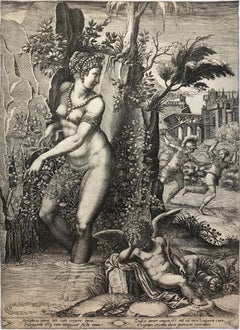
Venus and the Rose (2nd State)
By Giorgio Mantovano Ghisi
Located in Chicago, IL
Engraving after Luca Penni
Category

16th Century Old Masters Ifpda International Fine Print Dealers Association

Materials

Engraving

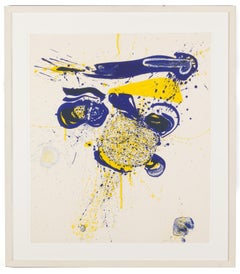
Mercury
By Sam Francis
Located in London, GB
Sam Francis Mercury 1963 Lithograph on BFK Rives paper, Edition of 20 60 .3 x 47.6 cms (23 3/4 x 18 3/4 ins) SF16664 Literature: The Prints of Sam Francis: A Catalogue Raisonne 196...
Category

1960s Abstract Ifpda International Fine Print Dealers Association

Materials

Lithograph

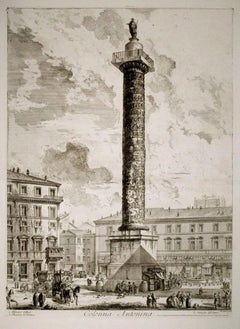
The Column of Marcus Aurelius
By Giovanni Battista Piranesi
Located in Chicago, IL
A fine impression with the address of the artist (Autore, Strada Felice) and the price (Paoli 2 1/2) as well as Hind Watermark no.3 (Fleur-de-lys-in-a-Double-Circle), all correspondi...
Category

Mid-18th Century Ifpda International Fine Print Dealers Association

Materials

Etching

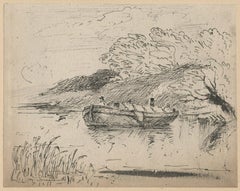
The River Barge
By David Cox
Located in Fairlawn, OH
The River Barge Pen and ink on paper on laid paper, mounted in English drum mount , c. 1810 Unsigned Condition: Slight sun staining to sheet and mount in the window (see photo) Image/sheet size: 5 1/4 x 6 11/16 inches Sight: : 5-3/4 x 7-1/4" Frame: 13-3/8 x 14-3/8" Provenance: Colnaghi, London (see photo of label) David Cox (29 April 1783 – 7 June 1859) was an English landscape painter, one of the most important members of the Birmingham School of landscape artists and an early precursor of Impressionism. He is considered one of the greatest English landscape painters, and a major figure of the Golden age of English watercolour. Although most popularly known for his works in watercolour, he also painted over 300 works in oil towards the end of his career, now considered "one of the greatest, but least recognised, achievements of any British painter. His son, known as David Cox the Younger (1809-1885), was also a successful artist. Early life in Birmingham, 1783–1804 Cox's birthplace in Deritend, Birmingham, illustrated by Samuel Lines Cox was born on 29 April 1783 on Heath Mill Lane in Deritend, then an industrial suburb of Birmingham. His father was a blacksmith and whitesmith about whom little is known, except that he supplied components such as bayonets and barrels to the Birmingham gun trade. Cox's mother was the daughter of a farmer and miller from Small Heath to the east of Birmingham. Early biographers record that "she had had a better education than his father, and was a woman of superior intelligence and force of character." Cox was initially expected to follow his father into the metal trade and take over his forge, but his lack of physical strength led his family to seek opportunities for him to develop his interest in art, which is said to have first become apparent when the young Cox started painting paper kites while recovering from a broken leg. By the late 18th century Birmingham had developed a network of private academies teaching drawing and painting, established to support the needs of the town's manufacturers of luxury metal goods, but also encouraging education in fine art, and nurturing the distinctive tradition of landscape art of the Birmingham School. Cox initially enrolled in the academy of Joseph Barber in Great Charles Street, where fellow students included the artist Charles Barber and the engraver William Radclyffe, both of whom would become important lifelong friends. At the age of about 15 Cox was apprenticed to the Birmingham painter Albert Fielder, who produced portrait miniatures and paintings for the tops of snuffboxes from his workshop at 10 Parade in the northwest of the town. Early biographers of Cox record that he left his apprenticeship after Fielder's suicide, with one reporting that Cox himself discovered his master's hanging body, but this is probably a myth as Fielder is recorded at his address in Parade as late as 1825. At some time during mid-1800 Cox was given work by William Macready the elder at the Birmingham Theatre, initially as an assistant grinding colours and preparing canvases for the scene painters, but from 1801 painting scenery himself and by 1802 leading his own team of assistants and being credited in plays' publicity. London, 1804–1814 In 1804 Cox was promised work by the theatre impresario Philip Astley and moved to London, taking lodgings in 16 Bridge Row, Lambeth. Although he was unable to get employment at Astley's Amphitheatre it is likely that he had already decided to try to establish himself as a professional artist, and apart from a few private commissions for painting scenery his focus over the next few years was to be on painting and exhibiting watercolours. While living in London, Cox married his landlord's daughter, Mary Agg and the couple moved to Dulwich in 1808. David Cox Travellers on a Path, pencil and brown wash. In 1805 he made his first of many trips to Wales, with Charles Barber, his earliest dated watercolours are from this year. Throughout his lifetime he made numerous sketching tours to the Home Counties, North Wales, Yorkshire, Derbyshire and Devon. Cox exhibited regularly at the Royal Academy from 1805. His paintings never reached high prices, so he earned his living mainly as a drawing master. His first pupil, Colonel the Hon.H. Windsor (the future Earl of Plymouth) engaged him in 1808, Cox went on to acquire several other aristocratic and titled pupils. He also went on to write several books, including: Ackermanns' New Drawing Book (1809); A Series of Progressive Lessons (1811); Treatise on Landscape Painting (1813); and Progressive Lessons on Landscape (1816). The ninth and last edition of his series Progressive Lessons, was published in 1845. By 1810 he was elected President of the Associated Artists in Water Colour. In 1812, following the demise of the Associated Artists, he was elected as associate of the Society of Painters in Water Colour (the old Water Colour Society). He was elected a Member of the Society in 1813, and exhibited there every year (except 1815 and 1817) until his death. Hereford, 1814–1827 In the summer of 1813 Cox was appointed as the drawing master of the Royal Military College in Farnham, Surrey, but he resigned shortly afterwards, finding little sympathy with the atmosphere of a military institution. Soon after that he applied to a newspaper advertisement for a position as drawing master for Miss Crouchers' School for Young Ladies in Hereford and in Autumn 1814 moved to the town with his family. Cox taught at the school in Widemarsh Street until 1819, his substantial salary of £100 per year requiring only two-day's work per week, allowing time for painting and the taking of private pupils. Cox's reputation as both a painter and a teacher had been building over previous years, as indicated by his election as a member of the Society of Painters in Water Colours and his inclusion in John Hassell's 1813 book Aqua Pictura, which claimed to present works by "all of the most approved water coloured draftsmen". The depression that accompanied the end of the Napoleonic Wars had caused a contraction in the art market, however, and by 1814 Cox had been very short of money, requiring a loan from one of his pupils to pay even for the move to Hereford. Despite its financial advantages and its proximity to the scenery of North Wales and the Wye Valley, the move to Hereford marked a retreat in terms of his career as a painter: he sent few works to the annual exhibition of the Society of Painters in Water Colours during his first years away from London and not until 1823 would he again contribute more than 20 pictures. Between 1823 and 1826 he had Joseph Murray Ince as a pupil. London, 1827–1841 He made his first trip to the Continent, to Belgium and the Netherlands in 1826 and subsequently moved to London the following year. He exhibited for the first time with the Birmingham Society of Artists in 1829, and with the Liverpool Academy in 1831. In 1839, two of Cox's watercolours were bought from the Old Water Colour Society exhibition by the Marquis of Conynha for Queen Victoria. Birmingham, 1841–1859 Greenfield House in Harborne, Birmingham – where Cox lived from 1841 until his death in 1859 . In May 1840 Cox wrote to one of his Birmingham friends: "I am making preparations to sketch in oil, and also to paint, and it is my intention to spend most of my time in Birmingham for the purpose of practice". Cox had been considering a return to painting in oils since 1836 and in 1839 had taken lessons in oil painting from William James Müller, to whom he had been introduced by mutual friend George Arthur Fripp. Hostility between the Society of Painters in Water Colours and the Royal Academy made it difficult for an artist to be recognised for work in both watercolour and oil in London, however, and it is likely that Cox would have preferred to explore this new medium in the more supportive environment of his home town. By the early 1840s his income from sales of his watercolours was sufficient to allow him to abandon his work as a drawing master, and in June 1841 he moved with his wife to Greenfield House in Harborne, then a village on Birmingham's south western outskirts. It was this move that would enable the higher levels of freedom and experimentation that were to characterise his later work. The elderly Cox pictured by Samuel Bellin in 1855. In Harborne, Cox established a steady routine – working in watercolour in the morning and oils in the afternoon. He would visit London every spring to attend the major exhibitions, followed by one or more sketching excursions, continuing the pattern that he had established in the 1830s. From 1844 these tours evolved into a yearly trip to Betws-y-Coed in North Wales to work outdoors in both oil and watercolour, gradually becoming the focus for an annual summer artists colony that continued until 1856 with Cox as its "presiding genius". Cox's experience of trying to exhibit his oils in London was short and unsuccessful: in 1842 he made his only submission to the Society of British Artists; one oil painting was exhibited at each of the British Institution and the Royal Academy in 1843; and two oil paintings were exhibited at the Royal Academy in 1844 – the last that would be exhibited in London during his lifetime. Cox showed regularly at the Birmingham Society of Arts and its successor, the Birmingham Society of Artists, becoming a member in 1842. Cox suffered a stroke on 12 June 1853 that temporarily paralysed him, and permanently affected his eyesight, memory and coordination. By 1857 however, his eyesight had deteriorated. An exhibition of his work was arranged in 1858 by the Conversazione Society Hampstead, and in 1859 a retrospective exhibition was held at the German Gallery Bond Street, London. Cox died several months later. He was buried in the churchyard of St Peters, Harborne, Birmingham, under a chestnut tree, alongside his wife Mary. Work Early work In the spring of 1811 Cox made a small number of notable works in oils during a visit to Hastings with his family. It is not known why he didn't continue working in this medium at the time, but the five known surviving examples were described in 1969 as "surely some of the most brilliant examples of the genre in England". Mature work Cox reached artistic maturity after his move to Hereford in 1814. Although only two major watercolours can confidently be traced to the period between Cox's arrival in the town and the end of the decade, both of these – Butcher's Row, Hereford of 1815 and Lugg Meadows, near Hereford of 1817 – mark advances on his earlier work. Later work Cox's later work produced after his move to Birmingham in 1841 was marked by simplification, abstraction and a stripping down of detail. His art of the period combined the breadth and weight characteristic of the earlier English watercolour school, together with a boldness and freedom of expression comparable to later impressionism. His concern with capturing the fleeting nature of weather, atmosphere and light was similar to that of John Constable, but Cox stood apart from the older painter's focus on capturing material detail, instead employing a high degree of generalisation and a focus on overall effect. The quest for character over precision in representing nature was an established characteristic of the Birmingham School of landscape artists with which Cox had been associated early in his life, and as early as 1810 Cox's work had been criticised for its "sketchiness of finish" and "cloudy confusion of objects", which were held to betray "the coarseness of scene-painting". During the 1840s and 1850s Cox took this "peculiar manner" to new extremes, incorporating the techniques of the sketch into his finished works to a far greater degree. Cox's watercolour technique of the 1840s was sufficiently different from his earlier methods to need explanation to his son in 1842, despite the fact that his son had been helping him teach and paint since 1827. The materials used for his later works in watercolour also differed from his earlier periods: he used black chalk instead of graphite pencil as his primary drawing medium, and the rough and absorbent "Scotch" wrapping paper for which he became well-known – both of these were related to his development of a rougher and freer style. Influence and legacy By the 1840s Cox, alongside Peter De Wint and Copley Fielding, had become recognised as one of the leading figures of the English landscape watercolour style of the first half of the 19th century. This judgement was complicated by reaction to the rougher and bolder style of Cox's later Birmingham work, which was widely ignored or condemned. While by this time De Wint and Fielding were essentially continuing in a long-established tradition, Cox was creating a new one. A group of young artists working in Cox's watercolour style emerged well before his death, including William Bennett, David Hall McKewan and Cox's son David Cox Jr. By 1850 Bennett in particular had become recognised as "perhaps the most distinguished among the landscape painters" for his Cox-like vigorous and decisive style. Such early followers concentrated on the example of Cox's more moderate earlier work and steered clear of what were then seen as the excesses of Cox's later years. During a period dominated by sleek and detailed picturesque landscape, however, they were still condemned by publications such as The Spectator as "the 'blottesque' school", and failed to establish themselves as a cohesive movement. John Ruskin in 1857 condemned the work of the Society of Painters in Water-colours as "a kind of potted art, of an agreeable flavour, suppliable and taxable as a patented commodity", excluding only the late work of Cox, about which he wrote "there is not any other landscape which comes near these works of David Cox in simplicity or seriousness". An 1881 book, A Biography of David Cox: With Remarks on His Works and Genius, was based on a manuscript by Cox's friend William Hall, edited and expanded by John Thackray Bunce, editor of the Birmingham Daily Post. There are two Blue Plaque memorials commemorating him at 116 Greenfield Road, Harborne, Birmingham, and at 34 Foxley Road, Kennington, London, SW9, where he lived from 1827. It can also be seen at the David Cox exhibition in Birmingham. His pupils included Birmingham architectural artist, Allen Edward...
Category

1810s Romantic Ifpda International Fine Print Dealers Association

Materials

Ink

Untitled
By Leon Kelly
Located in Fairlawn, OH
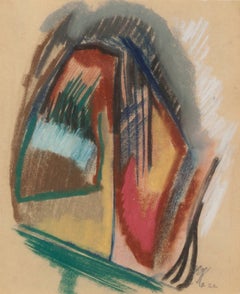
Untitled Pastel on paper, 1922 Initialed lower right (see photo) Exhibited: Francis Nauman, Leon Kelly: Draftsman Extraordinaire, New York, April 4 - May 23, 2014. Condition: excellent Image size: 11 8 7/8 inches Frame size: 18 1/4 x 16 1/4 inches Provenance: Estate of the artist The Orange Chicken...
Category

1920s Abstract Ifpda International Fine Print Dealers Association

Materials

Pastel

Landscape with Roman Ruins
By (After) Peter Paul Rubens
Located in Chicago, IL
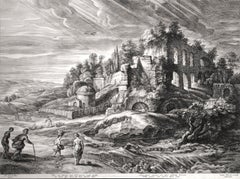
Engraving after Peter Paul Rubens (Siegen 1577 - 1640 Antwerp), executed by Schelte Adams Bolswert (Bolsward c. 1586 -1659 Antwerp). Bolswert was one of the major printmakers in the ...
Category

17th Century Old Masters Ifpda International Fine Print Dealers Association

Materials

Engraving

Tea at the Ritz, New York
By Paul César Helleu
Located in Fairlawn, OH
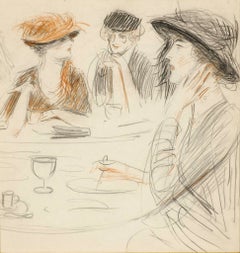
Tea at the Ritz, New York Colored chalk, 1912 Signed with the estate stamp verso. (see photo) Authenticated by the artist's daughter, Mme Paulette Johnston. Image size: 10 5/8 x 10 1...
Category

1920s Art Nouveau Ifpda International Fine Print Dealers Association

Materials

Chalk

Blizzard in Woods
By Charles E. Burchfield
Located in Fairlawn, OH
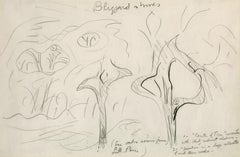
Blizzard in Woods Graphite on paper, c. 1945-1963 Unsigned Provenance: Sid Deutsch Gallery, New York Annotated with notes for completing the drawing. Deutsch Gallery has handled Bur...
Category

1940s American Modern Ifpda International Fine Print Dealers Association

Materials

Graphite

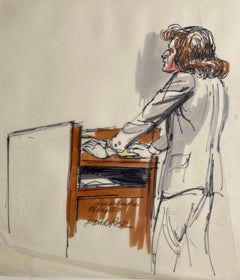
ELLSBERG - PENTAGON PAPERS TRIAL - Original Drawing - Leonard Weinglass Attorney
Located in Santa Monica, CA
DAVID ROSE (1910 – 2006) LEONARD WEINGLASS - ELLSBERG TRIAL, 1973 Color marking pen on tracing paper. Image 12 ½ x 11 inches, sheet 15 x 18 ½ inches. Very fresh, in good condition with bright colors save for horizontal creases at the lower sheet edge slightly into the image and a few other soft creases. Leonard Weinglass along with Leonard Boudin were attorneys for Anthony Russo and Daniel Ellsberg at the Pentagon Papers Trial in 1973. Upon his death in 2011 the NY Times called Weinglass, “perhaps the nation’s pre-eminent progressive defense lawyer, who represented political renegades Provenance: Directly from the artist David Rose to this dealer in the late 1980’s. I knew David as an artist and friend as we both lived in Los Angeles. It has been in temperature and humidity storage since its acquisition. The Ellsberg Trial was the beginning of a long career for Rose as a court reporter Rose’s papers are in Special Collections of USC, The University of Southern California. The Online Archives of California Rose Biography states: Rose's courtroom career began in 1973 with the trial of Daniel Ellsberg, the former defense analyst who released the Pentagon Papers regarding the Viet Nam War to the New York Times. (Rose received an Emmy Award nomination for his coverage of the Pentagon Papers trial.) Rose's sketches of this trial-- along with all those that would follow through the next twenty-five years-- appeared in television news broadcasts and newspapers all over the world. He saw himself as a reporter-- but with colored pencils and sketchpads as his tools. He tried to capture the emotions in the courtroom-- the tension, anger, and the body language that conveyed them. Over the years, Rose's art depicted the trials of some of the most famous-- and infamous-- personalities to make the news: Klaus Barbie (the Butcher of Lyon), Patty Hearst, Sirhan Sirhan, John Z. DeLorean, Rodney King, Imelda Marcos, Huey Newton...
Category

1970s Modern Ifpda International Fine Print Dealers Association

Materials

Ink

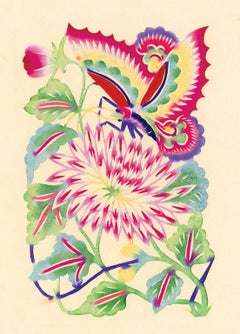
Butterfly Flowers 2 — Hopei Folk Art, Mid-Century Chinese Cut Paper Watercolor
Located in Myrtle Beach, SC
'Butterfly & Flowers', Chinese Hopei Folk Art, 1956. Paper-cut with watercolor, mounted on cream, wove backing paper, with fresh, vivid colors, in excellent condition. Matted to museum standards, unframed. Image size 5 1/8 x 3 1/8 inches; sheet size 8 7/8 x 6 1/4 inches; mat size 14 x 11 inches. ABOUT THIS WORK Hopei or Hebei is a province of North East China, on the Gulf of Chihli near Beijing that is home to Chengde Mountain Resort, the imperial summer residence of the Qing-dynasty emperors. Chengde contains 18th-century palaces, gardens, and pagodas ringed...
Category

Mid-20th Century Folk Art Ifpda International Fine Print Dealers Association

Materials

Watercolor