Jan s Co Fine French Antiques Inc. Furniture

to
580
811
810
1
210
95
39
21
17
12
9
8
7
5
4
3
2
1
16
360
434
1
369
12
22
293
4
7
1
485
432
375
238
222
754
562
104
34
33
811
811
811
7
4
4
3
2
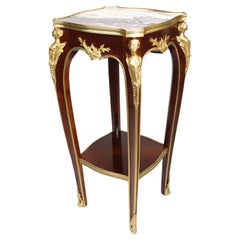
A French Louis XV style Mahogany Ormolu Mounted Side Table Attr Francois Linke
By François Linke
Located in Los Angeles, CA
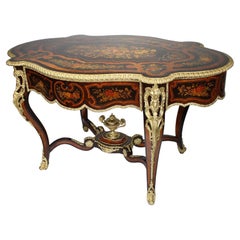
A fine French Louis XV Style Mahogany and Gilt-Bronze (Ormolu) Mounted Side Table, Attributed to Franc¸ois Linke (1855-1946). The square shaped table fitted with a Bre^che Violette marble top with a gilt bronze trim, the body surmounted on each corner with bronze caryatid mounts of winged female busts and an acanthus apron, the lower shelf with a sunburst parquetry design and raised on four cabriolet legs ending with gilt bronze sabots. The mounts stamped 'E.M' on the reverse. We believe that this table was most likely commissioned to Linke by Mâison Millet. circa: Paris, 1900-1920. François Linke (1855-1946) was one of the most celebrated ébénistes of his time. Born in Pankraz, Bohemia, Linke moved to Paris in 1875 and six years later established independent ateliers at 170, rue de Faubourg St. Antoine. As was the practice among contemporaries and noteworthy predecessors, such as Alfred Beurdeley and Henry Dasson, Linke initially produced furniture derived from styles popular during the 18th century ancien régime. By 1900, his worldwide reputation as an individualistic master of high quality furniture was already established. However, with a huge display, placing his extravagant pieces in room settings and winning the Médaille d'Or for his Grand Bureau...
Category

Early 20th Century French Belle Époque Side Tables

Materials

Marble, Bronze, Ormolu

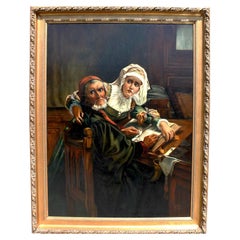
Oil on Canvas "the Prohibited Reading" After Karel Ooms
Located in Los Angeles, CA
A Large Continental Oil on Canvas "The Prohibited Reading " after Karel Ooms (Belgium, 1845-1900). This beautiful executed painting depicts a historical scene of an old man and a young woman who are huddled over a bible. The pair is gazing in apparent concern or alarm, over the old man's shoulder, towards something outside of the picture. The scene is likely set in the 16th or 17th century when Protestants were prosecuted, amongst others, for reading the bible in the vernacular, a practice prohibited by the Catholic Church at the time. Signed (l/r) A. Ribas 15-12-913. Within a giltwood carved frame. circa: Probably Belgium, 1913. Karel Ooms was born in Dessel on January 27, 1845 as the youngest son of a large peasant family. At school his extraordinary talent for drawing was discovered. When he was twelve his hometown provided financial support which allowed him to study at the Antwerp Academy of fine Arts. One of his teachers at the Academy was Nicaise de Keyser, one of the key figures in the Belgian Romantic-historical school of painting and a painter of mainly history paintings and portraits. After graduating from the Academy 1865 Karel Ooms was welcomed with pomp in his home town Dessel. He painted two altarpieces for the local church Saint Nicolas, to express his gratitude to his city. Karel Ooms settled as an independent artist in Antwerp around 1871. He quickly established a reputation as a portrait painter. In addition, he received commissions for religious paintings and history paintings. He gained particular recognition with two large paintings...
Category

Early 20th Century Belgian Renaissance Revival Paintings

Materials

Canvas, Giltwood

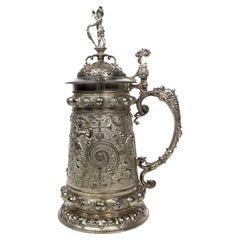
19th Century Renaissance Revival Style Britannia Silver Plated WMF Beer-Tankard
By WMF Württembergische Metallwarenfabrik
Located in Los Angeles, CA
A Fine and Elaborate German 19th Century Renaissance Revival Style Britannia Silver Plated Beer-Tankard by The Württembergische Metallwarenfabrik (WMF). T...
Category

Antique Late 19th Century German Renaissance Revival Pitchers

Materials

Silver Plate

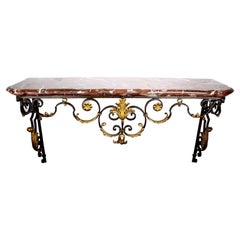
French Louis XV Style Parcel-Gilt Wrought Iron Wall Console with Marble Top
Located in Los Angeles, CA
A French Louis XV Style Wrought Iron Wall-Mounting Console with Marble Top. The scrolled slight serpentine wrought iron scrolled frame with its original finish and parcel-gilt acanth...
Category

Antique Early 1900s French Louis XV Console Tables

Materials

Marble, Wrought Iron

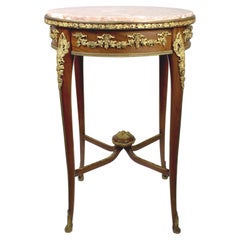
French 19th-20th Century Mahogany Mounted Gueridon Table, Attr. François Linke
By François Linke
Located in Los Angeles, CA
A fine French 19th-20th century Mahogany and Gilt-Bronze (Ormolu) Mounted Belle Époque Gueridon Circular Side-Table with Marble Top, Attributed to François Linke (1855-1946). The sin...
Category

Antique Early 1900s French Belle Époque End Tables

Materials

Marble, Bronze, Ormolu

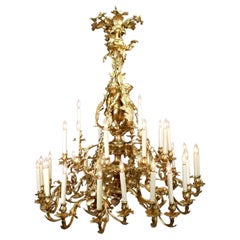
Palatial French 19th Century Louis XV Style Gilt-Bronze 39-L Cherub Chandelier
Located in Los Angeles, CA
A Palatial French 19th Century Louis XV Style Gilt-Bronze Figural Thirty-Nine Light Chandelier. The scrolled arm candle-arms designed with acanthus and floral wreaths protruding from...
Category

Antique Early 1900s French Louis XV Chandeliers and Pendants

Materials

Bronze, Ormolu

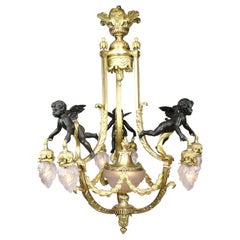
French 19th/20th Century Belle Époque Gilt Patinated Bronze Cherub Chandelier
Located in Los Angeles, CA
A fine and Rare Whimsical French 19th/20th century Belle Époque Gilt-Bronze and Patinated Bronze Figural Seven-Light Chandelier. The with frosted glass flame shades centered with a f...
Category

Antique Early 1900s French Belle Époque Chandeliers and Pendants

Materials

Bronze

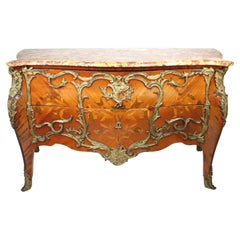
French 19th/20th Century Louis XV Style Gilt-Bronze Mounted Commode Marble Top
Located in Los Angeles, CA
A French 19th/20th Century Louis XV Style Gilt-Bronze Mounted Kingwood, Amaranth, Satinwood and Tulipwood Bois Satiné and Bois de Bout Floral Marquetry Two-Drawer Commode of bombé serpentine...
Category

Antique Early 1900s French Louis XV Commodes and Chests of Drawers

Materials

Marble, Bronze, Ormolu

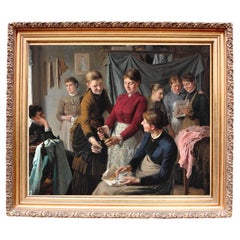
Wenzel Ulrik Tornøe Danish 19th Century Oil on Canvas "The Sewing Room" (Systue)
Located in Los Angeles, CA
Wenzel Ulrik Tornøe (Danish, 1844-1907) A very fine and large oil on canvas titled "Systue" ("The Sewing Room"). The finely executed artwork depicting the interior of a sewing room w...
Category

Antique 19th Century Danish Beaux Arts Paintings

Materials

Canvas, Giltwood

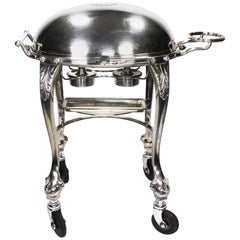
English Silver Plated Art Nouveau Meat Carving Trolley Cart by Elkington
By Elkington Co.
Located in Los Angeles, CA
A very fine English early 20th century century Art Nouveau silver plated "Chariot à Viande" meat-carving trolley-cart on wheels, by Elkington Plat...
Category

Antique Early 1900s English Art Nouveau Sheffield and Silverplate

Materials

Silver Plate

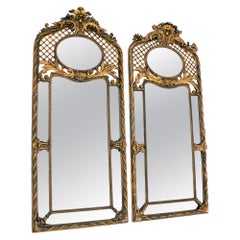
Pair French Belle Epoqué Louis XV Style Giltwood Gesso Carved Trumeau Mirrors
Located in Los Angeles, CA
A Pair of French Belle Epoqué Louis XV Style Giltwood and Gesso Carved Trumeau Mirrors. The slender carved framed each crowned with a rosette flaked by floral bouquets and scrolled a...
Category

Early 20th Century French Belle Époque Trumeau Mirrors

Materials

Giltwood, Wood, Mirror, Gesso

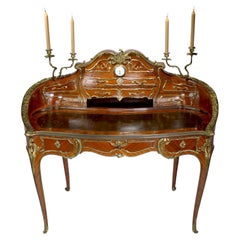
French 19th Century Louis XV Style Ormolu-Mounted Lady s Secretary Desk, Millet
By Maison Millet
Located in Los Angeles, CA
A Very fine French 19th century Louis XV Style Ormolu-Mounted Kingwood, Satinwood and Fruitwood Parquetry Kidney-Shaped secrétaire de dame (Lady's Desk) with an enamel dial clock and...
Category

Antique 19th Century French Louis XV Desks and Writing Tables

Materials

Bronze, Ormolu

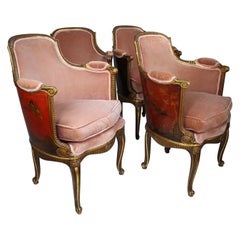
Four French Louis XV Style Gilt-Wood Carved Chinoiserie Bergeres, Jansen Attr.
By Maison Jansen
Located in Los Angeles, CA
A Fine and Rare Assembled Set of Four French Louis XV Style Gilt-Wood Carved and Japanned-Chinoiserie Lacquer Decorated Bergers Armchairs, attributed to Maison Jansen (House of Janse...
Category

Antique Early 1900s French Chinoiserie Armchairs

Materials

Velvet, Giltwood, Lacquer

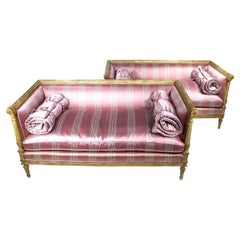
Pair of French Louis XVI Style Carved-Wood Cream-Lacquered Settees, Jansen Attr.
By Maison Jansen
Located in Los Angeles, CA
A Fine Pair of French Louis XVI Style Carved-wood Cream-Lacquered Settees, probably by Maison Jansen. The rectangular shaped Love Seats, each with scr...
Category

20th Century French Louis XVI Settees

Materials

Fabric, Satin, Silk, Wood

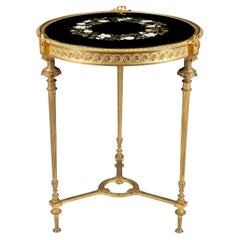
Franco-Italian 19th Century Neoclassical Style Gilt-Bronze Pietra Dura Table
Located in Los Angeles, CA
A Very fine Franco-Italian 19th century neoclassical Revival style gilt-bronze and Pietra Dura (or Pietra-Dure) occasional side-table Gueridon. The circular gilt-bronze frame raised ...
Category

Antique 19th Century Italian Neoclassical Revival End Tables

Materials

Marble, Bronze, Ormolu

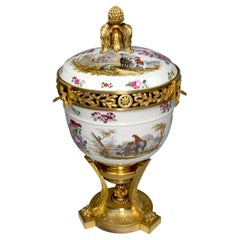
Fine German 19th Century Porcelain and Gilt-Bronze Mounted Potpourri Urn Vase
By Meissen Porcelain
Located in Los Angeles, CA
A very fine German 19th century porcelain and gilt-bronze mounted Potpourri Urn-Vase with Lid, attributed to Meissen. The ovoid white porcelain urn, decorated on all sides and lid wi...
Category

Antique 19th Century German Regency Revival Planters, Cachepots and Jard...

Materials

Bronze, Ormolu

Pair French 19th Century Louis XV/XVI Style Transitional Commodes, Linke Manner
By François Linke
Located in Los Angeles, CA
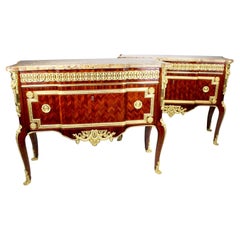
A very fine pair of French 19th/20th century Louis XV/XVI style Transitional Style Satinwood Parquetry and Gilt-Bronze Mounted Commodes with Brêche d'Alep marble-tops, in the manner of François Linke (1855-1946), inspired by models by Léonard Boudin (French, 1735-1804), Gilles Joubert...
Category

Antique Late 19th Century French Louis XV Commodes and Chests of Drawers

Materials

Marble, Bronze, Ormolu

Pair 19th Century Japanese Imari Porcelain Gilt-Bronze Torchere Candelabra
By Imari Porcelain
Located in Los Angeles, CA
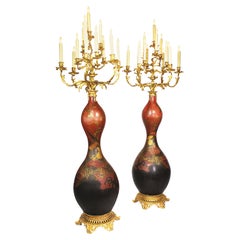
A fine Pair of 19th century Japanese Imari Porcelain and French Gilt-Bronze Mounted Thirteen-Light Celadon Torchere Candelabra. The bottle-shaped Japonisme vases with a Royal red background, decorated with parcel-gilt and black soaring eagles in the hunt within a forestall scene. Each Vase fitted and surmounted with a French 19th century Louis XV Style 13-Light scrolled candelabrum and all raised on a circular pierced gilt-bronze plinth. circa: 1880. Imari Porcelain (????) is the name for Japanese porcelain wares made in the town of Arita, in the former Hizen Province, northwestern Kyushu. They were exported to Europe extensively from the port of Imari, Saga, between the second half of the 17th century and the first half of the 18th century. The Japanese as well as Europeans called them Imari. In Japanese, these porcelains are also known as Arita-yaki (???). Imari or Arita porcelain has been continously produced up through the present day. Characteristics Though there are many types of Imari, Westerners' conception of Imari in the popular sense is associated only with a type of Imari produced and exported in large quantity in mid-17th century. This type is called Kinrande. Kinrande Imari is colored porcelain with cobalt blue underglaze and red and gold overglaze. The color combination was not seen in China at that time. Traditional Ming dynasty color porcelain used dominantly red and green, probably due to scarcity of gold in China, whereas gold was abundant in Japan in those days. The subject matter of Imari is diverse, ranging from foliage and flowers to people, scenery and abstractions. Some Imari design structures such as kraak style were adopted from China, but most designs were uniquely Japanese owing to the rich Japanese tradition of paintings and costume design. The porcelain has a gritty texture on the bases, where it is not covered by glaze. There is also blue and white Imari. Kakiemon style Imari is another type of Imari, but it tends to be categorized separately in Europe. History "Imari" was simply the trans-shipment port for Arita wares. It was the kilns at Arita which formed the heart of the Japanese porcelain industry. Arita's kilns were set up in the 17th century, when kaolin was discovered in 1616 by the immigrant Korean potter, Yi Sam-pyeong (1579–1655). (He may also be known by the name, "Kanage Sambei".) Yi Sam-Pyeong, along with his extended family of 180 persons, left Korea on the offer of a privileged position in Japan. This decision was made after the occurrence of certain Japanese invasions of Korea. After Yi Sam-Pyeong's discovery, his kilns began to produce revised Korean-style blue and white porcelains, known as "Shoki-Imari". In the mid-17th century there were also a lot of Chinese refugees in Northern Kyushu due to the turmoil on Chinese continent, and it is said one of them brought coloring technique to Arita. Thus Shoki-Imari developed into Ko-KutaniImari. Ko-Kutani was produced around 1650 for both export and domestic market. Blue and white porcelain continued to be produced and they are called Ai-Kutani. Ko-Kutani Imari for the export market usually adopted Chinese design structure such as kraak style, whereas Ai-Kutani for the domestic market were highly unique in design and are accordingly valued very much among collectors. Ko-Kutani style evolved into Kakiemon style Imari, which was produced for about 50 years around 1700. Imari achieved its technical and aesthetic peak in Kakiemon style, and it dominated European market. Blue and white Kakiemon is called Ai-Kakiemon. Kakiemon style transformed into Kinrande in the 18th century. Kinrande used blue underglaze and red and gold overglaze, and later some other colors. Imari began to be exported to Europe because the Chinese kilns at Ching-te-Chen were damaged in the political chaos and the new Qing dynasty government stopped trade in 1656–1684. Exports to Europe were made through the Dutch East India Company, but the designation "Imari Porcelain" in Europe connotes Arita wares of mostly Kinrande Imari. Export of Imari to Europe stopped in mid-18th century when China began export to Europe again, since Imari was not able to compete against China due to high labor cost. By that time, however, both Imari and Kakiemon style were already so popular among Europeans, Chinese export porcelain copied both Imari and Kakiemon style, which is called Chinese Imari. At the same time, European kilns, such as Meisen also tried to copy Imari and Kakiemon. Export of Imari surged again in late 19th century (Meiji era) when Japonism flourished in Europe. Thus in western world today, two kinds of Imari can...
Category

Antique 19th Century Japanese Japonisme Floor Lamps

Materials

Bronze, Ormolu

Henry Joseph Campotosto, Oil Canvas "Walking the Baby Goat"
Located in Los Angeles, CA
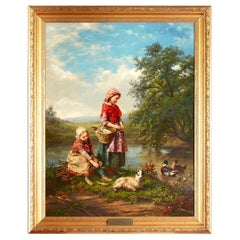
Henry Joseph Campotosto (Belgium, 1833-1910) A Very Fine Oil on Canvas "Walking the Baby Goat", depicting two young dutch girls by the grassy shore of a river bank, one standing holding a wicker basket and a leash to a resting baby goat, the youngest sitting next to her on a pile of branches tucking her pants, a pair of ducks and ducklings swimming by the tree lined river; within a later giltwood carved frame. Signed (l/r): Campotosto Henry. Circa: Brussels, 1870. Note: The artist is also known as Henri Campotosto Henry or Henri Campotosto was born in Brussels in 1833. He studied in Brussels at the Royal Academy des Beaux-Arts and painted some artworks with Eugène Verboeckhoven (Belgium, 1798-1881). He received a 1st Class Medal at the Academy of Brussels and an honorable mention at the Paris Exhibition of 1860. In 1871 he moved to London with his family and remained there for life. He exhibited his work at the Royal Academy Exhibition until 1874 and at the Suffolk Street Gallery from 1878. In 1880 he took part in the Berlin Academy Exhibition. His daughter Octavia also became a painter, visited Italy, and showed her paintings at the Royal Academy from 1871 to 1874. Henri Campotosto died in London in 1910. High Sales: Christie's New York - Property from an American Collection, "The Bird's Nest" - Lot 247 on October 22, 2008, Sold for $37,500 Bonhams London - 19th Century European, Victorian and British Impressionist Art on 28 September 2016 - Lot 33 "Gathering flowers" Sold for £25,000 ($33,750 USD) Museums: The British Museum - Print of two girls and a lamb and print of two girls by a river bank Literature • E. Benezit Dictionnaire des Peintres, Sculpteurs, Dessinateurs, et Graveurs by Librairie Gründ - 1976 Edition - Volume 2, Page 488. • Maurice W...
Category

Antique 19th Century Belgian Country Paintings

Materials

Canvas, Giltwood

Manner Titian, Oil on Canvas Sleeping Cupid
Located in Los Angeles, CA
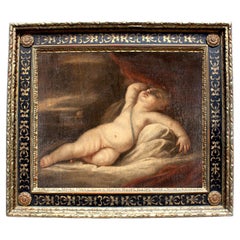
Manner of Titian (Tiziano Vecelli - Italian, 1485-1576) An Oil on Canvas "Sleeping Cupid" within a gilt and black decorated gesso frame. A label on reve...
Category

Antique 17th Century Italian Renaissance Paintings

Materials

Gesso, Canvas, Giltwood

French Louis XVI Style Ormolu and Marquetry Center Table, François Linke Attr.
By François Linke
Located in Los Angeles, CA
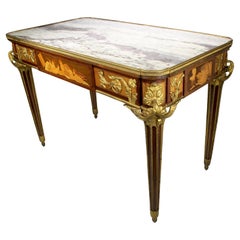
A Very Fine French 19th century Louis XVI Style Ormolu-Mounted Kingwood and Bois Citronnier Marquetry center table or writing table, attributed to François Linke (1855-1946), after t...
Category

Antique Early 1900s French Louis XVI Center Tables

Materials

Marble, Bronze, Ormolu

Italian 17th Century Oil on Canvas Head of Christ Crowned with Thorns, Mignard
By (circle of) Pierre Mignard
Located in Los Angeles, CA
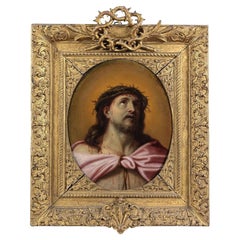
A very fine Italian 17th century oval oil on canvas "Head of Christ Crowned with Thorns" Circle of Pierre Mignard (French, 1612-1695) within...
Category

Antique 17th Century French Baroque Paintings

Materials

Canvas, Giltwood

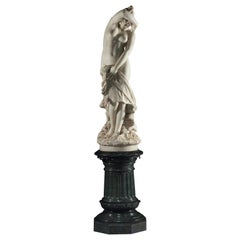
Pietro Bazzanti, Italian 19th Carved Marble Figure Semi-Nude Young Bather Girl
By Pietro Bazzanti
Located in Los Angeles, CA
Pietro Bazzanti - Barzanti (Italian, 1825-1895) "After the Bath" - a very Fine and large carved white Carrara marble figure of a semi-nude young maiden standing by the sea-shore. The smiling and posing young beauty, with bare breasts and back, her right arm juxtaposed over her head, while holding a blanket over her waist with her left hand and standing barefoot by a rocky seawall and wavy shoreline. Signed 'P. Barzanti/Florence' (on reverse) and raised on a cylindrical swiveling carved verde antico solid marble pedestal. circa: Florence, 1880-1890. Pietro Bazzanti or Barzanti (Italian, 1825-1895) was a 19th Century Italian sculptor born in Florence. Together with his brother, Niccolò Bazzanti (Firenze, 1802-1869) who was also a sculptor, they both worked the sprawling Florentine studio 'Pietro Bazzanti e Figlio' a hugely successful sculpture studio, operated within the family at their gallery on Lungarno Corsini until the mid-twentieth century. The studio was a place where many talented professors and apprentice sculptors specialized in sculpting marble...
Category

Antique Late 19th Century Italian Greco Roman Figurative Sculptures

Materials

Marble, Carrara Marble

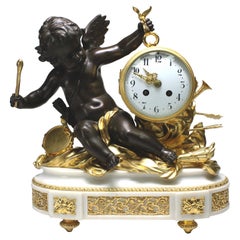
French Louis XVI Style Gilt and Patinated Bronze White Marble Cherub Cupid Clock
By S. Marti Cie
Located in Los Angeles, CA
A fine French Louis XVI Style gilt and patinated bronze and white marble figural mantel clock with a figure of a drummer cherub. The brown patina cupid, seated on gilt-bronze clouds ...
Category

Antique Early 1900s French Belle Époque Mantel Clocks

Materials

Marble, Bronze, Ormolu

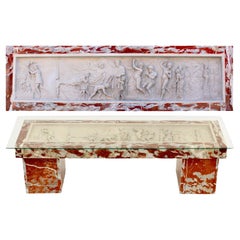
Italian 19th Century Greco-Roman Style Marble Bas-Relief Frieze, Coffee Table
Located in Los Angeles, CA
A Very Fine Italian 19th century Greco-Roman style carved Carrara marble bas-relief Frieze, after the antique. The finely carved white marble frieze in r...
Category

Antique 19th Century Italian Greco Roman Figurative Sculptures

Materials

Marble, Carrara Marble

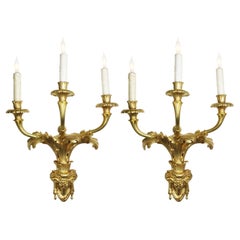
Pair French 19th Century Régence Style 3-Light Gilt-Bronze Wall Lights Sconces
Located in Los Angeles, CA
A Fine Pair of French 19th century Régence (Regency) style three-light gilt-bronze wall lights. The scrolled three light candle-lights, now electrified, above an acanthus leaf design...
Category

Antique Late 19th Century French Regency Wall Lights and Sconces

Materials

Bronze

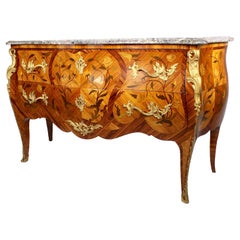
French Louis XV Style Bombé Fruitwood Marquetry Ormolu Mounted Commode
Located in Los Angeles, CA
A French Louis XV Style bois satiné, Fruitwood - Ormolu Mounted Two-Drawer Bombé Commode with mottled marble top. The bowed front and sides with floral marquetry and floral ormolu ha...
Category

Mid-20th Century French Louis XV Commodes and Chests of Drawers

Materials

Marble, Bronze

After Raffaello Sanzio 1483-1520 Raphael La Madonna della Seggiola Oil on Canvas
By (after) Raphael (Raffaello Sanzio da Urbino)
Located in Los Angeles, CA
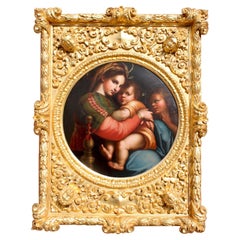
A Fine Italian 19th Century Oil Painting on Canvas "La Madonna della Seggiola" after Raphael (Raffaello Sanzio da Urbino 1483-1520). The circular painted canvas depicting a seated Madonna holding an infant Jesus Christ next to a child Saint John the Baptist, all within a massive carved two-tone gilt wood, gilt-patinated and gesso frame, which is identical to the frame on Raphael's original artwork. This painting is a 19th Century copy of Raphael's Madonna della Seggiola painted in 1514 and currently exhibited and part of the permanent collection at the Palazzo Pitti, Galleria Palatina, Florence, Italy. The bodies of the Virgin, Christ, and the boy Baptist fill the whole picture. The tender, natural looking embrace of the Mother and Child, and the harmonious grouping of the figures in the round, have made this one of Raphael's most popular Madonnas. The isolated chair leg is reminiscent of papal furniture, which has led to the assumption that Leo X himself commissioned the painting. Circa: 1890-1900. Subject: Religious painting Painting diameter: 28 inches (71.1 cm) Frame height: 55 1/8 inches (140 cm) Frame width: 46 inches (116.8 cm) Frame depth: 5 1/8 inches (13 cm) Raffaello Sanzio da Urbino (Italian, March 28 or April 6, 1483 - April 6, 1520), known as Raphael, was an Italian painter and architect of the High Renaissance. His work is admired for its clarity of form, ease of composition, and visual achievement of the Neoplatonic ideal of human grandeur. Together with Michelangelo and Leonardo da Vinci, he forms the traditional trinity of great masters of that period. Raphael was enormously productive, running an unusually large workshop and, despite his death at 37, leaving a large body of work. Many of his works are found in the Vatican Palace, where the frescoed Raphael Rooms were the central, and the largest, work of his career. The best known work is The School of Athens in the Vatican Stanza della Segnatura. After his early years in Rome much of his work was executed by his workshop from his drawings, with considerable loss of quality. He was extremely influential in his lifetime, though outside Rome his work was mostly known from his collaborative printmaking. After his death, the influence of his great rival Michelangelo was more widespread until the 18th and 19th centuries, when Raphael's more serene and harmonious qualities were again regarded as the highest models. His career falls naturally into three phases and three styles, first described by Giorgio Vasari: his early years in Umbria, then a period of about four years (1504–1508) absorbing the artistic traditions of Florence, followed by his last hectic and triumphant twelve years in Rome, working for two Popes and their close associates. Raphael was born in the small but artistically significant central Italian city of Urbino in the Marche region, where his father Giovanni Santi was court painter to the Duke. The reputation of the court had been established by Federico III da Montefeltro, a highly successful condottiere who had been created Duke of Urbino by the Pope - Urbino formed part of the Papal States - and who died the year before Raphael was born. The emphasis of Federico's court was rather more literary than artistic, but Giovanni Santi was a poet of sorts as well as a painter, and had written a rhymed chronicle of the life of Federico, and both wrote the texts and produced the decor for masque-like court entertainments. His poem to Federico shows him as keen to show awareness of the most advanced North Italian painters, and Early Netherlandish artists as well. In the very small court of Urbino he was probably more integrated into the central circle of the ruling family than most court painters. Federico was succeeded by his son Guidobaldo da Montefeltro, who married Elisabetta Gonzaga, daughter of the ruler of Mantua, the most brilliant of the smaller Italian courts for both music and the visual arts. Under them, the court continued as a centre for literary culture. Growing up in the circle of this small court gave Raphael the excellent manners and social skills stressed by Vasari. Court life in Urbino at just after this period was to become set as the model of the virtues of the Italian humanist court through Baldassare Castiglione's depiction of it in his classic work The Book of the Courtier, published in 1528. Castiglione moved to Urbino in 1504, when Raphael was no longer based there but frequently visited, and they became good friends. He became close to other regular visitors to the court: Pietro Bibbiena and Pietro Bembo, both later cardinals, were already becoming well known as writers, and would be in Rome during Raphael's period there. Raphael mixed easily in the highest circles throughout his life, one of the factors that tended to give a misleading impression of effortlessness to his career. He did not receive a full humanistic education however; it is unclear how easily he read Latin. Early Life and Works His mother Màgia died in 1491 when Raphael was eight, followed on August 1, 1494 by his father, who had already remarried. Raphael was thus orphaned at eleven; his formal guardian became his only paternal uncle Bartolomeo, a priest, who subsequently engaged in litigation with his stepmother. He probably continued to live with his stepmother when not staying as an apprentice with a master. He had already shown talent, according to Vasari, who says that Raphael had been "a great help to his father". A self-portrait drawing from his teenage years shows his precocity. His father's workshop continued and, probably together with his stepmother, Raphael evidently played a part in managing it from a very early age. In Urbino, he came into contact with the works of Paolo Uccello, previously the court painter (d. 1475), and Luca Signorelli, who until 1498 was based in nearby Città di Castello. According to Vasari, his father placed him in the workshop of the Umbrian master Pietro Perugino as an apprentice "despite the tears of his mother". The evidence of an apprenticeship comes only from Vasari and another source, and has been disputed—eight was very early for an apprenticeship to begin. An alternative theory is that he received at least some training from Timoteo Viti, who acted as court painter in Urbino from 1495.Most modern historians agree that Raphael at least worked as an assistant to Perugino from around 1500; the influence of Perugino on Raphael's early work is very clear: "probably no other pupil of genius has ever absorbed so much of his master's teaching as Raphael did", according to Wölfflin. Vasari wrote that it was impossible to distinguish between their hands at this period, but many modern art historians claim to do better and detect his hand in specific areas of works by Perugino or his workshop. Apart from stylistic closeness, their techniques are very similar as well, for example having paint applied thickly, using an oil varnish medium, in shadows and darker garments, but very thinly on flesh areas. An excess of resin in the varnish often causes cracking of areas of paint in the works of both masters. The Perugino workshop was active in both Perugia and Florence, perhaps maintaining two permanent branches. Raphael is described as a "master", that is to say fully trained, in December 1500. His first documented work was the Baronci altarpiece for the church of Saint Nicholas of Tolentino in Città di Castello, a town halfway between Perugia and Urbino. Evangelista da Pian di Meleto, who had worked for his father, was also named in the commission. It was commissioned in 1500 and finished in 1501; now only some cut sections and a preparatory drawing remain. In the following years he painted works for other churches there, including the Mond Crucifixion (about 1503) and the Brera Wedding of the Virgin (1504), and for Perugia, such as the Oddi Altarpiece. He very probably also visited Florence in this period. These are large works, some in fresco, where Raphael confidently marshals his compositions in the somewhat static style of Perugino. He also painted many small and exquisite cabinet paintings in these years, probably mostly for the connoisseurs in the Urbino court, like the Three Graces and St. Michael, and he began to paint Madonnas and portraits. In 1502 he went to Siena at the invitation of another pupil of Perugino, Pinturicchio, "being a friend of Raphael and knowing him to be a draughtsman of the highest quality" to help with the cartoons, and very likely the designs, for a fresco series in the Piccolomini Library in Siena Cathedral. He was evidently already much in demand even at this early stage in his career. Influence of Florence Raphael led a "nomadic" life, working in various centres in Northern Italy, but spent a good deal of time in Florence, perhaps from about 1504. Although there is traditional reference to a "Florentine period...
Category

Antique Early 1900s Italian Baroque Paintings

Materials

Canvas, Giltwood

After Raffaello Sanzio 1483-1520 Raphael La Madonna della Seggiola Oil on Canvas
By (after) Raphael (Raffaello Sanzio da Urbino)
Located in Los Angeles, CA
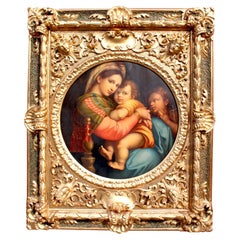
A Fine Italian 19th Century Oil Painting on Canvas "La Madonna della Seggiola" after Raphael (Raffaello Sanzio da Urbino 1483-1520). The circular painted canvas depicting a seated Madonna holding an infant Jesus Christ next to a child Saint John the Baptist, all within a massive carved gilt wood and gesso frame, which is identical to the frame on Raphael's original artwork. This painting is a 19th Century copy of Raphael's Madonna della Seggiola painted in 1514 and currently exhibited and part of the permanent collection at the Palazzo Pitti, Galleria Palatina, Florence, Italy. The bodies of the Virgin, Christ, and the boy Baptist fill the whole picture. The tender, natural looking embrace of the Mother and Child, and the harmonious grouping of the figures in the round, have made this one of Raphael's most popular Madonnas. The isolated chair leg is reminiscent of papal furniture, which has led to the assumption that Leo X himself commissioned the painting. A retailer's label reads " Fred K/ Keer's Sons - Framers and Fine Art Dealers - 917 Broad St. Newark, N.J." - Another label from the gilder reads "Carlo Bartolini - Doratore e Verniciatori - Via Maggio 1924 - Firenze". Circa: 1890-1900. Subject: Religious painting Canvas diameter: 28 inches (71.1 cm) Frame height: 54 inches (137.2 cm) Frame width: 42 1/2 inches (108 cm) Frame depth: 5 1/2 inches (14 cm) Raffaello Sanzio da Urbino (Italian, March 28 or April 6, 1483 - April 6, 1520), known as Raphael, was an Italian painter and architect of the High Renaissance. His work is admired for its clarity of form, ease of composition, and visual achievement of the Neoplatonic ideal of human grandeur. Together with Michelangelo and Leonardo da Vinci, he forms the traditional trinity of great masters of that period. Raphael was enormously productive, running an unusually large workshop and, despite his death at 37, leaving a large body of work. Many of his works are found in the Vatican Palace, where the frescoed Raphael Rooms were the central, and the largest, work of his career. The best known work is The School of Athens in the Vatican Stanza della Segnatura. After his early years in Rome much of his work was executed by his workshop from his drawings, with considerable loss of quality. He was extremely influential in his lifetime, though outside Rome his work was mostly known from his collaborative printmaking. After his death, the influence of his great rival Michelangelo was more widespread until the 18th and 19th centuries, when Raphael's more serene and harmonious qualities were again regarded as the highest models. His career falls naturally into three phases and three styles, first described by Giorgio Vasari: his early years in Umbria, then a period of about four years (1504–1508) absorbing the artistic traditions of Florence, followed by his last hectic and triumphant twelve years in Rome, working for two Popes and their close associates. Raphael was born in the small but artistically significant central Italian city of Urbino in the Marche region, where his father Giovanni Santi was court painter to the Duke. The reputation of the court had been established by Federico III da Montefeltro, a highly successful condottiere who had been created Duke of Urbino by the Pope - Urbino formed part of the Papal States - and who died the year before Raphael was born. The emphasis of Federico's court was rather more literary than artistic, but Giovanni Santi was a poet of sorts as well as a painter, and had written a rhymed chronicle of the life of Federico, and both wrote the texts and produced the decor for masque-like court entertainments. His poem to Federico shows him as keen to show awareness of the most advanced North Italian painters, and Early Netherlandish artists as well. In the very small court of Urbino he was probably more integrated into the central circle of the ruling family than most court painters. Federico was succeeded by his son Guidobaldo da Montefeltro, who married Elisabetta Gonzaga, daughter of the ruler of Mantua, the most brilliant of the smaller Italian courts for both music and the visual arts. Under them, the court continued as a centre for literary culture. Growing up in the circle of this small court gave Raphael the excellent manners and social skills stressed by Vasari. Court life in Urbino at just after this period was to become set as the model of the virtues of the Italian humanist court through Baldassare Castiglione's depiction of it in his classic work The Book of the Courtier, published in 1528. Castiglione moved to Urbino in 1504, when Raphael was no longer based there but frequently visited, and they became good friends. He became close to other regular visitors to the court: Pietro Bibbiena and Pietro Bembo, both later cardinals, were already becoming well known as writers, and would be in Rome during Raphael's period there. Raphael mixed easily in the highest circles throughout his life, one of the factors that tended to give a misleading impression of effortlessness to his career. He did not receive a full humanistic education however; it is unclear how easily he read Latin. Early Life and Works His mother Màgia died in 1491 when Raphael was eight, followed on August 1, 1494 by his father, who had already remarried. Raphael was thus orphaned at eleven; his formal guardian became his only paternal uncle Bartolomeo, a priest, who subsequently engaged in litigation with his stepmother. He probably continued to live with his stepmother when not staying as an apprentice with a master. He had already shown talent, according to Vasari, who says that Raphael had been "a great help to his father". A self-portrait drawing from his teenage years shows his precocity. His father's workshop continued and, probably together with his stepmother, Raphael evidently played a part in managing it from a very early age. In Urbino, he came into contact with the works of Paolo Uccello, previously the court painter (d. 1475), and Luca Signorelli, who until 1498 was based in nearby Città di Castello. According to Vasari, his father placed him in the workshop of the Umbrian master Pietro Perugino as an apprentice "despite the tears of his mother". The evidence of an apprenticeship comes only from Vasari and another source, and has been disputed—eight was very early for an apprenticeship to begin. An alternative theory is that he received at least some training from Timoteo Viti, who acted as court painter in Urbino from 1495.Most modern historians agree that Raphael at least worked as an assistant to Perugino from around 1500; the influence of Perugino on Raphael's early work is very clear: "probably no other pupil of genius has ever absorbed so much of his master's teaching as Raphael did", according to Wölfflin. Vasari wrote that it was impossible to distinguish between their hands at this period, but many modern art historians claim to do better and detect his hand in specific areas of works by Perugino or his workshop. Apart from stylistic closeness, their techniques are very similar as well, for example having paint applied thickly, using an oil varnish medium, in shadows and darker garments, but very thinly on flesh areas. An excess of resin in the varnish often causes cracking of areas of paint in the works of both masters. The Perugino workshop was active in both Perugia and Florence, perhaps maintaining two permanent branches. Raphael is described as a "master", that is to say fully trained, in December 1500. His first documented work was the Baronci altarpiece for the church of Saint Nicholas of Tolentino in Città di Castello, a town halfway between Perugia and Urbino. Evangelista da Pian di Meleto, who had worked for his father, was also named in the commission. It was commissioned in 1500 and finished in 1501; now only some cut sections and a preparatory drawing remain. In the following years he painted works for other churches there, including the Mond Crucifixion (about 1503) and the Brera Wedding of the Virgin (1504), and for Perugia, such as the Oddi Altarpiece. He very probably also visited Florence in this period. These are large works, some in fresco, where Raphael confidently marshals his compositions in the somewhat static style of Perugino. He also painted many small and exquisite cabinet paintings in these years, probably mostly for the connoisseurs in the Urbino court, like the Three Graces and St. Michael, and he began to paint Madonnas and portraits. In 1502 he went to Siena at the invitation of another pupil of Perugino, Pinturicchio, "being a friend of Raphael and knowing him to be a draughtsman of the highest quality" to help with the cartoons, and very likely the designs, for a fresco series in the Piccolomini Library in Siena Cathedral. He was evidently already much in demand even at this early stage in his career. Influence of Florence Raphael led a "nomadic" life, working in various centres in Northern Italy, but spent a good deal of time in Florence, perhaps from about 1504. Although there is traditional reference to a "Florentine period...
Category

Antique Early 1900s Italian Baroque Paintings

Materials

Canvas, Giltwood

After Raffaello Sanzio 1483-1520 Raphael La Madonna Della Seggiola Oil on Canvas
By (after) Raphael (Raffaello Sanzio da Urbino)
Located in Los Angeles, CA
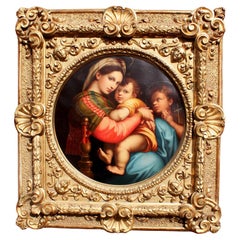
A fine Italian 19th century oil painting on canvas "La Madonna della Seggiola" after Raphael (Raffaello Sanzio da Urbino 1483-1520). The circular painted canvas depicting a seated Ma...
Category

Antique Late 19th Century Italian Baroque Paintings

Materials

Canvas, Giltwood

French 19th C.Louis XV Style Ormolu Mounted Bureau-Plat Desk Attr. Paul Sormani
By Paul Sormani
Located in Los Angeles, CA
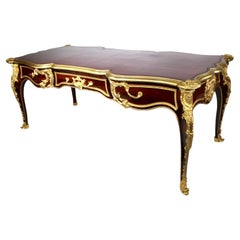
A Very Fine and Large French 19th Century Louis XV Style Ormolu Mounted Tulipwood Three-Drawer Bureau Plat - After a model by Joseph Baumhauer (died 1772) - Attributed to Paul Sormani (French-Italian 1817-1877). The serpentine shaped rectangular top enclosing a gilt tooled burgundy leather writing surface (worn) within a molded border above a long central drawer flanked by two drawers, with scrolled ormolu drawer-pulls, ormolu floral encadrements and acanthus corners co-raised on elegant cabriolet legs. (Unsigned - Unmarked). Circa: Paris, 1880. Paul Sormani (1817-1877): Born in Venice, Paul Sormani set up in Paris in the middle of the 19th century. He specialized in creating furniture and works of art and was known for his high quality reproductions of Louis XV and XVI furniture...
Category

Antique 19th Century French Louis XV Desks and Writing Tables

Materials

Bronze, Ormolu

Monumental French 19th Century Cast-Iron Bust of Head of Antinous as Dionysus
Located in Los Angeles, CA
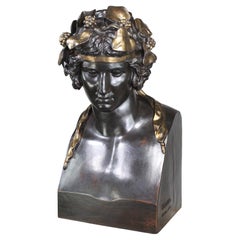
A Monumental French 19th Century Patinated and Parcel Gilt Cast-Iron Bust of 'Head from a Statue of Antinous as Dionysus' Wearing a Wreath of Ivy ...
Category

Antique 19th Century French Greco Roman Busts

Materials

Iron

Whimsical French 19th/20th Century Gilt-Bronze Belle Époque Putto Chandelier
Located in Los Angeles, CA
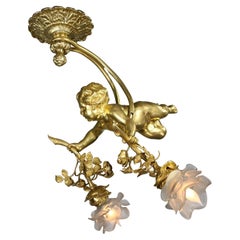
A charming whimsical French 19th/20th century Belle Époque two-light gilt bronze figural chandelier pendant. The charming gilt bronze figure of a naked hovering Putto (Child), suspen...
Category

Antique Early 1900s French Belle Époque Chandeliers and Pendants

Materials

Bronze

Pair of French 19th/20th Century Empire Style 3-Light Gilt-Bronze Wall Sconces
Located in Los Angeles, CA
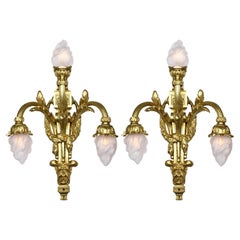
A fine pair of French 19th/20th Century Empire Revival Style Three-Light Gilt-Bronze Wall Sconces (Wall lights). The gilt-bronze wall brackets, each with a set of three scrolled light...
Category

Antique Early 1900s Empire Revival Wall Lights and Sconces

Materials

Bronze

French 19th Century Louis XV Style Gilt-Bronze Mounted Marquetry Center Table
Located in Los Angeles, CA
A Very Fine French 19th century Louis XV Style gilt-bronze mounted fruitwood floral marquetry center table or desk with drawer, by Ébéniste Louis Gradé, Gr...
Category

Antique 19th Century French Louis XV Center Tables

Materials

Bronze, Ormolu

Pair of French Empire Style Gilt-Bronze Two-Light Wall Torchère Sconces
Located in Los Angeles, CA
A pair of French empire style gilt-bronze two-light wall torchère sconces. Each elongated gilt-bronze applique with central twin-tassels supporting a pa...
Category

20th Century French Empire Wall Lights and Sconces

Materials

Bronze

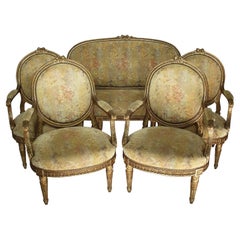
Fine French 19th Century Louis XVI Style Giltwood Carved Five-Piece Salon Suite
Located in Los Angeles, CA
A very fine French 19th century Louis XVI style giltwood carved five-piece salon suite, comprising of a canapé and four fauteuils, all with recent upholstery. The finely carved frame...
Category

Antique Late 19th Century French Louis XV Living Room Sets

Materials

Fabric, Giltwood

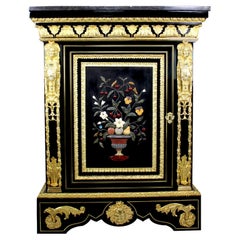
Fine French Napoleon III Ormolu Mounted Ebonized Wood Pietra Dura Cabinet
By Befort Jeune
Located in Los Angeles, CA
A very fine French 19th century Napoleon III Ormolu Mounted Ebonized wood and Pietra Dura Meuble d'Appui à Hauteur with a grey marble top. The single front-door black-lacquered cabin...
Category

Antique 19th Century French Napoleon III Cabinets

Materials

Multi-gemstone, Marble, Ormolu

Fine 19th C. French Gilt-Bronze Mounted Cabinet by Edouard Lievre Paul Sormani
By Edouard Lievre
Located in Los Angeles, CA
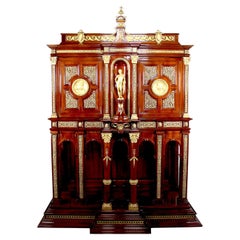
A Fine French 19th Century Neo-Renaissance Style Gilt-Bronze Mounted Walnut and Mahogany Two-Door Bargueno or Cabinet on Stand, attributed to Paul Sormani (1817-1877), designed Édouard Lièvre (1828-1886) and retailed by Poujol - Paris. The spreading pediment Vitruvian scrolled fitted frieze centered by a crest and flanked by cartouches, the quarter paneled doors with pierced rinceaux reserves and centered by an ormolu portrait relief roundels of King Charles VII of France 'The Victorious' (1403-1461) and Agnès Sorel (1422-1450), flanking a gilt-bronze statuette of 'The Belvedere Hermes’, the base fronted by open arches centered by a pair of columns with Corinthian capitals, above a spreading platform, all raised on bun feet. Circa: Paris, 1870. Paul Sormani (1817-1877) was born in Venice, Paul Sormani set up in Paris in the middle of the 19th century. He specialized in creating furniture and works of art and was known for his high quality reproductions of Louis XV and XVI furniture...
Category

Antique 19th Century French Renaissance Revival Cabinets

Materials

Bronze, Ormolu

Monumental Pair French 19th Century Putto Flambeaux Urns Torchere Urn Sculptures
By René Rozet 1
Located in Los Angeles, CA
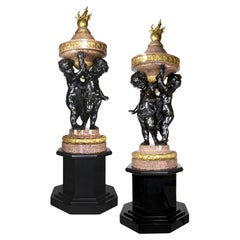
A Monumental Museum Quality Pair of French 19th Century Figural Gilt and Patinated Bronze Rosso Granite Marble Flambeaux Urns, each depicting a pair of standing allegorical and whims...
Category

Antique 1890s French Louis XV Figurative Sculptures

Materials

Granite, Bronze

French Louis XV Style Cut-Glass, Wrought Iron and Parcel-Gilt 6 Light Chandelier
Located in Los Angeles, CA
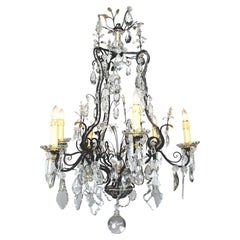
A Fine French Louis XV Style Cut-glass, Wrought Iron and Parcel-Gilt Six Light Chandelier. The scrolled ebonized iron frame surmounted with cut-glass pendants and prisms, the flower ...
Category

Antique Early 1900s French Louis XV Chandeliers and Pendants

Materials

Wrought Iron

French Early 20th C. Art-Deco Silvered Bronze Alabaster 6-Light Chandelier
Located in Los Angeles, CA
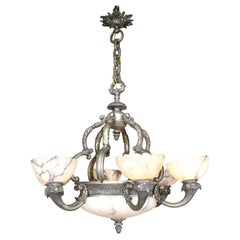
A French early 20th century Art Deco and silvered bronze carved veined white alabaster six-light chandelier. The carved circular plafonnier with a silvered apron...
Category

Antique Early 1900s French Art Deco Chandeliers and Pendants

Materials

Alabaster, Bronze

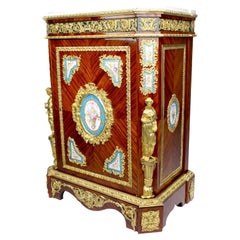
French Napoleon III Ormolu Porcelain Mounted Cabinet Meuble D Appui by Befort
Located in Los Angeles, CA
A Very Fine French Napoleon III Figural Ormolu and Porcelain (Probably Sevres) Mounted Tulipwood Meuble A Hauteur D'Appui, by Mathieu Befort, dit Befort Jeune. The rectangular shaped...
Category

Antique 19th Century Cabinets

Materials

Marble, Bronze, Ormolu

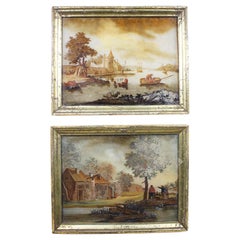
Rare Pair of Flemish 18th Century "Verre Églomisé" Reverse Glass Paintings
Located in Los Angeles, CA
A rare pair of Flemish 18th century "Verre Églomisé" Reverse Glass Paintings, each depicting riverfront scenes with figures, fishermen castles, co...
Category

Antique 18th Century Finnish Baroque Paintings

Materials

Glass, Giltwood, Paint

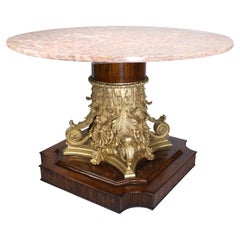
French 19th Century Renaissance Revival Style Gilt-Bronze Walnut Coffee Table
Located in Los Angeles, CA
A Fine and Rare French 19th Century Renaissance Revival Style Gilt-Bronze and Walnut coffee table with marble top. The assembled Corinthian gilt-bronze capital, now converted into a ...
Category

Antique Late 19th Century Classical Greek Center Tables

Materials

Marble, Bronze

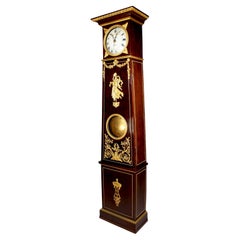
French 19th Century Louis XVI Style Plum-Mahogany Ormolu Mounted Tall Case Clock
Located in Los Angeles, CA
A Very Fine French 19th Century Louis XVI Style Plum-Mahogany and Ormolu Mounted Tall-Case Regulator attributed to Revollon. The Roman numeral dial signed: Revollon - M. Lion, with h...
Category

Antique 19th Century French Louis XVI Grandfather Clocks and Longcase Cl...

Materials

Ormolu

Italian Florentine Gilt Wood Carved Oval Mirror Marble Top Console Set
Located in Los Angeles, CA
An Italian Florentine gilt wood carved mirror and console with marble top set. The gilt-wood oval mirror frame with a floral and scrolled acanthus...
Category

Antique Early 1900s Italian Rococo Revival Wall Mirrors

Materials

Marble

An Italian 19th Century Patinated Bronze Torchere, After Niccolò Roccatagliata
By Niccolo Roccatagliata
Located in Los Angeles, CA
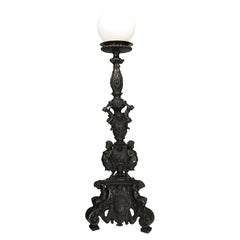
A Large and Impressive Italian 19th Century Patinated Bronze Figural Torchere, after a model by Niccolò Roccatagliata (Genoa 1593 - Venice 1636). The triangular foot base with projecting putti supporting the stem and oval reserves within cartouche motifs, one containing the initials "S.D" with an olive tree in-between and a bull-head below. The stem knot with figures of winged caryatids and festoons and upper part with cherub heads, acanthus leaves and egg and bead patterns and topped with a later white glass globe. The decorative system refers to the documented artistic production of the Venetian workshop of Niccolò Roccatagliata and takes inspirational model from the base of the Renaissance bronze of the Scuola Grande di San Teodoro in Venice, a work signed by Andrea del Bartolomeo di Alessandri known as Brescianino. Electrified. Circa: Venice, 1850-1880. RELATED LITERATURE L. Planiscig, Venezianische Bildhauer der Renaissance, Vienna, 1921, figs. 661-664; C. Avery, 'Andrea del Bartolomeo di Alessandri detto il Bresciano" lavator di gettar di Bronzo": candelabri, satiri e battenti', M. Ceriana and V. Avery (eds.), L'Industria artistica del Bronzo del Rinascimento a venezia e nell'Italia settentrionale, Venice, 2008, pp. 233-252. Similar models of this torchere were part of the interior decor collection at the Vanderbilt Mansion in New York (see black and white photo). The Cornelius Vanderbilt II House was a large mansion built in 1883 at 1 West 57th Street in Manhattan, New York City. It occupied the frontage along the west side of Fifth Avenue from West 57th Street up to West 58th Street at Grand Army...
Category

Antique 19th Century Italian Baroque Floor Lamps

Materials

Bronze

Large German Porcelain Gilt-Bronze Mounted Urn with Cover in Manner of Meissen
By Meissen Porcelain
Located in Los Angeles, CA
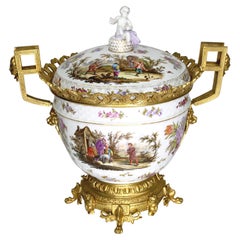
A Large German 19th/20th century Figural Porcelain and Gilt-Bronze Mounted Urn with Cover in the Manner of Meissen. The ovoid porcelain hand painted u...
Category

Antique Early 1900s German Baroque Revival Urns

Materials

Bronze

Large Pair of Baroque Style Walnut Parcel-Silver Leaf Winged Throne Armchairs
Located in Los Angeles, CA
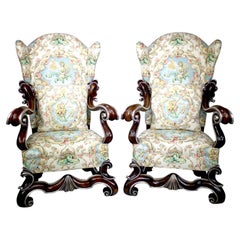
A large nicely carved pair of Baroque Revival style Walnut and Parcel-Silver Leaf Winged Throne Armchairs. The tall padded winged back armchairs, with scrolled carved walnut frames in a dark finish stain, each with finely carved open-armrests with parcel-silver leaf edges and clam-carved supports, raised on scrolled conjoined legs with wavy corners, all upholstered with a recent whimsical Scalamandre/Old World...
Category

Early 20th Century Portuguese Baroque Revival Armchairs

Materials

Silver Leaf

Grégoire Calvet French, 1871-1928 19th Century Marble Sculpture of a Nude Girl
Located in Los Angeles, CA
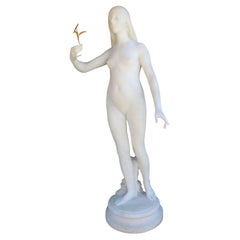
Grégoire Calvet (French, 1871-1928) A Fine Late 19th Century Life-Size White Marble Sculpture representing "Peace & Love". The beautifully carved white...
Category

Antique Late 19th Century French Art Nouveau Figurative Sculptures

Materials

Carrara Marble, Ormolu

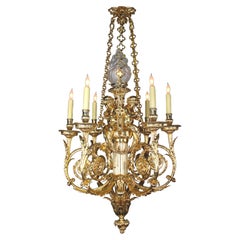
French 19th Century Louis XV Style Gilt Bronze Chandelier After Pierre Gouthière
By Pierre Gouthiere
Located in Los Angeles, CA
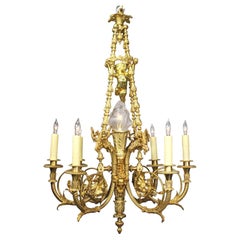
A fine French 19th Century Louis XV Style gilt bronze seven-light figural chandelier. The elongated and ovoid gilt-bronze frame with six scrolled candle-arms (now electrified) surmou...
Category

Antique Late 19th Century French Louis XV Chandeliers and Pendants

Materials

Bronze, Ormolu

French 19th/20th Century Louis XV Style Christofle Cie Figural Centerpiece
By Christofle
Located in Los Angeles, CA
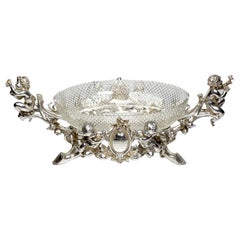
A very fine and palatial French 19th/20th century Christofle & Cie Louis XV style silvered figural centerpiece, fitted with an oval diamond-cut-glass center-dish, attributed to Bacca...
Category

Antique Early 1900s French Louis XV Planters, Cachepots and Jardinières

Materials

Crystal, Silver Plate, Bronze

French 19th Century Louis XV-XVI Ormolu Mounted Marquetry Commode Marble Top
Located in Los Angeles, CA
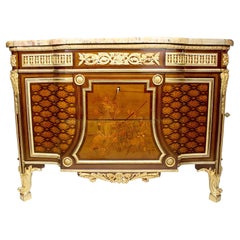
A Very Fine French 19th Century Louis XVI-Louis XVI Transition Style Ormolu-Mounted Mahogany, Birdseye Maple, Fruitwood and Sycamore Marquetry and Parquetry Commode with a Brèche d'Alep Marble-Top, after the model by Jean-Henri Riesener (1734-1806). Circa: 1870-1880. The finely detailed commode with rounded sides, finely chased ormolu mounts with their original mercury gilt, a single center apron drawer with wreath ormolu pulls and an acanthus plate...
Category

Antique 19th Century French Louis XVI Commodes and Chests of Drawers

Materials

Marble, Bronze, Ormolu

A Pair of French Empire Revival Style Mahogany Gilt-Bronze Mounted Game Chairs
Located in Los Angeles, CA
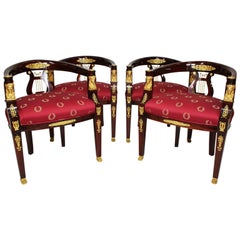
A Pair of French empire revival style mahogany and gilt-bronze mounted horseshoe shaped game armchairs (reproductions). The arched back frames centered with a harp design below a lau...
Category

Late 20th Century French Empire Revival Armchairs

Materials

Bronze

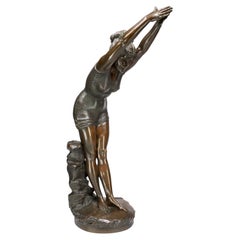
After Odoardo Tabacchi, Italian 19th Century "La Tuffolina" the Diver
By Odoardo Tabacchi
Located in Los Angeles, CA
After Odoardo Tabacchi (1831-1905) a very fine Italian 19th century patinated bronze figure of "La Tuffolina" (The Diver). The finely cast brown patin...
Category

Antique Late 19th Century Italian Beaux Arts Figurative Sculptures

Materials

Bronze

French 19th-20th C. Circular Marquetry Ormolu Table, Manner of François Linke
By François Linke
Located in Los Angeles, CA
A Very Fine French Late 19th/Early 20th Century Louis XV Style Ormolu Mounted Kingwood, Bois Satine, Mahogany, Marquetry and Parquetry Gueridon (Round End-Table), in manner of François Linke (1855-1946). The circular marquetry top with trellis inlay encompass by a ribbon-tied floral and ribbon entwining inlaid surround, above a frieze interspersed with four abundant floral, foliate and entwined opposing cornucopia mounts each centered by a bacchanal mask, with one frieze drawer, on slender cabriolet legs with an up swept X-stretcher surmounted by a circular under-tier with a basket weave mounted gallery. Bearing the fine quality furnishings retailer's plaque which reads: 'S. & H. Jewell, 131 & 132, High Holborn, London, W.C'. Circa: Paris, 1900. S & H Jewell are first recorded in 1830 as fine quality retailers, restorers and cabinet makers. They were a family business who worked from their premises at 29-31 Little Queen Street, Holborn, in London and then later to 26 Parker Street and then at 131 - 131, High Holborn, both in London W.C. They are recorded to have sold furniture to the Arts and Crafts home...
Category

Antique Early 1900s French Louis XV Side Tables

Materials

Bronze, Ormolu

Louis XVI Style Gilt-Bronze 7-Light Chandelier with Children, After Gouthière
Located in Los Angeles, CA
A French Louis XVI style gilt-bronze figural seven-light chandelier with Figures of Putti (Children), after the model by Pierre Gouthière in the Cabinet doré for Marie-Antoinette at ...
Category

20th Century French Louis XVI Chandeliers and Pendants

Materials

Bronze

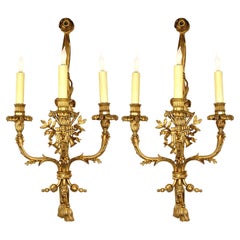
Pair of French 19th Century Louis XV Style Three-Light Gilt-Bronze Wall Sconces
By Henry Dasson
Located in Los Angeles, CA
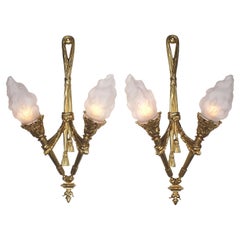
A very fine pair of French 19th Century Louis XV style three-light gilt-bronze wall lights (Sconces), attributed to Henri Dasson (1825–1896). The elongated ormolu tassel body surmoun...
Category

Antique 19th Century French Louis XV Wall Lights and Sconces

Materials

Bronze, Ormolu

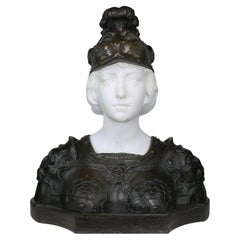
French 19th Century Bronze and White Marble Bust of Marianne in Full Armor
Located in Los Angeles, CA
A French 19th century bronze and marble bust of Marianne in full armor. The nicely cast Baroque Revival brown patinated bronze and carved white marble figure of Marianne, the allegorical personification of the French Republic, presented in her militaristic guise, reminiscent of Minerva, wearing a Phrygian helmet and armored breastplate centered by winged male mask and with lion shoulder armor pads, all raised on a conforming black marble base. Circa: 1890-1900. Marianne has been the national personification of the French Republic since the French Revolution, as a personification of liberty, equality, fraternity and reason, as well as a portrayal of the Goddess of Liberty. Marianne is displayed in many places in France and holds a place of honor in town halls and law courts. She is depicted in the Triumph of the Republic, a bronze sculpture overlooking the Place de la Nation in Paris, as well as represented with another Parisian statue on the Place de la République. Her profile stands out on the official government logo of the country, appears on French euro coins and on French postage stamps. She was also featured on the former franc currency and is officially used on most government documents. Marianne is a significant republican symbol; her French monarchist equivalent is often Joan of Arc. As a national icon Marianne represents opposition to monarchy and the championship of freedom and democracy against all forms of oppression. Other national symbols of Republican France include the tricolor flag, the national motto Liberté, Égalité, Fraternité, the national anthem "La Marseillaise", the coat of arms, and the official Great Seal of France. Marianne also wore a Cockade and a red Phrygian cap symbolizing Liberty. Minerva and its pendant bust of Mars evoke the classicizing subjects, bust-length formats, and style that originated in France during the reign of Louis XIV (1643–1715) and that concurrently was popularized across Europe. The busts' simple forms, stiff poses, and solemn facial types are consistent with the late Baroque sculptures that were carved in Flanders during this period. In Flanders, especially in Antwerp and Brussels, sculpture and architectural decoration traditionally was carved using combinations of native black marble (noir belge), mottled red marble (rouge belge), and white marble or alabaster. The use of these stones in colorful counterpoint speaks most strongly to the busts’ Flemish origins. The veneration of ideal heroes and heroines in ancient costume and arms took on extravagant form in the 17th century, with countless variations. Within this imaginative tradition, the identification of the pair as Minerva and Mars cannot be certain. The female bust, for example, could be identified as Bellona, Roman goddess of war, who is depicted in 17th and 18th century French paintings wearing flamboyantly plumed helmets and low-cut cuirasses that expose her breasts. Whatever their identities, the female and male warriors are portrayed as calm rather than bellicose beings. The sovereign pair does...
Category

Antique 19th Century French Baroque Revival Figurative Sculptures

Materials

Marble, Bronze

Still Thinking About These?

All Recently Viewed