Jan s Co Fine French Antiques Inc. Furniture

to
580
811
810
1
210
95
39
21
17
12
9
8
7
5
4
3
2
1
16
360
434
1
369
12
22
293
4
7
1
485
432
375
238
222
754
562
104
34
33
811
811
811
7
4
4
3
2
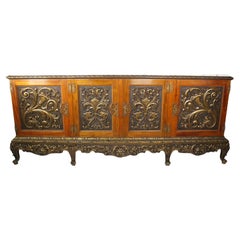
Large Italian Early 20th Century Gildwood Carved Server Buffet with Marble Top
Located in Los Angeles, CA
A fine and large Italian early 20th century gildwood carved and gilt-brass mounted server buffet with marble top. The rectangular fruit wood body with four front doors ornately carve...
Category

Antique Early 1900s Italian Belle Époque Buffets

Materials

Marble

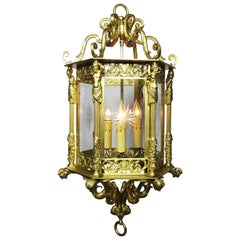
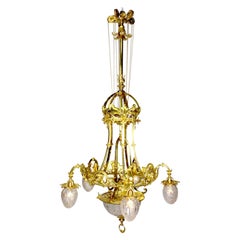
English 19th-20th Century Neoclassical Style Lantern, Attributed to Lenygon
By Lenygon Co. 1
Located in Los Angeles, CA
An English 19th-20th century neoclassical style figural hexagonal three-light gilt bronze lantern with figures of bearded male caryatids and winged gargoyles, every other glass panel centered with an edged glass starburst, possibly supplied by Lenygon & Co, London, circa 1900. The firm of Lenygon & Company was located at 31 Old Burlington Street, London. It was founded in the early 1900s and had an important clientele including the Earl of Pembroke...
Category

Antique Early 1900s English Neoclassical Revival Lanterns

Materials

Bronze

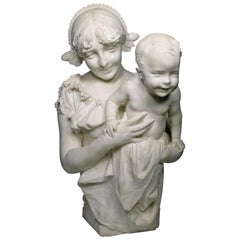
Italian 19th Century Life Marble Sculpture "Mother and Child" by A. Mazzucchelli
By Alfonso Mazzucchelli
Located in Los Angeles, CA
A very fine and charming Italian 19th century life-size Carrara marble sculpture of "A Mother and Child" depicting a young joyous mother holding her young child in her arms, by Profe...
Category

Antique 19th Century Italian Romantic Figurative Sculptures

Materials

Carrara Marble

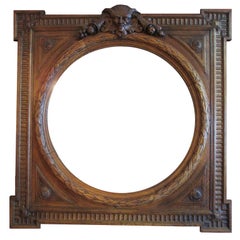
Italian Renaissance Revival Style 19th Century Carved Oak Figural Mirror Frame
Located in Los Angeles, CA
Italian Renaissance revival style 19th century carved oak figural mirror frame with a circular beveled mirror plate. The square shaped body with arrowhead corners, crowned with a car...
Category

Antique Late 19th Century Italian Renaissance Revival Mantel Mirrors and...

Materials

Mirror, Oak

French 19th Century Patinated Bronze Group "The Abduction of the Sabine Women"
By Pierre Loison 1
Located in Los Angeles, CA
A very fine and Monumental French 19th century patinated bronze group Titled "The Abduction of the Sabine Women" after a model by Pierre Loison (French, 1816-1886), depicting a young scantily maiden being carried away on the arms of a Roman soldier, raised on circular ebonized wood and brass revolving pedestal stand. Signed at the base: P. Loison, circa: Paris, 1870-1880. Overall height (Sculpture and Pedestal): 91 inches (231.2 cm). Sculpture height: 54 3/4 inches (139.1 cm). Sculpture width: 24 inches (61 cm). Pedestal height: 36 inches (91.5 cm). Pedestal width (Widest): 25 1/2 inches (64.8 cm). Pierre Loison was a French sculptor of the 19th century born in the seaside town of Loir-et-Cher on July 5, 1816 and died in Cannes on February 3, 1886. In 1841, he joined the Pierre-Jean David d'Angers workshop where he became one of his favorite pupils. A year later he attended the School of Fine Arts in Paris. He exhibited for the first time at the Salon des artistes Français where in 1845 he was awarded third-class medal. In 1853 he was awarded First Place medal and at the Universal Exhibition of 1955 he received an honorable mention and another medal award in 1859. On 12 July 1859 and by decree, he was made "Chevalier de la Légion d’Honneur". Pierre Loison is buried at The Montparnasse Cemetery in Paris. Works by Pierre Loison "Femme assise": Terre cuite (1843) au musée Gustave-Moreau à Paris "Jeune fille portant un vase": Statue en marbre blanc, (h. 1,25 m) datée de 1857 et présentée au Salon de 1859 ; la statue fut d’abord placée au Palais-Royal (appartements du prince Napoléon) ; elle est actuellement au musée des Beaux-arts de Dole ; une réplique de taille réduite est au Musée des arts décoratifs de Paris. "La Halle aux grains de Mer": Chaque façade de ce bâtiment, classé à l’inventaire supplémentaire des monuments historiques, comporte un fronton triangulaire et celui de la façade ouest représentant « L’Agriculture distribuant des couronnes aux enfants de Beauce et de Sologne » a été sculpté gracieusement par P. Loison, natif de la commune. "La Justice assise": Allégorie de la Justice au fronton du Palais de justice de Blois (1847). "Buste d’Achille Fould": Au musée du Château de Blois 8; "Nausicaa": Statue en plâtre présentée au Salon de 1874, au musée des Beaux-arts de Vendôme. "Statue de J-B. Pigalle sur la façade de l’hôtel de ville de Paris "Sculptures extérieures du Palais du Louvre": Pierre Loison est l’auteur de neuf statues qui décorent les façades du Louvre "Figure" (1878) au deuxième étage du Pavillon Marsan10; "La Navigation" (1868) sur la balustrade du premier étage du Pavillon des États11; "Pandore" (1861) sur l’aile Est12; « Vénus » (1865) Aile Marsan13; "l’Histoire et la Vérité" (1857)14; "La Poésie et la Philosophie" (1857)15 deux oculi du Pavillon Mollien, coté cour Napoléon ; "Concordet" (1857) sur la balustarde du premier étage de la Rotonde de Beauvais, coté cour Napoléon. "Statue de Sappho sur le rocher de Leucade : datée de 1859, (h. 1,85 m) sur la façade nord de la cour carrée du Palais du Louvre à Paris ; le modèle en plâtre, offert par Mme Loison, est au musée des Beaux-arts de Blois. "Vierge à l’enfant": Statue en marbre en l’église Saint-Pierre de Dampierre-en-Yvelines. "Jeune romain enlevant une Sabine": Groupe présenté au Salon de 1863 qui a été reproduit en bronze par la fonderie d’art Raingo frères. "Sépulture de la famille Hautoy : Au cimetière du Père-Lachaise, deux bas-reliefs en marbre représentant l’un "La vie de Famille," l’autre 'Le chantier," datés de 1880. "Demoiselle d’honneur de la Cour de François Ier": Statue en pierre exposée au Salon des artistes vivants en 1870 ; acquise par l’État à ce Salon, elle a été déposée en 1891, devant la mairie d’Aubin. "La Paix distribuant des palmes aux génies des Beaux-arts": Fronton du Château de Compiègne (1866). "Daphnis et Naïs": Groupe en marbre (1869) au musée de Picardie à Amiens. "Jean-Baptiste Pigalle": Statue en pierre (1881) sur la façade principale, au rez-de-chaussée de l’Hôtel de ville de Paris. "Gisant de Ferdinand-Philippe d'Orléans: dans la chapelle royale de Dreux en collaboration avec Ary Scheffer. "La Grace": Statue en marbre (1875) dans le grand foyer de l’opéra Garnier. The Abduction of the Sabine Women The Abduction of the Sabine Women is an episode in the legendary history of Rome, traditionally dated to 750 BC, in which the first generation of Roman men acquired wives for themselves from the neighboring Sabine families. Recounted by Livy and Plutarch (Parallel Lives II, 15 and 19), it provided a subject for Renaissance and post-Renaissance works of art that combined a suitably inspiring example of the hardihood and courage of ancient Romans with the opportunity to depict multiple figures, including heroically semi-nude figures, in intensely passionate struggle. Comparable themes from Classical Antiquity are the Battle of the Lapiths and Centaurs and the theme of Amazonomachy, the battle of Theseus with the Amazons. The Abduction is supposed to have occurred in the early history of Rome, shortly after its founding by Romulus and his mostly male followers. Seeking wives in order to found families, the Romans negotiated unsuccessfully with the Sabines, who populated the area. Fearing the emergence of a rival society, the Sabines refused to allow their women to marry the Romans. Consequently, the Romans planned to abduct Sabine women, during a festival of Neptune Equester and proclaimed the festival among Rome's neighbours. According to Livy, many people from Rome's neighbours including folk from the Caeninenses, Crustumini, and Antemnates, and many of the Sabines attended. At the festival Romulus gave a Signal, at which the Romans grabbed the Sabine women and fought off the Sabine men. The indignant abductees were soon implored by Romulus to accept Roman husbands. Livy says Romulus offered them free choice and promised civic and property rights to women. According to Livy, Romulus spoke to them each in person, declaring "that what was done was owing to the pride of their fathers, who had refused to grant the privilege of marriage to their neighbours; but notwithstanding, they should be joined in lawful wedlock, participate in all their possessions and civil privileges, and, than which nothing can be dearer to the human heart, in their common children." Responsibility of the men for meeting the needs of the children thus conceived was not included. War with the Sabines and other tribes Outraged at the occurrence, the King of the Caeninenses entered upon Roman territory with his army. Romulus and the Romans met the Caeninenses in battle, killed their king, and routed their army. Romulus later attacked Caenina and took it upon the first assault. Returning to Rome, he dedicated a temple to Jupiter Feretrius (according to Livy, the first temple dedicated in Rome) and offered the spoils of the enemy king as spolia opima. According to the Fasti Triumphales, Romulus celebrated a triumph over the Caeninenses on 1 March 752 BC. At the same time, the army of the Antemnates invaded Roman territory. The Romans retaliated, and the Antemnates were defeated in battle and their town captured. According to the Fasti Triumphales, Romulus celebrated a second triumph in 752 BC over the Antemnates. The Crustumini also started a war, but they too were defeated and their town captured. Roman colonists subsequently were sent to Antemnae and Crustumerium by Romulus, and many citizens of those towns also migrated to Rome (particularly the families of the captured women). The Sabines themselves finally declared war, led into battle by their king, Titus Tatius. Tatius almost succeeded in capturing Rome, thanks to the treason of Tarpeia, daughter of Spurius Tarpeius, governor of the citadel on the Capitoline Hill. She opened the city gates for the Sabines in return for "what they bore on their arms", thinking she would receive their golden bracelets. Instead, the Sabines crushed her to death with their shields, and her body was thrown from a rock known ever since by her name, the Tarpeian Rock. The Romans attacked the Sabines, who now held the citadel. The Roman advance was led by Hostus Hostilius, the Sabine defence by Mettus Curtius. Hostus fell in battle, and the Roman line gave way, They retreated to the gate of the Palatium. Romulus rallied his men by promising to build a temple to Jupiter Stator on the site. He then led them back into battle. Mettus Curtius was unhorsed and fled on foot, and the Romans appeared to be winning. At this point, however, the Sabine women intervened: [They], from the outrage on whom the war originated, with hair dishevelled and garments rent, the timidity of their sex being overcome by such dreadful scenes, had the courage to throw themselves amid the flying weapons, and making a rush across, to part the incensed armies, and assuage their fury; imploring their fathers on the one side, their husbands on the other, "that as fathers-in-law and sons-in-law they would not contaminate each other with impious blood, nor stain their offspring with parricide, the one their grandchildren, the other their children. If you are dissatisfied with the affinity between you, if with our marriages, turn your resentment against us; we are the cause of war, we of wounds and of bloodshed to our husbands and parents. It were better that we perish than live widowed or fatherless without one or other of you." The battle came to an end, and the Sabines agreed to unite in one nation with the Romans. Titus Tatius jointly ruled with Romulus until Tatius's death five years later. The new Sabine residents of Rome settled on the Capitoline Hill, which they had captured in the battle. Artistic representations: The Rape of the Sabine Women by Johann Heinrich Schönfeld The subject was popular during the Renaissance as symbolising the importance of marriage for the continuity of families and cultures. It was also an example of a battle subject in which the artist could demonstrate his skill in depicting female as well as male figures in extreme poses, with the added advantage of a sexual theme. It was depicted regularly on 15th-century Italian cassoni and later in larger paintings. A comparable opportunity from the New Testament was afforded by the theme of the Massacre of the Innocents. Giambologna The sculpture by Giambologna (1579–1583) that was reinterpreted as expressing this theme depicts three figures (a man lifting a woman into the air while a second man crouches) and was carved from a single block of marble. This sculpture is considered Giambologna's masterpiece. Originally intended as nothing more than a demonstration of the artist's ability to create a complex sculptural group, its subject matter, the legendary rape of the Sabines, had to be invented after Francesco I de' Medici, Grand Duke of Tuscany, decreed that it be put on public display in the Loggia dei Lanzi in Piazza della Signoria, Florence. True to mannerist densely packed, intertwined figural compositions and ambitious overinclusive efforts, the statue renders a dynamic panoply of emotions, in poses that offer multiple viewpoints. When contrasted with the serene single-viewpoint pose of the nearby Michelangelo's David, finished nearly 80 years before, this statue is infused with the dynamics that lead towards Baroque, but the tight, uncomfortable, verticality— self-imposed by the author's virtuosic restriction to a composition that could be carved from a single block of marble— lacks the diagonal thrusts that Bernini would achieve forty years later with his Rape of Proserpina and Apollo and Daphne, both at the Galleria Borghese, Rome. The proposed site for the sculpture, opposite Benvenuto Cellini's statue of Perseus, prompted suggestions that the group should illustrate a theme related to the former work, such as the rape of Andromeda by Phineus. The respective rapes of Proserpina and Helen were also mooted as possible themes. It was eventually decided that the sculpture was to be identified as one of the Sabine virgins. The work is signed OPVS IOANNIS BOLONII FLANDRI MDLXXXII ("The work of Johannes of Boulogne of Flanders, 1582"). An early preparatory bronze featuring only two figures is in the Museo Nazionale di Capodimonte in Naples. Giambologna then revised the scheme, this time with a third figure, in two wax models now in the Victoria and Albert Museum, London. The artist's full-scale gesso for the finished sculpture, executed in 1582, is on display at the Accademia Gallery in Florence. Bronze reductions of the sculpture, produced in Giambologna's own studio and imitated by others, were a staple of connoisseurs' collections into the 19th century. Nicolas Poussin Nicolas Poussin produced two major versions of this subject, which enabled him to display to the full his unsurpassed antiquarian knowledge, together with his mastery of complicated relations of figures in dramatic encounter. One, now at the Metropolitan Museum of Art, was executed in Rome, 1634–35. It depicts Romulus at the left giving the Signal for the abduction. The second version, of 1636–37, now at the Louvre Museum, shows that, though some of the principal figures are similar, he had not exhausted the subject. The architectural setting is more developed. Peter Paul Rubens Peter Paul Rubens painted a version of the subject about 1635–40. It is at the National Gallery, London. Jacques-Louis David Jacques-Louis David painted the other end of the story, when the women intervene to reconcile the warring parties. The Sabine Women Enforcing Peace by Running Between the Combatants (also known as The Intervention of the Sabine Women ) was completed in 1799. It is in the Louvre Museum. David had worked on it from 1796, when France was at war with other European nations after a period of civil conflict culminating in the Reign of Terror and the Thermidorian Reaction, during which David himself had been imprisoned as a supporter of Robespierre. After David’s estranged wife visited him in jail, he conceived the IDEA of telling the story, to honor his wife, with the theme being love prevailing over conflict. The painting was also seen as a plea for the people to reunite after the bloodshed of the revolution. The painting depicts Romulus's wife Hersilia — the daughter of Titus Tatius, leader of the Sabines — rushing between her husband and her father and placing her babies between them. A vigorous Romulus prepares to strike a half-retreating Tatius with his spear, but hesitates. Other soldiers are already sheathing their swords. The rocky outcrop in the background is the Tarpeian Rock. John Leech The English 19th century satirical painter John Leech included in his Comic History of Rome a depiction of the Rape of the Sabine Women, where the women are portrayed, with a deliberate anachronism, in Victorian costume...
Category

Antique 19th Century French Mannerist Figurative Sculptures

Materials

Bronze

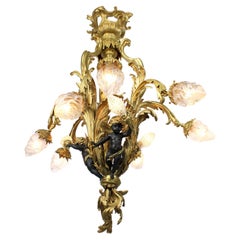
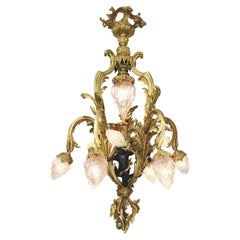
A French Belle Époque Gilt Bronze Patinated Bronze Ten-Light Cherub Chandelier
Located in Los Angeles, CA
A very fine and rare French Belle Époque gilt bronze and ebonized-patinated bronze ten-light cherub chandelier, with three winged cherubs, each holding a flame light with beaded glas...
Category

Antique Early 1900s French Belle Époque Chandeliers and Pendants

Materials

Bronze

French Belle Époque Gilt Bronze, Patinated Bronze Ten-Light Cherub Chandelier
Located in Los Angeles, CA
A very fine and rare French Belle Époque gilt bronze and ebonized-patinated bronze ten-light figural chandelier, with three winged cherubs, each holding a flame light with beaded gla...
Category

Antique Early 1900s French Belle Époque Chandeliers and Pendants

Materials

Bronze

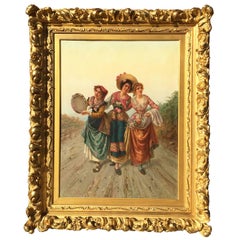
Pietro Gabrini Large Oil on Canvas "Three Singing Italian Beauties on The Road"
By Pietro Gabrini 1
Located in Los Angeles, CA
Pietro Gabrini (Italian, 1856-1926) a very fine and large oil on canvas "Three Singing Italian Beauties on The Road" depicting three cheerful Village young maidens walking through a ...
Category

Antique Late 19th Century Italian Baroque Revival Paintings

Materials

Canvas, Wood

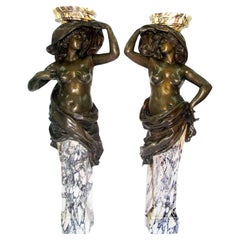
A Pair French 19th Century Bronze Nude Maidens Torchere, Carrier-Belleuse Attr.
By Albert-Ernest Carrier-Belleuse
Located in Los Angeles, CA
Very fine and monumental pair of French 19th century patinated bronze figural torchere sculptures titled "La Nuit" (The Night) attributed to Albert Carrier-Belleuse (French, 1824-188...
Category

Antique Late 19th Century French Beaux Arts Figurative Sculptures

Materials

Marble, Bronze

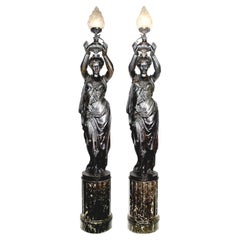
Pair of French 19th-20th Century Neoclassical Style Cast Iron Figural Torchères
Located in Los Angeles, CA
A very fine pair of French 19th-20th century neoclassical style patinated cast iron figural torchères by A. Durenne, Paris, each representing a figure of a standing young maiden, her arms raised forward while holding a a flaming urn gas light (Now electrified) with a frosted glass flame, each raised on a veined grey marble column stand, both cast-signed 'A. Durenne, Paris'. Antoine Durenne was an internationally renowned French art founder. He attended École Nationale Supérieure des Beaux-Arts in 1842. Durenne purchased a small foundry in Sommevoire, near the Val d'Osne, Haute-Marne, France and established The Durenne firm, circa Paris, 1900. Cast-iron had been in production during the 18th century but its inferior status to the more fashionable and delicate wrought iron had generally confined its use to architectural work. By the early 19th century, however, rapid developments of the Industrial Revolution combined with the simultaneous burgeoning of a new middle class provided the impetus for a dramatic Expansion in its application and in a short space of time a proliferation of iron foundries across Europe and America thrived on the production of everything from inkstands to railway stations. The use of cast-iron for garden ornament became particularly widespread at this time, as the possibilities for its mass-production at a fraction of the cost of bronze made it the material of choice for outdoor statuary...
Category

Antique Early 1900s French Neoclassical Revival Figurative Sculptures

Materials

Marble, Iron

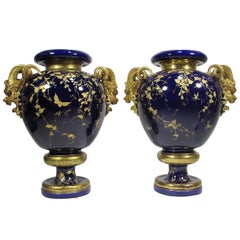
Fine Pair of 19th Century Cobalt-Blue and Parcel-Gilt Majolica Figural Vases
By Minton
Located in Los Angeles, CA
A very fine pair of 19th century cobalt-blue and parcel-gilt majolica figural vases, with figures of satyrs and gilt decorations of flowers and butterflies. Probably English, circa 1...
Category

Antique 19th Century British Other Vases

Materials

Ceramic

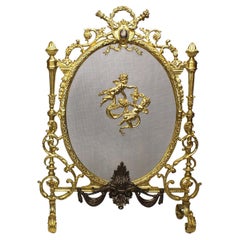
French 19th-20th Century Louis XV Style Gilt-Bronze Fireplace Screen
Located in Los Angeles, CA
A French 19th-20th century 'Belle Époque' Louis XV style gilt and patinated bronze fireplace screen. The ornately decorated oval screen, supported with a pair a of finial columns, su...
Category

Antique Early 1900s French Belle Époque Fireplaces and Mantels

Materials

Brass, Bronze, Steel

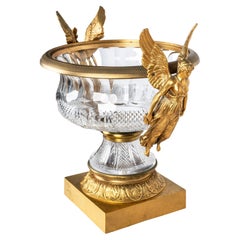
Large Empire Style Gilt-Bronze and Cut-Glass Grande Coupe Urn Centerpiece
Located in Los Angeles, CA
A Large and Impressive French Empire Revival Style Gilt-Bronze and Cut-Glass 'Grande Coupe' Figural Urn Centerpiece, in the manner of Baccarat, the mounts in the manner of and after ...
Category

Late 20th Century French Empire Revival Urns

Materials

Bronze

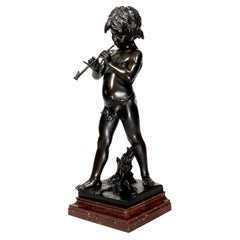
After Jean Louis Grégoire Spelter Figure "Boy Playing Pipe"
By Jean Louis Grégoire
Located in Los Angeles, CA
After Jean Louis Grégoire (France, 1840-1890) A Charming French 19th-20th Century Patinated Spelter Figure of "The Animal Charmer", depicting a sta...
Category

Antique Early 1900s French Folk Art Figurative Sculptures

Materials

Marble, Spelter

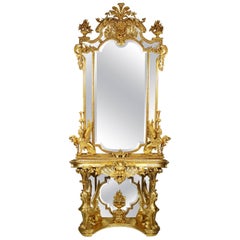
French Empire Revival 19th Century Giltwood Carved Figural Console and Mirror
Located in Los Angeles, CA
A fine French Empire Revival 19th century giltwood and Gesso carved figural console table with matching mirror. The "D" shaped top console raised by a pair of seated winged sphinxes ...
Category

Antique Late 19th Century French Empire Revival Console Tables

Materials

Marble

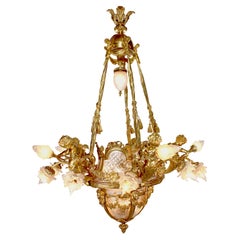
Fine French 19th-20th Century Louis XV Style Gilt Bronze and Baccarat Chandelier
By Cristalleries De Baccarat
Located in Los Angeles, CA
A very fine and palatial French 19th-20th century Louis XV style gilt bronze (Ormolu) and fitted-Baccarat crystal (cut-glass) twenty-six-light figural chandelier with five large cherubs...
Category

Antique Early 1900s French Belle Époque Chandeliers and Pendants

Materials

Bronze

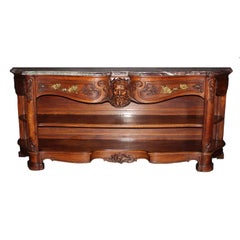
French Baroque 19th Century Louis XV Style Finely Carved Walnut Buffet Console
Located in Los Angeles, CA
French Baroque 19th century Louis XV style finely carved walnut figural buffet server console with a variegated Rouge Royal marble top, the apron centered with a relief carved figure...
Category

Antique 19th Century French Baroque Revival Console Tables

Materials

Marble, Bronze

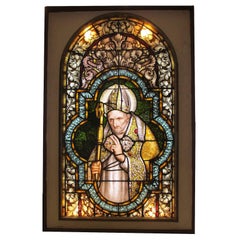
Rare Italian 19th-20th Century Framed Stained Glass Panel Depicting a Pope
By Vatican Work Shop
Located in Los Angeles, CA
A fine and rare Italian 19th-20th century framed stained glass panel depicting a pope, probably from the Vatican workshop. (Electrified,) circa 19...
Category

Antique Early 1900s Italian Classical Roman Paintings

Materials

Stained Glass

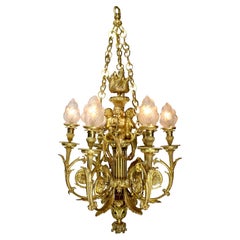
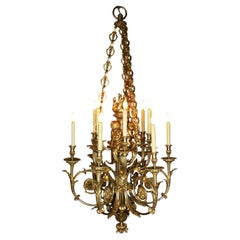
19th Century Louis XVI Style Ormolu Cherub Chandelier After Pierre Gouthiere
By Pierre Gouthiere
Located in Los Angeles, CA
A superb quality French, 19th century Louis XVI style ormolu figural six-light whimsical chandelier with figures of cherubs, after the model by Pierre Gouthiere...
Category

Antique 19th Century French Louis XVI Chandeliers and Pendants

Materials

Ormolu

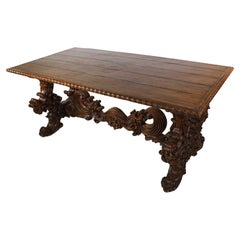
Baroque Revival Style Carved Wood Tavern or Farm Dining Pedestal Table
Located in Los Angeles, CA
A large carved wood tavern or farm dining table in the Baroque Revival Style. The rectangular top with a carved border, raised on twin carved pedestal bases conjoined with a central ...
Category

20th Century Unknown Baroque Revival Dining Room Tables

Materials

Fruitwood

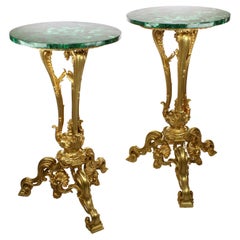
Pair French 19th Century Ormolu Malachite Pedestal Side Tables, Attr F.E. Piat
By Frédéric - Eugène Piat 1
Located in Los Angeles, CA
A Palatial very fine and rare pair of French 19th century Louis XV style Ormolu and Malachite Pedestal side tables, attributed to Frédéric-Eugène Piat (French, 1827-1903), the bronze...
Category

Antique 19th Century French Louis XV Side Tables

Materials

Malachite, Bronze, Ormolu

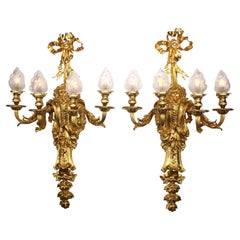
Fine Pair French 19th/20th Century Ormolu Regénce Style Lion Wall Light Sconces
Located in Los Angeles, CA
A very fine and impressive pair of French 19th/20th century Regénce style figural gilt-bronze four-light wall sconces appliques, each ormolu lumière centered with a lion pelt mask su...
Category

Antique 19th Century French Regency Revival Wall Lights and Sconces

Materials

Bronze, Ormolu

19th Century Louis XVI Style Ormolu Cherub Chandelier after Pierre Gouthiere
By Pierre Gouthiere
Located in Los Angeles, CA
A palatial and superb quality French, 19th century Louis XVI style ormolu figural six-light chandelier with figures of cherubs, after the model by Pierre Gouthiere...
Category

Antique 19th Century French Louis XVI Chandeliers and Pendants

Materials

Ormolu

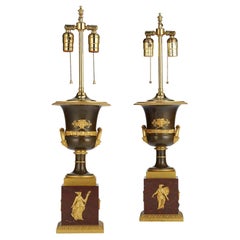
Pair French 19th Century Napoleon III Empire Style Gilt-Bronze Urn Table Lamps
By Pierre-Philippe Thomire
Located in Los Angeles, CA
A very fine pair of French 19th century Napoleon III Empire style patinated-bronze and gilt-bronze Mounted Allegorical covered Urn vases lamps in the manner of Pierre-Philippe Thomir...
Category

Antique Late 19th Century French Empire Revival Table Lamps

Materials

Marble, Brass, Bronze, Ormolu

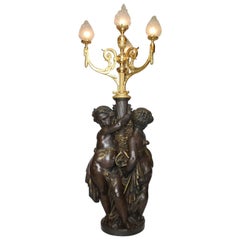
French, 19th Century Versailles Style Figural Torchère with Side-by-Side Putti
By Lacarrière, Delatour and Co.
Located in Los Angeles, CA
A very fine and large Museum Quality french, 19th century Versailles Style Figural Torchère with two side-by-side Putti in a Brown and Parcel-Gilt Patina Holding a Four-Light gilt bronze Candelabrum with Frosted glass flame shades, by Lacarrière Delatour...
Category

Antique 19th Century French Louis XV Figurative Sculptures

Materials

Bronze

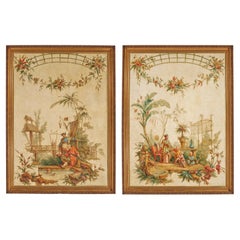
Pair French 18th-19th Century Chinoiserie Circle of Jean B. Pillement
By Jean-Baptiste Pillement
Located in Los Angeles, CA
A fine pair of French 18th-19th century whimsical rococo style chinoiserie oil on canvas, circle of Jean-Baptiste Pillement. (French, 1728-1808). One oil painting depicting an outdoor patio scene of a standing young mother, holding a fan, with her three young children playing with a horse-toy, a parrot and a cat, all surrounded by flowers, plants, trees, planters and flanked by a dragon fountain...
Category

Antique Late 18th Century French Chinoiserie Paintings

Materials

Canvas, Giltwood

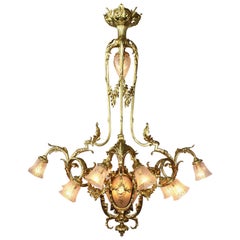
French Belle Époque Gilt-Bronze Molded Glass 15-Light Lyre Style Chandelier
Located in Los Angeles, CA
A fine and large French Belle Époque gilt-bronze and molded glass fifteen-light "Lyre Style" chandelier. The ovoid shaped gilt-bronze downcast foliate body surmounted with ten scroll...
Category

Antique Early 1900s French Belle Époque Chandeliers and Pendants

Materials

Bronze

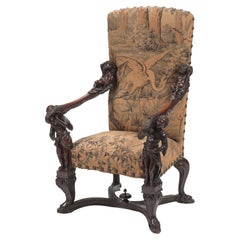
In Manner of Andrea Brustolon Venetian 19th Century Carved Walnut Figural Throne
By Valentino Panciera Besarel
Located in Los Angeles, CA
A fine Italian 19th century baroque revival style carved walnut figural throne armchair, attributed to Valentino Panciera Besarel (Venice, 1829-1902) in the manner of Andrea Brustolo...
Category

Antique Late 19th Century Italian Baroque Revival Armchairs

Materials

Tapestry, Walnut

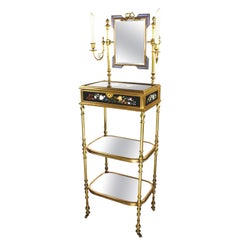
French 19th Century Gilt-Bronze and Pietra Dura Vanity Stand, Attr. Tahan, Paris
By Tahan Paris
Located in Los Angeles, CA
A fine and rare French 19th century gilt-bronze and pietra dura vanity stand, attributed to Jean-Pierre-Alexandre Tahan (1813-1892) - Maison Tahan, Paris. The ornate slender bronze body fitted with a rectangular vanity mirror surmounted with a beaded trim and blue-celeste Cloisonné enamel corners centering a ribbon bow supported by two reeded columns, each issuing a scrolled foliate candle arm, over a flip-top gilt-bronze compartment lined with a burgundy silk and fitted with 'pietra dura' marble inlay plaques...
Category

Antique Late 19th Century French Rococo Revival Vanities

Materials

Lapis Lazuli, Marble, Bronze, Enamel

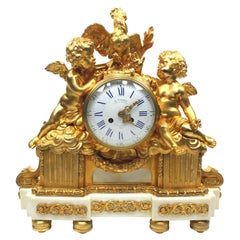
French 19th Century Louis XV Style Gilt Bronze Cherubs Rooster Mantel Clock
Located in Los Angeles, CA
A very fine French 19th century Louis XV style gilt bronze and white marble figural mantel clock. The finely chased ormolu body, with its original two-tone mercury gilt, centered with a circular enameled porcelain clock face with Roman and Arabic numeral dials and inscribed 'A. Thomas - Fabt de Bronze - 56, Rue de Turenne - Paris', surmounted with a pair of playful seated cherubs amidst clouds and wreaths, the case crowned with a figure of a Gallic Rooster (Coq Gaulois...
Category

Antique Late 19th Century French Louis XV Mantel Clocks

Materials

Marble, Bronze, Ormolu

Hamilton Hamilton Oil on Canvas "Othello and Desdemona"
By Hamilton Hamilton
Located in Los Angeles, CA
Hamilton Hamilton (American, 1847-1928) A large and impressive oil on canvas "Othello and Desdemona" after the William Shakespeare's play "Othe...
Category

Vintage 1920s American Art Nouveau Paintings

Materials

Canvas, Giltwood

French Louis XVI Style Gilt-Bronze Blown Cut-Glass 7-Light Figural Chandelier
By Cristalleries De Baccarat
Located in Los Angeles, CA
A French Louis XVI style gilt-bronze and blown cut-glass seven-light figural chandelier in the manner of Baccarat. The elongated gilt-bronze body surmounted with acanthus and leaf de...
Category

Mid-20th Century French Belle Époque Chandeliers and Pendants

Materials

Bronze

French 18th Century Oil on Canvas Mother and Twin Babies Fecundity after Lemoyne
By François Lemoyne
Located in Los Angeles, CA
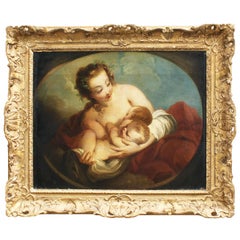
A very fine French 18th century oil on canvas "Fecundity" After Francois Lemoyne (French, 1688-1737) Depicting a young mother holding her twin her infant babies on her arms, within a...
Category

Antique Early 1800s French Louis XV Paintings

Materials

Canvas, Giltwood

Jacques Chantron French 1842-1918 19th Century Oil on Canvas "Mother Child"
Located in Los Angeles, CA
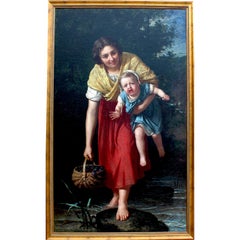
A fine and large French 19th century oil on canvas "Mother and Child Crossing a Creek" by Alexandre Jacques Chantron (French 1842-1918). The impressive and finely executed artwork depicting a young joyous mother holding her child...
Category

Antique 19th Century French Romantic Paintings

Materials

Canvas, Giltwood

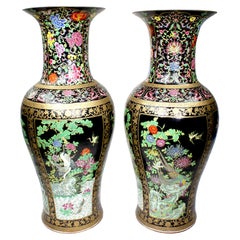
A Pair of Tall Chinese Export Porcelain Figural Vases with Birds and Flowers
Located in Los Angeles, CA
A Pair of Tall Chinese export porcelain figural vases. The ovoid porcelain bodies decorated with colorful flowers, tropical birds, tree...
Category

Late 20th Century Chinese Chinese Export Porcelain

Materials

Porcelain

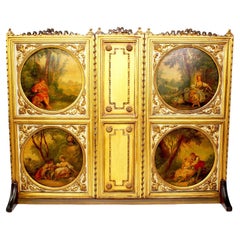
French 19th Century Louis XV Vernis Martin Style Giltwood Fireplace Screen
By Vernis Martin
Located in Los Angeles, CA
A very Fine and rare French 19th century Louis XV style giltwood carved Vernis Martin Stylefl fireplace screen. The rectangular carved giltwood panel surmounted with four circular oil paintings...
Category

Antique Late 19th Century French Louis XV Fireplaces and Mantels

Materials

Wood, Giltwood

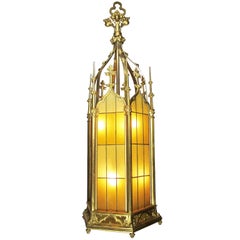
Set of Four Large French 19th-20th Century Gothic Style Gilt Bronze Lanterns
Located in Los Angeles, CA
A very fine and large set of four French 19th-20th century Gothic Revival style gilt bronze and glass six-light hanging lanterns with opaque-yellow stained-art glass, the top crowned with a cluster of fruits, circa 1900. Note: These are a set of four lanterns...
Category

Antique Early 1900s French Gothic Revival Lanterns

Materials

Bronze

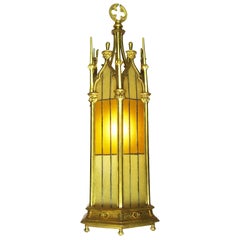
Set of Three Small French 19th-20th Century Gothic Style Gilt Bronze Lanterns
Located in Los Angeles, CA
A set of three French 19th-20th century Gothic revival style gilt bronze and glass single-light hanging lanterns with opaque-yellow stained-art-g...
Category

Antique Early 1900s French Gothic Revival Lanterns

Materials

Bronze

Fine Country French Louis XV Style Carved Walnut and Needlepoint Armchair
Located in Los Angeles, CA
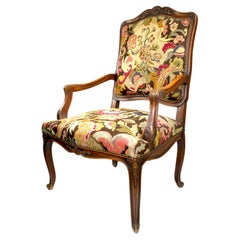
A fine Country French 19th-20th century Louis XV style carved walnut Fauteuil à la Reine armchair. The finely carved wood frame with open scrolled armrests and cabriolet legs, uphols...
Category

Antique Early 1900s French French Provincial Armchairs

Materials

Tapestry, Walnut

Charles Joshua Chaplin French, 1825-1891 Girl with Bird s Nest Oil on Canvas
By Charles Joshua Chaplin
Located in Los Angeles, CA
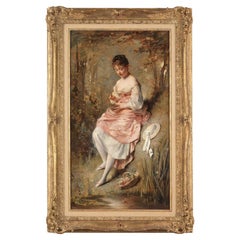
Charles Joshua Chaplin (French, 1825-1891) 'The Bird's Nest' A very fine and charming Rococo revival style oil on canvas depicting a young girl, dressed in 18th century costume and r...
Category

Antique 19th Century French Rococo Revival Paintings

Materials

Canvas, Giltwood

Large French Early 20th Century Art-Deco Bronze and Carved Alabaster Chandelier
Located in Los Angeles, CA
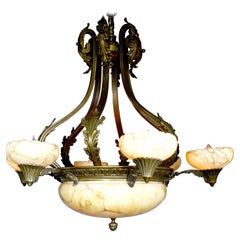
A large French early 20th century Art-Deco bronze and carved veined ivory-colored alabaster six-light chandelier. The carved circular alabaster plafonnier with a floral bronze apron ...
Category

Vintage 1920s French Art Deco Chandeliers and Pendants

Materials

Alabaster, Bronze

19th Century Louis XVI Style Gilt Bronze Mantel Clock by Lemerle Charpentier
By Lemerle Charpentier 1
Located in Los Angeles, CA
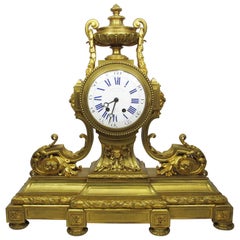
A Palatial French 19th century Louis XVI style gilt bronze mantel clock by Lemerle-Charpentier bronzier. The large rectangular gilt bronze body surmounted with floral scrolls and acanthus and crowned with an urn with wreath decorations. The circular porcelain enameled clock dial...
Category

Antique 19th Century French Louis XVI Mantel Clocks

Materials

Bronze

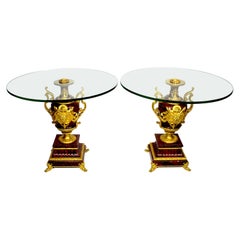
Ferdinand Barbedienne Pair of Marble Ormolu Urn Low Tables
By Ferdinand Barbedienne
Located in Los Angeles, CA
A fine pair of French Louis XV style Ormolu Mounted Rouge Griotte marble urns by Ferdinand Barbedienne (French, 1810-1892), now converted to low side tables with glass tops. The ovoi...
Category

Antique Late 19th Century French Louis XV Side Tables

Materials

Marble, Ormolu

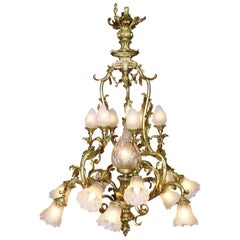
French Belle Époque Rococo Style Gilt-Bronze and Frosted Glass Shades Chandelier
Located in Los Angeles, CA
A fine French Belle Époque Rococo style gilt bronze and frosted glass shades nineteen light chandelier. The ornate gilt bronze frame surmounted six upper scrolled candle arms with frosted glass shades in the form of burning flames centered with a larger single flame glass shade...
Category

Antique Early 1900s French Belle Époque Chandeliers and Pendants

Materials

Brass, Bronze

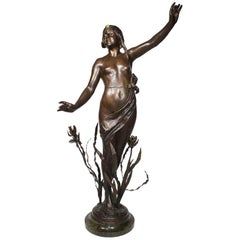
French Art-deco-orientalist Spelter of a Nude Young Maiden, Attributed to Hottot
By Louis Hottot
Located in Los Angeles, CA
An Imposing fine and large French Art-Deco Spelter (Petit-bronze) figure of a standing semi-nude orientalist maiden in a brown patina, attributed to Louis Hottot (French, 1834-1905). The smiling young topless beauty, posing with her arms outstretched, her hair wrapped with a headscarf centred with a green art-glass bead and a scantily scarf tied around her waist, standing barefoot among tropical shrubs and flowers and raised on a circular mottled green marble base. A brass plaque reads "TYPHA", Paris, circa 1900. Louis Hottot was a French sculpture who mainly specialized in Orientalist female figures and other Orientalist subjects and themes, most of his works were produced in spelter. He exhibited his works at the Paris Salon from 1885 to 1898. Hottot is best known for his Orientalist-themed sculptures, including Almie du Caire, circa 1887 and Fille d'Egypte, circa: 1885. He was a member of the Socie´te´ des Artistes Franc¸ais. Literature: Les Bronzes du XIXe Siecle, P. Kjellberg, Les Editions de L'amateur, Paris. S. Richemond, Les Orientalistes...
Category

Antique Early 1900s French Art Deco Figurative Sculptures

Materials

Marble, Spelter

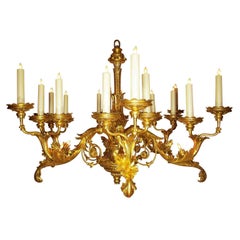
Palatial Italian 19th Century Florentine Rococo Giltwood Carved Chandelier
Located in Los Angeles, CA
An important palatial very fine and rare Italian 19th century florentine Rococo giltwood carved six-candle arms and twenty four-light chandelier, the...
Category

Antique Early 19th Century Italian Rococo Chandeliers and Pendants

Materials

Wrought Iron, Metal

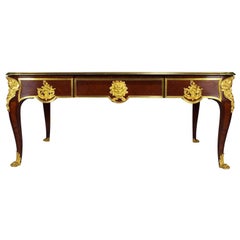
French 19th Century Louis XV Style Ormolu-Mounted Bureau Plat Desk
By Paul Sormani
Located in Los Angeles, CA
A very fine and large French 19th century Louis XV style ormolu-mounted mahogany and kingwood three-drawer bureau plat attributed to Paul Sormani (French-Italian 1817-1877). The shaped rectangular top enclosing a gilt tooled brown leather writing surface within a molded border above a long central drawer enclosing a fine modeled mask of Hercules wearing the Nemean lion pelt centered by flat cast encadrements and rosewood veneered a quatre faces flanked by two short drawers with reticulated escutcheons of scantly clad frolicking putti and doves over gadrooned "C" scrolls, trellis patterned panels on a stylized shell within similarly framed encadrements raised on elegant cabriole legs surmounted by bearded satyr masks ending in acanthus case hairy paw feet beneath sides centering bacchic masks. Lock mechanism stamped W S M, 6068, a key (lacking skeleton key), and 148. Veuve Paul Sormani Et Fils was the widow of the highly esteemed furniture maker Paul Sormani (French-Italian 1817-1877). After his death around 1877 she and her son took over the management of the company continuing the tradition of producing fine French furniture of the highest calibre. An escutcheon and several mounts were examined on the reverse, and each was found to have the bronze master model initials "SJ:. Blue chalk inscription on underside Glle 117, Paris, circa 1880. Paul Sormani (1817-1877): Born in Venice, Paul Sormani set up in Paris in the middle of the 19th century. He specialized in creating furniture and works of art and was known for his high quality reproductions of Louis XV and XVI furniture...
Category

Antique 19th Century French Louis XV Desks and Writing Tables

Materials

Bronze, Ormolu

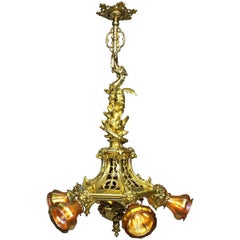
American Gothic-Revival Gilt-Bronze "Dragon" Chandelier in the Manner of Tiffany
By Louis Comfort Tiffany
Located in Los Angeles, CA
A very fine and rare American Gothic-Revival gilt bronze "Dragon" six-light figural chandelier. The elongated body in the form of a winged dragon biting on a perch with his tail wrap...
Category

Antique Early 1900s American Medieval Chandeliers and Pendants

Materials

Bronze

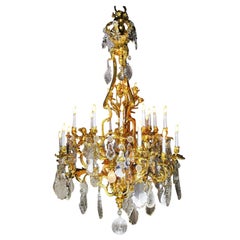
French 19th Century Louis XV Style Cherub Dragons Ormolu Crystal Chandelier
By Cristalleries De Baccarat
Located in Los Angeles, CA
A very fine and Palatial French 19th century Louis XV style figural gilt-bronze and crystal thirty-three light chandelier, attributed to Baccarat, after a model by Jacques Caffieri (French, 1678-1755) with twenty one Candelabra Arms, three gilt-bronze cherubs each holding a wreath and three sets of three-headed Winged Griffins, the central bronze ball in a deep-cobalt-blue enamel with fleur de lys decorations. The candle sleeves are opline glass. Circa: Paris, 1890. Jacques Caffieri (French, 1678-1755) not only produced chandeliers and furniture mounts for Louis XV but also entire gilt-bronze objects. The Cabinet de la Pendule adjoining Louis XV's bedroom at Versailles takes its name from the astronomical clock...
Category

Antique 19th Century French Louis XV Chandeliers and Pendants

Materials

Bronze

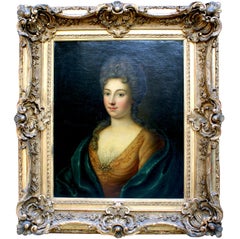
Franco-German 19th Century Oil on Canvas "Portrait of a Lady" in Giltwood Frame
Located in Los Angeles, CA
A fine Franco-German 19th century oil on canvas "Portrait of a Lady" depicting an 18th century young beauty posing with a profile gaze and cur...
Category

Antique 19th Century French Louis XV Paintings

Materials

Gesso, Canvas, Wood

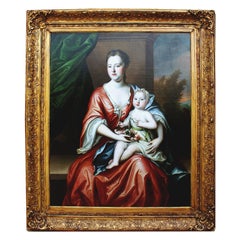
18th Century Oil on Canvas Mother Child Attr Michael Dahl
By Michael Dahl
Located in Los Angeles, CA
A very fine and large 18th century oil on canvas titled "Mother and Child" (Probably members of The Swedish Royal Family). Attributed to Michael Dahl (Swe...
Category

Antique 18th Century Swedish Baroque Paintings

Materials

Gesso, Canvas, Wood

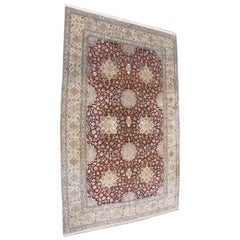
Fine Large and Palatial Persian Nain Hand-Knotted Wool and Silk Pile Area Rug
Located in Los Angeles, CA
A Palatial Persian Nain hand-knotted wool and silk Pile area rug. The very large and impressive vibrant and colorful medallion carpet with red-burgundy, ivory-beige, blue-Celeste and...
Category

Late 20th Century Persian Islamic Persian Rugs

Materials

Wool, Silk

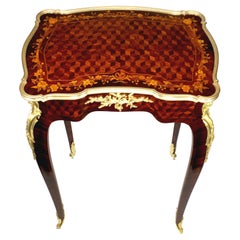
Fine French Louis XV Style Ormolu Mounted Marquetry Side-Table by François Linke
By François Linke
Located in Los Angeles, CA
A Very Fine French Louis XV Transitional Style Gilt-Bronze Mounted, Marquetry and Æil de Vermeil Parquetry single-drawer side-table by François Linke (1855-1946). The rectangular top...
Category

Antique Early 1900s French Louis XV Side Tables

Materials

Ormolu

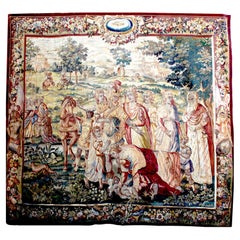
Flemish 17th-18th Century Baroque Historical Tapestry Fragment "A Royal Family"
Located in Los Angeles, CA
A fine and large Flemish 17th-18th century Baroque figural historical tapestry fragment. The large tapestry depicting an allegorical Royal family scene of a warrior meeting his new b...
Category

Antique 18th Century Belgian Baroque Decorative Art

Materials

Wool, Silk

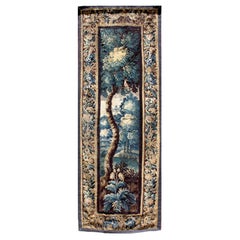
Flemish 18th-19th Century Verdure Landscape Tapestry Panel Centered with a Tree
Located in Los Angeles, CA
A fine flemish 18th-19th century Verdure landscape tapestry, the wool and silk tapestry centered by a scene of a tall tree within a forest background and a foliage border. Circa: 180...
Category

Antique Early 19th Century Belgian Baroque Tapestries

Materials

Wool, Silk

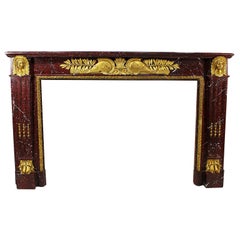
French Napoleon III Carved Griotte Marble and Ormolu Mounted Fireplace Mantel
By Pierre-Philippe Thomire
Located in Los Angeles, CA
Important French Napoleon III carved Rouge Griotte Marble and ormolu mounted figural fireplace mantel chimneypiece. The rectangular carv...
Category

Antique 19th Century French Empire Fireplaces and Mantels

Materials

Griotte Marble, Bronze, Ormolu

French 19th-20th Century Belle Époque Gilt-Bronze Cut-Glass 6-Light Chandelier
Located in Los Angeles, CA
A fine and large French 19th-20th century Belle Époque gilt-bronze and cut-glass six-light figural chandelier. The elongated gilt-bronze body with a pierced apron and silvered lining...
Category

Antique Early 1900s French Belle Époque Chandeliers and Pendants

Materials

Brass, Bronze

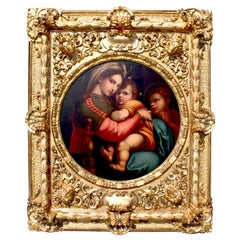
After Raffaello Sanzio 1483-1520 Raphael La Madonna della Seggiola Oil on Canvas
By Raphael (Raffaello Sanzio da Urbino)
Located in Los Angeles, CA
A fine Italian 19th century oil painting on canvas "La Madonna della Seggiola" after Raphael (Raffaello Sanzio da Urbino 1483-1520) The circular canvas depicting a seated Madonna holding an infant Jesus Christ next to a child Saint John the Baptist, all within a massive carved gilt wood and gesso frame (all high quality gilt is original) which is identical to the frame on Raphael's original artwork. This painting is a 19th Century copy of Raphael's Madonna della Seggiola painted in 1514 and currently exhibited and part of the permanent collection at the Palazzo Pitti, Galleria Palatina, Florence, Italy. The bodies of the Virgin, Christ, and the boy Baptist fill the whole picture. The tender, natural looking embrace of the Mother and Child, and the harmonious grouping of the figures in the round, have made this one of Raphael's most popular Madonnas. The isolated chair leg is reminiscent of papal furniture, which has led to the assumption that Leo X himself commissioned the painting, circa 1890-1900. Subject: Religious painting Measures: Canvas height: 29 1/4 inches (74.3 cm) Canvas width: 29 1/4 inches (74.3 cm) Painting diameter: 28 1/4 inches (71.8 cm) Frame height: 57 7/8 inches (147 cm) Frame width: 45 1/2 inches (115.6 cm) Frame depth: 5 1/8 inches (13 cm).   Raffaello Sanzio da Urbino (Italian, March 28 or April 6, 1483 - April 6, 1520), known as Raphael, was an Italian painter and architect of the High Renaissance. His work is admired for its clarity of form, ease of composition, and visual achievement of the Neoplatonic ideal of human grandeur. Together with Michelangelo and Leonardo da Vinci, he forms the traditional trinity of great masters of that period. Raphael was enormously productive, running an unusually large workshop and, despite his death at 37, leaving a large body of work. Many of his works are found in the Vatican Palace, where the frescoed Raphael Rooms were the central, and the largest, work of his career. The best known work is The School of Athens in the Vatican Stanza della Segnatura. After his early years in Rome much of his work was executed by his workshop from his drawings, with considerable loss of quality. He was extremely influential in his lifetime, though outside Rome his work was mostly known from his collaborative printmaking. After his death, the influence of his great rival Michelangelo was more widespread until the 18th and 19th centuries, when Raphael's more serene and harmonious qualities were again regarded as the highest models. His career falls naturally into three phases and three styles, first described by Giorgio Vasari: his early years in Umbria, then a period of about four years (1504–1508) absorbing the artistic traditions of Florence, followed by his last hectic and triumphant twelve years in Rome, working for two Popes and their close associates. Raphael was born in the small but artistically significant central Italian city of Urbino in the Marche region, where his father Giovanni Santi was court painter to the Duke. The reputation of the court had been established by Federico III da Montefeltro, a highly successful condottiere who had been created Duke of Urbino by the Pope - Urbino formed part of the Papal States - and who died the year before Raphael was born. The emphasis of Federico's court was rather more literary than artistic, but Giovanni Santi was a poet of sorts as well as a painter, and had written a rhymed chronicle of the life of Federico, and both wrote the texts and produced the decor for masque-like court entertainments. His poem to Federico shows him as keen to show awareness of the most advanced North Italian painters, and Early Netherlandish artists as well. In the very small court of Urbino he was probably more integrated into the central circle of the ruling family than most court painters. Federico was succeeded by his son Guidobaldo da Montefeltro, who married Elisabetta Gonzaga, daughter of the ruler of Mantua, the most brilliant of the smaller Italian courts for both music and the visual arts. Under them, the court continued as a centre for literary culture. Growing up in the circle of this small court gave Raphael the excellent manners and social skills stressed by Vasari. Court life in Urbino at just after this period was to become set as the model of the virtues of the Italian humanist court through Baldassare Castiglione's depiction of it in his classic work The Book of the Courtier, published in 1528. Castiglione moved to Urbino in 1504, when Raphael was no longer based there but frequently visited, and they became good friends. He became close to other regular visitors to the court: Pietro Bibbiena and Pietro Bembo, both later cardinals, were already becoming well known as writers, and would be in Rome during Raphael's period there. Raphael mixed easily in the highest circles throughout his life, one of the factors that tended to give a misleading impression of effortlessness to his career. He did not receive a full humanistic education however; it is unclear how easily he read Latin. Early Life and Works His mother Màgia died in 1491 when Raphael was eight, followed on August 1, 1494 by his father, who had already remarried. Raphael was thus orphaned at eleven; his formal guardian became his only paternal uncle Bartolomeo, a priest, who subsequently engaged in litigation with his stepmother. He probably continued to live with his stepmother when not staying as an apprentice with a master. He had already shown talent, according to Vasari, who says that Raphael had been "a great help to his father". A self-portrait drawing from his teenage years shows his precocity. His father's workshop continued and, probably together with his stepmother, Raphael evidently played a part in managing it from a very early age. In Urbino, he came into contact with the works of Paolo Uccello, previously the court painter (d. 1475), and Luca Signorelli, who until 1498 was based in nearby Città di Castello. According to Vasari, his father placed him in the workshop of the Umbrian master Pietro Perugino as an apprentice "despite the tears of his mother". The evidence of an apprenticeship comes only from Vasari and another source, and has been disputed—eight was very early for an apprenticeship to begin. An alternative theory is that he received at least some training from Timoteo Viti, who acted as court painter in Urbino from 1495.Most modern historians agree that Raphael at least worked as an assistant to Perugino from around 1500; the influence of Perugino on Raphael's early work is very clear: "probably no other pupil of genius has ever absorbed so much of his master's teaching as Raphael did", according to Wölfflin. Vasari wrote that it was impossible to distinguish between their hands at this period, but many modern art historians claim to do better and detect his hand in specific areas of works by Perugino or his workshop. Apart from stylistic closeness, their techniques are very similar as well, for example having paint applied thickly, using an oil varnish medium, in shadows and darker garments, but very thinly on flesh areas. An excess of resin in the varnish often causes cracking of areas of paint in the works of both masters. The Perugino workshop was active in both Perugia and Florence, perhaps maintaining two permanent branches. Raphael is described as a "master", that is to say fully trained, in December 1500. His first documented work was the Baronci altarpiece for the church of Saint Nicholas of Tolentino in Città di Castello, a town halfway between Perugia and Urbino. Evangelista da Pian di Meleto, who had worked for his father, was also named in the commission. It was commissioned in 1500 and finished in 1501; now only some cut sections and a preparatory drawing remain. In the following years he painted works for other churches there, including the Mond Crucifixion (about 1503) and the Brera Wedding of the Virgin (1504), and for Perugia, such as the Oddi Altarpiece. He very probably also visited Florence in this period. These are large works, some in fresco, where Raphael confidently marshals his compositions in the somewhat static style of Perugino. He also painted many small and exquisite cabinet paintings in these years, probably mostly for the connoisseurs in the Urbino court, like the Three Graces and St. Michael, and he began to paint Madonnas and portraits. In 1502 he went to Siena at the invitation of another pupil of Perugino, Pinturicchio, "being a friend of Raphael and knowing him to be a draughtsman of the highest quality" to help with the cartoons, and very likely the designs, for a fresco series in the Piccolomini Library in Siena Cathedral. He was evidently already much in demand even at this early stage in his career. Influence of Florence Raphael led a "nomadic" life, working in various centres in Northern Italy, but spent a good deal of time in Florence, perhaps from about 1504. Although there is traditional reference to a "Florentine period...
Category

Antique 19th Century Italian Baroque Paintings

Materials

Gesso, Canvas, Wood

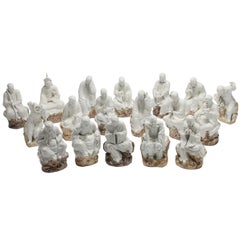
Chinese Set of Eighteen Blanc de Chine Enameled Ceramic Arhats or Luohan Buddhas
Located in Los Angeles, CA
A rare set of eighteen Blanc de Chine Style Enameled - Glazed Ceramic Arhat, also known as Luohans, the disciples of Buddha, each bearing the mark and style of the Chinese maker Zeng Longsheng. The Eighteen Arhats (or Luohan) (Chinese: ????; pinyin: Shíba Luóhàn; Wade–Giles: Shih-pa Lo-han) are depicted in Mahayana Buddhism as the original followers of Gautama Buddha (arhat) who have followed the Noble Eightfold Path...
Category

Mid-20th Century Chinese Tibetan Figurative Sculptures

Materials

Ceramic

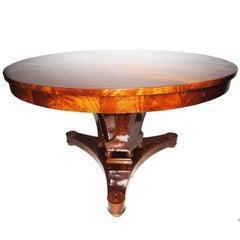
Fine Rare 19th Century Mahogany Marquetry Biedermeier Style Center Hall Table
Located in Los Angeles, CA
A very fine and rare Biedermeier style 19th century mahogany marquetry center hall table, the circular top with conforming frieze above a tulip shaped shaft, raised on spheres above ...
Category

Antique Late 19th Century Austrian Biedermeier Center Tables

Materials

Fruitwood, Mahogany

Still Thinking About These?

All Recently Viewed