Edo Asian Art and Furniture

EDO STYLE

Edo furniture was created during a flourishing time for the decorative arts owing to the stability of the Tokugawa shogunate rule in Japan. Spanning from 1603 to 1867, this era of peace and economic growth supported artistic advancements in lacquer, woodblock printing, porcelain and other artisanal trades. Because the country was largely isolated, there was little outside influence, leading to centuries of exceptional attention to the design of its furnishings and the quality of its traditional arts.

Unlike during the Meiji period that followed, with an increase in domestic and international markets, furniture during the Edo period was predominately commissioned by the ruling class, although people from across social groups benefited from the burgeoning metropolitan hubs for artisanal trades. For instance, Kyoto became a major center for lacquer art. Most furniture pieces were made from wood such as cedar or ash, including the era’s sashimono cabinets, which involved fine joinery and were rooted in the Heian period.

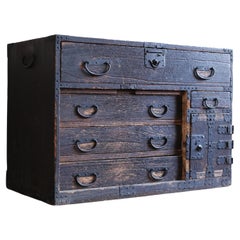
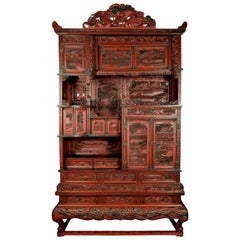
Sashimono cabinets, which were built by master craftsmen in a range of different wood types owing to the various trees that populate Japan, occasionally featured a stack of slender drawers as well as sliding doors. They were popular with everyone from samurai to kabuki actors. Tansu storage chests crafted from wood with metal fittings were also common in Edo-period homes. Some were designed to be easily portable while others were made to double as staircases.

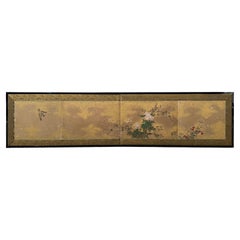
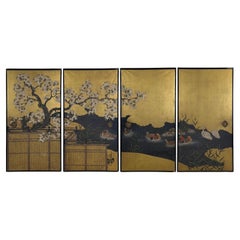
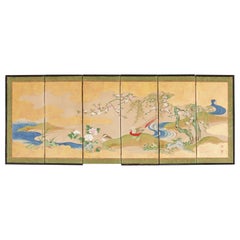
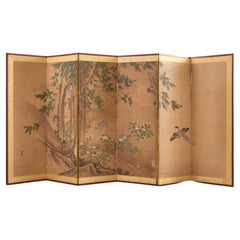
Painted folding screens, called byōbu, were also fashionable, with Japanese artists inspired by nature, literature and scenes of history and daily life to create vivid works. In Buddhist temples and the palatial homes of the aristocratic class, fusuma, or large sliding panels, would sometimes be adorned with gold or silver leaf. These dividers allowed interiors to change throughout the day, closing in small spaces for personal use or reflecting candlelight to illuminate communal spaces after dark.

Find a collection of Edo tables, lighting, decorative objects, wall decorations and more furniture on 1stDibs.

to
114
282
150
584
11
440
392
230
186
155
74
55
46
42
33
25
20
15
14
13
12
12
4
227
318
39
11
18
5
1
1
1
253
200
174
121
104
577
566
552
11
3
595
592
592
13
11
6
3
2
Style: Edo
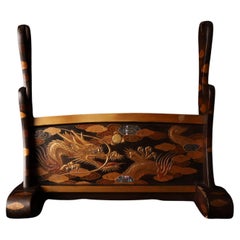
Japanese Gold Maki-e Katana Kake (Sword Stand) with Dragon Motif
Located in Fukuoka, JP
This elegant katana kake (sword stand) is crafted from wood and finished with a rich lacquer coating. Its surface is adorned with a striking gold maki-e depiction of a dragon — a tim...
Category

Late 18th Century Japanese Antique Edo Asian Art and Furniture

Materials

Gold Leaf

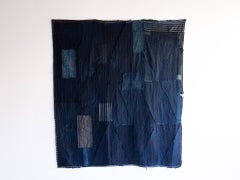
Japanese Antique Rag "BORO" 1800s-1860s / Abstract Art Wabi Sabi
Located in Sammu-shi, Chiba
This is an exceptionally old piece of Japanese fabric, dating back to the Edo period (1800s–1860s). It has been carefully used to withstand the harsh winter cold. Since ancient time...
Category

Mid-19th Century Japanese Antique Edo Asian Art and Furniture

Materials

Fabric

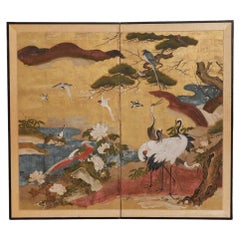
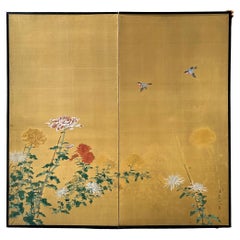
Antique Japanese Kachoga Kano School 2-Panel Screen, Edo Period
Located in Point Richmond, CA
Antique Japanese 2-panel Screen of Birds Flowers in a Landscape Setting, Kano School, Edo Period. This Kachoga subject of birds and flowers contains a brilliant mix of a variet...
Category

18th Century Japanese Antique Edo Asian Art and Furniture

Materials

Gold Leaf

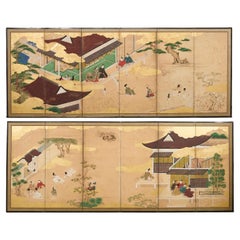
Pair Japanese Edo Six Panel Screens Legend of Minamoto
Located in Rio Vista, CA
Fascinating pair of large Japanese 19th century Edo period six-panel folding byobu screens depicting the legend of Minamoto No Yorimasa (Japanese Samurai 1106-1180). The pair of pain...
Category

19th Century Japanese Antique Edo Asian Art and Furniture

Materials

Brass, Gold Leaf

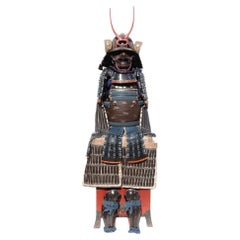
Antique Japanese Samurai Suit of Armor, Edo Period, 18th Century
Located in Point Richmond, CA
Antique Japanese Samurai Suit of Armor, Edo period, 18th century. A complete matching set of lacquered iron work; the cuirass with dragonfly decoration and blue lacing, a Kaga schoo...
Category

18th Century Japanese Antique Edo Asian Art and Furniture

Materials

Gold Leaf, Silver, Foil, Iron, Metal

Double-Sided Samurai Fan — Edo Period, Hand-Painted on Gold and Silver Leaf Pape
Located in Fukuoka, JP
Japan, Edo period (1603–1868) Size: 49 × 30 cm A magnificent double-sided Japanese folding fan (ōgi), hand-painted on paper richly decorated with gold and silver leaf. One side depi...
Category

19th Century Japanese Antique Edo Asian Art and Furniture

Materials

Wood, Paper

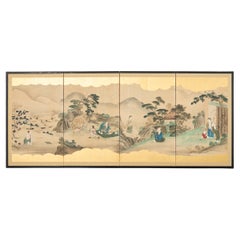
Japanese Edo Four Panel Screen Paragons of Filial Piety
Located in Rio Vista, CA
Late 19th century Edo period Japanese four panel folding byobu screen depicting four of the twenty-four paragons of filial piety. Beautifully painted in the Maruyama-Shijo style. The...
Category

19th Century Japanese Antique Edo Asian Art and Furniture

Materials

Brass, Gold Leaf

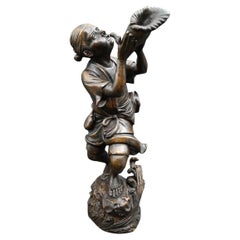
Japanese bronze Okimono , Edo period
Located in Bilzen, BE
Japanese bronze okimono from the Edo period in its old patina and good condition, Beautiful quality and expression Height 30 cm, not signed
Category

18th Century Japanese Antique Edo Asian Art and Furniture

Materials

Bronze

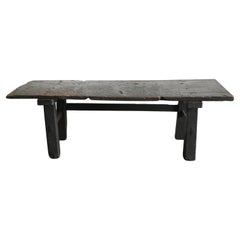
Japanese antique wabi-sabi black coffee low table / 1850-1912 / small table
Located in Sammu-shi, Chiba
This wooden low table, known as a "fuzukue" (writing desk), was made in Japan between the late Edo and Meiji periods (19th century). Crafted from cedar, its light and soft grain full...
Category

Late 19th Century Japanese Antique Edo Asian Art and Furniture

Materials

Cedar

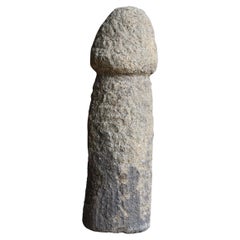
Japanese Antique Stone Carving Penis 1800s-1860s / Sculpture Wabi Sabi Mingei
Located in Chōsei District Nagara, JP
This is an old Japanese stone carving of a phallus, believed to have been made in the late Edo period (1800s–1860s). It is a rare and valuable a...
Category

Late 19th Century Japanese Antique Edo Asian Art and Furniture

Materials

Stone

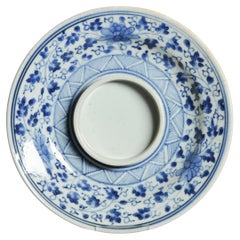
Rare Antique Edo period 17/18th Century Japanese Porcelain Plate Stand Arita Dis
Located in Amsterdam, Noord Holland
Description This is a beautiful piece of antique Japanese porcelain — it looks like Arita or Imari ware, decorated in classic blue and white cobalt underglaze. The central opening i...
Category

18th Century Japanese Antique Edo Asian Art and Furniture

Materials

Porcelain

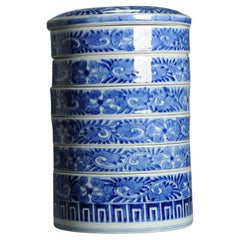
Antique Edo 19C Japanese Food container Ikegawa Ware Tea Ceremony Box Japan
Located in Amsterdam, Noord Holland
Description Sharing with you this lovely and large Food container in blue and white. Pieces like this were uses in the tea ceremony to serve food. Similar pieces can be found in the ...
Category

19th Century Japanese Antique Edo Asian Art and Furniture

Materials

Porcelain

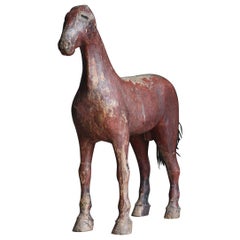
Japanese Antique Sacred Horse "Shinme" 1800s-1860s / Primitive Wabisabi
Located in Chōsei District Nagara, JP
This is an old Japanese carved wooden horse, a highly valuable piece created in the late Edo period (early 1800s–1860s). In Japan, it is known as a "Shinme" (sacred horse), a term re...
Category

Late 19th Century Japanese Antique Edo Asian Art and Furniture

Materials

Cedar, Lacquer

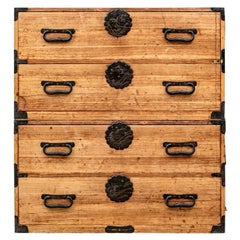
Fine Japanese Tansu Chest
Located in Bridgeport, CT
A classic Japanese Tansu Chest in Natural Pine originally collected in the late 1960’s in San Francisco, California. The two part Chest has a trad...
Category

20th Century Japanese Edo Asian Art and Furniture

Materials

Metal

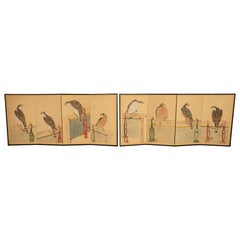
Pair Antique Japanese Edo Falcon Hawk Birds of Prey Handpainted Screens 1860
By Soga Nichokuan 1
Located in Portland, OR
A very fine pair of antique Edo period four paneled screens (Takagari), hand-painted with tethered birds of prey, in the manner of Soga Nichokuan, circa 1860. Wonderful pair of...
Category

Late 19th Century Japanese Antique Edo Asian Art and Furniture

Materials

Paper, Wood

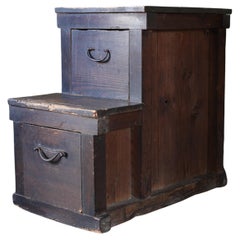
Japanese Antique "Staircase Chest" Late Edo Period-Meiji Period /Cabinet
Located in Sammu-shi, Chiba
We have an aesthetic sense peculiar to Japanese people. And we introduce the unique items that only we can do, the route of purchasing in Japan, the experience value so far, and the way that no one can imitate. Japanese antique black chest "staircase chest...
Category

19th Century Japanese Antique Edo Asian Art and Furniture

Materials

Cedar

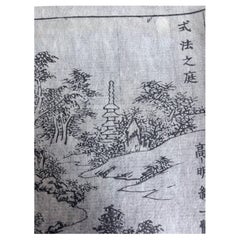
Japanese Pair Antique Lantern Garden Woodblock Prints 19c, immediately Framable
Located in South Burlington, VT
Two (2) Fine Old Woodblock Lanterns Garden Prints : Stone Pagoda, Gardens, Stepping Stones & Lush Landscapes Japan two (2) antique Old Kyoto Garden Woodblock prints from an original...
Category

19th Century Japanese Antique Edo Asian Art and Furniture

Materials

Paper

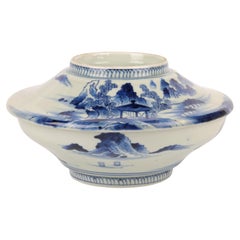
Japanese Imari Edo Period Blue White Porcelain Rice Dish and Cover
Located in Bishop s Stortford, Hertfordshire
A very stylish antique Edo period Japanese blue and white painted porcelain rice dish and cover decorated with watery landscapes dating from around 1850. The bowl is of wide round fo...
Category

Mid-19th Century Japanese Antique Edo Asian Art and Furniture

Materials

Porcelain

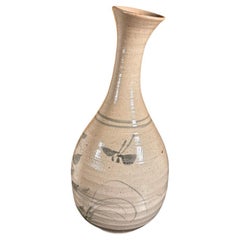
Extraordinary Japanese Hand Thrown Blue And White Wabi-Sabi Vase, Early 19thc.
Located in South Burlington, VT
A recent find: an old Japanese SHOKI-IMARI blue-and-white porcelain ware bottle with unique hand painted designs called Kusabana-Chou-Monyou (Grass, flower, and butterfly patterns)...
Category

Early 19th Century Japanese Antique Edo Asian Art and Furniture

Materials

Pottery

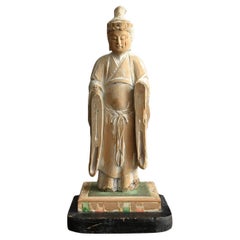
Wooden Buddha statues from the Edo period in Japan/1800-1868/Late Edo period
Located in Sammu-shi, Chiba
This wooden Buddhist statue was made in the late to late Edo period. It is thought to be a statue of Kannon Bodhisattva. It was originally placed in a shrine and was painted, but the...
Category

19th Century Japanese Antique Edo Asian Art and Furniture

Materials

Cypress

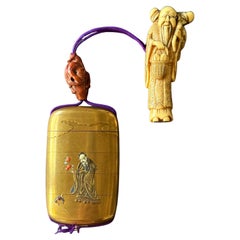
Fine Japanese Inro with Maki-e and Inlay by Shokasai and Shibayama
By Shibayama Factory
Located in Atlanta, GA
A Japanese four-case inro stringed together with a silk cord of a carved wood Ojime and a carved ivory netsuke circa 19th century of Edo period. This fine piece was made in collabora...
Category

19th Century Japanese Antique Edo Asian Art and Furniture

Materials

Wood, Lacquer

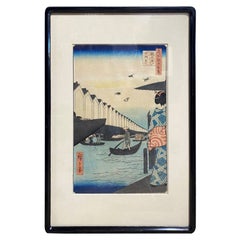
Utagawa Ando Hiroshige Japanese Woodblock Print Yoroi Ferry at Koami-Cho
Located in Studio City, CA
A wonderful Japanese woodblock print by famed Japanese artist Utagawa Hiroshige (Ando Hiroshige) (1797-1858) tilted "Yoroi Ferry at Koami-cho (Yoroi no ...
Category

Mid-19th Century Japanese Antique Edo Asian Art and Furniture

Materials

Paper

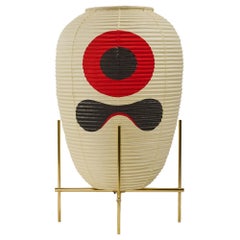
Contemporary Japanese Chochin Floor Lamp Limited Edition #1 Zen Washi
Located in Shibuya-ku, Tokyo
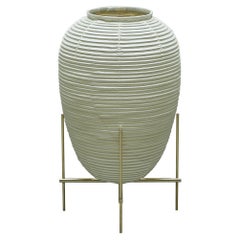
Name: OBAKE A Contemporary style Japanese Washi Japanese traditional paper shade floor lamp. Washi shade is famous as Isamu Noguchi Akari lightings. Base is made of brass. Limited pattern painted model. Edition of 3+1AP E26,27 light bulb. Available to work with 100-250V. Artist statement In Japan, there is an animist belief that the soul dwells in old tools that have passed a long time and turns into spirits such as "Youkai" or "OBAKE." Its existence lurks in the darkness of everyday life, sometimes causing fear and sometimes entertaining. This lantern is not an old tool, but it is made by the historic "Kojima Shoten", where the 10th generation are craftsmen in Kyoto. It's rare nowadays, and it's a style in which lanterns are made from bamboo bones to assembling papers and painting in one workshop and go. So, I decided to transform the polite crafted Japanese lanterns, which have been run through a traditional history, into a modern and pop style. It's not just OBAKE lurking in the darkness, but an existence who snuggles up to us as a more sophisticated being. These one-eyed OBAKE have a meaningful look that originated in ancient Sanskrit culture. The red-eye "A [a]" is the facial expression that is the first pronunciation to make a sound in Sanskrit, which means "truth" and "spirit of inquiry" at the same time. The blue-eyed "UN [hu?]" expresses the pronunciation to close the sound, and at the same time means "wisdom" and "nirvana." There is also the idea that describing the beginning and end of the universe is represented by considering the "A" and "UN" as a pair. In Asia, it is a common sight to see a pair of guardian statues...
Category

2010s Japanese Edo Asian Art and Furniture

Materials

Brass

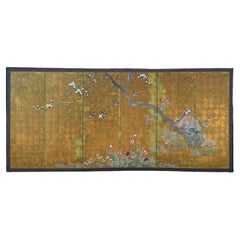
Japanese screen: Melody of Magnolia Blossoms
Located in Fukuoka, JP
Bathed in radiant gold, Melody of Magnolia Blossoms captures the fleeting harmony of nature in bloom. A graceful magnolia branch arcs across the shimmering surface, its petals unfold...
Category

Early 17th Century Japanese Antique Edo Asian Art and Furniture

Materials

Paper, Wood

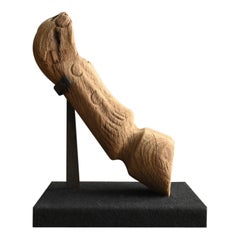
Japanese antique wood carving "Kirin s legs" /1800s/Shrines and temples carvings
Located in Sammu-shi, Chiba
Do you know Kirin? It is a type of legendary animal that appears in Chinese mythology, and is a spiritual animal that has been passed down in Japan since ancient times. At first glan...
Category

19th Century Japanese Antique Edo Asian Art and Furniture

Materials

Wood

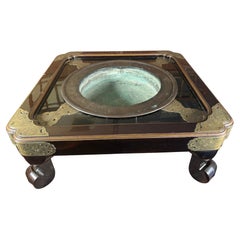
Japan Elegant Antique Rich Black Lacquer Table, 1852 With Signed Box
Located in South Burlington, VT
From our recent Japan acquisitions An important black lacquer treasure dated 1852 with its original box tomobako Superb antique Ohibachi (over sized hibachi) from late Edo era use...
Category

Mid-19th Century Japanese Antique Edo Asian Art and Furniture

Materials

Wood, Lacquer

Japanese Screen: Spring Offering
Located in Fukuoka, JP
Spring Offering is a small yet exquisitely refined Edo-period screen originally created as a backdrop for a Girls’ Day altar. Against a softly shimmering gold-leaf background, delica...
Category

18th Century Japanese Antique Edo Asian Art and Furniture

Materials

Paper, Wood

Japanese Screen: Spring Offering
$1,250 Sale Price
56% Off
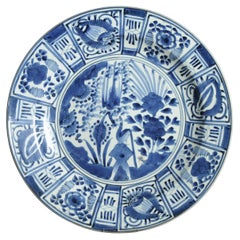
39CM Antique Kraak Edo period 1680-1690 Japanese Porcelain Huge Charger Arita
Located in Amsterdam, Noord Holland
Description Sharing with you this very nice edo period, 1680-1700, example. With a garden floral scene with birds in the style of Chinese Wanli period pieces. Unmarked at base Arit...
Category

Late 17th Century Japanese Antique Edo Asian Art and Furniture

Materials

Porcelain

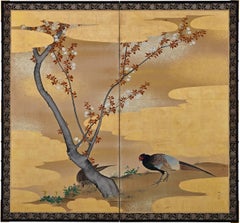
Early 19th Century Japanese Screen. Cherry Blossom Pheasants by Mori Tetsuzan
Located in Kyoto, JP
Mori Tetsuzan (1775-1841) Pheasants and Cherry Blossoms Two-fold Japanese screen. Ink, color, gofun, gold and silver on paper. A two-fold Japanese bir...
Category

Early 19th Century Japanese Antique Edo Asian Art and Furniture

Materials

Gold Leaf

Japanese Antique Chests of Drawers 1800s-1860s/Safe Storage Cabinet Wabisabi
Located in Sammu-shi, Chiba
It is an old Japanese drawer. It is an item from the Edo period (1800s-1860s). It has a keyed door so that it can also be used as a safe. Both metal fittings are attached with very ...
Category

Late 19th Century Japanese Antique Edo Asian Art and Furniture

Materials

Cedar

Stunning Set of Four 19th Century Edo Period Fusuma Door Decorative Panels
Located in Los Angeles, CA
A set of four fusuma (sliding door) panels from the 19th century, painted in ink and colors on gold leaf. The panels depict a blossoming cherry tree extending beyond a woven fence an...
Category

Late 19th Century Japanese Antique Edo Asian Art and Furniture

Materials

Gold Leaf, Brass

17th Century Japanese Screen Pair. Tiger Dragon by Kaiho Yusetsu
Located in Kyoto, JP
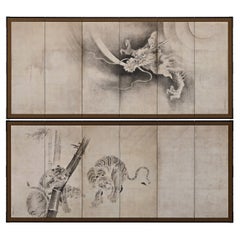
Kaiho Yusetsu (1598-1677) Tiger and Dragon Early Edo Period, Circa 1650 A Pair of Six-fold Japanese Screens. Ink and slight color on paper. Dimensions: Each screen: H. 171 cm x W. 380 cm (67.5’’ x 149.5’’) In this pair of early Edo period Japanese screens a group of tigers prowl in a bamboo grove whipped with fierce wind, while a dragon claws through clouds and mist. The dragon embodies elemental qualities - looming out of the mist, the coils of its body disappearing in the clouds. The dragon is calling for rain, symbolizing spring which is considered the fountain of life. On the other side, the tigers calls for the wind, symbolizing autumn which is considered the end of life. Tigers were familiar motifs within Japanese art from ancient times though the animals were imaginary to the people in the 17th century. While dragons and tigers are usually associated as sacred and ferocious, in this painting, both animals have rather amusing expressions. The tigers appear to glare at the dragon with cat-like eyes, and the look on the swirling dragon’s face appears almost affectionate - lending a playful flair to an otherwise magnificent theme. The tiger and dragon are cosmological symbols of the balancing forces in the world. Screens such as this were originally meant to express the fluctuating nature of the world. For Japanese in the early Edo period, they likely suggested the powers of the cosmos. In Japan the tiger and dragon motif was originally absorbed into the circles of Zen monasteries before spreading into the secular world. The theme especially appealed to the military classes with the Kano school, the official painters to the Shogun and the samurai, being the leading contributors. The painter of this pair of screens, Kaiho Yusetsu (1598-1677), was closely patronized by the third Shogun Tokugawa Iemitsu. In his later years he worked with Kano school artists...
Category

Mid-17th Century Japanese Antique Edo Asian Art and Furniture

Materials

Silk, Wood, Paper

Rare Japanese Negoro Stem Dish Momoyama Edo Period
Located in Atlanta, GA
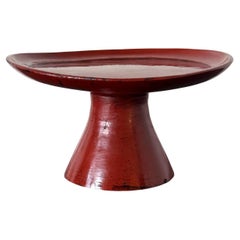
An antique red lacquer stem dish from Japan, circa 17th century (Momoyama to early Edo period). This type of red lacquer finish is known as Negoro lacquer. It was developed by the me...
Category

17th Century Japanese Antique Edo Asian Art and Furniture

Materials

Wood, Lacquer

Japanese Edo Six Panel Table Screen After Maruyama Okyo
Located in Rio Vista, CA
Fantastic diminutive Japanese Edo period table top screen depicting a lively water landscape with flora and fauna. The screen is beautifully painted o...
Category

19th Century Japanese Antique Edo Asian Art and Furniture

Materials

Brass, Gold Leaf

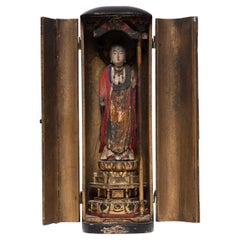
Japanese Zushi Traveling Shrine of Jizō Bosatsu, c. 1850
Located in Chicago, IL
The simple exterior of black lacquer encasing this 19th-century Japanese traveling shrine (zushi) belies the splendor within. The hinged doors open to reveal a lustrous gold interior...
Category

Mid-19th Century Japanese Antique Edo Asian Art and Furniture

Materials

Wood

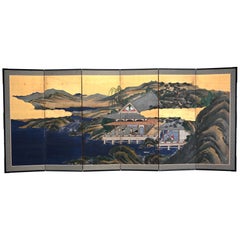
Edo-Style Six-Panel Japanese Byobu Screen with Gold Paint Landscape
Located in Hamburg, PA
This Asian screen print is a stunning six-panel byobu (folding screen) featuring a traditional Japanese landscape. The artwork showcases a serene scene with a lakeside pavilion set a...
Category

19th Century Antique Edo Asian Art and Furniture

Materials

Wood, Paint, Paper

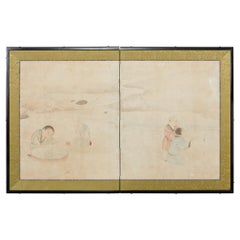
Japanese Edo Two Panel Screen Children Playing Catching Fish
Located in Rio Vista, CA
Delightful late 18th century/early 19th century Japanese Edo period two panel byobu screen depicting children at play near a riverbank and catching fish. Painted in the Maruyama-Shij...
Category

18th Century Japanese Antique Edo Asian Art and Furniture

Materials

Silk, Wood, Paper

18th Century Japanese Rinpa Screen. White Chrysanthemums. School of Korin.
Located in Kyoto, JP
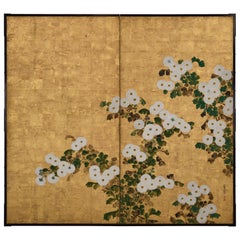
School of Ogata Korin White Chrysanthemums 18th Century, Edo period. A two-panel Japanese screen. Ink, color, gofun and gold leaf on paper. Dimensions: H. 171 cm x W. 188 cm (67.5” x 74”) On this two-panel Japanese screen we see blooming chrysanthemums, a flower which embodies the essence of autumn in Japan. Here the traditional floral theme has been simplified and stylized. The bright colors and asymmetrical composition against the delicate gold leaf create a luxurious and ornate work of art. Its background, a strikingly patinated grid of gold leaf, denies any sense of place or time and imbues everything with an ethereal glow. The leaves and stems of the plants are nothing more than pools of mottled color and ink without any outline whatsoever. These are typical Rinpa adaptations of traditional ink painting methods; tarashikomi, or diluted washes of color blended while very wet, and mokkotsu, or “bonelessness,” which creates forms without exterior outlines. The relief work of the rounded flower petals has been obtained by the moriage process (a mixture based on ground shells modeled on the surface of the paper). On the lower right of the screen, the siganture “Hokyo Korin Jakumyo” and the “Hoshuku” seal can be read. Korin is Ogata Korin, famed for the Irises (Nezu Museum) and Red and White Plum Blossom (MOA Museum of Art) folding screens, both National Treasures. Korin worked in both Kyoto and Edo in the mid-Edo period. Korin was using the art name “Jakumyo” just after he received the Hokyo level, which was in 1701. This particular screen was published in May of 1961 in the Japanese Sansai Fine Art Magazine*. An in depth article accompanies the photograph of the screen and and a photograph of the signature and seal. This article devotes much of its body to discussing the moriage technique, how it enlivens the chrysanthemum flowers and Korin’s specific skill in using the technique. The article goes on to discuss the most famous works of Korin, utilizing this technique, which were known at the time. Specifically a two-panel screen held in the Honolulu Museum which was discovered in the store-house of Takahashi Soan. A two-panel screen pair which the Nakano family own. A two-panel screen pair with chrysanthemums in moriage in fan designs owned by the Nomura family. Also a small folding screen featuring chrysanthemums held in the Yamato Bunkakan. The article goes on to say that this particular two-fold screen came from the Nijo family. Korin is known to have had a strong connection with the aristocratic Nijo family. The article explains that Korin received a lot of favors from the Nijo family and that this screen would have been gifted to them. Since that time the Honolulu screen has been amended to ‘attributed to Ogata Korin’ and I do not know further details of the other 3 screens. Other Chrysanthemum screens...
Category

18th Century Japanese Antique Edo Asian Art and Furniture

Materials

Gold Leaf

19th Century Japanese Scroll Painting, Birds Flowers of the Four Seasons
Located in Kyoto, JP
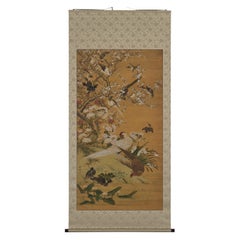
Birds and flowers of the four seasons Early to mid-19th century Ink, pigment and gofun on silk Unidentified artist Signature: S...
Category

1830s Japanese Antique Edo Asian Art and Furniture

Materials

Silk

Double-Sided Japanese Fan — Edo Period, Hand-Painted on Silver Leaf Paper
Located in Fukuoka, JP
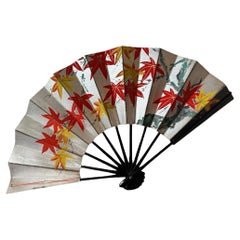
Japan, Edo period (1603–1868) Size: 49 × 30 cm A magnificent double-sided Japanese folding fan (ōgi), hand-painted on paper richly decorated with gold and silver leaf. One side depi...
Category

19th Century Japanese Antique Edo Asian Art and Furniture

Materials

Wood, Paper

Contemporary Japanese Chochin Floor Lamp Zen Washi Japanese Paper Shade
Located in Shibuya-ku, Tokyo
Name: Under the Hazy Moon Contemporary style Japanese Washi Japanese traditional paper shade floor lamp. Washi shade is famous as Isamu Noguchi Akari lightings. Base is made of brass...
Category

2010s Japanese Edo Asian Art and Furniture

Materials

Brass

19th Century Japanese Edo Six Panel Kano School Landscape Screen
Located in Rio Vista, CA
Late Edo period 19th century Japanese six-panel landscape screen featuring a cypress tree over a flowering hibiscus with a pair of hototogisu birds. Kano school painted with ink and ...
Category

19th Century Japanese Antique Edo Asian Art and Furniture

Materials

Silk, Wood, Paper

Shinbei Sakakura X (10th) Japanese Hagi Yaki Ware Pottery Chawan Tea Bowl Box
Located in Studio City, CA
A wonderfully hand crafted and beautifully glazed Hagi Yaki Ware Chawan tea bowl by the 10th Shinbei Sakakura (X). This piece has quite a special feel to it. The Chawan radiates i...
Category

Mid-19th Century Japanese Antique Edo Asian Art and Furniture

Materials

Pottery, Stoneware

Suzuribako or writting box circular shape in nashiji and gold lacquer
Located in PARIS, FR
Suzuribako (writing box) in black lacquer, rectangular in shape, with a gold lacquer (maki-e) decoration of a pavilion by the edge of a waterfall and a mountain river surrounded by v...
Category

Late 18th Century Japanese Antique Edo Asian Art and Furniture

Materials

Gold Leaf

19th Century Japanese Cinnabar / Lacquer Cabinet
Located in Fulton, CA
Incredible example of Asian lacquer carving. Standing over seven feet tall, this monumental display shelf was produced in Japan at the end of the Ed...
Category

Late 19th Century Japanese Antique Edo Asian Art and Furniture

Materials

Wood, Lacquer

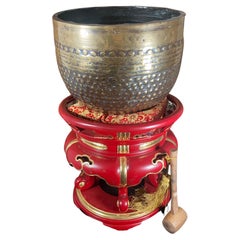
Japanese Large 1842 Bronze Temple Meditation Bowl Rin Serene Resonating Sound
Located in South Burlington, VT
Japan, a rare dated large bronze hand hammered temple bell rin, Edo period , incised and dated Tenpo era 13th (1842) around rim. Perfect meditation instrument. When struck emits a pleasing bold reverberating sound guaranteed to please you. Bell is in very good condition... Includes red lacquered display base as shown and a complimentary striker This hand-hammered and wrought bronze percussion instrument created by specialized Samurai craftsmen with dimpled construction and incised signature of maker along rim sets atop a round red lacquered footed wood display base with wooden striker and when struck creates a serene reverberating sound. Perfect for meditation gardens or interior spaces. Total Height of bronze bell with red lacquered stand...
Category

1840s Japanese Antique Edo Asian Art and Furniture

Materials

Bronze

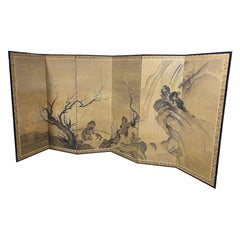
Japanese Asian Large Edo Six-Panel Folding Byobu Screen Landscape Monkeys Trees
Located in Studio City, CA
An absolutely gorgeous, wonderfully composed six-panel Japanese Byobu folding screen/room divider depicting a family of playful monkeys among the blooming trees and mountainous lands...
Category

Early 19th Century Japanese Antique Edo Asian Art and Furniture

Materials

Gold Leaf

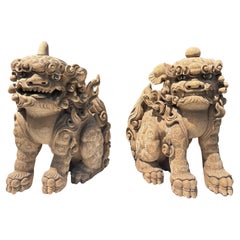
Japan Important Large Pair Early Shinto Temple Lions Hand-Carved, 18th Century
Located in South Burlington, VT
Just discovered and coming from a Shinto Shrine deaccession Call or message us for details or to reserve. Japan an early and superb pair (2) of mythical Shi Shi Temple Foo Dogs als...
Category

18th Century Japanese Antique Edo Asian Art and Furniture

Materials

Wood

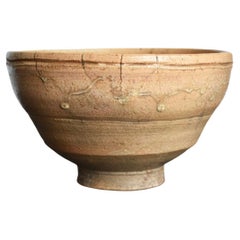
Japanese Antique Earthenware Tea Bowl/Edo Period/1700-1800/ Hagi Ware
Located in Sammu-shi, Chiba
This is Hagi ware made in the middle of the Edo period. Hagi ware is a type of pottery that began in Hagi City, Yamaguchi Prefecture in the early Edo period...
Category

18th Century Japanese Antique Edo Asian Art and Furniture

Materials

Pottery

Antique 19th Century Japanese Two-Panel Screen ‘Byobu’, Kano School, Edo Period
Located in London, GB
Japanese Kano School Edo period two-panel screen depicting flowering prunus and bamboo on a rock formation, with colorful birds next to a body of water. ...
Category

Mid-19th Century Japanese Antique Edo Asian Art and Furniture

Materials

Gold Leaf

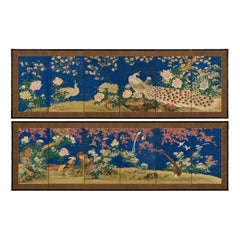
Mid 19th Century Japanese Screen Pair. Flowers Birds of the Four Seasons.
Located in Kyoto, JP
Shioka Sorin (1781-1850) Flowers & Birds of the Four Seasons Pair of six-panel Japanese Screens. Ink, gofun and pigments on silk. Dimensions (each screen): H. 91.5cm x W. 285cm (3...
Category

Mid-19th Century Japanese Antique Edo Asian Art and Furniture

Materials

Silk

Japanese Screens: Echo of Chrysanthemums
Located in Fukuoka, JP
Echo of Chrysanthemums captures the quiet dialogue between form and reflection. Against a radiant gold-leaf ground, blooming chrysanthemums rise in graceful color harmony — white, cr...
Category

19th Century Japanese Antique Edo Asian Art and Furniture

Materials

Gold Leaf

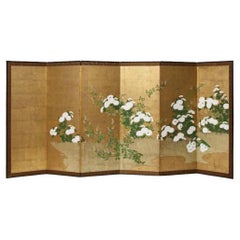
Kiku to Hagi Byobu, Rinpa School Style, Edo Period.
Located in Point Richmond, CA
A Chrysanthemum and Bush Clover painting on gold leaf six-panel folding screen, painted with clusters of leafy green chrysanthemum plants with white blossoms having moriage relief petals of gofun growing amidst pink blossoming bush clover within a bunched bush clover garden fence rendered in lighter gold relief, all on a background entirely of rich gold leaf. These two flowers are symbolic of Japan and the autumn season. The classic patterned paper verso with a Naga Antiques...
Category

Early 1800s Japanese Antique Edo Asian Art and Furniture

Materials

Gold Leaf

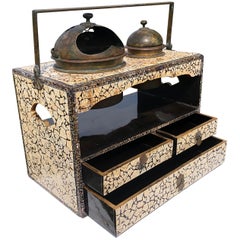
Japanese Rare Antique Inlaid Smoking Tansu, Complete 1850
Located in South Burlington, VT
The first we have seen A spectacular and hard to find Inlaid mother of pearly - using the raden technique- and lacquered three-drawer Tansu complete with all original bronze accoutrement including a fine engraved antique long pipe and two removable covered bronze cylinders all executed by expert mid-19th century Edo samurai...
Category

19th Century Japanese Antique Edo Asian Art and Furniture

Materials

Bronze

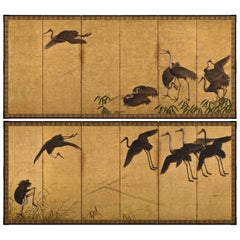
17th Century Japanese Screen Pair. Flock of Cranes. Ink and color on gold leaf.
Located in Kyoto, JP
A pair of six-fold Japanese screens from the 17th century depicting a flock of cranes arriving at their wintering grounds. The expansive scene is heavily atmospheric. The cranes are...
Category

17th Century Japanese Antique Edo Asian Art and Furniture

Materials

Gold Leaf

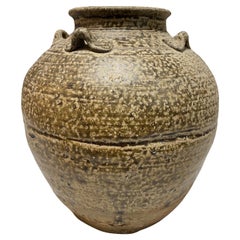
Japanese Antique Edo Wabi-Sabi Shigaraki Tamba Tanba Art Pottery Jar Tsubo Vase
Located in Studio City, CA
A beautiful Tamba (Tanba) ware (or Sigaraki ware) Japanese pottery vase/jar/pot - produced sometime during the Edo Period (1603-1867). Tamba-yaki ware is a type of Japanese pottery a...
Category

18th Century Japanese Antique Edo Asian Art and Furniture

Materials

Pottery, Stoneware

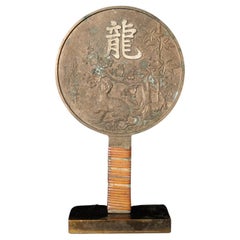
Edo period bronze mirror with a rare design depicting a tiger and plum blossoms
Located in Fukuoka, JP
A finely cast bronze mirror from the Edo period, featuring an exceptionally rare motif: a powerful tiger set against elegant plum blossoms. The contrasting imagery embodies strength ...
Category

18th Century Japanese Antique Edo Asian Art and Furniture

Materials

Silver, Bronze

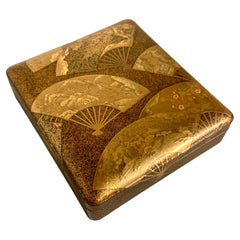
Japanese Maki-e Lacquer Document Box, Edo Period, early 19th Century, Japan
Located in Austin, TX
A spectacular Japanese maki-e lacquer lidded box, possibly a writing box, suzuribako, decorated with images of folding fans, ogi, Edo Period, earl...
Category

Early 19th Century Japanese Antique Edo Asian Art and Furniture

Materials

Coral

Japanese Folding Screen Gold Leaf
Located in Brescia, IT
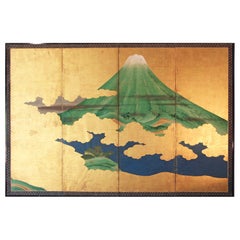
Byobu painted with mineral pigments on gold leaf, the quality of the painting is still excellent, with no color loss or restorations. A classic four-panel screen depicting Mount Fuji...
Category

Early 19th Century Japanese Antique Edo Asian Art and Furniture

Materials

Gold Leaf

Japanese Woodblock Print Kinryuzan Temple at Asakusa by Utagawa Hiroshige
Located in Atlanta, GA
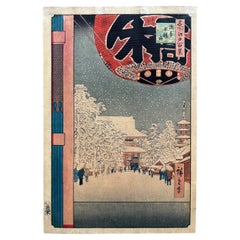
Title: Kinryuzan Temple at Asakusa from the series One Hundred Famous Views of Edo (Meisho Edo Hyakkei) Artist: Utagawa Hiroshige (Japanese, 1797–1858) Original published date: 7th m...
Category

Early 20th Century Japanese Edo Asian Art and Furniture

Materials

Paper

Edo asian art and furniture for sale on 1stDibs.

Find a broad range of unique Edo asian art and furniture for sale on 1stDibs. Many of these items were first offered in the 21st Century and Contemporary, but contemporary artisans have continued to produce works inspired by this style. If you’re looking to add vintage asian art and furniture created in this style to your space, the works available on 1stDibs include asian art and furniture, wall decorations, decorative objects and other home furnishings, frequently crafted with wood, metal and other materials. If you’re shopping for used Edo asian art and furniture made in a specific country, there are Asia, East Asia, and Japan pieces for sale on 1stDibs. While there are many designers and brands associated with original asian art and furniture, popular names associated with this style include Utagawa Hiroshige (Ando Hiroshige), Arita, Ryosuke Harashima, and Kitagawa Utamaro. It’s true that these talented designers have at times inspired knockoffs, but our experienced specialists have partnered with only top vetted sellers to offer authentic pieces that come with a buyer protection guarantee. Prices for asian art and furniture differ depending upon multiple factors, including designer, materials, construction methods, condition and provenance. On 1stDibs, the price for these items starts at $55 and tops out at $1,386,932 while the average work can sell for $3,412.