Edo Asian Art and Furniture

EDO STYLE

Edo furniture was created during a flourishing time for the decorative arts owing to the stability of the Tokugawa shogunate rule in Japan. Spanning from 1603 to 1867, this era of peace and economic growth supported artistic advancements in lacquer, woodblock printing, porcelain and other artisanal trades. Because the country was largely isolated, there was little outside influence, leading to centuries of exceptional attention to the design of its furnishings and the quality of its traditional arts.

Unlike during the Meiji period that followed, with an increase in domestic and international markets, furniture during the Edo period was predominately commissioned by the ruling class, although people from across social groups benefited from the burgeoning metropolitan hubs for artisanal trades. For instance, Kyoto became a major center for lacquer art. Most furniture pieces were made from wood such as cedar or ash, including the era’s sashimono cabinets, which involved fine joinery and were rooted in the Heian period.

Sashimono cabinets, which were built by master craftsmen in a range of different wood types owing to the various trees that populate Japan, occasionally featured a stack of slender drawers as well as sliding doors. They were popular with everyone from samurai to kabuki actors. Tansu storage chests crafted from wood with metal fittings were also common in Edo-period homes. Some were designed to be easily portable while others were made to double as staircases.

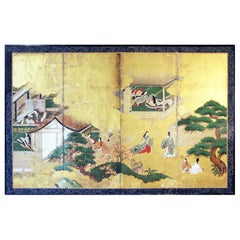
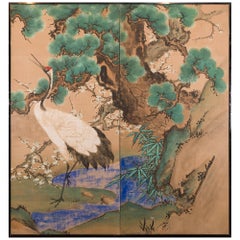
Painted folding screens, called byōbu, were also fashionable, with Japanese artists inspired by nature, literature and scenes of history and daily life to create vivid works. In Buddhist temples and the palatial homes of the aristocratic class, fusuma, or large sliding panels, would sometimes be adorned with gold or silver leaf. These dividers allowed interiors to change throughout the day, closing in small spaces for personal use or reflecting candlelight to illuminate communal spaces after dark.

Find a collection of Edo tables, lighting, decorative objects, wall decorations and more furniture on 1stDibs.

to
114
284
150
587
11
441
392
232
186
155
74
55
46
42
33
25
20
15
14
13
13
12
4
227
321
39
11
18
5
1
1
1
253
201
175
121
104
580
569
555
11
3
598
595
595
13
11
6
3
2
Style: Edo
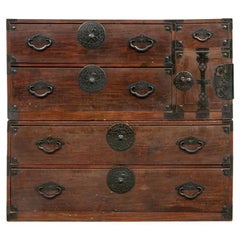
Vintage Japanese Carry Chest On Chest
Located in Bridgeport, CT
The two stacking units in a reddish-brown stain with black metal mounts. The top chest with two long drawers on the left. The right side with a drawer over two more smaller drawers...
Category

Early 20th Century Japanese Edo Asian Art and Furniture

Materials

Metal

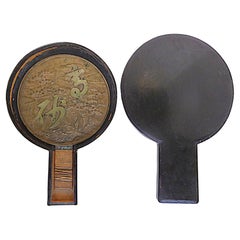
Edo Period Japanese Bronze Mirror with Lacquer Box Japan mid 1800s
Located in Miami, FL
Antique Japanese Bronze Mirror decorated with a scene of clouds swirling over two intertwinning pine trees, symbol of long life, on a promontory with waves breaking against it. Larg...
Category

1880s Japanese Antique Edo Asian Art and Furniture

Materials

Bronze

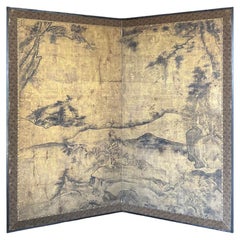
Early Edo Period Chinese-Inspired Screen
Located in Fukuoka, JP
This remarkable screen from the early Edo period, circa the 17th century, showcases the influence of early Chinese art forms with its intricate ink work on a gold leafed surface. The...
Category

17th Century Japanese Antique Edo Asian Art and Furniture

Materials

Gold Leaf

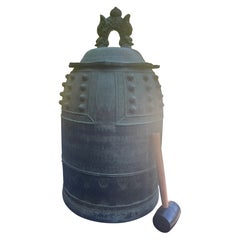
Japanese Giant Antique Bronze Temple Bell Bonsho Special Early Inscriptions, 27"
Located in South Burlington, VT
Unique Bronze Bell One of a kind find bronze bonsho temple bell- with an unusual scalloped crest, side panel markings, rare bottom band pattern castings, and early patron signatures - a rare Buddhist temple...
Category

19th Century Japanese Antique Edo Asian Art and Furniture

Materials

Bronze

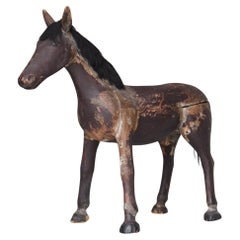
Japanese Antique Sacred Horse Wooden Statue "Shinme" 1800s-1860s / Wabi Sabi
Located in Chōsei District Nagara, JP
This is a very rare carved wooden statue of a sacred horse that was dedicated to a Japanese shrine. It was produced during the Edo period (1800s-1860s), and the main material used is...
Category

Mid-19th Century Japanese Antique Edo Asian Art and Furniture

Materials

Cedar

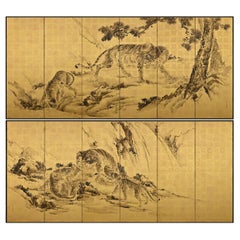
Japanese Screen Pair, Tigers by Kishi Renzan, Late Edo Period
Located in Kyoto, JP
Kishi Renzan (1804-1859) Tigers Pair of six-panel Japanese screens. Ink and gold-leaf on paper. In this monochromatic pair of six-fold Japanese screens painted on gold-leaf, Kishi Renzan has created a breathtaking composition of a family of tigers. The screens are filled with a sense of drama which is conveyed by both the subject matter and the wet, expressive brushwork. The running mountain stream and the towering waterfall allude to refreshment during the summer months and we feel the tiger families familiarity and security within their environment. Renzan’s master, Kishi Ganku...
Category

Mid-19th Century Asian Antique Edo Asian Art and Furniture

Materials

Gold Leaf

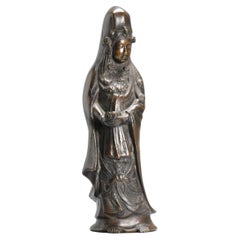
Antique Chinese Bronze Statue Guanyin China 19th / 20th century
Located in Amsterdam, Noord Holland
BRONZE top level Chinese statue Qing period, 19th century. Condition 29.5cm Period 19th century
Category

19th Century Japanese Antique Edo Asian Art and Furniture

Materials

Porcelain

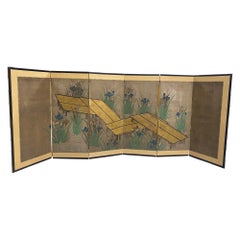
Japanese Asian Six-Panel Folding Byobu Screen Landcape Bridge with Iris Flowers
Located in Studio City, CA
A gorgeous six-panel Japanese Byobu folding screen depicting a nature lake/landscape scene with a water walkway/angular bridge and blossoming iris flowers - perhaps an homage to the famed Irises screens...
Category

19th Century Japanese Antique Edo Asian Art and Furniture

Materials

Gold Leaf

Japanese Antique Exhibition Stand / Sword Case / 1800-1868s / Wabi-sabi
Located in Iwate-gun Shizukuishi-cho, Iwate Prefecture
This is an old drawer for storing Japanese swords originally called "Katanatansu". It is thought to be from around the Edo period. Cedar is used for the material, and a large numbe...
Category

Mid-19th Century Japanese Antique Edo Asian Art and Furniture

Materials

Wood, Paper, Cedar

Utagawa Ando Hiroshige Woodblock Print J001, Japan
Located in Norton, MA
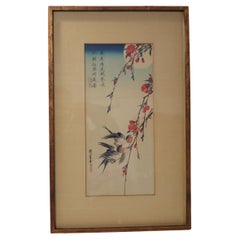
Rare find, Utagawa Ando Hiroshige, Japanese, 1797 to 1858, woodblock prints on paper, peach and swallows in moonlight. The first is signed and i...
Category

Early 19th Century Japanese Antique Edo Asian Art and Furniture

Materials

Paper

Japanese Antique Edo Wood Noh Theater Omi-Onna Ko-Omote Koomote Mask, 1700s
Located in Studio City, CA
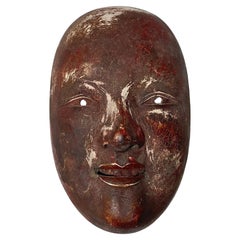
A truly beautiful, wonderfully aged, alluring mask made for Japanese Noh theater. The naturally faded beauty and unique character drew us to this mask immediately. The mask is hand...
Category

18th Century Japanese Antique Edo Asian Art and Furniture

Materials

Wood

Mid 18th Century Japanese Screen Pair. Crows Pines by Unkoku Toshuku.
Located in Kyoto, JP
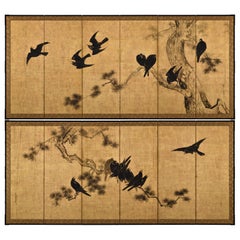
Unkoku Toshuku (1722-1779) Crows and Pines A pair of six-panel Japanese Screens. Ink and gold leaf on paper. Dimensions: Each Screen: H. 170.5 cm x W. 375 cm Haha-cho or mynah birds, whose forms resemble crows in artwork, were commonly depicted in Japanese art. These types of paintings were originally modeled on paintings attributed to the 13th century Chinese painter Muqi (Mokkei), whose art was enormously influential in Japan. Crows only became a theme among Japanese artists from the later 1500s onward. They likely were inspired by these imported Chinese paintings of myna birds, which are not native to Japan, substituting the native species of crow instead.  The best known early examples of the depiction of Japanese crows are two Momoyama screen...
Category

Mid-18th Century Japanese Antique Edo Asian Art and Furniture

Materials

Gold Leaf

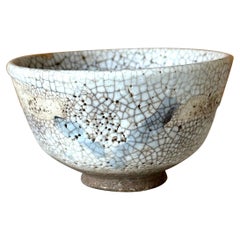
Japanese Shino Chawan Tea Bowl Edo Period
Located in Atlanta, GA
A Japanese ceramic Chawan (tea bowl) of e-Shino (painted Shino) ware style circa mid-late 18th century Edo period. The classically shaped bowl features an abstract blue paint of blue grass and displays strong characters in the milky white glaze, with overall crawling and crackling effect. One of the most distinctive characteristics of Shino that is exemplified on this bowl is the small pinholes called suana, which tea masters favor (termed as yuzuhada, or citron skin). The milky-white feldspar...
Category

Late 18th Century Antique Edo Asian Art and Furniture

Materials

Ceramic

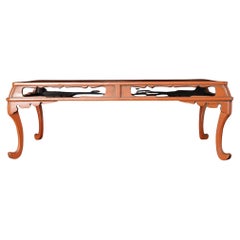
Japanese Negoro-Style Lacquered Table, 17th–18th Century
Located in Fukuoka, JP
This Japanese Negoro-style lacquered table dates to the 17th–18th century and exemplifies the restrained beauty and layered surface aesthetic characteristic of Negoro lacquerware. Tr...
Category

17th Century Japanese Antique Edo Asian Art and Furniture

Materials

Wood, Lacquer

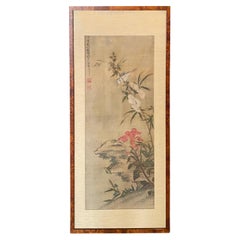
Japanese Asian Edo Nagasaki School Nanpin Nature Floral Flower Bird Painting
Located in Studio City, CA
A beautiful Japanese Asian Edo Period (1603-1868) Nagasaki School/ Nanpin School nature landscape scene painting featuring a playful bird and colorful spring flowers in full bloom. ...
Category

Mid-19th Century Japanese Antique Edo Asian Art and Furniture

Materials

Silk, Paint

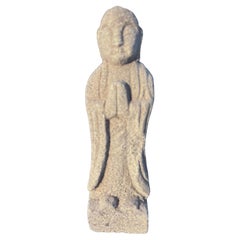
Japanese Tall 100 Year Old Stone Buddha, Hands in Prayer
Located in South Burlington, VT
A very good hand carved stone Buddha/Jizo Guardian sculpture set upon its own carved base Good display candidate for your favorite indoor or outdoor space In Japan, Kṣitigarbha, kn...
Category

Early 20th Century Japanese Edo Asian Art and Furniture

Materials

Stone

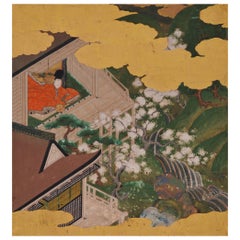
Japanese Painting, 17th Century, Tale of Genji, Tosa School
Located in Kyoto, JP
Illustration to an unidentified chapter of the Tale of Genji (Genji Monogatari) Tosa School (second half of the 17th Century) Ink, pigment, gofun and...
Category

Late 17th Century Japanese Antique Edo Asian Art and Furniture

Materials

Gold Leaf

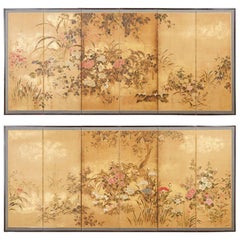
Pair of Japanese Edo Rimpa School Screens after Tawaraya Sōtatsu
Located in Rio Vista, CA
Impressive pair of 17th century Japanese Edo period Rinpa school screens made in the manner and style of Autumn Grasses by Tawaraya Sōtatsu (1570-1640). Beautifully decorated with wi...
Category

17th Century Japanese Antique Edo Asian Art and Furniture

Materials

Gold Leaf

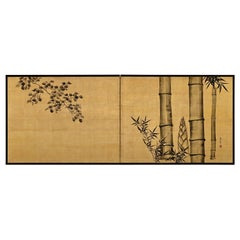
19th Century Japanese Screen for Tea-Ceremony, Ink Bamboo and Plum on Gold Leaf
Located in Kyoto, JP
Three Friends of Winter Nakajima Raisho (1796-1871) Late Edo period, circa 1850 Ink and gold leaf on paper. This is a double-sided Japanese Furosaki or tea-ceremony screen from the mid 19th century; bamboo and plum on the front, young pines the back. It by Nakajima Raisho, a master painter of the Maruyama school in the late Edo and early Meiji periods. In this work Raisho combines exquisite ink brushwork with large open spaces of brilliant gold-leaf to inspire the viewers imagination. Rather than naturalism, he is searching for the phycological impression of the motifs, resulting in abstraction and stylization. His simplification of the motifs the result of looking to capture the inner nature of the objects. This art motif is known as Sho Chiku Bai, or the Three Friends of Winter. Evergreen pine connotes steadfastness, bamboo suggests both strength and flexibility, while plum blossoms unfurling on snow-laden branches imply hardiness. Combined, this trio is emblematic of Japanese new year. Chinese literati were the first to group the three plants together due to their noble characteristics. Like these resilient plants flowering so beautifully in winter, it was expected of the scholar-gentleman to cultivate a strong character with which he would be able to show the same degree of perseverance and steadfastness even during times of adverse conditions. The screen would have been placed near the hearth of a room used for the Japanese tea ceremony, shielding the fire from draughts and also forming a stimulating and decorative backdrop behind the tea utensils. It would have been used in the Hatsugama, or first tea-ceremony of the new year. Nakajima Raisho (1796-1871) originally studied under Watanabe Nangaku before entering the school of Maruyama Ozui. He was the highest ranking Maruyama school painter at the end of the Edo period and was known as one of the ‘Four Heian Families’ along with Kishi...
Category

Mid-19th Century Japanese Antique Edo Asian Art and Furniture

Materials

Gold Leaf

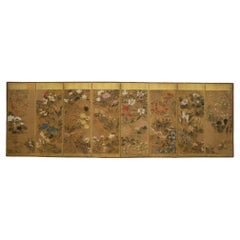
Summer Flowers Eight-Panel Botanical Screen
Located in Fukuoka, JP
Summer Flowers Eight-Panel Botanical Screen Period: Late Edo Size: 352x117 cm (138x46 inches) SKU: PTA42 Immerse yourself in the splendor of late Ed...
Category

18th Century Japanese Antique Edo Asian Art and Furniture

Materials

Gold Leaf

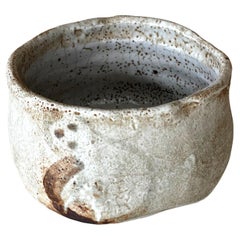
Antique Japanese Shino Ware Chawan Tea Bowl
Located in Atlanta, GA
On offer is a Japanese ceramic tea bowl (chawan) used in the traditional chado ceremony. The bowl was potted in clog form with a ring foot shaved extremely low. Its size and harmonious proportion make it perfect to be held in both hands during chado. Classified as shino ware...
Category

18th Century Japanese Antique Edo Asian Art and Furniture

Materials

Ceramic

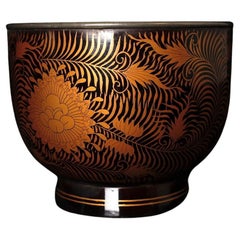
Elegant Arabesque-Design Lacquer Bowl with Metal Rim, Late Edo Period
Located in Fukuoka, JP
This elegant Japanese lacquer bowl dates to the late Edo period (19th century) and is distinguished by its refined arabesque (karakusa) design. The flowing vegetal scrollwork, execut...
Category

19th Century Japanese Antique Edo Asian Art and Furniture

Materials

Metal

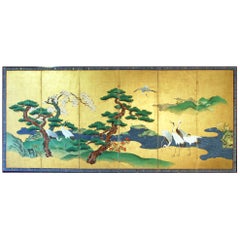
Japanese Folding Screen Six Panels Painted on Gold Leaf
Located in Brescia, IT
Paravento a sei pannelli di scuola giapponese Kano: paesaggio con bellissime ed eleganti gru vicino al fiume, con alberi di pino e sakura. Dipinto a mano con pigmenti minerali ed inc...
Category

Early 19th Century Japanese Antique Edo Asian Art and Furniture

Materials

Gold Leaf

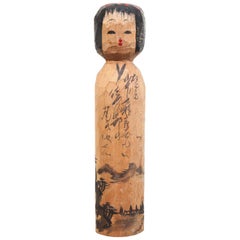
Hand Painted Wood Japanese Traditional Kokeshi Doll
Located in Barcelona, ES
Japanese doll called Kokeshi of the early 20th century. Provenance from the northern Japan. Dolls shapes and patterns are particular to a certain area and are classified under elev...
Category

Early 20th Century Japanese Edo Asian Art and Furniture

Materials

Wood

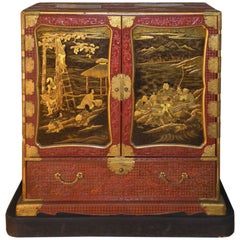
Japanese Lacquer and Cinnabar "Samurai" Cabinet, Inaba Family, Edo Period
Located in Troy, NY
Exceptionally large and rare lacquer cabinet. According to the heraldry, visible on the headgear in one of the panels, it was made for the Inaba family, a high ranking Daimyo family,...
Category

Late 19th Century Japanese Antique Edo Asian Art and Furniture

Materials

Bronze

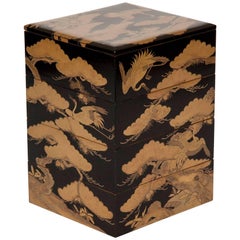
Japanese Black Lacquer Jubako Box with Stork Motif
Located in Stamford, CT
A four-tier Japanese Meiji period black lacquer Jubako box with stork and fir tree decoration. Box in four sections with lid.
Category

Late 19th Century Japanese Antique Edo Asian Art and Furniture

Materials

Lacquer

Rare Antique Edo period 18th c Japanese Porcelain Plate Arita Dish Animals Horse
Located in Amsterdam, Noord Holland
Description Sharing with you this very nice edo period example. With a stunning decoration of flowers, cranes (in the centre behind the leave and de border), horses and figures. cent...
Category

18th Century Japanese Antique Edo Asian Art and Furniture

Materials

Porcelain

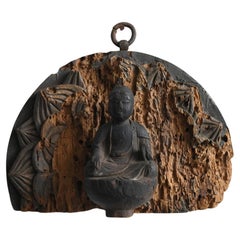
Japanese antique wall-hanging wooden Buddha statue/Edo period/1603-1868/Wabisabi
Located in Sammu-shi, Chiba
This is a wooden Buddha statue made around the Edo period in Japan. Although it is a small Buddha statue, it has a strong presence and is beautiful. Originally, there was a wooden pe...
Category

18th Century Japanese Antique Edo Asian Art and Furniture

Materials

Cypress

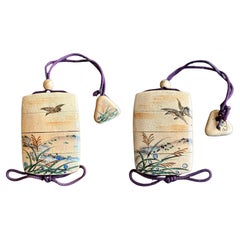
Rare Japanese Ceramic Glazed Inro with Ojime and Netsuke Ogata Kenzan Edo Period
Located in Atlanta, GA
A Japanese four-section inro made from ceramic with glazed painting with original ensuite Ojime and Netsuke circa 18th century of Edo period signed by Ogata Kenzan (1663–1743). The r...
Category

18th Century Japanese Antique Edo Asian Art and Furniture

Materials

Ceramic

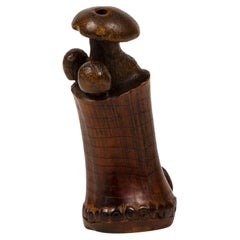
Netsuke in bamboo in the form of a mushroom
Located in PARIS, FR
Very elegant small netsuke carved from a short segment of bamboo, depicting three mushrooms caps growing at its top. Beautiful brown patina from use. Since traditional kimonos do not...
Category

Late 18th Century Japanese Antique Edo Asian Art and Furniture

Materials

Bamboo

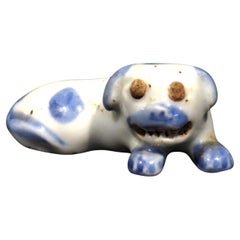
A Rare Edo Period Hirado Porcelain Netsuke, Japan Circa 1850
Located in Ottawa, Ontario
The recumbent white porcelain figure of a pug dog shown baring its teeth, decorated by hand with spot painted cobalt detail, the underside with twin holes intended for a cord to pass...
Category

Mid-19th Century Japanese Antique Edo Asian Art and Furniture

Materials

Porcelain

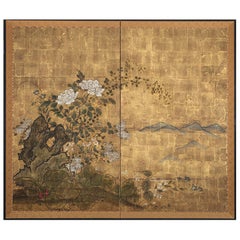
Japanese Two-Panel Screen, Floral Garden on Gold
Located in Hudson, NY
Peonies, marigolds and pinks next to a garden stone with soft mountain peaks in the background. Late Edo (1603 - 1868) period painting in mineral pigmen...
Category

Early 19th Century Japanese Antique Edo Asian Art and Furniture

Materials

Gold Leaf

Japanese Edo Six Panel Screen Yoshitsune and Benkei
Located in Rio Vista, CA
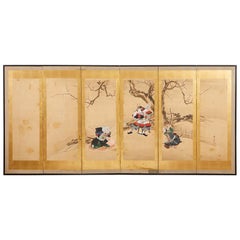
Spectacular 19th century Japanese late Edo period six-panel byobu screen depicting Yoshitsune and Benkei, two heroes of Japanese folklore. Crafted in ink and natural color pigments on mulberry paper with thick gold leaf borders on each panel. The character Yoshitsune is seated under a blossoming cherry tree in full armor holding a fan. The warrior priest or monk Benkei is depicted kneeling on a leopard skin...
Category

19th Century Japanese Antique Edo Asian Art and Furniture

Materials

Brass, Gold Leaf

Antique Japanese Wood Miniature Mask Netsuke
Located in Point Richmond, CA
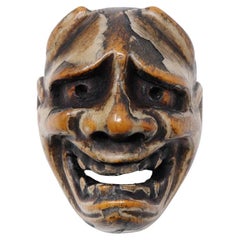
Antique Japanese Wood Miniature Mask Netsuke, an unsigned work depicting Hannya, the female horned demon popular in Noh performance plays, a solid hardwood piece carved in high relie...
Category

19th Century Japanese Antique Edo Asian Art and Furniture

Materials

Wood

Utagawa Ando Hiroshige Japanese Woodblock Print Kinryuzan Temple, Asakusa
Located in Studio City, CA
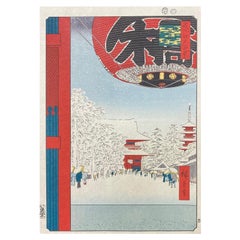
A wonderful Japanese woodblock print by famed Japanese artist Utagawa Hiroshige (Ando Hiroshige) (1797-1858) titled "Kinryuzan Temple, Asakusa" was initially conceived in 1856. It i...
Category

20th Century Japanese Edo Asian Art and Furniture

Materials

Paper

Pair of Antique Japanese Paintings of Karashishi, Edo Period, 18th Century
Located in Prahran, Victoria
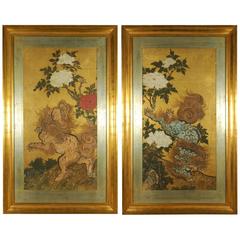
A rare pair of antique Japanese Karashishi paintings in a landscape of rocks and peony flowers on gold leaf ground in fine handmade frames, Edo period, early 18th century. The Karash...
Category

Early 18th Century Japanese Antique Edo Asian Art and Furniture

Materials

Gold Leaf

18°th Century Japanese Gold Leaf Screen
Located in Brescia, IT
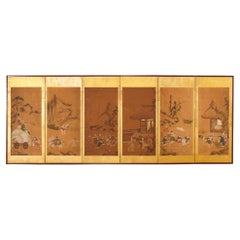
Four-panel folding screen depicting the famous legend of Hikaru Genji, a nobleman of extraordinary grace and beauty, and his gallant adventures at court. The novel Genji Monogatari, ...
Category

18th Century Japanese Antique Edo Asian Art and Furniture

Materials

Gold Leaf

Antique Edo 18/19th C Japanese Jubako Ikegawa Ware Tea Ceremony Box Japan
Located in Amsterdam, Noord Holland
A lovely piece Condition Hairline in the base and Kintsugi repair to lid. Size. 20.5x13x13 Period 19th century Meiji Periode (1867-1912)
Category

19th Century Japanese Antique Edo Asian Art and Furniture

Materials

Porcelain

Antique Japanese Porcelain Edo period Tokkuri Bottle Vase Flowers Japan
Located in Amsterdam, Noord Holland
Description Nice Beautiful Arita Japanese Porcelain. This antique Japanese Imari porcelain sake bottle features a sleek and elegant design, with hand-painted floral patterns cr...
Category

19th Century Japanese Antique Edo Asian Art and Furniture

Materials

Porcelain

Decorative Togatta Kokeshi Doll Sculpture from Northern Japan, Hand-Painted
Located in Vienna, AT
A beautiful and exceptionally 18 inches tall classic traditional Togatta Kokeshi doll from Northern Japan. Handcrafted of wood and hand-painted in the ...
Category

Early 20th Century Japanese Edo Asian Art and Furniture

Materials

Wood

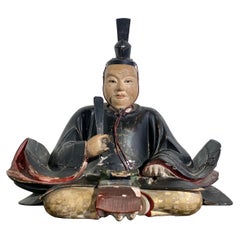
Japanese Carved and Lacquered Wood Shogun, Edo Period, 19th Century, Japan
Located in Austin, TX
An unusual Japanese carved wood, lacquer, and gilt decorated portrait sculpture of a shogun, Edo Period, early 19th century, Japan. The unidentified shogun (possibly Tokugawa Iey...
Category

Mid-19th Century Japanese Antique Edo Asian Art and Furniture

Materials

Wood, Lacquer

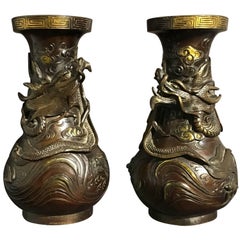
Pair of Japanese Edo Period Parcel-Gilt Bronze Dragon Vases, Early 19th Century
Located in Austin, TX
A pair of well cast and dramatic Japanese parcel gilt bronze dragon vases, Edo period, early 19th century. The heavy bronze vases of pear shape, each with a single writhing dragon cast in high relief...
Category

Early 19th Century Japanese Antique Edo Asian Art and Furniture

Materials

Bronze

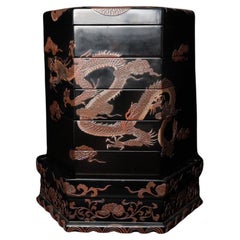
19th century Dragon lacquer box
Located in Fukuoka, JP
Large Lacquered hexagonal box on stand depicting Dragon flying amidst the clouds. Unique , appliqués like lacquer technique created amazing effect of almost 3d effect. Multilayered ...
Category

19th Century Japanese Antique Edo Asian Art and Furniture

Materials

Wood, Lacquer

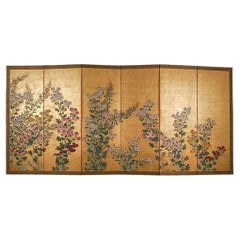
Japanese Six-Panel Screen Byobu With Chrysanthemums And Autumn Grass and Flower
Located in Torino, IT
The 19th Century Six-Panel Japanese folding screen "Byōbu" usually used in the most important Japanese house to stop wind and also to separate different space of the same big room de...
Category

Mid-19th Century Japanese Antique Edo Asian Art and Furniture

Materials

Gold Leaf

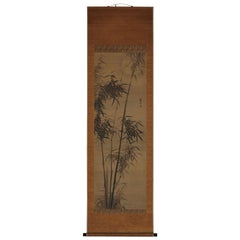
Japanese Painting, Hanging Scroll, 19th Century Bamboo in Moonlight
Located in Kyoto, JP
Bamboo in moonlight Gamo Rakan (1784-1866) Hanging scroll, ink on silk. Dimensions: Scroll: 201 cm x 58 cm Image: 137 cm x 45 cm In this early 19th century work by Gamo Rakan a light ink wash applied to the silk background silhouettes the moon and suggests the atmosphere of early evening. Even though it is a literati subject, Rakan’s bamboo is quite realistic with a strong decorative style. The painting finds its inspiration from Chinese Ming dynasty painters who often used a single-tone, jet black stroke to emphasize the calligraphic nature of bamboo. In a different era, decorative would have been seen as somewhat unrefined. But increasingly in the Edo period, it was the hallmark of high style. The Japanese people, in particular the rising merchant class, had gradually become apathetic toward the traditional Sesshu and Kano schools of painting. Chinese professional and amateur painters living in the port of Nagasaki during the 18th century had a profound effect on Japanese painting and the freshness of their style and its decorative appeal contributed greatly to its popularity. Gamo Rakan’s teacher, Tani Buncho...
Category

Early 19th Century Japanese Antique Edo Asian Art and Furniture

Materials

Silk

Artist Mikawachi Yaki Vase 1989 Vintage Japanese Hirado Vase with Bird Scene
Located in Amsterdam, Noord Holland
This is a most unusually made antique Hirado porcelain cachepot with playing boys. Crisply modelled with cobalt blue glaze About Hirado 平戸 Ware The origins of Hirado ware (it's als...
Category

19th Century Antique Edo Asian Art and Furniture

Materials

Porcelain

Japanese antique stone god/[Daikokuten]/Stone Buddhas from the Edo period
Located in Sammu-shi, Chiba
Do you know what Daikokuten is? This god in Japan is an old god who has existed since the end of the Muromachi period (16th century) as one of the seven gods who bestow happiness. He...
Category

18th Century Japanese Antique Edo Asian Art and Furniture

Materials

Stone

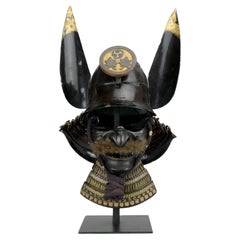
Samurai Helmet "Zunari Kabuto" - Early Edo (circa 1610)
Located in Paris, FR
Samurai Helmet "Zunari kabuto" with 3 black lacquered iron plates. Japan, early EDO period, circa 1610. Neck protector (shikoro), 5-strip hineno, laced brown, beige and green. Central ornament (maedate) in gold and silver lacquered wood. Triple tomo with 2 maple leaves. 2 rounded horn-shaped side ornaments (wakidate) in black and gold lacquered wood. Black-lacquered iron mask...
Category

Early 17th Century Japanese Antique Edo Asian Art and Furniture

Materials

Iron

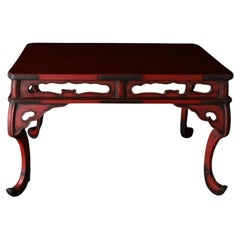
Rare Japanese Negoro Lacquer Table with Curved Legs (Late 17th–18th Century)
Located in Fukuoka, JP
are Japanese Negoro Lacquer Table with Curved Legs (Late 17th–18th Century) Japan, Edo period Dimensions: H 26.5 cm × W 43.1 cm × D 27 cm (Top surface: W 42.7 cm × D 25.7 cm) This e...
Category

Late 17th Century Japanese Antique Edo Asian Art and Furniture

Materials

Wood, Lacquer

Antique Imari Porcelain Plate with Shishi and Botan Motifs, Late Edo–Meiji Perio
Located in Fukuoka, JP
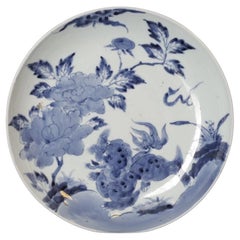
This antique Imari porcelain plate dates to the late Edo–Meiji period (19th century) and is decorated with a lively scene of playful shishi (mythical lion-dogs) among blooming botan ...
Category

Mid-19th Century Japanese Antique Edo Asian Art and Furniture

Materials

Porcelain

Contemporary Japanese Console with Folding Screen Zen Japanese Modern
Located in Shibuya-ku, Tokyo
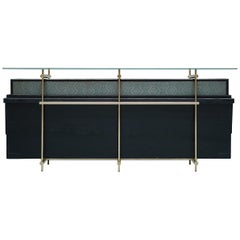
Name: Early Dawn Collection: STILLIFE A console table that using a wooden box that stores two Japanese gold folding screens. It is a new histor...
Category

2010s Japanese Edo Asian Art and Furniture

Materials

Brass

Japanese Edo Six Panel Screen Chinese Children at Play
Located in Rio Vista, CA
Amazing 19th century Japanese Edo period six panel folding byobu screen depicting Chinese children at play. The screen alludes to the 100 children theme. ...
Category

19th Century Japanese Antique Edo Asian Art and Furniture

Materials

Gold Leaf

Japanese antique screen - EDO period - Willow over a stream
Located in Prahran, Victoria
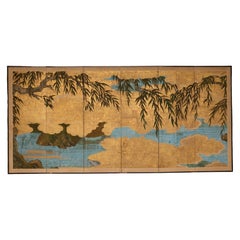
Antique Japanese 6 panel screen from the early Edo period (C1650). One of a pair (both available). This magnificent golden screen shows...
Category

1650s Japanese Antique Edo Asian Art and Furniture

Materials

Gold Leaf

Large Antique Imari Porcelain Plate with Shishi and Botan Motifs, Late Edo–Meiji
Located in Fukuoka, JP
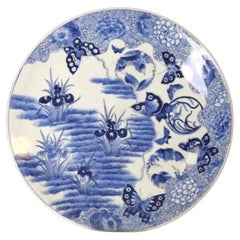
This impressive large antique Imari porcelain plate dates to the late Edo–Meiji period (19th century) and is finely decorated with a lively composition of playful shishi (mythical li...
Category

Mid-19th Century Japanese Antique Edo Asian Art and Furniture

Materials

Porcelain

Antique japanese forged iron tsuba from the Edo period
Located in Bilzen, BE
A forge iron Japanese samurai tsuba from the Edo period (1603 - 1868) Katana tsuba 7.5 x 7.5 cm Good condition as shown in the pictures uncleaned with its old patina
Category

18th Century Japanese Antique Edo Asian Art and Furniture

Materials

Iron

31.5CM Antique Kraak Edo period 1680-1690 Japanese Porcelain Charger Arita
Located in Amsterdam, Noord Holland
Description Sharing with you this very nice edo period, 1680-1700, example. With a garden floral bird scene in the style of Chinese Wanli period pieces. Marked at the base with a fl...
Category

Late 17th Century Japanese Antique Edo Asian Art and Furniture

Materials

Porcelain

Unusual Samurai Jingasa Hat with Gilded Crests and Gilded Interior
Located in Fukuoka, JP
An uncommon Edo-period samurai jingasa, distinguished by its applied gilded crest decorations and rare gilded interior finish. Jingasa of this type were worn by samurai and retainers...
Category

18th Century Japanese Antique Edo Asian Art and Furniture

Materials

Wood, Lacquer

Rare Samurai Hishaku (Mounted Water Dipper) with Raden Inlay, Edo Period
Located in Fukuoka, JP
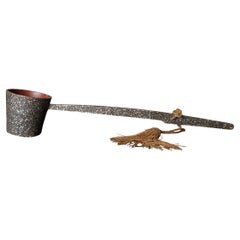
This rare samurai hishaku (water dipper) dates to the mid Edo period, circa 17th–18th century, and represents an unusual and highly refined example of mounted samurai equipment. Such...
Category

Mid-17th Century Japanese Antique Edo Asian Art and Furniture

Materials

Silk, Wood, Lacquer

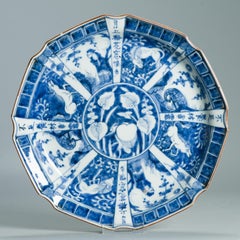
Japanese Arita Blue and White Kraak Dish - Edo Period, late 17th
Located in DELFT, NL
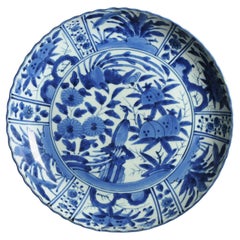
A 17th Century Japanese Blue and White Porcelain Dish in the Kraak Style, Arita Kilns 1670 – 1700. The central design shows three pheasant, one perched on a rock amongst flowering p...
Category

Late 17th Century Japanese Antique Edo Asian Art and Furniture

Materials

Porcelain

Japanese Two Panel Screen Manchurian Crane and Turtles
Located in Hudson, NY
In Japan, cranes symbolize fidelity as they mate for life and turtles symbolize longevity. Additionally, this screen also has the Japanese motif of sho-chiku-bai, or the three friends of winter (pine, plum, and bamboo). So called the three friends of winter because all three flourish during the cold months. This screen was originally fusuma doors...
Category

Mid-19th Century Japanese Antique Edo Asian Art and Furniture

Materials

Paper

Edo asian art and furniture for sale on 1stDibs.

Find a broad range of unique Edo asian art and furniture for sale on 1stDibs. Many of these items were first offered in the 21st Century and Contemporary, but contemporary artisans have continued to produce works inspired by this style. If you’re looking to add vintage asian art and furniture created in this style to your space, the works available on 1stDibs include asian art and furniture, wall decorations, decorative objects and other home furnishings, frequently crafted with wood, metal and other materials. If you’re shopping for used Edo asian art and furniture made in a specific country, there are Asia, East Asia, and Japan pieces for sale on 1stDibs. While there are many designers and brands associated with original asian art and furniture, popular names associated with this style include Utagawa Hiroshige (Ando Hiroshige), Arita, Ryosuke Harashima, and Kitagawa Utamaro. It’s true that these talented designers have at times inspired knockoffs, but our experienced specialists have partnered with only top vetted sellers to offer authentic pieces that come with a buyer protection guarantee. Prices for asian art and furniture differ depending upon multiple factors, including designer, materials, construction methods, condition and provenance. On 1stDibs, the price for these items starts at $55 and tops out at $1,386,932 while the average work can sell for $3,412.