Edo Asian Art and Furniture

EDO STYLE

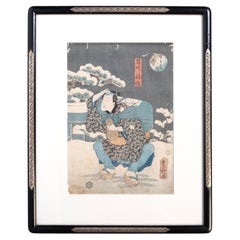
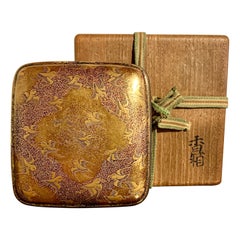
Edo furniture was created during a flourishing time for the decorative arts owing to the stability of the Tokugawa shogunate rule in Japan. Spanning from 1603 to 1867, this era of peace and economic growth supported artistic advancements in lacquer, woodblock printing, porcelain and other artisanal trades. Because the country was largely isolated, there was little outside influence, leading to centuries of exceptional attention to the design of its furnishings and the quality of its traditional arts.

Unlike during the Meiji period that followed, with an increase in domestic and international markets, furniture during the Edo period was predominately commissioned by the ruling class, although people from across social groups benefited from the burgeoning metropolitan hubs for artisanal trades. For instance, Kyoto became a major center for lacquer art. Most furniture pieces were made from wood such as cedar or ash, including the era’s sashimono cabinets, which involved fine joinery and were rooted in the Heian period.

Sashimono cabinets, which were built by master craftsmen in a range of different wood types owing to the various trees that populate Japan, occasionally featured a stack of slender drawers as well as sliding doors. They were popular with everyone from samurai to kabuki actors. Tansu storage chests crafted from wood with metal fittings were also common in Edo-period homes. Some were designed to be easily portable while others were made to double as staircases.

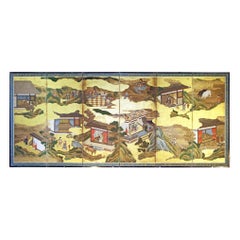
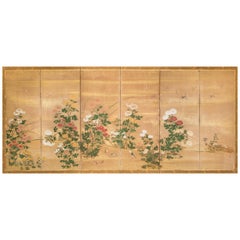
Painted folding screens, called byōbu, were also fashionable, with Japanese artists inspired by nature, literature and scenes of history and daily life to create vivid works. In Buddhist temples and the palatial homes of the aristocratic class, fusuma, or large sliding panels, would sometimes be adorned with gold or silver leaf. These dividers allowed interiors to change throughout the day, closing in small spaces for personal use or reflecting candlelight to illuminate communal spaces after dark.

Find a collection of Edo tables, lighting, decorative objects, wall decorations and more furniture on 1stDibs.

to
114
283
150
585
11
441
392
232
186
155
74
55
46
42
33
25
20
15
14
13
13
12
4
226
320
39
11
18
5
1
1
1
252
201
175
121
104
578
567
553
11
3
596
593
593
13
11
6
3
2
Style: Edo
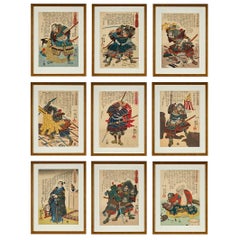
Nine Japanese Woodblock Prints by Utagawa Kuniyoshi
Located in Petworth, West Sussex
Utagawa Kuniyoshi (Japan, 1798-1861), a set of nine Japanese woodblock prints (ukiyo-e) from the series 'Taiheiki Eiyuden', or 'Heroes of the Great Peace' published between 1846-1847...
Category

Mid-19th Century Japanese Antique Edo Asian Art and Furniture

Materials

Paper

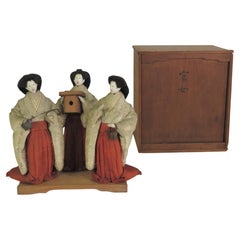
Late Edo Period Sannin-kanjyo Figures or Three Court Ladies w. Wood Box Japan
Located in Miami, FL
Late Edo Period Dolls representing Sannin-kanjyo which means the three court ladies. They support and care for the emperor (Odairi-sama) and the empre...
Category

Late 19th Century Japanese Antique Edo Asian Art and Furniture

Materials

Fabric, Wood

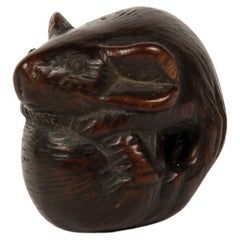
Boxwood nestuke in the form of a curled up mouse forming almost a pearl
Located in PARIS, FR
Netsuke in boxwood depicting a mouse curled up on itself, holding its tail between its tiny paws. The highly realistic rendering of the fur and the deep, worn patina emphasize the na...
Category

Late 18th Century Japanese Antique Edo Asian Art and Furniture

Materials

Boxwood

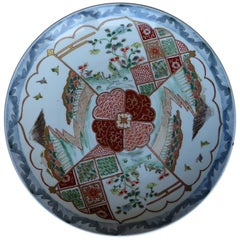
Japanese Porcelain Charger Plate Finely Hand Painted, Edo Period Circa 1840
Located in Lincoln, Lincolnshire
This is an excellent example of a Japanese porcelain Charger or very large plate with a finely hand painted design, dating to the Edo period circa 1840 or possibly earlier. This cha...
Category

Mid-19th Century Japanese Antique Edo Asian Art and Furniture

Materials

Porcelain

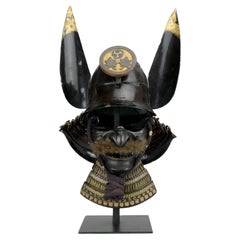
Samurai Helmet "Zunari Kabuto" - Early Edo (circa 1610)
Located in Paris, FR
Samurai Helmet "Zunari kabuto" with 3 black lacquered iron plates. Japan, early EDO period, circa 1610. Neck protector (shikoro), 5-strip hineno, laced brown, beige and green. Central ornament (maedate) in gold and silver lacquered wood. Triple tomo with 2 maple leaves. 2 rounded horn-shaped side ornaments (wakidate) in black and gold lacquered wood. Black-lacquered iron mask...
Category

Early 17th Century Japanese Antique Edo Asian Art and Furniture

Materials

Iron

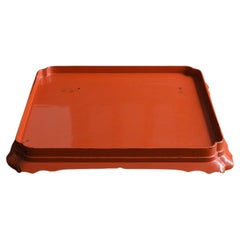
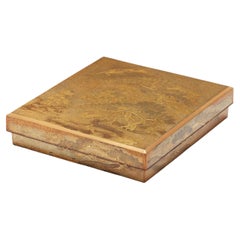
A large square tray made of Japanese antique lacquer / Late Edo period/19th
Located in Sammu-shi, Chiba
These trays were made after the late Edo period in Japan (after 1800). This particular type of tray is known as "Negoro-bon." Negoro lacquerware is a specific style of Japanese lacqu...
Category

19th Century Japanese Antique Edo Asian Art and Furniture

Materials

Lacquer

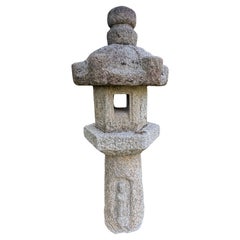
Japanese Exceptional Antique Granite Stone Buddhist Lantern
Located in South Burlington, VT
Museum Piece. Please view our video. Call or message us for additional details. Japan, an early “Buddhist” granite stone lantern with weathering from great age, and dating to ...
Category

19th Century Japanese Antique Edo Asian Art and Furniture

Materials

Granite

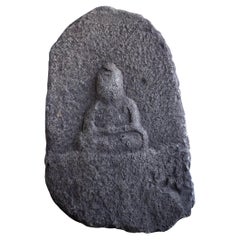
Edo Period Stone Buddha/1600’s/Japanese Antique Buddha Statue/Garden Ornament
Located in Sammu-shi, Chiba
This stone Buddha sculpture, believed to date back to the early Edo period or earlier, depicts Jizo Bosatsu in a seated pose. Crafted from granite, it showcases the natural effects ...
Category

Early 17th Century Japanese Antique Edo Asian Art and Furniture

Materials

Stone

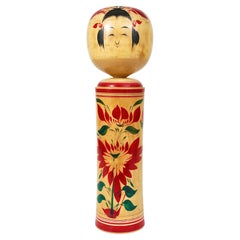
Decorative Naruko Kokeshi Doll Sculpture from Northern Japan, Hand-Painted
Located in Vienna, AT
A beautiful and exceptionally 18 inches tall classic traditional Naruko Kokeshi doll from Northern Japan. Handcrafted of wood and hand-painted in t...
Category

Early 20th Century Japanese Edo Asian Art and Furniture

Materials

Wood

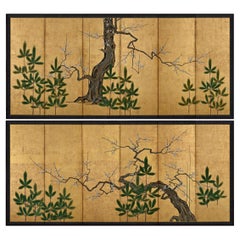
18th Century Japanese Screen Pair. Plum Young Pines. Kano School.
Located in Kyoto, JP
Dimensions (Each screen): H. 176 cm x W. 378 cm (69’’ x 149’’) This pair of Japanese folding screens depict blossoming plum trees amongst young pines. They are designed to capture t...
Category

Late 18th Century Japanese Antique Edo Asian Art and Furniture

Materials

Gold Leaf

Unusual Edo Period Imari Kiln Misfire Cup
Located in Fukuoka, JP
An exceptional and rare example of an Edo period (c. 18th–19th century) Imari porcelain cup that resulted from a kiln misfire—transforming it into a unique sculptural object. Likely ...
Category

18th Century Japanese Antique Edo Asian Art and Furniture

Materials

Ceramic

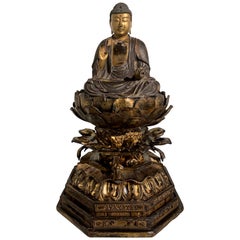
Japanese Giltwood Medicine Buddha, Yakushi Nyorai, Muromachi Period 16th Century
Located in Austin, TX
A striking Japanese late Muromachi Period (1333-1573) lacquered and giltwood figure of Yakushi Nyorai, the Medicine Buddha, seated upon an elaborate car...
Category

16th Century Japanese Antique Edo Asian Art and Furniture

Materials

Rock Crystal

Late 17th Century Japanese Screen Pair. Battle of Ichi-no-tani and Yashima.
Located in Kyoto, JP
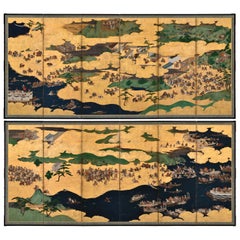
Anonymous Late 17th Century Battle of Ichi-no-tani & Yashima Dimensions: Each Screen: H. 175 cm x W. 385 cm (69” x 151.5”) This pair of Japanese screens depict two significant battles from the Genpei War (1180–85), as recounted in the Tale of the Heike, a semi-historical epic chronicling the conflict between rival clans for control of Japan, written in the early 1200s. Each screen portrays a single battle through a series of small episodes, framed by gold clouds, landscape elements, and architectural features. True to the style of many screens inspired by The Tale of the Heike, the scenes are rendered in lavish colors and gold, downplaying the brutality of the warfare. Although based on real events, these narratives often glorified and romanticized the heroic feats of the warriors. Viewers at the time would have been familiar with the story’s details, leading to a proliferation of paintings on folding screens inspired by this theme from the late Muromachi to the early Edo periods. On the right screen, we see the Minamoto’s attack on the Taira, who have retreated from the capital, Kyoto, toward the sea. The central building represents the temporary Taira headquarters, where Taira soldiers are holding the young Emperor Antoku. The Minamoto plan to launch a surprise attack from the rear after descending the steep cliff known as Ichi-no-tani, depicted at the top center. This scene highlights the tactical brilliance of Minamoto commander Yoshitsune and the courage of his men. The left screen captures moments from the Battle of Yashima...
Category

Late 17th Century Japanese Antique Edo Asian Art and Furniture

Materials

Gold Leaf

Paravento Giapponese a sei pannelli su foglia d oro.
Located in Brescia, IT
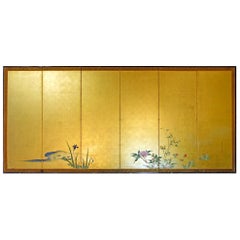
Paravento giapponese a sei pannelli , opera di un pittore della prima metà del 19° secolo, di scuola Rinpa. Sei pannelli dipinti con inchiostro su foglia oro e "gofun" su carta veget...
Category

Early 19th Century Japanese Antique Edo Asian Art and Furniture

Materials

Gold Leaf

Edo Period (19th) Japanese antique painting of flowers
Located in Fukuoka, JP
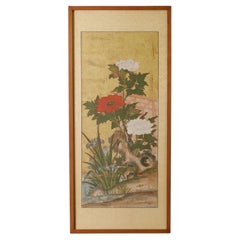
Japanese antique painting of flowers 19 C Weight 3kg ( 6.6lb)
Category

Mid-19th Century Japanese Antique Edo Asian Art and Furniture

Materials

Silk, Paper

Antique Japanese Porcelain Edo period Tokkuri Bottle Vase Flowers Japan
Located in Amsterdam, Noord Holland
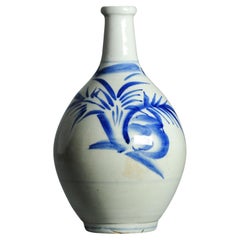
Description Nice Beautiful Arita Japanese Porcelain. This antique Japanese Imari porcelain sake bottle features a sleek and elegant design, with hand-painted floral patterns cr...
Category

19th Century Japanese Antique Edo Asian Art and Furniture

Materials

Porcelain

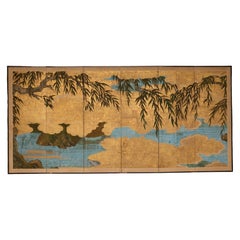
Japanese antique screen - EDO period - Willow over a stream
Located in Prahran, Victoria
Antique Japanese 6 panel screen from the early Edo period (C1650). One of a pair (both available). This magnificent golden screen shows...
Category

1650s Japanese Antique Edo Asian Art and Furniture

Materials

Gold Leaf

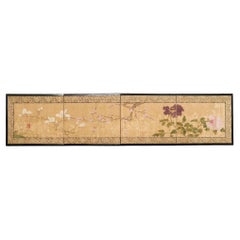
Japanese Edo Four Panel Screen Flowering Peony Prunus Magnolia
Located in Rio Vista, CA
Early 19th century Japanese Edo/Tokugawa period four panel folding byobu table screen featuring peony, prunus, and magnolia. Painted with ink and natural color pigments on silk with ...
Category

19th Century Japanese Antique Edo Asian Art and Furniture

Materials

Brass

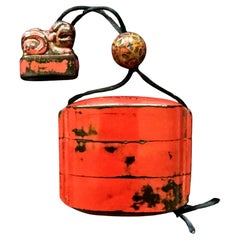
Rare Japanese Inro Netsuke and Omije with Negoro Red Lacquer Edo Period
Located in Atlanta, GA
A Japanese three-case inro with stringed carved netsuke and bead ojime from early Edo period circa 17th century. The trio accoutrement is covered in red Negoro lacquer and displays w...
Category

17th Century Japanese Antique Edo Asian Art and Furniture

Materials

Wood, Lacquer

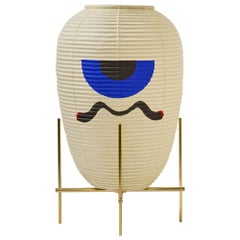
Contemporary Japanese Chochin Floor Lamp Limited Edition #2 Zen Washi
Located in Shibuya-ku, Tokyo
Name: OBAKE UN Contemporary style Japanese Washi Japanese traditional paper shade floor lamp. Washi shade is famous as Isamu Noguchi Akari lightings. Base is made of brass. Limited pattern painted model. Edition of 3+1AP E26,27 light bulb. Available to work with 100-250V. Artist statement In Japan, there is an animist belief that the soul dwells in old tools that have passed a long time and turns into spirits such as "Youkai" or "OBAKE." Its existence lurks in the darkness of everyday life, sometimes causing fear and sometimes entertaining. This lantern is not an old tool, but it is made by the historic "Kojima Shoten", where the 10th generation are craftsmen in Kyoto. It's rare nowadays, and it's a style in which lanterns are made from bamboo bones to assembling papers and painting in one workshop and go. So, I decided to transform the polite crafted Japanese lanterns, which have been run through a traditional history, into a modern and pop style. It's not just OBAKE lurking in the darkness, but an existence who snuggles up to us as a more sophisticated being. These one-eyed OBAKE have a meaningful look that originated in ancient Sanskrit culture. The red-eye "A [a]" is the facial expression that is the first pronunciation to make a sound in Sanskrit, which means "truth" and "spirit of inquiry" at the same time. The blue-eyed "UN [hu?]" expresses the pronunciation to close the sound, and at the same time means "wisdom" and "nirvana." There is also the idea that describing the beginning and end of the universe is represented by considering the "A" and "UN" as a pair. In Asia, it is a common sight to see a pair of guardian statues...
Category

2010s Japanese Edo Asian Art and Furniture

Materials

Brass

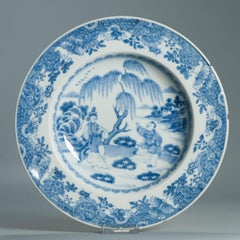
Antique 18/19C Japanese Edo Porcelain Blue White Dish Figures Ladies Pagoda
Located in Amsterdam, Noord Holland
Description A very nicely decorated Japanese Porcelain dish in Chinese Kangxi style. Marked at base. There is an underglaze blue bird mark at the base, the marks on these kinds of d...
Category

18th Century Japanese Antique Edo Asian Art and Furniture

Materials

Porcelain

Antique Edo period 18/19th century Japanese Bowl Washer for the Tea Ceremony
Located in Amsterdam, Noord Holland
Description A lovely set for the Kaiseki meal. Condition Perfect. SizeL 24.5x24.5cm Period 19th century Meiji Periode (1867-1912)
Category

19th Century Japanese Antique Edo Asian Art and Furniture

Materials

Porcelain

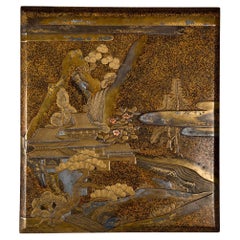
Suzuribako or writing box made of nashiji lacquer and adorned with a landscape
Located in PARIS, FR
Suzuribako, or writing box, of rectangular shape, decorated with an imposing architecture realized in hira maki-e lacquer, probably a palatial structure, situated beside a waterfall...
Category

Late 18th Century Japanese Antique Edo Asian Art and Furniture

Materials

Gold Leaf

Japanese antique pottery bowl/[Banko ware] Mie prefecture/1850-1912
Located in Sammu-shi, Chiba
Banko-yaki is a type of pottery that began in the northern part of Mie Prefecture in the middle of the Edo period. (The places marked with red circles on the map are the kilns of Banko ware...
Category

Late 19th Century Japanese Antique Edo Asian Art and Furniture

Materials

Pottery

Antique Wooden Sculpture "Kobo Daishi" / Buddha Statues / Edo-Meiji Period
Located in Sammu-shi, Chiba
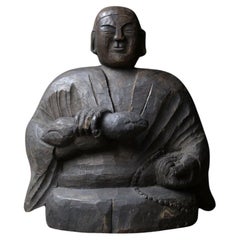
This is an old Japanese "Kobo Daishi" wooden figure. "Kobo Daishi" means "Kukai". "Kukai" was a monk from the early Heian period. His posthumous name was "Kobo Daishi". He is the fou...
Category

19th Century Japanese Antique Edo Asian Art and Furniture

Materials

Cypress

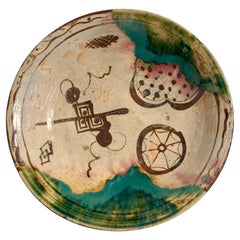
Japanese Ao-Oribe Glazed Stoneware Dish, Early Edo Period, 17th Century, Japan
Located in Austin, TX
A fine and rare Japanese ao-oribe glazed minoyaki stoneware dish, late Momoyama or early Edo period, 17th century, Japan. The circular dish of wheel thrown ...
Category

17th Century Japanese Antique Edo Asian Art and Furniture

Materials

Stoneware

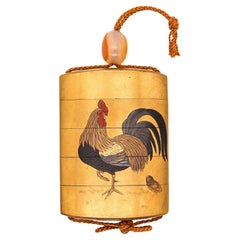
Japan 1810 Kajikawa Edo Period Five Drawer Inro Lacquered Gilt Wood With Rooster
Located in Miami, FL
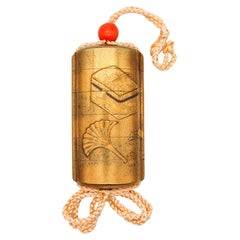
Japanese Inro from the Edo period (1615-1868) created by Kajikawa. Beautiful Inro, created in Japan by one of the Kajikawa family during the Edo period (1615-1868), circa 1810. Has been carefully crafted in carved precious wood with applications of gilding maki-e and decorated with Japonism patterns. All dan trays are attached together with a himo cord. The detailed craftsmanship was a true pleasure to behold. Period: Edo period (1615-1868). Shogunate. Approximate Date: 1790-1810 Motif: A family of birds consisting of a cockerel, the hen and three chicks. Drawers: Five. Shape: Rectangular navette. Technique: Carved wood, lacquer and decorated in iroe-hiramaki-e on a gold ground. Ojime: 15mm 20mm, oval carved from natural translucent agate. Netsuke: None Weight: 47.70 Grams. Measurements: Inro is 78 mm by 55 mm by 18 mm (3.07 x 2.17 x 0.71 Inches). Signatures: Kajikawa Saku, in the underside with the signature KAJIKAWA. By a member of the Kajikawa family, signed Kajikawa 梶川 Japan, late 18th century to early 19th century, Edo period (1615-1868). The Kajikawa family Kajikawa family, flourished in the 19th century, they was Japanese lacquerware artists whose school in Edo (now Tokyo) flourished for more than 200 years. This family is perhaps the most famous of all the dynasties of Japanese lacquer artists, and certainly the name most often found on inro. The family is said to have been founded by Hikobei at Edo in the early 17th century, although some claim that the family’s great reputation really stemmed from his son and pupil Kyujiro. In any event, Hikobei worked for the shogunate, as did his successors until well into the 19th century. Kijirō excelled in designing particularly delicate lacquer inrō, portable medicine cases...
Category

1810s Japanese Antique Edo Asian Art and Furniture

Materials

Agate, Gold

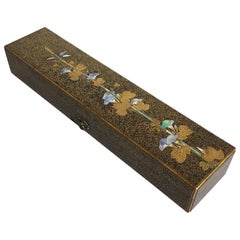
Japanese Edo Period Igarashi School Long Lacquer Box, Tanzaku-Bako
Located in Austin, TX
A stunning Japanese Edo period lacquer tanzakubako, box for poem cards, late 18th-early 19th century, Edo Period, Japan. Attributed to the Igarashi School, this box is masterfully ...
Category

Early 19th Century Japanese Antique Edo Asian Art and Furniture

Materials

Mother-of-Pearl, Lacquer

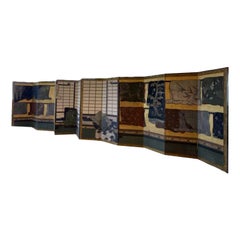
17th Century Late 1600s , Japanese Edo Period 12-Panel Folding Screen Painted
Located in North Miami, FL
A pair of 17th Century (Late 1600s) Japanese Edo screens made of 12-panels. This folding silk screen is painted on a gold leaf background. It has a...
Category

17th Century Japanese Antique Edo Asian Art and Furniture

Materials

Silk, Wood, Paint, Paper

Extremely Rare Tokugawa Clan Kimono Hanger with Maki-e Lacquer. Edo period
Located in Fukuoka, JP
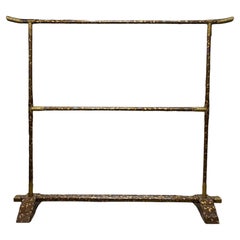
Extremely Rare Tokugawa Clan Kimono Hanger with Makie Lacquer and Gilded Fittings Edo Period, 18th–19th Century Dimensions: H 166 cm × L 187 cm × W 41.5 cm Materials: Wood, Lacquer...
Category

18th Century Japanese Antique Edo Asian Art and Furniture

Materials

Metal

Japanese Kutani Sake Bottle, Tokkuri, Yoshidaya Style, Edo Period, early 19th c
By Yoshidaya
Located in Austin, TX
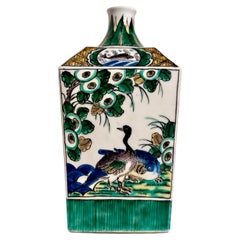
A bold and dramatic Japanese Kutani porcelain square tokkuri (bottle for sake), decorated in the Yoshidaya style, and attributed to the Yoshidaya Kiln (1824 - 1831). The striking sa...
Category

1820s Japanese Antique Edo Asian Art and Furniture

Materials

Ceramic, Stoneware

17th Century Japanese Screen. View of West Lake by Unkoku Toyo.
Located in Kyoto, JP
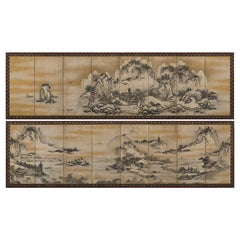
Unkoku Toyo (1612-1668) View of West Lake Pair of eight-panel Japanese Screens. Ink and gold wash on paper. Dimensions: Each screen: H. 110 cm x W. 372 cm (43” x 147”) This pair ...
Category

Mid-17th Century Japanese Antique Edo Asian Art and Furniture

Materials

Paper

Edo Period Kyoto Screen (2/2)
Located in Fukuoka, JP
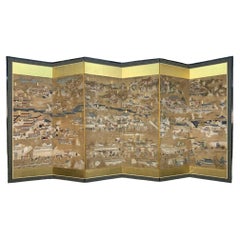
Edo Period Kyoto Screen Period: Edo period Size: 343 x 176 cm (134.6 x 69 inches) This stunning Edo period screen depicts typical scenes of daily life...
Category

18th Century Japanese Antique Edo Asian Art and Furniture

Materials

Paper, Wood, Silk

Japan 1800 Edo Period Six Drawer Inro In Lacquered Gilt Wood With Utensils
Located in Miami, FL
Japanese Inro from the Edo Period (1603-1867). Beautiful Inro, created in Japan during the Edo period (Shogunate), circa 1800. It was carefully crafted in carved precious wood with ...
Category

Early 1800s Japanese Antique Edo Asian Art and Furniture

Materials

Coral

Wooden Sword of Old Japanese Buddha / 1800-1900 / Wall-Mounted Object
Located in Sammu-shi, Chiba
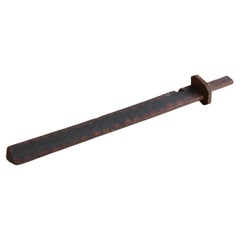
This is an introduction to a slightly unusual item. This is a wooden sword possessed by the Buddha statue. Only the sword remained. Gods such as Fudo Myo, who reign as Buddhist guardians...
Category

19th Century Japanese Antique Edo Asian Art and Furniture

Materials

Cedar

Japanese Large porcelain Dish Imari-Arita Hand Painted signed Edo Period Ca 1810
Located in Lincoln, Lincolnshire
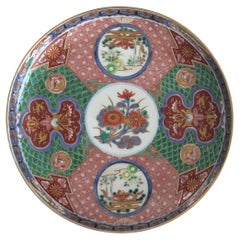
This is a very beautiful example of a Japanese, Arita- Imari porcelain large Dish or Platter with finely hand painted decoration, dating to the Edo period circa 1810. This dish is v...
Category

Early 19th Century Japanese Antique Edo Asian Art and Furniture

Materials

Ceramic

Japanese Tosa School Framed Six Panel Screen Gold Leaf
Located in Brescia, IT
Japanese six-panel screen of the famous "Tosa school" made by an anonymous artist of the mid-18th century, work painted in the classic way with colored pigments and inks on vegetable...
Category

Mid-18th Century Japanese Antique Edo Asian Art and Furniture

Materials

Gold Leaf

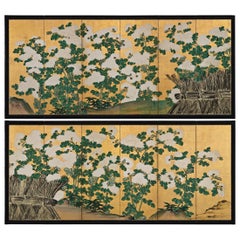
Japanese Six-Panel Screen, Chrysanthemums
Located in Hudson, NY
Japanese six-panel screen: Chrysanthemums, Edo period (circa 1800) painting of a variety of chrysanthemums in a garden landscape, with sparrows. Mineral p...
Category

Early 1800s Japanese Antique Edo Asian Art and Furniture

Materials

Gold Leaf

Antique 19th Century Japanese Woodblock Print By Utagawa Kunisada C.1858
Located in London, GB
Antique 19th Century Japanese Woodblock Print By Utagawa Kunisada C.1858 Edo period 1858 (Ansei 5), 3rd month Original Woodblock print of Snow (Yuki) actor Nakamura Fukusuke I as H...
Category

Mid-19th Century Japanese Antique Edo Asian Art and Furniture

Materials

Paper

Japanese Antique Stone Garden Kanon Guan Yin in Royal Ease 19thc.
Located in South Burlington, VT
Big, Beautiful And Signed From our recent Japanese Acquisitions An early and hard to find Japanese hand carved stone Kanon in a mudra of contemplation. Nyoirin Kannon Bosatsu is b...
Category

19th Century Japanese Antique Edo Asian Art and Furniture

Materials

Stone

Japanese Lacquer Incense Box, Kogo, Momoyama or Edo Period, 16th/17th Century
Located in Austin, TX
A wonderful Japanese lacquer incense box, kogo, with a design of plovers in flight, late Momoyama or early Edo Period, circa 1600, Japan. The small box, called a kogo, was used to s...
Category

Early 17th Century Japanese Antique Edo Asian Art and Furniture

Materials

Gold, Pewter

Japanese antique Buddhist statues/[Ten Kings statues]/Edo period/18-19th century
Located in Sammu-shi, Chiba
This wooden Buddhist statue (made from cypress wood) is thought to have been made in the Edo period, probably around the 18th or 19th century. It is one of the types of statues known...
Category

18th Century Japanese Antique Edo Asian Art and Furniture

Materials

Cypress

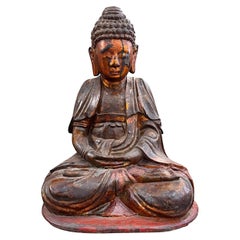
Edo Period Vietnamese Seated Buddha Sculpture, 19th Century
Located in NICE, FR
A serene and evocative seated Vietnamese Buddha sculpture. Expertly hand-carved from wood, this statue captures the timeless grace and spiritual depth of Buddhist iconography. The Bu...
Category

Late 19th Century Vietnamese Antique Edo Asian Art and Furniture

Materials

Wood

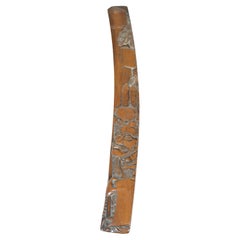
Japanese Wooden Dagger, Late 19th C
Located in Stockholm, SE
A Japanese high quality wooden dagger. The carving is made of the highest quality as often Japanese items are. There is a signature and a poem engraved on side. Comes from an old Swedish collection...
Category

Late 19th Century Japanese Antique Edo Asian Art and Furniture

Materials

Boxwood

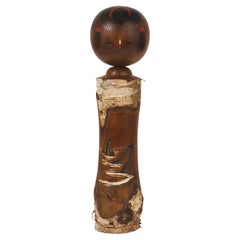
Decorative Kokeshi Doll Sculpture from Northern Japan, Hand-Painted
Located in Vienna, AT
A beautiful and exceptionally 18 inches tall Classic traditional Kokeshi doll from Northern Japan. Handcrafted of wood and hand-painted in the the early 20th century. In good conditi...
Category

Early 20th Century Japanese Edo Asian Art and Furniture

Materials

Wood

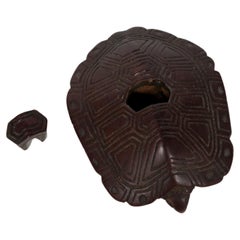
Netsuke in Boxwood in the form of a turtle hidden in its shell
Located in PARIS, FR
Netsuke in boxwood in the form of a tortoise hiding in its shell with only its head overstepping. Textures from the shell are executed with realism precision and a great care for de...
Category

Late 18th Century Japanese Antique Edo Asian Art and Furniture

Materials

Wood

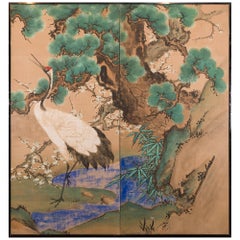
Japanese Two Panel Screen Manchurian Crane and Turtles
Located in Hudson, NY
In Japan, cranes symbolize fidelity as they mate for life and turtles symbolize longevity. Additionally, this screen also has the Japanese motif of sho-chiku-bai, or the three friends of winter (pine, plum, and bamboo). So called the three friends of winter because all three flourish during the cold months. This screen was originally fusuma doors...
Category

Mid-19th Century Japanese Antique Edo Asian Art and Furniture

Materials

Paper

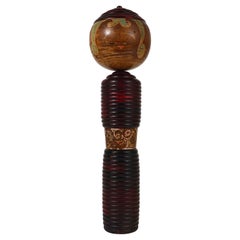
Decorative Kokeshi Doll Sculpture from Northern Japan, Hand-Painted, Signed
Located in Vienna, AT
A beautiful and exceptionally 19 inches tall classic traditional Kokeshi doll from Northern Japan. Handcrafted of wood and hand-painted in the early 20th century, covered with a layer of wax. Signed by the artist on its underneath. In good condition with charming patina. A classic traditional doll with a simple but lovely design, a decorative piece. In Japan these dolls symbolize love, friendship and believed to be a lucky charm. We offer more large Kokeshi...
Category

Early 20th Century Japanese Edo Asian Art and Furniture

Materials

Wood

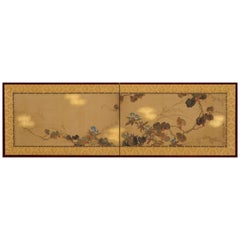
Japanese Screen Painting, Early 19th Century, Autumn Flowers by Sakai Hoitsu
Located in Kyoto, JP
A two-fold Japanese screen by the Rimpa school artist Sakai Hoitsu (1761-1828), Japan, 19th century, Edo period. This small Japanese folding screen pai...
Category

Early 19th Century Japanese Antique Edo Asian Art and Furniture

Materials

Wood, Silk

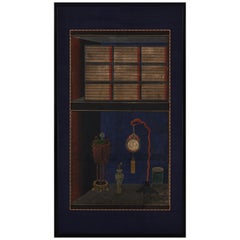
Korean Chaekgeori painting. 19th Century Joseon. Books Scholars’ Accouterments
Located in Kyoto, JP
Books and Scholars’ Accouterments; Chaekgeori Second half of the 19th century Korean framed panel. Ink and color on paper. This Korean Chaekgeori...
Category

Late 19th Century Korean Antique Edo Asian Art and Furniture

Materials

Paper

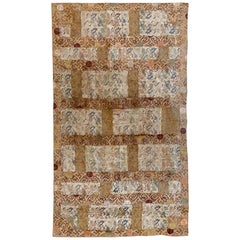
Antique Brocade Kesa Monk s Patched Robe Edo Period
Located in Atlanta, GA
Kesa, known as "Jiasha" in Chinese and "Kasaya" in Sanskrit, is an out layer garment worn by the ordained Buddhist monks. Bearing a basic rectangular form, it developed originally in...
Category

Late 18th Century Japanese Antique Edo Asian Art and Furniture

Materials

Textile, Brocade

Mid-18th Century Japanese Screen Pair, One Hundred Flowers, Chrysanthemums
Located in Kyoto, JP
Omori Soun (b. 1704) Chrysanthemums - One Hundred Flowers A Pair of Six-fold Japanese Screens. Ink, color, gofun and gold leaf on paper. Dating ...
Category

Mid-18th Century Japanese Antique Edo Asian Art and Furniture

Materials

Gold Leaf

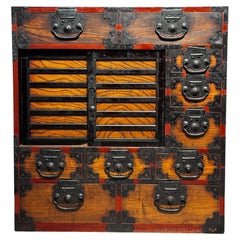
Japanese Late Edo Period Kiri and Cypress Tansu Merchant s Chest
Located in San Francisco, CA
A fine Japanese late Edo period kiri wood (chestnut) and cypress wood tansu (merchant's chest) with multiple drawers of various sizes including a sliding section. Having original red...
Category

Mid-19th Century Japanese Antique Edo Asian Art and Furniture

Materials

Iron

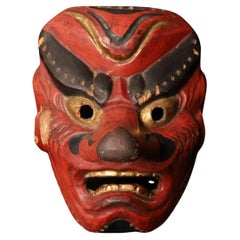
Japanese Tengu Noh Mask, Edo Period, 19th Century
Located in Fukuoka, JP
An authentic Japanese Tengu mask dating to the Edo period (19th century), traditionally associated with Noh theater and classical Japanese performing arts. The mask is hand-carved fr...
Category

Early 19th Century Japanese Antique Edo Asian Art and Furniture

Materials

Wood

Antique Japanese Ink Stone Maki-e Lacquer Box Suzuribako Edo Provenance
Located in Atlanta, GA
A Japanese ink stone box (known as Suzuribako) with exquisite maki-e decoration from Edo period (circa mid-18th century). The box features a rectang...
Category

18th Century Japanese Antique Edo Asian Art and Furniture

Materials

Wood, Lacquer

Mingei Japanese Folk Art — Statue of Kannon Bosatsu, 18th Century
Located in Fukuoka, JP
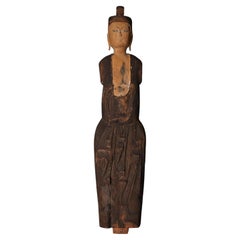
A serene Mingei (folk art) wooden statue of Kannon Bosatsu, dating to the 18th century. Carved with simplicity and spiritual warmth, the figure embodies the humble, unadorned aesthet...
Category

18th Century Japanese Antique Edo Asian Art and Furniture

Materials

Wood

Japanese Lacquered Maki-e Fubako Edo Period
Located in Atlanta, GA
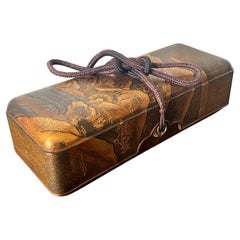
A Japanese lacquered wood fubako (a box used to store document or small scroll painting), circa second half of 19th century late Edo period. The rectangular box features an unusually deep lipped lid with slightly rounded corners, a conforming lower box that is almost entirely covered by the lid which has two bronze medallion rings with tasseled...
Category

19th Century Japanese Antique Edo Asian Art and Furniture

Materials

Wood, Lacquer

Pair of Exceptional Daimyo Hand Warmers
Located in Hudson, NY
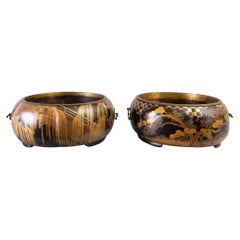
The daimyo were the ruling class of land owners, subordinate to shogun, who formed around the 10th century and fell out of power in the 19th century. Daimyo families tended to be wealthy and could commission artwork or decorative pieces. This pair of 17th century hibachi are black and gold lacquer with designs of Uji Bridge...
Category

Late 17th Century Japanese Antique Edo Asian Art and Furniture

Materials

Lacquer

Rare Japanese Ceramic Glazed Inro with Ojime Ogata Kenzan Edo Period
Located in Atlanta, GA
A Japanese three-section inro made from ceramic with glazed painting with an original ensuite Ojime circa 18th century of Edo period signed by Ogata Kenzan (1663–1743). The circular ...
Category

18th Century Japanese Antique Edo Asian Art and Furniture

Materials

Ceramic

Unusual Samurai Jingasa Hat with Gilded Crests and Red Lacquer Interior
Located in Fukuoka, JP
An uncommon Edo-period samurai jingasa, distinguished by its gilded crest decorations and richly lacquered red interior. Jingasa of this type were worn by samurai, ashigaru, and reta...
Category

17th Century Japanese Antique Edo Asian Art and Furniture

Materials

Wood, Lacquer

Edo asian art and furniture for sale on 1stDibs.

Find a broad range of unique Edo asian art and furniture for sale on 1stDibs. Many of these items were first offered in the 21st Century and Contemporary, but contemporary artisans have continued to produce works inspired by this style. If you’re looking to add vintage asian art and furniture created in this style to your space, the works available on 1stDibs include asian art and furniture, wall decorations, decorative objects and other home furnishings, frequently crafted with wood, metal and other materials. If you’re shopping for used Edo asian art and furniture made in a specific country, there are Asia, East Asia, and Japan pieces for sale on 1stDibs. While there are many designers and brands associated with original asian art and furniture, popular names associated with this style include Utagawa Hiroshige (Ando Hiroshige), Arita, Ryosuke Harashima, and Kitagawa Utamaro. It’s true that these talented designers have at times inspired knockoffs, but our experienced specialists have partnered with only top vetted sellers to offer authentic pieces that come with a buyer protection guarantee. Prices for asian art and furniture differ depending upon multiple factors, including designer, materials, construction methods, condition and provenance. On 1stDibs, the price for these items starts at $55 and tops out at $1,386,932 while the average work can sell for $3,412.