Edo Asian Art and Furniture

EDO STYLE

Edo furniture was created during a flourishing time for the decorative arts owing to the stability of the Tokugawa shogunate rule in Japan. Spanning from 1603 to 1867, this era of peace and economic growth supported artistic advancements in lacquer, woodblock printing, porcelain and other artisanal trades. Because the country was largely isolated, there was little outside influence, leading to centuries of exceptional attention to the design of its furnishings and the quality of its traditional arts.

Unlike during the Meiji period that followed, with an increase in domestic and international markets, furniture during the Edo period was predominately commissioned by the ruling class, although people from across social groups benefited from the burgeoning metropolitan hubs for artisanal trades. For instance, Kyoto became a major center for lacquer art. Most furniture pieces were made from wood such as cedar or ash, including the era’s sashimono cabinets, which involved fine joinery and were rooted in the Heian period.

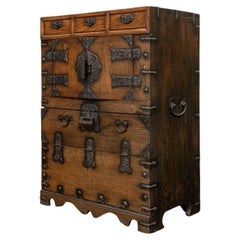
Sashimono cabinets, which were built by master craftsmen in a range of different wood types owing to the various trees that populate Japan, occasionally featured a stack of slender drawers as well as sliding doors. They were popular with everyone from samurai to kabuki actors. Tansu storage chests crafted from wood with metal fittings were also common in Edo-period homes. Some were designed to be easily portable while others were made to double as staircases.

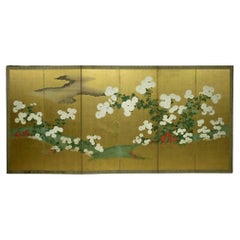
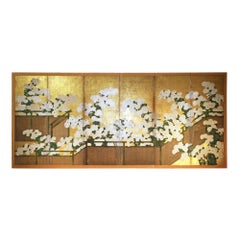
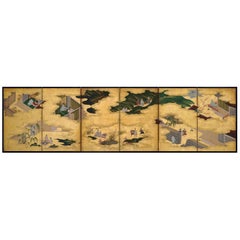
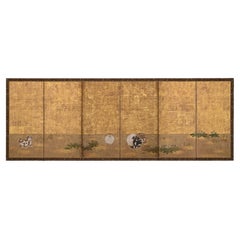
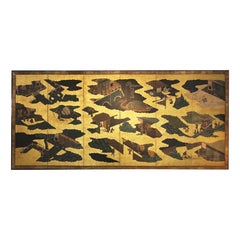
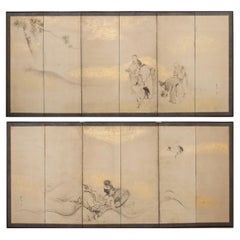
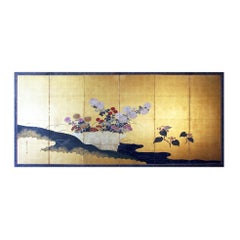
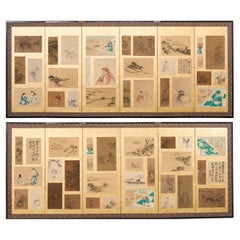
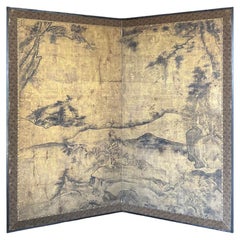
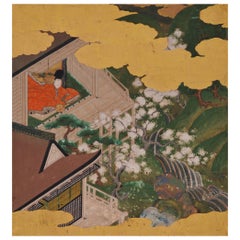
Painted folding screens, called byōbu, were also fashionable, with Japanese artists inspired by nature, literature and scenes of history and daily life to create vivid works. In Buddhist temples and the palatial homes of the aristocratic class, fusuma, or large sliding panels, would sometimes be adorned with gold or silver leaf. These dividers allowed interiors to change throughout the day, closing in small spaces for personal use or reflecting candlelight to illuminate communal spaces after dark.

Find a collection of Edo tables, lighting, decorative objects, wall decorations and more furniture on 1stDibs.

to
114
283
150
585
11
441
392
232
186
155
74
55
46
42
33
25
20
15
14
13
13
12
4
226
320
39
11
18
5
1
1
1
252
201
175
121
104
578
567
553
11
3
596
593
593
13
11
6
3
2
Style: Edo
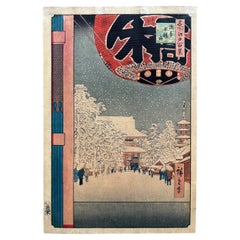
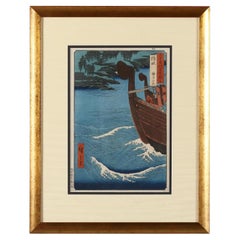
Japanese Woodblock Print Kinryuzan Temple at Asakusa by Utagawa Hiroshige
Located in Atlanta, GA
Title: Kinryuzan Temple at Asakusa from the series One Hundred Famous Views of Edo (Meisho Edo Hyakkei) Artist: Utagawa Hiroshige (Japanese, 1797–1858) Original published date: 7th m...
Category

Early 20th Century Japanese Edo Asian Art and Furniture

Materials

Paper

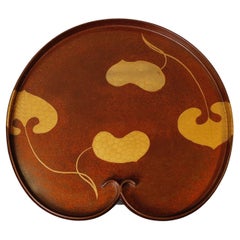
Superb Footed Lacquer Tray with Maki-e Decoration, Late Edo–Meiji Period
Located in Fukuoka, JP
This superb Japanese footed lacquer tray dates to the late Edo–Meiji period (19th century) and is finely decorated with an elegant maki-e design. The refined composition and subtle u...
Category

19th Century Japanese Antique Edo Asian Art and Furniture

Materials

Wood, Lacquer

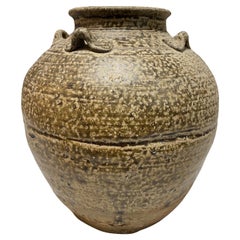
Japanese Antique Edo Wabi-Sabi Shigaraki Tamba Tanba Art Pottery Jar Tsubo Vase
Located in Studio City, CA
A beautiful Tamba (Tanba) ware (or Sigaraki ware) Japanese pottery vase/jar/pot - produced sometime during the Edo Period (1603-1867). Tamba-yaki ware is a type of Japanese pottery a...
Category

18th Century Japanese Antique Edo Asian Art and Furniture

Materials

Pottery, Stoneware

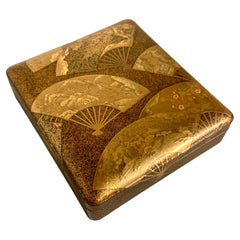
Japanese Maki-e Lacquer Document Box, Edo Period, early 19th Century, Japan
Located in Austin, TX
A spectacular Japanese maki-e lacquer lidded box, possibly a writing box, suzuribako, decorated with images of folding fans, ogi, Edo Period, earl...
Category

Early 19th Century Japanese Antique Edo Asian Art and Furniture

Materials

Coral

Late Edo Period Rinpa School Chrysanthemum Blossom Screen
Located in Fukuoka, JP
Late Edo Period Rinpa School Chrysanthemum Blossom Screen Period: late Edo, early 19th century Size: 364 x 172 cm (143 x 67 inches) This exquisite late Edo period Rinpa school scr...
Category

18th Century Japanese Antique Edo Asian Art and Furniture

Materials

Paper

Japanese Screen mid Edo gold leaf
Located in Brescia, IT
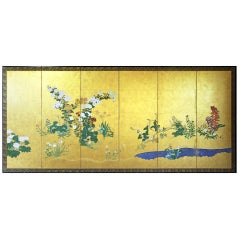
This 18th century six-panel screen is truly special. The author is unknown, but his singular genius in portraying dozens of chrysanthemum flowers created with the white of the "gofun...
Category

Mid-18th Century Japanese Antique Edo Asian Art and Furniture

Materials

Gold Leaf

Japanese Screen Painting, Circa 1700 Tales of Ise by Tosa Mitsusuke
By Tosa Mitsusuke 1
Located in Kyoto, JP
A six-fold Japanese screen by Tosa Mitsusuke (1675-1710), Japan 17th-18th century, Edo period. The signature reads Shoroku-i ge Tosa sa Konoe Shogen Mit...
Category

Late 17th Century Japanese Antique Edo Asian Art and Furniture

Materials

Gold Leaf

Lovely 17th-18th Century Scroll Painting Japan Artist Kano Soyu Painted
Located in Amsterdam, Noord Holland
It is a work that is said to have been drawn by Kano Soyu as you can see. It is a picture of the light-colored Sansui map carefully drawn to the smallest detail, and the towering m...
Category

17th Century Japanese Antique Edo Asian Art and Furniture

Materials

Silk

Japanese Folding Screen Gold Leaf
Located in Brescia, IT
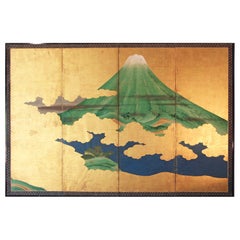
Byobu painted with mineral pigments on gold leaf, the quality of the painting is still excellent, with no color loss or restorations. A classic four-panel screen depicting Mount Fuji...
Category

Early 19th Century Japanese Antique Edo Asian Art and Furniture

Materials

Gold Leaf

Elegant Horse Screen. In style of Kano Tanshin
By Kano Tanshin
Located in Fukuoka, JP
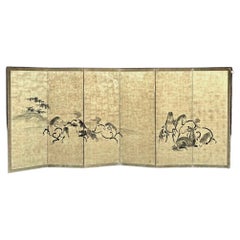
Ink on gold. This continuation of equine grace unfolds across a stunning gold-leaf backdrop, capturing the essence of nobility that horses represent in Japanese lore. The screen de...
Category

Late 18th Century Japanese Antique Edo Asian Art and Furniture

Materials

Gold Leaf

19th Century Japanese Edo Screen Kano School Garden Terrace
Located in Rio Vista, CA
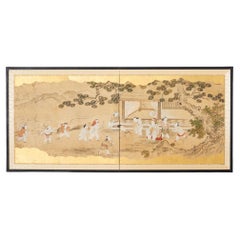
Fantastic 19th century Japanese Edo/Tokugawa period two-panel byobu screen featuring Chinese children frolicking on a garden terrace with a pavilion and large pine tree. Made in the ...
Category

19th Century Japanese Antique Edo Asian Art and Furniture

Materials

Brass, Gold Leaf

Japanese Lacquer Maki-E Scroll Box Fubako by Kansonsai Edo Period
Located in Atlanta, GA
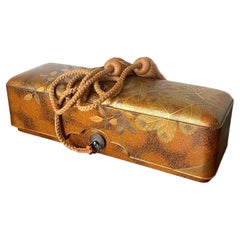
A Japanese lacquered wood fubako (a box to store document or small scroll painting) circa late 18th century of Edo period. The rectangular box features a deep lid with rounded corners and recessed mid-edge and a lower box with two bronze medallion rings and tasseled silk ties. The surface of the fubako was elaborately decorated with hiramaki-e and a low takamaki-e on a mottled Mura-nashiji background. The motifs on the lid depict branches of Japanese pine with finely rendered needles on the lower part; on the upper part, it showcases fruited persimmon branches. Two different shades of gold fundame were used to contrast the design and augmented by scattered gold kirigane to highlight some of the leaves. The design continues and cascades down to all sides of the lid as well as the walls of the box. The two bronze medallions appear original to the box and the silk ties show significant fading from the age. This Fine fubako is signed on the lower wall "Kanshosai" in Kanji with a kao mark. All the trims were finished in gold fundame and the interiors a dense nashiji in gold. Kanshosai is the mark of the distinguished lacquer artist Lizuka Toyo I who also signed his work "Toyosai". He was active in the second half of the 18th century during Edo period, employed by Hachisuka Shigeyoshi (1738-1801), daimyo of Awa on Shikoku Island. Although most survived work bearing his marks are inros, he was also known to decorated trays and other larger objects...
Category

Late 18th Century Japanese Antique Edo Asian Art and Furniture

Materials

Wood, Lacquer

Late 17th Century Japanese Screen. Puppy and Kittens on Gold Leaf.
Located in Kyoto, JP
Anonymous Late 17th century Puppy & Kittens A six-panel Japanese screen. Ink, color, gofun, gold-leaf and gold-fleck on paper. A medium sized late 17th century Japanese screen fe...
Category

Late 17th Century Japanese Antique Edo Asian Art and Furniture

Materials

Gold Leaf

Japanese Woodblock Print Famous Views of the Sixty-Odd Provinces by Hiroshige
Located in Atlanta, GA
Artist: Utagawa Hiroshige (1797 - 1858) Series: Pictures of Famous Places in the Sixty-odd Provinces Number: 44 Oki Province: Takuhi Shrine Medium: Woodblock Print Date: 1853 (Kaei 6), 12th month Number of Prints: 70/70 (inc. Title Page) Format: Vertical Oban Size (H x W): 14" x 9.25" print only. Publisher: Koshimuraya Heisuke (Koshihei) Blockcutter's mark: Hori Ko-Sen Signature: Hiroshige hitsu Additional marks: Censor's seals: aratame, Ox 12 Displayed with mat and gilt wood frame. Reference: For an identical print, see the collection of MIA (Minneapolis Institute of Art) Accession Number P.75.51.398; MFA...
Category

1850s Japanese Antique Edo Asian Art and Furniture

Materials

Paper

Japanese Screen Pair, circa 1730, Peacocks and Phoenix, Kano School
Located in Kyoto, JP
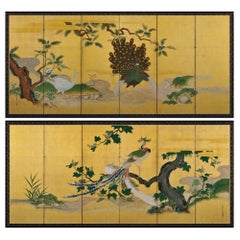
Phoenix and Peacocks. A pair of six-panel Japanese folding screens by Tsunetake Yotei (n.d.) First half of the 18th century. The signature reads 67 year old Tsunetake. The seals read: -Tsunetake no in, -Yotei, -Seishin Dimensions: Each screen – H. 69” x W. 149” (176 cm x 378 cm) A pair of Kano Grand Picture (Waga) screens depicting phoenix and peacocks rich with symbolic meaning. Dating to the first half of the 18th century, from the Kobikicho Kano school in Edo, this pair of folding...
Category

Early 18th Century Asian Antique Edo Asian Art and Furniture

Materials

Gold Leaf

Peony Blossoms Screen
Located in Fukuoka, JP
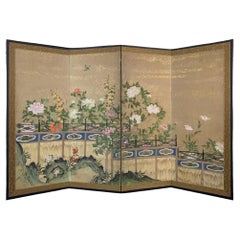
Peony Blossoms Screen Period: Edo period 18-19th century Size: 212 x 138 cm (83.5 x 54.3 inches) SKU: PJ105 Experience a rare gem from Japan's heritage – an Edo period peony blosso...
Category

18th Century Japanese Antique Edo Asian Art and Furniture

Materials

Paper, Silk

Elaborate Rustic Antique Korean Chest
Located in Bridgeport, CT
The classic Korean chest with three short frieze drawers over double doors with large mounts and a lock. The lower case with a hinged drop front with lock. Iron mounts overall and ca...
Category

19th Century Korean Antique Edo Asian Art and Furniture

Materials

Metal

Japanese Zushi Traveling Shrine of Bishamonten, c. 1800
Located in Chicago, IL
This gorgeous Japanese red lacquer traveling shrine (zushi) protects a miniature statue of Bishamonten, the Buddhist God of Warfare here depicted as an armor-clad warrior. A fearsome protector, he is thought to defend sacred places, punish evil-doers, expel demons and bestow wealth. In this example, Bishamonten stands atop a crouching demon, dressed in finely painted armor...
Category

Mid-19th Century Japanese Antique Edo Asian Art and Furniture

Materials

Wood

Six-panel gold leaf screen
Located in Brescia, IT
Large Japanese six-panel screen, ink, color, gold, and gold leaf on paper, depicting three scenes from Genji monogatari (The Tale of Genji), the vignettes punctuated by raised golden...
Category

Early 19th Century Japanese Antique Edo Asian Art and Furniture

Materials

Gold Leaf

Pair of 18th Century Japanese Edo Screens of Chinese Immortals
Located in Rio Vista, CA
Mesmerizing pair of late 18th/early 19th century Japanese Edo period byobu screens by Shibata Gito (Japanese 1780-1819). The paintings depict Chinese immortals in a dreamy landscape....
Category

18th Century Japanese Antique Edo Asian Art and Furniture

Materials

Silk, Wood, Paper

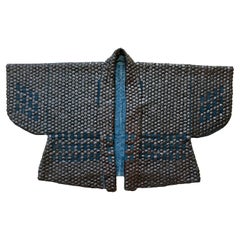
Rare Antique Kikko Katabira Armor Jacket Edo Period
Located in Atlanta, GA
A rare and well-preserved Kikko Jacket used traditionally as an under armor by elite Daimyo and Samurai class since the time of the Mongol invasions of Japan (1270s), and particularl...
Category

Mid-19th Century Japanese Antique Edo Asian Art and Furniture

Materials

Iron

Pair of Japanese Edo Six Panel Screens the Seven Sages
Located in Rio Vista, CA
Fantastic pair of 19th century Japanese late Edo/early Meiji period six-panel screens titled The seven sages of the bamboo grove. The Kano school screens...
Category

19th Century Japanese Antique Edo Asian Art and Furniture

Materials

Brass, Gold Leaf

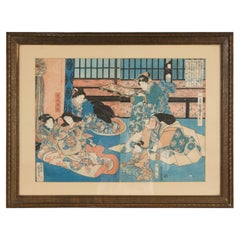
Japanese Edo 19th Century Signed Utagawa Kuniyoshi Diptych Woodblock Print
Located in Yonkers, NY
An antique Japanese Edo period diptych woodblock print from the early to mid 19th century, signed by Utagawa Kuniyoshi. Immerse yourself in the Japanese Edo period artistry with this antique 19th-century diptych woodblock print. Signed by the artist, this captivating piece is a striking depiction of a tranquil interior scene, rendered in a soothing color palette of blue, pink, and black tones. This print comprises two panels, assembled under glass in a custom frame to form a cohesive narrative. The scene captures a specific moment in time, presenting a man surrounded by four women and a child, beautifully adorned in traditional Japanese garments. The intricate details of their clothing are a testament to the artisan's skill, bringing an element of authenticity and depth to the scene. On the left, three women sit in a state of relaxed conversation, while another stands, graciously offering a tray. Adding intrigue, two additional women can be spotted peeking through a slightly open window, one cleverly concealing her face behind a fan. A child, smaller in stature, sits attentively in front of the man, further enhancing the scene's narrative quality. A signature from the artist adds an additional layer of authenticity, making this piece a must-have for collectors of antique Japanese art...
Category

19th Century Japanese Antique Edo Asian Art and Furniture

Materials

Glass, Paint, Paper

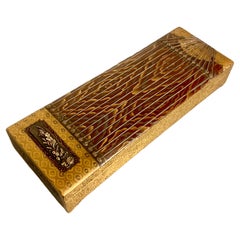
Japanese Lacquer Writing Box, Suzuribako, Edo Period, 18th Century, Japan
Located in Austin, TX
An exceptionally fine and unusual Japanese lacquer writing implements box, suzuribako, in the form of a zither, koto, Edo Period, 18th century, Japan. With a modern wood storage box,...
Category

18th Century Japanese Antique Edo Asian Art and Furniture

Materials

Gold, Silver, Copper

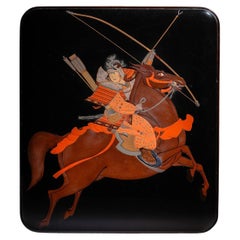
Edo Gold-Lacquer Writing Box with Samurai Warrior, Makie Suzuribako
Located in Taichung, TW
This Edo-period makie suzuribako features the legendary Heian-period general Minamoto no Yoshiie, widely known as Yawata Tarō, shown charging forward on horseback with bow drawn. Cel...
Category

Mid-18th Century Japanese Antique Edo Asian Art and Furniture

Materials

Lacquer

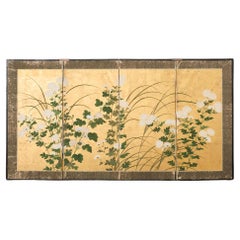
Japanese Edo Four Panel Screen Flowering White Chrysanthemums
Located in Rio Vista, CA
19th century extraordinary Japanese late Edo/early Meiji period four-panel byobu screen featuring flowering white chrysanthemums painted in a moriage (raised pigment) style. The pain...
Category

19th Century Japanese Antique Edo Asian Art and Furniture

Materials

Brass, Gold Leaf

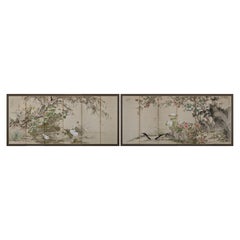
19th Century Japanese Screen Pair - Birds Flowers of the Four Seasons
Located in Kyoto, JP
Birds & Flowers of the Four Seasons Yamamoto Baiitsu (1783-1856) Late Edo period, Dated 1850 A magnificent pair of six-panel Japanese folding screens by Yamamoto Baitsu, representin...
Category

Mid-19th Century Japanese Antique Edo Asian Art and Furniture

Materials

Wood, Paper

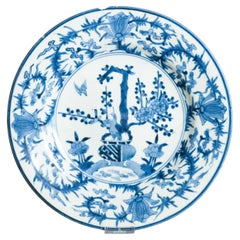
Rare Antique Edo period Ca 1680 -1700 Japanese Porcelain Plate Arita Dish
Located in Amsterdam, Noord Holland
Description Sharing with you this very nice edo period, 1660-1680, example. With a central scene of flowers. The rim beautifully painted. Unmarked at base Arita ware, also known a...
Category

17th Century Japanese Antique Edo Asian Art and Furniture

Materials

Porcelain

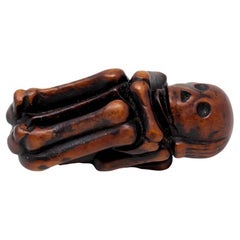
Japanese Edo Period (1603-1868) Skeleton Foetus Netsuke
Located in Newark, England
Laying Foetus From our Japanese collection, we are pleased to offer this Japanese Edo Period Skeleton Netsuke. The Skeleton Netsuke is carved from Boxwood depicting a skeleton in t...
Category

Mid-19th Century Japanese Antique Edo Asian Art and Furniture

Materials

Wood, Boxwood

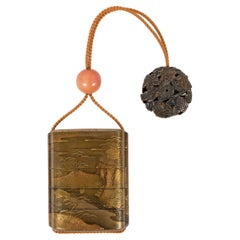
Japanese inro of the edo period adorned with a landscape houses near a lake
Located in PARIS, FR
Inrō with four gold lacquer compartments, decorated with a lake landscape. Accompanied by a bronze ryusa manju. Small boxes formed of compartments that fit one on top of the other, i...
Category

Late 18th Century Japanese Antique Edo Asian Art and Furniture

Materials

Gold

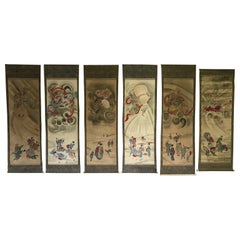
Set of 6 Large Kakemonos Japanese Mythology, 19th Century Japan circa 1800 Edo
Located in Beuzevillette, FR
Beautiful set of 6 large kakemonos from 19th century Japanese mythology. Paper support with a canvas pasted on the paper Wonderful set that is part of Japan's history and beliefs When not hung, the Kakemonos are rolled up. circa 1800 - Japan - Edo Period A kakemono translates as "object to hang". In Japan this refers to a painting or calligraphy, most often done on silk or paper framed in a scroll that was intended to be hung on walls or in public lighting. This particular form, which allows them to be in a roll, dates back to the Tang dynasty in China (this would be related to the copying and preservation of ancient Buddhist texts). A Kami is a deity or spirit worshipped in the Shinto religion. A Yokai is a spirit, ghost, demon, or strange apparition from the creatures of Japanese folklore. Each of these kakemonos represents a unique story: - A kami, a Japanese deity, is shown painting a rainbow. Indeed, he performs the action with his right hand while his left hand holds a kind of basket with three pots of paint. This kami has a rather closed attitude. He is standing in a dark and tormented sky. Below this figure, 8 villagers are dressed in traditional Japanese clothes. Their faces are softened. They are not afraid of the elements made by the kami above their heads. - A character with an unreal look is holding a kind of jar with his two hands, which he spills on human figures above. This being is floating in the air, probably a character from mythology, perhaps Susanoo. Underneath, villagers on umbrellas. They are trying to protect themselves as best they can from what is falling on them. One of them is carrying baskets with fish on her shoulders. A character in the background is thrown forward and falls. - On this kakemono, the god Raijin, dressed in a white and blue outfit, strikes the sky with his two drum hammers to create lightning and its thunderous sound. Surrounded by Tomoe and a long red scarf, Raijin, enraged and with dishevelled hair, creates a dark and violent storm. The villagers seem frightened by this meteorological phenomenon. One of the villagers can be seen fainting in the arms of a man. This scene may seem chaotic, but Japanese legend tells us that once a field is struck by lightning, the harvest is good. - On this kakemono, we see an unreal-looking figure holding a fan, as if he were sweeping away the bad weather, or simply producing gusts of wind. He is probably the kami of wind and air, Shina tsu-hiko. The figures below him seem surprised by so much wind. An umbrella flies away on the left, the women hold their hair and scarf, the clothes are caught in the power of the wind, there is even a woman on the ground on the bottom left. - This Kakemono represents a short moment. This Raiju is a yokai (ghost spirit...
Category

19th Century Japanese Antique Edo Asian Art and Furniture

Materials

Paper

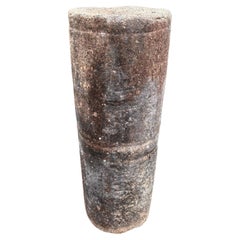
Japanese Antique Hand Carved Temple Garden Stone Display Sign EarIy Inscription
Located in South Burlington, VT
Rare and Hard To Find Temple Pedestal, 19th Century From Japan , a hard to find solid inscribed and well carved round top temple pedestal - perfect for displaying your indoor or out...
Category

19th Century Japanese Antique Edo Asian Art and Furniture

Materials

Stone

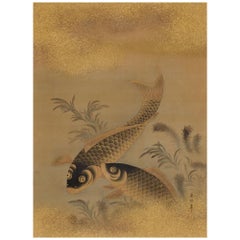
Japanese Painting, Hanging Scroll, Mid 19th Century, Koi and Water Plants
By Iwase Hirotaka
Located in Kyoto, JP
Iwase Hirotaka (1808-1877) Koi and Water Plants Hanging scroll, ink, color, gold wash and gold flecks on silk Inscription: Hirotaka Seal: Ille...
Category

1860s Japanese Antique Edo Asian Art and Furniture

Materials

Silk

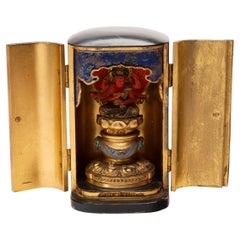
Japanese Zushi Traveling Shrine of Aizen Myō-ō, c. 1850
Located in Chicago, IL
A simple exterior of black lacquer belies the splendor within this late 19th-century Japanese traveling shrine (zushi). The hinged doors open to reveal a lustrous gold interior and a...
Category

Mid-19th Century Japanese Antique Edo Asian Art and Furniture

Materials

Wood

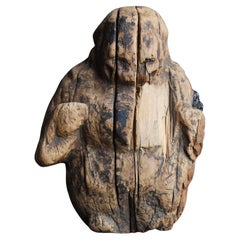
Japanese Antique Wood Carving Daikokuten 1800s-1860s / Figurine Wabisabi
Located in Chōsei District Nagara, JP
This is an old Japanese wooden carving of Daikokuten, created during the Edo period (1800s–1860s). It is carved from sugi (Japanese cedar). Having endured the passage of centuries, i...
Category

Late 19th Century Japanese Antique Edo Asian Art and Furniture

Materials

Cedar

Rare Japanese Floor Screen of Perched Eagles Soga Shohaku Edo period
Located in Atlanta, GA
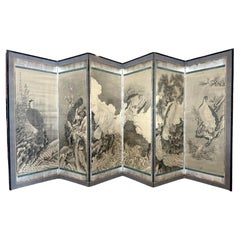
A rare six-panel Japanese folding floor screen (Byōbu) by Soga Shōhaku (1730-1781) from Edo period. The screen depicts six perched hawk-eagles in various poses positioned in a litera...
Category

18th Century Japanese Antique Edo Asian Art and Furniture

Materials

Brocade, Wood, Paper

17th Century Japanese Edo Four Panel Screen Hotei with Chinese Sages
Located in Rio Vista, CA
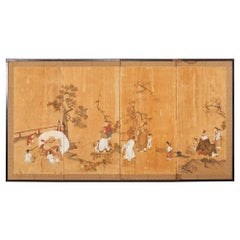
Beautifully weathered late 17th/early 18th century Japanese edo period four panel byobu screen depicting hotei (fat monk) in a treed landscape with Chinese sages engaged in leisurely...
Category

17th Century Japanese Antique Edo Asian Art and Furniture

Materials

Brass

Edo Landscape Japanese Folding Screen
Located in Brescia, IT
Refined work by a painter from the first half of the 19th century, from the landscape of the "Rinpa" school by a painter from the end of the 18th century, the Rinpa school. Six panels painted in ink on gold leaf and "gofun" on vegetable paper. The flowers are made with the "gofun" technique, natural or pigmented white oyster powder. Rinpa is one of the major historical schools of Japanese painting. The style was consolidated by the brothers Ogata Korin (1658–1716) and Ogata Kenzan (1663–1743). This folding screen has a very clean design that leaves plenty of room for the beautiful golden landscape. It comes flat and you can easily hang it with our hooks. Lucio Morini...
Category

18th Century Japanese Antique Edo Asian Art and Furniture

Materials

Gold Leaf

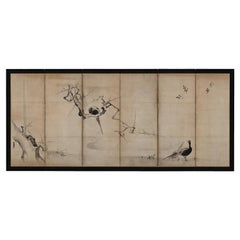
17th Century Japanese Screen. Ink Plum Tree Birds by Kano Naonobu.
Located in Kyoto, JP
Kano Naonobu (1607-1650) Plum Tree and Birds Six-fold Japanese Screen. Ink and slight color on paper. In this evocative ink work spread over a six-panel folding screen, we see the consummation of the elegance and refinement of the Edo Kano school. This 17th century screen is a rare surviving example of a large-scale bird and flower painting by Kano Naonobu, the younger brother of Kano Tanyu...
Category

17th Century Japanese Antique Edo Asian Art and Furniture

Materials

Wood, Paper

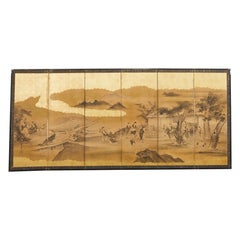
Japanese Edo Six Panel Screen Merrymaking in the Chinese Countryside
Located in Rio Vista, CA
Large 19th century Japanese Edo period six panel folding byobu screen made in the Kano school style. Beautifully crafted with signature after Kano Tan'yu. Ink and natural color pigme...
Category

19th Century Japanese Antique Edo Asian Art and Furniture

Materials

Gold Leaf

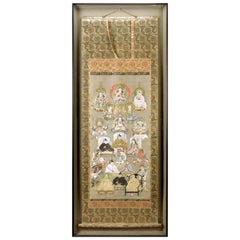
Japanese Silk Suijaku Scroll Nyorai-Kojin with Mixed Buddhism and Shinto Deities
Located in Atlanta, GA
A Japanese silk Suijaku hanging scroll beautifully presented in a custom wood shadow box frame from Edo period (circa 18-19th century). The scroll, surmounted on golden brocade was painted in fine details with gouache, ink and gold powder highlight, served as a Suijaku mandala for the worshippers. Honji Suijaku is a complicated religious concept uniquely developed in Japan. It mixed and hybrid the Buddism deities with native shinto spirits (known as Kami), which were seen as local manifestations (the suijaku, literally means a "trace") of Buddhist deities (the honji literally the original ground). The original idea may lie with the synergetic strategy to spread Buddism by making it more relatable to the local population who had already worshiped Shinto gods. The paradigm, adopted in the 10th century from an orignal Chinese concept, remained a defining feature of Japanese religious life up to the end of the Edo period (1868). Instead of being confined to deities, its application was often extended to historical figures as shown on this scroll. This long hanging scroll depicts an arrangement of 21 figures including Buddhism and Shinto deities as well as two historical figures on the bottom. Each figure was name-tagged in Kanji for easy identification by the worshippers. It was used in the temple or shrine so that when the worshipper prayed in front the mandala, they prayed simultaneously to all the deities. On the very top, sits Nyorai-Kojin, a hybrid deity of Nyorai Buddha and Kojin, the kaki for fire, stove and kitchen. From the top to bottom and left to right, here is the list of the deities: Kanon with Thousand Hands, Kanon with Willow Branch, Monju Bosatsu...
Category

Early 19th Century Japanese Antique Edo Asian Art and Furniture

Materials

Silk, Wood

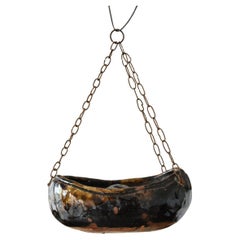
Japanese Antique Pottery Hanging Vase/Edo/1800s/Boat-Shaped Vase
Located in Sammu-shi, Chiba
This is a black-glazed boat-shaped pottery made in the late Edo period of Japan. This will be a hanging vase. Pour water directly into this and decorate the flowers. Also, perhaps this is a pottery called Seto-yaki. Seto is an ancient kiln located in Aichi Prefecture. Various shapes and colors were produced there, and in the late Edo period, dark glazed pottery was also produced. When a dark brown glaze is applied, the areas with thick glaze look black, and the areas with thin glaze look brown. I put water directly into this and left it for a day, but there was no water leakage. I would say it is in very good condition. Although it is a small item, it has a very strong presence. It has a glossy and elegant appearance. There are many types of Seto pottery...
Category

19th Century Japanese Antique Edo Asian Art and Furniture

Materials

Pottery

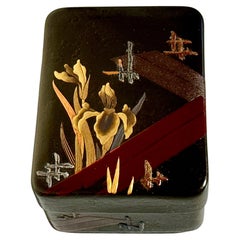
Japanese Rinpa Lacquer Box, "Irises at Yatsuhashi", by Santo Kyosui, Edo Period
Located in Austin, TX
A very special Japanese Rinpa style small lacquer box for incense accessories, kobako, by Santo Kyosui (1816 to 1867), late Edo period (1603 to 1868), mid 19th century, Kyoto, Japan....
Category

Mid-19th Century Japanese Antique Edo Asian Art and Furniture

Materials

Copper, Pewter

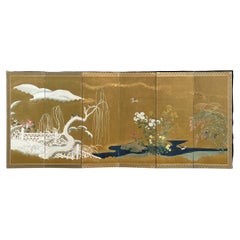
Japanese Screen: Flow of Time in Gold
Located in Fukuoka, JP
Seasons Flowing in Gold is a masterful expression of depth and rhythm, painted with a subtle three-dimensional effect that brings the landscape to life. From the snow-laden willow a...
Category

Early 19th Century Japanese Antique Edo Asian Art and Furniture

Materials

Paper, Wood

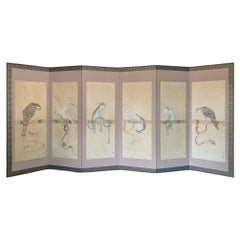
Mid-Edo Hawk Screen
Located in Fukuoka, JP
Step into the world of Mid Edo Japan with our six-panel Hawk screen, each depicting a different hawk. In this period, hawks were revered not only for their majestic beauty but also f...
Category

18th Century Japanese Antique Edo Asian Art and Furniture

Materials

Wood, Paper

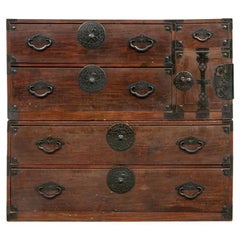
Vintage Japanese Carry Chest On Chest
Located in Bridgeport, CT
The two stacking units in a reddish-brown stain with black metal mounts. The top chest with two long drawers on the left. The right side with a drawer over two more smaller drawers...
Category

Early 20th Century Japanese Edo Asian Art and Furniture

Materials

Metal

Japanese Byobu - Japanese Folding Screen Gold Leaf
Located in Brescia, IT
Floral scene of a "Rimpa School" garden with polychrome chrysanthemum flowers. Six-panel screen painted with pigments on golden rice paper of good size and well preserved. Bold color...
Category

Early 19th Century Japanese Antique Edo Asian Art and Furniture

Materials

Gold Leaf

Pair Japanese Edo Six Panel Harimaze Decoupage Screens
Located in Rio Vista, CA
Incredible pair of late 18th/early 19th century Japanese Edo period six panel folding byobu screens featuring Harimaze decoupage, applied paintings and drawing. Each screen is an ama...
Category

19th Century Japanese Antique Edo Asian Art and Furniture

Materials

Gold Leaf

Japanese Rare Serene Hand Carved Stone Shinto Rice Prosperity Goddess , 19thc
Located in South Burlington, VT
From our Japanese Acquisitions - An ancient design with an unique modern contemporary feel. Imagine this wonderful antique stone sculpture in your indoor gallery or favorite garden...
Category

19th Century Japanese Antique Edo Asian Art and Furniture

Materials

Stone

Early Edo Period Chinese-Inspired Screen
Located in Fukuoka, JP
This remarkable screen from the early Edo period, circa the 17th century, showcases the influence of early Chinese art forms with its intricate ink work on a gold leafed surface. The...
Category

17th Century Japanese Antique Edo Asian Art and Furniture

Materials

Gold Leaf

Japanese Erotic Framed Edo Period Shunga Woodblock Print of Couple, 19th Century
Located in Studio City, CA
A wonderful, highly erotic Japanese Shunga woodblock print. This work is likely by the renowned Ukiyo-e artist Utagawa Kunisada 1786-1865 (also known as Utagawa Toyokuni III) and created during the Edo period (1603–1867). Shunga is a type of Japanese erotic art...
Category

19th Century Japanese Antique Edo Asian Art and Furniture

Materials

Paper

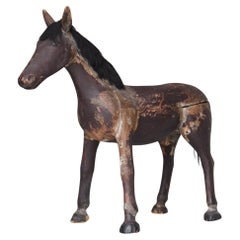
Japanese Antique Sacred Horse Wooden Statue "Shinme" 1800s-1860s / Wabi Sabi
Located in Chōsei District Nagara, JP
This is a very rare carved wooden statue of a sacred horse that was dedicated to a Japanese shrine. It was produced during the Edo period (1800s-1860s), and the main material used is...
Category

Mid-19th Century Japanese Antique Edo Asian Art and Furniture

Materials

Cedar

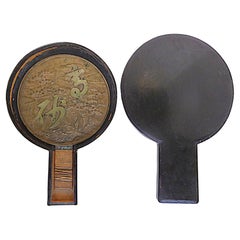
Edo Period Japanese Bronze Mirror with Lacquer Box Japan mid 1800s
Located in Miami, FL
Antique Japanese Bronze Mirror decorated with a scene of clouds swirling over two intertwinning pine trees, symbol of long life, on a promontory with waves breaking against it. Larg...
Category

1880s Japanese Antique Edo Asian Art and Furniture

Materials

Bronze

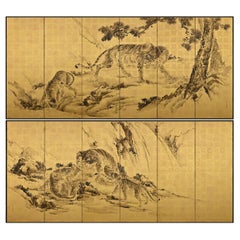
Japanese Screen Pair, Tigers by Kishi Renzan, Late Edo Period
Located in Kyoto, JP
Kishi Renzan (1804-1859) Tigers Pair of six-panel Japanese screens. Ink and gold-leaf on paper. In this monochromatic pair of six-fold Japanese screens painted on gold-leaf, Kishi Renzan has created a breathtaking composition of a family of tigers. The screens are filled with a sense of drama which is conveyed by both the subject matter and the wet, expressive brushwork. The running mountain stream and the towering waterfall allude to refreshment during the summer months and we feel the tiger families familiarity and security within their environment. Renzan’s master, Kishi Ganku...
Category

Mid-19th Century Asian Antique Edo Asian Art and Furniture

Materials

Gold Leaf

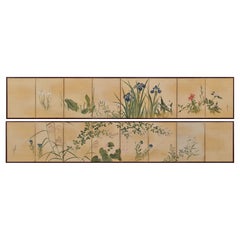
1838 Japanese Screen Pair. Flowers Grasses of the Four Seasons.
Located in Kyoto, JP
Maruyama Oshin (1790-1838) Flowers and grasses of the four seasons: dated 1838 Pair of eight-panel Japanese screens; ink, color and gold leaf on silk Dimensions: each (2) H. 38.5 cm...
Category

1830s Japanese Antique Edo Asian Art and Furniture

Materials

Silk

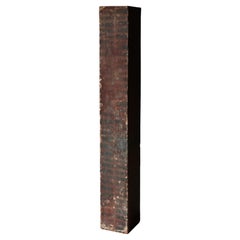
Japanese Antique Exhibition Stand / Sword Case / 1800-1868s / Wabi-sabi
Located in Iwate-gun Shizukuishi-cho, Iwate Prefecture
This is an old drawer for storing Japanese swords originally called "Katanatansu". It is thought to be from around the Edo period. Cedar is used for the material, and a large numbe...
Category

Mid-19th Century Japanese Antique Edo Asian Art and Furniture

Materials

Wood, Paper, Cedar

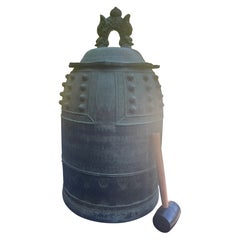
Japanese Giant Antique Bronze Temple Bell Bonsho Special Early Inscriptions, 27"
Located in South Burlington, VT
Unique Bronze Bell One of a kind find bronze bonsho temple bell- with an unusual scalloped crest, side panel markings, rare bottom band pattern castings, and early patron signatures - a rare Buddhist temple...
Category

19th Century Japanese Antique Edo Asian Art and Furniture

Materials

Bronze

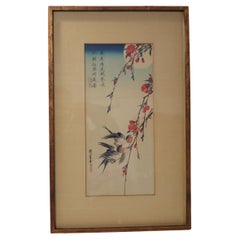
Utagawa Ando Hiroshige Woodblock Print J001, Japan
Located in Norton, MA
Rare find, Utagawa Ando Hiroshige, Japanese, 1797 to 1858, woodblock prints on paper, peach and swallows in moonlight. The first is signed and i...
Category

Early 19th Century Japanese Antique Edo Asian Art and Furniture

Materials

Paper

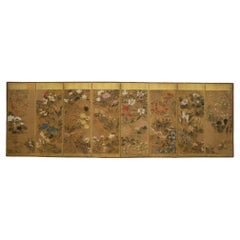
Summer Flowers Eight-Panel Botanical Screen
Located in Fukuoka, JP
Summer Flowers Eight-Panel Botanical Screen Period: Late Edo Size: 352x117 cm (138x46 inches) SKU: PTA42 Immerse yourself in the splendor of late Ed...
Category

18th Century Japanese Antique Edo Asian Art and Furniture

Materials

Gold Leaf

Japanese Painting, 17th Century, Tale of Genji, Tosa School
Located in Kyoto, JP
Illustration to an unidentified chapter of the Tale of Genji (Genji Monogatari) Tosa School (second half of the 17th Century) Ink, pigment, gofun and...
Category

Late 17th Century Japanese Antique Edo Asian Art and Furniture

Materials

Gold Leaf

Edo asian art and furniture for sale on 1stDibs.

Find a broad range of unique Edo asian art and furniture for sale on 1stDibs. Many of these items were first offered in the 21st Century and Contemporary, but contemporary artisans have continued to produce works inspired by this style. If you’re looking to add vintage asian art and furniture created in this style to your space, the works available on 1stDibs include asian art and furniture, wall decorations, decorative objects and other home furnishings, frequently crafted with wood, metal and other materials. If you’re shopping for used Edo asian art and furniture made in a specific country, there are Asia, East Asia, and Japan pieces for sale on 1stDibs. While there are many designers and brands associated with original asian art and furniture, popular names associated with this style include Utagawa Hiroshige (Ando Hiroshige), Arita, Ryosuke Harashima, and Kitagawa Utamaro. It’s true that these talented designers have at times inspired knockoffs, but our experienced specialists have partnered with only top vetted sellers to offer authentic pieces that come with a buyer protection guarantee. Prices for asian art and furniture differ depending upon multiple factors, including designer, materials, construction methods, condition and provenance. On 1stDibs, the price for these items starts at $55 and tops out at $1,386,932 while the average work can sell for $3,412.