Edo Furniture

EDO STYLE

Edo furniture was created during a flourishing time for the decorative arts owing to the stability of the Tokugawa shogunate rule in Japan. Spanning from 1603 to 1867, this era of peace and economic growth supported artistic advancements in lacquer, woodblock printing, porcelain and other artisanal trades. Because the country was largely isolated, there was little outside influence, leading to centuries of exceptional attention to the design of its furnishings and the quality of its traditional arts.

Unlike during the Meiji period that followed, with an increase in domestic and international markets, furniture during the Edo period was predominately commissioned by the ruling class, although people from across social groups benefited from the burgeoning metropolitan hubs for artisanal trades. For instance, Kyoto became a major center for lacquer art. Most furniture pieces were made from wood such as cedar or ash, including the era’s sashimono cabinets, which involved fine joinery and were rooted in the Heian period.

Sashimono cabinets, which were built by master craftsmen in a range of different wood types owing to the various trees that populate Japan, occasionally featured a stack of slender drawers as well as sliding doors. They were popular with everyone from samurai to kabuki actors. Tansu storage chests crafted from wood with metal fittings were also common in Edo-period homes. Some were designed to be easily portable while others were made to double as staircases.

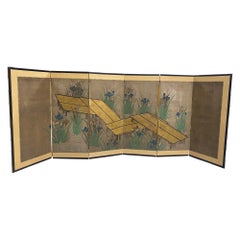
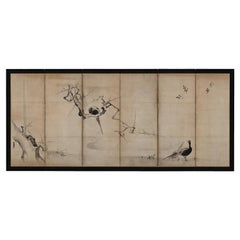
Painted folding screens, called byōbu, were also fashionable, with Japanese artists inspired by nature, literature and scenes of history and daily life to create vivid works. In Buddhist temples and the palatial homes of the aristocratic class, fusuma, or large sliding panels, would sometimes be adorned with gold or silver leaf. These dividers allowed interiors to change throughout the day, closing in small spaces for personal use or reflecting candlelight to illuminate communal spaces after dark.

Find a collection of Edo tables, lighting, decorative objects, wall decorations and more furniture on 1stDibs.

to
254
337
333
887
11
1
198,576
115,351
44,192
33,259
16,584
12,238
10,871
10,846
9,982
8,923
7,347
6,665
6,488
6,391
6,244
6,160
4,912
3,747
380
439
68
12
25
12
3
2
1
1
2
1
306
281
245
209
202
802
784
760
21
3
899
896
896
13
11
6
3
3
Style: Edo
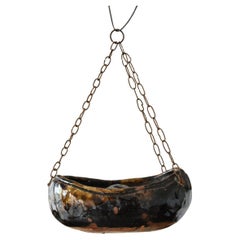
Japanese Antique Pottery Hanging Vase/Edo/1800s/Boat-Shaped Vase
Located in Sammu-shi, Chiba
This is a black-glazed boat-shaped pottery made in the late Edo period of Japan. This will be a hanging vase. Pour water directly into this and decorate the flowers. Also, perhaps this is a pottery called Seto-yaki. Seto is an ancient kiln located in Aichi Prefecture. Various shapes and colors were produced there, and in the late Edo period, dark glazed pottery was also produced. When a dark brown glaze is applied, the areas with thick glaze look black, and the areas with thin glaze look brown. I put water directly into this and left it for a day, but there was no water leakage. I would say it is in very good condition. Although it is a small item, it has a very strong presence. It has a glossy and elegant appearance. There are many types of Seto pottery...
Category

19th Century Japanese Antique Edo Furniture

Materials

Pottery

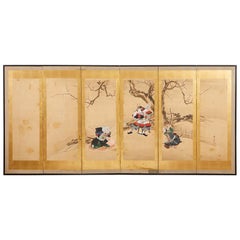
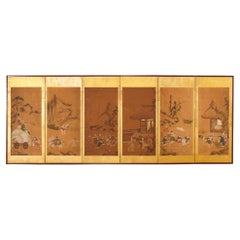
Japanese Edo Six Panel Screen Yoshitsune and Benkei
Located in Rio Vista, CA
Spectacular 19th century Japanese late Edo period six-panel byobu screen depicting Yoshitsune and Benkei, two heroes of Japanese folklore. Crafted in ink and natural color pigments on mulberry paper with thick gold leaf borders on each panel. The character Yoshitsune is seated under a blossoming cherry tree in full armor holding a fan. The warrior priest or monk Benkei is depicted kneeling on a leopard skin...
Category

19th Century Japanese Antique Edo Furniture

Materials

Brass, Gold Leaf

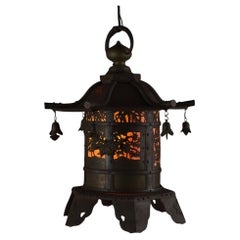
Japanese Temple Lantern
Located in Los Angeles, CA
This Japanese lantern is rare and spectacular in its size and ornamental design. A true one of a kind piece. It can be used as a hanging fixture, as seen in the photos or a magnifice...
Category

Late 19th Century Japanese Antique Edo Furniture

Materials

Brass, Iron

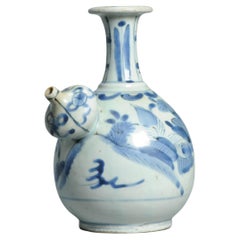
Antique 17C Japanese Porcelain Blue White Ghendi Edo Period Ghendi Kendi
Located in Amsterdam, Noord Holland
Nice & Beautiful Arita Japanese Porcelain Kendi. Floral and figural scene. This 17th Century Japanese Export Porcelain Jug or Ewer, Arita Kilns c.1670-1690 is painted in lovely blue...
Category

17th Century Antique Edo Furniture

Materials

Porcelain

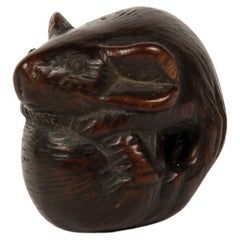
Boxwood nestuke in the form of a curled up mouse forming almost a pearl
Located in PARIS, FR
Netsuke in boxwood depicting a mouse curled up on itself, holding its tail between its tiny paws. The highly realistic rendering of the fur and the deep, worn patina emphasize the na...
Category

Late 18th Century Japanese Antique Edo Furniture

Materials

Boxwood

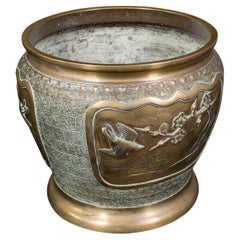
Antique Edo Period Decorative Planter, Japanese, Bronze, Jardiniere, Victorian
Located in Hele, Devon, GB
This is an antique Edo period decorative planter. A Japanese, bronze jardiniere bowl, dating to the Victorian era, circa 1850. Graced with dashing relief and great tonality Displays...
Category

1850s Japanese Antique Edo Furniture

Materials

Bronze

Antique japanese forged iron tsuba from the Edo period
Located in Bilzen, BE
A forge iron Japanese samurai tsuba from the Edo period (1603 - 1868) Katana tsuba 7.5 x 7.5 cm Good condition as shown in the pictures uncleaned with its old patina
Category

18th Century Japanese Antique Edo Furniture

Materials

Iron

Japanese Zushi Traveling Shrine of Bishamonten, c. 1800
Located in Chicago, IL
This gorgeous Japanese red lacquer traveling shrine (zushi) protects a miniature statue of Bishamonten, the Buddhist God of Warfare here depicted as an armor-clad warrior. A fearsome protector, he is thought to defend sacred places, punish evil-doers, expel demons and bestow wealth. In this example, Bishamonten stands atop a crouching demon, dressed in finely painted armor...
Category

Mid-19th Century Japanese Antique Edo Furniture

Materials

Wood

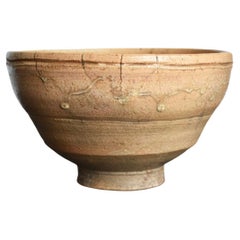
Japanese Antique Earthenware Tea Bowl/Edo Period/1700-1800/ Hagi Ware
Located in Sammu-shi, Chiba
This is Hagi ware made in the middle of the Edo period. Hagi ware is a type of pottery that began in Hagi City, Yamaguchi Prefecture in the early Edo period...
Category

18th Century Japanese Antique Edo Furniture

Materials

Pottery

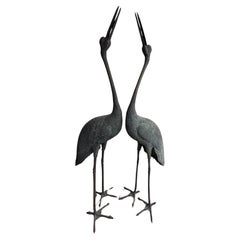
A Large Pair of Japanese Cast Bronze Edo Style Cranes
Located in ARMADALE, VIC
A Large Pair of Japanese Cast Bronze Edo Style Cranes Provenance: Private Australian Collection. Dimensions: Height: 215cm. Width: 60cm. Depth: 60cm.
Category

21st Century and Contemporary Japanese Edo Furniture

Materials

Bronze

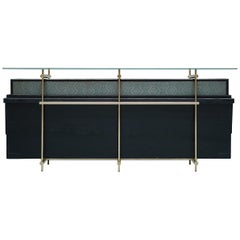
Contemporary Japanese Console with Folding Screen Zen Japanese Modern
Located in Shibuya-ku, Tokyo
Name: Early Dawn Collection: STILLIFE A console table that using a wooden box that stores two Japanese gold folding screens. It is a new histor...
Category

2010s Japanese Edo Furniture

Materials

Brass

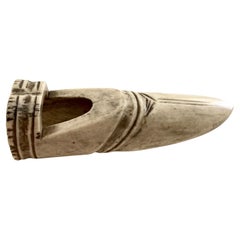
Netsuke in the Form of a Bamboo Whistle
Located in Bridgeport, CT
A large and well carved Antler Netsuke with in a fine and realistic form of a realistic traditional Bamboo Whistle. Quintessentially Japanese in form, the Netsuke has incised details...
Category

20th Century Edo Furniture

Materials

Antler

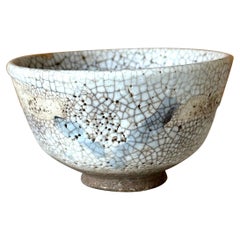
Japanese Shino Chawan Tea Bowl Edo Period
Located in Atlanta, GA
A Japanese ceramic Chawan (tea bowl) of e-Shino (painted Shino) ware style circa mid-late 18th century Edo period. The classically shaped bowl features an abstract blue paint of blue grass and displays strong characters in the milky white glaze, with overall crawling and crackling effect. One of the most distinctive characteristics of Shino that is exemplified on this bowl is the small pinholes called suana, which tea masters favor (termed as yuzuhada, or citron skin). The milky-white feldspar...
Category

Late 18th Century Antique Edo Furniture

Materials

Ceramic

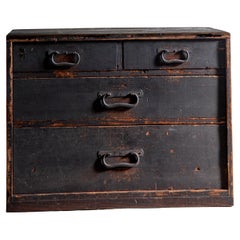
1860s-80s Japanese antique wabi sabi Urushi mid Tansu chest of drawers
Located in 常陸大宮市, JP
From Tohoku area, Japan. This mid-size, black Urushi lacquered Tansu chest of drawers is a product of late Edo to early Meiji era (circa 1860s-1880s) , estimate from the style & con...
Category

Late 19th Century Japanese Antique Edo Furniture

Materials

Wood

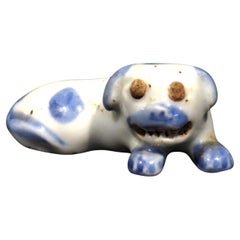
A Rare Edo Period Hirado Porcelain Netsuke, Japan Circa 1850
Located in Ottawa, Ontario
The recumbent white porcelain figure of a pug dog shown baring its teeth, decorated by hand with spot painted cobalt detail, the underside with twin holes intended for a cord to pass...
Category

Mid-19th Century Japanese Antique Edo Furniture

Materials

Porcelain

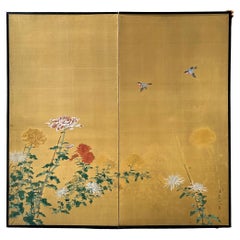
Japanese Screens: Echo of Chrysanthemums
Located in Fukuoka, JP
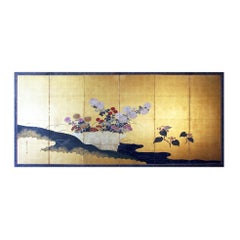
Echo of Chrysanthemums captures the quiet dialogue between form and reflection. Against a radiant gold-leaf ground, blooming chrysanthemums rise in graceful color harmony — white, cr...
Category

19th Century Japanese Antique Edo Furniture

Materials

Gold Leaf

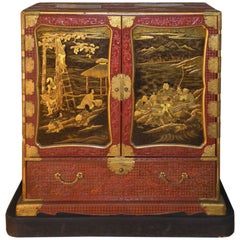
Japanese Lacquer and Cinnabar "Samurai" Cabinet, Inaba Family, Edo Period
Located in Troy, NY
Exceptionally large and rare lacquer cabinet. According to the heraldry, visible on the headgear in one of the panels, it was made for the Inaba family, a high ranking Daimyo family,...
Category

Late 19th Century Japanese Antique Edo Furniture

Materials

Bronze

Japanese Antique Buddhist Shrine Box "Zushi", Edo Period 1603-1868
Located in Hitachiomiya-shi, 08
This antique Buddhist shrine box was crafted in the Edo Period (1603-1868). Known in Japan as a “Zushi,” it served as a small sanctuary to enshrine Buddhist figures, scriptures, or ...
Category

Mid-17th Century Japanese Antique Edo Furniture

Materials

Cedar

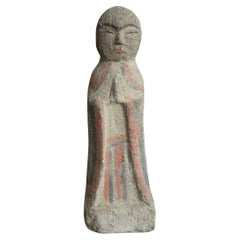
Small Edo period stone Buddha from Japan/Jizo Bodhisattva/1800s/Amulet
Located in Sammu-shi, Chiba
This is a small stone statue believed to have been made in Japan during the Edo period. It was placed at crossroads, village entrances, or along mountain paths to pray for the safety...
Category

19th Century Japanese Antique Edo Furniture

Materials

Stone

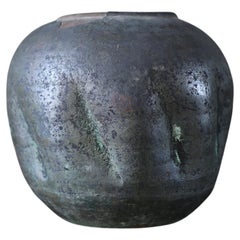
Antique Rare Pottery Coated with Copper Plate Used in Japan/Tsubo Wabisabi
Located in Sammu-shi, Chiba
It is used in Japan. It seems to be in the Edo period (1700s-1800s). But details are unknown. The unique distorted shape is beautiful. The color and balance of the glaze are al...
Category

Early 19th Century Japanese Antique Edo Furniture

Materials

Pottery

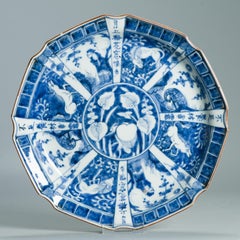
Rare Antique Edo period 18th c Japanese Porcelain Plate Arita Dish Animals Horse
Located in Amsterdam, Noord Holland
Description Sharing with you this very nice edo period example. With a stunning decoration of flowers, cranes (in the centre behind the leave and de border), horses and figures. cent...
Category

18th Century Japanese Antique Edo Furniture

Materials

Porcelain

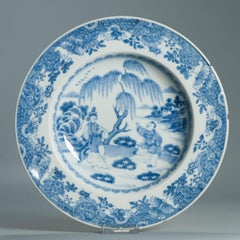
Antique 18/19C Japanese Edo Porcelain Blue White Dish Figures Ladies Pagoda
Located in Amsterdam, Noord Holland
Description A very nicely decorated Japanese Porcelain dish in Chinese Kangxi style. Marked at base. There is an underglaze blue bird mark at the base, the marks on these kinds of d...
Category

18th Century Japanese Antique Edo Furniture

Materials

Porcelain

Antique Edo period 18/19th century Japanese Bowl Washer for the Tea Ceremony
Located in Amsterdam, Noord Holland
Description A lovely set for the Kaiseki meal. Condition Perfect. SizeL 24.5x24.5cm Period 19th century Meiji Periode (1867-1912)
Category

19th Century Japanese Antique Edo Furniture

Materials

Porcelain

Edo Period Horagai – Ritual Conch Shell Trumpet
Located in Fukuoka, JP
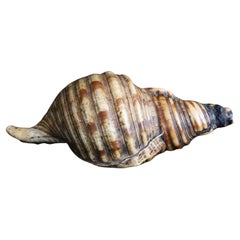
A rare and authentic Edo period (1603–1868) horagai—a conch shell trumpet traditionally used in Japanese Buddhist rituals, Shugendō mountain ascetic practices, and by yamabushi (moun...
Category

18th Century Japanese Antique Edo Furniture

Materials

Shell

Japanese Rinpa Lacquer Box, "Irises at Yatsuhashi", by Santo Kyosui, Edo Period
Located in Austin, TX
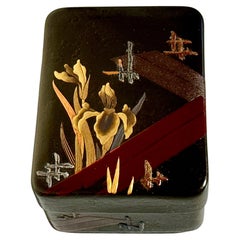
A very special Japanese Rinpa style small lacquer box for incense accessories, kobako, by Santo Kyosui (1816 to 1867), late Edo period (1603 to 1868), mid 19th century, Kyoto, Japan....
Category

Mid-19th Century Japanese Antique Edo Furniture

Materials

Copper, Pewter

Japanese Giant Antique Bronze Temple Bell Bonsho Special Early Inscriptions, 27"
Located in South Burlington, VT
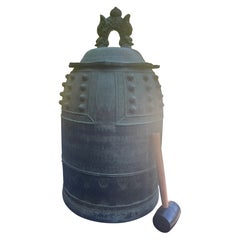
Unique Bronze Bell One of a kind find bronze bonsho temple bell- with an unusual scalloped crest, side panel markings, rare bottom band pattern castings, and early patron signatures - a rare Buddhist temple...
Category

19th Century Japanese Antique Edo Furniture

Materials

Bronze

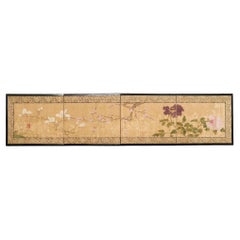
Japanese Edo Four Panel Screen Flowering Peony Prunus Magnolia
Located in Rio Vista, CA
Early 19th century Japanese Edo/Tokugawa period four panel folding byobu table screen featuring peony, prunus, and magnolia. Painted with ink and natural color pigments on silk with ...
Category

19th Century Japanese Antique Edo Furniture

Materials

Brass

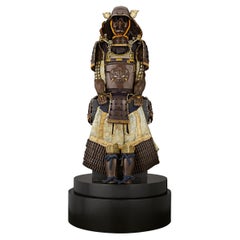
Edo Period Samurai Suit Of Armor
Located in New Orleans, LA
This exquisite Tetsusabiji Uchidashi Gomai Dou Gusoku (Five-Plate Russet Iron Embossed Cuirass Armor), crafted in the 18th century, exemplifies the pinnacle of Edo-period samurai arm...
Category

18th Century Asian Antique Edo Furniture

Materials

Copper, Iron

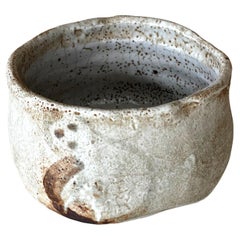
Antique Japanese Shino Ware Chawan Tea Bowl
Located in Atlanta, GA
On offer is a Japanese ceramic tea bowl (chawan) used in the traditional chado ceremony. The bowl was potted in clog form with a ring foot shaved extremely low. Its size and harmonious proportion make it perfect to be held in both hands during chado. Classified as shino ware...
Category

18th Century Japanese Antique Edo Furniture

Materials

Ceramic

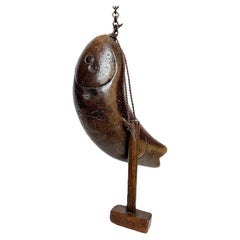
Japanese Fish Shape Meditation Drum (Gyoban), Edo Period
Located in Point Richmond, CA
Japanese Monk Meditation Fish Gong, Edo Period (Zen fish shaped drum, Gyoban) In the Zen Buddhist temples of Japan, suspended in front of the entrance to the refectory, you will not...
Category

Late 19th Century Japanese Antique Edo Furniture

Materials

Wood

Extremely Rare Tokugawa Clan Kimono Hanger with Maki-e Lacquer. Edo period
Located in Fukuoka, JP
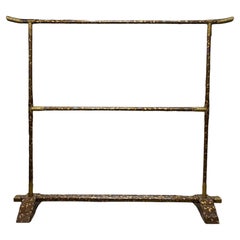
Extremely Rare Tokugawa Clan Kimono Hanger with Makie Lacquer and Gilded Fittings Edo Period, 18th–19th Century Dimensions: H 166 cm × L 187 cm × W 41.5 cm Materials: Wood, Lacquer...
Category

18th Century Japanese Antique Edo Furniture

Materials

Metal

Japanese Byobu - Japanese Folding Screen Gold Leaf
Located in Brescia, IT
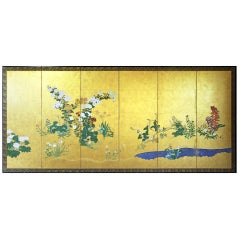
Floral scene of a "Rimpa School" garden with polychrome chrysanthemum flowers. Six-panel screen painted with pigments on golden rice paper of good size and well preserved. Bold color...
Category

Early 19th Century Japanese Antique Edo Furniture

Materials

Gold Leaf

Edo Landscape Japanese Folding Screen
Located in Brescia, IT
Refined work by a painter from the first half of the 19th century, from the landscape of the "Rinpa" school by a painter from the end of the 18th century, the Rinpa school. Six panels painted in ink on gold leaf and "gofun" on vegetable paper. The flowers are made with the "gofun" technique, natural or pigmented white oyster powder. Rinpa is one of the major historical schools of Japanese painting. The style was consolidated by the brothers Ogata Korin (1658–1716) and Ogata Kenzan (1663–1743). This folding screen has a very clean design that leaves plenty of room for the beautiful golden landscape. It comes flat and you can easily hang it with our hooks. Lucio Morini...
Category

18th Century Japanese Antique Edo Furniture

Materials

Gold Leaf

Edo Period Stone Buddha/1600’s/Japanese Antique Buddha Statue/Garden Ornament
Located in Sammu-shi, Chiba
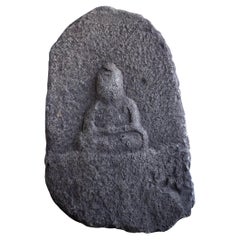
This stone Buddha sculpture, believed to date back to the early Edo period or earlier, depicts Jizo Bosatsu in a seated pose. Crafted from granite, it showcases the natural effects ...
Category

Early 17th Century Japanese Antique Edo Furniture

Materials

Stone

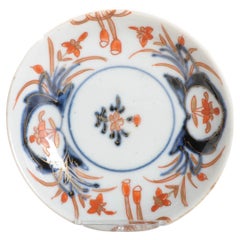
Antique Japanese Porcelain Edo Period Dish Floral Flowers Imari, 18th Century
Located in Amsterdam, Noord Holland
Porcelain decorated with Imari palette in Japan, Saucer dish. Additional information: Material: Porcelain & Pottery Decoration Type / Colour: Imari Region of Origin: Japan Period: 1...
Category

18th Century Japanese Antique Edo Furniture

Materials

Porcelain

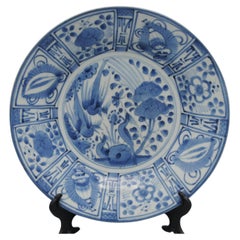
Japanese Arita Blue and White Kraak Dish - Edo Period, late 17th
Located in DELFT, NL
A 17th Century Japanese Blue and White Porcelain Dish in the Kraak Style, Arita Kilns 1670 – 1700. The central design shows three pheasant, one perched on a rock amongst flowering p...
Category

Late 17th Century Japanese Antique Edo Furniture

Materials

Porcelain

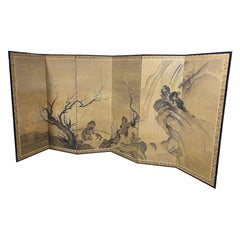
Japanese Asian Large Edo Six-Panel Folding Byobu Screen Landscape Monkeys Trees
Located in Studio City, CA
An absolutely gorgeous, wonderfully composed six-panel Japanese Byobu folding screen/room divider depicting a family of playful monkeys among the blooming trees and mountainous lands...
Category

Early 19th Century Japanese Antique Edo Furniture

Materials

Gold Leaf

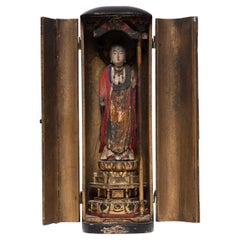
Japanese Zushi Traveling Shrine of Jizō Bosatsu, c. 1850
Located in Chicago, IL
The simple exterior of black lacquer encasing this 19th-century Japanese traveling shrine (zushi) belies the splendor within. The hinged doors open to reveal a lustrous gold interior...
Category

Mid-19th Century Japanese Antique Edo Furniture

Materials

Wood

A Lovely shaped 17C Edo period Rare Porcelain Dish Fisherman Enamel
Located in Amsterdam, Noord Holland
A great dish dating to most probably the second half of the 17th century, delicate painting of a fisherman walking the bridge of a river. Condition Good condition, chip to rim, tha...
Category

17th Century Antique Edo Furniture

Materials

Porcelain

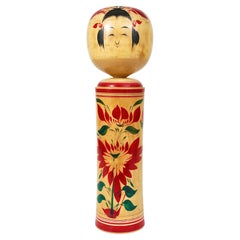
Decorative Naruko Kokeshi Doll Sculpture from Northern Japan, Hand-Painted
Located in Vienna, AT
A beautiful and exceptionally 18 inches tall classic traditional Naruko Kokeshi doll from Northern Japan. Handcrafted of wood and hand-painted in t...
Category

Early 20th Century Japanese Edo Furniture

Materials

Wood

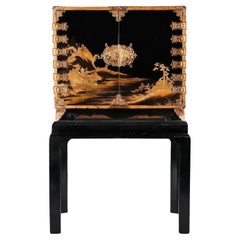
An Important Late 17th Century Japanese Lacquered Cabinet Edo Period on Stand
Located in Benington, Herts
An extremely fine, elegant and rare late 17th Century Japanese lacquer cabinet, from the Eco period, on later lacquered black stand. Japanese circa 1690 Provenance A private Scottish collection This outstanding cabinet is a fascinating fusion of east and west. The cabinet itself would have been made in Japan, c.1690, and is decorated to the outside with hiramaki-e lacquer. This technique involves the use of sprinkled gold powder which adheres to the lacquer surface. On the best pieces, as with this example, many layers are added in order to create areas of high relief and give depth to the surface decoration. The taste of the Japanese workshops in this period was often for quite restrained pieces with plenty of the black background visible, unlike some of the busier Chinese lacquer or European japanned examples produced around the same time. The Japanese makers seemed content to rely on the outstanding quality of the lacquer itself, regarded by most experts as the finest lacquer ever produced, and did not see the need to cover every surface believing that less was more in this respect. The lacquer here is used to produce a mountainous scene with buildings on the bank of a river, the other side of the river with more buildings and a contrasting flatter and forested landscape. The fine perspective achieved is the result of the clever use of raised and flatter areas in the lacquer itself in combination with the drawing of the design itself. Another remarkable aspect of this piece is the fine metalware throughout, but particularly the lockplate / hasp, hinges and foot mounts to the front. This is all beautifully cast and engraved contrasting against the black background. Interestingly another cabinet on stand with near identical metalwork was advertised in the Burlington Magazine, November 1913, with the dealer W. Williamson and Sons of Guildford. The lacquer on that piece is similarly refined and it seems likely that both pieces came from the same workshop. The European influence in our piece can be seen in both the later ebonised stand and in the japanned decoration which has been applied to the inside of the doors and is also very fine indeed. This consists of two panels with birds of prey perched on branches in colours set against a golden background. The cabinet has a recent Scottish provenance and so it is likely that the ebonised stand was made in Britain though such pieces were made throughout Europe as a way of quite literally elevating these imported pieces of eastern lacquer as in Japan these would have been used on the floor. Inside the cabinet there is a combination of more Japanese lacquer and lock plates and European drawer handles. Most of the lacquer drawer fronts incorporate mountainous scenes and birds in combination, with a few purely one or the other of the two subjects. Again the lacquer is in excellent condition and is of exceptional quality with multiple layers of relief used in one single scene in many cases. As mentioned above, Japanese lacquer is the most technically brilliant of the eastern lacquers and, as such, was highly prized by collectors and connoisseurs throughout Europe when this piece was made. The acquisition of such pieces would only have been possible for a small group of incredibly wealthy individuals, largely royal or high ranking courtiers or merchants connected with the East India trade...
Category

1690s Japanese Antique Edo Furniture

Materials

Lacquer

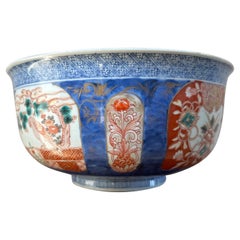
Imari Porcelain Blue Red Large Bowl, Early 19th century
Located in Worcester Park, GB
The image shows an Imari porcelain bowl, a distinctive style of Japanese export porcelain. Origin and Name: Imari ware originated in the Arita kilns of the former Hizen Province in n...
Category

Early 19th Century Japanese Antique Edo Furniture

Materials

Porcelain

Japanese Asian Six-Panel Folding Byobu Screen Landcape Bridge with Iris Flowers
Located in Studio City, CA
A gorgeous six-panel Japanese Byobu folding screen depicting a nature lake/landscape scene with a water walkway/angular bridge and blossoming iris flowers - perhaps an homage to the famed Irises screens...
Category

19th Century Japanese Antique Edo Furniture

Materials

Gold Leaf

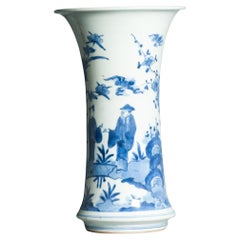
Antique 17C Japanese Porcelain Blue White Edo Period Arita Vase Flowers
Located in Amsterdam, Noord Holland
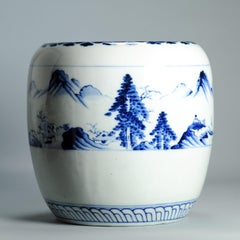
Nice & Beautiful Arita Japanese Porcelain Vase, beaker shape. Landscape scene with figures. Thanks to Pater Gratia Oriental Art Beaker vase Japan 1680-1700 A large cylindrical t...
Category

17th Century Antique Edo Furniture

Materials

Porcelain

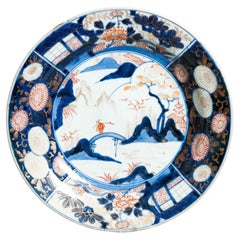
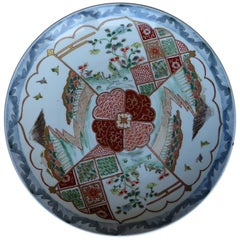
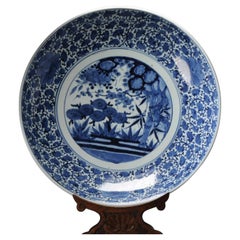
Japanese Porcelain Charger Plate Finely Hand Painted, Edo Period Circa 1840
Located in Lincoln, Lincolnshire
This is an excellent example of a Japanese porcelain Charger or very large plate with a finely hand painted design, dating to the Edo period circa 1840 or possibly earlier. This cha...
Category

Mid-19th Century Japanese Antique Edo Furniture

Materials

Porcelain

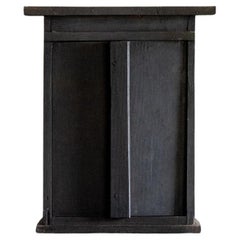
1860s-90s wabi sabi Japanese thick black sliding lattice door, exterior door
Located in 常陸大宮市, JP
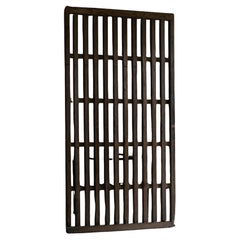
New finds from the old-established family house in Ibaraki pref, Kanto area, Japan. Had been kept with care at the 2nd floor to avoid the humidity , even it was used as the exterior ...
Category

Late 19th Century Japanese Antique Edo Furniture

Materials

Wood

Antique Kraak Edo Period 1680-1690 Japanese Porcelain Huge Charger Arita
Located in Amsterdam, Noord Holland
Sharing with you this very nice edo period, 1680-1700, example. With a garden floral scene. Marked at base: made in the Hua Qing period of the great Ming Dynasty Arita ware, also known as Arita-yaki, has its origins in 1616, when a Korean farmer, Yi Sam-pyeong, discovered white clay kaolin in Arita and used it to create Japan’s first porcelain. Arita was the first place to produce ceramics in Japan. After the discovery, a number of kilns opened in the area and it soon became a source for Japanese export porcelain...
Category

17th Century Japanese Antique Edo Furniture

Materials

Porcelain

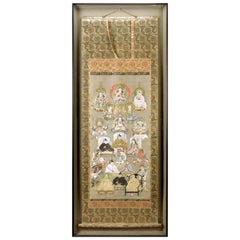
Japanese Silk Suijaku Scroll Nyorai-Kojin with Mixed Buddhism and Shinto Deities
Located in Atlanta, GA
A Japanese silk Suijaku hanging scroll beautifully presented in a custom wood shadow box frame from Edo period (circa 18-19th century). The scroll, surmounted on golden brocade was painted in fine details with gouache, ink and gold powder highlight, served as a Suijaku mandala for the worshippers. Honji Suijaku is a complicated religious concept uniquely developed in Japan. It mixed and hybrid the Buddism deities with native shinto spirits (known as Kami), which were seen as local manifestations (the suijaku, literally means a "trace") of Buddhist deities (the honji literally the original ground). The original idea may lie with the synergetic strategy to spread Buddism by making it more relatable to the local population who had already worshiped Shinto gods. The paradigm, adopted in the 10th century from an orignal Chinese concept, remained a defining feature of Japanese religious life up to the end of the Edo period (1868). Instead of being confined to deities, its application was often extended to historical figures as shown on this scroll. This long hanging scroll depicts an arrangement of 21 figures including Buddhism and Shinto deities as well as two historical figures on the bottom. Each figure was name-tagged in Kanji for easy identification by the worshippers. It was used in the temple or shrine so that when the worshipper prayed in front the mandala, they prayed simultaneously to all the deities. On the very top, sits Nyorai-Kojin, a hybrid deity of Nyorai Buddha and Kojin, the kaki for fire, stove and kitchen. From the top to bottom and left to right, here is the list of the deities: Kanon with Thousand Hands, Kanon with Willow Branch, Monju Bosatsu...
Category

Early 19th Century Japanese Antique Edo Furniture

Materials

Silk, Wood

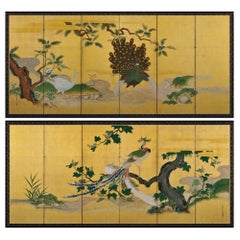
Japanese Screen Pair, circa 1730, Peacocks and Phoenix, Kano School
Located in Kyoto, JP
Phoenix and Peacocks. A pair of six-panel Japanese folding screens by Tsunetake Yotei (n.d.) First half of the 18th century. The signature reads 67 year old Tsunetake. The seals read: -Tsunetake no in, -Yotei, -Seishin Dimensions: Each screen – H. 69” x W. 149” (176 cm x 378 cm) A pair of Kano Grand Picture (Waga) screens depicting phoenix and peacocks rich with symbolic meaning. Dating to the first half of the 18th century, from the Kobikicho Kano school in Edo, this pair of folding...
Category

Early 18th Century Asian Antique Edo Furniture

Materials

Gold Leaf

Japanese Edo Six Panel Screen Chinese Children at Play
Located in Rio Vista, CA
Amazing 19th century Japanese Edo period six panel folding byobu screen depicting Chinese children at play. The screen alludes to the 100 children theme. ...
Category

19th Century Japanese Antique Edo Furniture

Materials

Gold Leaf

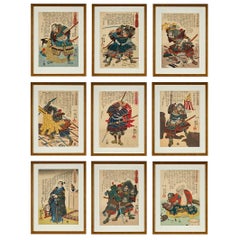
Nine Japanese Woodblock Prints by Utagawa Kuniyoshi
Located in Petworth, West Sussex
Utagawa Kuniyoshi (Japan, 1798-1861), a set of nine Japanese woodblock prints (ukiyo-e) from the series 'Taiheiki Eiyuden', or 'Heroes of the Great Peace' published between 1846-1847...
Category

Mid-19th Century Japanese Antique Edo Furniture

Materials

Paper

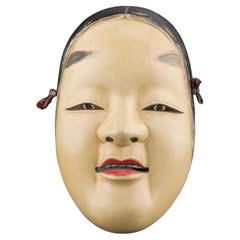
Antique Japanese Noh theatre Carved Painted Wooden Ko-Omote Mask
Located in Forney, TX
A scarce antique Japanese Noh theatre hand carved and painted wooden mask of Ko-Omote. Sculpted in Japan in the 19th century, Ko-omote (literally ...
Category

19th Century Japanese Antique Edo Furniture

Materials

Cypress, Paint

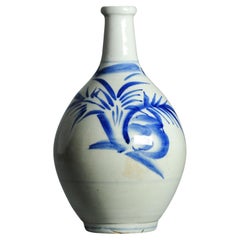
Antique Japanese Porcelain Edo period Tokkuri Bottle Vase Flowers Japan
Located in Amsterdam, Noord Holland
Description Nice Beautiful Arita Japanese Porcelain. This antique Japanese Imari porcelain sake bottle features a sleek and elegant design, with hand-painted floral patterns cr...
Category

19th Century Japanese Antique Edo Furniture

Materials

Porcelain

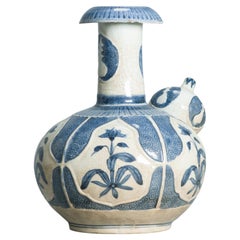
Antique 17C Japanese Porcelain Blue White Arita Ghendi Edo Period Kendi Flowers
Located in Amsterdam, Noord Holland
Beautiful & Rare 17th Century Japanese Arita Porcelain Kendi This exquisite blue and white kendi (ewer or jug) was crafted in the Arita kilns of Japan during the late 17th century, ...
Category

17th Century Antique Edo Furniture

Materials

Porcelain

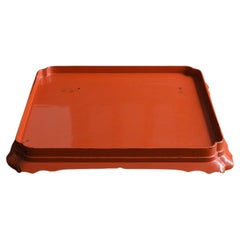
A large square tray made of Japanese antique lacquer / Late Edo period/19th
Located in Sammu-shi, Chiba
These trays were made after the late Edo period in Japan (after 1800). This particular type of tray is known as "Negoro-bon." Negoro lacquerware is a specific style of Japanese lacqu...
Category

19th Century Japanese Antique Edo Furniture

Materials

Lacquer

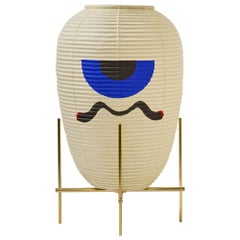
Contemporary Japanese Chochin Floor Lamp Limited Edition #2 Zen Washi
Located in Shibuya-ku, Tokyo
Name: OBAKE UN Contemporary style Japanese Washi Japanese traditional paper shade floor lamp. Washi shade is famous as Isamu Noguchi Akari lightings. Base is made of brass. Limited pattern painted model. Edition of 3+1AP E26,27 light bulb. Available to work with 100-250V. Artist statement In Japan, there is an animist belief that the soul dwells in old tools that have passed a long time and turns into spirits such as "Youkai" or "OBAKE." Its existence lurks in the darkness of everyday life, sometimes causing fear and sometimes entertaining. This lantern is not an old tool, but it is made by the historic "Kojima Shoten", where the 10th generation are craftsmen in Kyoto. It's rare nowadays, and it's a style in which lanterns are made from bamboo bones to assembling papers and painting in one workshop and go. So, I decided to transform the polite crafted Japanese lanterns, which have been run through a traditional history, into a modern and pop style. It's not just OBAKE lurking in the darkness, but an existence who snuggles up to us as a more sophisticated being. These one-eyed OBAKE have a meaningful look that originated in ancient Sanskrit culture. The red-eye "A [a]" is the facial expression that is the first pronunciation to make a sound in Sanskrit, which means "truth" and "spirit of inquiry" at the same time. The blue-eyed "UN [hu?]" expresses the pronunciation to close the sound, and at the same time means "wisdom" and "nirvana." There is also the idea that describing the beginning and end of the universe is represented by considering the "A" and "UN" as a pair. In Asia, it is a common sight to see a pair of guardian statues...
Category

2010s Japanese Edo Furniture

Materials

Brass

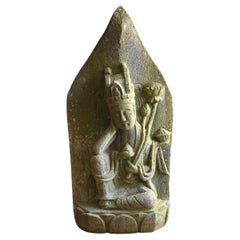
Japanese antique stone Buddha /Kannon Bodhisattva / late 19th-early 20th century
Located in Sammu-shi, Chiba
This stone statue of Nyoirin Kannon was created between the end of the Edo period and the Taisho period (late 19th century to early 20th century). The Nyoirin Kannon is a Buddha imag...
Category

Late 19th Century Japanese Antique Edo Furniture

Materials

Stone

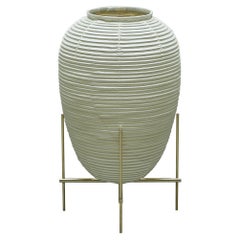
Contemporary Japanese Chochin Floor Lamp Zen Washi Japanese Paper Shade
Located in Shibuya-ku, Tokyo
Name: Under the Hazy Moon Contemporary style Japanese Washi Japanese traditional paper shade floor lamp. Washi shade is famous as Isamu Noguchi Akari lightings. Base is made of brass...
Category

2010s Japanese Edo Furniture

Materials

Brass

17th Century Japanese Screen. Ink Plum Tree Birds by Kano Naonobu.
Located in Kyoto, JP
Kano Naonobu (1607-1650) Plum Tree and Birds Six-fold Japanese Screen. Ink and slight color on paper. In this evocative ink work spread over a six-panel folding screen, we see the consummation of the elegance and refinement of the Edo Kano school. This 17th century screen is a rare surviving example of a large-scale bird and flower painting by Kano Naonobu, the younger brother of Kano Tanyu...
Category

17th Century Japanese Antique Edo Furniture

Materials

Wood, Paper

Utagawa Ando Hiroshige Woodblock Print J001, Japan
Located in Norton, MA
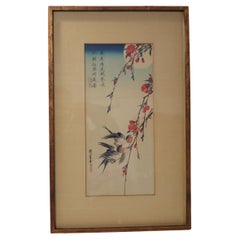
Rare find, Utagawa Ando Hiroshige, Japanese, 1797 to 1858, woodblock prints on paper, peach and swallows in moonlight. The first is signed and i...
Category

Early 19th Century Japanese Antique Edo Furniture

Materials

Paper

Edo furniture for sale on 1stDibs.

Find a broad range of unique Edo furniture for sale on 1stDibs. Many of these items were first offered in the 21st Century and Contemporary, but contemporary artisans have continued to produce works inspired by this style. If you’re looking to add vintage furniture created in this style to your space, the works available on 1stDibs include asian art and furniture, wall decorations, decorative objects and other home furnishings, frequently crafted with wood, metal and other materials. If you’re shopping for used Edo furniture made in a specific country, there are Asia, East Asia, and Japan pieces for sale on 1stDibs. While there are many designers and brands associated with original furniture, popular names associated with this style include Utagawa Hiroshige (Ando Hiroshige), Arita, Ryosuke Harashima, and Kitagawa Utamaro. It’s true that these talented designers have at times inspired knockoffs, but our experienced specialists have partnered with only top vetted sellers to offer authentic pieces that come with a buyer protection guarantee. Prices for furniture differ depending upon multiple factors, including designer, materials, construction methods, condition and provenance. On 1stDibs, the price for these items starts at $55 and tops out at $1,386,932 while the average work can sell for $2,989.

Still Thinking About These?

All Recently Viewed