Renaissance Furniture

RENAISSANCE STYLE

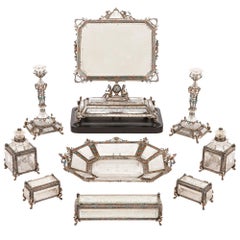
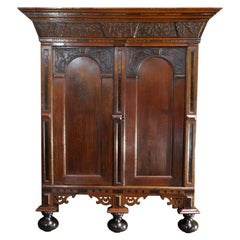
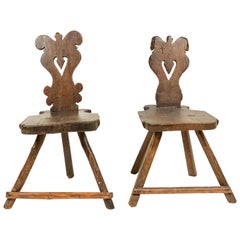
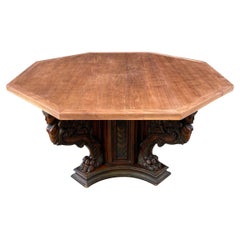
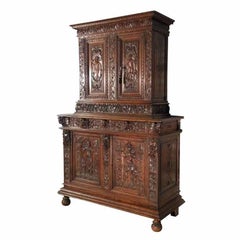
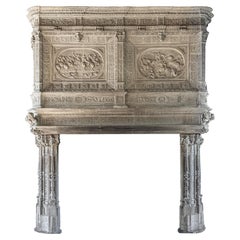
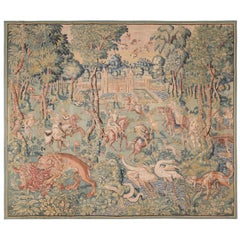
Spanning an era of cultural rebirth in Europe that harkened back to antiquity, the Renaissance was a time of change in design. From the late 1400s to the early 1600s, Rome, Venice and Florence emerged as artistic centers through the expansion of global trade and a humanist belief in the arts being central to society. Antique Renaissance furniture was ornately carved from sturdy woods like walnut, its details standing out against the tapestries and stained glass adorning the walls.

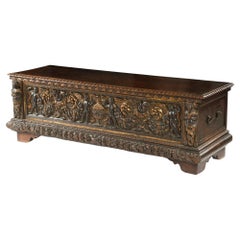
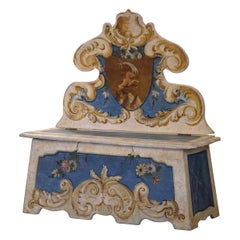
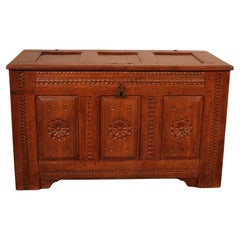
Renaissance chests, which were frequently commissioned for marriages, were often decorated with gilding or painted elements. Those that were known as cassoni were crafted in shapes based on classical sarcophagi. As opposed to the medieval era, when furniture was pared down to the necessities, a wide range of Renaissance chairs, tables and cabinets were created for the home, and the designs regularly referenced ancient Rome.

Large torchères of the Renaissance era that were used as floor lamps were inspired by classical candelabras, while marble surfaces evoked frescoes. The inlaid boxes being imported from the Middle East informed the intarsia technique, which involved varying hues of wood in mosaic-like patterns, such as those by architect Giuliano da Maiano in the Florence Cathedral.

Tapestry-woven cushion covers accented the variety of Renaissance seating — from conversation to study chairs — while bookcases for secular use reflected the migration of culture and knowledge from the church into the home. The aesthetics of the Italian Renaissance later spread to France through the publishing of work by renowned designers, including Hugues Sambin and Jacques Androuet du Cerceau. Centuries later, the 19th-century Renaissance Revival would see a return to this influential style.

Find a collection of antique Renaissance case pieces, decorative objects and other furniture on 1stDibs.

to
349
1,358
1,093
2,281
212
18
196,858
114,748
44,066
33,040
16,213
12,146
10,879
10,840
9,960
8,923
7,327
6,610
6,516
6,380
6,218
6,113
4,934
3,760
831
824
626
230
220
115
124
27
9
14
12
6
14
10
8
26
41
1,310
786
411
300
257
1,967
824
486
149
148
2,511
2,426
2,478
39
23
9
7
7
Style: Renaissance
Original Antique Print of Tobit And The Angel After Domenichino. C.1850
Located in St Annes, Lancashire
Great image after Domenichino Fine steel engraving Published circa 1850 Unframed. Free shipping
Category

1850s English Antique Renaissance Furniture

Materials

Paper

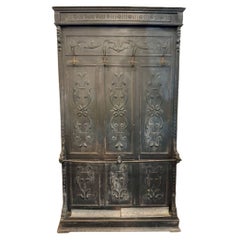
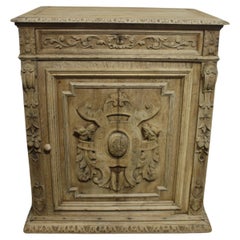
Antique French Carved Oak Storage Cabinet Renaissance Roman Centurion c1890
Located in Shreveport, LA
Antique French carved oak storage cabinet Renaissance Roman Centurion 19th cent ~Direct from the Brittany region of France, an ornately hand carved an...
Category

19th Century French Antique Renaissance Furniture

Materials

Oak

20th Century Spanish Renaissance Carved Walnut Bench Banquette "Escaño"
Located in Miami, FL
Stunning antique Spanish Renaissance walnut bench, called "escaño" in Spain, believed to date back to the early 19th century. Heavy pieces of solid walnut in back and seat with bevel...
Category

Early 20th Century Spanish Renaissance Furniture

Materials

Walnut

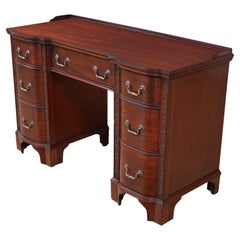
NVIN0488 Councill Vintage Mahogany Low Boy
Located in Annville, PA
From Niagara Furniture a Councill Vintage Mahogany Low Boy in excellent condition. Simple yet sophisticated this beautiful Councill Vintage Mahogany Low Boy has everything going for...
Category

1990s North American Renaissance Furniture

Materials

Mahogany

Italian Gilt Grotto Table
Located in Westwood, NJ
An unusual Grotto table, the rounded 'D' shaped flame mahogany and rosewood crossbanded top above a gilt metal cast base of a giant clamshell supported by...
Category

21st Century and Contemporary Vietnamese Renaissance Furniture

Materials

Aluminum

Italian Gilt Grotto Table
$2,868 Sale Price / item
25% Off
Antique French Carved Oak Cabinet Vestry Altar Wine Renaissance c1860
Located in Shreveport, LA
19th century French carved oak cabinet vestry altar wine renaissance dining room. Direct from France, a beautiful 19th century carved cabinet, with a striking silhouette, in a versatile small size, perfect for use throughout today’s home! Clients love this size for a wine/liquor cabinet as well as for serving piece storage in a dining room or towels in a powder room. Excellent style, with carved moulding crown above three baluster columns across the cabinet front, and two recessed carved panel doors. Mid...
Category

1860s French Antique Renaissance Furniture

Materials

Oak

19th Century Italian Rosso Verona Marble Sculpture - Antique Head of Zeus
Located in West Palm Beach, FL
An antique Italian Rosso Verona marble sculpture or mask of Zeus with detailed carvings. The solid marble head has a fabulous patina. It is mounted on a square marble plinth, in good...
Category

19th Century Italian Antique Renaissance Furniture

Materials

Marble

Antique Square 16th Century Gold Brown Flemish Renaissance Tapestry Nobleman
Located in New York, NY
Tapestries were ubiquitous in the castles and churches of the late medieval and Renaissance eras. At a practical level, they provided a form of insulation and decoration that could be easily transported. In addition, the process of tapestry weaving, where every stitch is placed by hand, enabled the creation of complex figurative images on an enormous scale. This is an excellent example of 16th century Flemish Renaissance Tapestry...
Category

16th Century Belgian Antique Renaissance Furniture

Materials

Tapestry, Silk, Wool

French 19th Century Cabinet Confiturier
Located in Stockbridge, GA
This buffet confiturier is in the style of Henri II, rich in carvings. Buffet confiturier means a cabinet with 1 door that was in the 19th century generally used in the kitchen.
Category

Late 19th Century French Antique Renaissance Furniture

Materials

Oak

Pair of rare statues , Noah and King David, Flanders, early 16th century
Located in PARIS, FR
Noah and King David, Flanders, early 16th century Rare wood carvings in the round of Noah holding the Ark and King David holding his lyre. Noah, a biblical figure, is the tenth and l...
Category

16th Century Belgian Antique Renaissance Furniture

Materials

Wood

Oval Cocktail Table
Located in Annville, PA
An Oval Cocktail Table of the highest quality, produced by Niagara Furniture. Satinwood banding surrounds a field of pie shaped, figured mahogany ...
Category

2010s Renaissance Furniture

Materials

Mahogany

Oval Cocktail Table
Oval Cocktail Table
$1,515 / item
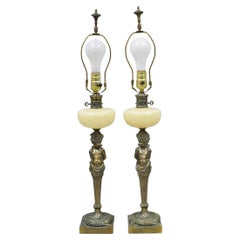
Pair of Italian Renaissance Oak Pedestal Figures
Located in Queens, NY
Pair of Italian Renaissance style (19th Cent) carved oak life size pilaster form pedestals of Greek man and woman (torso) on square base with floral carving
Category

19th Century Antique Renaissance Furniture

Materials

Oak

Antique Brass Renaissance Style Bevel Edged Wall Mirror, English, C.1910
Located in St Annes, Lancashire
Fabulous brass mirror with aged verdigris patina Can be hung both as a diamond or a square Original mirror plate. The plate is slightly distressed / misty The measurement given is...
Category

1910s English Vintage Renaissance Furniture

Materials

Brass

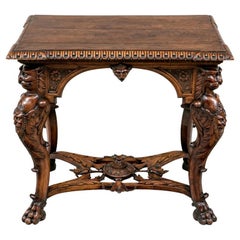
A late 16th century French Renaissance richly carved walnut center table
Located in PARIS, FR
A late 16th century Renaissance richly carved walnut center table France, The Loire Valley area Dimensions: h. 33.46 in., w. 59.45 in., d. 36.22 in. Our remarquable table is a fabu...
Category

16th Century French Antique Renaissance Furniture

Materials

Walnut

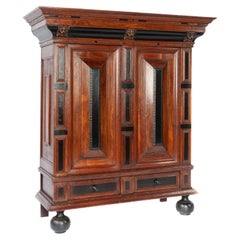
Antique 17th Century Dutch Renaissance Solid Oak with Ebony Veneer Cupboard
Located in Casteren, NL
This beautiful and friendly-sized cupboard is made of the finest watered oak in the tradition of the Dutch Renaissance during the “Dutch golden age” It is a two-story four-door cabin...
Category

17th Century Dutch Antique Renaissance Furniture

Materials

Ebony, Oak

First French Renaissance Dresser
Located in Saint-Ouen, FR
Provenance : Chabrières Arlès collection then through descent Under the reign of Henry II, during the French Renaissance, the rigour of composi...
Category

16th Century French Antique Renaissance Furniture

Materials

Oak

Leather Fireside Chair
Located in Annville, PA
The Niagara Furniture Green Leather Fireside Chair is designed after an American original antique chair and ships out covered in full grained tufted genuine leather with brass nail t...
Category

2010s Indonesian Renaissance Furniture

Materials

Leather, Mahogany

19th Century Italian Renaissance Carved Walnut Credenza with Figures Paw Feet
Located in Dallas, TX
Bring elegance and artistry to your dining or living room with this richly carved antique sideboard. Crafted in Italy circa 1870, the long antique credenza is built of solid walnut a...
Category

Mid-19th Century Italian Antique Renaissance Furniture

Materials

Walnut

Spanish Azulejo Tile Arista y Cuenca - Toledo 16th century
Located in DELFT, NL
Early Arista y cuenca tile made in Toledo. Tile decorated in renaissance with stylized flowers was probably made between 1550 and 1575.
Category

16th Century Spanish Antique Renaissance Furniture

Materials

Earthenware

Renaissance sideboard, France, circa 1790.
Located in Chorzów, PL
An old sideboard - chest of drawers with a top in the Renaissance style. Made in the late 18th century from walnut wood. A unique piece of furniture, richly decorated with carvings a...
Category

Late 18th Century French Antique Renaissance Furniture

Materials

Walnut

Petite Antique French Octagon Center Side TABLE Renaissance Carved Oak
Located in Shreveport, LA
Petite Antique French Octagon Center Side TABLE Renaissance Carved Oak. Direct from France, a fabulous SMALL antique French octagon table, ornately adorned, just like the full-size ...
Category

Late 19th Century French Antique Renaissance Furniture

Materials

Oak

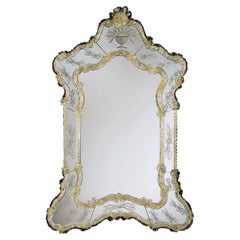
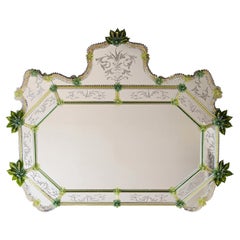
A Toki Wall Mirror
Located in Milan, IT
Elegant Venetian mirror made in the strictest Murano tradition with rich bands carefully engraved by hand. All assembled with golden crystal elements handmade in the Murano furnaces....
Category

2010s Italian Renaissance Furniture

Materials

Glass

A Toki Wall Mirror
$2,995 / item
Leather Swan Arm Chair
Located in Annville, PA
This high end Leather Swan Arm Chair from Niagara Furniture is impressive with solid mahogany hand carved details as well as the full grain genuine leather upholstery. A great designer look with a solid and comfortable frame. Inspired by an antique chair...
Category

2010s Renaissance Furniture

Materials

Leather, Mahogany

Large French Richly Carved Buffet Sideboard Chest - Renaissance - 17th - France
Located in Beuzevillette, FR
Very important Renaissance chest transformed into a two-door sideboard in the 19th century. Composed of numerous carved wooden details. This sideboard is richly decorated and testifi...
Category

17th Century European Antique Renaissance Furniture

Materials

Oak

Risso Wall Mirror
Located in Milan, IT
Classic oval Venetian mirror, made in the most rigorous Murano tradition. Finely hand-engraved on the elements of the bands, it is assembled with numerous floral elements in gold cry...
Category

2010s Italian Renaissance Furniture

Materials

Glass

Risso Wall Mirror
$2,300 / item
Large Carved Oak Renaissance Style Armchair from France, C. 1890
Located in Dallas, TX
Hand-carved in the Renaissance style in France, circa 1890, this imposing oak armchair features a verdant tapestry affixed with iron nailheads. The sc...
Category

1890s French Antique Renaissance Furniture

Materials

Tapestry, Upholstery, Oak

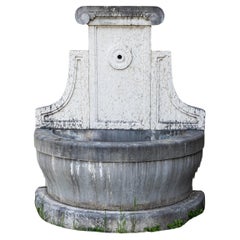
Italian Ancient Marble Sculpture Fountain, Late 16th Century
Located in Milano, IT
Sea monster Carrara marble mouth fountain Italy, late 16th century It measures 13.8 x 31.5 x 18.9 in (35 x 80 x 48 cm) State of conservation: some small evident gaps and widespread signs of wear due to outdoor exposure. The gray marks crossing it do not come from restoration, but are rather the natural veins of the marble. This work has some morphological characteristics typically associated with the iconography of the sea monster: an elongated muzzle, sharp teeth, protruding eyes, elongated ears, and a coiled serpent's tail. An in-depth series of studies on artistic depictions of the sea monster attempted to verify how this symbol evolved in antiquity in the European and Mediterranean contexts and how it gradually changed its image and function over time. The iconography itself is mutable and imaginative and its history is rich with cultural and artistic exchange, as well as the overlapping of ideas. This occurred so much that it is difficult to accurately pinpoint the "types" that satisfactorily represent its various developments. However, we can try to summarize the main figures, starting from the biblical Leviathan and the marine creature that swallowed Jonah (in the Christian version, this figure was to become a whale or a "big fish", the “ketos mega”, translation of the Hebrew “dag gadol”). Other specimens ranged from the dragons mentioned in the Iliad (which were winged and had legs) to "ketos” (also from Greek mythology), the terrifying being from whose Latinized name (“cetus”) derives the word "cetacean". See J. Boardman, “Very Like a Whale” - Classical Sea Monsters, in Monsters and Demons in the Ancient and Medieval Worlds, in Papers presented in Honor of Edith Porada, Mainz am Rhein 1987, pp. 73-84). In Italy the monster underwent yet further variations: it can be found in Etruscan art on the front of some sarcophagi representing the companion of souls, while among the Romans we find the “Pistrice” (cited by Plinio in Naturalis Historia PLIN., Nat., II 9, 8 and by Virgilio in Eneide: VERG., Aen., III, 427), which appeared in the shape of a stylized hippocampus or a very large monstrous cetacean and evolved into a hideous being with a dragon's head and long webbed fins. During the Middle Ages, the sea monster was the object of new transformations: at this time, it is often winged, the head is stretched like a crocodile, the front legs are often very sharp fins - sometimes real paws - until the image merges with dragons, the typical figures of medieval visionary spirituality widely found throughout Europe (on this topic and much more, see: Baltrušaitis, J., Il Medioevo fantastico. Antichità ed esotismi nell’arte gotica, Gli Adelphi 1997). In Italy during the 15th and 16th centuries, the revival of classicism - representative of the humanistic and Renaissance periods - led to a different reading of these "creatures". Indeed, the sea monster was also to find widespread use as an isolated decorative motif, especially in numerous fountains and sculptures where dolphins or sea monsters were used as a characterizing element linked to water (on this theme see: Chet Van Duzer, Sea Monsters on Medieval and Renaissance Maps, London, The British library, 2013). From the morphological point of view, the "sea monsters" of this period are mostly depicted as hybrid figures, in which the body of a mythological or real being (a hippocampus, a sea snake, a dolphin), is joined to a head with a rather indistinct appearance. It was usually characterized by large upright ears, an elongated snout, sharp teeth and globular, protruding eyes; a complex and indefinite figure, both from the symbolic point of view and from that of its genesis. The work we are examining is placed as a cross between the medieval sea serpent and the Renaissance dolphin, with stylistic features which recall the snake as often used in heraldry (such as the "snake" depicted in the coat of arms of the Visconti - the lords and then dukes of Milan between 1277 and 1447 - and which, for some, may be derived from the representations of the “Pistrice” that swallowed Jonah). In the search for sources, Renaissance cartography and in particular woodcuts should not be neglected. See for example the monsters of Olaus Magnus, from the editions of the “Historia de gentibus septentrionalibus” (“History of the peoples of the north”) and the natural histories of Conrad Gesner, Ulisse...
Category

16th Century Italian Antique Renaissance Furniture

Materials

Carrara Marble

Italian Vintage "Cesto di Frutta Impruneta" Terracotta Centerpiece
Located in Encinitas, CA
Italian traditional Impruneta terracotta fruit baskets: Cesto di Frutta. Woven motif on the baskets, Florence, Italy. Circa 1920. Lichen patina. Set of 2available with slightly diff...
Category

Early 20th Century Italian Renaissance Furniture

Materials

Terracotta

Late 17th Century Tuscan Italian Walnut Cassone
Located in Hudson, NY
This nicely detailed walnut Italian cassone or chest is from the late 17th century approx. circa 1680 to 1700. Formally part of the collection of a Frick museum board member the piec...
Category

Late 17th Century Italian Antique Renaissance Furniture

Materials

Walnut

17th Century Oak Beguinage Piece
Located in Brussels, Brussels
Lovely little oak beguinage cabinet from the Renaissance period of the 17th century. Very beautiful piece of furniture which has an interesting dimension which is composed of a small...
Category

17th Century Antique Renaissance Furniture

Materials

Oak

Seated White Deer in Landscape, Signed O. Millar, after Wilton Diptych
Located in West Palm Beach, FL
Seated White Deer in Landscape, Signed O. Millar, after Wilton Diptych Wilton Diptych Variation, Seated White Deer in Landscape, Signed O. Millar Oil on canvas, 40 inches by 50 inch...
Category

Late 20th Century English Renaissance Furniture

Materials

Canvas, Giltwood

Early 17th Century Italian Walnut Credenza/ Cabinet
Located in San Francisco, CA
A wonderful and rare walnut credenza or sideboard, heavy patinated, original unrestored finish and original hardware. The hand-carved moldings and classic. Ionic swags above fluted ...
Category

Early 17th Century Italian Antique Renaissance Furniture

Materials

Walnut

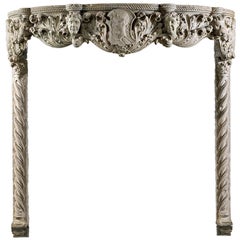
Neo-Renaissance Period Stone Fireplace, Dated 1534
Located in SAINT-OUEN-SUR-SEINE, FR
This outstanding Tonnerre stone fireplace is a masterpiece of the first French Renaissance. It was sculpted in 1534, under the reign of King François the 1st for Philippe Merlan (1503-1546), Baron of Montpont, Lord of Jully-lez-Arnay-le-Duc. This monumental fireplace...
Category

16th Century French Antique Renaissance Furniture

Materials

Stone

Italian Renaissance Style Gold Velvet Banner
Located in Queens, NY
Italian Renaissance style (19/20th Century) gold velvet hanging banner with damask and embroidered curved bottom
Category

19th Century Italian Antique Renaissance Furniture

Materials

Fabric

Large Renaissance Style Painted Porcelain Plaque
Located in London, GB
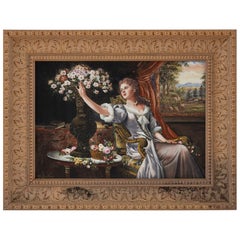
Large Renaissance style painted porcelain plaque German, 20th century Frame: Height 50cm, width 64cm, depth 6cm Plaque: Height 34cm, width 49cm, depth 0.5cm In this beautifully painted porcelain plaque, a young woman in fine aristocratic clothing sits in a dark Renaissance style interior scene. She sits in a gold armchair, covered in ornate floral upholstery, stretching out her arm to pluck a rose from a bouquet of flowers on the table beside her. Behind her is a landscape painting with red velvet...
Category

20th Century German Renaissance Furniture

Materials

Porcelain, Giltwood

17th Century French Leather Coffer with Nailhead Detail
Located in Houston, TX
17th century French leather coffer, chest or trunk with nailhead detail from burgundy on newer wooden base.   
Category

17th Century French Antique Renaissance Furniture

Materials

Brass

Frans Franken III 16th Century Oil on Wood, Adoration of the Magi, Painting
Located in IT
Frans Franken III and aid, Adoration of the Magi Good condition The oil painting on wood, with a gold background, depicts an Adoration of the Magi. The Magi are dressed in sumptuous silk and brocade dresses; they wear precious hats and jewelery. The richness of their garments is in contrast with the humility of the Holy Family and of the other characters who, around curious, observe the scene. The hut is simple, made of wood and straw: above it shines the Comet, symbol of the divine event. In the distance, a group of wayfarers walk along a path that is lost on the horizon, blending into the gold of the bottom. The representation proposes a traditional iconography, in which the painter inserts some details that he lends himself to symbolic interpretations. Among these is the appearance of the Magi, who from the XIVth century differs iconographically: the wise astronomers represent the homage to Jesus of the then known parts of the world, namely Africa, Asia and Europe. To the right of the Magi, in the foreground, sits a monkey, considered a demonic creature and a symbol of lies and sin. It is depicted on the sidelines, as a defeat, next to a fragment of a classical column: ruin alludes to the end of paganism, of the old world that collapses with the advent of the new one, marked by the birth of Christ and liberation from the Original Sin. On the ruins he climbs the ivy, symbol of the immortality of the soul. The work is attributable to the workshop of the Flemish painter Frans Francken III...
Category

16th Century Belgian Antique Renaissance Furniture

Materials

Paint

17th C. Painted Cabinet with Chalk, Graphite Panel Drawings, Turin, Italy
Located in Brooklyn, NY
An incredibly unique find on a hill top Villa in Turin, this cabinet has resided in the same home since its creation and hence is in remarkably good condition. The drawings and pain...
Category

17th Century Antique Renaissance Furniture

Materials

Wood, Paint

Large Patinated Bacchus Garden Bronze Tazza Urn
Located in Guaynabo, PR
This is a patinated bronze large round Tazza urn with pedestal. There is a mask of Bacchus with hair made of grapes leaves and ram horns over his head adorni...
Category

Early 20th Century Renaissance Furniture

Materials

Bronze

Pair of Italian Friezes 18th Century Blue Painted Gilwood Wall Decorative Panels
Located in Milano, MI
Pair of 1700s Italian Wall Decorative Panels, a pair of blue laquer vertical frieze dating back to late 18th century, with a stunning  hand-carved gilded relief  candelabra decoratio...
Category

18th Century and Earlier Italian Antique Renaissance Furniture

Materials

Gold Leaf

A French 19th century Renaissance st. Ormolu and patinated Bronze chandelier
Located in West Palm Beach, FL
A stunning and very high quality French 19th century Renaissance st. Ormolu and patinated Bronze chandelier. This impressive twelve arm chandelier is centered around a topie shaped b...
Category

19th Century French Antique Renaissance Furniture

Materials

Bronze, Ormolu

Antique French Renaissance "Le Force Le Pouvoir" Spelter Metal Sculpture Pair
Located in Philadelphia, PA
Antique French Renaissance "Le Force & Le Pouvoir" Spelter Metal Sculptures Raised on Wooden Bases - a Pair. Circa Early 20th Century. Measurements: 27" H x 9" W x 5.25" D.
Category

Early 20th Century Unknown Renaissance Furniture

Materials

Metal

Antique carved walnut fireplace with painting from the 17th century
Located in SAINT-OUEN-SUR-SEINE, FR
Important antique Renaissance style fireplace made ouf ot carved walnut. The hood is adorned with a large oil on canvas depicting a Renaissance ball scene after the Italian-Swiss painter Giovanni Andrea Casella (see inscriptions found on the back). Casella was born in Lugano, Switzerland, in 1619. He is active in the Italian Piedmont where he is a student of Pietro Da Cortona. He is famous from 1642 and realizes masterpieces for the Castello di Rivoli, the Royal Palace of Turin and the Duomo of Turin (Cathedral of the city). For the Duomo, he performed the painting of Saint-Côme and Saint-Damien on the sixth altar. He is also very active in Switzerland, his native country, where he works with his nephew Giacomo. Both painted in 1662 the two lateral frescoes of the choir of the Church of St. Roch in Lugano. This chimney is composed of old carved walnut elements dating from the 17th century, which were reassembled during the 19th century. The jambs are decorated with carved terms...
Category

19th Century French Antique Renaissance Furniture

Materials

Walnut

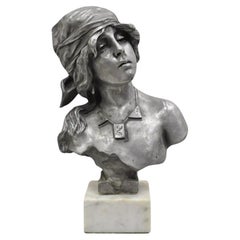
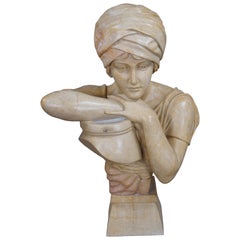
Rebecca at the Well Marble Bust Sculpture Statue After Antonio Piazza 27"
Located in Dayton, OH
An impressive marble bust of "Rebecca at the Well" after Antonio Piazza (Italian 1875-1925). The sculpture is executed in a beautiful beige marble showcasing Rebekah with her arms ...
Category

Late 20th Century Renaissance Furniture

Materials

Marble

Venetian Renaissance Antique Fireplace from the 15th Century
By Giorgio da Sebenico
Located in London, GB
A large and rare Venetian Renaissance antique fireplace mantel from the fifteenth century. This extremely rare chimneypiece is carved in Pietra d’...
Category

15th Century and Earlier Italian Antique Renaissance Furniture

Materials

Marble

Antique Enamelled Glass Decanter Glasses By J L Lobmeyr, Vienna Late 19th.C
Located in Bristol, GB
ANTIQUE AUSTRIAN DECANTER AND CORDIAL GLASSES Hand-blown pinched clear glass decanter and four matching cordial glasses. Profusely decorated by ha...
Category

1870s Austrian Antique Renaissance Furniture

Materials

Enamel

Pair of Green Patinated Bronze Horses
By Ludovico De Luigi
Located in Queens, NY
Pair of Italian Renaissance style green patinated bronze figure of horse walking (from a series of 1,000 titled: "Cavalli di San Marco II", signed by L...
Category

20th Century Italian Renaissance Furniture

Materials

Bronze

Italian Black Walnut Space Towel Rack Rail with Carved Legs
Located in Carimate, Como
Beautiful Italian black painted wood towel rack or quilt stand with globe turnings and feet. This towel rack or quilt stand is one of those handy piece...
Category

20th Century Italian Renaissance Furniture

Materials

Wood

Flemish Hand-Woven "Feuilles de Choux" Tapestry, Silk and Wool
Located in Firenze, FI
Provenance: Oudenaarde manufacture, Flanders, Mid-16th Century Tapestry wool and silk texture Dimensions 340/330 x 340/338cm Extremely rare piece In good condition Washed and lined It is a typical Flemish tapestry "with large leaves", well preserved, woven with green, yellow and brown yarns whose colors have remained fresh and intense. The market and collectors in recent decades have greatly re-evaluated tapestries with "large leaves", appreciating their high decorative value and ability to blend in with modern furnishings. Our tapestry belongs to a very particular subcategory of the "feuille de...
Category

16th Century Belgian Antique Renaissance Furniture

Materials

Wool, Silk

18th Century Rustic Renaissance Two-Tiered Cabinet
Located in Dallas, TX
18th Century Rustic Renaissance Two-Tiered Cabinet is the perfect solution for more storage in style! Hand-crafted from solid oak, it features a subtly recessed upper tier flanked b...
Category

Late 18th Century Dutch Antique Renaissance Furniture

Materials

Oak

Baetto Wall Mirror
Located in Milan, IT
Elegant Venetian mirror made in the strictest Murano tradition with rich bands carefully engraved by hand. All assembled with crystal elements handmade in the Murano furnaces. Wooden...
Category

2010s Italian Renaissance Furniture

Materials

Glass

Baetto Wall Mirror
$3,610 / item
Large Renaissance Style Figural Lion Carved Wood Paw Feet Throne Chair
Located in Philadelphia, PA
Large Renaissance Style Figural Lion Carved Wood Paw Feet Throne Chair. Item features a large impressive size, ornate lion heads and paw feet, nicely carved details, very nice item, ...
Category

Late 20th Century Renaissance Furniture

Materials

Wood

A Pair Gilt Bronze Fireplace Supports / Andirons - Renaissance Style
Located in Casteren, Noord-Brabant
A pair of antique gilt bronze fireplace andirons in renaissance style. Coups with on top flames, flanked with ram heads, resting on lions...
Category

1870s French Antique Renaissance Furniture

Materials

Bronze, Ormolu

Tuscany Renaissance Table Six Chairs, Hand-Carved Walnut by Michele Bonciani
Located in Vigonza, Padua
Tuscany Renaissance table with six chairs by Michele Bonciani in hand-carved walnut in original conditions, polished to wax. The upholstery of the chairs is still usable. We can mak...
Category

Early 19th Century Italian Antique Renaissance Furniture

Materials

Walnut

Renaissance Inkwell Calamelli workshop, Italy, Faenza, second half of the 16th
By Virgiliotto Calamelli
Located in Milano, IT
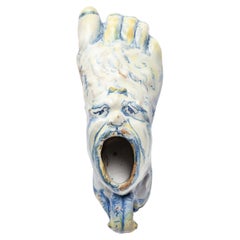
Inkwell Calamelli workshop (attr.). Faenza, second half of the 16th century Height 4.33 in; length 8.07 in; depth 2.95 in (11 cm; 20.5 cm; 7.5 cm) Weight: 0.800 lb (363 g) State of conservation: some chipping to the top of the mask around the mouth. Handle glued, without any restorations; minor chips in some raised areas. This object has the shape of a foot wearing Greek-style footwear, as can be seen in some raised areas. The foot is anatomically modeled with bare toes, while the ankle is partially covered by the footwear. On the heel, there is a small circular handle to support the object. The mouth of the container is shaped like a mask. The interior, completely enameled, suggests that the piece was intended to be used as an inkwell or to contain some other liquid. The base, however, is not enamelled. The painted decoration, scant and brief, consists of rapid cobalt blue shading between the toes of the foot, with more precise emphasis on the nails. It is accompanied by yellow citrine accents to enhance the forms. The mask is painted with the tip of the brush, to accentuate the tense nature of the eyes and to accentuate their outline. Thin strokes of yellow-orange line the interior of the mouth. Since the Renaissance, this decoration has been referred to as "compendiaria" and it characterizes the period of production extending from the mid-16th century to approximately the middle of the following century. It significantly influenced tastes at the time. It evolved from the polychrome style "istoriato" and transformed into a new style that "summarized" (compendia), or condensed, the ornamentation of the works into a few colors, placing greater prominence on the shapes. It was often inspired by metal specimens. Since the Renaissance, this decoration has been referred to as "compendiaria" and it characterizes the period of production extending from the mid-16th century to approximately the middle of the following century. It significantly influenced tastes at the time. It evolved from the polychrome style "istoriato" and transformed into a new style that "summarized" (compendia), or condensed, the ornamentation of the works into a few colors, placing greater prominence on the shapes. It was often inspired by metal specimens. This artwork finds parallels in similar objects all characterized by this refined style and produced in the city of Faenza and other Italian centers starting from the mid-16th century. The closest comparable example in majolica is a foot acquired by the British Museum in 2011 (inv. 2011, 8008.1). This was previously published by Carmen Ravanelli Guidotti in 1996 and later by Dora Thornton in 2016 during the conference on Renaissance ceramics...
Category

16th Century Italian Antique Renaissance Furniture

Materials

Maiolica

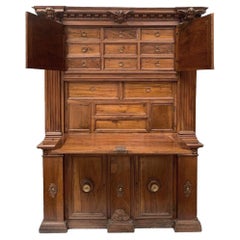
Notable circa 17th Century Carved Walnut Two-Tiered Cabinet in Renaissance Style
Located in Bridgeport, CT
A large and impressive 17th century European cabinet. Made in two parts, both with elaborate carved decoration and burled panels and details. The upper cabinet with heavy overhanging...
Category

17th Century European Antique Renaissance Furniture

Materials

Wood

Ecce Homo - Florence, 15th century
Located in Bruxelles, BE
A terracotta bust "Ecce Homo" Florence, 15th century 53 x 44 x 31 cm
Category

15th Century and Earlier Italian Antique Renaissance Furniture

Materials

Terracotta

Pair of Italian Renaissance Wrought Iron Exterior Wall Lanterns
Located in Queens, NY
Pair of Italian Renaissance-style (19/20th Century) wrought iron exterior wall lanterns with 4 filigree panels supported by a scroll design wall ...
Category

Late 19th Century Italian Antique Renaissance Furniture

Materials

Wrought Iron

17th Century Louis XIII Armchair
Located in Saint-Ouen, FR
During the first half of the seventeenth century chairs evolve towards a new model today known as Louis XIII foreshadowing the armchair. Chairs adopt a widen and lower silhouette. Horizontal lines prevail. Cushions disappear supplanted by horse hair upholstery. This chair stands on four feet linked by an H-shaped spacer and a frontal cross-bar. Legs, spacers, cross-bar and arm-rests are all turned as rosary beads...
Category

17th Century French Antique Renaissance Furniture

Materials

Walnut

Green Red Gold Stardust Salviati Murano Glass Liqueur Goblet, Vintage Italy
Located in Nuernberg, DE
A single beautiful liqueur glass made in Murano Italy. Very good vintage condition, consistent with age and use. A nice addition to any table, bar or just to display in your collecti...
Category

Mid-20th Century Italian Renaissance Furniture

Materials

Blown Glass

Renaissance furniture for sale on 1stDibs.

Find a broad range of unique Renaissance furniture for sale on 1stDibs. Many of these items were first offered in the 21st Century and Contemporary, but contemporary artisans have continued to produce works inspired by this style. If you’re looking to add vintage furniture created in this style to your space, the works available on 1stDibs include case pieces and storage cabinets, decorative objects, wall decorations and other home furnishings, frequently crafted with wood, walnut and other materials. If you’re shopping for used Renaissance furniture made in a specific country, there are Europe, Italy, and France pieces for sale on 1stDibs. While there are many designers and brands associated with original furniture, popular names associated with this style include Europa Antiques, Sinke Van Tongeren, Albrecht Dürer, and Castelli. It’s true that these talented designers have at times inspired knockoffs, but our experienced specialists have partnered with only top vetted sellers to offer authentic pieces that come with a buyer protection guarantee. Prices for furniture differ depending upon multiple factors, including designer, materials, construction methods, condition and provenance. On 1stDibs, the price for these items starts at $35 and tops out at $3,217,683 while the average work can sell for $6,828.

Recently Viewed

View All