Asia - Paintings and Screens
to
56
373
1,108
400
279
91
3
28
10
1
1
37
88
154
94
42
21
13
3
1
7
1
7
12
6
4
190
168
121
121
94
352
324
277
41
14
373
334
347
26
4
3
2
1
Item Ships From: Asia
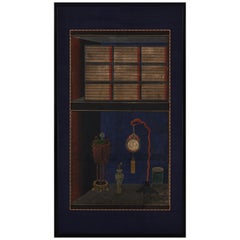
Korean Chaekgeori painting. 19th Century Joseon. Books
Scholars’ Accouterments
Located in Kyoto, JP
Books and Scholars’ Accouterments; Chaekgeori
Second half of the 19th century
Korean framed panel. Ink and color on paper.
This Korean Chaekgeori...
Category
Late 19th Century Korean Edo Antique Asia - Paintings and Screens
Materials
Paper
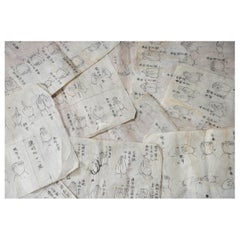
Early 20th century 10-pieces set of Japanese Practitioner’s Hand-Sign Manuscript
Located in Chiba, JP
MUDRA OF ESOTERIC BUDDHISM
A set of 10 handwritten practitioner’s charts depicting various mudras (symbolic hand gestures) used in Mikkyo — Japanese Esoteric Buddhism. These gesture...
Category
Early 20th Century Japanese Meiji Asia - Paintings and Screens
Materials
Paper
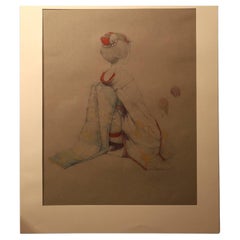
Large Collotype Print by Ryunosuke Fukui
from "Maiko" Series
- print no 6
Located in Fukuoka, JP
A large print created by Ryunosuke Fukui, a highly acclaimed modernist artist from Japan who lived between 1923 and 1986. Fukui's art has been exhibited in many prestigious museums a...
Category
20th Century Showa Asia - Paintings and Screens
Materials
Other
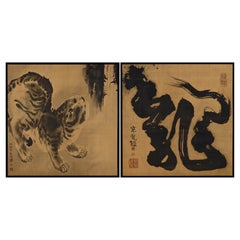
19th Century Japanese Paintings. Zenga Tiger and Dragon by Inoue Kanshu.
Located in Kyoto, JP
Inoue Kanshu (1807-1880)
Zenga Tiger and Dragon
19th century
Pair of framed Japanese paintings. Ink on silk.
Dimensions (each): W. 114 cm x H. 115 cm (45” x 45”)
Presented here ...
Category
Mid-19th Century Japanese Meiji Antique Asia - Paintings and Screens
Materials
Silk
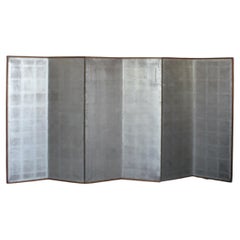
B41 Japanese Antiques 6panels, Silver Paper, folding Screen, brown-rimmed
Located in Niiza, JP
Material: Paper, wooden frame
1 piece: Width 435 x Height 1370 x Depth 18 mm
Expanded size: Width 2650 mm
Folded size: Width 455 x Height 1370 x Depth 100 mm, weight 9 kg
Packaging (...
Category
20th Century Japanese Asia - Paintings and Screens
Materials
Paper
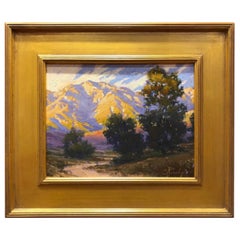
American Landscape by Craig Pursley
Located in Lantau, HK
Craig Pursley. Autry's Home, American, born 1954.
Oil on canvas. Dimensions 28.5 x 36 cm
Original art work(s).
Category
20th Century Asia - Paintings and Screens
Materials
Paint
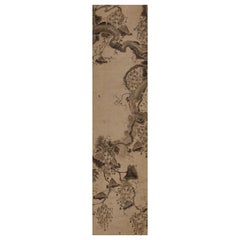
17th Century Korean Grapevine and Squirrel Scroll Painting, Mid Joseon Period
Located in Kyoto, JP
Anonymous. Korean, 17th century. Joseon period.
Hanging scroll. Ink on paper.
Seal: Shinso
Dimensions:
Scroll: H. 200 cm x W. 31 cm (79” x 12”)
Image: H. 122 cm x W. 29.5 cm (48” x 11.5”)
The grapevine came to China and then Korea from western Asia via the silk road trade routes. By the mid-Joseon period, it was one of the most popular subjects for Korean literati painters. Grapevines were painted as a singular subject or, less commonly, in combination with squirrels, which are associated with children due to their playful nature. Together, grapevines and squirrels embody wishes for abundant offspring and wealth.
For the Korean literati artist the twisting vines, curling tendrils and round, plump grapes provided ample opportunity for expressive "brush play”. In this painting the artist has abstracted the scene and is seemingly unconcerned with discontinuities and proportion. Vines spring up from nowhere, grapes hang in random clusters and the squirrel’s head appears as if twisted backwards. For the vines and leaves we can feel a sense of speed in the brushstrokes, imparting a dynamic feel which is at once intense and animated. This contrasts dramatically with the countless tiny strokes of ink which realistically capture the texture of the squirrel’s fur...
Category
17th Century Korean Other Antique Asia - Paintings and Screens
Materials
Paper
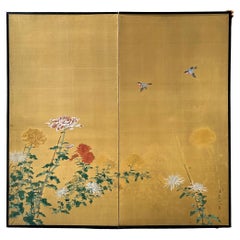
Japanese Screens: Echo of Chrysanthemums
Located in Fukuoka, JP
Echo of Chrysanthemums captures the quiet dialogue between form and reflection. Against a radiant gold-leaf ground, blooming chrysanthemums rise in graceful color harmony — white, cr...
Category
19th Century Japanese Edo Antique Asia - Paintings and Screens
Materials
Gold Leaf

$5,785 Sale Price
35% Off
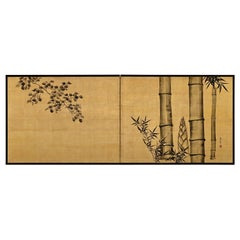
19th Century Japanese Screen for Tea-Ceremony, Ink Bamboo and Plum on Gold Leaf
Located in Kyoto, JP
Three Friends of Winter
Nakajima Raisho (1796-1871)
Late Edo period, circa 1850
Ink and gold leaf on paper.
This is a double-sided Japanese Furosaki or tea-ceremony screen from the mid 19th century; bamboo and plum on the front, young pines the back. It by Nakajima Raisho, a master painter of the Maruyama school in the late Edo and early Meiji periods. In this work Raisho combines exquisite ink brushwork with large open spaces of brilliant gold-leaf to inspire the viewers imagination. Rather than naturalism, he is searching for the phycological impression of the motifs, resulting in abstraction and stylization. His simplification of the motifs the result of looking to capture the inner nature of the objects. This art motif is known as Sho Chiku Bai, or the Three Friends of Winter. Evergreen pine connotes steadfastness, bamboo suggests both strength and flexibility, while plum blossoms unfurling on snow-laden branches imply hardiness. Combined, this trio is emblematic of Japanese new year. Chinese literati were the first to group the three plants together due to their noble characteristics. Like these resilient plants flowering so beautifully in winter, it was expected of the scholar-gentleman to cultivate a strong character with which he would be able to show the same degree of perseverance and steadfastness even during times of adverse conditions.
The screen would have been placed near the hearth of a room used for the Japanese tea ceremony, shielding the fire from draughts and also forming a stimulating and decorative backdrop behind the tea utensils. It would have been used in the Hatsugama, or first tea-ceremony of the new year.
Nakajima Raisho (1796-1871) originally studied under Watanabe Nangaku before entering the school of Maruyama Ozui. He was the highest ranking Maruyama school painter at the end of the Edo period and was known as one of the ‘Four Heian Families’ along with Kishi...
Category
Mid-19th Century Japanese Edo Antique Asia - Paintings and Screens
Materials
Gold Leaf
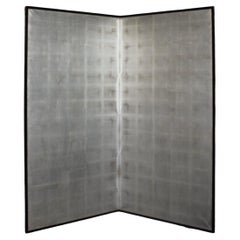
B51 Old Japanese Antiques Silver folding screen, Byobu 2panel
Located in Niiza, JP
Unfolded size: 1700 x 1675 x 20 mm
Foldable: 850 x 1675 x 40 mm, 7kg
Estimated size after packaging (sandwiched between 9 mm plywood):
11 cm x 93 cm x 175 cm Weight 25KG
An atmosp...
Category
19th Century Japanese Antique Asia - Paintings and Screens
Materials
Fabric, Paper
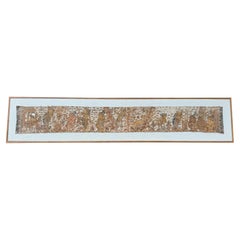
Bali Hindu Textile Framed
Kamasan
Painting, Indonesia C. 1900
Located in Jimbaran, Bali
This Antique Balinese Kamasan painting, rendered on handwoven cotton, beautifully captures the timeless elegance of classical Wayang-style storytellin...
Category
Early 1900s Balinese Folk Art Antique Asia - Paintings and Screens
Materials
Cotton, Paint
$1,360 Sale Price
20% Off
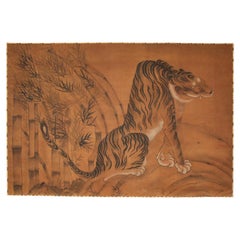
K26 Japanese Antiques A large hanging scroll, Bamboo Tiger Ink on Silk painted
Located in Niiza, JP
Ink on Silk, Scroll head: wood
Image size: 1400(W) x 930(H) [mm]
Scroll mounting: 1470(W) x 1350(H) [mm]
Box size: 100(W) x 90(H) x 1590(D) [mm] 3kg
Estimated packing size: 150(W) x...
Category
19th Century Japanese Antique Asia - Paintings and Screens
Materials
Fabric, Paper
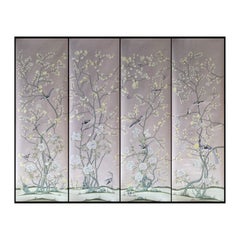
Floral Chinoiserie Wallpaper Hand Painted Wallpaper on Purple Silk
Located in Wuxi, 32
If you love the look of De Gournay wallpaper but not the price, this is for you. Measures: 3 ft x 8 ft.
The colorways in this sections present our latest colorways, which can be a...
Category
21st Century and Contemporary Chinese Asia - Paintings and Screens
Materials
Silk
$2,280 Sale Price / set
20% Off
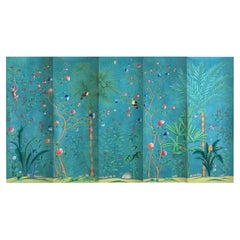
Palm Tree Chinoiserie Wallpaper Hand Painted Wallpaper on EDO Silk /Panel
Located in Wuxi, 32
If you love the look of De Gournay wallpaper but not the price, this is for you.
The colorways in this sections present our latest colorways, which can be applied to any designs and any base ground (silk, tea paper, metallic, fabric and etc.)
Price
There are 5 panels in the listed photo, price is for 1 panel of 36" wide x 108" high, background is on EDO silk...
Category
21st Century and Contemporary Chinese Asia - Paintings and Screens
Materials
Silk
$648 Sale Price
28% Off
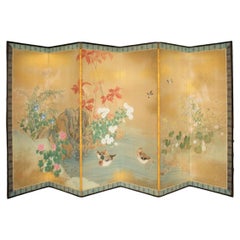
B11 Japanese Antiques 6panels, Paper, folding Screen with Flower & bird painting
Located in Niiza, JP
Bird and flower painting
Material: Paper on wooden frame, colored
One piece: W660×H1825mm×D20mm,
Unfolded size: W3860mm, 16kg
Folded size: W660×H1825×D110mm
Packaging (sandwiched wit...
Category
19th Century Japanese Antique Asia - Paintings and Screens
Materials
Paper
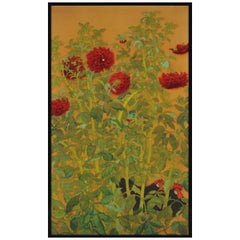
Japanese Painting, Framed Panel, Dahlias and Roosters, circa 1920
Located in Kyoto, JP
Tanaka Tessen (b.1890)
Dahlias and Roosters
Taisho period, circa 1920
Framed painting. Mineral pigments and ink on silk.
Dimensions (framed):
H. 159 cm x W. 97 cm x D. 2.5 cm (62.5” x 38” x 1”)
An ornate and complex composition in which the artist explores almost the entire painting surface. The coloration is bold and evocative and the tinted silk ground recreates the warm golden glow of sunset. Soft, luminous brushwork details the black feathers of the roosters, which seem to cloud and blur in counterpoint to the sharper points of the eyes and beaks. Their brilliant red combs balance the composition, echoing the rich burgundy hues of the dahlias; the flowers exquisite and lifelike. Dahlias were an exotic subject favored by painters of the Taisho era.
The painting belongs to the school of Kyoto Nihonga, exemplifying the principles of decorative elegance and consumate brush technique with which it was intimately associated. Painters of the time relied on the Shijo school method, basing the forms of the composition from life sketches. Sometimes they were then integrated with elements derived from Chinese bird and flower...
Category
1920s Japanese Taisho Vintage Asia - Paintings and Screens
Materials
Wood, Silk
Evolving Elegance: An Oxidized Silver Screen from the Meiji Period
Located in Fukuoka, JP
This anodized 6-panel screen captures the serene and minimalistic beauty of a bamboo grove, embodying the aesthetic principles of the Edo period. The screen features subtle and delic...
Category
18th Century Japanese Edo Antique Asia - Paintings and Screens
Materials
Silver Leaf
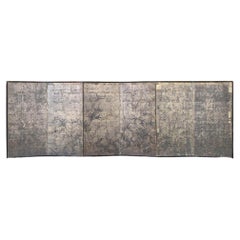
Japanese screen: Summer Breeze on Gold
Located in Fukuoka, JP
Period: Taishō–Shōwa
Size: 170 cm x 378 cm (67 in x 149 in)
SKU: 2481
Dimensions: 170 cm x 378 cm (67 in x 149 in)
Bathed in the gentle shimmer of gold leaf, Summer Breeze on Gold ...
Category
Early 20th Century Asian Showa Asia - Paintings and Screens
Materials
Wood, Paper
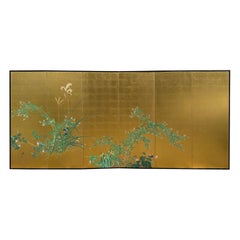
Peonies in Summer Light
Located in Fukuoka, JP
The screen blossoms with peonies — flowers often celebrated in Japanese art as symbols of prosperity, honor, and beauty. Painted in soft pinks and whites, they radiate under a gentle...
Category
20th Century Japanese Showa Asia - Paintings and Screens
Materials
Paper, Wood
$4,830
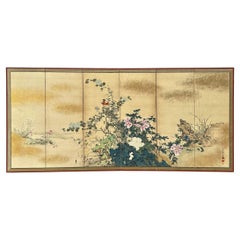
Chinese Screen with Semi-Precious Stone
Located in Fukuoka, JP
This magnificent Chinese folding screen captivates with its deep black lacquer surface, richly adorned with inlays of semi-precious stones. The composition depicts a luxuriant garden...
Category
Early 20th Century Chinese Asia - Paintings and Screens
Materials
Multi-gemstone
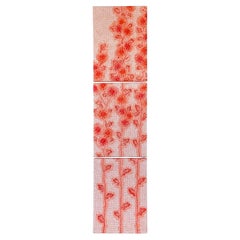
Mid 20th Century kimono textile art " Growing ~ Longevity ~" by ikasu Pink Japan
By Kimono ikasu
Located in Setagaya City, JP
<< About this canvas
This set is a depiction of a tall chrysanthemum stem, entirely dyed in a traditional shibori technique.
<< Period / Story
The haori featured in this canvas was created and used during the late Showa period (1960-80ies).
<< Explanation and meaning of pattern and colors
A charming chrysanthemum flowers all around a stem seem to reach the heavens.
The chrysanthemum flower, which retains its vitality long after being cut, symbolizes longevity, purification from malevolent spirits, and good fortune. In ancient times, during the Kamakura period (1185-1333), emperors loved the chrysanthemum pattern, and it remains the most prestigious flower and the emblem of the Japanese imperial family...
Category
1970s Japanese Japonisme Vintage Asia - Paintings and Screens
Materials
Canvas, Silk
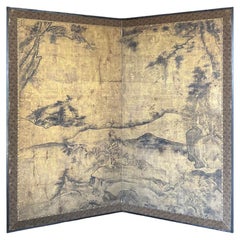
Early Edo Period Chinese-Inspired Screen
Located in Fukuoka, JP
This remarkable screen from the early Edo period, circa the 17th century, showcases the influence of early Chinese art forms with its intricate ink work on a gold leafed surface. The...
Category
17th Century Japanese Edo Antique Asia - Paintings and Screens
Materials
Gold Leaf
$3,496 Sale Price
56% Off
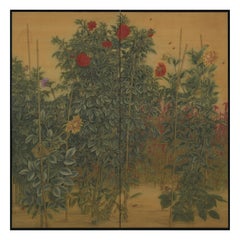
Circa 1920. Taisho era Japanese Nihonga Screen. Dahlias
Cockscomb.
Located in Kyoto, JP
Kawabe Kasho (b.1892)
Dahlias & Cockscomb
Taisho era. Circa 1920
Two-panel Japanese Screen. Mineral pigments and ink on silk.
This exquisite two-panel Japanese folding screen, pa...
Category
Early 20th Century Japanese Taisho Asia - Paintings and Screens
Materials
Silk
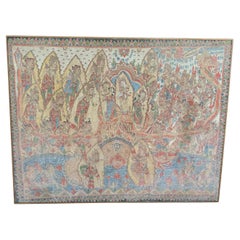
Bali Hindu Textile Framed
Kamasan
Painting, Indonesia C. 1940
Located in Jimbaran, Bali
This captivating Balinese Kamasan textile painting showcases the distinctive style rooted in the classical Wayang tradition, unfolding a mythic tableau rich with symbolism and storyt...
Category
1950s Balinese Folk Art Vintage Asia - Paintings and Screens
Materials
Cotton, Paint
Art Deco Garden Screen 3 Panels By André Fu Living
By André Fu
Located in Admiralty, HK
designed as a nod to the beauty of japanese zen gardens, this artfully designed movable screen is visually pure in its composition, yet intricate at the same time. crafted in solid a...
Category
2010s Chinese Modern Asia - Paintings and Screens
Materials
Ash

$15,455 / item
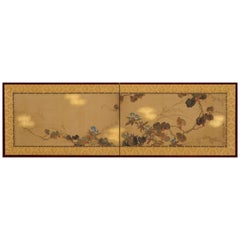
Japanese Screen Painting, Early 19th Century, Autumn Flowers by Sakai Hoitsu
Located in Kyoto, JP
A two-fold Japanese screen by the Rimpa school artist Sakai Hoitsu (1761-1828), Japan, 19th century, Edo period.
This small Japanese folding screen pai...
Category
Early 19th Century Japanese Edo Antique Asia - Paintings and Screens
Materials
Wood, Silk
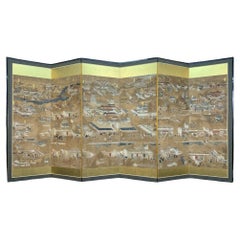
Edo Period Kyoto Screen
Located in Fukuoka, JP
Edo Period Kyoto Screen
Period: Edo period
Size: 343 x 176 cm (134.6 x 69 inches)
SKU: RJ69
This stunning Edo period screen depicts typical scenes of d...
Category
18th Century Japanese Edo Antique Asia - Paintings and Screens
Materials
Silk, Wood, Paper
$9,450
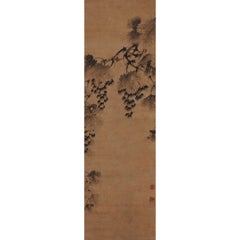
Korean Painting, Wall Panel, 17th Century Ink Grapevine
Located in Kyoto, JP
Grapevine
Anonymous. Korean, 17th century.
Wall panel, ink on paper.
Upper seal:
Kou Kinun in
Lower seal:
Kaigen
Dimensions:
Measures: 98.5 cm x 29.5 cm (39” ...
Category
17th Century Korean Other Antique Asia - Paintings and Screens
Materials
Wood, Paper
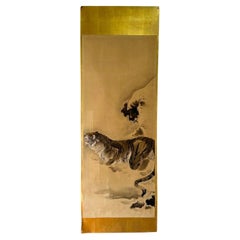
Late 19th century (Meiji period) painting depicting tiger
Located in Fukuoka, JP
Antique Tiger Painting on Paper – Meiji Period
A striking depiction of a tiger, painted on paper and signed by the artist. This work was originally part of a Japanese byobu folding ...
Category
Late 19th Century Japanese Meiji Antique Asia - Paintings and Screens
Materials
Gold Leaf
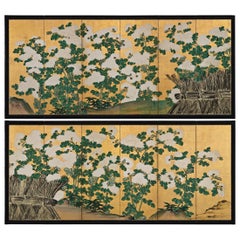
Mid-18th Century Japanese Screen Pair, One Hundred Flowers, Chrysanthemums
Located in Kyoto, JP
Omori Soun (b. 1704)
Chrysanthemums - One Hundred Flowers
A Pair of Six-fold Japanese Screens. Ink, color, gofun and gold leaf on paper.
Dating ...
Category
Mid-18th Century Japanese Edo Antique Asia - Paintings and Screens
Materials
Gold Leaf
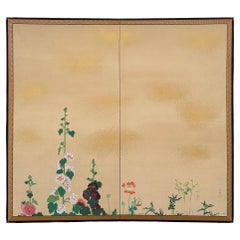
Showa Golden Mallow Screen
Located in Fukuoka, JP
This exquisite two-panel screen from the Showa period features a lush depiction of mallows in vibrant hues set against a luxurious golden background. The mallow flower, known in Japa...
Category
20th Century Japanese Showa Asia - Paintings and Screens
Materials
Gold Leaf
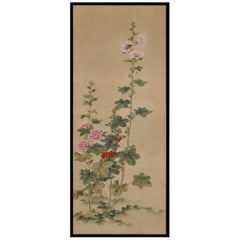
Mid 19th Century Framed Japanese Painting. Snail, Wasp
Hollyhock.
Located in Kyoto, JP
Obata Tosho (1812-1886)
Snail, Wasp & Hollyhock
Late Edo period, mid 19th Century
Framed Japanese Painting. Ink and color on paper.
Individually framed 19th century bird and flow...
Category
Mid-19th Century Japanese Edo Antique Asia - Paintings and Screens
Materials
Paper
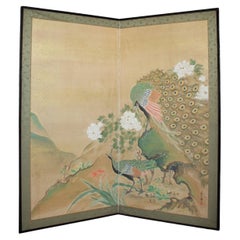
B50 Old Japanese Antiques a folding screen, Byobu 2panel, Peacock
Located in Niiza, JP
Unfolded size: 1700 x 1720 x 18 mm
Foldable: 855 x 1720 x 36 mm, 6kg
Estimated size after packaging (sandwiched between 9 mm plywood):
8 cm x 92 cm x 180 cm Weight 25KG
This paint...
Category
19th Century Japanese Antique Asia - Paintings and Screens
Materials
Wood, Paper
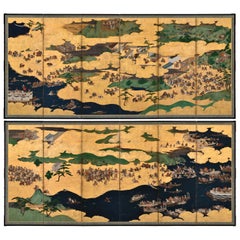
Late 17th Century Japanese Screen Pair. Battle of Ichi-no-tani and Yashima.
Located in Kyoto, JP
Anonymous
Late 17th Century
Battle of Ichi-no-tani & Yashima
Dimensions: Each Screen: H. 175 cm x W. 385 cm (69” x 151.5”)
This pair of Japanese screens depict two significant battles from the Genpei War (1180–85), as recounted in the Tale of the Heike, a semi-historical epic chronicling the conflict between rival clans for control of Japan, written in the early 1200s.
Each screen portrays a single battle through a series of small episodes, framed by gold clouds, landscape elements, and architectural features. True to the style of many screens inspired by The Tale of the Heike, the scenes are rendered in lavish colors and gold, downplaying the brutality of the warfare. Although based on real events, these narratives often glorified and romanticized the heroic feats of the warriors. Viewers at the time would have been familiar with the story’s details, leading to a proliferation of paintings on folding screens inspired by this theme from the late Muromachi to the early Edo periods.
On the right screen, we see the Minamoto’s attack on the Taira, who have retreated from the capital, Kyoto, toward the sea. The central building represents the temporary Taira headquarters, where Taira soldiers are holding the young Emperor Antoku. The Minamoto plan to launch a surprise attack from the rear after descending the steep cliff known as Ichi-no-tani, depicted at the top center. This scene highlights the tactical brilliance of Minamoto commander Yoshitsune and the courage of his men.
The left screen captures moments from the Battle of Yashima...
Category
Late 17th Century Japanese Edo Antique Asia - Paintings and Screens
Materials
Gold Leaf
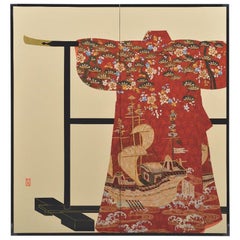
Japanese Large Red Silk Brocade Gilded Two Panel Folding Screen
Located in Takarazuka, JP
Exquisite contemporary Japanese two panel folding screen or "byobu" featuring genryoku style handcrafted silk raised kimono in cream and gold needlework on a mesmerizing red background. Tagasode is the way a genryoku kosode kimono is hung over a kimono rack...
Category
21st Century and Contemporary Japanese Asia - Paintings and Screens
Materials
Gold
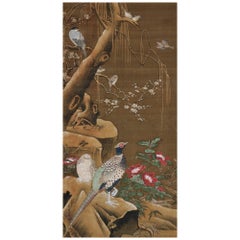
Japanese Painting. Bird and Flower. 19th century copy of Lu Ji by Ogata Tomin.
Located in Kyoto, JP
Ogata Tomin (1839 -1895)
Birds in a spring landscape
Ink and colour on silk.
Inscription reads:
“Copy of Lu Ji, painted with heartfelt appreciation”
“Painted by Tomin Ogat...
Category
Late 19th Century Japanese Ming Antique Asia - Paintings and Screens
Materials
Silk
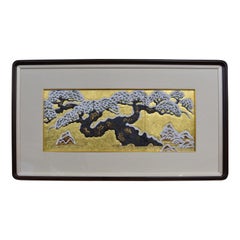
Japanese Contemporary Gold Leaf Brown Framed Porcelain Panel by Master Artist, 3
Located in Takarazuka, JP
Exquisite museum quality Japanese contemporary framed porcelain panel art work consisting of three pieces intricately hand-painted showcasing a wintry ...
Category
21st Century and Contemporary Japanese Meiji Asia - Paintings and Screens
Materials
Gold Leaf
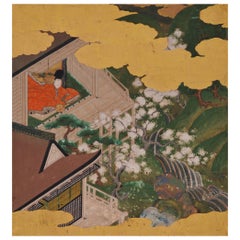
Japanese Painting, 17th Century, Tale of Genji, Tosa School
Located in Kyoto, JP
Illustration to an unidentified chapter of the Tale of Genji (Genji Monogatari)
Tosa School (second half of the 17th Century)
Ink, pigment, gofun and...
Category
Late 17th Century Japanese Edo Antique Asia - Paintings and Screens
Materials
Gold Leaf
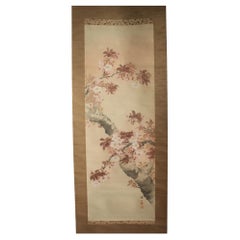
K10 Japanese Antiques Hanging scroll, Cherry blossom painting, silk
Located in Niiza, JP
Cherry blossom painting
Silk Scroll tip: wood
Image size: 410 (W) x 1200 (H) [mm]
Scroll mounting: 570 (W) x 2180 (H) [mm]
Box size: 80 x 75 x 700 mm 970g
Comes with a box, although...
Category
19th Century Japanese Antique Asia - Paintings and Screens
Materials
Silk
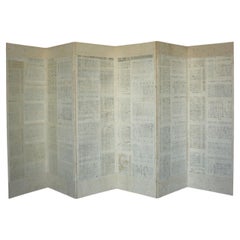
B82 Old Japanese antiques 6panels, Plain folding screen with the base left as is
Located in Niiza, JP
Plain folding screen with the base left as is
Material: Paper on wooden frame
One piece: W580×H1740mm×D15mm,
Unfolded size: W3500mm
Folded size: W590×H1740×D100mm, 7kg
Estimate packi...
Category
20th Century Japanese Asia - Paintings and Screens
Materials
Paper
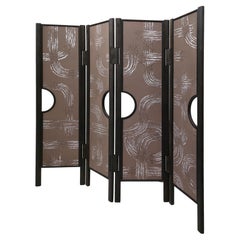
Art Deco Garden Screen 4 Panels By André Fu Living
By André Fu
Located in Admiralty, HK
designed as a nod to the beauty of japanese zen gardens, this artfully designed movable screen is visually pure in its composition, yet intricate at the same time. crafted in solid a...
Category
2010s Chinese Modern Asia - Paintings and Screens
Materials
Ash
$20,618 / item
Japanese Contemporary Silk Red Black Cream Hand-Crafted Two Panel Folding Screen
Located in Takarazuka, JP
Exceptional Japanese contemporary two panel "byobu" or folding screen featuring genryoku style handcrafted silk raised kimono Japanese decorative art in crimson red, cream and gold o...
Category
21st Century and Contemporary Japanese Meiji Asia - Paintings and Screens
Materials
Gold
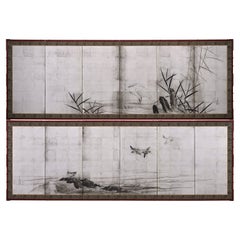
Japanese Silver Screen Pair, Meiji Period, Herons
Plovers, Shijo School
Located in Kyoto, JP
Heron & Plovers
Ink and silver leaf on paper
Maekawa Bunrei (1837-1917)
A pair of low six-panel Japanese screens by Maekawa Bunrei, a later master of the Kyoto based Shijo school of painting. On the right screen a solitary white heron stands motionless in a stream. On the left screen plovers play along a shoreline. The elegant forms are executed employing fluid, minimalistic ink brushstrokes. The soft brushstrokes and the sharp light of the silver leaf lend the scenes a sense of translucence. The sophisticated composition superbly exploits the long, horizontal pictorial surface of the pair of folding screens...
Category
Early 1900s Japanese Meiji Antique Asia - Paintings and Screens
Materials
Silver Leaf
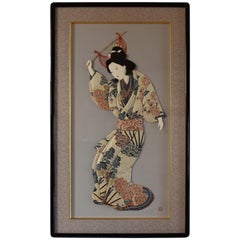
Japanese Contemporary Brocade Silk Handcrafted Framed Oshie Decorative Art
Located in Takarazuka, JP
Exquisite Japanese contemporary framed oshie wall decorative art piece, recreating a famous painting from Meiji period featuring a Japanese dancer holding a net with cherry blossom ...
Category
21st Century and Contemporary Japanese Meiji Asia - Paintings and Screens
Materials
Brocade, Silk
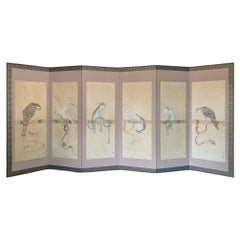
Mid-Edo Hawk Screen
Located in Fukuoka, JP
Step into the world of Mid Edo Japan with our six-panel Hawk screen, each depicting a different hawk. In this period, hawks were revered not only for their majestic beauty but also f...
Category
18th Century Japanese Edo Antique Asia - Paintings and Screens
Materials
Wood, Paper
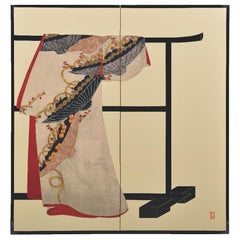
$2,520
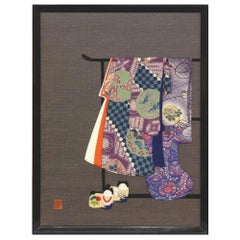
Japanese Contemporary Framed Blue Purple Gray Silk Brocade Decorative Art
Located in Takarazuka, JP
Japanese contemporary framed three-dimensional decorative art piece in Japanese traditional silk and brocade in soft green, blue and purple on a deep gray background, recreating an 1...
Category
21st Century and Contemporary Japanese Meiji Asia - Paintings and Screens
Materials
Brocade, Silk
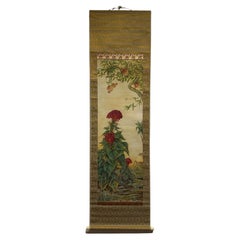
Fine Japanese Floral Painting Scroll, Taisho Period, Early 20th Century
Located in Fukuoka, JP
A superb early 20th-century Japanese hanging scroll (kakejiku) from the Taisho period, featuring an elegant and vibrant floral painting. The artwork is executed with refined skill an...
Category
Early 20th Century Japanese Taisho Asia - Paintings and Screens
Materials
Wood, Paper
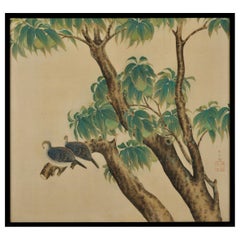
Japanese Framed Silk Painting, Turtledoves and Peaches, Taisho Era, circa 1920
Located in Kyoto, JP
Nakamura Daizaburo
Turtledoves in a Peach Tree
Taisho period, circa 1920
Framed painting. Mineral pigments, ink and gofun on silk
Signed: Daizaburo
Dimensions (framed)...
Category
1910s Japanese Taisho Vintage Asia - Paintings and Screens
Materials
Wood, Silk
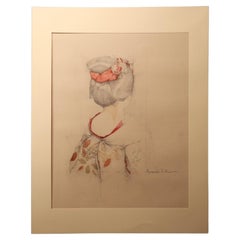
Large Collotype Print by Ryunosuke Fukui
from "Maiko" Series
- print no 7
Located in Fukuoka, JP
A large print created by Ryunosuke Fukui, a highly acclaimed modernist artist from Japan who lived between 1923 and 1986. Fukui's art has been exhibited in many prestigious museums a...
Category
20th Century Showa Asia - Paintings and Screens
Materials
Other
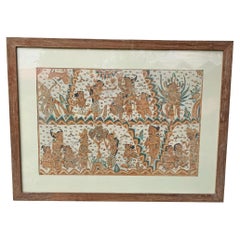
Bali Hindu Textile Framed
Kamasan
Painting, Indonesia, Early 20th Century
Located in Jimbaran, Bali
An early 20th century 'Kamasan' cotton textile painting from Bali, Indonesia. The hand-painted image has great detail and depicts Balinese Hindu mythology. It has been framed with a ...
Category
Early 20th Century Balinese Folk Art Asia - Paintings and Screens
Materials
Cotton, Paint
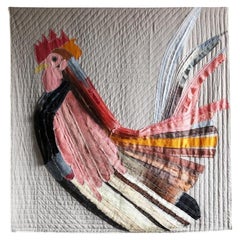
sky color bird by Blue Tip Atelier
Located in Sammu-shi, Chiba
Title : sky color bird
Japan / 2024s
Size : w1620 x h1635 mm
Scraps of fabric used in the Sky series are used to express birds in the colours of the sky.
The materials used are li...
Category
2010s Japanese Modern Asia - Paintings and Screens
Materials
Linen
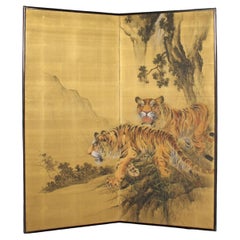
B13 Japanese Antiques 2panels, silk, folding Screen with Tiger
Located in Niiza, JP
Material: Silk on wooden frame
One piece: W685×H1525mm×D20mm,
Unfolded size: W1370mm
Folded size: W685×H1525×D40mm, 5kg
Packaging estimate (sandwiched with 5-10mm plywood): 12cm x 77...
Category
20th Century Japanese Asia - Paintings and Screens
Materials
Silk
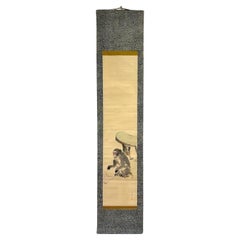
19th.c Fine painting depicting Monkey.
Located in Fukuoka, JP
Very fine sroll painting depicting Monkey. Signed. Painted on paper canvass with ink.
Size:192/40.5cm ( 75.5/15.9inch ), painting only is 131/30cm ( 51.5 / 11.8inch ) 230gr (0.5l...
Category
19th Century Japanese Edo Antique Asia - Paintings and Screens
Materials
Wood, Paper
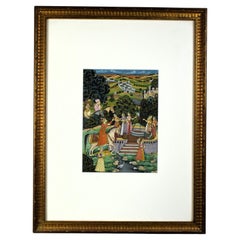
Mughal Miniature of Shah Jahan on a Leisure Stroll, 19th Century
Located in Islamabad, PK
The Mughal miniature painting, meticulously crafted with a single-hair brush on fine rice paper, captures a serene and elegant scene of Emperor Shah Jahan taking a leisurely stroll o...
Category
Mid-19th Century Indian Anglo Raj Antique Asia - Paintings and Screens
Materials
Paint, Paper
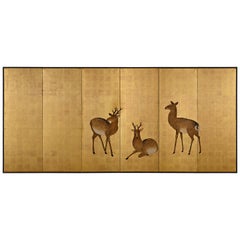
19th Century Japanese Screen, Deer in Spring, Maruyama Shijo School
Located in Kyoto, JP
A six-panel Japanese folding screen from the leading Maruyama-Shijo artist Okamoto Toyohiko (1773-1845). Simply featuring three deer and a few sprigs of foliage on a sumptuous gold-leaf background this work emphasizes naturalistic expression and a masterful use of negative space. Reduced to its most basic elements, the blank spaces inspire imagination and evoke the smells, sounds and even the weather of the scene. Whilst deer are traditionally depicted in association with autumn, here the green growth on the tops of the foliage indicates the season of spring. The work references Maruyama Okyo’s two-panel deer screen...
Category
Early 19th Century Japanese Edo Antique Asia - Paintings and Screens
Materials
Gold Leaf
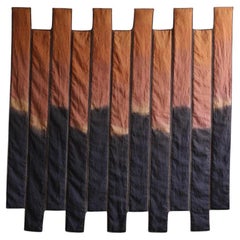
The sky visible at Honmonji Temple Ⅲ by Blue Tip Atelier
Located in Sammu-shi, Chiba
Title : The sky visible at Honmonji Temple Ⅲ
Japan / 2024s
Size : w1620 x h1630 mm
The sky can be seen from Honmonji Temple, which the artist passes while running, a hobby of her...
Category
2010s Japanese Modern Asia - Paintings and Screens
Materials
Linen
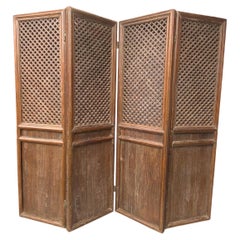
Qing Dynasty Chinese Four Panel Screen c. 1850
Located in Jimbaran, Bali
A testement to Qing Dynasty craftsmanship this folding panel features wonderful lattice windows. The panel still features its original hinges that allows for many ways to position th...
Category
1850s Chinese Qing Antique Asia - Paintings and Screens
Materials
Wood
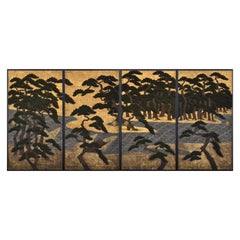
Circa 1700 Japanese Sliding Door (Fusuma) Set. Pine Trees on the Seashore.
Located in Kyoto, JP
"Pine Trees on the Seashore"
A set of four sliding doors (Japanese fusuma). Ink, color, gold-leaf and gold-fleck on paper.
Dimensions (total display si...
Category
Late 17th Century Japanese Edo Antique Asia - Paintings and Screens
Materials
Gold Leaf
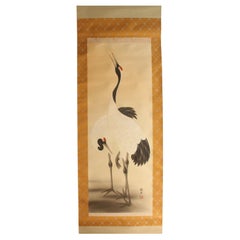
K8 Japanese Antiques Hanging scroll, crane, silk
Located in Niiza, JP
Silk Scroll tip: resin
Size Image size: 410 (W) x 1100 (H) [mm] Scroll mounting: 540 (W) x 1900 (H) [mm]
Box size: 80 x 80 x 630 mm 900g Comes with a box, although it is not an orig...
Category
20th Century Japanese Asia - Paintings and Screens
Materials
Silk
Showa Delicate Floral Screen
Located in Fukuoka, JP
This graceful two-panel screen captures the essence of summer with its subtle depiction of slender grasses and fine lines, artfully arranged against a golden background. The screen e...
Category
20th Century Japanese Showa Asia - Paintings and Screens
Materials
Gold Leaf

Still Thinking About These?
All Recently ViewedMore Ways To Browse
Asian Folding Screen Birds
Brown Wood Framed Qing Dynasty Portraits
Carved Soapstone Panels
Chinese Emperor Painting
Chinese Floor Screens
Chinese Lacquer Antique Screens
Chinese Stone Panel
Emperor Empress Art
Gold Leaf Cranes
Japanese Brush Painting
Japanese Dragon Screen
Japanese Edo Screen 4 Panels
Japanese Oshie
Japanese Painting Irises
Japanese Screen Kyoto
Japanese Screen With Birds
Japanese Waterfall Painting
Kyoto Screens