Asia - Paintings and Screens
to
56
373
1,108
398
279
91
3
28
10
1
1
37
88
154
94
42
21
13
3
1
7
1
7
12
6
4
190
168
121
121
94
352
324
277
41
14
373
334
347
26
4
3
2
1
Item Ships From: Asia
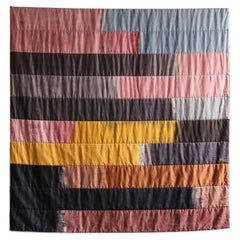
The sky visible at Honmonji Temple Ⅱ by Blue Tip Atelier
Located in Sammu-shi, Chiba
Title : The sky visible at Honmonji Temple Ⅱ
Japan / 2024s
Size : w1805 x h1805 mm
The sky can be seen from Honmonji Temple, which the artist passes while running, a hobby of hers....
Category
2010s Japanese Modern Asia - Paintings and Screens
Materials
Linen
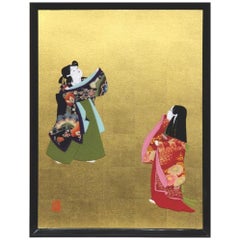
Japanese Contemporary Framed Green Red Black Gold Decorative Art
Located in Takarazuka, JP
Exquisite Japanese contemporary framed three-dimensional decorative art piece in Japanese silk kimono fabric in vivid red, green and black on gold leaf Japanese paper, recreating a s...
Category
21st Century and Contemporary Japanese Meiji Asia - Paintings and Screens
Materials
Gold Leaf
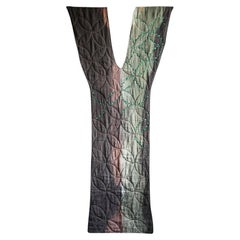
Big Tree by Blue Tip Atelier
Located in Sammu-shi, Chiba
Title : Big Tree
Japan / 2024s
Size : w 820 × h 1950 mm
The large tree is expressed through dyeing, quilting and embroidery.
The material is fine Croatian Linen.
Hand quilted with c...
Category
2010s Japanese Modern Asia - Paintings and Screens
Materials
Linen
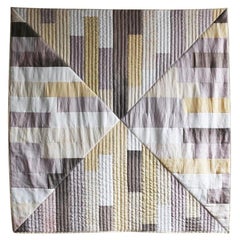
Lumière douce (à Paris) by Blue Tip Atelier
Located in Sammu-shi, Chiba
Title : Lumière douce (à Paris)
Japan / 2024s
Size : w1500 x h1490 mm
The soft light that shines through the cloudy skies of Paris, where the artist once lived, is replaced with ...
Category
2010s Japanese Modern Asia - Paintings and Screens
Materials
Linen
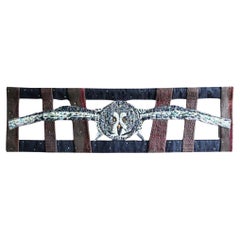
Fukurou(fuyu) by Blue Tip Atelier
Located in Sammu-shi, Chiba
Title : Fukurou (fuyu)
Japan / 2024s
Size : h 490 × w 1720 mm
An owl flapping through the winter trees is expressed through hand-painted, dyeing, quilting, and embroidery.
The mater...
Category
2010s Japanese Modern Asia - Paintings and Screens
Materials
Linen
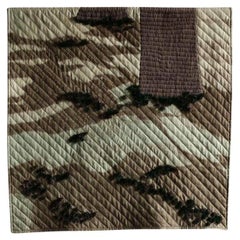
Komorebi(Ohara, Kyoto) by Blue Tip Atelier
Located in Sammu-shi, Chiba
Title : Komorebi(Ohara, Kyoto)
Japan / 2024s
Size : w970 x h960 mm
A landscape seen in Ohara, Kyoto.
The sunlight filtering through the trees is expressed using a variety of techni...
Category
2010s Japanese Modern Asia - Paintings and Screens
Materials
Linen
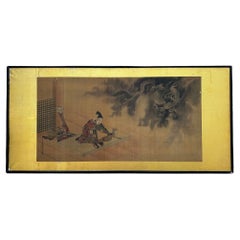
Elegant Edo period painting by Reizei Tamechika (1823-1864) 冷泉為恭
Located in Fukuoka, JP
Elegant Edo period painting by Reizei Tamechika (1823-1864)
Period: Edo
Size: 113x53 cm
Indulge in the elegance of the Edo period with our superb painting on silk, a masterpiece ...
Category
19th Century Japanese Edo Antique Asia - Paintings and Screens
Materials
Gold Leaf

$2,600 Sale Price
38% Off
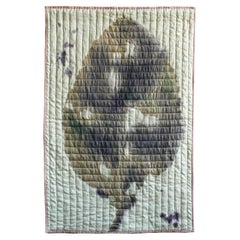
one leaf by Blue Tip Atelier
Located in Sammu-shi, Chiba
Title : one leaf
Japan / 2023s
Size : w790 x h1200 mm
A work that has been unevenly dyed after hand-painting.
This quilt is made with linen viyella, which has a natural sheen.
Han...
Category
2010s Japanese Modern Asia - Paintings and Screens
Materials
Linen
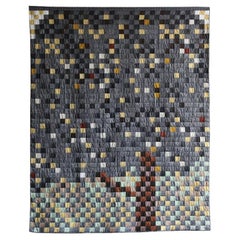
Tree by Blue Tip Atelier
Located in Sammu-shi, Chiba
Title : Tree
Japan / 2021s
Size : W 1100 H 1400 mm
This quilt is a traditional technique called nine patches,
which skillfully uses the shades of cloth to create a mosaic effec...
Category
2010s Japanese Modern Asia - Paintings and Screens
Materials
Linen
$3,000
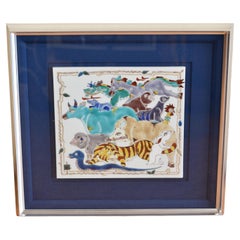
Japanese Green Yellow Brown Framed Porcelain Panel by Master Artist
Located in Takarazuka, JP
Exquisite Japanese contemporary hand-painted Kutani porcelain framed porcelain panel in a square shape, one of the artist's signature works depicting C...
Category
21st Century and Contemporary Japanese Asia - Paintings and Screens
Materials
Porcelain
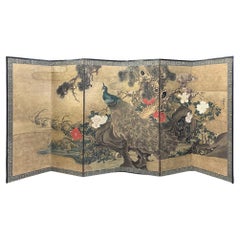
Lavish 19th Century Maruyama School Peacock Screen
Located in Fukuoka, JP
Lavish 19th Century Maruyama School Peacock Screen
Period: 19th Century
Size: 360 x 173 cm (141.7 x 68.1 inches)
Behold the grandeur of the 19th Cent...
Category
19th Century Japanese Edo Antique Asia - Paintings and Screens
Materials
Wood, Paper
$10,700 Sale Price
45% Off
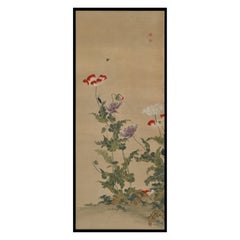
Mid 19th Century Framed Japanese Painting. Longhorn Beetle
Poppies.
Located in Kyoto, JP
Obata Tosho (1812-1886)
Longhorn Beetle & Poppies.
Late Edo period, mid 19th Century
Framed Japanese Painting. Ink and color on paper.
Individually framed 19th century bird and f...
Category
Mid-19th Century Japanese Edo Antique Asia - Paintings and Screens
Materials
Paper
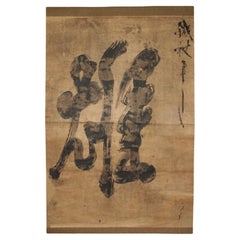
K27 Japanese Antiques A large hanging scroll, calligraphy monk Ink on paper
Located in Niiza, JP
Ink on paper, Scroll head: wood
Image size: 740(W) x 1070(H) [mm]
Scroll mounting: 890(W) x 1840(H) [mm] 750g
Estimated packing size: 140(W) x 140(H) x 1950(D) [mm] 4kg
Dynamic Si...
Category
19th Century Japanese Antique Asia - Paintings and Screens
Materials
Fabric, Paper
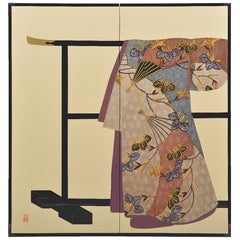
Japanese Contemporary Orange Black Cream Silk Two-Panel Folding Screen, 4
Located in Takarazuka, JP
Extraordinary Japanese contemporary two panel "byobu" or folding screen featuring genryoku style handcrafted silk raised kimono Japanese decorative art in Purple, blue, black and ora...
Category
21st Century and Contemporary Japanese Meiji Asia - Paintings and Screens
Materials
Gold
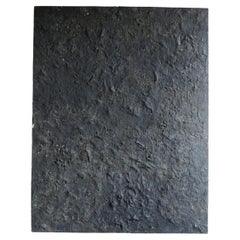
Tsumikasanattamono by Wataru Hatano BK
Located in Sammu-shi, Chiba
Japan / 2021s
Size : W1200 D25 H1550 mm
Kuroya Washi artist Hatano Wataru's masterpiece "Stacked Things" series. Japanese paper, soil, pigments, etc. are layered on top of each other to express the beauty of what has been accumulated over the years.
[Wataru Hatano...
Category
2010s Japanese Japonisme Asia - Paintings and Screens
Materials
Sandstone
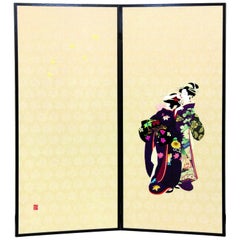
Japanese Traditional Brocade Silk Two-Panel Folding Screen
Located in Takarazuka, JP
Japanese contemporary two-panel "byobu" or folding screen featuring two graceful ladies dressed in elegant formal traditional Japanese kimonos. This folding screen is inspired by Jap...
Category
21st Century and Contemporary Japanese Meiji Asia - Paintings and Screens
Materials
Brocade, Silk
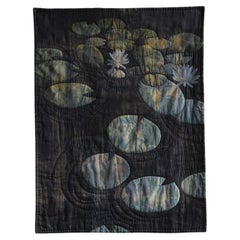
Suiren by Blue Tip Atelier
Located in Sammu-shi, Chiba
Title : SUIREN
Japan / 2022s
Size : W 610 H 810 mm
Expressing delicate color changes by dyeing many times.
This quilt is made with french linen and cotton.
Hand-quilted with Japanese sashiko...
Category
2010s Japanese Modern Asia - Paintings and Screens
Materials
Linen
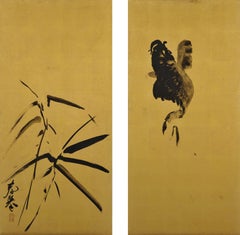
Yamamoto Shunkyo (1871-1933) Japanese Framed Painting Pair, Carp and Bamboo
Located in Kyoto, JP
Two framed panels by Yamamoto Shunkyo depicting a carp (koi) leaping from a river.
Ink and gold leaf on paper.
Instinctively brushed in a freehand s...
Category
Early 20th Century Japanese Meiji Asia - Paintings and Screens
Materials
Gold Leaf
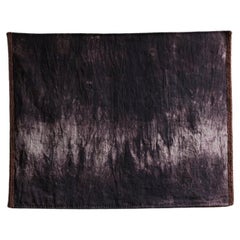
Lumière Ⅰ by Blue Tip Atelier
Located in Sammu-shi, Chiba
Title : lumière ?
Japan / 2022s
Size : W 990 H 770 mm
A work inspired by light.
This quilt is made with Woven fresh linen and french linen.
Hand-quilted with Japanese sashiko...
Category
2010s Japanese Modern Asia - Paintings and Screens
Materials
Linen
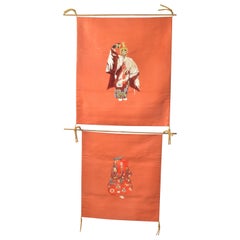
Pair of Japanese Vintage Gilded Embroidered Silk Wall Decorative Art, circa 1935
Located in Takarazuka, JP
Exquisite pair of Japanese vintage (circa 1935) hand-crafted extremely intricately embroidered silk fabric used in the presentation of ceremonial gifts on special occasions called fu...
Category
1930s Japanese Meiji Vintage Asia - Paintings and Screens
Materials
Silk
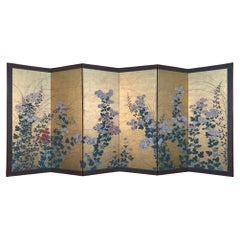
Early 19th Century Rimpa School Floral Screen
By Rimpa School
Located in Fukuoka, JP
Early 19th Century Rimpa School Floral Screen
Period: Early 19th Century
Dimensions: 367x171 cm (144.5x67.3 inches)
SKU: RJ118/2
This 6-panel gold-leafed screen is a splendid repre...
Category
Early 19th Century Japanese Edo Antique Asia - Paintings and Screens
Materials
Gold Leaf
$13,260 Sale Price
25% Off
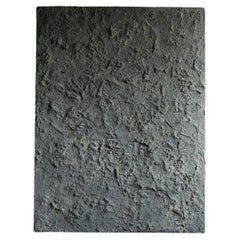
Tsumikasanattamono by Wataru Hatano
Located in Sammu-shi, Chiba
Japan / 2021s
Size : W1200 D25 H1600 mm
Kuroya Washi artist Hatano Wataru's masterpiece "Stacked Things" series. Japanese paper, soil, pigments, etc. are layered on top of each other to express the beauty of what has been accumulated over the years.
[Wataru Hatano...
Category
2010s Japanese Japonisme Asia - Paintings and Screens
Materials
Sandstone
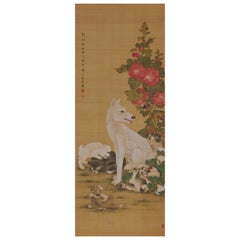
1844 - Chichi, Japanese Scroll Painting. Colour on Silk
Located in Kyoto, JP
Mother’s Breast (Chichi) 1844
Hanging scroll. Ink, pigments and gofun on silk.
Inscription:
Kouka era, dragon year, late winter, painted by Shozan Yashou
Artist’ seals:
...
Category
1840s Japanese Edo Antique Asia - Paintings and Screens
Materials
Silk
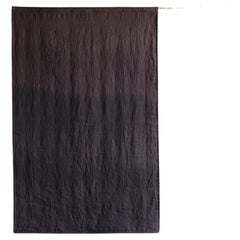
Mountains at Dawn by Blue Tip Atelier
Located in Sammu-shi, Chiba
Title : Mountains at dawn
Japan / 2022s
Size : W 990 H 1500 mm
A work inspired by the mountains at dawn.
This quilt is made with french linen.
Hand-quilted with Japanese sashiko...
Category
2010s Japanese Modern Asia - Paintings and Screens
Materials
Linen
Japanese Contemporary Red Black Cream Folding Screen Silk Brocade Kimono Art, 3
Located in Takarazuka, JP
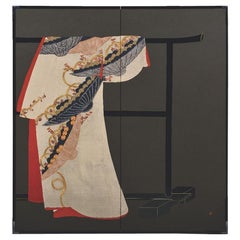
Exceptional Japanese contemporary two panel "byobu" or folding screen featuring genryoku style handcrafted silk raised kimono Japanese decorative art in crimson red, black and gold o...
Category
21st Century and Contemporary Japanese Meiji Asia - Paintings and Screens
Materials
Gold
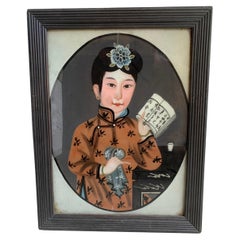
Chinese Reverse Glass Painting of Woman, Early 20th Century
Located in Jimbaran, Bali
This Chinese portrait depicts a young woman and was painted using a reverse glass painting technique. Painting in reverse on the opposite side of a piece of glass meant the painter h...
Category
Early 20th Century Chinese Qing Asia - Paintings and Screens
Materials
Glass, Wood, Paint
Mathilda by Blue Tip Atelier
Located in Sammu-shi, Chiba
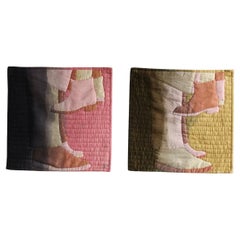
Title : Mathilda(Ⅰ,Ⅱ)
Japan / 2023s
Size : w440 x h440 mm
This quilt is made with french linen.
Hand-quilted with cotton thread.
Hand dyed with madder, chinese sumac, Japanese Pagoda Tree flower buds
and tingi (A kind of bark of mangrove).
[Blue Tip...
Category
2010s Japanese Modern Asia - Paintings and Screens
Materials
Linen
$1,200 / set
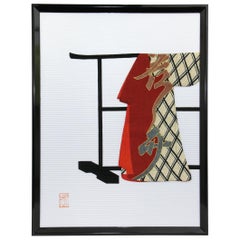
Japanese Contemporary Framed Red Black Silk Brocade Oshie Decorative Art
Located in Takarazuka, JP
A sophisticated technique is used to transform highest quality kimono fabrics into exquisite antique pieces of kimono fabric to recreate a Genryoku kosode kimono . Tagasode is the wa...
Category
21st Century and Contemporary Japanese Meiji Asia - Paintings and Screens
Materials
Silk, Brocade
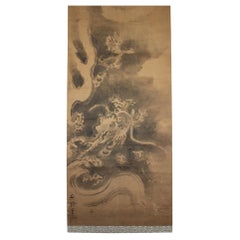
K19 Japanese Antiques A hanging scroll, Dragon
Clouds Ink on Paper painted
Located in Niiza, JP
Ink on paper, Scroll head: wood
Image size: 340(W) x 950(H) [mm]
Scroll mounting: 460(W) x 1530(H) [mm]
Box size: 70(W) x 70(H) x 550(D) [mm] 600g
Estimated packing size: 130(W) x 13...
Category
19th Century Japanese Antique Asia - Paintings and Screens
Materials
Paper
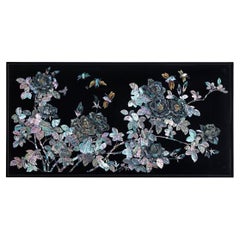
Wall Decor Handcrafted Painting on Wood Panel by Arijian Rose 03
Located in Namyangju-si, KR
The rose, forever a symbol of romantic love is expressed multifariously by using mother of pearl, lacquer, gilt, and silver powder in this work. It delivers the delicate touches of a...
Category
2010s South Korean Asia - Paintings and Screens
Materials
Wood
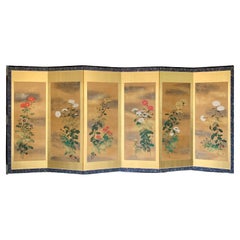
Meiji Chrysanthemum Masterpiece
Located in Fukuoka, JP
Step into a world of timeless beauty with our exceptional six-panel screen from the Edo-Meiji period. In impeccable condition, each panel features stunning paintings of chrysanthemum...
Category
19th Century Japanese Meiji Antique Asia - Paintings and Screens
Materials
Gold
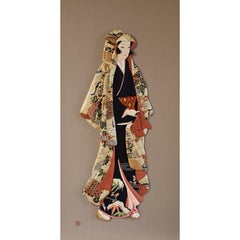
Japanese Contemporary silk brocade Traditional Oshie Handcrafted Decorative Art
Located in Takarazuka, JP
Extraordinary hand crafted Japanese contemporary traditional oshie wall decorative art piece with a stunning three-dimensional effect. This is a centuries-old traditional Japanese handcrafted wall decorative art form using high quality silk and brocade fabrics, known as oshie (literally, “pressed pictures”) that goes back to the Edo period (1603-1868). It is said this art form was born of the reluctance of ladies of the court to discard the magnificent silk kimonos and brocaded obi they had donned for a lifetime. The solution was to recycle these opulent fabrics into stunning works of art.
Oshie resembles a carefully crafted very intricate jigsaw puzzle comprising numerous intricate pieces of kimono fabric padded with slightly differing thicknesses of cotton and painstakingly glued and ironed individually. All those tiny pieces are then glued one by one on a custom-made board making sure each piece lands on the exact right place making sure that the right pieces overlap the lower pieces to create an undulating three-dimesional picture. Highly detailed oshie pieces contain hundreds of small pieces that are expertly aligned to recreate even the minutest details of the the painting In the final process. Facial features are painted in miniature-like exactitude. The end product is an awe-inspiring piece with a surprising three-dimensional effect.
This magnificent piece depicts a fascinating scene of a lady of privilege wearing an exquisitely brocaded headdress and overcoat to protect herself from the cold. Each dainty step she takes exposes the folds of her multi-layered kimono in a scene reminiscent of the ladies of the ancient imperial court of Japan. The creator of this signed piece has prided herself in using exquisite antique and vintage kimono and obi...
Category
21st Century and Contemporary Japanese Meiji Asia - Paintings and Screens
Materials
Brocade, Silk
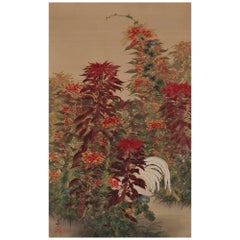
Japanese Painting, Hanging Scroll, Circa 1930, Amaranth and Rooster
Located in Kyoto, JP
Amaranth and Rooster
Artist unknown
Hanging scroll, ink, mineral pigment and gofun on silk.
Painting inscription: Tojo ??
Painting seal: Tojo ??
circa 1930
Dimensions:
Scroll:...
Category
Early 20th Century Japanese Taisho Asia - Paintings and Screens
Materials
Silk
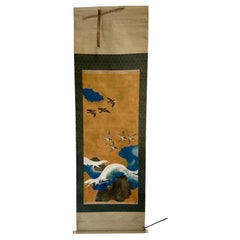
Early 20th c. scroll depicting birds flying over the waves
Located in Fukuoka, JP
Unique signed Hanging Scroll depicting birds flying over the waves.
Age: First half of the 20th century
Size: Overall 203/64.5cm ( 79.8 / 25.3inch ) , only painting part:117/50....
Category
Early 20th Century Japanese Taisho Asia - Paintings and Screens
Materials
Wood, Paper
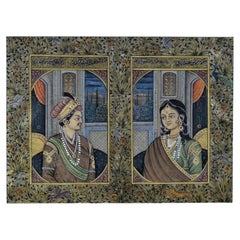
Mughal miniature portrait depicting Emperor Akbar and Jodha Bai, 19th Century
Located in Islamabad, PK
The Mughal miniature portrait, created with a single-hair brush on delicate rice paper and embellished with 24k gold water, depicts the noble Mughal Emperor Akbar and his esteemed consort, Jodha Bai. This exquisite artwork exemplifies the pinnacle of Mughal artistry, renowned for its intricate detail and luxurious use of materials.
At the center of the composition, Emperor Akbar is portrayed with an air of majestic authority and wisdom. He is dressed in regal attire, featuring rich textiles adorned with elaborate patterns. The gold water applied to his garments and accessories adds a shimmering, ethereal quality, highlighting the emperor's status and the richness of his attire. His turban is prominently adorned with a jeweled ornament, enhancing his royal presence. Akbar's expression is composed and contemplative, reflecting his reputation as a wise and benevolent ruler.
Beside him stands Jodha Bai, exuding grace and elegance. Her attire is a masterpiece of Mughal textile...
Category
Mid-19th Century Indian Anglo Raj Antique Asia - Paintings and Screens
Materials
Gold Leaf
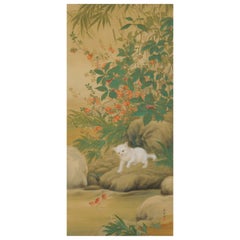
Japanese Painting, Hanging Scroll,
Playful Cat
by Hirose Toho, 1920s Taisho
By Hirose Toho
Located in Kyoto, JP
Playful Cat
Hirose Toho (1875-1930)
Hanging scroll, ink, mineral pigments and gofun on silk.
Painting inscription: Toho Sha
Painting seals:
Upper - Hirose Hitoshi
Lo...
Category
1920s Japanese Taisho Vintage Asia - Paintings and Screens
Materials
Silk
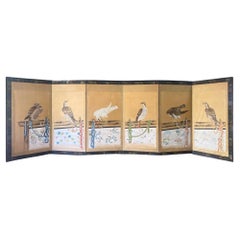
Late 18th to Early 19th Century Hawk Screen
Located in Fukuoka, JP
Late 18th to Early 19th Century Hawk Screen
Period: Late Edo
Size: 372 x 125 cm (146.4 x 49.2 inches)
Behold the grandeur of the late Edo period encaps...
Category
18th Century Japanese Edo Antique Asia - Paintings and Screens
Materials
Paper, Wood
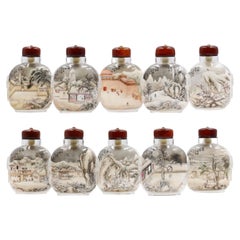
$5,800 Sale Price
32% Off
Inside Painted Snuff Bottles, Ten Pieces Snow Landscapes by Sun Sansong 1999
Located in Tainan, TW
Sun Sansong is the very early student of Wang Xisan. This collection is very rare and worth collecting. Ten Pieces are all his "FINE" works.
Artist: Sun ...
Category
20th Century Chinese Modern Asia - Paintings and Screens
Materials
Glass
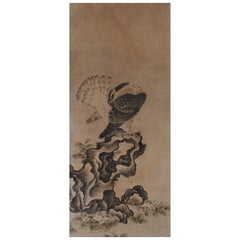
Japanese Painting, Framed Panel, 17th Century Falcon by Mitani Toshuku
By Mitani Toshuku
Located in Kyoto, JP
Mitani Toshuku (1577-1654)
“Falcon”
Wall panel, ink and light color on paper.
Upper seal: Mitani
Lower seal: Toshuku
Dimensions:
Each 118.5 cm x 51 cm x 2 cm (46.5” x 20” x .75”)
Individual falcon paintings by Mitani Toshuku (1577-1654), an early artist of the Unkoku School. Founded by Unkoku Togan (1547–1618), a master of the Momoyama period, the Unkoku school enjoyed long lasting patronage in southern Japan. Togan was a retainer of the Mori family in present day Yamaguchi prefecture. Members of the school considered themselves to be in the artistic lineage of Sesshu Toyo...
Category
Early 17th Century Japanese Edo Antique Asia - Paintings and Screens
Materials
Wood, Paper
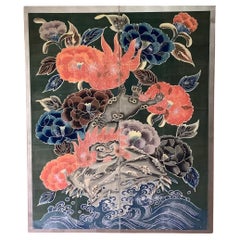
Late Edo period Tsutsugaki 筒描 Auspicious Shishi Batik Screen
Located in Fukuoka, JP
Auspicious Shishi Batik Screen
Period: Late Edo
Size: 145x173 cm (57x68 inches)
SKU: PTA62
Step into the mythical world of late Edo Japan with our radiant batik screen depicting the...
Category
19th Century Japanese Edo Antique Asia - Paintings and Screens
Materials
Cotton, Wood
$2,690 Sale Price
50% Off
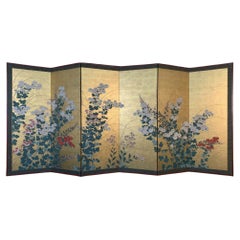
Early 19th Century Rimpa School Floral Screen
By Rimpa School
Located in Fukuoka, JP
Early 19th Century Rimpa School Floral Screen
Period: Early 19th Century
Dimensions: 367x171 cm (144.5x67.3 inches)
SKU: RJ118
This 6-panel gold-leafed screen is a splendid represe...
Category
Early 19th Century Japanese Edo Antique Asia - Paintings and Screens
Materials
Gold Leaf
$13,260 Sale Price
25% Off
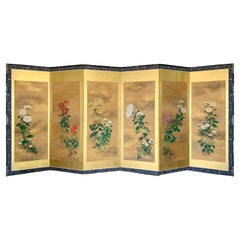
Meiji Chrysanthemum Masterpiece
Located in Fukuoka, JP
Step into a world of timeless beauty with our exceptional six-panel screen from the Edo-Meiji period. In impeccable condition, each panel features stunning paintings of chrysanthemum...
Category
19th Century Japanese Meiji Antique Asia - Paintings and Screens
Materials
Gold
$4,624 Sale Price
40% Off
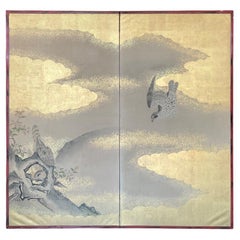
Majestic Hawks Edo Screen by Tosa School
Located in Fukuoka, JP
Majestic Hawks Edo Screen
Period: Edo
Size: 150x168 cm (59x66 inches)
SKU: PTA93
Step back in time to the Edo period with our superb Tosa school screen d...
Category
19th Century Edo Antique Asia - Paintings and Screens
Materials
Gold Leaf
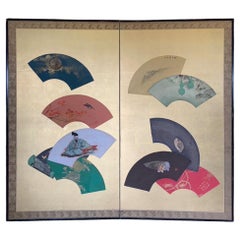
Taisho Golden Fan Screen
Located in Fukuoka, JP
Taisho Golden Fan Screen
Period: Meiji
Size: 190x171 cm
Step into a world of elegance with our exquisite two-panel Taisho screen adorned in gold, depicting fans adorned with vario...
Category
20th Century Japanese Taisho Asia - Paintings and Screens
Materials
Gold Leaf
$2,540
Edo-Meiji Phoenix Birds Screen
Located in Fukuoka, JP
Edo-Meiji Phoenix Birds Screen
Period: Edo-Meiji
Size: 360 x 152 cm (141.73 x 60 inches)
SKU: PD16
This gorgeous silk screen from the Edo-Meiji period showcases mythical phoenix bi...
Category
19th Century Japanese Edo Antique Asia - Paintings and Screens
Materials
Silk, Paper
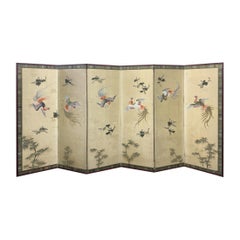
K18 Japanese Antiques A Silk hanging scroll, Lion painted
Located in Niiza, JP
Color on silk, Scroll head: Wood
Image size: 420(W) x 1160(H) [mm]
Scroll mounting: 570(W) x 1930(H) [mm]
Box size: 80(W) x 80(H) x 660(D) [mm] 900g
Estimated packing size: 150(W) x ...
Category
20th Century Japanese Asia - Paintings and Screens
Materials
Silk
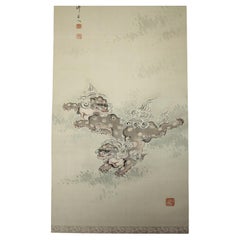
Vintage kimono textile art " Plum Gradation " by ikasu Pink White Japan
By Kimono ikasu
Located in Setagaya City, JP
This canvas featuring a plum color gradient kimono showcases a unique decorative variation of the popular seigaiha (青海波) sea waves pattern.
The artwork got a Mr.
Mrs. Abe Arts ...
Category
1980s Japanese Japonisme Vintage Asia - Paintings and Screens
Materials
Canvas, Silk
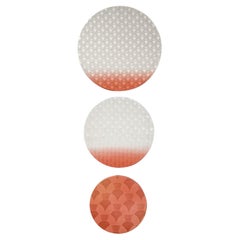
19th Century obi textile art " Pine forest ~ Longivety ~ " by ikasu Green Japan
By Kimono ikasu
Located in Setagaya City, JP
<< Story behind the work
Obi fabric I used for this artwork is taken from three different over 100-years-old antique sashes, and is framed in wood taken from antique ...
Category
Early 20th Century Japanese Japonisme Asia - Paintings and Screens
Materials
Gold Leaf
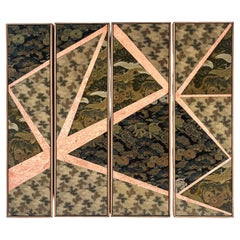
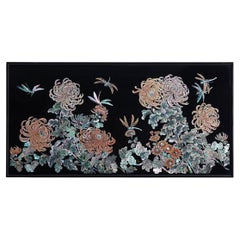
Handcrafted Painting on Wood Panel by Arijian Chrysanthemum 03
Located in Namyangju-si, KR
Wall Decor Handcrafted Mother of Pearl Chrysanthemum Painting on Wood Panel by Arijian.
Category
2010s South Korean Asia - Paintings and Screens
Materials
Wood
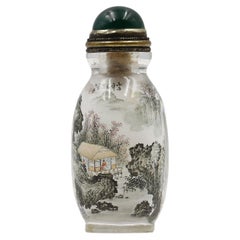
Inside Painted Glass, "Landscape" Snuff Bottle by Fu Guoshun, 1996
Located in Tainan, TW
Fu Guoshun was born at Hebei in 1954. He was complimented as a Master of Chinese arts and crafts in 2012. It is the highest honor for an inside painting artist. There are only ten artists who earned this glory. He is also the director of China International Painting and Calligraphy Association, vice chairman of China Snuff Bottle Professional Committee, and vice-chairman of Hebei Inside painted snuff bottle Association. Since 1977, he has been studying the art of inside painting under Wang Xisan. Fu Guoshun is one of the best artists in Ji school.
Mr Fu Guoshun's inside paintings are exquisite. His works include landscapes, figures, animals, flowers, and birds to calligraphy with comprehensive skills. In addition, his professions are known for their elegance, flexibility, and light. With the three superb skills of poetry, calligraphy, and painting, there are only a handful of artists who can match up in the field of snuff bottles. It is difficult to find other artists who could compare his paintings from an artistic perspective when it comes to inside painted snuff bottles...
Category
20th Century Chinese Modern Asia - Paintings and Screens
Materials
Glass
Mid 20th Century obi textile art " Moon phase II " by ikasu Silver Black Japan
By Kimono ikasu
Located in Setagaya City, JP
<< About this artwork
This artwork has been upcycled from a stunning obi, which is adorned with calligraphy weaving saying "moon" and "moonlight".
<< Period /...
Category
1970s Japanese Japonisme Vintage Asia - Paintings and Screens
Materials
Silver Leaf

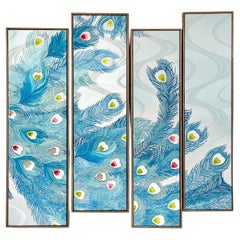
Antique kimono textile art " Peacock Feathers ~ Royalty ~" by ikasu Blue Japan
By Kimono ikasu
Located in Setagaya City, JP
This work uses an antique furisode (festive kind of kimono with long sleeves) with peacock feathers - a symbol of royalty and prosperity. Can be used both vertically and horizontall...
Category
Early 20th Century Japanese Japonisme Asia - Paintings and Screens
Materials
Gold Leaf, Silver Leaf
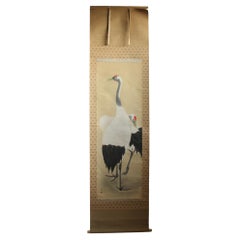
K7 Japanese Antiques Hanging scroll, silk, crane
Located in Niiza, JP
Hanging scroll, silk, crane
Image size: 420 (W) x 1270 (H) [mm] Scroll size: 560 (W) x 2120 (H) [mm]
Box size: 80 x 75 x 630 mm, 830 g
Colored cloth and silk, wooden tip
The crane...
Category
19th Century Japanese Antique Asia - Paintings and Screens
Materials
Silk
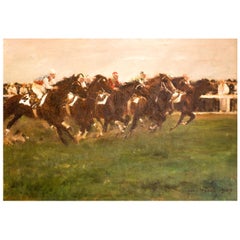
Horse Racing Scene in Impressionist Style by Otto Dill
Located in Lantau, HK
Otto Dill was a German painter known for his Impressionist depictions of animals, landscapes, and equestrian sports. He was a member of the Munich Secession, a cooperative of artists...
Category
Mid-20th Century German Asia - Paintings and Screens
Materials
Canvas
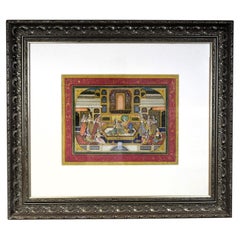
Miniature Mughal of Emperor Akbar And His Wife In His Courtyard, 19th Century
Located in Islamabad, PK
The Mughal miniature painting, executed with an exceptionally fine single-hair brush, is a testament to the meticulous craftsmanship and exquisite detail characteristic of Mughal art...
Category
Late 19th Century Indian Anglo-Indian Antique Asia - Paintings and Screens
Materials
Paint, Paper
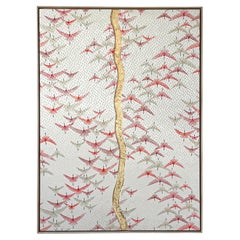
Vintage kimono textile art " Cranes ~ Kintsugi ~ " by ikasu White Red Gold Japan
By Kimono ikasu
Located in Setagaya City, JP
<
The frame for this work is made of paulownia wood taken from antique Kiritansu - chest-of-drawers for kimono.
I use antique kiritansu that can’t be used as furniture anymore to create basis and frames for my works. It adds them even more authentic atmosphere of traditional wabisabi spirit. Can you feel it?
The piece uses the concept of "kintsugi" - it "unites" the pieces of antique kimono back together with golden leaf to give it a second wind as art work.
<< Period / Story
The kimono used in this piece was originally crafted during the late Showa period (1960-80ies).
<< Explanation and meaning of pattern and colors
The Japanese saying goes, "A crane lives a thousand years, a tortoise lives ten thousand years," making cranes a symbol of longevity.
Cranes are also known for staying with the same partner for their entire lives, which is why they are often used at weddings and other celebrations to symbolize "marital bliss" and the desire for harmony between husband and wife.
On this particular piece, cranes are flying through snow woven on the fabric, as if they are overcoming all the disasters to get to their beloved ones.
The color scarlet, or deeply dyed red, used for the most of the cranes here, has long been associated with the meaning of "warding off evil." It is believed to possess the power to repel malevolent forces and invite good fortune.
During the Heian period, scarlet was reserved for sacred buildings and ceremonial objects that held great significance. Ordinary people were prohibited from wearing scarlet-red kimonos, which made it a highly special color.
<< Characteristics of the fabric
Cranes, going up and down, are generously decorated by kimpaku here. "Kimpaku" (金箔) refers to gold leaf/foil in Japanese. Gold leaf is a traditional material used in various aspects of Japanese culture, including art, crafts, and even in culinary applications.
In traditional Japanese art, gold leaf is often applied to religious objects, sculptures, paintings, and lacquerware to create a luxurious and decorative effect. The use of gold leaf in art dates back centuries and is associated with a sense of wealth, prestige, and the divine.
Traditional kimpaku technique is used here to make an accent decoration in the middle.
<< About the frame
This artwork frame is crafted from paulownia wood, a uniquely Japanese material closely tied to the world of kimonos, and it serves to convey the refined beauty of Japanese nature.
Paulownia wood is known as the lightest wood in Japan, prased for its natural luster, resistance to moisture, and resilience against cracking. Since ancient times, it has been used in crafting furniture, chests, and musical instruments.
Paulownia wood is closely linked to kimono culture. During the Edo period, it became customary to store cherished kimonos in paulownia chests...
Category
Late 20th Century Japanese Japonisme Asia - Paintings and Screens
Materials
Gold Leaf
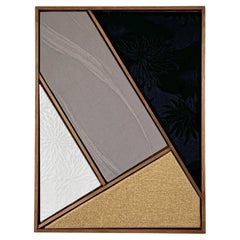
Vintage kimono textile art " Monochrome Geometry " by ikasu Gold Grey Japan
By Kimono ikasu
Located in Setagaya City, JP
This work is inspired by traditional Japanese nature colors symbolism, and is framed in paulownia wood originally used for a kimono chest-of-drawers.
It is filled with storytelling ...
Category
1960s Japanese Japonisme Vintage Asia - Paintings and Screens
Materials
Silk, Wood
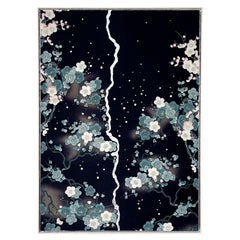
Antique kimono textile art " Plum Blossom Night ~ Resilience ~ " by ikasu Japan
By Kimono ikasu
Located in Setagaya City, JP
This artwork uses antique fabric from Taisho era (early 1920ies) kimono and paulownia wood taken from antique kiritansu - chest-of-drawers used initially to keep kimonos.
It is el...
Category
1920s Japanese Japonisme Vintage Asia - Paintings and Screens
Materials
Silver Leaf
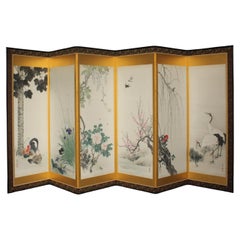
B4 JapaneseAntiques 6panels, Gold back, Flower&bird Chicken Crane, FoldingScreen
Located in Niiza, JP
Material: paper, wooden frame
One sheet: W580×H1750mm,
unfolded size: W3520mm, 10kg
Folded size: W600×H1750×D105mm
Estimated packaging (sandwiched with 5-10mm plywood):
21cm x 70cm x...
Category
19th Century Japanese Antique Asia - Paintings and Screens
Materials
Paper
Vintage obi textile art "Under the Sun ~ Serendipity ~" by ikasu Red Beige Japan
By Kimono ikasu
Located in Setagaya City, JP
<
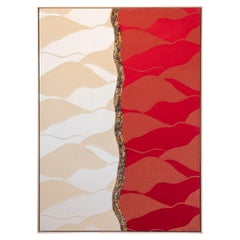
This artwork creatively uses tree bark to evoke the imagery of woods and mountains during both the morning and nighttime on left and right. It is elegantly framed with paulownia wood, a tree closely connected to kimono culture, and is filled with storytelling and sense of luxury.
By incorporating both the front and back sides of the same obi fabric woven in different colors, the play of light and shadow on the mountains is depicted through the contrasting appearances of these surfaces.
The intention behind this piece is to convey the exquisite beauty of Japanese mountains and the lush forests that inhabit them. To achieve this, traditional elements of Japanese culture, such as obi textiles and craftsmanship involving wood, were used.
The outer side and inner linings of the same obi, no longer suitable for clothing, along with bark material that would normally be discarded, have been repurposed to create this exceptional upcycle artwork.
The fusion of Japanese natural materials – silk, paulownia wood, and pine bark for the central decoration – along with the so-called "Tozan" pattern, a unique Japanese natural design showing mountains from far-away point, captures the magnificent beauty of Japanese nature from various perspectives.
The central bark decoration stands out as a distinctive feature of this work. Pine, oak, and other tree barks are interwoven among the mountains woven into the obi, creating a tangible and authentic natural atmosphere.
<< Period / Story
The obi used in this piece was originally crafted during the late Showa period (1960-80ies).
<< Explanation and meaning of pattern and colors
This upcycle artwork uses an obi with a tozan pattern woven in two colors. The design is inspired by a distant mountain range, a motif that has been used in paintings and crafts since ancient times. However, in this particular design, the mountains are depicted not as distant peaks but as graceful semicircles giving it a mild atmosphere.
<< Characteristics of the fabric
This upcycled Fukuro-obi (two-side obi) showcases a festive color pattern of mountains intricately woven with gold threads against a beige front and red on the back.
The way this obi interacts with light allows it to shift in expression, much like a mountain revealing different facets over time. It can transform from deep shades of color to the appearance of gold shimmering against bright hues, depending on the lighting and viewing angle.
<< About the frame
Kiritansu - chest-of-drawers for kimono, is traditionally made from paulownia wood, a uniquely Japanese material closely tied to the world of kimonos.
Paulownia wood is known as the lightest wood in Japan, prased for its natural luster, resistance to moisture, and resilience against cracking. Since ancient times, it has been used in crafting furniture, chests, and musical instruments.
During the Edo period, it became customary to store cherished kimonos in paulownia chests...
Category
Late 20th Century Japanese Japonisme Asia - Paintings and Screens
Materials
Silk, Wood
Still Thinking About These?
All Recently ViewedMore Ways To Browse
Asian Folding Screen Birds
Brown Wood Framed Qing Dynasty Portraits
Carved Soapstone Panels
Chinese Emperor Painting
Chinese Floor Screens
Chinese Lacquer Antique Screens
Chinese Stone Panel
Emperor Empress Art
Gold Leaf Cranes
Japanese Brush Painting
Japanese Dragon Screen
Japanese Edo Screen 4 Panels
Japanese Oshie
Japanese Painting Irises
Japanese Screen Kyoto
Japanese Screen With Birds
Japanese Waterfall Painting
Kyoto Screens