Asia - Paintings and Screens
to
56
373
1,109
400
279
91
3
28
10
1
1
37
88
154
94
42
21
13
3
1
7
1
7
12
6
4
190
168
121
121
94
352
324
277
41
14
373
334
347
26
4
3
2
1
Item Ships From: Asia
VIntage kimono textile art " Geometry ~ Chrysanthemums ~" by ikasu White Japan
By Kimono ikasu
Located in Setagaya City, JP
<
This work is inspired by traditional Japanese natural symbolism, and is framed in paulownia wood originally used for a kimono chest-of-drawers.
It is elegantly framed with...
Category
1960s Japanese Japonisme Vintage Asia - Paintings and Screens
Materials
Silk, Wood

Vintage obi textile art " Broken Vase ~ kintsugi ~" by ikasu Black Gold Japan
By Kimono ikasu
Located in Setagaya City, JP
<
This textile artwork uses a vintage obi dated around 1980ies, with a feather motif, and arranges it so that it looks like a vase.
Antique obi, just as it is a broken vase, is united back again with black obijime - a string used to tie up obi when it’s worn. Framed in kiritansu (antique chest) paulownia wood.
It is elegantly framed with paulownia wood originally used for kimono chest-of-drawers, and is filled with storytelling and sense of luxury.
I used pieces of kimono that could no longer be used as clothing and kiritansu chest-of-drawers that would normally be discarded to create the ultimate upcycled piece.
<< Explanation and meaning of pattern and colors
Feathers hold various meanings and symbolism in Japanese traditional culture, often reflecting themes of spirituality, symbolism, and folklore. Here are some of the meanings associated with feathers in Japanese tradition:
・Divine Protection: Feathers are often seen as symbols of divine protection and spiritual guidance. Feathers, especially those from birds, are considered to be imbued with the protective energy, offering spiritual guardianship and safeguarding against negative forces.
・Connection to the Spirit World: Feathers are sometimes associated with the spirit world and the realm of the divine. In folklore and mythology, feathers are depicted as messengers between the earthly realm and the celestial realms.
・Symbol of Beauty and Elegance: Feathers are admired for their natural beauty, grace, and elegance. In traditional Japanese arts such as Noh theater, Kabuki, and dance performances like Kagura, actors and performers often use feathered costumes or accessories to enhance their appearance and convey a sense of refinement and sophistication.
・Sign of Good Luck and Prosperity: In Japanese folklore, certain birds like cranes and pheasants are considered symbols of good fortune, longevity, and prosperity. Feathers from these birds are often depicted in art and craftwork as auspicious symbols believed to bring blessings and positive energy to the bearer.
<
Kiritansu - chest-of-drawers for kimono, is traditionally made from paulownia wood, a uniquely Japanese material closely tied to the world of kimonos.
Paulownia wood is known as the lightest wood in Japan, prased for its natural luster, resistance to moisture, and resilience against cracking. Since ancient times, it has been used in crafting furniture, chests, and musical instruments.
During the Edo period, it became customary to store cherished kimonos in paulownia chests...
Category
1980s Japanese Japonisme Vintage Asia - Paintings and Screens
Materials
Silk, Wood
Vintage kimono textile art " Marble Story ~ Healing ~" by ikasu Grey Japan
By Kimono ikasu
Located in Setagaya City, JP
<
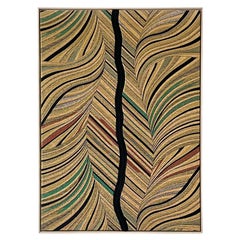
This work uses a vintage kimono fabric with marble pattern, that makes it look like a real piece of marble.
The line in the middle symbolizes “kintsugi” - concept of wabi-sabi, which values imperfection, impermanence, and the beauty of aging.
It is elegantly framed with paulownia wood originally used for kimono chest-of-drawers, and is filled with storytelling and sense of luxury.
I used pieces of kimono that could no longer be used as clothing and kiritansu chest-of-drawers that would normally be discarded to create the ultimate upcycled piece.
<< Explanation and meaning of pattern and colors
Kintsugi (金継ぎ), which translates to "golden joinery" or "golden repair," is a traditional Japanese art form of repairing broken pottery with lacquer mixed with powdered gold, silver, or platinum. I used this tecnique here to "repair" antique kimono by transforming it into art work. Beyond its literal meaning of mending broken ceramics, kintsugi carries profound philosophical and cultural significance in Japanese tradition:
・Embracing Imperfection: Kintsugi celebrates imperfection and impermanence. Rather than disguising or concealing flaws, it highlights them, treating the breakage as part of the object's history. This philosophy encourages acceptance of imperfection as an essential aspect of life, beauty, and human experience.
・Wabi-Sabi Aesthetic: Kintsugi embodies the principles of wabi-sabi, an aesthetic worldview centered on the acceptance of transience and imperfection. Wabi-sabi values simplicity, authenticity, and the beauty of things that are imperfect, impermanent, and incomplete. Kintsugi exemplifies these principles by turning what might be considered flaws into features that enhance the object's beauty and character.
・Resilience and Transformation: The act of repairing broken things with precious metals symbolizes resilience and transformation. Instead of discarding or replacing the broken object, kintsugi honors its history and transforms it into something new and valuable. This reflects broader philosophical themes of overcoming adversity, finding beauty in imperfection, and embracing change.
・Honoring the Past: Kintsugi preserves and honors the history of the object. Rather than erasing or ignoring its past, it acknowledges and celebrates it. This aspect of kintsugi can be seen as a metaphor for honoring our own personal histories, including the challenges and setbacks we have faced, and recognizing how they have shaped us into who we are today.
・Spiritual and Philosophical Symbolism: Kintsugi has spiritual and philosophical implications, reflecting concepts such as the interconnectedness of all things, the cycle of life and death, and the pursuit of harmony and balance. The process of repairing broken objects with precious metals is seen as a metaphor for spiritual growth, enlightenment, and the journey towards wholeness.
Overall, kintsugi represents not only a practical technique for repairing ceramics but also a profound philosophical and cultural perspective on life, beauty, and the human experience. It embodies values such as resilience, acceptance, and the transformative power of embracing imperfection.
<< Characteristics of the fabric
This vintage textile is hand-painted with a traditional painting technique where the colors are added on wet surface, which creates an effect of marble.
<< About the frame
Kiritansu - chest-of-drawers for kimono, is traditionally made from paulownia wood, a uniquely Japanese material closely tied to the world of kimonos.
Paulownia wood is known as the lightest wood in Japan, prased for its natural luster, resistance to moisture, and resilience against cracking. Since ancient times, it has been used in crafting furniture, chests, and musical instruments.
During the Edo period, it became customary to store cherished kimonos in paulownia chests...
Category
1960s Japanese Japonisme Vintage Asia - Paintings and Screens
Materials
Gold Leaf
Vintage kimono textile art " Turquoise Forest ~ Strength ~ " by ikasu Blue Japan
By Kimono ikasu
Located in Setagaya City, JP
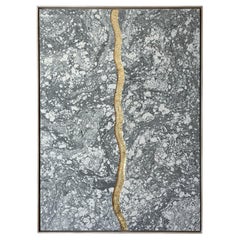
Fabrics featuring iconic Japanese plants like chrysanthemum, maple, and bamboo were gathered from various long underwear and kimono pieces to create a set of canvases (diameter 30, 25 and 20cm) showcasing exquisite gradations.
The top canvas, in pristine white, originates from long under-kimono, while the middle and bottom canvases are skillfully upcycled from kimono fabrics.
<< Period / Story
The long under-kimono and kimono fabrics used in these canvases were originally crafted and worn during the late Showa period (1960-80ies).
<< Explanation and meaning of pattern and colors
The pattern on the top canvas features a chrysanthemum, an auspicious emblem symbolizing longevity. It is affectionately referred to as the "raccoon dog chrysanthemum" due to the large, overlapping petals resembling the fur of a muzina, a creature similar to a raccoon dog or badger. This motif is highly popular in various plant-inspired designs and frequently seen in Edo komon, katazome, and jimon textiles.
The top canvas naga-juban under-kimono, being entirely white and devoid of any additional dyes, suggests its use as formal wear. Its pristine white hue accentuates the silk's luster when exposed to light and highlights the beauty of the woven patterns.
The fabric used here is rinzu, a type of fabric thinner than crepe de chine, characterized by its soft, smooth texture and subtle sheen. This particular lintel distinguishes itself with the way its ground pattern emerges and also incorporates a woven chrysanthemum pattern.
The central canvas showcases a maple tree, symbolizing longevity, which changes its colors with the seasons, bringing joy and happiness to people's lives.
The bamboo featured on the lower canvas has been regarded as a symbol of good fortune since ancient times, given its straight and vigorous growth, along with the Chinese legend that a phoenix consumes its fruit. It embodies concepts such as "immortality," "longevity," and "strength" because it remains green even in winter. The hollow stem also signifies "innocence," suggesting that there are no hidden agendas.
All three canvases are adorned with ground patterns that, when viewed from a distance, appear as modern works of art, yet upon closer inspection, they reveal a distinct Japanese ambiance.
<< Characteristics of the fabric
All three canvases are made of fabrics with jimon. The unique and high level of Japanese weaving...
Category
1970s Japanese Japonisme Vintage Asia - Paintings and Screens
Materials
Canvas, Silk
Framed Hindu Calendar Kamasan Painting from Bali, Indonesia
Located in Jimbaran, Bali
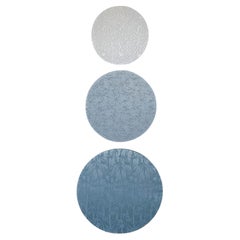
This framed Hindu Calendar is a 'Kamasan' cotton textile painting from Bali, Indonesia. It features a black wood frame and glass front. Along the bottom there are two "Naga" dragons ...
Category
1950s Balinese Tribal Vintage Asia - Paintings and Screens
Materials
Cotton, Paint
Vintage kimono textile art " Fern ~ Connection to Nature ~" by ikasu Black Japan
By Kimono ikasu
Located in Setagaya City, JP
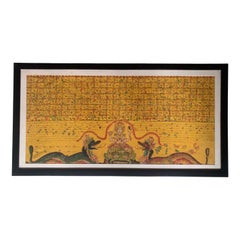
This work uses an antique tomesode (festive kind of kimono) with fern design to evoke feelings of tranquility, harmony, and appreciation for the beauty of the environment. Can be used both vertically and horizontally.
It is elegantly framed with paulownia wood originally used for kimono chest-of-drawers, and is filled with storytelling and sense of luxury.
I used pieces of kimono that could no longer be used as clothing and kiritansu chest-of-drawers that would normally be discarded to create the ultimate upcycled piece.
<< Explanation of colors and patterns
In Japanese traditional culture, ferns, particularly the Japanese painted fern (Athyrium niponicum), hold several meanings and symbolisms:
・Elegance and Beauty: Ferns are admired for their graceful, delicate appearance and intricate leaf patterns. In Japanese aesthetics, they are appreciated for their natural beauty and are often used in gardens, landscapes, and floral arrangements to add a sense of refinement and elegance.
・Resilience and Perseverance: Ferns are known for their ability to thrive in diverse environments, including shady forests, rocky cliffs, and damp soil. Their resilience in the face of challenging conditions is seen as a symbol of endurance and perseverance. In Japanese culture, ferns may represent the ability to overcome adversity and flourish despite obstacles.
・Connection to Nature and Tranquility: Ferns are native to forested areas and are often associated with the natural world. In Japanese traditional culture, they symbolize a deep connection to nature and the importance of maintaining harmony with the environment. The lush green foliage of ferns evokes feelings of tranquility and peacefulness, making them popular motifs in Zen gardens and traditional landscape paintings.
・Purity and Simplicity: Ferns are emblematic of simplicity and purity in Japanese aesthetics. Their unassuming beauty and understated elegance reflect the principles of wabi-sabi, an aesthetic worldview that values imperfection, impermanence, and simplicity. Ferns may be used in tea ceremonies, Ikebana (flower arranging), and other traditional arts to evoke a sense of tranquility and appreciation for life's fleeting moments.
Overall, ferns in Japanese traditional culture symbolize elegance, resilience, connection to nature, purity, and simplicity. Their presence in art, literature, and landscape design underscores their enduring significance as symbols of natural beauty and spiritual resonance.
<< Characteristics of the fabric
This vintage textile is hand-painted with a traditional Japanese technique called "yuzen".
<< About the frame
Kiritansu - chest-of-drawers for kimono, is traditionally made from paulownia wood, a uniquely Japanese material closely tied to the world of kimonos.
Paulownia wood is known as the lightest wood in Japan, prased for its natural luster, resistance to moisture, and resilience against cracking. Since ancient times, it has been used in crafting furniture, chests, and musical instruments.
During the Edo period, it became customary to store cherished kimonos in paulownia chests...
Category
1960s Japanese Japonisme Vintage Asia - Paintings and Screens
Materials
Silk, Wood
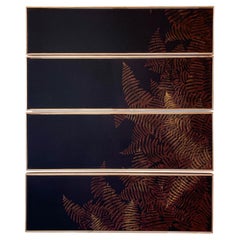
VIntage kimono textile art " Geometry ~ Marble ~" by ikasu Gold White Grey Japan
By Kimono ikasu
Located in Setagaya City, JP
This work is inspired by traditional Japanese nature motifs symbolism, and is framed in paulownia wood originally used for a kimono chest-of-drawers.
It is elegantly framed with pau...
Category
1960s Japanese Japonisme Vintage Asia - Paintings and Screens
Materials
Silk, Wood
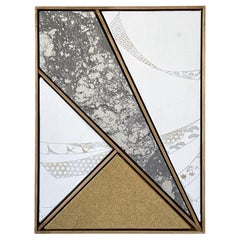
Vintage obi textile art " Camellia ~ Serendipity ~" by ikasu Blue Japan
By Kimono ikasu
Located in Setagaya City, JP
[Story behind the work]
This work is inspired by traditional Japanese nature motifs symbolism, and is framed in paulownia wood originally used for a kimono chest-of-drawers.
It is elegantly framed with paulownia wood originally used for kimono chest-of-drawers, and is filled with storytelling and sense of luxury.
In this artwork, the aim was to capture the the auspicious symbol of camellia used in antique kimono. Traditional Japanese culture, represented by the kimono, and wood, an integral element of Japanese craftsmanship, were used to bring this vision to life.
I used pieces of kimono that could no longer be used as clothing and kiritansu chest-of-drawers that would normally be discarded to create the ultimate upcycled piece.
[Explanation and meaning of pattern and colors]
This delicate piece features hand-drawn camellia motifs flowing gracefully on a softly brightened grayish background.
Camellias, native to Japan, bloom from winter to early spring. As an evergreen tree with green leaves throughout the year, it symbolizes the anticipation of spring and is considered an auspicious plant. Due to its seasonal significance and auspicious meanings, camellias have been used as motifs symbolizing good fortune. Additionally, they were highly valued for their use in oil, cosmetics, and medicine, representing nobility. Believed to possess the power to ward off misfortune, camellias also carry the meaning of "protection from calamity" and have strong ties to traditional ceremonies. In this artwork, camellias are delicately depicted alongside flowing branches, subtly representing good fortune with their pale pink and white hues.
"Sora-iro nezumi 空色鼠" refers to a light grayish color with a hint of blue, reminiscent of the slightly brightened sky on a lightly cloudy day. Popular during the late Edo period (19th cent.), it elegantly captures the slightly brighter sky pattern seen on lightly overcast days. Notably, the term "nezumi-iro" (mouse gray), popular during the late Edo period, was paired with brown tones, collectively known as "Forty-eight Teas and a Hundred Mice 四十八茶百鼠." Colors within the "nezumi" (gray) spectrum, particularly "sora-iro nezumi," were favored by young people for their cool and sophisticated appeal.
[Characteristics of the fabric]
The fabric features intricately woven patterns that reveal subtle gradations through dyeing, creating a grid pattern that transforms depending on the light conditions.
Originally, this fabric was part of a formal kimono known as a "hōmongi 訪問着," featuring motifs along the hem, shoulders, and sleeves. These motifs have been carefully selected and combined to create a unified piece of artwork.
[About the frame]
Kiritansu - chest-of-drawers for kimono, is traditionally made from paulownia wood, a uniquely Japanese material closely tied to the world of kimonos.
Paulownia wood is known as the lightest wood in Japan, prased for its natural luster, resistance to moisture, and resilience against cracking. Since ancient times, it has been used in crafting furniture, chests, and musical instruments.
During the Edo period, it became customary to store cherished kimonos in paulownia chests...
Category
1960s Japanese Japonisme Vintage Asia - Paintings and Screens
Materials
Silk, Wood
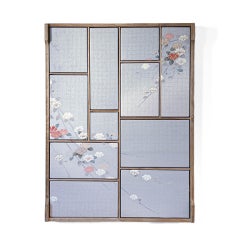
Vintage kimono textile art " Sunset Timelapse ~ Ephemerality ~" ikasu Red Japan
By Kimono ikasu
Located in Setagaya City, JP
<
The art piece uses two sides - front and reverse - of the same kimono, to show beautiful sea surrounding Japan, in hues and in late sunset, as a timelapse.
The frame for this work is made of paulownia wood taken from antique Kiritansu - chest-of-drawers for kimono.
I use antique kiritansu that can’t be used as furniture anymore to create basis and frames for my works. It adds them even more authentic atmosphere of traditional wabisabi spirit. Can you feel it?
<< Period / Story
The kimono used in this piece was originally crafted during Showa period (around 1960ies).
<< Explanation and meaning of pattern and colors
Sea waves, depicted in two color variations here, are a symbol of transience and Impermanence in Japanese culture. The ebb and flow of the tides, the ever-changing currents, and the relentless motion of the waves serve as reminders of the fleeting nature of life. This artwork featuring the sea convey themes of impermanence, reminding viewers to cherish the present moment and appreciate the beauty of life's fleeting moments.
The theme of impermanence is strengthen by two colors of the sea - the lighter in early hues and the darker when the sun is just about to set in the sea.
<< About the frame
This artwork frame is crafted from paulownia wood, a uniquely Japanese material closely tied to the world of kimonos, and it serves to convey the refined beauty of Japanese nature.
Paulownia wood is known as the lightest wood in Japan, prased for its natural luster, resistance to moisture, and resilience against cracking. Since ancient times, it has been used in crafting furniture, chests, and musical instruments.
Paulownia wood is closely linked to kimono culture. During the Edo period (17th cent.~), it became customary to store cherished kimonos in paulownia chests...
Category
1960s Japanese Japonisme Vintage Asia - Paintings and Screens
Materials
Silk, Wood
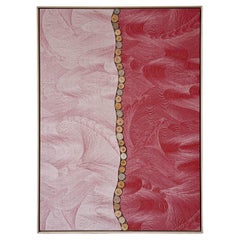
English Portrait Of A Lady From Circa End Of The 17th Century
Located in Chonburi, TH
Circle of Willem Wissing
Oil on canvas in its original frame
Canvas size 65x75cm = 25.5”x29.5"
Including frame 82x93cm = 32”x36.5"
The oil painting is in excellent condition.
Fr...
Category
17th Century British Georgian Antique Asia - Paintings and Screens
Materials
Canvas, Linen, Wood

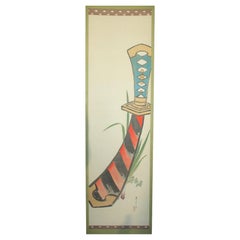
Japanese Antiques 4th Head Torii Kiyotada Silk Painted Scroll, Festival, Sword
Located in Niiza, JP
Torii School Head 7th Generation [4th Generation Torii Kiyotada] Silk Painted Scroll, Festival, Sword, May
Silk Painted
Scroll head: Ceramic
box: Paulownia wood
Size: Painting size: 330 (W) x 1130 (H) [mm]
Scroll: 360 (W) x 2000 (H) [mm]
Box size: 70 x 70 x 435 mm, 600g
A large composition depicting a Japanese sword
It is thought to represent the May festival
Sekku (seasonal festival) means a day that is a turning point in the season, or a traditional event that is held on that day.
Held in May, old weapons...
Category
19th Century Japanese Antique Asia - Paintings and Screens
Materials
Silk, Paper
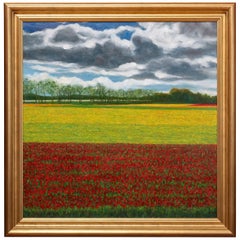
Tulip Field , Holland , 2019
Located in Lantau, HK
Eliza Chui
Tulip Field, Holland, 2019
Oil on canvas, measures: 60 x 60cm.
Category
21st Century and Contemporary Asia - Paintings and Screens
Materials
Paint
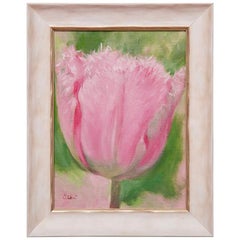
Pink Tulip, 2019
Located in Lantau, HK
Eliza Chui
Pink tulip, 2019
Oil on canvas
Measures: 30 x 22 cm.
Category
21st Century and Contemporary Asia - Paintings and Screens
Materials
Paint

$2,000
Still Thinking About These?
All Recently ViewedMore Ways To Browse
Asian Folding Screen Birds
Brown Wood Framed Qing Dynasty Portraits
Carved Soapstone Panels
Chinese Emperor Painting
Chinese Floor Screens
Chinese Lacquer Antique Screens
Chinese Stone Panel
Emperor Empress Art
Gold Leaf Cranes
Japanese Brush Painting
Japanese Dragon Screen
Japanese Edo Screen 4 Panels
Japanese Oshie
Japanese Painting Irises
Japanese Screen Kyoto
Japanese Screen With Birds
Japanese Waterfall Painting
Kyoto Screens