Atlanta - Ceramics
to
11
285
2,049
1,374
262
23
40
1
1
115
73
74
23
37
8
15
14
2
1
2
1
2
3
283
56
11
8
6
261
253
119
77
57
285
285
285
29
12
8
5
3
Item Ships From: Atlanta
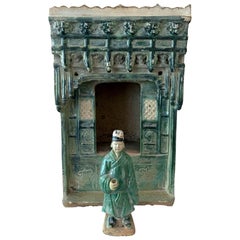
Chinese Stoneware Funeral Shrine Model and Figure Ming Dynasty
Located in Atlanta, GA
A stoneware shrine model with a figurine made in Ming dynasty (15th-17th century) in China and used as funeral burial objects. It is not known whether the two objects were originally associated, but they display similar glaze and oxidation and were in the same collection. The stoneware building is an architectural rendering of a typical ancestor shrine used at the time. It features a single room behind an elaborate front with double doors, under a multiple layered eaves. There are great architectural and decorative details throughout. The green glaze shows a wonderful silvery oxidation, an indication that the piece was buried in the ground. The side appears to be glazed lightly originally and some scrape marks and oxidized glaze residues remains. The back is unglazed. The figure is a typical tomb figurine...
Category
16th Century Chinese Ming Antique Atlanta - Ceramics
Materials
Stoneware
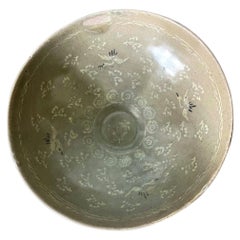
Korean Ceramic Celadon Bowl with Slip Inlay Goryeo Dynasty
Located in Atlanta, GA
A good Korean celadon bowl with elaborate slip inlays circa 12-13th century from the Goryeo Dynasties (918 to 1392AD). Despite inspired originally ...
Category
15th Century and Earlier Korean Archaistic Antique Atlanta - Ceramics
Materials
Ceramic
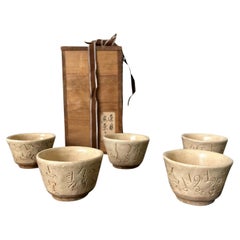
Set of Five Ceramic Tea Cups by Otagaki Rengetsu
Located in Atlanta, GA
A set of five stoneware sencha tea cups by Otagaki Rengetsu (1791-1875). These miniature cups were simply molded in the classic form, glazed in off white and incised with cursive waka poems, a signature decorative style by the artist. Accompanies the cups is a wood storage box and paper slip label inscribed "Rengetsu sencha, tea cups"
Purportedly purchased from Tessai-do Co. Ltd., Japan in 1991.
Otagaki Rengetsu was a famous Buddhist nun in Edo period who is widely regarded to have been one of the greatest Japanese poets...
Category
Late 19th Century Japanese Japonisme Antique Atlanta - Ceramics
Materials
Ceramic, Wood
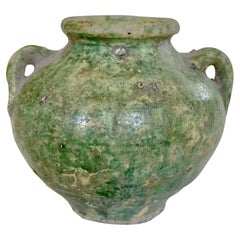
Ming Jarlet with Green Glaze
Located in Atlanta, GA
Small Ming pottery jarlet with handles and a green glaze. 16th century.
This charming, somewhat rustic piece is like a miniature version of the large earthenware jars used to store ...
Category
16th Century Chinese Antique Atlanta - Ceramics
Materials
Pottery
Fine Trumpet Satsuma Vase by Taizan Yohei
Located in Atlanta, GA
A tall ceramic satsuma ware vase in a rare slender trumpet form with very fine surface decoration by Japanese potter Taizan Yohei IX (1864-1922). The vase was dated to late Meiji period circa 1890-1900s.
The main motif and the focal point of the vase is the continuous panel that circumvents the entire mid-body, apparently a rendition of the Boy's Festival, known as "Tango no Sekku" in Japanese. The traditional festival is celebrated on May 5th of each year. Originated in Nara Period...
Category
1880s Japanese Meiji Antique Atlanta - Ceramics
Materials
Ceramic

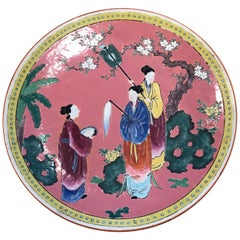
Large Japanese Meiji Imari Porcelain Plate with Enamel Decoration
Located in Atlanta, GA
A large Japanese porcelain platter decorated with over glaze enamels featuring three ladies in the garden among the rock grottoes, a cherry tree in blossom, a half-hidden banana tree and peonies. The ladies were pictured as holding various item, a fly...
Category
Late 19th Century Japanese Meiji Antique Atlanta - Ceramics
Materials
Ceramic
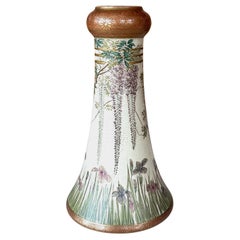
Fine Japanese Enameled Satsuma Vase by Kinkozan Meiji Period
By Kinkozan
Located in Atlanta, GA
A ceramic satsuma ware vase with very fine surface decoration made by Kinkozan circa 1880-1900s of late Meiji Period. The vase is of an elegant and relatively rare form with a trumpet shape body and the so-called garlic neck and opening. The surface is exquisitely decorated in a floral scheme with gilt and a light jewel-tone enamel. The top part showcases large bundles of wisteria blossom in white and purple, cascading down from a gilt wood trellis...
Category
1880s Japanese Meiji Antique Atlanta - Ceramics
Materials
Ceramic
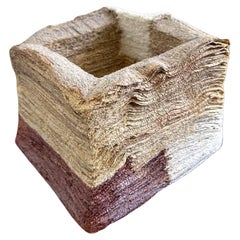
Ceramic Sculpture by South Korean Artist Jongjin Park
By Jongjin Park
Located in Atlanta, GA
A highly unique ceramic sculpture by South Korean artist Jongjin Park (1982-). The square-form piece is boundary-pushing and defies both the traditional ...
Category
2010s South Korean Organic Modern Atlanta - Ceramics
Materials
Ceramic, Paper
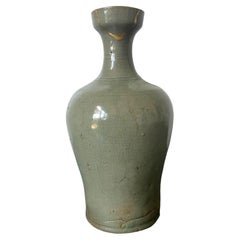
Korean Caledon Vase Bottle with Kintsugi Repair Goryeo Dynasty
Located in Atlanta, GA
A ceramic wide-mouthed bottle vase covered in green celadon glaze from Goryeo dynasty circa 11-12th century. The bottle vase with such a form (mouth with wide rim, long and slender neck, tall body with swelled shoulders that taper down toward the base) is known as "kwanggubyong" in Korean and developed from the prototype of bottles from united Silla kingdom. It was used for holding oil or liquid. Some of this type of vase take a plain form without much decoration other than glaze; Some feature basic geometrical lines, such as this one. Three concentric rings were featured along the neck and on the shoulder. Some with more carving on the body (see a vase in the collection of Brooklyn Musuem, 79.246.3) or a simple paint with iron glaze (See c.16-1930 in Fitzwilliam Musuem, Cambridge, UK).
The vase on offer is covered in a lovely green celadon glaze which exhibits fine even crackles throughout the surface. It has a slightly uneven base with the foot ring shaved by the potter. The surface is original with a nice mellow patina. There is a historical kintsugi repair on the mouth rim, with its gold vain...
Category
15th Century and Earlier Korean Archaistic Antique Atlanta - Ceramics
Materials
Ceramic
Antique Large Korean Ceramic White Bowl Joseon Dynasty
Located in Atlanta, GA
A Korean ceramic porcelain bowl covered in a white glaze with a hint of bluish green circa 18th century, possibly earlier, of the Joseon Dynasty. The deep bowl is relatively large in...
Category
18th Century Korean Archaistic Antique Atlanta - Ceramics
Materials
Ceramic
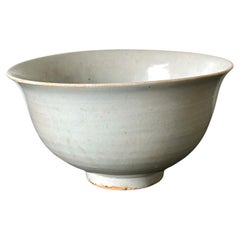
Japanese Shigaraki Jar for Ikebana by Shiho Kanzaki
By Shiho Kanzaki
Located in Atlanta, GA
A Shigaraki stoneware jar by Japanese potter Shino Kanzaki (1942-2018). Kanzaki is a world renowned potter in Shigaraki who based his modern work on the ancient tradition of Shigaraki and Iga ware...
Category
20th Century Japanese Modern Atlanta - Ceramics
Materials
Ceramic
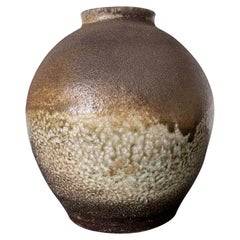
Korean Ceramic Water Dropper in Dog Form Joseon Dynasty
Located in Atlanta, GA
A lovely Korean ceramic water dropper in the form of a sitting dog circa 19th century late Joseon Dynasty. The charming animal form features underglaze blue paint outlining the furs ...
Category
19th Century Korean Antique Atlanta - Ceramics
Materials
Ceramic
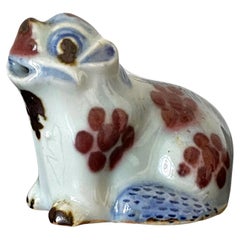
Ceramic Sculptural Centerpiece by Ryuichi Kakurezaki
By Kakurezaki Ryuichi
Located in Atlanta, GA
A large and bespoken stoneware centerpiece platter in sculptural form by Japanese ceramic artist Ryuichi Kakurezaki (1950-) circa 2000s. Made in Bizen ware tradition in a thick slab ...
Category
Early 2000s Japanese Modern Atlanta - Ceramics
Materials
Ceramic
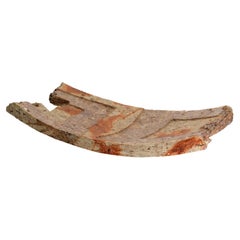
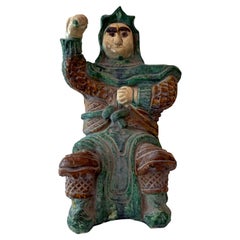
Chinese Ceramic Glazed Guardian Ming Dynasty
Located in Atlanta, GA
A stoneware figure depicting a seated armored warrior with a striking pose circa 15th-17th century. He is likely one of the four heavenly kings, th...
Category
16th Century Chinese Ming Antique Atlanta - Ceramics
Materials
Stoneware
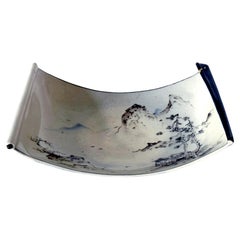
Rare Japanese Porcelain Painted Footed Dish Makuzu Kozan
By Makuzu Kozan
Located in Atlanta, GA
A rare footed dish in the form of an open scroll painting with literati landscape from the studio of Japanese Potter Makuzu Kozan. Also known as Miyagawa Kozan (1842–1916), Makuzu wa...
Category
Early 1900s Japanese Meiji Antique Atlanta - Ceramics
Materials
Porcelain
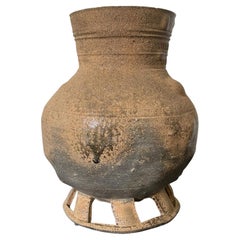
Fine Korean Pottery Footed Jar with Long Neck Silla Period
Located in Atlanta, GA
A stoneware jar of bulbous form with a long neck supported by open-work foot dated from Silla, Three Kingdoms period (57 BCE-668 AD). The grey color ves...
Category
15th Century and Earlier Korean Archaistic Antique Atlanta - Ceramics
Materials
Ceramic
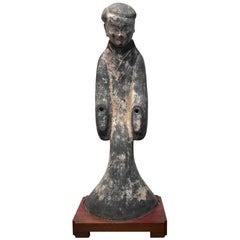
Tomb Lady in Waiting Figurine Han Dynasty
Located in Atlanta, GA
On offer is a pottery figurine of lady in waiting, found in the tombs as funeral objects in Han dynasty of China. Generally known as Han tomb ladies, t...
Category
15th Century and Earlier Chinese Han Antique Atlanta - Ceramics
Materials
Pottery
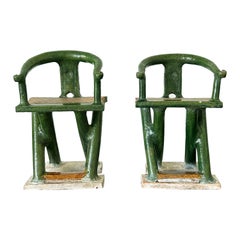
Pair of Chinese Ming Dynasty Tomb Funeral Pottery Chair Models
Located in Atlanta, GA
A pair of Chinese stoneware horseshoe cross chairs circa Ming dynasty (15th-17th century). The miniature models were traditionally made as burial offeri...
Category
16th Century Chinese Ming Antique Atlanta - Ceramics
Materials
Stoneware
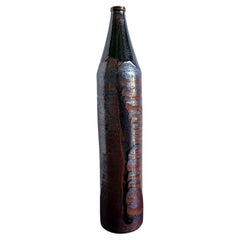
Early Tall Ceramic Vase with Unique Glaze by Brother Thomas Bezanson
By Brother Thomas Bezanson
Located in Atlanta, GA
An early ceramic vase in a cylinder form by potter Brother Thomas Bezanson (1929-2007). Unusually tall at 21.75 inches, the vase strikes the viewer with its slender silouette with a tapering neck and mouth opening. What is extraordinary about this piece is the complex glaze Bezanson applied on the surface. Three vertical black glaze stripes are featured around the surface. On one side, stacks of horizontal finger-like marks were placed on a brown and silvery iridescent background, characterized as "Honan tenmoku" glaze. The other side, the glaze took on a brilliant silver oxidation in a mottled effect. The top conical portion is largely covered with a thick and oily "black olive" glaze, which is dripping down in high saturation. Circles surrounding the rim was less iron-saturated, forming a more orderly visual border. In close range, the different glazes across the vase displays subtle changes of shimmering, iridescent and textured effects and are visually mesmerizing.
Bezanson's ceramic and glaze techniques was rooted in Asian ceramic tradition but utterly modern looking.
The vase was marked on the base "Benedictine Monks Weston Vermont", "^60 BRENER" and Bezanson's decipher as shown. The decipher indicated that this vase was made in Weston VT circa 1965-1970, same period of another vase with similar glaze effect in our gallery (shown in the last photo), showcasing the highly sophisticated techniques Bezanson mastered and used fluidly in his ceramic work.
Brother Thomas Bezanson (1929-2007) was a Canadian born artist and Benedictine monk primarily known for his porcelain pottery and mastery of complex glazes. Strongly influenced by Asian pottery, often adapting traditional Chinese and Japanese pottery methods and materials to his work. He is renowned for his original glaze recipes and perfect forms and always sought to create something new and beautiful. His exacting standards made for the shattering of over 80% of each firing. One "rescued" piece however is now in the collection of the Museum of Fine Arts, Boston. His estate is represented by Pucker Gallery...
Category
Mid-20th Century American Modern Atlanta - Ceramics
Materials
Ceramic
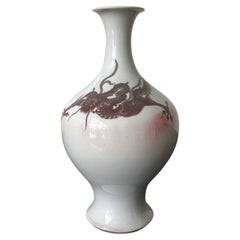
Japanese Porcelain Glazed Vase with Dragon Design Mazuku Kozan
By Makuzu Kozan
Located in Atlanta, GA
A porcelain vase with dragon design by Japanese imperial potter Makuzu Kozan (1842-1916), circa 1900s. The vase is made in what is considered early phase of his underglaze period during late Meiji era. In a classic baluster form, the surface of the vase was decorated with a slithering dragon in underglaze iron red circulating the exterior among pink clouds. The animated rendering of the dragon is fine and detailed, with five claws, scales, long tails and highlighted eyes. The pink cloud is misty and called Morotai or the hazy style, created with a unique technique developed in Kozan's studio called fuki-e by blowing the pigment powders onto the surface. Kozan Studio experimented with newly available colors from the west starting in the 1880s, which resulted in the expansion of the palette and style that bridged the east and west aesthetic tradition. Marked in underglaze blue on the base.
Known also as Miyagawa Kozan...
Category
Early 1900s Japanese Japonisme Antique Atlanta - Ceramics
Materials
Porcelain
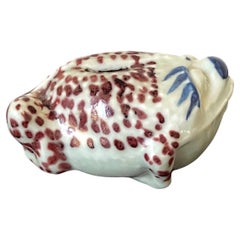
Korean Ceramic Water Dropper in Frog Form
Located in Atlanta, GA
A Korean ceramic water dropper in the form of fog circa early 20th century likely from Japanese colonial time post 1910s. The animal form features under...
Category
Early 20th Century Atlanta - Ceramics
Materials
Ceramic
Korean Ceramic Tea Bowl with Slip Inlays Goryeo Dynasty
Located in Atlanta, GA
A small ceramic conical form tea bowl from Korean Goryeo Dynasty circa 14th century. The bowl is of a slightly irregular shape and covered in a grayish overglaze. The inlaid slip dec...
Category
15th Century and Earlier Korean Archaistic Antique Atlanta - Ceramics
Materials
Ceramic
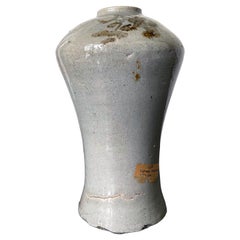
Tall Korean Ceramic Storage Jar Joseon Dynasty
Located in Atlanta, GA
A Korean ceramic storage jar circa 18th century of Joseon Dynasty. The jar is of a classic Maebyong form (known in Chinese as Plum Vase or Meiping...
Category
18th Century Korean Other Antique Atlanta - Ceramics
Materials
Ceramic
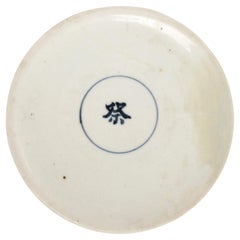
Korean Ceramic Ritual Offering Vessel with Inscription Joseon Dynasty
Located in Atlanta, GA
A ceramic dish with high cylindrical foot in white glaze with a cobalt blue underglaze inscription from Korea, circa 18-19th century Joseon Dynasty. This is a classic ceremonial vess...
Category
Late 18th Century Korean Archaistic Antique Atlanta - Ceramics
Materials
Ceramic

$3,200 Sale Price
46% Off
Japanese Contemporary Ceramic Sculpture Kiyoharu Ichino
By Kiyoharu Ichino
Located in Atlanta, GA
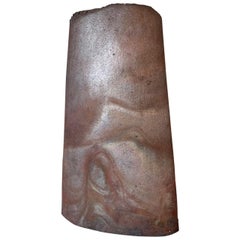
"Purple Dawn", a ceramic sculpture piece by Japanese potter Kiyoharu Ichino (1957-). Purchased from Touching Stone, Santa Fe, New Mexico in 2003. Tradition meets renovation, this sculptural piece with its slab like minimal shape draws the viewer into its mysterious shape that is reminiscent of a monument. Its surface, with the typical Tanba clay fired at very high temperature and completely free of glaze, radiates a subtle metallic sheen that is nearly in a shade of purple. This piece was purchased from Touching Stone, Santa Fe, New Mexico in 2003.
Artist's bio from the gallery and the exhibition:
"Kiyoharu Ichino was born in 1957 in Tachikui into an extended family steeped in pottery-making tradition. He learned all aspects of Tanba pottery since childhood. When he was twenty, he moved to Seto to study pottery under a master of Akatsu-yaki. Upon returning to Tachikui, he launched his career with the Tanba Group Kiln. In 1983, he established his own kiln and began showing in galleries all over Japan. His works have been selected repeatedly for the prestigious juried Japan Traditional Crafts Exhibition sponsored by the Japan Crafts Association. In 1995, he was nominated to be a permanent member of The Japan Crafts Association, an honor bestowed to the most experienced and talented artists.
Traditional Tanba pottery is fired unglazed at very high temperature in large wood-fueled kilns. Ichino uses both an anagama (hole kiln) and a noborigama (climbing kiln), burning almost a thousand bundles of wood over several days to bring out the unique personalities of Tanba clay, which is renowned for its rich texture and deep purplish brown colors. Many of his pieces show silvery fire-marks like swirling mists left by the wood fire. His pieces appear to be integral parts of the clay rather than separate objects made from it. To show the unique clay texture, he often includes seemingly unfinished edges in his designs, exposing the rough clay body. Despite the high level of sophistication and innovation, Ichino's works maintain a strong connection with the ancient Tanba pottery tradition. Ichino should be no stranger to many Santa Fe residents. His work has been exhibited both in Touching Stone Gallery and as part of a major exhibition in the New Mexico Museum of International Folk Art in 2006.
About Tanba ware...
Category
Early 2000s Japanese Modern Atlanta - Ceramics
Materials
Ceramic
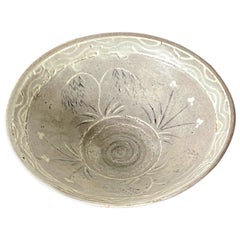
Korean Celadon Inlay Plate Goryeo Period
Located in Atlanta, GA
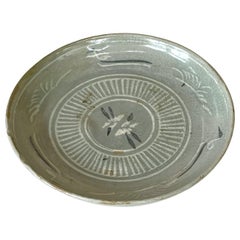
The round ceramic plate with a slightly raised foot ring is dated from late Korean Goryeo Kingdom (918 to 1392 AD) likely toward the end of the 14th century. The plate features a celadon glaze and underglaze slip inlays in black and white. The inlays showcases a pair of bird (appears to be cranes) in the center of a radiating double walled ring...
Category
15th Century and Earlier Korean Archaistic Antique Atlanta - Ceramics
Materials
Ceramic
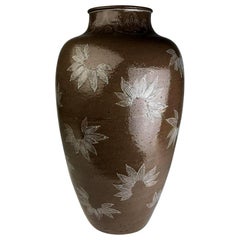
Rare Large Vase with White Slip Inlay Makuzu Kozan Meiji Period
By Makuzu Kozan
Located in Atlanta, GA
A impressively large and unusual stoneware vase in an urn shape from the studio of Japanese Potter Makuzu Kozan, also known as Miyagawa Kozan (1842–1916), one of the most established and collected ceramist from Meiji Period. Born as Miyagawa Toranosuke, Kozan established his pottery studio in Yokohama circa 1870s and later became one of the appointed artist to the Japanese Imperial household. His work was exhibited in many international fairs that the Meiji government participated at the turn of the century and won many grand prizes.
This vase is dated to the end of Makuzu's life circa 1910-1916 based on similar work created around that time. After achieving domestic and international fame, Makuzu retired and handed the business to his son Hanzan in 1912. He dedicated his time to other selected projects that were more in tune with Japanese sensibility than export aesthetic. He made a group of stoneware pottery pieces inspired by Edo master like Ninsei and Kenzan as well as his own poetic creation. This piece is attributed to that period.
Standing of an impressive size, this vase is more like an urn, made with stoneware instead of porcelain. It was coated with a brown iron glaze with a slight translucent quality. Underglaze whit slips were used to draw low relief decoration of bamboo leaves that sparsely scatter on the surface. Slightly more elaborate scrolling vines and autumn flowers circles under the mouth rim. Same white slip inlay was used to sign the vase under the base. The whole effect of the piece is unusual. With its dark glaze in contrast with the sparse white decoration that is more abstract and geometric than realistic, it appears almost modern with an Art Deco flavor.
For stoneware urn and vase in the similar genre by Makuzu Kozan: see figure 113 on page 182 of "Sekai ni Aisa Reta ya Kimono" MIYAGAWA KOZAN MAKUZU...
Category
1910s Japanese Japonisme Vintage Atlanta - Ceramics
Materials
Ceramic
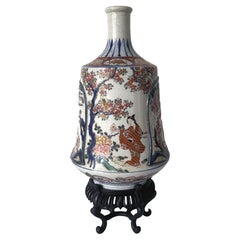
Antique Japanese Imari Bottle Vase on Wood Stand
Located in Atlanta, GA
On offer is a large Japanese Imari ceramic bottle vase with elaborate surface design circa 19th century (late Meiji Period). The distinct shape of the bottle is called tea-whisk form and the rare prototype was found in the early Ko-Imari production dated back to 16-17th century of Edo period. The shape was designed specifically to store liquor. This revived bottle was made in the 19th century and showcases decoration and colors typical of Imari ware. A lady in kimono holding a fan under a Sakura tree is showcased in the front and the back, with underglaze blue contrasting the rich overglaze enamel and gold. On the two sides, raised relief borders enclose scenes of combatant dragons and tigers under plum trees, both rendered in great relief details and of sculptural quality. The base was marked in underglaze blue the archaic Chinese characters "Da Ming Cheng Hua Year Made...
Category
19th Century Japanese Meiji Antique Atlanta - Ceramics
Materials
Ceramic
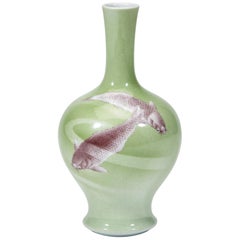
Fine Japanese Ceramic Vase Makuzu Kozan Meiji Period
By Makuzu Kozan
Located in Atlanta, GA
A Japanese long neck porcelain vase circa 1900-1910s by the studio of Miyagawa Kozan (1842–1916), one of the most established and collected Japanese ceramist from the end of Meiji Period. Commonly known as Makuzu Kozan, which also appears as the signature on his work, his originally birth name was Miyagawa Toranosuke. He was the appointed artist to the Japanese Imperial household and his work was exhibited in many international fairs that the Meiji government participated at the turn of the century.
This vase features an elegant Classic form with a slender neck and slightly flared mouth above a baluster body. It was finely painted with two swimming carps in a copper red underglaze among green ribbons like waves. The background display a brilliant verdant green overall, Around the fish a poetic hazy effect was emphasized for a visual complexity by Fuki-e (the blow painting), an invention in Kozan's studio. The new technical development of chemical colors from the west was embraced circa 1900s in Kozan studio. This empowered the more creative experiments with not only colors, but also concept of dimension, which led Makuzu Kozan's work to become a bridge between East and West aesthetics. This is particularly evident in this vase with the Masterly details of the brush strokes, the expertly employment of gradient of color, and a very realistic and detailed rendering of the fish and their vivid motions.
For two similar examples of Kozan's work with similar carps decoration, see Page 148-149 of the book: Sekai ni Aisa Reta ya Kimono Miyagawa Kozan Makuzu...
Category
Early 20th Century Japanese Meiji Atlanta - Ceramics
Materials
Ceramic
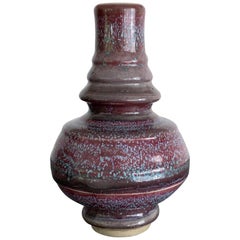
Asian Flambe Studio Pottery Vase
By Kyoto Pottery
Located in Atlanta, GA
A garlic bottle vase in an archaic Chinese form, but likely Japanese in origin. Several circumventing grooves however, suggest a more modern age. It was done in a brilliant purple glaze over a robin egg blue background glaze. The bubbling and bursting effects during the firing renders the surface an artistic spotting effect. The color pallet recalls the Classic Jun Yao...
Category
Late 19th Century Japanese Japonisme Antique Atlanta - Ceramics
Materials
Ceramic
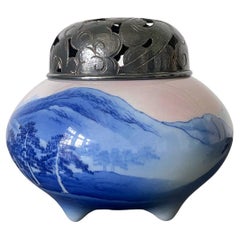
Japanese Glazed Ceramic and Silver Koro Incense Burner Makuzu Kozan
By Makuzu Kozan
Located in Atlanta, GA
A tri-pod ceramic incense burner (koro) by Japanese Imperial potter Makuzu Kozan (1842-1916) circa late Meiji to the start of Taisho period (1890-1910s). A fine example of the artist's work belonging to the late part of his underglaze paint phase (started around 1887 until his death), the surface of the koro was painted in beautiful shades of blue to depict a continuous landscape not unlike a traditional ink and watercolor hand scroll. The rise and fall mountains recede and fade into the horizon and are dotted with groves of pines. The sky is painted with a beautiful subtle shade of pink, suggesting a time of sunrise or sunset. The koro is fitted with an ensuite reticulated sterling silver hoya (incense cover), pierced with swirling cloud and marked with "pure silver' in Kanji. The base is signed in underglaze blue "Makuzu Kozan Sei" within a double ring. The piece is beautifully potted in form and the decoration was done with expertise using the novel technique developed by Kozan called Fuki-e (the blow painting), in order to achieve the striking landscape known as "Mountain and Water" with sense of dimensions and gradient, the poetic effects normally conveyed only by sumi ink staining on paper. The piece comes with an unsigned tomobako (wood storage box) of a recent age.
Also known as Miyagawa Kozan (1842–1916), Makuzu Kozan was one of the most established and collected ceramist from Meiji Period. Born as Miyagawa Toranosuke, Kozan established his pottery studio in Yokohama around 1870s and later became one of the appointed artists to the Japanese Imperial household. His work was exhibited in many international fairs that the Meiji government participated at the turn of the century and won many grand prizes. Being one of the most creative ceramists, Kozan started experimenting with new chemical colors from the West in the format of his porcelain glaze around 1880s. New colors allowed him to create underglaze designs that appeared bright, smooth and glossy. He even invented his own receipt of cobalt blue to achieve a much brighter yet softer shade, as evident on this vase. To create landscape that is realistic and dimensional, more common in the western paintings, he was inspired by the native Japanese ink painting technique developed around 1900 by Yokoyama...
Category
Early 1900s Japanese Japonisme Antique Atlanta - Ceramics
Materials
Silver
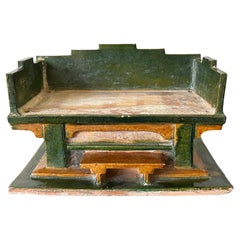
Chinese Ming Dynasty Tomb Funeral Pottery Bed Model
Located in Atlanta, GA
A Chinese stoneware day bed model circa Ming dynasty (15th-17th century). The miniature models were traditionally made as burial offering objects. Pottery models of daily life necess...
Category
16th Century Chinese Ming Antique Atlanta - Ceramics
Materials
Stoneware
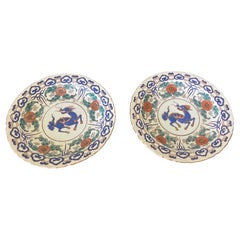
Pair Antique Japanese Artia Ceramic Cabinet Plates
By Arita
Located in Atlanta, GA
A pair of Japanese decorative ceramic plates, made in Arita for export market circa 17-18th century. The cabinet-display dishes feature lotus-petal gilt rim and a lavish tricolor ene...
Category
18th Century Japanese Japonisme Antique Atlanta - Ceramics
Materials
Ceramic
Japanese Studio Ceramic Vase by Ken Matsuzaki with Original Tomobako
By Ken Matsuzaki
Located in Atlanta, GA
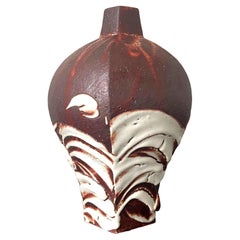
An impressive stoneware bottle form vase by contemporary Japanese studio potter Ken Matsuzaki (1950-) circa 2010s. The solid form takes its cue from Chinese traditional plum vase (Meiping) with raised and swelled shoulder and a small opening, yet it rises from a non-conventional pentagonal faceted base. The extraordinary surface was covered with Yohen Shino glaze in a deep iron hue. Thick white slips were applied in bold strokes to the lower portion of the vase. The abstract pattern calls to mind of the imagery of the iconic ocean waves found in traditional Japanese art. The presence of the vase is strong and none-compromising, reaching back to the past yet appearing utterly modern. It is marked by the artist underneath and comes with the original tomobako with title and author inscriptions and a wrapping cloth with the artist's seal.
"Ken Matsuzaki’s haptic ceramics bring a contemporary approach to traditional Japanese ceramicware, most notably 16th-century Oribe pottery...
Category
21st Century and Contemporary Japanese Modern Atlanta - Ceramics
Materials
Ceramic
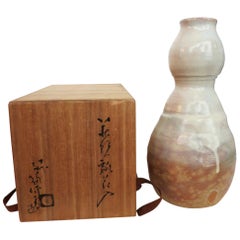
Hagi Ikebana Vase by Kyusetsu Miwa X Japanese Studio Pottery
By Kyusetsu Miwa X
Located in Atlanta, GA
A stoneware vase with white dripping glaze from Hagi by Kyusetsu Miwa X (1895-1981), Showa Period. The vase is in the shape of "Double Gourd" with a bulbous ...
Category
20th Century Japanese Japonisme Atlanta - Ceramics
Materials
Ceramic
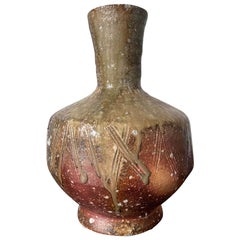
Modern Japanese Ceramic Shigaraki Ikebana Vase Takahashi Shunsai
Located in Atlanta, GA
A tall ceramic vase made in the tradition of Shigaraki ware by Japanese potter Takahashi Shunsai (1927-2011), the fourth heir of the famed Rakusai lineage of potters. The vase is heavily potted in the reddish sandy Shigaraki clay. It has a Classic vase form made for Ikebana display. The surface is thickly draped with natural ash glaze that deposited onto the body during the firing process in the kiln. It also features decoration of carved lines. Nuggets of feldspar were incorporated in the clay and exposed onto the surface as crystal like jewels. Substantial and archaic looking, the vase also has a strong modern appeal due to its Mingei styling. It was signed on the base with a pressed seal Shunsai as shown. The vase comes with its original wood storage box (tomobako) with bears the title and signature in Kanji and a seal. It also retains a paperwork noting the artist's biography and practice philosophy in Japanese.
Born in Shigaraki, Shunsai was the second son of renowned potter Takahashi Rakusai...
Category
1990s Japanese Modern Atlanta - Ceramics
Materials
Ceramic
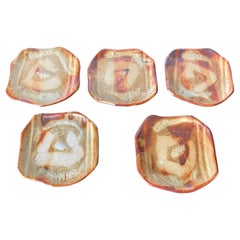
Set of Five Yohen-Kin Shino Ceramic Plates by Suzuki Tomio
Located in Atlanta, GA
Japanese ceramic Suzuki Tomio (born in 1948) specializes in Shino ware. In 2003, he successfully developed Yohen-kin or transformed gold Shino, an opulent and golden glaze which led to a number of luster glazes in the artist’s growing body of work. Inspired by the golden tea ceremony room in Osaka Castle commissioned by Toyotomi Hideyoshi (1536-1598) where honored guests were served tea from a glittering bowl coated with pure gold, it took the artist nearly a decade of experimentation and refinement to achieve the glaze while strictly adhering to traditional shino making techniques.
This set of five Yohen-kin plates displays a lustrous transformation. Signed on the bottom of plates. With original wrap cloth and the storage tomobako box entitled and signed by the artist in Kanji, with additional red seal. The size of the box is 5-1/8 x 8-1/4 x 8-1/4 inches.
Many of Suzuki Tomio's shino pottery...
Category
Early 2000s Japanese Organic Modern Atlanta - Ceramics
Materials
Ceramic
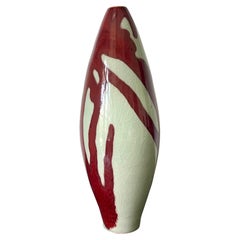
Porcelain Celadon Vase with Copper Glaze by Brother Thomas Bezanson
By Brother Thomas Bezanson
Located in Atlanta, GA
A spindle form porcelain vase by Brother Thomas Bezanson (1929-2007). As a modern interpretation of "Mei-Ping", a classic form of Chinese vase,...
Category
1980s American Modern Vintage Atlanta - Ceramics
Materials
Ceramic
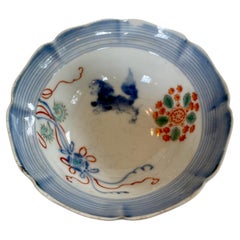
18th Century Japanese Foliate Rimmed Bowl
Located in Atlanta, GA
18th century Japanese Kakiemon foliate rimmed bowl, Edo period (1603-1867). This charming bowl's decor shows a guardian lion ("shi shi") and a floral...
Category
18th Century Japanese Antique Atlanta - Ceramics
Materials
Porcelain
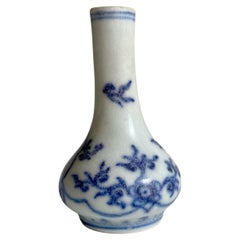
Miniature Vase from Hatcher Collection Decorated with Birds and Flowers
Located in Atlanta, GA
Miniature 17th century blue and white pear-shaped vase decorated with birds and flowers.
This miniature vase was part of a hoard recovered by Captain Michael Hatcher...
Category
17th Century Chinese Antique Atlanta - Ceramics
Materials
Porcelain
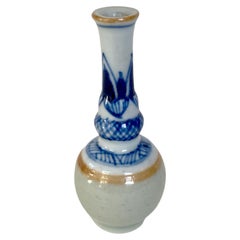
18th Century Miniature Porcelain Vase
Located in Atlanta, GA
18th Century miniature blue and white vase with celadon base and cafe au lait band, Qianlong period (1736 - 1795). Small and elegant, wit...
Category
18th Century Chinese Antique Atlanta - Ceramics
Materials
Porcelain
$465 Sale Price
40% Off
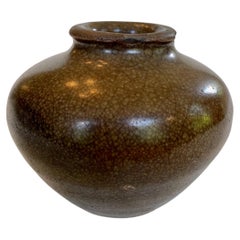
12th Century Song Jarlet with Deep Brown Glaze
Located in Atlanta, GA
Song jarlet with deep brown glaze, 12th century.
This small piece is all about purity of form, enhanced by the rich color of its glaze, which has a subtle crackle. The glaze, which covers almost the entire piece except for the very edge of its foot, looks like melted chocolate poured over...
Category
15th Century and Earlier Chinese Antique Atlanta - Ceramics
Materials
Pottery
$450 Sale Price
51% Off
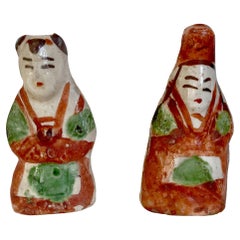
Pair of Small Ming Dynasty Pottery Figures
Located in Atlanta, GA
Pair of small Ming Dynasty (1364-1644) terracotta polychrome figures, in excellent condition.
Here's a cute little couple, looking very spry for their age. Both figures are wearing...
Category
16th Century Chinese Antique Atlanta - Ceramics
Materials
Pottery
$575 Sale Price / set
35% Off
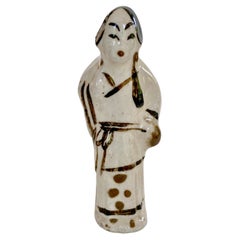
16th Century Chinese Pottery Figure
Located in Atlanta, GA
Ming dynasty pottery figure of a standing woman, likely from the Suzhou region.
This is a small figure with a lot of personality, rendered in crea...
Category
16th Century Chinese Antique Atlanta - Ceramics
Materials
Ceramic
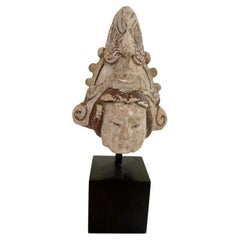
12th Century Terracotta Head of a Woman
Located in Atlanta, GA
12th century terracotta head of a woman, Song Dynasty (from 960 to 1279).
This small, delicately molded head of a woman wearing an elaborate headdress is mounted on a cube-shaped...
Category
15th Century and Earlier Chinese Antique Atlanta - Ceramics
Materials
Pottery
$725 / item
Still Thinking About These?
All Recently ViewedMore Ways To Browse
Yi Dynasty
Yongzheng Blue And White Vase
Yuan Jar
16th Century Ming Plates
Antique Chinese Ducks
Antique Horse Plates
Asian Water Jar
Bali Art Deco
Bizen Yaki
Buddhist Flowers
Chinese Clay Teapot
Chinese Eggshell Porcelain
Chinese Famille Noir
Chinese Lotus Blue White
Chinese Opium Pillow
Chinese Porcelain Bowl Famille Verte
Chinese Rose Medallion Plate
Imperial Satsuma