Berlin - Art
to
124
190
181
144
99
152
Overall Width
to
Overall Height
to
21
118
230
397
17
18
11
10
12
9
10
13
20
14
15
179
96
73
63
17
14
12
11
8
3
2
1
1
327
243
113
356
189
143
115
114
59
54
49
47
45
45
43
41
35
31
30
30
29
27
26
509
286
285
258
233
34
24
19
12
11
149
5
228,988
155,615
Item Ships From: Berlin
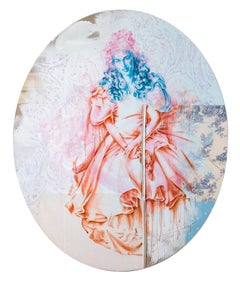
Robe 4
By Fides Becker
Located in Morongo Valley, CA
'Robe 4' by Fides Becker
Acrylic and Egg Tempura on Canvas and Deco Fabric
160 x 140 cm, 2005
The leading theme of the artist’s interventions is the staging of temporality, transi...
Category
Early 2000s Contemporary Berlin - Art
Materials
Canvas, Acrylic, Egg Tempera
$11,426
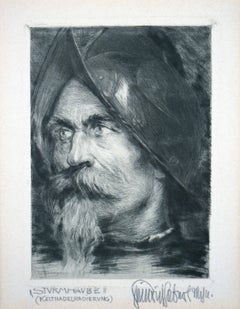
Balaclava - The target in sight -
Located in Berlin, DE
Heinrich Haberl (1869 Passau to 1934 Munich), Sturmhaube, c. 1900. drypoint, 14 x 10 cm (platemark), 28 x 21 cm (sheet size), 39 x 29 cm (passe-partout), titled "Sturmhaube" in lead at lower left and inscribed "Kaltnadelradierung", signed and locally inscribed "Heinrich Haberl Mchn. [Munich]" at lower right, inscribed again in lead on verso and with old collection stamp.
- slightly darkened, fixed and mounted
- The target in sight -
About the artwork
The theatrical "role-portrait" is to be seen against the background of the Rembrandt cult, which reached its climax at the end of the 19th century. The soldier seems to have stepped straight out of Rembrandt's Night Watch (1642) to fix something outside the picture with an alert and ready gaze. The steeply rising brim of the morion frames the gaze and thus perspectivises it as the actual 'pictorial action'. The gaze represents both the vigilant defence and the visionary goal of the battle.
Not only the subject, but also the style of the etching needle reflect Rembrandt's understanding of the times. Strong contrasts of light and dark are created in a virtuoso free stroke, without losing the effect of the reflections on the helmet and in the eyes. This shows a kinship with the early prints of Lovis Corinth, who also saw himself as an artist in the role of the knight. Against this background, Haberl's picture can also be seen as a representation of his artistic self-image.
About the artist
Heinrich Haberl first attended the art school in Nuremberg and from 1892 studied at the Munich Academy. There he was a master student of Johann Leonhard von Raab, Rudolf von Seitz, Franz von Defregger...
Category
Early 19th Century Realist Berlin - Art
Materials
Etching
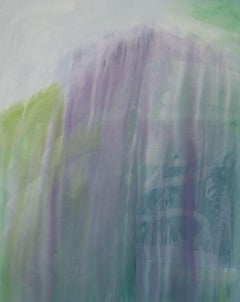
Lavender Vine, Painting, Acrylic on Canvas
Located in Yardley, PA
Inspired by a photo that the artist took of a Wisteria vine overflowing from the top corner of a building in Berlin. This work creates an analogue to the physical twisting aspects of...
Category
2010s Abstract Berlin - Art
Materials
Acrylic
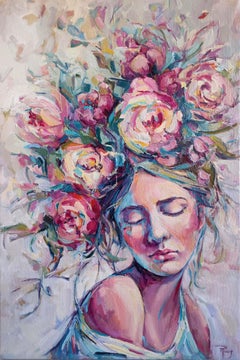
Portrait of a woman. Flora
Located in Zofingen, AG
The painting “Flora” depicts a young woman in a serene and contemplative state with her eyes closed, symbolizing inner peace and connection with nature. Inspired by the Roman goddess...
Category
2010s Modern Berlin - Art
Materials
Canvas, Oil
Half-length portrait of a man with beard - A Rembrandt of the 18th century -
Located in Berlin, DE
Johann Friedrich Bause (1738 Halle a. d. Saale - 1814 Weimar). Half-length portrait of a man with beard and cap after a drawing by Christian Wilhelm Ernst Dietrich. Etching and coppe...
Category
1780s Baroque Berlin - Art
Materials
Etching

Albert Herzfeld 1865 1943 Landscape
Located in Berlin, DE
oil on hardboard
Signed lower left
63x47 cm
Albert Herzfeld (1865–1943) was a noted German painter
Life, Work & Persecution
Originally, Herzfeld was active in his family’s text...
Category
1920s Jugendstil Berlin - Art
Materials
Oil
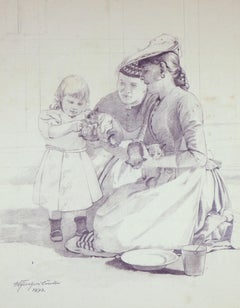
Feeding the Kittens - Little cat mother -
Located in Berlin, DE
Ernst Albert Fischer-Cörlin (1853 Körlin - 1932 Persante). Feeding the Kittens, 1893. Pencil on painting cardboard, 38 x 29 cm. Signed and dated by the artist at lower left "E[rnst] A[lbert] Fischer=Cörlin 1893".
- Lightly stained, somewhat dusty and minimally foxed.
- Little cat mother -
About the artwork
Daughter, mother and grandmother gather in the sunlight to feed a litter of kittens. The mother and grandmother hold the lively, playful animals in their arms, while the young girl feeds two of the four kittens with cookies. There is also a small bucket of milk and a bowl of milk. The women and the girl watch as the cute, still blind animals eat.
It is a scene taken from everyday life, but it also has an allegorical dimension, bringing maternal care into the representation. Three generations are represented, with the grandmother and the mother already mothers. They not only offer the kittens to the youngest, but also proudly observe the maternal care that the youngest gives to the kittens. Like the kittens, she will grow up and become a mother herself, so the image is also an allegory of life's ever-new beginnings. In keeping with this, the morning sun shines into the picture from the right. Fischer-Cörlin has masterfully worked out the quality of the light, with its light and dark areas, with the pencil used...
Category
1890s Academic Berlin - Art
Materials
Cardboard, Carbon Pencil
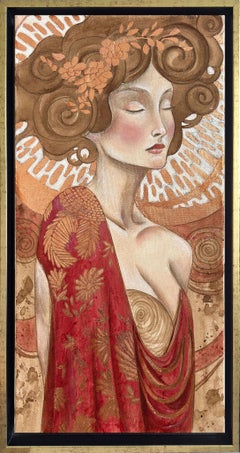
Inner peace
Located in Zofingen, AG
The painting, executed in a mixed technique, depicts a beautiful young woman. Her closed eyes emphasize the overall atmosphere of relaxation. Natural beauty, graceful figure, and the...
Category
2010s Art Deco Berlin - Art
Materials
Gold
Reinhard Bartsch deutsch 1925 - 1990 Berlin
Located in Berlin, DE
Reinhard Bartsch 1927 Berlin - 1990 Berlin
oil on canvas
55x 40 cm
signed lower right
Reinhard Bartsch (1927–1990) was a German painter and graphic artist, born and active in B...
Category
Late 20th Century Impressionist Berlin - Art
Materials
Oil
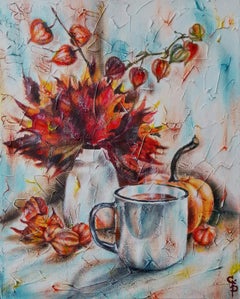
A Coffee with Autumn. original painting
Located in Zofingen, AG
In this still life, autumn invites you in like an old friend, offering warmth and comfort. A simple white cup of hot coffee sits beside a vase filled with vibrant red leaves, and the...
Category
2010s Impressionist Berlin - Art
Materials
Acrylic, Cardboard
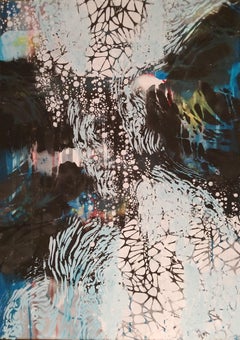
Permeation Purr, Painting, Acrylic on Canvas
By Diana Heit
Located in Yardley, PA
"Permeation Purr" is a captivating painting that explores the interplay between sound, cats, and botanical imagery in a mesmerizing blend of black, blue, and white hues. The canvas e...
Category
2010s Abstract Berlin - Art
Materials
Acrylic
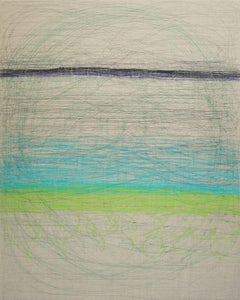
Static 2, Painting, Acrylic on Canvas
Located in Yardley, PA
A performance piece made with musician Makoto Sakamoto at Loophole on 30.11.22. Static circles, static noise, static lines. “We didn’t discuss what we were going to do beforehan...
Category
2010s Abstract Berlin - Art
Materials
Acrylic
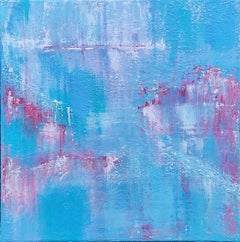
Sky Garden. Abstract original painting
Located in Zofingen, AG
This abstract painting with the main color tone of blue has a size of 40x40 cm. It was painted on canvas with acrylic paints, texture paste, and a palette knife.
In this painting, I...
Category
2010s Abstract Impressionist Berlin - Art
Materials
Canvas, Acrylic
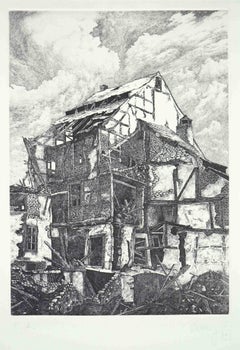
Agony - The architecture of decay -
Located in Berlin, DE
Jörg Olberg (*1956 Dresden), Agony, 1987. etching, E.A. (edition of 30), 24 x 17 cm (image), 46 x 37 cm (sheet), each signed in pencil lower right "Olberg" and dated "IX [19]87", inscribed lower left "E.A. [Epreuve d'Artiste]".
- minimal crease and dust stains in the broad margin
- The architecture of decay -
About the artwork
Jörg Olberg draws here the sum of his artistic study of the Berlin ruins, which were still present in the cityscape well into the 80s. With his work "Agony" he creates an allegory of decay. Positioned in the landscape of ruins, a ruined house grows before the viewer, rising like the Tower of Babel into the sky, its roof and gable brightly illuminated by the sun. But already the roof shows mostly only the rafters, and as the gaze is drawn further down, the building visibly disintegrates, the beams protruding in all directions looking like splintered bones. Slowly but inexorably - in agony - the house will collapse in on itself and become nothing more than the burial mound of itself. At the same time, the small-scale stone composition and the plaster form a pattern-like ornamentation of decay.
The tension in the picture is fed by the counter-movement of growth and collapse, which is heightened by the dramatic formation of clouds. The swirls of clouds are reminiscent of a world landscape...
Category
1980s Realist Berlin - Art
Materials
Etching, Paper
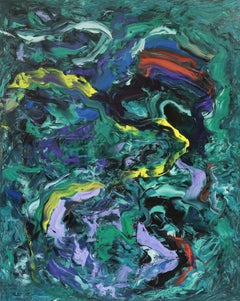
The Chaos Of The Soul And The Physical Destruction, Painting, Oil on Canvas
Located in Yardley, PA
The Chaos Of The Soul And The Physical Destruction Of The Self Oil paint is layered and swirled to express movement and emotions through colour. This is part of the artist’s on...
Category
2010s Abstract Berlin - Art
Materials
Oil
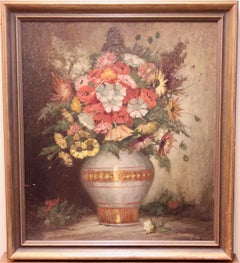
Antique oil Painting by Klaus Clausmeyer, Still Life with Flower Vase.
Located in Berlin, DE
"Masterpiece of floral elegance by Klaus Clausmeyer"
Immerse yourself in a magnificent piece of art history: The oil painting by the renowned German painter Klaus Clausmeyer (1887 -...
Category
20th Century Berlin - Art
Materials
Canvas, Oil
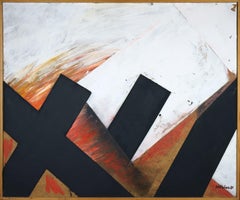
Black form surfaces on red painterly ground / - The Double Origin of Painting -
Located in Berlin, DE
Jürgen Möbius (*1939 Großenhain), Black form surfaces on red painterly ground. Oil on hardboard, 50 x 60 cm, 51 x 61 cm (frame), signed "Möbius" and dated "[19]81".
- Small paint chip in upper right corner, otherwise good condition. Gallery frame with slight signs of wear.
- The Double Origin of Painting -
About the artwork
In the painting black, optically dominant forms can be seen, which in their arrangement at right angles to each other have a proto-architectural character. They are, so to speak, always already given original forms. At the same time, however, the forms are surfaces of color, and thus genuine painting. In order to make the painterly character of the painting clearly visible, Jürgen Möbius has applied red-toned strokes that have preserved the brushstroke. These are traces of an act of painting.
The diagonal layers of red strokes merge into the upper white area, which oscillates between brushwork and homogeneous flatness, while the central white field, into which a black bar protrudes, has a decidedly planar character.
The sharp contrast between the autonomous black surface forms, reminiscent of Kasimir Malevich, and the free brushstroke, which is not bound to any motif, creates an enormous pictorial tension, which is conveyed by the white, but at the same time is intensified by the virulent black-and-white contrast.
In addition to the tense contrast of form and color, there is also a contrast between the dynamic of the brushstroke and the static of the black surface forms, whereby the diagonal alignment of these forms also gives the static a dynamic, while at the same time the layered brushstrokes have something static about them.
Added to this structure of tension is the fact that the painting ground, the unprepared hardboard, is clearly present as such in the picture. In this way, it becomes clear once again that we are not dealing with an autonomous cosmos of form and color, as in Suprematism, but with a painting created by the artist's hand.
With this work, Jürgen Möbius explores the possibilities of painting and thematizes painting in terms of its twofold origin, the trace of the guided brush and the painterly form, which gains its independence precisely by absorbing the brushstroke into itself.
About the artist
From 1959 to 1965 Jürgen Möbius studied painting at the University Institute for Art and Work Education in Mainz. He also studied philosophy and art history at the University of Mainz. Afterwards he worked as a freelance artist in Mainz.
At first, Möbius created material reliefs and installations, then, around 1974, he turned increasingly to conceptual art and added cinematic means. During this phase he wrote the manifesto-like essay "Principles of Supranatural Landscape" (1979).
From 1981 on, Möbius concentrated on painting and searched for artistic ways to "treat intellectual and sensual perception equally in the fusion of representational and abstract pictorial elements" (Wolfgang Zemter). He found inspiration on his study trips to Thailand and Sri Lanka.
"The pure painting of Jürgen Möbius flows through us as a timeless expression of memory and energy, ploughing our perception and bringing us the happiness of seeing authentic, immovable form.
- Philippe Büttner
Selection of solo exhibitions
1969 Galerie Würzner, Düsseldorf / Galerie Gurlitt, Mainz
1972 Städtische Galerie, Mainz
1973 Galerie Schloss Ringenberg Rathaus, Kleve
1974 Röderhausmuseum, Wuppertal
1976 Galerie Glasing, Osnabrück / Städtische Galerie, Herne
1977, 1997, 2004 Märkisches Museum, Witten
1979 Studio M, Bamberg / Staatstheater, Darmstadt
1980 Galerie Stolànovà, Wiesbaden / Mittelrheinmuseum, Koblenz
1982 Galerie Dornhöfer, Mainz
1984 Galerie Neumühle, Schlangenbad
1985 Landesmuseum, Mainz / Kunstverein, Ludwigshafen / Nassauischer Kunstverein, Wiesbaden
1986 Museum, Bochum / Galerie der Stadt Iserlohn
1987, 1990 Galerie Klaus Kiefer, Essen
1987, 2000 Galerie Ulrike Buschlinger, Wiesbaden
1988 Kunsthalle Darmstadt
1988, 1992, 1996, 1999 Galerie Leonhard, Basel
1992, 2002 Galerie Zulauf, Freisheim
1994 Galerie Remy, Vallendar
1995 Sendezentrum des Zweiten Deutschen Fernsehens, Mainz
2001 Collegium oecumenicum, Bamberg / MVB Forum für Kultur und Wirtschaft, Mainz
2006 Adam Gallery, London
Selection of group exhibitions
1969 ‘International Graphic Arts’, Galerie Dalléas Bordeaux, Paris
1975 ‘Deutscher Künstler-Bund’, Dortmund
1979 ‘Man and man’s Images’, Märkisches Museum Witten
1980 ‘Love-Dokuments of our Time’, Art Hall Darmstadt and Art Association Hannover
1982 ‘Work - Progress – Position’, Nassau Art Association Wiesbaden
1983 ‘Principle Hope – Utopic Aspects in Art and Culture of the 20th Century’, Museum Bochum
1986 ‘Selfportraits’, Gallery Klaus Kiefer Essen
1987 ‘The Dying and Death’, Gallery Klaus Kiefer Essen
1989 ‘Where are You, Revolution – Freedom, Liberty, Egality, Fraternity to-day’, Museum Bochum 1990 ‘Flight – a Problem within the Memory of Man’, Kunsthalle Darmstadt ‘Art and War 1939 – 89’, House of Cultures Berlin
1991 ‘Material and Form’, Pillnitz Castle Dresden and Pfalz Gallery Kaiserslautern
1995 20 Years Exhibitions, Chrämerhuus Langenthal, Schweiz
1998 ‘Works on Paper’, Klaus Kiefer Gallery Essen
2000 ‘Acquisitions 1900 – 2000’, Mittelrhein-Museum Koblenz
2001 ‘Strange Pictures’, Klaus Kiefer Gallery Essen
2002 ‘10 Years Buschlinger Gallery’, Buschlinger Gallery Wiesbaden
2004 ‘Eternal Space – Pictures and Sculptures’, Dome of Bamberg
2005 Art Fair Chicago, Adam Gallery, London
Selected Bibliography
Mittelrheinisches Landesmuseum (Hrsg.): Jürgen Möbius - Neue Bilder, Mainz 1985.
Kunstverein Darmstadt (Hrsg.): Jürgen Möbius. Bilder 1985 - 1988. Kunsthalle Darmstadt, 26. Juni - 14. August 1988. Red. Dorit Marhenke, Lyrik Marcus Schiltenwolf, Düsseldorf 1988.
Gabriele Prusko (Hrsg.): Jürgen Möbius. Mit Texten von Philippe Büttner und Ralph Mieritz, Basel 1992.
Wolfgang Zemter (Hrsg.): Jürgen Möbius - Aktuelle Arbeiten. Märkisches Museum der Stadt Witten, Bönen 1999.
Wolfgang Zemter (Hrsg.): Jürgen Möbius. Flieger in meinem Zimmer und Beruhigte Zone, Bönen 2004.
Dama Gallery...
Category
1980s Abstract Berlin - Art
Materials
Oil
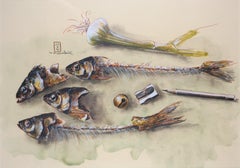
Still life with fish bones, pencil and pencil sharpener / - The irony of art -
Located in Berlin, DE
Manfred K. Schwitteck (*1948), Still life with fish bones, pencil and pencil sharpener, 1992. watercolor over pencil on handmade paper, 31.5 x 45 cm (visible size), 47 x 61 cm (frame...
Category
1990s Surrealist Berlin - Art
Materials
Watercolor, Etching
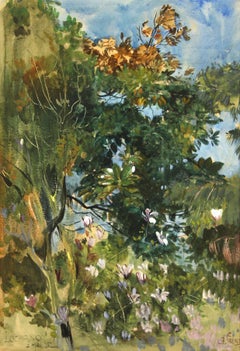
Plant Impression in Locarno - Floral Crescendo -
Located in Berlin, DE
Alexander Frenz (1861 Rheydt - 1941 Düsseldorf). Plant impression in Locarno. Gouache and watercolour. 35 x 23,5 cm (visible size), 49,5 x 38,5 cm (fra...
Category
1890s Impressionist Berlin - Art
Materials
Watercolor
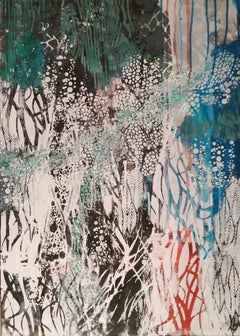
Permeation, Painting, Acrylic on Canvas
By Diana Heit
Located in Yardley, PA
"Permeation" is a captivating painting that invites viewers to explore the interconnectedness of nature within a serene garden setting. Bathed in hues of white, blue, and subtle hint...
Category
2010s Abstract Berlin - Art
Materials
Acrylic
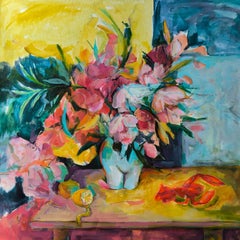
Still Life with Crab
Located in Zofingen, AG
The painting “Still Life with Crab” combines elements of piquancy and intrigue. The central place is occupied by a vase of flowers, depicted in the fo...
Category
2010s Modern Berlin - Art
Materials
Canvas, Acrylic
Field - Field research -
Located in Berlin, DE
Karl Ludwig Mordstein (1937 Füssen - 2006 Wilszhofen), Field 1983. Color etching, copy 13/65, 22.5 x 28 cm (image), 40 x 45 cm (sheet), 43 x 48 cm (frame), titled, numbered, monogram...
Category
1980s Abstract Berlin - Art
Materials
Etching
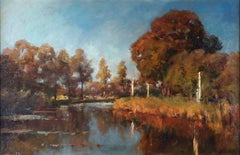
Late Summer River Landscape / - Realistic Impression -
By Jan Hillebrand Wijsmüller
Located in Berlin, DE
Jan Hillebrand Wijsmuller (1855 Amsterdam - 1925 ibid.), Late Summer River Landscape, oil on canvas, relined, 34 x 56 cm (inside measurement), 43 x 64 cm (frame), signed J[an] H[illebrand] Wijsmuller at lower right.
- in good condition, the frame with isolated bumped spots
- Realistic Impression -
About the artwork
The panoramic landscape format shows a river landscape, with the course of the river, which curves to the right, leading the eye into the depths of the picture and tempting it to continue the landscape in the imagination beyond the visible area. At the same time, however, the fact that the landscape is not visible through the bend in the river focuses our gaze on the entirety of the landscape depicted, without prompting us to focus on distant details. Accordingly, the brushstroke is not designed to render details with realistic precision. In the front left area of the river there is even a completely free brushwork, trained by Impressionism, which nevertheless remains committed to representational and convincingly suggests the movement of the water.
Regardless of the distance of the observer, the entire picture is painted with the same broad brushstroke, so that the landscape is given as an impression. And yet this impression is not ephemeral, as in the case of French Impressionism, to put it exaggeratedly, but reveals to us the essence of the landscape in all its richness. This is why the Dutch variant of Impressionism is always also a realism, although the pictures appear less progressive, but still contain a dimension of landscape painting that is lost with progress.
In the impression, the reality of the landscape is revealed, and this happens as we experience the landscape in the visual impression. Wijsmuller does not depict houses or people in order to allow the experience of the landscape to fully unfold. The experience is determined first and foremost by the river, which does not flow into the picture from our point of view, but towards us. Where the river begins to bend, the water is churned by a rapids. Toward us, the riverbed widens and the water comes to rest, covering the entire width of the foreground like a mirror.
The stillness of the water corresponds to the evening mood of the late summer landscape, in which the warm tones of the evening light blend with the yellow and brown tones of the plants. A gentle, almost idyllic reality, carried by the brushstroke, yet animated by a liveliness that is also made visible by the brushstroke. The broad, dynamically placed brushstrokes evoke the movement of the treetops and animate even the immobile reeds, while the trunks on the right bank, executed in virtuoso white strokes that seem like markings, make the sunlight shine. On the other bank, a carpet of light also spreads out, its energetic effect again expressed in the brushstroke. The dynamic of the landscape is further enhanced by the complementary color contrasts between the greens, yellows, and browns on the one hand and the blue of the all-encompassing sky on the other. A contrast that is intensified by the reflection in the water.
The evening coming to rest of the landscape is thus at the same time an all-encompassing contrasting and yet in itself harmonious movement. This reality becomes accessible to us as an experience in the impression of the landscape.
About the artist
Jan Hillebrand Wijsmuller entered the Royal Academy of Arts in Amsterdam in 1876 and studied under the innovative Professor August Allebé, who was famous for the Amsterdam Impressionism, also known as the Allebé School.
In 1877, Wijsmuller transferred to the Hague Academy of Art, and thus to the Hague School, and then completed his studies at the Brussels Academy of Art. Returning to the Netherlands, Wijsmuller opened his own studio in Amsterdam.
In 1883 he won the prestigious Young Artist Award, donated by Willink van Collen, which made Wijsmuller a well-known and sought-after artist.
Wijsmuller was a member of the Societät Arti et Amicitiae Amsterdam and the Pulchri Studio in The Hague.
Wijsmuller belongs to the second generation of the Hague School. While Vincent van Gogh described the protagonists of the first generation to his brother Theo as "the great gray people," the second generation, and Wijsmuller in particular, used a much more colorful palette. His oeuvre makes him a major player in Dutch Impressionism...
Category
1890s Impressionist Berlin - Art
Materials
Canvas
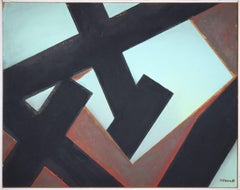
Tectonic Tension / - Archetypes of Painting -
Located in Berlin, DE
Jürgen Möbius (*1939 Großenhain), Tectonic Tension. Oil on hardboard, 47.5 x 60 cm, 49 x 61.5 cm (frame), signed lower right "Möbius" and dated "[19]81".
- Upper left corner with a small chip, light scratches and a little rubbed in places. Provisional gallery frame with traces of use.
- Archetypes of Painting -
About the artwork
The form structure in front of the eye is overlapped by the frame. Thus, the frame does not open up a space in which something is presented, but rather shows the seemingly arbitrary section of a comprehensive context that cannot be framed as such.
We see forms that stand in a structure of tension with each other, whereby the individual black and brown forms, which continue almost endlessly beyond the frame, already show a tension in themselves, since they are not only forms, but also surfaces - form surfaces, while the light blue surface ground is at the same time forms that appear as surface forms. The formed surfaces and surface forms are nested within each other and form a structure that encompasses all elements.
The angular arrangement of the black and brown shaped surfaces gives the structure a tectonic character. The tension is thus heightened to the point of paradox, since the black shape at the front is overlapped by the brown shape at the bottom in the center of the picture, which would be impossible in real space. It is precisely through this "paradox" that Möbius demonstrates that the paradoxical is reality within painting. It is, so to speak, the most original possibility of painting, which distinguishes it from the other arts. In combination with the tectonic formations, Jürgen Möbius creates an archaic primordial painting, which, however, should not be confused with the autonomous color and form cosmos of Suprematism à la Kasimir Malevich. Instead of homogeneous, perfectly colored forms, here the colors are deliberately applied unevenly, and the light blue is mixed with the brown in a manner determined by the brushstroke. At the edges of the surface forms, the uneven application of paint allows the wood of the unprimed hardboard to show through. In this way, Möbius illustrates that we are dealing with a painting that has been created by an act of painting - an act, however, that takes hold of the original principles of painting and thus realizes painting as such.
About the artist
From 1959 to 1965 Jürgen Möbius studied painting at the University Institute for Art and Work Education in Mainz. He also studied philosophy and art history at the University of Mainz. Afterwards he worked as a freelance artist in Mainz.
At first, Möbius created material reliefs and installations, then, around 1974, he turned increasingly to conceptual art and added cinematic means. During this phase he wrote the manifesto-like essay "Principles of Supranatural Landscape" (1979).
From 1981 on, Möbius concentrated on painting and searched for artistic ways to "treat intellectual and sensual perception equally in the fusion of representational and abstract pictorial elements" (Wolfgang Zemter). He found inspiration on his study trips to Thailand and Sri Lanka.
"The pure painting of Jürgen Möbius flows through us as a timeless expression of memory and energy, ploughing our perception and bringing us the happiness of seeing authentic, immovable form.
- Philippe Büttner
Selection of solo exhibitions
1969 Galerie Würzner, Düsseldorf / Galerie Gurlitt, Mainz
1972 Städtische Galerie, Mainz
1973 Galerie Schloss Ringenberg Rathaus, Kleve
1974 Röderhausmuseum, Wuppertal
1976 Galerie Glasing, Osnabrück / Städtische Galerie, Herne
1977, 1997, 2004 Märkisches Museum, Witten
1979 Studio M, Bamberg / Staatstheater, Darmstadt
1980 Galerie Stolànovà, Wiesbaden / Mittelrheinmuseum, Koblenz
1982 Galerie Dornhöfer, Mainz
1984 Galerie Neumühle, Schlangenbad
1985 Landesmuseum, Mainz / Kunstverein, Ludwigshafen / Nassauischer Kunstverein, Wiesbaden
1986 Museum, Bochum / Galerie der Stadt Iserlohn
1987, 1990 Galerie Klaus Kiefer, Essen
1987, 2000 Galerie Ulrike Buschlinger, Wiesbaden
1988 Kunsthalle Darmstadt
1988, 1992, 1996, 1999 Galerie Leonhard, Basel
1992, 2002 Galerie Zulauf, Freisheim
1994 Galerie Remy, Vallendar
1995 Sendezentrum des Zweiten Deutschen Fernsehens, Mainz
2001 Collegium oecumenicum, Bamberg / MVB Forum für Kultur und Wirtschaft, Mainz
2006 Adam Gallery, London
Selection of group exhibitions
1969 ‘International Graphic Arts’, Galerie Dalléas Bordeaux, Paris
1975 ‘Deutscher Künstler-Bund’, Dortmund
1979 ‘Man and man’s Images’, Märkisches Museum Witten
1980 ‘Love-Dokuments of our Time’, Art Hall Darmstadt and Art Association Hannover
1982 ‘Work - Progress – Position’, Nassau Art Association Wiesbaden
1983 ‘Principle Hope – Utopic Aspects in Art and Culture of the 20th Century’, Museum Bochum
1986 ‘Selfportraits’, Gallery Klaus Kiefer Essen
1987 ‘The Dying and Death’, Gallery Klaus Kiefer Essen
1989 ‘Where are You, Revolution – Freedom, Liberty, Egality, Fraternity to-day’, Museum Bochum 1990 ‘Flight – a Problem within the Memory of Man’, Kunsthalle Darmstadt ‘Art and War 1939 – 89’, House of Cultures Berlin
1991 ‘Material and Form’, Pillnitz Castle Dresden and Pfalz Gallery Kaiserslautern
1995 20 Years Exhibitions, Chrämerhuus Langenthal, Schweiz
1998 ‘Works on Paper’, Klaus Kiefer Gallery Essen
2000 ‘Acquisitions 1900 – 2000’, Mittelrhein-Museum Koblenz
2001 ‘Strange Pictures’, Klaus Kiefer Gallery Essen
2002 ‘10 Years Buschlinger Gallery’, Buschlinger Gallery Wiesbaden
2004 ‘Eternal Space – Pictures and Sculptures’, Dome of Bamberg
2005 Art Fair Chicago, Adam Gallery, London
Selected Bibliography
Mittelrheinisches Landesmuseum (Hrsg.): Jürgen Möbius - Neue Bilder, Mainz 1985.
Kunstverein Darmstadt (Hrsg.): Jürgen Möbius. Bilder 1985 - 1988. Kunsthalle Darmstadt, 26. Juni - 14. August 1988. Red. Dorit Marhenke, Lyrik Marcus Schiltenwolf, Düsseldorf 1988.
Gabriele Prusko (Hrsg.): Jürgen Möbius. Mit Texten von Philippe Büttner und Ralph Mieritz, Basel 1992.
Wolfgang Zemter (Hrsg.): Jürgen Möbius - Aktuelle Arbeiten. Märkisches Museum der Stadt Witten, Bönen 1999.
Wolfgang Zemter (Hrsg.): Jürgen Möbius. Flieger in meinem Zimmer und Beruhigte Zone, Bönen 2004.
Dama Gallery...
Category
1980s Abstract Berlin - Art
Materials
Oil
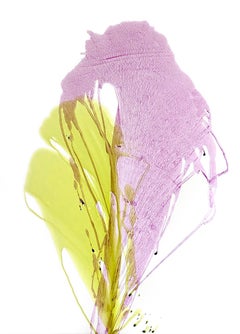
Nothing superfluous. Floral Abstraction, acylic painting by Vika Flartina
Located in Zofingen, AG
"Nothing superfluous." The painting is inspired by spring, when everything is just beginning to awaken, like man and his awakening, when everything superfluous is cut off.
Category
2010s Abstract Berlin - Art
Materials
Paper, Acrylic
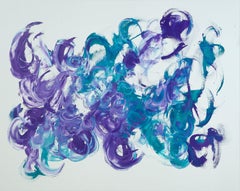
Oil Painting 14, Painting, Oil on Canvas
Located in Yardley, PA
Purple and turquoise oil paint was pushed around in swirl-like motions with a palette knife. This is part of the artist’s ongoing practice, where he intuitively paints for a few ho...
Category
2010s Abstract Expressionist Berlin - Art
Materials
Oil
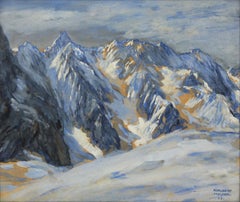
Wettersteinkamm - The blue of the mountains -
Located in Berlin, DE
Adalbert Holzer (1881 Munich - 1966 Munich). Wettersteinkamm. Watercolour, 29 x 34.5 cm (visible size), 37.5 x 43 cm (frame), signed and dated at lower right 'ADALBERT HOLZER [19]23'.
Framed behind glass. Frame shows signs of wear.
- The blue of the mountains -
About the artwork
The Wetterstein ridge is revealed to the viewer from a gentle, snow-covered hill. In contrast to conventional depictions of mountains, the painting is composed entirely of shades of blue, which condense into the blue-grey of the rock or fade into the white of the snow. As a complementary colour to the blue, Holzer virtuously activates the ochre ground. The uniform yet exciting polarity of the colours emphasises the massive majesty of the mountains and at the same time underlines the special character of the Wetterstein ridge. Holzer transferred the translucency of glass painting, in which he was originally trained, to watercolour and developed a pictorial language related to the art of Ferdinand Hodler, which earned him the nickname 'Master of Blue' and led to the appreciation of his watercolours in particular.
About the artist
After an apprenticeship as a stained glass painter at the Kunstgewerbeschule, Adalbert Holzer studied at the Munich Art Academy under Carl von Marr...
Category
1920s Realist Berlin - Art
Materials
Watercolor
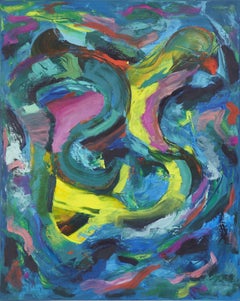
Oil Painting 9, Painting, Oil on Canvas
Located in Yardley, PA
Oil paint was initially pushed around in swirl-like motions with a palette knife. Over several months the canvas was layered with different patches of colour. This is part of the ar...
Category
2010s Abstract Berlin - Art
Materials
Oil
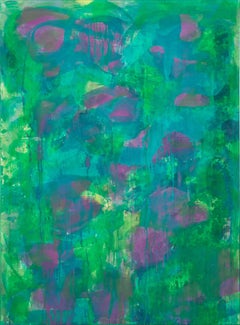
Mountain Flowers, Painting, Acrylic on Canvas
Located in Yardley, PA
Taken from a double exposure photo of an orange butterfly among pink flowers in Switzerland. Four fist-sized cube-shaped rocks were wrapped in towels, dipped in paint and used to mak...
Category
2010s Abstract Expressionist Berlin - Art
Materials
Acrylic
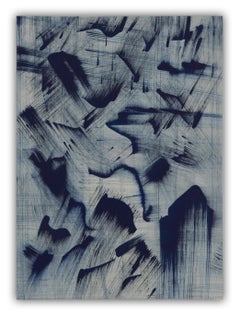
Untitled (09.11.22) B (Abstract Painting)
By Joan Saló
Located in London, GB
Joan Saló is a Spanish contemporary abstract painter whose meticulous, meditative approach creates works that bridge manual gesture with digital-age precision. He lives and works in ...
Category
2010s Abstract Berlin - Art
Materials
Canvas, Acrylic
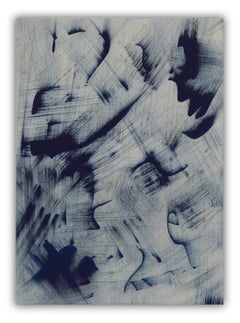
Untitled (09.11.22) A (Abstract Painting)
By Joan Saló
Located in London, GB
Joan Saló is a Spanish contemporary abstract painter whose meticulous, meditative approach creates works that bridge manual gesture with digital-age precision. He lives and works in ...
Category
2010s Abstract Berlin - Art
Materials
Canvas, Acrylic
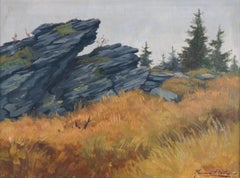
Low Mountain Landscape with Rocks - The mystery of an inconspicuous place -
Located in Berlin, DE
Heinz Roder (1895-1965), Low Mountain Landscape with Rocks, oil on painting cardboard, 30 x 40 cm (visual size), 40 x 50 cm (frame), signed and dated "[19]34" at lower right. In a de...
Category
1930s Berlin - Art
Materials
Cardboard
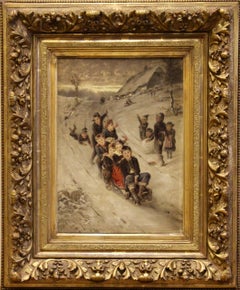
Fritz Beinke, Cheerful Winter Landscape with Children Playing and Sledding.
Located in Berlin, DE
Cheerful winter landscape with children playing and sledding.
Signed lower left. Age-related condition.
Dimensions with frame: 48 cm x 58.5 c...
Category
19th Century Berlin - Art
Materials
Wood, Oil

$7,216 Sale Price
20% Off
Greenery Floral Abstraction, acylic painting on synthetic paper
Located in Zofingen, AG
A work from the series "Secrets of Memories".
I create my paintings by applying many translucent layers, just as people are made up of different layers, among them layers of other pe...
Category
2010s Abstract Berlin - Art
Materials
Acrylic
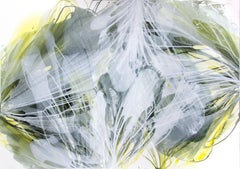
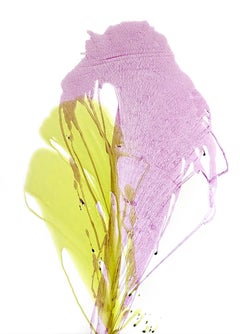
Nothing superfluous. Floral Abstraction, acylic painting by Vika Flartina
Located in Zofingen, AG
"Nothing superfluous." The painting is inspired by spring, when everything is just beginning to awaken, like man and his awakening, when everything superfluous is cut off.
Category
2010s Abstract Berlin - Art
Materials
Acrylic, Paper
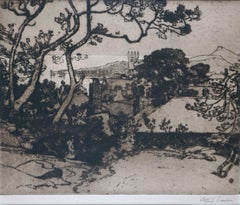
View of a coastal town / - The Pilgrim
s View -
Located in Berlin, DE
Albert Ernst (1909 Fronhofen - 1996 Hamburg), View of a Coastal Town, etching, 30 x 37 cm (picture), 45 x 50.5 cm (frame), signed in pencil lower right "Albert Ernst", framed under g...
Category
Mid-20th Century Realist Berlin - Art
Materials
Etching
Homage à Kahnweiler / - The Appearance of Genius-
Located in Berlin, DE
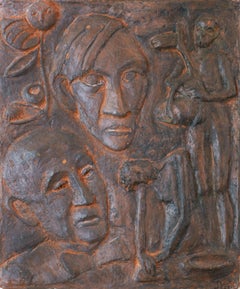
Irmgard Biernath (1905 Waldheim in Saxony - 1998 Mainz), Hommage à Kahnweiler, 1984. Terracotta relief, burnished red body, 43.5 x 38 cm, mounted on support plate, in wooden frame 57 x 49.5 cm, monogrammed "IB" at lower right.
- Isolated patina losses, but overall good condition, frame slightly bumped.
- The Appearance of Genius-
This homage to Daniel-Henry Kahnweiler shows the gallerist and art theorist as Pablo Picasso portrayed him in his lithographic portrait of 1957.
As an innovative Parisian gallery owner, Kahnweiler had exclusively represented Picasso since 1911, while Picasso had painted his famous portrait of Kahnweiler the previous year as a major work of Cubism. And it is Picasso who appears at the centre of Irmgard Biernath's image. Here, his face echoes the features of the self-portrait he painted in 1907 in the Prague National Gallery.
His eyes are wide open as he gazes into the distance, surrounded by the works of his artistic vision that have already taken shape. On the right is the bronze "Man with Sheep...
Category
1980s Contemporary Berlin - Art
Materials
Terracotta
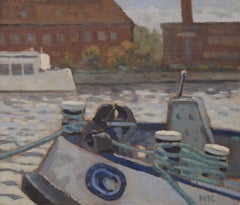
ships on Spree river, Painting, Oil on Other
By Nikolai Kraneis
Located in Yardley, PA
done on location in Berlin, canvas on panel :: Painting :: Impressionist :: This piece comes with an official certificate of authenticity signed by the artist :: Ready to Hang: No ::...
Category
Early 2000s Impressionist Berlin - Art
Materials
Oil
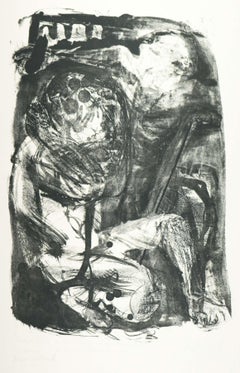
Threatening to defeat me once and for all / - A Christmas Pietà -
Located in Berlin, DE
Johannes Heisig (*1953 Leipzig), "Threatening to defeat me once and for all" - To the Christmas Oratorio by Johann Sebastian Bach. Lithograph on strong yellowish laid paper with wate...
Category
1980s Abstract Expressionist Berlin - Art
Materials
Lithograph
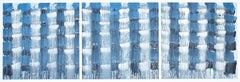
Blue Clouds Grey, Painting, Acrylic on Canvas
Located in Yardley, PA
Exploring blue monochrome and relaxed repetition. Reflecting the patterns of clouds during the final hour of light before sunset; how they create shadows that fall over each other. ...
Category
2010s Abstract Berlin - Art
Materials
Acrylic
In The Morning / Oil Painting 18, Painting, Oil on Canvas
Located in Yardley, PA
Oil paint was pushed around in swirl-like motions with a palette knife and layered over several years with different patches of colour. The resulting piece is contrasting and vibrant...
Category
2010s Abstract Berlin - Art
Materials
Oil
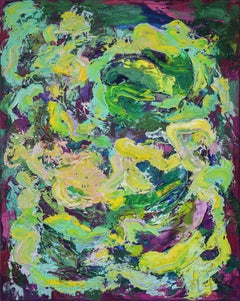
Orange Face, Painting, Oil on Canvas
Located in Yardley, PA
Green and yellow oil paint was pushed around in swirl-like motions with a palette knife. As a final action the green acrylic background was covered by orange oil paint. This is part...
Category
2010s Abstract Expressionist Berlin - Art
Materials
Oil
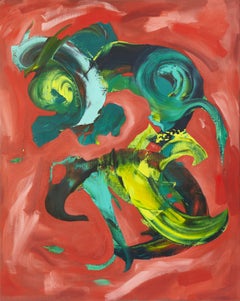
Yesterday I Was A Rock, Today I Am A Stone, Painting, Acrylic on Canvas
Located in Yardley, PA
Yesterday I Was A Rock, Today I Am A Stone, (Sitting On The Ground) Gestural movements were used to capture and reflect the flowers mentioned in the title. Initially created as a ...
Category
2010s Expressionist Berlin - Art
Materials
Acrylic
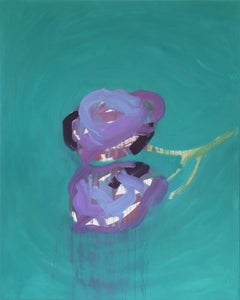
Half-length portrait of an elderly bearded man - Melancholy of a prophet -
Located in Berlin, DE
Friedrich August Seitz (1902 Staffort - 1944 Belgrade). Half-length portrait of an elderly man with a beard. Oil on canvas, 42 x 34 cm (visible seize), 58 x 50 cm (frame), signed and...
Category
1920s Expressionist Berlin - Art
Materials
Oil
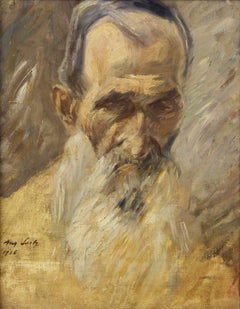
Man sitting in the studio - Thinking about art -
Located in Berlin, DE
Adolph Eduard Otto von Faber du Faur (1828 Ludwigsburg - 1901 Munich). Man sitting in the studio. Watercolour painting, 43 x 27 cm (visible size), 73 x 53 cm (frame), monogrammed at lower right, estate stamp.
Upper right corner neatly repaired, small tear in the wall to the left of the sitter.
- Thinking about art -
About the artwork
The sitter, an elderly man, is seated in a studio on a pedestal reminiscent of an academy hall. The earthy, dark tones give the scene a weighty quality. The lightest tones are found in the incarnate parts of the figure, which do not stand out from the other colours of the picture, but are linked to them. As a result, the sitter's face is both part of and the highlight of the colour references in the picture. The colour of the sitter's skin is reflected in his pink coat, while his white-grey hair matches the colour of the wall next to him. This almost monochrome wall surface, in turn, is connected across the portrait to the framed picture standing on the floor, which seems to have been erased by this correspondence with the empty wall surface. Through the palette, which is positioned directly behind the sitter's head, the reference to painting, which is already given by the studio space, is explicitly linked to the sitter, who thus seems to be contemplating the question of the meaning of art.
This raises the question of whether Faber Du Faur, who had become lonely in his old age, might have painted a self-portrait here in his later years. In addition to the studio setting, the sitter's explicit reference to the palette and the fact that the picture was part of his estate, the only summary elaboration of the body suggests a self-portrait, while the representation of the face is concretised with the wide-open eyes typical of a self-portrait. This concentration on the face gives the impression of the artist's melancholy introspection, captured by the palette and related to the meaning of painting, whose dark character is reinforced by the concealment of the palette hanging on the right of the picture in the light tones so characteristic of Faber Du Faur. In the course of this resignation, Faber du Faur advises his son Hans, who has also become a painter: "Promise me one thing: never move to Munich, they'll kill you here!"
Whoever the sitter may be, the references to painting make the portrait a resigned self-contemplation by Faber Du Faur, focused on art.
About the artist
After leaving school, Otto Faber du Faur entered the service of the Württemberg army, at the same time cultivating his artistic talent. In 1851, on the recommendation of his father Christian Wilhelm, who was himself a battle painter, he spent six months in Munich as an apprentice to Alexander von Kotzebue. In 1852 he was granted a year's leave of absence from military service to study battle painting in the studio of Adolphe Yvon...
Category
1890s Realist Berlin - Art
Materials
Watercolor
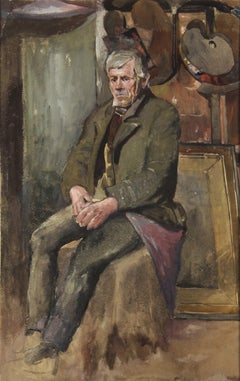
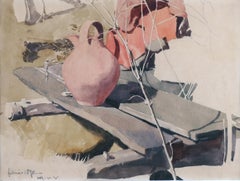
Clay jug on a bench - The essence of the clay jar revealed by the sunlight -
By Hans Richard von Volkmann
Located in Berlin, DE
Hans Richard von Volkmann (1860 Halle (Saale) - 1927 ibid.), Clay jug on a bench. Pencil and Watercolour on paper. 20 x 26,7 cm (visible size), 37 x 45 cm (frame), dated and monogrammed lower left "Februar 1890 - HR. V. V."
- Minimally tanned. Framed behind glass in a passepartout.
About the artwork
Using the technique of his early youth - pencil and watercolour - Hans Richard von Volkmann depicts a still life. However, this is not a conventional indoor still life, but an open-air depiction, painted outdoors and not in the studio. It is therefore an open-air painting, characteristic of von Volkmann's oeuvre, which could have been painted in the Willingshausen colony of painters, where open-air painting was programmatically practised there and the artist stayed there that year.
And indeed, this painting is a manifesto of open-air painting. Von Volkmann demonstrates that leaving the studio for the light of nature leads to an entirely new quality of art. To prove this, he uses the genre of still life, which can be described as the studio subject par excellence. Moreover, light plays an essential role in the classical still life. It is the real protagonist of the still life. And it is precisely this moment, essential to the still life, that von Volkmann exploits to demonstrate the potential of plein-air painting: He presents the objects as they appear in the sunlight. The date of February and the bare branches in the foreground make it clear that this is a clear winter day in bright sunlight. The delicate plant in the foreground casts a clearly defined shadow, as does the jug. However, the shadow is most pronounced on the jug itself: The underside of the handle appears almost black, making the top, and therefore the jug itself, shine all the more brightly. The shining of the objects in the sunlight is also visible on the bench. As complementary phenomena to the shadow zones, light edges can be seen on the boards of the seats and the upper foot of the bench shines entirely in the light. To achieve this intensity of light, von Volkmann activated the bright white of the painting ground.
By depicting the objects in glistening sunlight, von Volkmann demonstrates that this quality of light is only to be found outdoors. And this light leads to a new way of looking at the objects themselves. The jug on the bench seems like an accidental arrangement, as if the artist had stumbled upon this unintentional still life and captured it with fascination. And in this fascination there is a moment of realisation that refers to the objects themselves. It is only when they shine brightly in the sunlight that their true nature is revealed. In this way, sunlight allows the objects to come into their own, so to speak. Sunlight, which is not present in the studio, gives the still life an entirely new dimension of reality, which is also reflected in the colours interwoven by the sunlight: The bench and the jug stand in a harmonious grey-pink contrast to the green of the implied meadow.
The emphasis on the jug as the central subject of the picture also implies that the watercolour has not been completed. This non finito inscribes a processuality into the picture, making it clear that something processual has been depicted, the temporality of which has been made artistically permanent. This is why von Volkmann signed the painting and dated it to the month.
About the Artist
Von Volkmann made his first artistic attempts at the age of 14. He painted many watercolours of his home town of Halle. This laid the foundation for his later outdoor painting.
In 1880 his autodidactic beginnings were professionalised with his admission to the Düsseldorf Art Academy. There he studied under Hugo Crola, Heinrich Lauenstein, Johann Peter Theodor Janssen and Eduard von Gebhardt until 1888. Von Volkmann then moved to the Karlsruhe Academy, where he was Gustav Schönleber's master pupil until 1892.
In 1883 he came for the first time to Willingshausen, Germany's oldest painters' colony, at the suggestion of his student friend Adolf Lins...
Category
1890s Naturalistic Berlin - Art
Materials
Watercolor
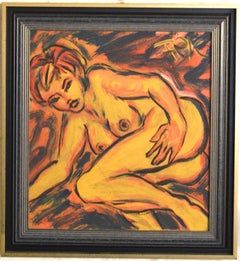
Flirting Jasmin
Located in Berlin, DE
Felix Samuel Pfefferkorn grew up without parents. Because his parents lost their lives in a bombing raid, he was raised as an orphan. He has been missing since January 1, 1980.
His ...
Category
Mid-20th Century Modern Berlin - Art
Materials
Oil
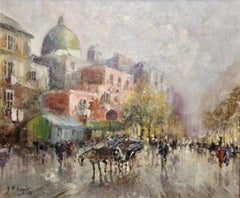
Guglielmo de Giorgio, busy street in Paris, France. Decorative oil painting.
Located in Berlin, DE
Guglielmo de Giorgio, busy street in Paris, France. Decorative oil painting.
Dimensions WITHOUT frame in cm 50 x 60
Dimensions WITH frame in cm 6...
Category
20th Century Modern Berlin - Art
Materials
Canvas, Oil
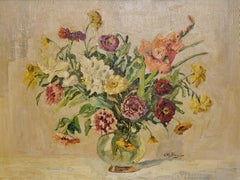
Flower Still Life by Otto Beyer. Painting, Oil on Canvas.
Located in Berlin, DE
Flowers Still Life by Otto Beyer. Painting, oil on canvas.
Dimensions without frame.
Frame has minor damage in places.
Category
20th Century Berlin - Art
Materials
Canvas, Oil
$1,347 Sale Price
20% Off
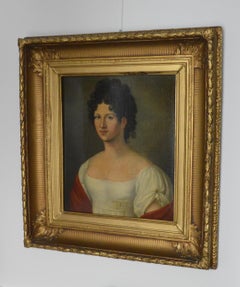
the portrait of Henriette Charlotte Plantier, 1821
Located in Berlin, DE
The picture is oil on canvas.
The picture is signed.
Friedrich Wilhelm Ternite
Friedrich Wilhelm Ternite (1786-1871) was a German portrait and miniature painter, as well as a litho...
Category
1820s Realist Berlin - Art
Materials
Oil
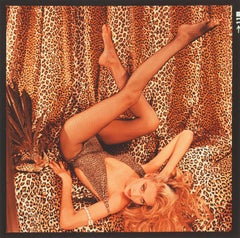
Jerry Hall, New York City 1985
By Annie Leibovitz
Located in Berlin, DE
Printed in 2011. Signed in pencil; titled, dated, inscribed and with the photographers black copyright stamp, on the verso. Number 10 from a limited edition of 25.
Category
1880s Contemporary Berlin - Art
Materials
Archival Pigment
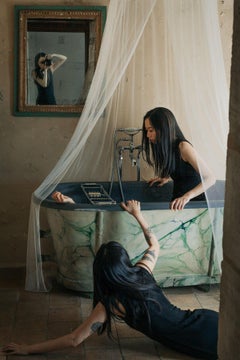
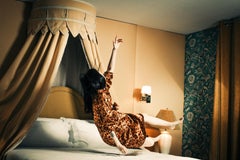
End of the Party 2
Located in Berlin, DE
Signed, dated and numbered '2/10' on the verso. From the series 'End of the party'. On Hahnemühle bright white.
Category
2010s Berlin - Art
Materials
Inkjet
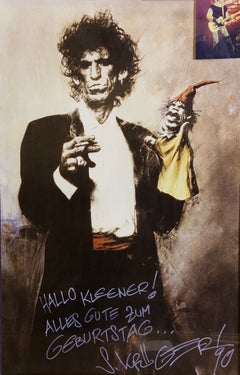
Untitled (Keith Richards with Mick Jagger Puppet), signed and dedicated
By Sebastian Kruger
Located in Berlin, DE
Offset print of untitled painting (Keith Richards with Mick Jagger puppet), signed and dedicated by Sebastian Kruger (Krüger) as follows:
"Hello Little One! Happy Birthday..."
S. Kr...
Category
1990s Berlin - Art
Materials
Offset
$3,848 Sale Price
20% Off
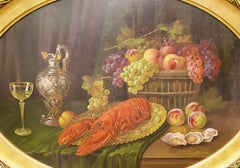
Oval Still Life, with Fruits and Lobster. Oil Painting by Herzberg-Schönwald.
Located in Berlin, DE
Antique, oval still life, with fruits and lobster. Oil painting.
Signed lower right.
Dimensions are without frame.
The painting and the frame have m...
Category
20th Century Berlin - Art
Materials
Oil, Fiberboard
Zwischen Schwarz und Rot
Located in Berlin, DE
Signed in pencil 'GHoehme' lower right, dated and inscribed 'I. Probedruck 1959' lower left. On wove paper, with full margins.An exceptionally richly printed proof impression of the ...
Category
1950s Berlin - Art
Materials
Etching

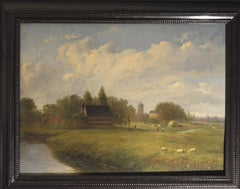
pastoral landscape
Located in Berlin, DE
The picture is oil on wood and signed.
Louis Pierre Verwee (1807–1877) was a Belgian landscape and animal painter. He's considered a key figure in the Romantic school of Belgian lan...
Category
Late 19th Century Land Berlin - Art
Materials
Oil
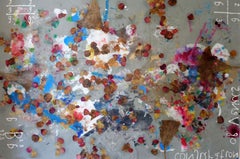
Conjuration of Venus, Painting, Acrylic on Paper
Located in Yardley, PA
Acrylics, house paint, dry pressed Rose petals, dry pressed Datura flowers (4), varnish (partial) on industrial floor paper. I attempted to create a symbiosis between natural bio sh...
Category
2010s Abstract Berlin - Art
Materials
Acrylic
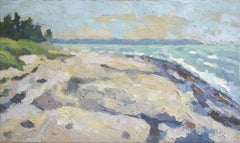
Baltic beach, Painting, Oil on Canvas
By Nikolai Kraneis
Located in Yardley, PA
A beach from the german baltic sea, around Prerow. Oil on linen. Painted with a lot of paint, applied with brush and palette knife. The edges of canvas are colored in a brownish oc...
Category
2010s Contemporary Berlin - Art
Materials
Oil
Transferred 1
Located in Berlin, DE
From the narrative photography series 'Transferred'.
This series was shot in the summer of 2021 in a hotel room and a tourist apartment, when
Kayee deliberately shot outside of her ...
Category
2010s Berlin - Art
Materials
Inkjet
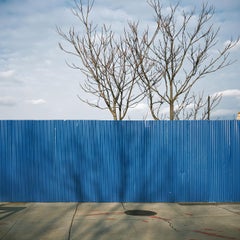
401 Carroll St., Gowanus
Located in Berlin, DE
From the series 'Brooklyn Corrugated Iron Fences'. Signed, dated and numbered on the verso.
Category
2010s Berlin - Art
Materials
Silver Gelatin
Still Thinking About These?
All Recently ViewedMore Ways To Browse
Wes Anderson Art
West Indies Painting
Woodstock Ny Paintings
Zane Gray
1970s Seascape Oil Painting
A Grimshaw
Adam Barland
Air France Afrique
Alden Bryan
Amanda Acker
Antique Chinese Watercolor Landscape
Anton Genberg
Anton Sipos
Appalachian Painting
Army Navy Poster
Art Contemporary Fuschia
Arthur Walker Redgate
B Harvey