Berlin - Art
to
124
190
181
144
99
152
Overall Width
to
Overall Height
to
21
118
230
397
17
18
11
10
12
9
10
13
20
14
15
179
96
73
63
17
14
12
11
8
3
2
1
1
327
243
113
356
189
143
115
114
59
54
49
47
45
45
43
41
35
31
30
30
29
27
26
509
286
285
258
233
34
24
19
12
11
149
5
228,988
155,614
Item Ships From: Berlin
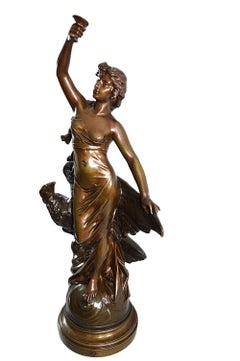
Hebe Par Drouot Edouard Drouot (French, 1859-1945)
Located in Berlin, DE
Bronze, beautifully cast, patinated. Above a fluted round base, the figure of the Greek goddess of youth. Hébé is depicted here rising in a tight-fitting robe before an eagle, the sy...
Category
Early 20th Century Jugendstil Berlin - Art
Materials
Bronze
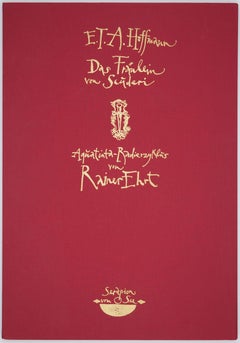
Graphic portfolio for E. T. A. Hoffmann ‘Miss of Scuderi’, 2003
Located in Berlin, DE
Rainer Ehrt (*1960 Elbingerode), Graphic portfolio for E. T. A. Hoffmann ‘Miss of Scuderi’, 2003. Seven color aquatint etchings, 53 cm x 38 cm in linen folder, each signed in lead lo...
Category
Early 2000s Realist Berlin - Art
Materials
Paper
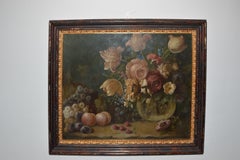
Flower picture ca. 18th century
Located in Berlin, DE
restored
oil on canvas
unsigned
80 x 70 cm
Unknown flower painting from the 18th century. Many paintings are unsigned. At the time they were considered part of the inventory of ups...
Category
Late 18th Century Baroque Berlin - Art
Materials
Oil
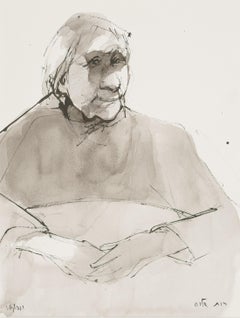
Old Woman at the Table / - Shaded view -
By Ruth Schloss
Located in Berlin, DE
Ruth Schloss (1922 Nuremberg - 2013 Kfar Shmaryahu), Old Woman at the Table, around 1990. Mixed media on watercolor paper, 32 cm x 24 cm, signed “Schloss” lower left and signed again...
Category
1990s Realist Berlin - Art
Materials
Paper
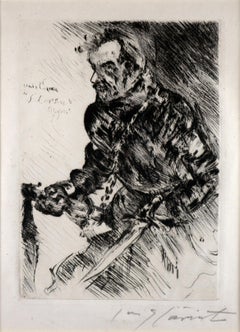
Rudolf v. Rittner as Florian Geyer - Last man standing -
By Lovis Corinth
Located in Berlin, DE
Lovis Corinth (1858 Tapiau - 1925 Zandvoort), Rudolf von Rittner as Florian Geyer, 1924 (Müller 854), drypoint signed in pencil. 20.4 × 14.2 (plate size), 37.7 × 30.6 cm (sheet size). Published by Karl Nierendorf, Berlin. Framed in a passepartout.
- Strong, precise impression. Frame a little bit rubbed and with two small damages.
About the artwork
The knight is a leitmotif in Lovis Corinth's work, culminating in his Self-Portrait in Armour of 1914. Of all the paintings on this theme, Corinth most often depicted Florian Geyer. Descended from a Franconian noble family, he fought for the freedom of the peasants during the peasant wars of the Reformation, first diplomatically and then militarily, leading the legendary Schwarzen Haufen (Black Troops). The name derives from the black uniforms with which Geyer dressed the peasants willing to fight.
During the Napoleonic occupation, the freedom fighter Florian Geyer was sung about by the Romantics, and the free corps Die Schwarze Schaar, founded in 1813 by Major von Lützow, succeeded the Schwarzer Haufen. It was against this historical background that Gerhard Hauptmann wrote the revolutionary drama Florian Geyer, which premiered at the Deutsches Theater in Berlin in 1896. While the actor Rudolf Rittner, who would later appear in Fritz Lang's films, initially played the role of Schäferhans, he took over the leading role in the new production at Berlin's Lessing Theatre in 1904, again directed by Emil Lessing, which established his fame as an actor. Hauptmann himself praised the acting. He wrote to Hugo von Hofmannsthal: "It went quite well with Florian Geyer. In any case, I had the great pleasure of seeing the play again in an admirable performance". And Lovis Corinth was so taken with Rittner's performance that he painted an oil portrait of him in the role of Florian Geyer in 1906.
After two further graphic versions in 1915 and 1920/21, Corinth returned to the painting a year before his death and almost twenty years after the oil painting to create this graphic version in 1924. Even the inscription in the picture was taken over. This proves all the more the importance of the knight and freedom fighter for Corinth's self-image.
The oil painting, in particular, proclaims the single-minded determination to fight to the last for the values defended, manifested in the oil painting by the tattered flag held out to the enemy. There is a parallel with Rainer Maria Rilke's 1899 story The Cornet, in which the protagonist goes down with the flag that he first saved at the risk of his life.
Consequently, the portrait is also a self-portrait, and the knight's armour is not an academic costume or an ironic refraction, but an expression of Corinth's self-image, which also includes his self-representation as an artist. The Secession poster...
Category
1920s Expressionist Berlin - Art
Materials
Etching
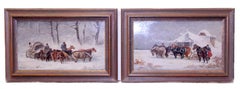
Pair of Winter Horse Sleigh Scenes by Jan Wolski, Oil on Panel
Located in Berlin, DE
Charming pair of winter landscape paintings by Polish artist Jan Wolski (circa 1907–1990), each finely executed in oil on panel and signed lower right. The compositions depict horse-...
Category
20th Century Realist Berlin - Art
Materials
Oil, Wood Panel
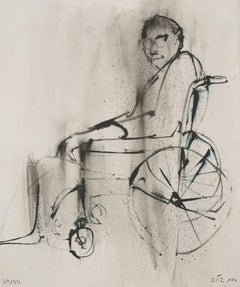
Man in a wheelchair / - Looking to the future -
By Ruth Schloss
Located in Berlin, DE
Ruth Schloss (1922 Nuremberg - 2013 Kfar Shmaryahu), Man in a wheelchair, around. 1990. Mixed media on watercolor paper, 38.5 cm x 33 cm, signed “Schloss” lower left and again in Heb...
Category
1990s Realist Berlin - Art
Materials
Paper
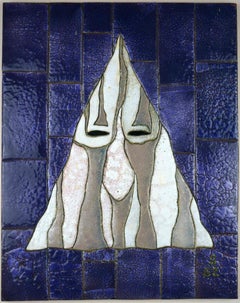
White Mask on Violet Ground - Mythic mask mountain -
Located in Berlin, DE
Hermann Schütte (1893 Osnabrück - 1973 Hamburg), White Mask on Violet Ground. Enameled copper plate on wooden base, 37 x 29.5 cm, monogrammed and dated "S[chütte] [19]62" in the lowe...
Category
1960s Post-War Berlin - Art
Materials
Enamel
Oil painting, Russian - soviet artist, Samochwalow (Samokhvalov)
Located in Berlin, DE
Oil painting, Russian, soviet artist, Samochwalow (Samokhvalov)
Oil on cardboard.
Signed (monogrammed) and dated.
Moscow gallery or exhibition sticker on the back.
Dimensions with ...
Category
20th Century Berlin - Art
Materials
Oil, Cardboard
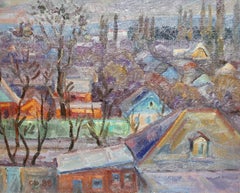

$4,811 Sale Price
20% Off
Hot hot summer
Located in Zofingen, AG
"Hot Hot Summer" is both a visual delight and a playful provocation. This artwork explores themes of desire, indulgence, and the sweet loss of control. Ice cream melts between the fi...
Category
2010s Modern Berlin - Art
Materials
Canvas, Acrylic
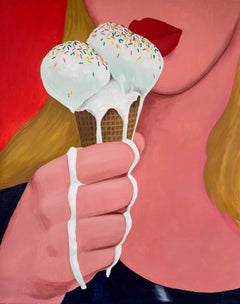
Twelve variations on a dice theme / - The Musical Proportions of the Cube -
Located in Berlin, DE
Hans Rudolf Bosshard (*1929 Balm-Lottstetten), Twelve variations on a dice theme, 1962. Portfolio with inserted cover sheet and twelve woodcuts on thin Japanese paper. Copy no. 2/10,...
Category
1960s Minimalist Berlin - Art
Materials
Paper
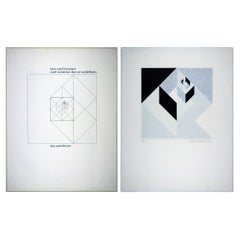
Female portrait 19 19th century
Located in Berlin, DE
oil on canvas
unsigned
Category
Late 19th Century Jugendstil Berlin - Art
Materials
Oil
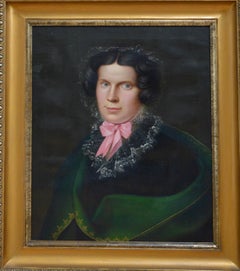
Death as a servant / - Concise congeniality -
Located in Berlin, DE
Alfred Rethel after (1816 Diepenbenden - 1859 Düsseldorf), Death as a servant, around 1920. Color woodcut by Oskar Bangemann after a drawing by Rethel created around 1845 on handmade...
Category
1910s Realist Berlin - Art
Materials
Paper
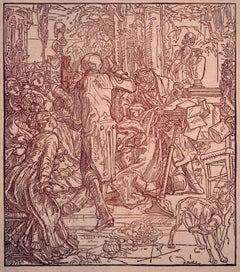
The Mother / - Violated Motherhood -
By Georg Tappert
Located in Berlin, DE
Georg Tappert (1880 Berlin - 1957 Berlin), The Mother, 1918 (1964). Estate print from 1964. Linocut on Japan, 31.5 cm x 20 cm (image), 44.5 cm x 28 cm (sheet size), marked lower left...
Category
1910s Expressionist Berlin - Art
Materials
Paper
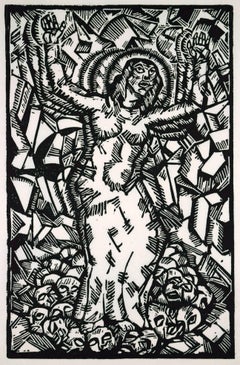
The Zero Hour / - After the End of the World -
Located in Berlin, DE
Rudolf Nehmer (1912 Bobersberg - 1983 Dresden), The Zero Hour, 1948. Woodcut on yellowish wove paper, 20 cm x 14.8 cm (image), 43 cm x 30 cm (sheet size), signed “Rud.[olf] Nehmer” i...
Category
1940s Realist Berlin - Art
Materials
Woodcut
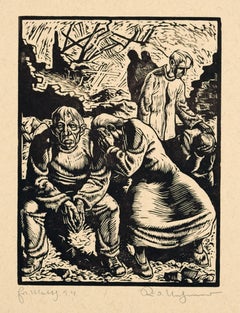
The Hut / - The head of the hat -
By Reiner Schwarz
Located in Berlin, DE
Reiner Schwarz (*1940 Hirschberg), The Hut, 1967. Lithograph, 32.5 cm x 32.5 (depiction), 59 cm x 42 cm (sheet size), signed “R.[einer] Schwarz” in pencil lower right, dated “[19]67”...
Category
1960s Surrealist Berlin - Art
Materials
Paper
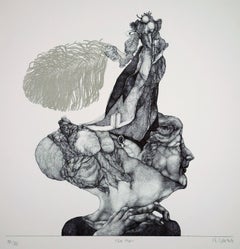
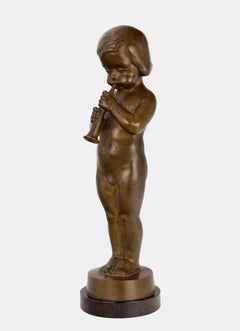
Boy playing the shawm / - The transience of sounds -
Located in Berlin, DE
Hans Harders (1875 Mörel - 1955 Berlin), Boy playing the shawm, around 1930. Dark patinated bronze with round plinth on a black marble base (2 cm high), t...
Category
1930s Art Deco Berlin - Art
Materials
Bronze
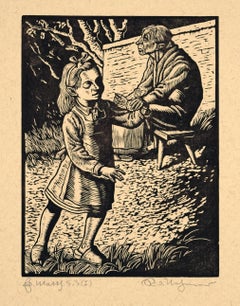
Blessed are the spiritually poor / - The Abundance of Poverty -
Located in Berlin, DE
Rudolf Nehmer (1912 Bobersberg - 1983 Dresden), Blessed are the spiritually poor, 1948. Woodcut on yellowish wove paper, 20 cm x 15 cm (image), 45 cm x 30 cm (sheet size), signed “Ru...
Category
1940s Realist Berlin - Art
Materials
Woodcut
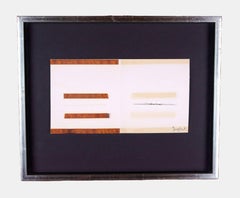
Collage with metal application / - Rhythm and Reflection -
Located in Berlin, DE
Hermann Goepfert (1926 Bad Nauheim - 1982 Antwerp), Collage with metal application, 1965. Contribution no. 14 from the anthology 'La lune en rodage II' published by Editions Panderma...
Category
1990s Abstract Berlin - Art
Materials
Paper
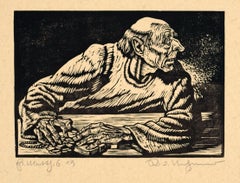
Greed / - The Poverty of Wealth -
Located in Berlin, DE
Rudolf Nehmer (1912 Bobersberg - 1983 Dresden), The birds under the sky, 1948. Woodcut on yellowish wove paper, 11 cm x 18 cm (depiction), 43 cm x 30 cm (sheet size), signed “Rud.[ol...
Category
1940s Realist Berlin - Art
Materials
Woodcut
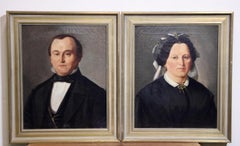
Pair of decorative antique oil paintings, Portraits. 19th century.
Located in Berlin, DE
Pair of decorative antique oil paintings, portraits. 19th century. Signed and dated.
Dimensions with frame in cm EACH PAINTING 53 x 63
Category
19th Century Berlin - Art
Materials
Canvas, Oil
$3,367 Sale Price
20% Off
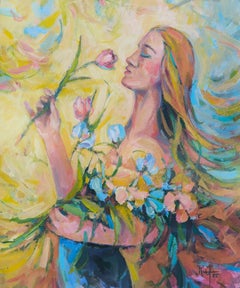
Painting of Woman with Flowers
Located in Zofingen, AG
The Girl Whose Hair Smells Like Spring
This contemporary portrait of a young woman captures a tender connection between femininity and nature. Her hair seems to carry the scent of e...
Category
2010s Modern Berlin - Art
Materials
Canvas, Acrylic
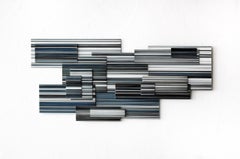
Layers Object No. 12 by Doris Marten - Abstract painting, minimalist, lines, ink
By Doris Marten
Located in Paris, FR
Layers Object No. 12 is a unique ink drawings on Alu-Dibond painting by contemporary artist Doris Marten, dimensions are 55.5 × 121 cm (21.9 × 47.6 in).
The artwork is signed, sold u...
Category
2010s Contemporary Berlin - Art
Materials
Ink
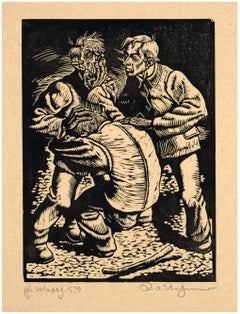
Blessed are the peacemakers / - Dehumanization -
Located in Berlin, DE
Rudolf Nehmer (1912 Bobersberg - 1983 Dresden), Blessed are the peacemakers, 1948. Woodcut on yellowish wove paper, 18 cm x 15.5 cm (image), 45 cm x 30 cm (sheet size), signed “Rud.[...
Category
1940s Realist Berlin - Art
Materials
Woodcut
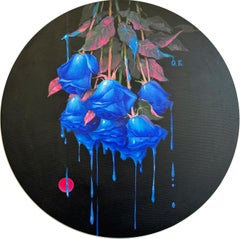
Out of the blue
Located in Zofingen, AG
This painting reflects the subtle transformations we experience within ourselves. The flowers appear to dissolve and shift, symbolizing the ever-changing nature of our emotions and s...
Category
2010s Modern Berlin - Art
Materials
Canvas, Acrylic
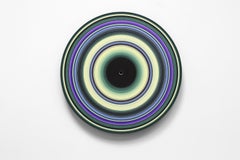
Around the World No. 10C by Doris Marten - Oil on vinyl, music, circle, vivid
By Doris Marten
Located in Paris, FR
Around the World No. 10C is a unique oil on vinyl painting by German contemporary artist Doris Marten, dimensions are 30 × 30 cm (30 × 30 cm).
The artwork is signed, sold unframed a...
Category
2010s Contemporary Berlin - Art
Materials
Mixed Media, Oil
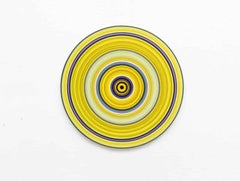
Yellow Edition No. 02m by Doris Marten - Oil on vinyl, music, circle, vivid
By Doris Marten
Located in Paris, FR
Yellow Edition No. 02m is a unique oil on vinyl painting by German contemporary artist Doris Marten, dimensions are 25 × 25 cm (9.8 × 9.8 in).
The artwork is signed, sold unframed a...
Category
2010s Contemporary Berlin - Art
Materials
Mixed Media, Oil
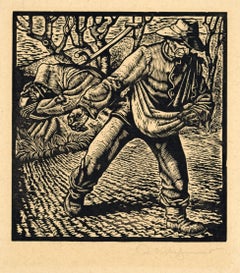
The Fieldman and Death / - Sowing and Harvest -
Located in Berlin, DE
Rudolf Nehmer (1912 Bobersberg - 1983 Dresden), The Fieldman and Death, around 1948. Woodcut on yellowish wove paper, 16.8 cm x 15.8 cm (depiction), 42 cm x 30 cm (sheet size), signe...
Category
1940s Realist Berlin - Art
Materials
Woodcut
Blessed are the merciful / - The support of care -
Located in Berlin, DE
Nehmer, Rudolf (1912-1983), Blessed are the merciful, 1948
Rudolf Nehmer (1912 Bobersberg - 1983 Dresden), Blessed are the merciful, 1948. Woodcut on yellowish wove paper, 18.8 cm x ...
Category
1940s Realist Berlin - Art
Materials
Woodcut
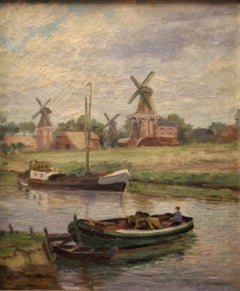
Johann Hermann ter Hell – Dutch Windmills and Barges, Oil on Canvas
Located in Berlin, DE
Atmospheric oil on canvas landscape, signed lower right and most likely by Johann Hermann ter Hell. The painting depicts a tranquil river scene with moored barges and several windmil...
Category
20th Century Impressionist Berlin - Art
Materials
Canvas, Oil
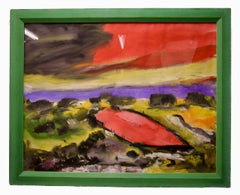
Lothar Malskat – Abstract Landscape in Red and Green, Signed and Dated ’44
Located in Berlin, DE
Vivid expressionist landscape by Lothar Malskat (German, 1913–1988), signed and dated ’44 lower right. Executed in watercolor and gouache on paper, this dynamic composition captures ...
Category
20th Century Expressionist Berlin - Art
Materials
Watercolor, Gouache
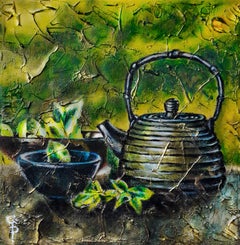
Green tea. original painting
Located in Zofingen, AG
In the painting, a dark teapot, shimmering with gold, stands gracefully to one side, while two modest bowls, each cradling delicate green leaves, rest quietly on the other. A dialogu...
Category
2010s Impressionist Berlin - Art
Materials
Acrylic, Canvas
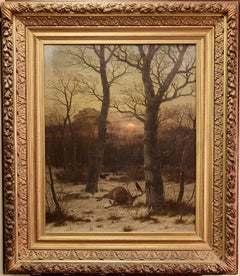
Caeser Bimmermann, Oil Painting, 1885. Snowy Winter Landscape with Deer.
Located in Berlin, DE
Caeser Bimmerman, oil painting, 1885, snowy winter landscape with deer and birds. Hunting scene.
The romantic forest landscape in winter is a recu...
Category
19th Century Berlin - Art
Materials
Canvas, Oil
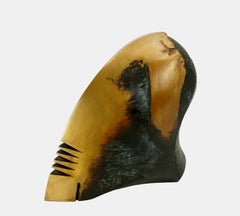
Helmet Head / - Futuristic Archaism -
Located in Berlin, DE
Karl-Heinz Deutsch (*1940 Karlsruhe), Helmet Head, around 2003. Polished and patinated bronze, 23.5 cm (height) x 25.5 cm (length) x 16 cm (depth), weight 4.9 kg. Monogrammed on the ...
Category
Early 2000s Surrealist Berlin - Art
Materials
Bronze
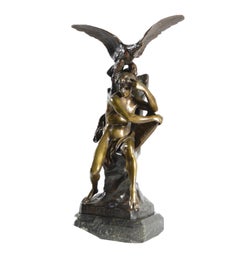
Emile Louis Picault (1833-1915),
Le Penseur
By Émile Louis Picault
Located in Berlin, DE
Emile Louis Picault (1833-1915), 'Le Penseur', patinated bronze mounted on a marble base, H 30 - 33 cm (bronze - total)
A fantastic quality Bronze of
Emile Louis Picault
Signed o...
Category
Late 19th Century Jugendstil Berlin - Art
Materials
Bronze
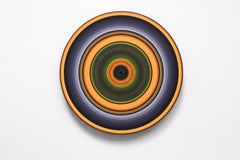
Rainy Days and Autumn Leafs No. 74 by Doris Marten - Oil on vinyl, music
By Doris Marten
Located in Paris, FR
Rainy Days and Autumn Leafs No. 74 is a unique oil on vinyl painting by German contemporary artist Doris Marten, dimensions are 30 × 30 cm (11.8 × 11.8 in).
The artwork is signed, s...
Category
2010s Contemporary Berlin - Art
Materials
Oil
Rainy Days and Autumn Leafs No. 76 by Doris Marten - Oil on vinyl, music
By Doris Marten
Located in Paris, FR
Rainy Days and Autumn Leafs No. 76 is a unique oil on vinyl painting by German contemporary artist Doris Marten, dimensions are 30 × 30 cm (11.8 × 11.8 in).
The artwork is signed, s...
Category
2010s Contemporary Berlin - Art
Materials
Oil
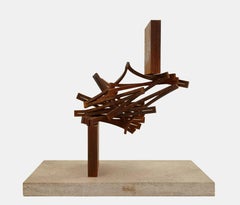
Gradual Rotation / - Dynamic Tectonics -
Located in Berlin, DE
Thomas Röthel (*1969 Ansbach), Gradual Rotation, around 2005. Steel with rust patina mounted on stone plate. Overall dimensions: 38 cm (height) x 34 cm (width) x 27 cm (depth), weigh...
Category
Early 2000s Abstract Berlin - Art
Materials
Steel
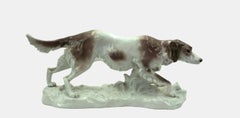
Pointer / - The elegance of the hunting dog -
Located in Berlin, DE
Anton Büschelberger (1869 Eger - 1934 Dresden), Pointer, around 1930, made by the Karl Ens porcelain manufactory in Volkstedt (Thuringia), model number 2478, 6. Porcelain with underg...
Category
1920s Realist Berlin - Art
Materials
Porcelain
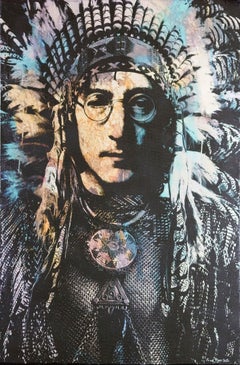
Chief John Winston Ono Lennon! / - Chief of the Pop -
Located in Berlin, DE
Fred Tiger (*1976), Chief John Winston Ono Lennon!, 2020. Hand-finished canvas print, 60 cm (height) x 40 cm (width), signed “Fred Tiger” lower right and dated “2020”, on the reverse...
Category
2010s Pop Art Berlin - Art
Materials
Canvas
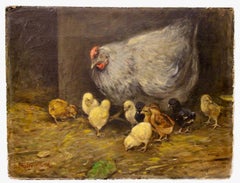
Fritz Schulze-Blank – Hen with Chicks, Oil on Cardboard
Located in Berlin, DE
Delightful oil on cardboard by Fritz Schulze-Blank, signed lower left. The painting captures a tender barnyard scene with a hen surrounded by her colorful brood of chicks, rendered w...
Category
20th Century Realist Berlin - Art
Materials
Oil, Cardboard
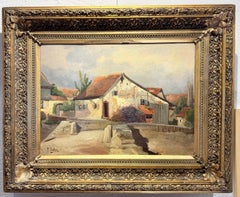
Karl Eduard Onken Jever Oldenburg 1846 - 1934 Wien Landscape
Located in Berlin, DE
oli on canvas
signed bottom left
34x44 cm
Karl Eduard Onken (also known as Carl Eduard Onken) was an Austrian landscape painter and etcher of German origin.
Here are some key ...
Category
1920s Land Berlin - Art
Materials
Oil
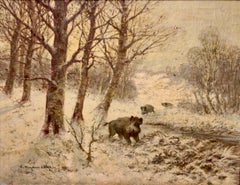
Antique Oil Painting, Winter Landscape with Wild Boars. Hunting Scene.
Located in Berlin, DE
Winter landscape with wild boars. Similar to a hunting scene. Signed lower left "W. Heydendahl"
Dimensions with frame: 92 cm x 112 cm
Dimensions without frame: 71 cm x 90.5 cm
"For...
Category
20th Century Berlin - Art
Materials
Canvas, Oil
Small Nude / - Abstract Figurativity -
Located in Berlin, DE
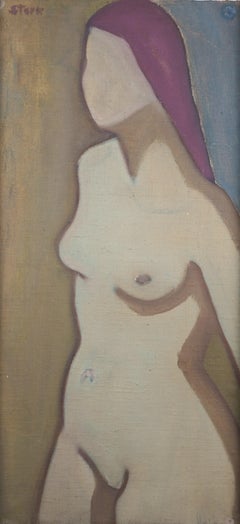
Gustl Stark (1917 Mainz - 2009 ibid.), Small Nude, 1946. Oil on canvas, marouflaged, 54 x 25 cm (picture), 30 x 60 cm (frame), signed "Stark" top left, verso twice signed "Gustav Stark", inscribed by hand as "Small Nude" and dated by hand "1946". With label of the exhibition of the Bundeshaus Bonn from 1956.
- Rubbed area in the lower third of the body, at the same level a retouch in the ochre background. I provisional frame.
- Abstract Figurativity -
About the artwork
During the war, Gustl Stark suffered a particularly severe blow for an artist: he lost his right arm. Nevertheless, he continued to devote himself to art, and the painting, created in 1946, immediately after the end of the Nazi reign of terror, testifies to the dawn of a new era. At the same time, the work is a rare example of the artist's early figurative work, as Stark turned entirely to abstract painting as early as 1950. And even this painting is by no means purely figurative; rather, it already illustrates Stark's turn toward abstraction.
We see a female nude, but one that remains faceless. This can be read symbolically and in relation to the immediate past epoch, which, in the face of horrors, silences and blinds - literally renders faceless. In this sense, the figure is positioned to 'look back'. But she does not look. While this meaning may resonate and make the painting an important work of the immediate postwar period, Gustl Stark is primarily concerned with something else here, namely art itself. The absence of the face leads to the body becoming something flat. Due to the de-individualization, we do not see a concrete person with his individual features, but a body surface. And indeed, the body is constructed through an extremely planar design. Even the contour lines that form the corporeality have a planar rather than a linear character, especially where they merge into shadow zones of almost the same color. And the surfaces themselves are not modeled. The incarnate parts do not show any plastic gradations; the corporeality is completely withdrawn into the plane, which is also true for the hair. In addition, there is no uniform background against which the figure could appear; rather, the area next to the hair is kept bluish, creating a succession of earth-toned colored areas, which again binds the figure to the surface.
Last but not least, the flatness is also forced by the painting technique. Gustl Stark paints directly, a la prima, onto the coarse canvas, whereby the structure of the painting support remains visible in the picture, and in places - around the hair, for example - the canvas itself can be seen. This structural all-over lends the picture a certain flatness.
Gustl Stark thus uses the very motif that stands for the corporeality of art par excellence - the female nude - to transform the spatiality of the traditional picture into a flatness characteristic of modern art. And yet, a strong impression of corporeality is created, without being produced by a painterly modeling of the body. The oscillation between flatness and corporeality creates the intense tension of this groundbreaking painting.
In Gustl Stark's oeuvre, as a consequence of the abstraction we see here, the figurative is completely stripped away in a further step, which is also a loss when looking at this early key work.
About the artist
Gustl Stark was the son of a woodcarver and, after an apprenticeship as a decorative painter, attended the State School of Arts and Crafts in Mainz from 1936 to 1937. Although he was severely wounded in the war and lost his right arm, he studied at the Würzburg School of Painting and Drawing from 1943-1944 and then at the Academy of Fine Arts in Nuremberg from 1944-1948.
He won a state scholarship at the state art competition in Bad Ischl. Numerous study trips to Sylt, Paris, Switzerland, Austria, Italy, Holland and Belgium followed.
Gustl Stark worked in Mainz and was the first artist there to focus on abstract painting. His work quickly gained international recognition, including the Salon Réaliés Nouvelles in Paris.
From 1963-1970 he taught at the State University Institute for Art and Work Education in Mainz and from 1970-1975 at the Johannes Gutenberg University. Gustl Stark became particularly famous for his color embossed prints, for which he invented his own technique.
Gustl Stark received numerous awards for his work. He received the Art Prize for Painting of the City of Mainz in 1962, the State Prize of Rhineland-Palatinate in 1984, and the Gutenberg Bust of the City of Mainz in 1987.
Selected Bibliography
Hans Vollmer (Hrsg.): Allgemeines Lexikon der bildenden Künstler des XX. Jahrhunderts, Vierter Band, Leipzig 1958, S. 344.
Hans H...
Category
1940s Realist Berlin - Art
Materials
Canvas
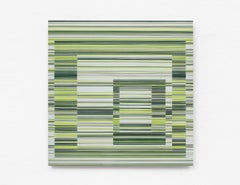
Layer No.16 by Doris Marten - Abstract painting, minimalist, green
By Doris Marten
Located in Paris, FR
Layer No.16 is a unique Indian ink on Alu-Dibond painting by contemporary artist Doris Marten, dimensions are 45 × 45 cm (17.7 × 17.7 in).
The artwork is signed, sold unframed and co...
Category
2010s Contemporary Berlin - Art
Materials
India Ink
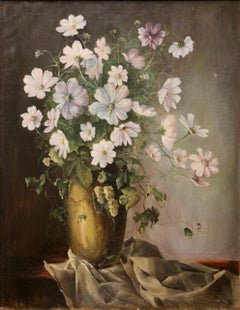
Erich Lindenau – Floral Still Life with Cosmos Flowers, Oil on Canvas, 1947
Located in Berlin, DE
Charming oil on canvas floral still life by Erich Lindenau (German, 1892–1955), monogrammed E.L. and dated 1947 lower right. The work depicts a graceful bouquet of cosmos flowers in ...
Category
20th Century Realist Berlin - Art
Materials
Canvas, Oil
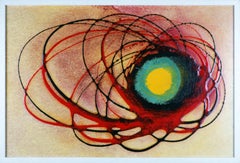
Eccentric discharges of a turquoise-yellow core / - Energetic traces -
Located in Berlin, DE
Klaus Oldenburg (*1942 Berlin), Eccentric discharges of a turquoise-yellow core, around 1975. paint and cast resin on chipboard, 39 x 59 cm (inside dim...
Category
1970s Berlin - Art
Materials
Resin
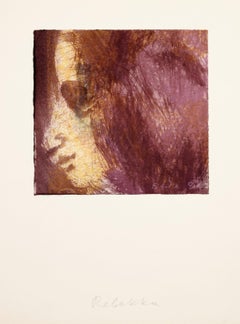
Rebekka / - Rebekka
s Appearance -
Located in Berlin, DE
Emil Wachter (1921 Neuburgweiser - 2012 Karlsruhe), Rebekka, 1987. Watercolor mounted on cardboard, 13.5 (height) x 14 cm (width). Signed “E.[mil] Wa[chter]” in pencil within the ima...
Category
1980s Realist Berlin - Art
Materials
Paper
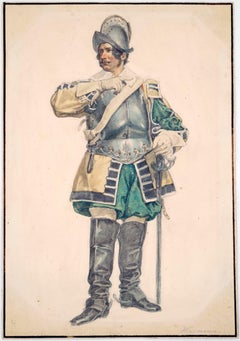
The actor Karl Seydelmann, probably as Max Piccolomini / - Theatrical Realism -
Located in Berlin, DE
Theodor Hosemann (1807 Brandenburg - 1875 Berlin), The actor Karl Seydelmann probably as Max Piccolomini, around 1840. Watercolor with pencil, 20.5 cm (height) x 14.7 cm (width), sig...
Category
1840s Realist Berlin - Art
Materials
Paper
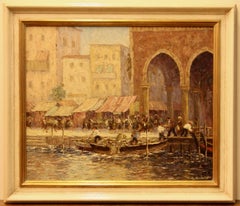
Venetian Market Scene, Italy, Gondola, Oil on Plywood, Signed and Titled verso
Located in Berlin, DE
Atmospheric oil painting on plywood, titled “Markt in Venedig” (Market in Venice) on the reverse and signed lower right (signature indistinct). The composition vividly portrays a bus...
Category
20th Century Impressionist Berlin - Art
Materials
Plywood, Oil
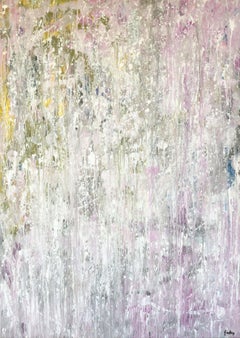
Rainy Day, Painting, Acrylic on Canvas
Located in Yardley, PA
Part of the artist’s ongoing self reflection practice, at this point in time he would paint for 1-3 hours intuitively, and allow his current mood, along with his perception of the ...
Category
2010s Abstract Expressionist Berlin - Art
Materials
Acrylic
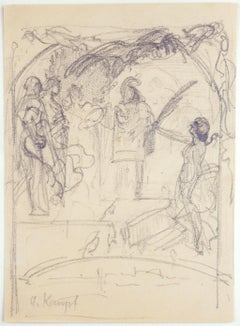
Study for an allegory of victory / - A virtuoso victory -
By Arthur Kampf
Located in Berlin, DE
Arthur Kampf (1864 Aachen - 1950 Castorp-Rauxel), Study to an allegory of victory, around 1900. Pencil on paper, 21 cm x 18 cm, signed lower left "A. Kampf".
- slightly darkened, otherwise in good condition
- A virtuoso victory -
About the artwork
The vertical-format sketch illustrates a plateau to which a staircase leads up from the right. Arthur Kampf thus takes up a typical baroque disposition for the depiction of allegories. And indeed, a female figure climbs the steps to hand the palm of victory to a figure that is probably also female. Other persons standing on the plateau pay homage to her, whereby the figure on the left edge of the picture may represent a warrior.
The scene is framed by an ornamentally decorated arch field, which additionally emphasizes the allegorical-historical content of the depiction. An arch can also be seen under the staircase, suggesting that this may be a design for a supraport.
The sheet could have been created in the wake of Arthur Kampf's appointment in 1899 as head of the studio for history painting at the Berlin Art Academy. The drawing style, which only outlines the idea of the picture and yet is determined by concise lines, corresponds to the sketchiness of the Baroque and testifies to Arthur Kampfs intensive study of this heyday of history painting.
About the artist
Arthur Kampf was the son of the Aachen painter and imperial court photographer August Kampf. His older brother Eugen and his son Herbert were also painters.
Arthur Kampf studied at the Düsseldorf Academy of Art from 1879 under Eduard von Gebhardt and Peter Janssen the Elder, whose master pupil he was from 1883 to 1891. Influenced by the naturalistic paintings of Jules Bastien-Lepage, which Kampf saw on a trip to Paris in 1885, he created the painting "The Last Statement" in 1886, which was based on a personal experience. It shows a man mortally wounded by knife wounds. The oppressive drasticness of the almost life-size depiction caused a sensation and controversial criticism.
The first successes were achieved: At the Berlin Jubilee Exhibition of 1886, Kampf received an honorable mention, and at the Munich Annual Exhibition of 1890, he was awarded a gold medal. Between 1886 and 1936, Kampf participated in all the major German exhibitions.
In 1887 the artist painted his first fresco, which was the beginning of a series of monumental compositions. With the highly successful painting "The Burial of the Corpse of Kaiser Wilhelm I in the Berlin Cathedral" (1888), Kampf established himself as a painter of contemporary history, following in the footsteps of Adolph von Menzel, whose oeuvre he immediately took up with the painting "Speech by Frederick the Great to His Generals in Koeben" (1893). The pictures of his Liberation War cycle were included in school textbooks and distributed in large editions as postcards.
As for his academic career, Kampf became an assistant professor at the Düsseldorf Academy of Art in 1887, and in 1894 he was appointed professor of the class for antiquities and nature, and in 1897 he became head of the painting class. In 1899 Kampf was appointed director of the history painting studio at the Berlin Academy of Art. In 1901 he became a full member of the academy and was its president from 1907 to 1912. As Anton von Werner's successor, Kampf directed the Academy of Fine Arts in Charlottenburg from 1915 to 1925.
Among his monumental works is the painting of the assembly hall of the Aachen town hall, done between 1898 and 1902. It focuses on the social welfare of the state and the work of the people. Important subsequent commissions include the painting of the reading room of the new Royal Library in Berlin and the new auditorium of the University of Berlin with "Fichte's Speech to the German Nation". During World War I, at the request of General Ewald von Lochow, Kampf traveled to the Western theaters of war, including Warsaw in 1916.
In addition to painting, Kampf was also intensively involved in printmaking and, together with his brother Eugen and artist friends such as Alexander Frenz and Olof Jernberg, was considered an innovator of lithography in Düsseldorf. From 1913 on, he worked continuously as an illustrator of historical works and literary classics such as Shakespeare and Goethe.
Kampf remained a recognized artist after 1933. On the occasion of the retrospective of his complete works at the "Great German Art Exhibition", he was awarded the "Eagle Shield of the German Reich". During the final phase of World War II, Kampf was placed on Hitler's "Gottbegnadetenliste," which protected him from military service. After World War II, Kampf, whose work was largely destroyed, fell into obscurity.
Arthur Kampf belonged to numerous artists' associations. He was a member of the "Rheinisch-Westfälischer Künstlerbund", the "Society of German Watercolorists", the "Association of German Illustrators", the "Malkasten", the "Künstlerclub St. Lucas", the "Düsseldorfer Künstlerbund", the "Freie Vereinigung Düsseldorfer Künstler" and the "Berliner Künstlerbund".
Arthur Kampf's sister was married to the painter Alexander Frenz.
"Kampf's public recognition in the German Empire later led to his being one-sidedly labeled as a history painter and representative of the Wilhelmine era. This classification does not do justice to the artist's oeuvre as a whole. His early talent did not experience a rapid development later on, but it reached an ever greater mastery in the sense of an impressively relaxed realism and extended thematically beyond history. Kampf was also an excellent draughtsman, etcher and lithographer. Many of his works have been destroyed or lost, and some lead a shadowy existence in museum storerooms."
- Otto Zirk
"His importance as a Wilhelminian painter and cultural politician has been forgotten in favor of an exaggerated reception of his work during the Third Reich.
- Andreas Schroyen
Selection of public collections that own works by Arthur Kampf:
Altonaer Museum Hamburg, Berlinische Galerie, Burg Frankenberg Aachen, Busch-Reisinger Museum Cambridge/Mass., Deutsches Historisches Museum Berlin, Government Art Collection London, Kulturhistorisches Museum Magdeburg, Kunsthalle Hamburg, Museum für Kunst- und Kulturgeschichte Dortmund, Museum Kunstpalast Düsseldorf, Neue Nationalgalerie Berlin, Suermondt-Ludwig-Museum Aachen, Van der Heydt-Museum Wuppertal.
Selected Bibliography
Hans W...
Category
Early 20th Century Realist Berlin - Art
Materials
Paper
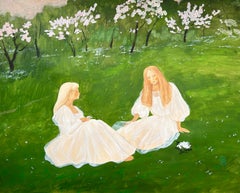
Spring Bloom II
Located in Zofingen, AG
shipped in roll
“Spring Bloom II” captures a quiet moment of connection between two young women surrounded by blooming spring trees. Soft dresses, fresh greens, and gentle light crea...
Category
2010s Abstract Expressionist Berlin - Art
Materials
Canvas, Acrylic
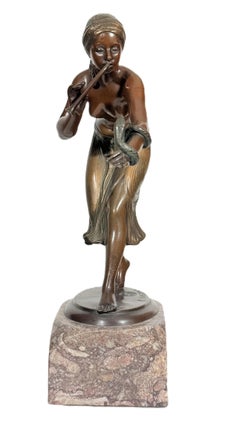
Rudolf KAESBACH (1873-1955) Bronze Jugendstil
By Rudolf Kaesbach
Located in Berlin, DE
Rudolf KAESBACH (1873-1955), "Snake Charmer"
Inscribed 'R. Kaesbach' on the plinth and with the foundry mark, height with base: approx. 30.2 cm
Founding mark RM
Rosenthal & Maeder ...
Category
Early 20th Century Berlin - Art
Materials
Bronze
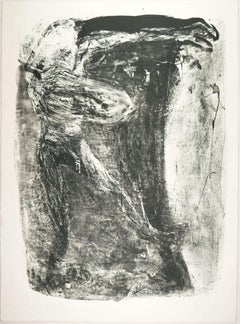
My treasure, my sanctuary / - A Tortured Treasure -
Located in Berlin, DE
Johannes Heisig (*1953 Leipzig), "My treasure, my sanctuary" - To the Christmas Oratorio by Johann Sebastian Bach. Lithograph on strong yellowish laid paper with watermark, 53 x 39.5...
Category
1980s Abstract Expressionist Berlin - Art
Materials
Lithograph
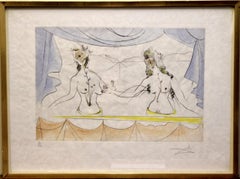
Salvador Dalí, LES DAMES DE LA RENAISSANCE, 1971 Hand signed and numbered.
By Salvador Dalí
Located in Berlin, DE
Salvador Dalí, LES DAMES DE LA RENAISSANCE, 1971
Hand signed and numbered.
Etching on Japanese paper.
Signed "Dalí" lower right and numbered "21/120" left.
Dimensions are with fra...
Category
20th Century Abstract Berlin - Art
Materials
Etching
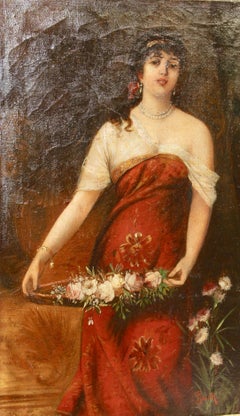
Painting, 19th century, oil on canvas, "Young woman with flower basket"
Located in Berlin, DE
Painting, 19th century, oil on canvas, "Young woman with flower basket"
Signed, F.Bach.
Dimensions with frame 52cm x 72.5cm
Category
19th Century Romantic Berlin - Art
Materials
Canvas, Oil
$4,329 Sale Price
20% Off
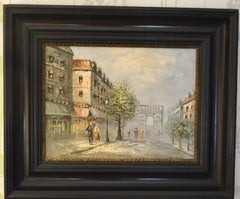
busy street in Paris
Located in Berlin, DE
signed lower right
Oli on cardboard
75x62 cm
internal mas 52x 38 cm
This work was not examined by the Rehs Galleries in New York.
Antoine Blanchard, was born in France on Novem...
Category
1950s Modern Berlin - Art
Materials
Oil
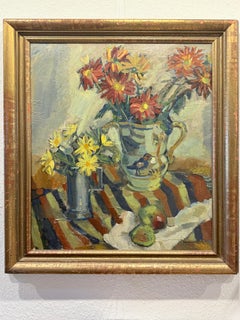
Expressive flower still life
Located in Berlin, DE
Oil on canvas
67,5 x52 cm
attribute Hedwig Hausmann-Hoppe was a German painter (born June 29, 1865 in Gumbinnen; died after 1922) specializing in still life, flower, and landscape p...
Category
1890s Expressionist Berlin - Art
Materials
Oil
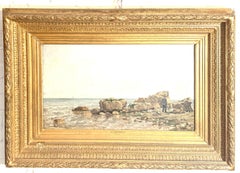
Émile Louis Vernier (1829-1887), a beachcomber, oil on canvas
Located in Berlin, DE
Émile Louis Vernier (1829-1887),
a beachcomber,
oil on canvas
Signed to the bottom left corner.
Frame: 77 x 103 cm
Émile Louis Vernier (1829–1887) was a French painter and lithog...
Category
1850s Realist Berlin - Art
Materials
Oil
Still Thinking About These?
All Recently ViewedMore Ways To Browse
Wes Anderson Art
West Indies Painting
Woodstock Ny Paintings
Zane Gray
1970s Seascape Oil Painting
A Grimshaw
Adam Barland
Air France Afrique
Alden Bryan
Amanda Acker
Antique Chinese Watercolor Landscape
Anton Genberg
Anton Sipos
Appalachian Painting
Army Navy Poster
Art Contemporary Fuschia
Arthur Walker Redgate
B Harvey