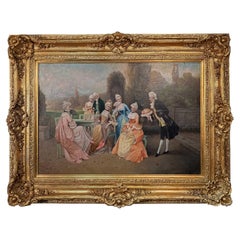
California - Decorative Art

to
184
748
11,141
5,059
703
27
18
Height
to
Width
to
117
70
27
25
20
11
10
8
7
6
5
2
1
1
1
41
128
534
45
79
229
153
11
5
4
11
10
29
42
43
22
18
250
210
150
150
144
326
277
247
109
78
748
736
740
10
8
7
7
6
Item Ships From: California
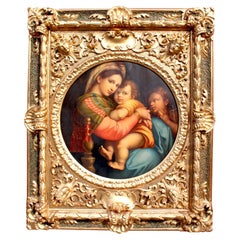
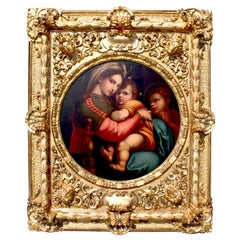
After Raffaello Sanzio 1483-1520 Raphael La Madonna della Seggiola Oil on Canvas
By (after) Raphael (Raffaello Sanzio da Urbino)
Located in Los Angeles, CA
A Fine Italian 19th Century Oil Painting on Canvas "La Madonna della Seggiola" after Raphael (Raffaello Sanzio da Urbino 1483-1520). The circular painted canvas depicting a seated Madonna holding an infant Jesus Christ next to a child Saint John the Baptist, all within a massive carved two-tone gilt wood, gilt-patinated and gesso frame, which is identical to the frame on Raphael's original artwork. This painting is a 19th Century copy of Raphael's Madonna della Seggiola painted in 1514 and currently exhibited and part of the permanent collection at the Palazzo Pitti, Galleria Palatina, Florence, Italy. The bodies of the Virgin, Christ, and the boy Baptist fill the whole picture. The tender, natural looking embrace of the Mother and Child, and the harmonious grouping of the figures in the round, have made this one of Raphael's most popular Madonnas. The isolated chair leg is reminiscent of papal furniture, which has led to the assumption that Leo X himself commissioned the painting. Circa: 1890-1900. Subject: Religious painting Painting diameter: 28 inches (71.1 cm) Frame height: 55 1/8 inches (140 cm) Frame width: 46 inches (116.8 cm) Frame depth: 5 1/8 inches (13 cm) Raffaello Sanzio da Urbino (Italian, March 28 or April 6, 1483 - April 6, 1520), known as Raphael, was an Italian painter and architect of the High Renaissance. His work is admired for its clarity of form, ease of composition, and visual achievement of the Neoplatonic ideal of human grandeur. Together with Michelangelo and Leonardo da Vinci, he forms the traditional trinity of great masters of that period. Raphael was enormously productive, running an unusually large workshop and, despite his death at 37, leaving a large body of work. Many of his works are found in the Vatican Palace, where the frescoed Raphael Rooms were the central, and the largest, work of his career. The best known work is The School of Athens in the Vatican Stanza della Segnatura. After his early years in Rome much of his work was executed by his workshop from his drawings, with considerable loss of quality. He was extremely influential in his lifetime, though outside Rome his work was mostly known from his collaborative printmaking. After his death, the influence of his great rival Michelangelo was more widespread until the 18th and 19th centuries, when Raphael's more serene and harmonious qualities were again regarded as the highest models. His career falls naturally into three phases and three styles, first described by Giorgio Vasari: his early years in Umbria, then a period of about four years (1504–1508) absorbing the artistic traditions of Florence, followed by his last hectic and triumphant twelve years in Rome, working for two Popes and their close associates. Raphael was born in the small but artistically significant central Italian city of Urbino in the Marche region, where his father Giovanni Santi was court painter to the Duke. The reputation of the court had been established by Federico III da Montefeltro, a highly successful condottiere who had been created Duke of Urbino by the Pope - Urbino formed part of the Papal States - and who died the year before Raphael was born. The emphasis of Federico's court was rather more literary than artistic, but Giovanni Santi was a poet of sorts as well as a painter, and had written a rhymed chronicle of the life of Federico, and both wrote the texts and produced the decor for masque-like court entertainments. His poem to Federico shows him as keen to show awareness of the most advanced North Italian painters, and Early Netherlandish artists as well. In the very small court of Urbino he was probably more integrated into the central circle of the ruling family than most court painters. Federico was succeeded by his son Guidobaldo da Montefeltro, who married Elisabetta Gonzaga, daughter of the ruler of Mantua, the most brilliant of the smaller Italian courts for both music and the visual arts. Under them, the court continued as a centre for literary culture. Growing up in the circle of this small court gave Raphael the excellent manners and social skills stressed by Vasari. Court life in Urbino at just after this period was to become set as the model of the virtues of the Italian humanist court through Baldassare Castiglione's depiction of it in his classic work The Book of the Courtier, published in 1528. Castiglione moved to Urbino in 1504, when Raphael was no longer based there but frequently visited, and they became good friends. He became close to other regular visitors to the court: Pietro Bibbiena and Pietro Bembo, both later cardinals, were already becoming well known as writers, and would be in Rome during Raphael's period there. Raphael mixed easily in the highest circles throughout his life, one of the factors that tended to give a misleading impression of effortlessness to his career. He did not receive a full humanistic education however; it is unclear how easily he read Latin. Early Life and Works His mother Màgia died in 1491 when Raphael was eight, followed on August 1, 1494 by his father, who had already remarried. Raphael was thus orphaned at eleven; his formal guardian became his only paternal uncle Bartolomeo, a priest, who subsequently engaged in litigation with his stepmother. He probably continued to live with his stepmother when not staying as an apprentice with a master. He had already shown talent, according to Vasari, who says that Raphael had been "a great help to his father". A self-portrait drawing from his teenage years shows his precocity. His father's workshop continued and, probably together with his stepmother, Raphael evidently played a part in managing it from a very early age. In Urbino, he came into contact with the works of Paolo Uccello, previously the court painter (d. 1475), and Luca Signorelli, who until 1498 was based in nearby Città di Castello. According to Vasari, his father placed him in the workshop of the Umbrian master Pietro Perugino as an apprentice "despite the tears of his mother". The evidence of an apprenticeship comes only from Vasari and another source, and has been disputed—eight was very early for an apprenticeship to begin. An alternative theory is that he received at least some training from Timoteo Viti, who acted as court painter in Urbino from 1495.Most modern historians agree that Raphael at least worked as an assistant to Perugino from around 1500; the influence of Perugino on Raphael's early work is very clear: "probably no other pupil of genius has ever absorbed so much of his master's teaching as Raphael did", according to Wölfflin. Vasari wrote that it was impossible to distinguish between their hands at this period, but many modern art historians claim to do better and detect his hand in specific areas of works by Perugino or his workshop. Apart from stylistic closeness, their techniques are very similar as well, for example having paint applied thickly, using an oil varnish medium, in shadows and darker garments, but very thinly on flesh areas. An excess of resin in the varnish often causes cracking of areas of paint in the works of both masters. The Perugino workshop was active in both Perugia and Florence, perhaps maintaining two permanent branches. Raphael is described as a "master", that is to say fully trained, in December 1500. His first documented work was the Baronci altarpiece for the church of Saint Nicholas of Tolentino in Città di Castello, a town halfway between Perugia and Urbino. Evangelista da Pian di Meleto, who had worked for his father, was also named in the commission. It was commissioned in 1500 and finished in 1501; now only some cut sections and a preparatory drawing remain. In the following years he painted works for other churches there, including the Mond Crucifixion (about 1503) and the Brera Wedding of the Virgin (1504), and for Perugia, such as the Oddi Altarpiece. He very probably also visited Florence in this period. These are large works, some in fresco, where Raphael confidently marshals his compositions in the somewhat static style of Perugino. He also painted many small and exquisite cabinet paintings in these years, probably mostly for the connoisseurs in the Urbino court, like the Three Graces and St. Michael, and he began to paint Madonnas and portraits. In 1502 he went to Siena at the invitation of another pupil of Perugino, Pinturicchio, "being a friend of Raphael and knowing him to be a draughtsman of the highest quality" to help with the cartoons, and very likely the designs, for a fresco series in the Piccolomini Library in Siena Cathedral. He was evidently already much in demand even at this early stage in his career. Influence of Florence Raphael led a "nomadic" life, working in various centres in Northern Italy, but spent a good deal of time in Florence, perhaps from about 1504. Although there is traditional reference to a "Florentine period...
Category

Early 1900s Italian Baroque Antique California - Decorative Art

Materials

Canvas, Giltwood

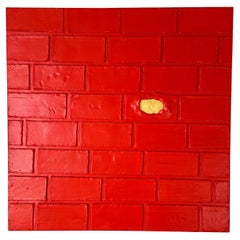
“WALL” Abstract Sculpture Painting by Maria Savino
Located in North Hollywood, CA
“WALL” Abstract sculpture painting by Italian artist Maria Savino 2013
Category

Late 20th Century Italian California - Decorative Art

Materials

Cast Stone

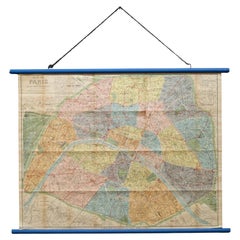
Early 20th c. Plan of Paris Map Hanging Scroll c.1920
Located in San Francisco, CA
ABOUT An original folding map of the Paris on two dowels and hanging chain. Linen backed. CREATOR France by L. Guilmin. Paris, France. DATE OF MANUFACTURE c.1920. MAT...
Category

Early 20th Century French Art Deco California - Decorative Art

Materials

Wood, Paper, Linen

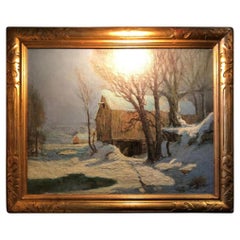
Barn in Moonlight by Frederick John Mulhaupt American Oil Canvas Laid on Board
Located in West Hollywood, CA
Barn in Moonlight by Frederick John Mulhaupt American Oil Canvas Laid on Board “Barn in Moonlight” By FREDERICK JOHN MULHAUPT (1871 – 1938) AMERICAN. Signed / Oil On Canvas laid on...
Category

Early 20th Century American California - Decorative Art

Materials

Canvas, Paint

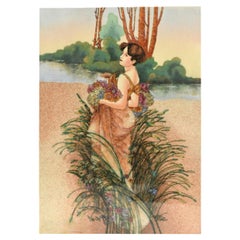
Gemstone Painting Modeled After Alphonse Mucha Summer Art Nouveau
Located in Somis, CA
Step into a realm of extraordinary beauty with this gemstone artwork, a homage to the masterpiece "Summer" by Alphonse Mucha, transformed by a breathtaking mosaic of precious stones....
Category

20th Century Italian Art Nouveau California - Decorative Art

Materials

Multi-gemstone

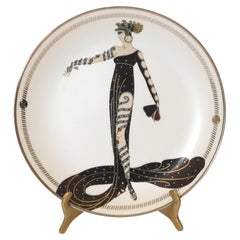
Erté "La Merveilleuse" Sevenarts Porcelain Collector Plate Romain de Tirtoff
By Sevenarts Ltd., Franklin MInt, Erté
Located in Moreno Valley, CA
House of Erté Romain de Tirtoff "La Merveilleuse" Sevenarts Porcelain Collector Plate. The La Merveilleuse Plate is an original decorative limited edition porcelain plate realized in...
Category

Late 20th Century German Art Deco California - Decorative Art

Materials

Porcelain

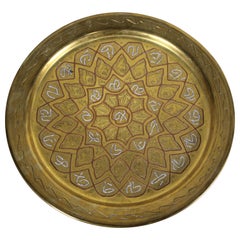
Egyptian Middle Eastern Tray Overlaid with Islamic Writing in Silver
Located in Moreno Valley, CA
Islamic Arabic calligraphy circular tray with silver overlay. Round Egyptian brass tray overlaid with metal silver and copper Islamic calligraphy ...
Category

Mid-20th Century Egyptian Islamic California - Decorative Art

Materials

Metal, Brass, Copper

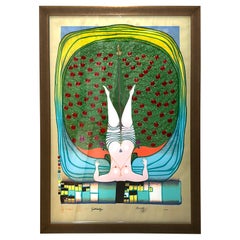
Friedensreich Hundertwasser Silkscreen Collage 1972 Homage Schroeder Sonnenstern
By Hundertwasser
Located in Palm Springs, CA
A striking image from 1972 by Friedensreich Hundertwasser titled Homage to Schroeder-Sonnenstern. It is work number 715 and from an edition of 4200 of which this is number 2860. It i...
Category

1970s Swiss Vintage California - Decorative Art

Materials

Paper

Mid-20th Century Tribal Tapa Cloth, Fiji
Located in Point Richmond, CA
Tapa cloth made from mulberry fiber with natural pigments, Fiji, mid-20th century.
Category

Mid-20th Century Fijian Tribal California - Decorative Art

Materials

Natural Fiber

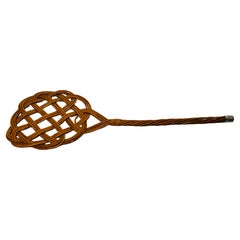
Vintage Handcrafted Rattan Carpet Beater Folk Art Decorative Wall Object
Located in Moreno Valley, CA
Vintage Handcrafted Rattan Carpet Beater, Early 20th Century – Functional Folk Art & Decorative Wall Object. A beautifully handwoven rattan carpet beater, also known as a rug beater,...
Category

Early 20th Century French French Provincial California - Decorative Art

Materials

Rattan

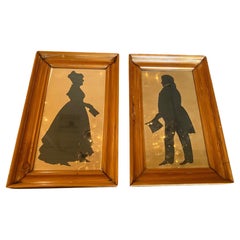
Wall Decoration Art Pair Silhouettes Black Framed Antique Los Angeles Gallery
Located in West Hollywood, CA
Wall Decoration Art Pair Silhouettes Black Framed Antique Los Angeles Gallery . Pair of silhouettes portrays the 19th century Lady and Gentleman With his Hat. This pair has been well taken care of and has minor wear consistent with the age. Wall art Silhouette of a Lady and a Gentleman framed in possible hand carved pine wood or fruitwood Frame. Charming elegant profile depicts high status man at ease with himself ensured his place in hierarchy looking sharp and same goes for the Lady holding what appears to be a document. The subjects are dapperly dressed with his top hat in his hand, trimmed haircut, leather boots and the lady with a nice Hairdo and an elaborate dress. An original continental French or British silhouette in a period fruitwood light color frames and are beveled. Antique dealer Los Angeles West Hollywood La Cienega Melrose Ave. The watercolor and paper cut silhouettes...
Category

19th Century European Antique California - Decorative Art

Materials

Metal

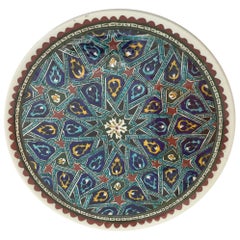
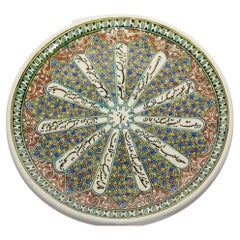
Hand Painted Ceramic Decorative Moorish Plate 1950s
By Iznik Pottery
Located in Moreno Valley, CA
Vintage polychrome hand painted and handcrafted ceramic wall decorative plate with polychrome Ottoman floral design. This is an intricately, hand painted Moorish plate that was made in Turkey. Turkey is famous for its kiln products, such as tiles and pottery, which are glazed and multicolored. It has a beautifully hand painted geometrical Moorish design in burgundy, yellow, turquoise, light and dark blue. An Islamic ceramic...
Category

Mid-20th Century Turkish Moorish California - Decorative Art

Materials

Ceramic

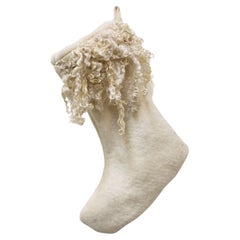
Custom Wool Felted Stocking
By JG Switzer
Located in Santa Rosa, CA
Adorned with Wensleydale wool on West Sonoma County, climate beneficial wool from Fibershed, this custom stocking is made to order in our workshop in The Barlow, Sonoma County, Calif...
Category

2010s American Organic Modern California - Decorative Art

Materials

Wool

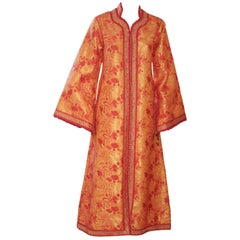
Moroccan Brocade Caftan Maxi Dress 1970 Kaftan Size S to M
Located in Moreno Valley, CA
Moroccan exotic metallic brocade caftan gown, circa 1970s. The luxurious kaftan is designed with brilliant gold metallic fabric. The front of the elegant caftan gown is embellished with woven gold buttons and loops that run down the centre to the hemline. The cuffs and border seams are accented with handmade applique trim. This exotic Arabic caftan gown makes a very extravagant garment for formal attire transitions effortlessly to casual wear Measurements The gown length from the collar to the hem 52" 1/2 inches The bust measured flat side to side 18" 1/2 inches The complete bust measures 37" inches The shoulders measure 15" 1/2 inches The outer sleeve length measures 24" inches The waist section measured flat 20" 1/2 inches The hip section measured flat 24" 1/2 inches Size small to Medium. Elegant vintage Moroccan caftan lime green and silver lame metallic floral Moorish brocade Kaftan, circa 1970s. This vintage long maxi dress kaftan is crafted in Morocco and tailored for a relaxed fit with wide sleeves This long maxi dress kaftan is embroidered and embellished entirely by hand. One of a kind evening Moroccan Middle Eastern gown. The kaftan features a traditional neckline, embellished sleeves It is a slip on, the button does not open. In Morocco, fashion preserves its traditional style inherited from great civilizations that found their way to Northwest Africa, such as the ottomans and the moors. Moroccan fashion has been recognized for its style and has garnered a reputation, winning awards in international fashion shows throughout Europe. Marrakech Bohemian, Yves Saint Laurent style. The Moroccan kaftans are worn by men and women, at home or at Moroccan wedding or traditional ceremonies. You can wear this traditional Moroccan caftan for your next Moroccan party, at the beach or to relax around the pool. Unisex long Moroccan robe...
Category

20th Century Moroccan Moorish California - Decorative Art

Materials

Brocade

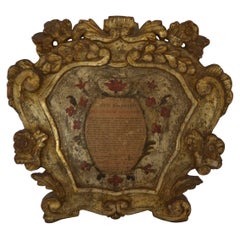
18th Century Italian Plaque "Secundum Joannedi"
Located in Pomona, CA
18th-Century wall plaque "Secundum Joannebi".
Category

1740s Italian Antique California - Decorative Art

Materials

Wood

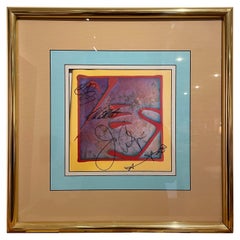
Signed Record Sleeve Yes Yesyears Album by Members Framed
Located in San Diego, CA
1978 yes yesyears signed by members of the band record and sleeve, original frame, signatures on front and back by Jon Anderson, Steve Howe, Chris Squire,...
Category

20th Century North American Post-Modern California - Decorative Art

Materials

Brass

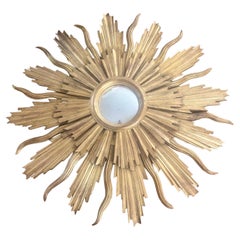
Mid Century Italian Giltwood Sunburst Mirror
Located in Ross, CA
Gilt wood sunburst mirror made in Italy during the middle of the 20th century. Layers of rays protrude out from the round mirrored center in strait and squiggly lines.
Category

Mid-20th Century Italian Mid-Century Modern California - Decorative Art

Materials

Giltwood

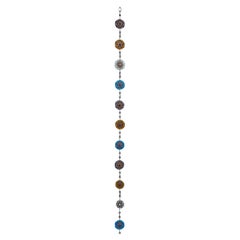
Felipe Delfinger Sun Catcher Art Glass Hanging
By Felipe Delfinger
Located in San Francisco, CA
Felipe Delfinger bohemian art glass Sun Catcher, U.S.A. Beautiful wall hanging or window art in wrought iron and blown glass.
Category

1960s American Mid-Century Modern Vintage California - Decorative Art

Materials

Iron

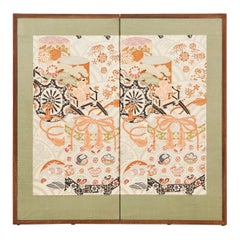
Japanese Showa Two Panel Screen Embroidered Silk Gilt Boxes
Located in Rio Vista, CA
Charming Japanese Showa period two-panel folding byobu screen featuring an embroidered silk picture of beautiful gift boxes. Stunning pattern of Hanaguruma (flower cart) laden with d...
Category

20th Century Japanese Mid-Century Modern California - Decorative Art

Materials

Silk, Wood, Paper

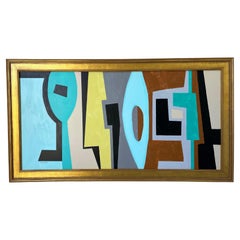
Original Abstract Acrylic on Board by Rick Orr
By Rick Orr
Located in Palm Springs, CA
Original large abstract painting by American listed artist Rick Orr. This is an acrylic on board, with a gold leaf wood frame. Measurements: 53.25” Wide, 29.25” High. 1.25” Deep.
Category

2010s American Modern California - Decorative Art

Materials

Gold Leaf

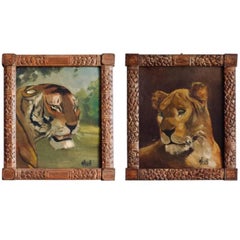
Pair of Tiger and Lion Art Deco Framed Paintings
Located in Los Angeles, CA
Pair of tiger and lion Art Deco framed paintings. Oil on panel. Beautiful carved wood frames.
Category

1930s French Art Deco Vintage California - Decorative Art

Materials

Paint, Hardwood

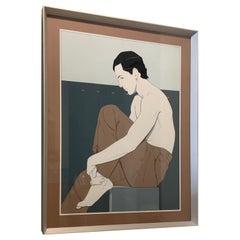
Patrick Nagel Vintage Art Rare “Seated Man" Silkscreen, Framed Only 40 Pcs Made
By Patrick Nagel
Located in Palm Springs, CA
I have owned this Patrick Nagel original silkscreen “Seated Man” since it was released in 1981. I was in fashion college then and Patrick and hi...
Category

1980s American Modern Vintage California - Decorative Art

Materials

Paper

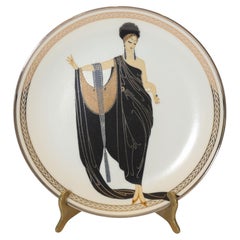
Erté Romain de Tirtoff "Glamour " Sevenarts Porcelain Collector Plate
By Sevenarts Ltd., Erté, Franklin MInt
Located in Moreno Valley, CA
House of Erté Romain de Tirtoff " Glamour " Sevenarts Porcelain Collector Plate. The Glamour Plate is an original decorative limited edition porcelain plate realized in the 1990s. Th...
Category

Late 20th Century German California - Decorative Art

Materials

Porcelain

Haviland Limoges France Decorative Plate La Chasse a La Licorne 1981 Limited Ed.
By Haviland Co., Limoges
Located in Moreno Valley, CA
Robert Haviland & C. Parlon Limoges France Decorative Plate 1981 Limited Ed # 5. Limited Edition collectible plate "The Lady and the Unicorn" by Robert Haviland & Co and Limoges France. Haviland Limoges France Limited Edition Porcelain Collector Plate "La Dame a La Licorne". La Chasse a La Licorne Limoges Haviland C. Parlon Collectible Plate. French Limoges limited edition and 22-karat gold collectors plate by Haviland & Parlon. This coveted and rare collector plate display a scene from the famous late fifteenth century Renaissance Paris tapestries of unicorn hunting scene ," La Chasse A La Licorne". The plate is hand painted with an incredible amount of detail, bright and bold colors with a 22-karat gold rim. Made of porcelain with a glossy finish, this round plate features a stunning multicolor fairy tale design with a unicorn theme. The plate is handmade and painted, and is part of the Limoge product line. This vintage Haviland Limoges La Chasse a la Licorne Unicorn Plate...
Category

Late 20th Century French Renaissance California - Decorative Art

Materials

Porcelain

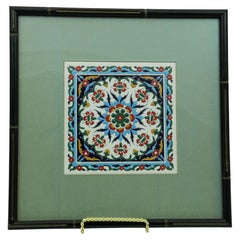
Handcrafted Turkish Iznik Style Ceramic Tile Framed 1950
By Iznik Pottery
Located in Moreno Valley, CA
Framed fine quality Iznik style Turkish ceramic tile with flower motif. Handcrafted Turkish Iznik style ceramic tile framed. Turkish traditional ...
Category

Mid-20th Century Turkish Islamic California - Decorative Art

Materials

Ceramic, Pottery, Wood

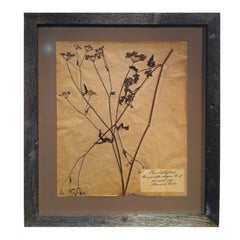
Framed Botanical. Study #4
Located in Los Angeles, CA
French Botanical study of various flora from the end of the 19th century and beginning of 20th century, plate includes species identification. The frame is from reclaimed wood. Part ...
Category

19th Century French Antique California - Decorative Art

Materials

Wood

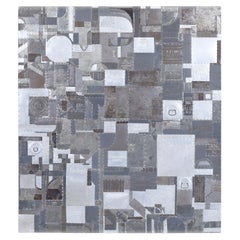
California Modern Mosaic Wall Sculpture by Max E. Neufeldt
By Max Neufeldt
Located in North Hollywood, CA
Wonderful vintage mosaic wall sculpture designed by California artist Max E. Neufeldt in the United States. Rarely can you find such a unique work ...
Category

20th Century American Mid-Century Modern California - Decorative Art

Materials

Aluminum

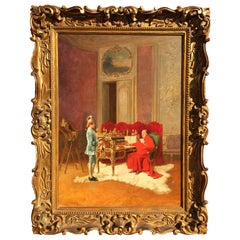
Charles Edouard Edmond Delort Oil on Canvas "Game for the Cardinal"
By Charles Edouard Edmond Delort
Located in Los Angeles, CA
Charles Edouard Edmond Delort (French, 1841-1895) oil on canvas "Game for the Cardinal", depicting a seated cardinal behind an ornate French Louis XV roll-top Bureau du Roi, after the model by Jean-François Oeben currently at Versailles, a young boy delivering a game bird as a gift, all inside an ornately paneled and upholstered wall room with parquet floors and centred with a white bear skin rug...
Category

19th Century French Rococo Antique California - Decorative Art

Materials

Canvas, Wood

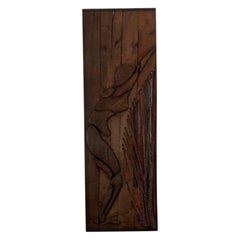
Wood Panel
Located in Los Angeles, CA
This French wood wall panel artfully carves the form of a nude woman in a diver’s pose, blending sensuous artistry with naturalistic elements. The organic lines and the addition of k...
Category

1950s French Vintage California - Decorative Art

Materials

Wood

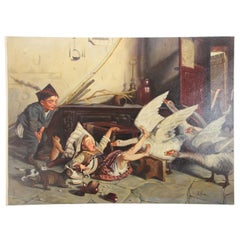
19th Century Style Painting of Children Playing with Geese
Located in Moreno Valley, CA
Countryside children from the late 19th century playing and attacked by geese on a farm. 19th century style oil on canvas style painting. Stretched on a piece of wood frame. Left sid...
Category

Late 20th Century Unknown Country California - Decorative Art

Materials

Canvas

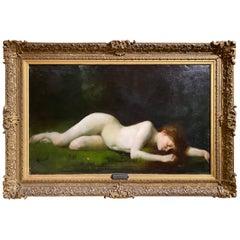
Poujol, Biblis changée en source (Byblis Transformed into a Spring), 1898
Located in Tarzana, CA
Poujol, Biblis changée en source (Byblis Transformed into a Spring), 1898 Artist: Poujol Nationality: French Date: 1898 Medium: Oil on canvas Signature: Signed and dated lower left...
Category

19th Century French Romantic Antique California - Decorative Art

Materials

Canvas

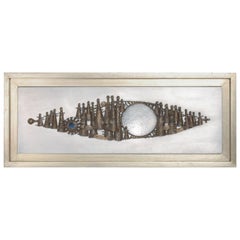
1960s Mexican Modern Glass Wall Art Sculpture with Bronze Figurines
Located in Chula Vista, CA
Wall Sculpture 1960s Mexican Modern Wall Art Abstract Sculpture with Figures crafted in Bronze and Glass. 13 3/4" H x 33 1/2" x 1 1/2" D, Art 29 3/8" x 9 5/8" H Original Unrestored V...
Category

1960s Mexican Mid-Century Modern Vintage California - Decorative Art

Materials

Bronze

19th Cenury Style Fruit Still Life
Located in San Francisco, CA
Wonderfully mellow and vibrant still life of fruit on platter and over flowing from woven basket and on a glass compote. Executed in the style of 18th. and 19th. century still life....
Category

20th Century European Barbizon School California - Decorative Art
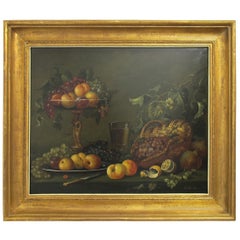
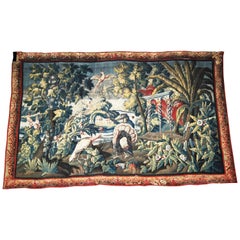
17th Century Tapestry of The Americas Manufactured Royale De Felletin Antiques
By Royal Manufacture of Aubusson
Located in West Hollywood, CA
17th Century Tapestry of the AMERICAS Manufactured : Royale De Felletin Antiques Rare, “ The Americas “ In a beautiful landscape composed of water exotic trees plants villages Castles and Turkey birds...
Category

17th Century French Antique California - Decorative Art

Materials

Wool, Silk, Paint

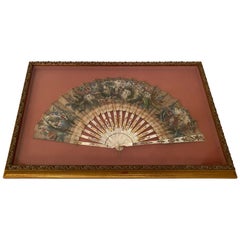
19th Century French Painted Paper and Mother of Pearl Fan
Located in Brea, CA
19th century French painted paper and mother of pearl fan, shadow-box framed antique ladies fan, made of mother of pearl with a hand embellished re...
Category

1850s French French Provincial Antique California - Decorative Art

Materials

Mother-of-Pearl

After Raffaello Sanzio 1483-1520 Raphael La Madonna della Seggiola Oil on Canvas
By Raphael (Raffaello Sanzio da Urbino)
Located in Los Angeles, CA
A fine Italian 19th century oil painting on canvas "La Madonna della Seggiola" after Raphael (Raffaello Sanzio da Urbino 1483-1520) The circular canvas depicting a seated Madonna holding an infant Jesus Christ next to a child Saint John the Baptist, all within a massive carved gilt wood and gesso frame (all high quality gilt is original) which is identical to the frame on Raphael's original artwork. This painting is a 19th Century copy of Raphael's Madonna della Seggiola painted in 1514 and currently exhibited and part of the permanent collection at the Palazzo Pitti, Galleria Palatina, Florence, Italy. The bodies of the Virgin, Christ, and the boy Baptist fill the whole picture. The tender, natural looking embrace of the Mother and Child, and the harmonious grouping of the figures in the round, have made this one of Raphael's most popular Madonnas. The isolated chair leg is reminiscent of papal furniture, which has led to the assumption that Leo X himself commissioned the painting, circa 1890-1900. Subject: Religious painting Measures: Canvas height: 29 1/4 inches (74.3 cm) Canvas width: 29 1/4 inches (74.3 cm) Painting diameter: 28 1/4 inches (71.8 cm) Frame height: 57 7/8 inches (147 cm) Frame width: 45 1/2 inches (115.6 cm) Frame depth: 5 1/8 inches (13 cm).   Raffaello Sanzio da Urbino (Italian, March 28 or April 6, 1483 - April 6, 1520), known as Raphael, was an Italian painter and architect of the High Renaissance. His work is admired for its clarity of form, ease of composition, and visual achievement of the Neoplatonic ideal of human grandeur. Together with Michelangelo and Leonardo da Vinci, he forms the traditional trinity of great masters of that period. Raphael was enormously productive, running an unusually large workshop and, despite his death at 37, leaving a large body of work. Many of his works are found in the Vatican Palace, where the frescoed Raphael Rooms were the central, and the largest, work of his career. The best known work is The School of Athens in the Vatican Stanza della Segnatura. After his early years in Rome much of his work was executed by his workshop from his drawings, with considerable loss of quality. He was extremely influential in his lifetime, though outside Rome his work was mostly known from his collaborative printmaking. After his death, the influence of his great rival Michelangelo was more widespread until the 18th and 19th centuries, when Raphael's more serene and harmonious qualities were again regarded as the highest models. His career falls naturally into three phases and three styles, first described by Giorgio Vasari: his early years in Umbria, then a period of about four years (1504–1508) absorbing the artistic traditions of Florence, followed by his last hectic and triumphant twelve years in Rome, working for two Popes and their close associates. Raphael was born in the small but artistically significant central Italian city of Urbino in the Marche region, where his father Giovanni Santi was court painter to the Duke. The reputation of the court had been established by Federico III da Montefeltro, a highly successful condottiere who had been created Duke of Urbino by the Pope - Urbino formed part of the Papal States - and who died the year before Raphael was born. The emphasis of Federico's court was rather more literary than artistic, but Giovanni Santi was a poet of sorts as well as a painter, and had written a rhymed chronicle of the life of Federico, and both wrote the texts and produced the decor for masque-like court entertainments. His poem to Federico shows him as keen to show awareness of the most advanced North Italian painters, and Early Netherlandish artists as well. In the very small court of Urbino he was probably more integrated into the central circle of the ruling family than most court painters. Federico was succeeded by his son Guidobaldo da Montefeltro, who married Elisabetta Gonzaga, daughter of the ruler of Mantua, the most brilliant of the smaller Italian courts for both music and the visual arts. Under them, the court continued as a centre for literary culture. Growing up in the circle of this small court gave Raphael the excellent manners and social skills stressed by Vasari. Court life in Urbino at just after this period was to become set as the model of the virtues of the Italian humanist court through Baldassare Castiglione's depiction of it in his classic work The Book of the Courtier, published in 1528. Castiglione moved to Urbino in 1504, when Raphael was no longer based there but frequently visited, and they became good friends. He became close to other regular visitors to the court: Pietro Bibbiena and Pietro Bembo, both later cardinals, were already becoming well known as writers, and would be in Rome during Raphael's period there. Raphael mixed easily in the highest circles throughout his life, one of the factors that tended to give a misleading impression of effortlessness to his career. He did not receive a full humanistic education however; it is unclear how easily he read Latin. Early Life and Works His mother Màgia died in 1491 when Raphael was eight, followed on August 1, 1494 by his father, who had already remarried. Raphael was thus orphaned at eleven; his formal guardian became his only paternal uncle Bartolomeo, a priest, who subsequently engaged in litigation with his stepmother. He probably continued to live with his stepmother when not staying as an apprentice with a master. He had already shown talent, according to Vasari, who says that Raphael had been "a great help to his father". A self-portrait drawing from his teenage years shows his precocity. His father's workshop continued and, probably together with his stepmother, Raphael evidently played a part in managing it from a very early age. In Urbino, he came into contact with the works of Paolo Uccello, previously the court painter (d. 1475), and Luca Signorelli, who until 1498 was based in nearby Città di Castello. According to Vasari, his father placed him in the workshop of the Umbrian master Pietro Perugino as an apprentice "despite the tears of his mother". The evidence of an apprenticeship comes only from Vasari and another source, and has been disputed—eight was very early for an apprenticeship to begin. An alternative theory is that he received at least some training from Timoteo Viti, who acted as court painter in Urbino from 1495.Most modern historians agree that Raphael at least worked as an assistant to Perugino from around 1500; the influence of Perugino on Raphael's early work is very clear: "probably no other pupil of genius has ever absorbed so much of his master's teaching as Raphael did", according to Wölfflin. Vasari wrote that it was impossible to distinguish between their hands at this period, but many modern art historians claim to do better and detect his hand in specific areas of works by Perugino or his workshop. Apart from stylistic closeness, their techniques are very similar as well, for example having paint applied thickly, using an oil varnish medium, in shadows and darker garments, but very thinly on flesh areas. An excess of resin in the varnish often causes cracking of areas of paint in the works of both masters. The Perugino workshop was active in both Perugia and Florence, perhaps maintaining two permanent branches. Raphael is described as a "master", that is to say fully trained, in December 1500. His first documented work was the Baronci altarpiece for the church of Saint Nicholas of Tolentino in Città di Castello, a town halfway between Perugia and Urbino. Evangelista da Pian di Meleto, who had worked for his father, was also named in the commission. It was commissioned in 1500 and finished in 1501; now only some cut sections and a preparatory drawing remain. In the following years he painted works for other churches there, including the Mond Crucifixion (about 1503) and the Brera Wedding of the Virgin (1504), and for Perugia, such as the Oddi Altarpiece. He very probably also visited Florence in this period. These are large works, some in fresco, where Raphael confidently marshals his compositions in the somewhat static style of Perugino. He also painted many small and exquisite cabinet paintings in these years, probably mostly for the connoisseurs in the Urbino court, like the Three Graces and St. Michael, and he began to paint Madonnas and portraits. In 1502 he went to Siena at the invitation of another pupil of Perugino, Pinturicchio, "being a friend of Raphael and knowing him to be a draughtsman of the highest quality" to help with the cartoons, and very likely the designs, for a fresco series in the Piccolomini Library in Siena Cathedral. He was evidently already much in demand even at this early stage in his career. Influence of Florence Raphael led a "nomadic" life, working in various centres in Northern Italy, but spent a good deal of time in Florence, perhaps from about 1504. Although there is traditional reference to a "Florentine period...
Category

19th Century Italian Baroque Antique California - Decorative Art

Materials

Gesso, Canvas, Wood

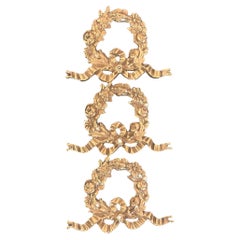
French Brass Furniture Pediments- Set of 3, 1920 s
Located in Ross, CA
Set of 3 brass furniture pediments in the shape of wreaths. Made in France in the early 20th century.
Category

1920s French French Provincial Vintage California - Decorative Art

Materials

Brass

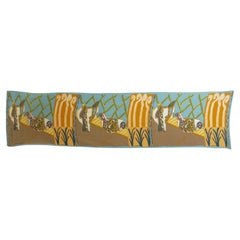
Deco Lake Shore by Betty Woodman Museum Silk Textile
By Edith Woodman Burroughs
Located in Moreno Valley, CA
Betty Woodman (American, 1930–2018). Silk chiffon textile with hand rolled edges. After the "Deco Lake Shore," 2002. The Metropolitan Museum of Art, New York, © Betty Woodman textile...
Category

21st Century and Contemporary American Rustic California - Decorative Art

Materials

Silk

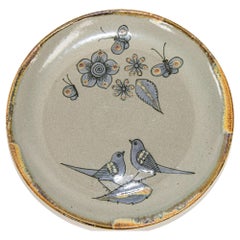
Tonala Folk Art Pottery Plate Hand Painted with Birds, Mexico, circa 1960 s
By Ken Edwards
Located in Moreno Valley, CA
Handcrafted Ken Edwards ceramic plate Tonala Mexico Folk Art Pottery. Vintage Ken Edwards Mexican ceramic birds and flowers from Tonala Pottery. ...
Category

Mid-20th Century Mexican Folk Art California - Decorative Art

Materials

Ceramic

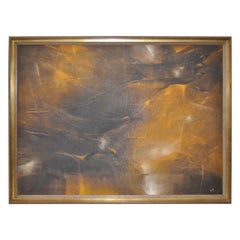
"Swallows Five" Mid-Century Modern Abstract Painting by Monte, circa 1950s
Located in San Francisco, CA
Large and impressive 1950s abstract oil painting by Monte This really is a magnificent abstract painting. It's large size will make this the centerpiece of most interiors. Beau...
Category

Mid-20th Century American Mid-Century Modern California - Decorative Art
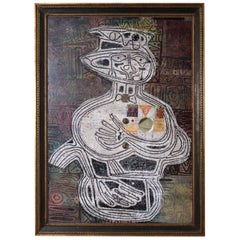
Materials

Canvas

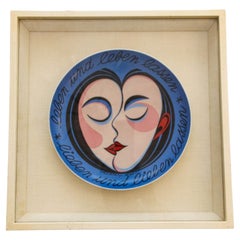
1970s VASARELY "Live and let live love and let love" Rosenthal Framed Plate
By Rosenthal, Victor Vasarely
Located in Moreno Valley, CA
1970s VICTOR VASARELY "Live and let live love and let love". Rosenthal collectible framed German plate. Victor Vasarely Rosenthal Studio Line Limited Edition Porcelain Plate. By Vasarely born 1936. "Leben und Leben lassen, Lieben und Lieben lassen" "Live and let live - love and let love". Limited edition, signed and numbered. Plate is in good condition, size is 12". Frame is not in good condition, white became yellowish shows wear. Victor Vasarely, born as Győző Vásárhelyi on April 9, 1906, in Pécs, Hungary, was a Hungarian-French artist widely regarded as the "father of Op Art" (Optical Art). He is known for his pioneering work in geometric abstraction and the use of optical illusions to create visually captivating and dynamic artworks. Vasarely's early career involved studying medicine in Budapest, but he later decided to pursue his passion for art and enrolled in the Műhely (Workshop) academy in Hungary. He initially experimented with various styles, including Impressionism and Post-Impressionism, but his interest in geometric abstraction grew stronger over time. In the 1930s, Vasarely moved to Paris, where he continued to explore geometric patterns, lines, and shapes in his art. He believed that art should not merely imitate nature but should create its own language of forms and colors to engage the viewer's perception actively. This philosophy led to the development of Op Art, a movement that emerged in the 1960s and focused on creating optical illusions and visual effects through precise geometric patterns and colors. Vasarely's artworks often featured meticulously arranged geometric shapes, giving the impression of movement and three-dimensionality. He employed various optical tricks, such as the juxtaposition of contrasting colors and the use of repetition, to create an illusion of depth and visual dynamism. His artworks can evoke a sense of visual vibration and often challenge the viewer's perception. Throughout his career, Vasarely's influence extended beyond the art world. He believed in the democratization of art and wanted to make art accessible to a wider audience. He embraced mass production techniques, creating what he called "multiple originals" or "serigraphs" (a form of screen printing). These serigraphs allowed him to produce multiple copies of his artworks at affordable prices, making them more accessible to art enthusiasts. Vasarely's artistic legacy continues to be celebrated around the world. His work has been exhibited in numerous galleries and museums, and he remains an influential figure in the fields of Op Art and abstract geometric art. He passed away on March 15, 1997, in Paris, leaving behind a vast body of work that continues to captivate audiences and inspire artists to this day. About Rosenthal: German porcelain manufactory Rosenthal was originally founded as a ceramics-painting studio by Philipp Rosenthal Sr. (1855-1937) in 1879 at Schloss Erkersreuth in Bavaria, near the Czech border. Its first highly popular product was an ashtray inscribed with the words “Resting place for lit cigars.” In 1890, the company moved to the neighboring hamlet of Selb and, a year later, began to manufacture its own porcelain, since white porcelain was, at that time, in short supply. Rosenthal’s first complete table service was called Empire; it was exhibited along with other lines at Paris’s Exposition Universelle in 1900. With the dawn of the 20th century, Rosenthal began producing porcelain tableware and services formed and decorated in the latest styles, like the Jugendstil Botticelli (1903), the Art Nouveau Darmstadt (1905), and the all-white Maria (1916) lines. Successes with this au courant approach led the company to launch an art pottery division in 1910, dedicated to luxury tableware, vases, and other decorative objects. By the 1930s, figurines were another important Rosenthal product, most notably the Disney-licensed Mickey Mouse pieces introduced in 1931. In 1934, Philipp Rosenthal was forced to leave his company and country when his Jewish ancestry came under persecution by the Nazi regime. Despite the loss of its founder, the Rosenthal company remained the premier supplier of high-quality porcelain tableware to the Third Reich. After the war, in 1950, Philip Rosenthal Jr. (1916-2001) joined his father's company as an advertising manager. By 1958, he had become its CEO, continuing his father’s vision to produce high-quality porcelain in line with progressive tastes. Through the rest of the 20th century, Rosenthal was the most commercially successful porcelain producer in Germany. In the postwar era, Rosenthal’s most famous tableware lines have included 2000 by Raymond Loewy and Richard Latham (1954), Magic Flute by Bjørn Wiinblad (1959), Suomi by Timo Sarpaneva (1976), and Moon by Jasper Morrison (1997). The company has enjoyed many popular and critically acclaimed collaborations with designers and brands, like Salvador Dalì, Tapio Wirkkala, Walter Gropius, Andy Warhol, Ron Arad, Enzo Mari, Konstantin Grcic, and Versace. Rosenthal's product lines have encompassed more than ceramics over the years. In 1972, the company began producing furniture, under the subsidiary Rosenthal Einrichtung, in Espelkamp, Germany. Standouts from this arm of Rosenthal include Gunter Ferdinand Ris and Herbert Selldorf’s futuristic Sunball Lounge Chair (1969), Verner Panton’s Relaxer Rocking Chair (1974), Burchard Vogtherr's Vario Pillo...
Category

Late 20th Century German Post-Modern California - Decorative Art

Materials

Porcelain

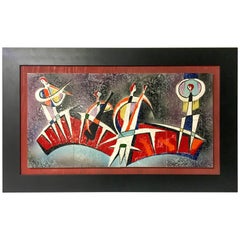
Unique Mid-Century Wall Relief Tile of Musicians by Cam Para of California
Located in San Diego, CA
Very cool framed wall tile depicting a quartet of musicians playing their instruments; Classic Mid-Century style! Vibrant colors and great texture by California artist Cam Para, circ...
Category

Late 20th Century American Mid-Century Modern California - Decorative Art

Materials

Ceramic

Abstract Painting in Original Frame
Located in Palm Desert, CA
A fun abstract painting on a merlot background in its original walnut & gilt frame with antique glass. We have not been able to find any information on the artist, but it is signed a...
Category

Early 20th Century American California - Decorative Art

Materials

Walnut

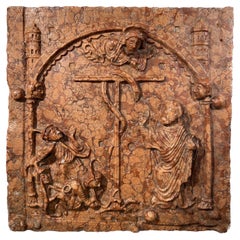
19th Century Moses the Bronze Serpent Italian Marmo Rosso Di Verona Low Relief
Located in Encinitas, CA
Moses and the bronze serpent depicted in low relief carving in Italian Marmo Ross di Verona. Handcrafted replica of a Tau Cross XIII century artifac...
Category

Mid-19th Century Italian Baroque Antique California - Decorative Art

Materials

Marble

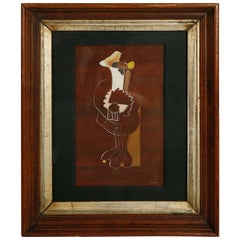
1963 Joe Nyiri Abstract Monoprint
Located in San Diego, CA
Abstract stylized figure with applied decoration by California artist Joe Nyiri from 1963 in original Orr's Gallery frame.
Category

Mid-20th Century American Mid-Century Modern California - Decorative Art

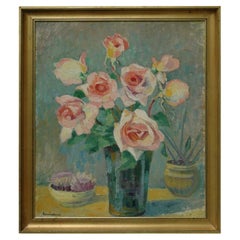
Bouquet of Roses by Hermine David, Oil on Cardboard Linen, Signed
By Jules Pascin, Hermine David
Located in Los Angeles, CA
Bouquet of roses by Hermine David, oil on cardboard linen, signed. Framed. Hermine Lionette Cartan David (19 April 1886 in Paris – 1 December 1970 in ...
Category

1930s European Art Deco Vintage California - Decorative Art

Materials

Canvas, Wood, Paint

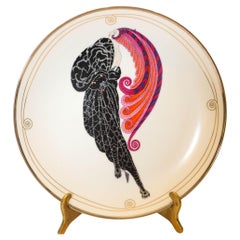
Erté "Beauty and the Beast" Sevenarts Porcelain Collector Plate
By Franklin MInt, Sevenarts Ltd., Erté
Located in Moreno Valley, CA
House of Erté Romain de Tirtoff " Beauty and the Beast" Sevenarts Porcelain Collector Plate. The Beauty and the Beast Plate is an original decorative limited edition porcelain plate realized in the 1990s. This beautiful and very rare plate was produced for House of Ertè in fine porcelain. The plate reproduced the beautiful artwork " Beauty and the Beast" realized by the artist in 1987 and shows one of his famous and sophisticated figures. House of Erté Beauty and the Beast...
Category

Late 20th Century German Art Deco California - Decorative Art

Materials

Porcelain

Oil on Canvas by José Herrera
By José Herrera
Located in Los Angeles, CA
Oil on Canvas by José Herrera (Spanish, 1943-). Signed and dated 1973. Original stainless steel frame. A beautiful piece.
Category

1970s Spanish Modern Vintage California - Decorative Art

Materials

Stainless Steel

Kutahya Hand Painted Islamic Turkish Decorative Plate 1950 s
Located in Moreno Valley, CA
Vintage Turkish Polychrome Hand Painted Ceramic Kutahya Platter. Circa 1950's. Hand painted and handcrafted Turkish Kutahya ceramic wall decorative...
Category

Mid-20th Century Turkish Islamic California - Decorative Art

Materials

Ceramic

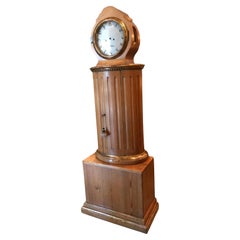
19th C. Swedish Carved Pine Wood Clock Grandmother Grandfather Long Case Antique
Located in West Hollywood, CA
19th C. Swedish Carved Pine Wood Clock Grandmother Grandfather Long Case Antique . Freestanding hand carved pine wood clock with all the original mechanics and hardware , weights rack...
Category

Early 19th Century Swedish Antique California - Decorative Art

Materials

Metal

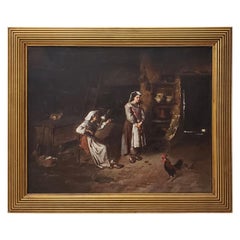
Joseph Mazzuloni Italy "The Broken Jug" Original Oil Painting, circa 1890s
Located in San Francisco, CA
Joseph Mazzuloni (Italy, b. 1868) "The Broken Jug" original oil painting circa 1890s Fine antique oil painting by Italian artist Joseph Mazzuloni. Titled "The Broken Jug". A...
Category

Late 19th Century Italian Antique California - Decorative Art

Materials

Paint

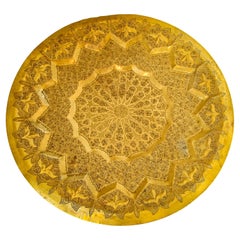
Moroccan Moorish Polished Brass Decorative Tray Wall Hanging
Located in Moreno Valley, CA
Fabulous Moroccan Moorish hand-hammered brass tray, intricate multi dimension artwork, very fine Islamic Metalwork brass repousse designs. Handcrafted wall hanging decorative brass tray with a copper...
Category

Early 20th Century Moroccan Moorish California - Decorative Art

Materials

Brass

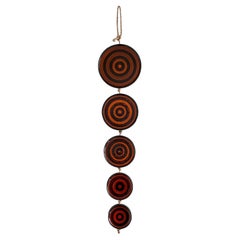
Mid Century Ceramic Wall Art Sculpture
Located in Los Angeles, CA
Ceramic disc wall sculpture Germany, circa 1960’s Five unique ceramic discs with concentric rings Bold and contrasting color palette ranging from d...
Category

1960s German Vintage California - Decorative Art

Materials

Ceramic

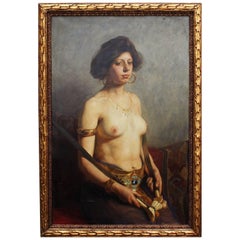
Karl Viktor Mayr, Austrian Oil on Canvas "An Exotic Nude Girl"
By Karl Viktor Mayr
Located in Los Angeles, CA
Karl Viktor Mayr (Austrian, 1882-1974) a very fine Austrian oil on canvas "An Exotic Nude Girl" depicting a young semi-nude woman, revealing her breast...
Category

Early 1900s Austrian Folk Art Antique California - Decorative Art

Materials

Canvas, Giltwood

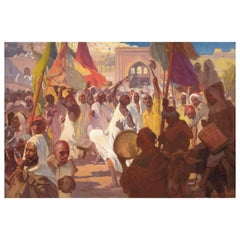
Very Fine and Large Orientalist Oil on Canvas Titled "Ashura Rituals, Tangier"
By Gordon B. Coutts 1
Located in Los Angeles, CA
Gordon B. Coutts (Scottish/American, 1868-1937) A very fine and large orientalist oil on canvas titled "Ashura Rituals, Tangier" (Arabic: عاشوراء‎ ʻĀshūrā’ - Urdu: عاشورا‎ - Persian: عاشورا‎ - Turkish: Aşure Günü). Signed and inscribed: 'Gordon Coutts/TANGIER' (lower right), circa 1920. Provenance: The Fisher Art Museum, University of Southern California. Gordon Coutts led a peripatetic career, born in Aberdeen, Scotland, he then studied and travelled to Glasgow, London, Paris and Rome before settling in Melbourne, Australia in 1891. In 1896 he moved to Sydney, where he taught at the Art Society of New South Wales, before returning back to Europe in 1899. With the climate of northern Europe detrimental to Coutts' poor health, he moved with his wife, Alice Grey, to the United States where he became a frequent exhibitor at the Bohemian Club in San Francisco. In 1920 he travelled to Tangiers, Morocco where, dressed as an Arab, he passed from tribe to tribe observing the lifestyle, customs and practices of the the village people and Bedouins. The present work depicts the celebration of Ashura. The day of Ashura is commemorated by Shi'ite Muslims; "A day of pain, pilgrimage and pageantry, it is one of the holiest in their religion. The word Ashura means 10, and refers to the tenth day of Muharram, the first month of the Islamic calendar. This is a period of mourning and cleansing, which marks the martyrdom of Hussein, grandson of the Prophet Muhammad...
Category

Early 20th Century Moroccan Other California - Decorative Art

Materials

Canvas

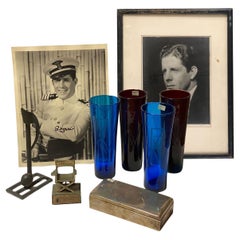
Rudy Vallee Actors / Musician Hollywood Personal Effects, Photos Awards
Located in Van Nuys, CA
Rare opportunity to own a collection of 9 personal effects by famed musician and actor Rudy Vallee including 4 handblown drinking glasses with his initials etc c hed into the glasses, 1969 Directors Guild of America awards, a sterling silver cigar box presented by Jumbo Tent C.S., a spelter metal statue of a quaver musical note, a signed 8x10 photo of Rudy in a ship captains uniform and a framed 8x10 photo of a Rudy from his younger days. Hubert Prior Vallée (July 28, 1901 – July 3, 1986), known professionally as Rudy Vallée, was an American singer, musician, actor, and radio host. He was one of the first modern pop stars of the teen idol type. United States 1930-1970 Included in this set -1969 Directors Guild of America award -Sterling Silver Cigar Box Presented by Jumbo Tent C.S -Signed 8x10 Photo -Framed 8X10 Photo -Spelter Metal Quaver Musical Note Statue -Pair of Red Drinking Glass...
Category

1950s American Mid-Century Modern Vintage California - Decorative Art

Materials

Metal, Silver

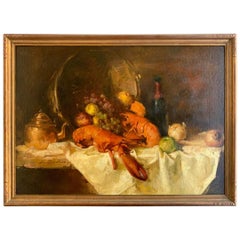
Sumptuous Large Original William Foster Still Life Painting of a Banquet Table
By William Frederick Foster
Located in Tustin, CA
Sumptuous, very large, original oil on canvas board, still life painting depicting a banquet table. This painting is a virtuoso display of how artist William Frederick Foster (1883-1953) captures texture in paint. You can see this in the mouth watering fruit, crustacea and other samplings laid upon the table as well as the masterfully painted reflective surfaces of the copper tea pot, wine bottle and the gathered table cloth. Painting is framed in the original wood frame. Painting framed measures 34.5” high x 46” wide x 1.5” deep. Painting unframed measures 30.5” high x 42.5” wide. William Foster was born in Cincinnati, Ohio, in 1883. He became a noted figure painter and illustrator, living the last twenty-one years of his career in Los Angeles, California. At age 12, he moved with his family to Colorado, but in 1898, he returned to Cincinnati and enrolled at the Art Academy where he studied with Joseph Henry Sharp and Frank Duveneck. His early ambition was to be a violinist, but he was re-focused on fine art when he saw a painting by Albert Ceck Wenzell. In 1902, he went to New York City where he painted scenery for theaters, auditoriums, and large department stores. He also studied at the New York School with Robert Henri and William Merritt Chase, and from 1903 to 1931, he worked as an illustrator and with a brief teaching stint in 1919 at the Art Institute of Chicago. In 1903, he sold his first illustration, a depiction of high society, to Life magazine, and the style was very similar to Wenzell. From that time, he worked for most of the major magazines including Collier's, The Saturday Evening Post and Harper's Monthly. In 1926, he won the National Academy of Design's Thomas B. Clarke Prize for the best figure composition painted in the United States by a non-academician. The following year, he was voted an Associate Member based on his recognition for a figure work titled The Girl in Brown. During World War I, he operated his own ambulance in France as a member of the American Volunteer Motor Ambulance Corps and also received mention as a camoufleur artist. Returning to the U.S., he resumed his illustration work and moved to Chicago, where he taught at the Art Institute. Foster moved to Los Angeles in 1932 and devoted his energy to painting, exhibiting and teaching. He taught at the Chouinard School of Art in Los Angeles and gave private classes in his studio. He also worked on a mural project at the Hearst estate...
Category

Early 20th Century American American Classical California - Decorative Art

Materials

Masonite

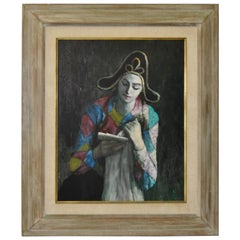
Mid-Century Modern Harlequin Painting, circa 1970
Located in San Francisco, CA
Mid-Century Modern harlequin oil painting. This fine Harlequin painting is bold, bright, colorful and executed by a very talented artist. T...
Category

Mid-20th Century American Mid-Century Modern California - Decorative Art

Materials

Other

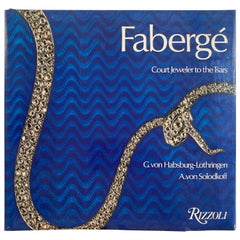
Fabergé Court Jeweler to the Tsars Hardcover Table Book
By Geza von Habsburg-Lothringen, Alexander von Solodkoff
Located in Moreno Valley, CA
Faberge: Court Jeweler to the Tsars Book by Solodkoff, Rizzoli 1984. Fabergé: Court Jeweler to the Tsars Fabergé, Court Jeweler to the Tsars by G. von Habsburg-Lothringen and A. von Solodkoff. New York: Rizzoli, 1979. First English edition hardcover with slip case. 171 pp. A book on the history of Carl Fabergé and his work. For more than 35 years, Peter Carl Fabergé (1846-1920) was purveyor of exquisite creations in jewels and precious metals to European royalty, most notably Russia and England, and to the wealthy of the world. He was a designer of unsurpassed ingenuity and delicacy. He turned out a profusion of jeweled flowers in rock-crystal pots, enameled cigarette cases, desk sets in multicolored gold, silver and platinum, gold sedan chairs and coronation coaches...
Category

20th Century American Modern California - Decorative Art

Materials

Paper

Large 19th Century French Oil on Canvas by Jules Garson
Located in Tarzana, CA
A 19th century French oil painting on canvas depicting classical figures in landscape, with a standing gentleman presenting bouquet of flowers to a sitting lady. Signed: Jules Garson...
Category

Late 19th Century French Antique California - Decorative Art

Materials

Canvas

Still Thinking About These?

All Recently Viewed