Japan - Asian Art and Furniture

to
104
1,373
11,208
5,374
764
599
10
23
2
1
1
1
1
70
188
506
609
182
83
28
3
2
8
2
1
3
13
7
4
1
596
510
454
422
283
1,327
1,300
1,280
13
11
1,373
1,349
1,351
26
10
4
2
2
Item Ships From: Japan
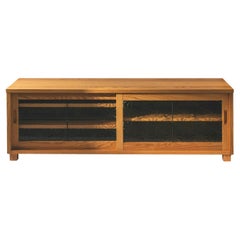
No.32 TV Stand
Located in 北見市, JP
BEFORE VINTAGE FURNITURE No.32 / TV Stand Data/ April 2024... Italy Salone del Mobile.Milano/Milano Salone International Furniture Fair Exhibits Birthday / 2023.8.8 Size: W1500 D500 ...
Category

2010s Japanese Japan - Asian Art and Furniture

Materials

Cut Glass, Wood

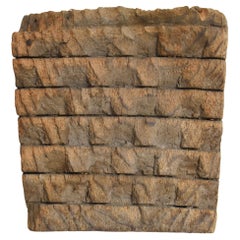
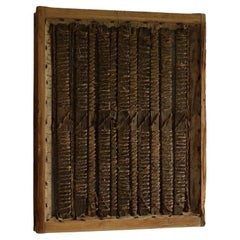
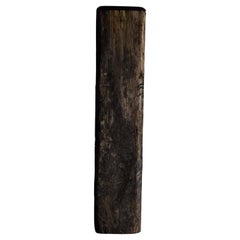
Japanese Antique Thatching Tools "Gangi" 1860s-1920s / Wall Decoration Wabisabi
Located in Chōsei District Nagara, JP
This is a traditional Japanese thatched roof tool known as a “Gangi.” A Gangi is used to trim the cut ends of the thatch and smooth the roof’s surface, symbolizing the craftsmanship ...
Category

Early 20th Century Japanese Meiji Japan - Asian Art and Furniture

Materials

Cedar

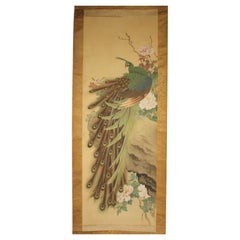
K29 Japanese Antiques A hanging scroll, Peacock on silk
Located in Niiza, JP
Silk, Scroll head: wood Image size: 500(W) x 1450(H) [mm] Scroll mounting: 650(W) x 2100(H) [mm] Box size: 85×80×730㎜ 1100g Estimated packing size: 130(W) x 130(H) x 800(D) [mm] 4kg...
Category

20th Century Japanese Japan - Asian Art and Furniture

Materials

Fabric, Silk

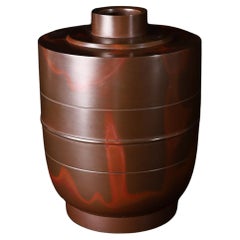
Exceptional Vermilion-Bronze Vase by Hasuda Shūgorō, A Master of 20th-Century Ja
By Shugoro Hasuda
Located in Fukuoka, JP
This is a superb and guaranteed authentic vermilion-bronze vase of top-shaped (tōgata) form, created by the celebrated Japanese artist Hasuda Shūgorō (蓮...
Category

20th Century Japanese Japan - Asian Art and Furniture

Materials

Bronze

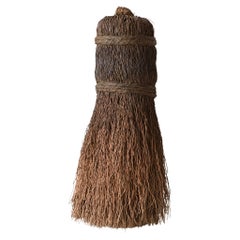
Early 20th century Korean Garment Brush
Located in Chiba, JP
Old Korean garment brush used for hemp textile as scarce exposed type without covered grip, early 20th century, approx. L 24cm (9.44in), in used conditio...
Category

Early 20th Century Korean Japan - Asian Art and Furniture

Materials

Other

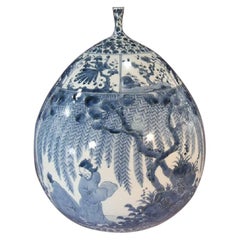
Japanese Contemporary Imari Blue White Porcelain Vase
Located in Takarazuka, JP
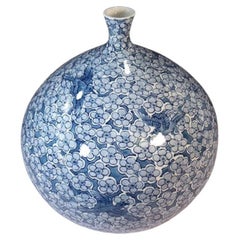
Exquisite Japanese contemporary decorative porcelain vase, hand painted in underglaze blue on a beautifully shaped body in pure white, a signed piece by widely acclaimed master porce...
Category

21st Century and Contemporary Japanese Meiji Japan - Asian Art and Furniture

Materials

Porcelain

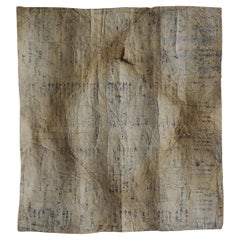
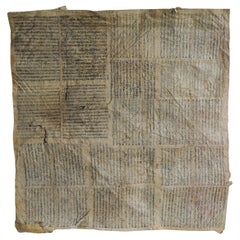
Japanese Antiques , Tapestries , Wabi-Sabi
Located in Katori-Shi, 12
We present to you a precious old wrapping paper from the Taisho period. This washi paper was used to wrap important items. It was made by overlapping multiple ledgers, and is chara...
Category

Early 20th Century Japanese Taisho Japan - Asian Art and Furniture

Materials

Paper

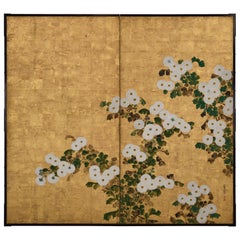
18th Century Japanese Rinpa Screen. White Chrysanthemums. School of Korin.
Located in Kyoto, JP
School of Ogata Korin White Chrysanthemums 18th Century, Edo period. A two-panel Japanese screen. Ink, color, gofun and gold leaf on paper. Dimensions: H. 171 cm x W. 188 cm (67.5” x 74”) On this two-panel Japanese screen we see blooming chrysanthemums, a flower which embodies the essence of autumn in Japan. Here the traditional floral theme has been simplified and stylized. The bright colors and asymmetrical composition against the delicate gold leaf create a luxurious and ornate work of art. Its background, a strikingly patinated grid of gold leaf, denies any sense of place or time and imbues everything with an ethereal glow. The leaves and stems of the plants are nothing more than pools of mottled color and ink without any outline whatsoever. These are typical Rinpa adaptations of traditional ink painting methods; tarashikomi, or diluted washes of color blended while very wet, and mokkotsu, or “bonelessness,” which creates forms without exterior outlines. The relief work of the rounded flower petals has been obtained by the moriage process (a mixture based on ground shells modeled on the surface of the paper). On the lower right of the screen, the siganture “Hokyo Korin Jakumyo” and the “Hoshuku” seal can be read. Korin is Ogata Korin, famed for the Irises (Nezu Museum) and Red and White Plum Blossom (MOA Museum of Art) folding screens, both National Treasures. Korin worked in both Kyoto and Edo in the mid-Edo period. Korin was using the art name “Jakumyo” just after he received the Hokyo level, which was in 1701. This particular screen was published in May of 1961 in the Japanese Sansai Fine Art Magazine*. An in depth article accompanies the photograph of the screen and and a photograph of the signature and seal. This article devotes much of its body to discussing the moriage technique, how it enlivens the chrysanthemum flowers and Korin’s specific skill in using the technique. The article goes on to discuss the most famous works of Korin, utilizing this technique, which were known at the time. Specifically a two-panel screen held in the Honolulu Museum which was discovered in the store-house of Takahashi Soan. A two-panel screen pair which the Nakano family own. A two-panel screen pair with chrysanthemums in moriage in fan designs owned by the Nomura family. Also a small folding screen featuring chrysanthemums held in the Yamato Bunkakan. The article goes on to say that this particular two-fold screen came from the Nijo family. Korin is known to have had a strong connection with the aristocratic Nijo family. The article explains that Korin received a lot of favors from the Nijo family and that this screen would have been gifted to them. Since that time the Honolulu screen has been amended to ‘attributed to Ogata Korin’ and I do not know further details of the other 3 screens. Other Chrysanthemum screens...
Category

18th Century Japanese Edo Antique Japan - Asian Art and Furniture

Materials

Gold Leaf

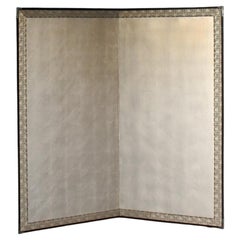
B48 Old Japanese Silver folding screen, Byobu 2panel
Located in Niiza, JP
Unfolded size: 1740 x 1750 x 20 mm Foldable: 870 x 1750 x 40 mm, 7kg Estimated size after packaging (sandwiched between 5 mm plywood): 9 cm x 95 cm x 185 cm Weight 30KG An atmosph...
Category

20th Century Japanese Japan - Asian Art and Furniture

Materials

Paper

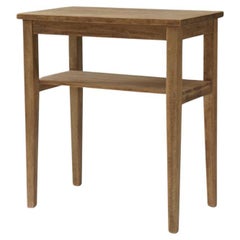
Japanese Antique Oak Side Table, 1960s - Japandi Wabi-Sabi
Located in Chiba, Chiba
A Japanese antique side table crafted from oak and dating from the 1960s. Its gently tapered legs create a sharp, refined silhouette, giving the piece a sense of quiet sophistication...
Category

Mid-20th Century Japanese Japan - Asian Art and Furniture

Materials

Wood

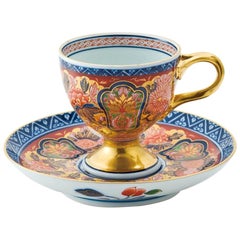
Japanese Contemporary Hand Painted Red Gilded Porcelain Cup and Saucer
Located in Takarazuka, JP
Exquisite Japanese contemporary Ko-Imari (Old Imari) style gilded hand painted porcelain cup and saucer. This extraordinary piece brings back the glory an...
Category

21st Century and Contemporary Japanese Japan - Asian Art and Furniture

Materials

Gold

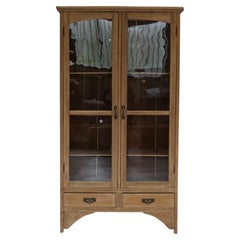
Japanese Antique Ash Wood Cabinet, 1912s–1926s - Japandi Wabi-Sabi
Located in Chiba, Chiba
A Japanese antique cabinet crafted from ash wood, dating from the 1912–1926 period. At 75 cm wide, it offers a compact footprint that fits easily into smaller rooms, entryways, or co...
Category

Early 20th Century Japanese Taisho Japan - Asian Art and Furniture

Materials

Wood

Japanese Antique Exhibition Stand / Sword Case / 1800-1868s / Wabi-sabi
Located in Iwate-gun Shizukuishi-cho, Iwate Prefecture
This is an old drawer for storing Japanese swords originally called "Katanatansu". It is thought to be from around the Edo period. Cedar is used for the material, and a large numbe...
Category

Mid-19th Century Japanese Edo Antique Japan - Asian Art and Furniture

Materials

Wood, Paper, Cedar

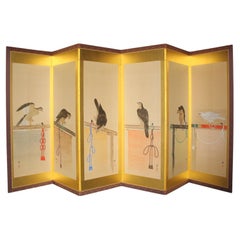
B77 Old Japanese 6panels folding Screen, Hawk Falconer
Located in Niiza, JP
Material: Paper on wooden frame One piece: W580×H1740mm×D15mm, Unfolded size: W3520mm Folded size: W600×H1740×D100mm, 12kg Estimate packing size: (sandwiched with 5-10mm plywood): 17...
Category

20th Century Japanese Japan - Asian Art and Furniture

Materials

Paper

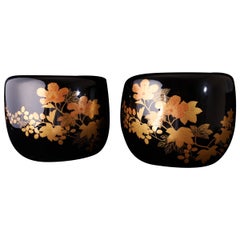
Pair of Japanese Lacquer Hibachi with Tropical Motifs — Taishō to Early Shōwa Pe
Located in Fukuoka, JP
Dimensions: each approx. 23 × 23 × 26 cm Material: Black lacquer with gold maki-e decoration Condition: Very good, minor wear consistent with age A rare matched pair of Japanese lac...
Category

Early 20th Century Japanese Taisho Japan - Asian Art and Furniture

Materials

Copper, Gold Leaf

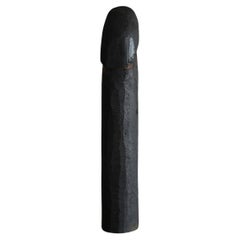
Japanese antique wooden large penis / folk belief / 1868-1920
Located in Sammu-shi, Chiba
This item is a giant wooden penis that was used in old Japanese houses from the late 19th century to the early 20th century (Meiji to Taisho eras). This i...
Category

Late 19th Century Japanese Meiji Antique Japan - Asian Art and Furniture

Materials

Cedar

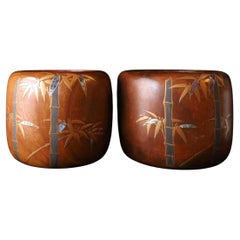
Pair of Japanese Hibachi with Inlaid Bamboo Motif
Located in Fukuoka, JP
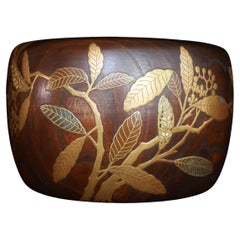
A beautifully matched pair of Japanese hibachi (traditional fire bowls) from the Meiji period (1868–1912), showcasing exceptional craftsmanship and refined aesthetics. Each vessel is...
Category

Early 20th Century Japanese Taisho Japan - Asian Art and Furniture

Materials

Wood

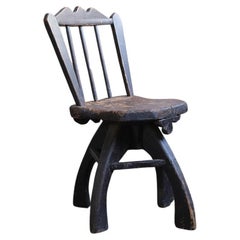
Primitive Wood Chair from Japan 1860s-1900s / Wabi Sabi Wooden Chair Mingei
Located in Sammu-shi, Chiba
This is an old primitive chair discovered in Japan. Details of this chair are unknown. It is also possible that it was not produced in Japan, but was brought over from East Asia or S...
Category

Early 20th Century Japanese Meiji Japan - Asian Art and Furniture

Materials

Wood

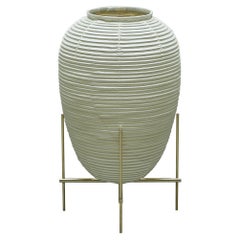
Contemporary Japanese Chochin Floor Lamp Zen Washi Japanese Paper Shade
By Ryosuke Harashima
Located in Shibuya-ku, Tokyo
Name: Under the Hazy Moon Contemporary style Japanese Washi Japanese traditional paper shade floor lamp. Washi shade is famous as Isamu Noguchi Akari lightings. Base is made of brass...
Category

2010s Japanese Edo Japan - Asian Art and Furniture

Materials

Brass

Japanese Antique Door, Abstract Art Wabi Sabi, 1860s-1900s
Located in Katori-Shi, 12
Very old Japanese sliding door. The simple design conveys the charm of the material. You can feel the world of wabi and sabi. Recommended as a wall painting. It was made in the Mei...
Category

Early 20th Century Meiji Japan - Asian Art and Furniture

Materials

Wood

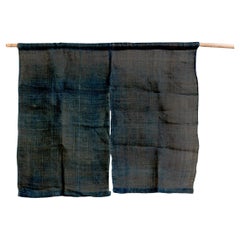
Antique Noren Curtain, Japan, circa 1890 / Wabi Sabi, Japanese craftsmanship
Located in Tokyo, Tokyo
A rare antique noren (Japanese split curtain), hand-woven from natural fibers and dyed in deep, layered shades of natural indigo. Its subtle gradation of...
Category

Late 19th Century Japanese Antique Japan - Asian Art and Furniture

Materials

Fabric

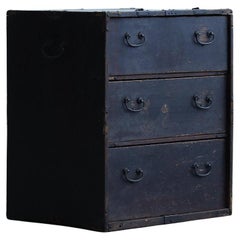
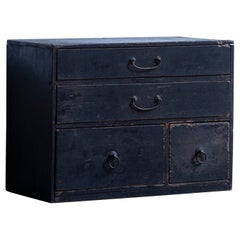
Japanese Antique Chests of Drawers 1860s-1900s /Tansu, Wabi-Sabi
Located in Katori-Shi, 12
This small drawer was produced in the Taisho period. This chest is made of sturdy cedar with a lacquer finish, with a base panel made of lightweight paulownia wood and an iron handl...
Category

Early 20th Century Japanese Taisho Japan - Asian Art and Furniture

Materials

Wood

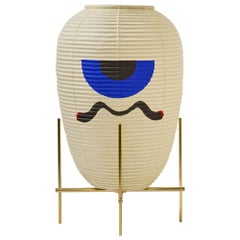
Contemporary Japanese Chochin Floor Lamp Limited Edition #2 Zen Washi
By Ryosuke Harashima
Located in Shibuya-ku, Tokyo
Name: OBAKE UN Contemporary style Japanese Washi Japanese traditional paper shade floor lamp. Washi shade is famous as Isamu Noguchi Akari lightings. Base is made of brass. Limited pattern painted model. Edition of 3+1AP E26,27 light bulb. Available to work with 100-250V. Artist statement In Japan, there is an animist belief that the soul dwells in old tools that have passed a long time and turns into spirits such as "Youkai" or "OBAKE." Its existence lurks in the darkness of everyday life, sometimes causing fear and sometimes entertaining. This lantern is not an old tool, but it is made by the historic "Kojima Shoten", where the 10th generation are craftsmen in Kyoto. It's rare nowadays, and it's a style in which lanterns are made from bamboo bones to assembling papers and painting in one workshop and go. So, I decided to transform the polite crafted Japanese lanterns, which have been run through a traditional history, into a modern and pop style. It's not just OBAKE lurking in the darkness, but an existence who snuggles up to us as a more sophisticated being. These one-eyed OBAKE have a meaningful look that originated in ancient Sanskrit culture. The red-eye "A [a]" is the facial expression that is the first pronunciation to make a sound in Sanskrit, which means "truth" and "spirit of inquiry" at the same time. The blue-eyed "UN [hu?]" expresses the pronunciation to close the sound, and at the same time means "wisdom" and "nirvana." There is also the idea that describing the beginning and end of the universe is represented by considering the "A" and "UN" as a pair. In Asia, it is a common sight to see a pair of guardian statues...
Category

2010s Japanese Edo Japan - Asian Art and Furniture

Materials

Brass

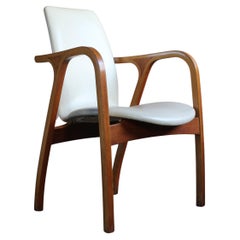
Antler Chair designed by Junzo Sakakura Architectural Office for Tendo Mokko
By Junzo Sakakura
Located in Sammu-shi, Chiba
The Antler Chair was designed by Junzo Sakakura Architectural Research Institute in 1966. It is a long-selling masterpiece chair that is still being made today. This is a rare monopo...
Category

1960s Japanese Mid-Century Modern Vintage Japan - Asian Art and Furniture

Materials

Teak, Plywood

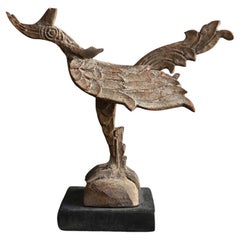
Thai wooden bird/lucky ornament/amulet
Located in Sammu-shi, Chiba
A wooden figurine made in Thailand. A small figurine that imitates a swan-like, dragon-like creature that decorates the roofs of Thai temples. It is probably from the late 20th centu...
Category

Late 20th Century Thai Other Japan - Asian Art and Furniture

Materials

Wood

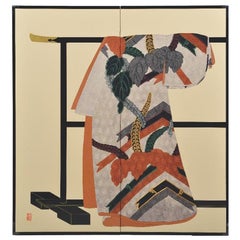
Japanese Contemporary Orange Black Silk Brocade Two-Panel Folding Screen, 3
Located in Takarazuka, JP
Extraordinary Japanese contemporary two panel "byobu" or folding screen featuring genryoku style handcrafted raised silk and brocade kimono in black, orange and gold on textured crea...
Category

21st Century and Contemporary Japanese Meiji Japan - Asian Art and Furniture

Materials

Gold

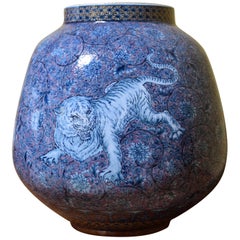
Japanese Contemporary Blue Pink Porcelain Vase by Master Artist Duo
Located in Takarazuka, JP
Exceptional Japanese Contemporary museum=quality extremely intricately hand painted decorative porcelain vase in blue elegantly featuring the four auspicious creatures of Chinese myt...
Category

21st Century and Contemporary Japanese Meiji Japan - Asian Art and Furniture

Materials

Gold

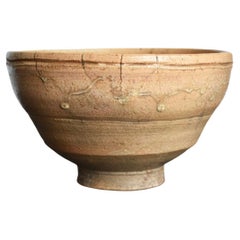
Japanese Antique Earthenware Tea Bowl/Edo Period/1700-1800/ Hagi Ware
Located in Sammu-shi, Chiba
This is Hagi ware made in the middle of the Edo period. Hagi ware is a type of pottery that began in Hagi City, Yamaguchi Prefecture in the early Edo period...
Category

18th Century Japanese Edo Antique Japan - Asian Art and Furniture

Materials

Pottery

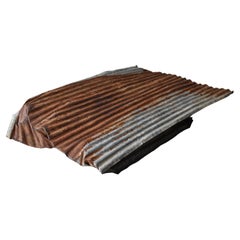
Japanese Old Galvanized Iron 1920s-1940s / Abstract Art Object Wabisabi
Located in Chōsei District Nagara, JP
This is an old Japanese tin. It has been lying in this condition in an old warehouse for many years. Judging from the texture and feel, it is estimated to have been manufactured in t...
Category

Mid-20th Century Japanese Showa Japan - Asian Art and Furniture

Materials

Tin

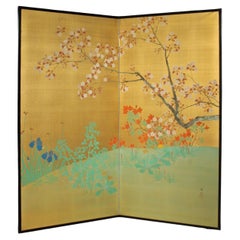
B35 Japanese Antiques Gold background flowers folding screen, 2-panel
Located in Niiza, JP
Material: Paper & Silk-like fabric, wooden frame 1 piece: Width 760 x Height 1520 x Depth 20 mm Expanded size: Width 1520 mm Folded size: Width 760 x Height 1520 x Depth 40 mm, weigh...
Category

20th Century Japanese Japan - Asian Art and Furniture

Materials

Paper, Silk

Antique Small Chest of Drawers from 19th Century, Japan
Located in Tokyo, Tokyo
Antique small chest of drawers from Edo period (1603-1868), Japan. Because of its age, the chest shows signs of use, which in turn make...
Category

19th Century Japanese Antique Japan - Asian Art and Furniture

Materials

Iron

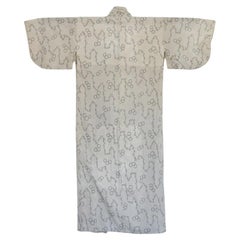
Old Japanese Kimono / 1912-1945 / Wall Hanging Decoration / Tapestry
Located in Sammu-shi, Chiba
I think this is a kimono woven from the Taisho era to the early Showa era (1912-1945) in Japan. It is a modern design. In the Taisho era, various things were made with reference to...
Category

Early 20th Century Japanese Taisho Japan - Asian Art and Furniture

Materials

Cotton

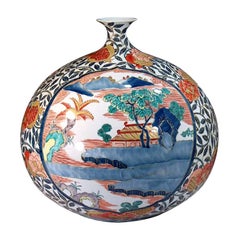
Japanese Contemporary Green Blue Red Porcelain Vase by Master Artist, 3
Located in Takarazuka, JP
Exceptional contemporary Japanese decorative porcelain vase, hand painted in red and blue depicting a beautiful scene from old rural Japan, a signed masterpiece by highly acclaimed m...
Category

21st Century and Contemporary Japanese Meiji Japan - Asian Art and Furniture

Materials

Gold

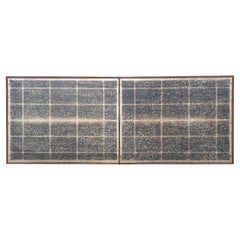
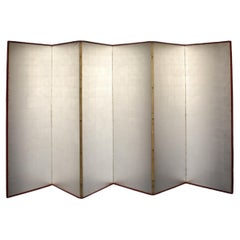
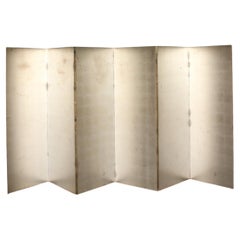
Silver Harmony
Located in Fukuoka, JP
The screen features a minimalist grid-like pattern with a soft silver shimmer, evoking quiet balance and timeless sophistication. Its understated design makes it a versatile piece, s...
Category

20th Century Japanese Showa Japan - Asian Art and Furniture

Materials

Silver Leaf

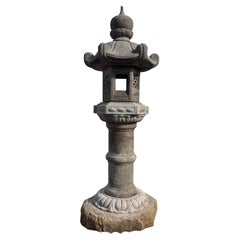
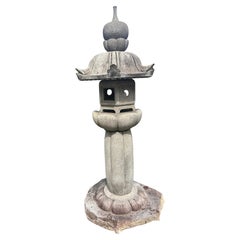
Japan Tall Old Kasuga "Deer" Granite Stone Lantern
Located in South Burlington, VT
One "Deer" lantern Available Please view our video Call or Contact Us For Details A tall antique classsic beauty with all original pieces. Japan, a fine tall kasuga "deer" gran...
Category

Early 20th Century Japanese Showa Japan - Asian Art and Furniture

Materials

Granite

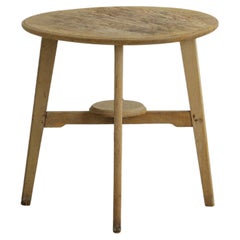
Japanese Antique Table, Early 20th Century
Located in Katori-Shi, 12
Introducing an exceptional round table that can be said to be the culmination of Taisho-era craftsmanship. It features tapered legs that narrow towards the base, giving it a delica...
Category

Early 20th Century Japanese Taisho Japan - Asian Art and Furniture

Materials

Wood

B20 Japanese Antiques 6panels, Silver Paper, folding Screen
Located in Niiza, JP
Silver-covered folding screen Material: Paper on wooden frame One piece: W600×H1745mm×D20mm, Unfolded size: W3630mm Folded size: W615×H1745×D105mm, 12kg Estimate packing size: (sandw...
Category

20th Century Japanese Japan - Asian Art and Furniture

Materials

Paper

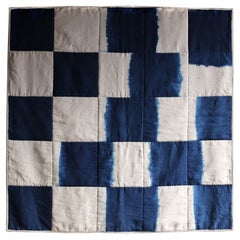
ICHIMATSU by Blue Tip atelier
Located in Sammu-shi, Chiba
Title : ICHIMATSU Japan / 2020s Size : W 1480 x H 1480 mm Each part is dyed with indigo to express a checkered pattern that collapses. This quilt is made with Woven fresh linen. Hand-quilted with cotton thread. Hand dyed with indigo. [Blue Tip atelier...
Category

2010s Japanese Modern Japan - Asian Art and Furniture

Materials

Linen

Japanese Antique Low Table, Wabi Sabi
Located in Katori-Shi, 12
This is an antique wooden low table from the Meiji period (1986-1912). The curved legs are beautiful. It was used as a workbench by craftsmen at the time. The material is high-qual...
Category

Early 20th Century Japanese Meiji Japan - Asian Art and Furniture

Materials

Wood

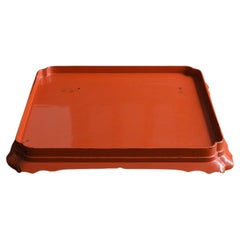
A large square tray made of Japanese antique lacquer / Late Edo period/19th
Located in Sammu-shi, Chiba
These trays were made after the late Edo period in Japan (after 1800). This particular type of tray is known as "Negoro-bon." Negoro lacquerware is a specific style of Japanese lacqu...
Category

19th Century Japanese Edo Antique Japan - Asian Art and Furniture

Materials

Lacquer

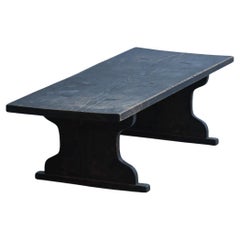
Japanese old wood stand / Exhibition stand wabi-sabi / primitive wood stand /
Located in Sammu-shi, Chiba
This display stand is made by combining old wooden sleepers with a newly made tabletop. The top of the display stand is finished with cashew paint, like lacquer, and has a jet blac...
Category

Mid-20th Century Japanese Primitive Japan - Asian Art and Furniture

Materials

Wood

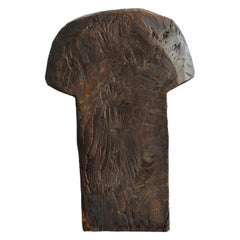
Japanese Antique Wooden Object/Craftsman s Workbench/Penis-Shaped Figurine
Located in Sammu-shi, Chiba
Introduce interesting items. This was once used as a workbench in Japan. It's shaped like a penis, but one side of the tip has a mark that looks like it was hit and is slightly scr...
Category

Late 19th Century Japanese Meiji Antique Japan - Asian Art and Furniture

Materials

Wood

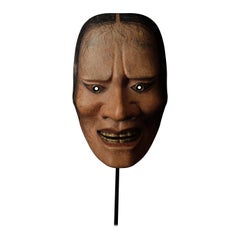
Japanese Noh Mask of Hashihime (橋姫)
Located in Fukuoka, JP
Hashihime (橋姫) There is no existing play featuring the “Hashihime” mask, but currently, it is used in performances where the character places an iron ring (katayude) on their head. ...
Category

20th Century Japanese Showa Japan - Asian Art and Furniture

Materials

Wood

Japanese Antiques , Old Wrapping Paper , Tapestries , Wabi-Sabi
Located in Katori-Shi, 12
We present to you a precious old wrapping paper from the Taisho period. This washi paper was used to wrap important items. It was made by overlapping multiple ledgers, and is chara...
Category

Early 20th Century Japanese Taisho Japan - Asian Art and Furniture

Materials

Paper

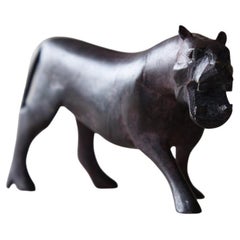
Ebony Wood Carving Tiger Sculpture
Located in Chiba, JP
Traditional Hanamaki clay doll, early-mid 20th century, Iwate, Japan. H 15.5 x W 13.3 x D 10 cm (6.10 x 5.23 x 3.93in). Aged deterioration as is as seen.
Category

20th Century Unknown Japonisme Japan - Asian Art and Furniture

Materials

Ebony

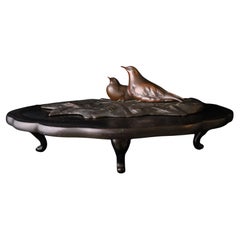
Japanese Bronze Sculpture of Two Birds on Leaf Base – Showa Period. Signed
Located in Fukuoka, JP
A serene and elegant Japanese bronze sculpture depicting a pair of birds resting on a large, naturalistically rendered leaf. Likely crafted during the Showa period, this piece showca...
Category

20th Century Japanese Showa Japan - Asian Art and Furniture

Materials

Bronze

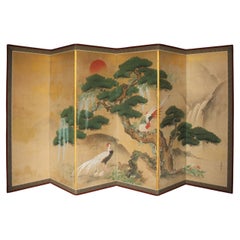
B2 Japanese Antiques Kano School, 6panel folding screen, Pine Tree and Pheasant
Located in Niiza, JP
Material: Paper, Wooden Frame Single: W600×H1760mm Unfolded Size: W3640mm 12kg Folded Size: W620×H1760×D100mm Estimated packaging (sandwiched with 5-10mm plywood): 21cm x 72cm x 18...
Category

19th Century Japanese Antique Japan - Asian Art and Furniture

Materials

Paper

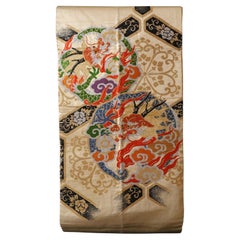
Japanese Maru Obi with Gold Embroidered Dragons – Silk Brocade, Taisho to Showa
Located in Fukuoka, JP
A magnificent example of Japanese textile artistry, this vintage maru obi dates from the Taisho to early Showa period (circa 1920–1950). Woven in luxurious silk, it features a richly detailed brocade design with mythological dragons encircled by flames and stylized clouds—symbols of strength, protection, and imperial authority in Japanese culture. The opulent gold and beige ground is accented with bold tones of red, green, black, and purple, showcasing intricate weaving techniques and vibrant color contrasts. Hexagonal panels with floral motifs in gold and black add structure and visual rhythm to the piece. Measuring 341 cm in length and 32 cm in width, this maru obi was traditionally worn for formal kimono occasions and would have wrapped fully around the waist. Today, it makes a powerful statement as a display piece—whether mounted as wall art or draped as a textile sculpture—highlighting the beauty and craftsmanship of early 20th-century Japanese weaving...
Category

20th Century Japanese Showa Japan - Asian Art and Furniture

Materials

Cotton, Silk

Japan Rare Tall Tulip Stone Lantern- one of a kind Beauty
Located in South Burlington, VT
Unusual "tulip" flower contemporary designed garden lantern - first we have seen. Please view our video. A handsome and elegant tulip flower form kasuga stone lantern with a lovely...
Category

Mid-20th Century Japanese Showa Japan - Asian Art and Furniture

Materials

Granite

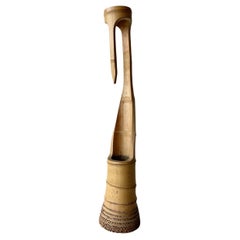
1975 Japanese Crane-Neck Bamboo Ikebana Flower Arrangement Vase
Located in Chiba, JP
H 68.5 x 14.5 x 13.5 cm (26.96 x 5.70 x 5.31in). Showa period (1975). A type of traditional Japanese ikebana flower arrangement vase. Inside copper-plated. Aged deterioration as is.
Category

1970s Japanese Japonisme Vintage Japan - Asian Art and Furniture

Materials

Copper

Japanese Antique Wooden Brazier/Hibachi Brazier/1868-1912s Wabi-Sabi
Located in Iwate-gun Shizukuishi-cho, Iwate Prefecture
This is an old Japanese brazier. It is made of zelkova wood and is thought to date back to the Meiji period. It features the strong grain of zelkova...
Category

Late 19th Century Japanese Primitive Antique Japan - Asian Art and Furniture

Materials

Copper

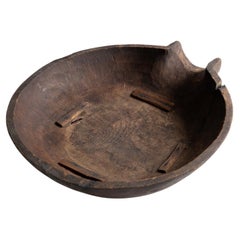
Japanese Katakuch Wood bowl / Mingei Wabisabi
Located in Sammu-shi, Chiba
If you are looking for something special, we recommend buying items selected by BROOD. We sell a carefully selected range of old Japanese items. We have seen tens of thousands of ite...
Category

Mid-20th Century Japanese Showa Japan - Asian Art and Furniture

Materials

Wood

Contemporary Japanese Blue and White Porcelain Vase by Master Artist, 2
Located in Takarazuka, JP
Unique Japanese contemporary decorative porcelain vase, intricately hand painted in cobalt blue underglaze on an elegantly shaped porcelain body, a signed work by respected award-win...
Category

21st Century and Contemporary Japanese Meiji Japan - Asian Art and Furniture

Materials

Porcelain

Set of 3 hibachi Incense burner Planters
Located in Fukuoka, JP
A rare and elegant set of three Japanese hibachi (traditional fire bowls) from the Meiji period (1868–1912), made of richly grained paulownia wood and intricately decorated with carv...
Category

20th Century Japanese Japan - Asian Art and Furniture

Materials

Belgian Black Marble, Copper

Japanese "Suiseki" with Pink color / Natural Stone Carving
Located in Sammu-shi, Chiba
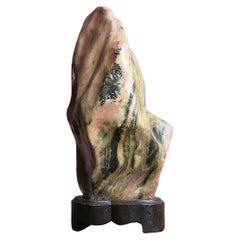
This is a stone mined in Japan. Not only in China but also in Japan from ancient times, rocks in the mountains have been shaved and stones for viewing have been quarried. Such stone...
Category

Mid-20th Century Japanese Showa Japan - Asian Art and Furniture

Materials

Stone

Japanese Blue Green Hand-Painted Porcelain Vase by Contemporary Master Artist, 2
Located in Takarazuka, JP
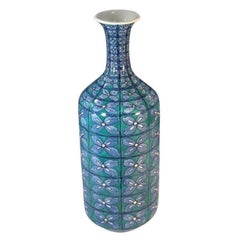
Japanese contemporary Imari Porcelain vase featuring a “flowers-in-the-wind” motif, hand-painted in blue, white and green.This elegantly shaped porcelain vase is a signed piece by a ...
Category

21st Century and Contemporary Japanese Japan - Asian Art and Furniture

Materials

Porcelain

JapaneseAntiques Terasaki kogyo, Gold background, Bamboo and plum folding screen
Located in Niiza, JP
material: paper and cloth Unfolded size: 1600 x 1660 mm Can be folded in half: 800 x 1660 mm, 6 kg Estimated packing size: (Sandwich with 12mm plywood) 10 × 95 × 185cm 30kg A bold ...
Category

20th Century Japan - Asian Art and Furniture

Materials

Paper

B22 Japanese Antiques 6panels, Silver Paper, folding Screen, black edge
Located in Niiza, JP
Silver foil folding screen Material: Paper pasted on wooden frame 1 piece: Width 595 x Height 1740 x Depth 18 mm Expanded size: Width 3610 mm Folded size: Width 615 x Height 1740 x D...
Category

20th Century Japanese Japan - Asian Art and Furniture

Materials

Paper

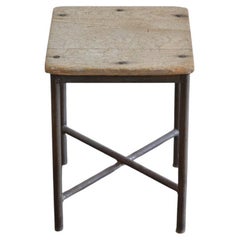
Iron Stool Used in an Old Japanese Elementary School/Made in 1965
Located in Sammu-shi, Chiba
This is a stool used at Minoya Elementary School in Gunma Prefecture, Japan. The back of the seat has the name of the school and the fact that it was built in 1965. A simple stool with an oak top and iron legs. Two plastic parts on the toe are missing, but there is no problem in use. Old school...
Category

Mid-20th Century Japanese Showa Japan - Asian Art and Furniture

Materials

Iron

Large Collotype Print by Ryunosuke Fukui from "Maiko" Series - print no 3
Located in Fukuoka, JP
A large print created by Ryunosuke Fukui, a highly acclaimed modernist artist from Japan who lived between 1923 and 1986. Fukui's art has been exhibited in many prestigious museums a...
Category

20th Century Showa Japan - Asian Art and Furniture

Materials

Other

Still Thinking About These?

All Recently Viewed