Art by Medium: Woodcut
to
1,535
3,575
505
329
179
269
Overall Width
to
Overall Height
to
52
746
3,463
602
30
104
438
303
162
215
398
164
163
121
28
2,422
589
250
215
205
115
57
44
42
25
5
3
1
1
3,414
1,301
119
2,341
1,209
888
849
616
471
462
402
392
364
351
272
243
215
212
183
175
147
133
107
4,864
184,747
97,287
78,603
77,694
170
152
57
51
45
392
2,257
1,910
1,865
Medium: Woodcut
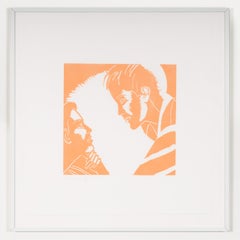
Jennifer and Eric
By Alex Katz
Located in Toronto, Ontario
Adored by collectors and art lovers the world over, Alex Katz is renowned for his elegant and distinctive version of figuration. Born in 1927, Katz has been dedicated to art-making s...
Category
1980s Pop Art Art by Medium: Woodcut
Materials
Woodcut

$6,000 Sale Price
20% Off
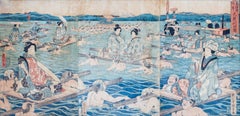
Rare Scene of Nobility on Palanquins Over Water, Ukiyo-e Style Woodcut
Located in New York, NY
Ukiyo-e Style Woodcut
Untitled, c. 1900
Woodcut print
Sight: 13 1/2 x 28 3/4 in.
Framed: 22 1/4 x 37 1/4 in.
Category
Early 1900s Other Art Style Art by Medium: Woodcut
Materials
Woodcut
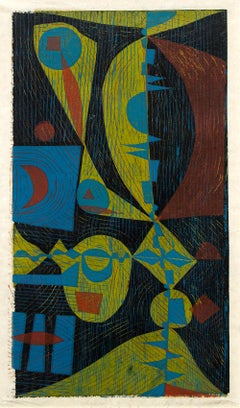
Mid-Century Modern Abstract Woodcut Print, Geometric Fine Art in Color
Located in Denver, CO
This original mid-century modern woodcut print on linen, titled "Shapes", is by renowned American artist Edward Marecak (1919–1993). A striking example of his abstract work, this pie...
Category
20th Century Abstract Geometric Art by Medium: Woodcut
Materials
Woodcut
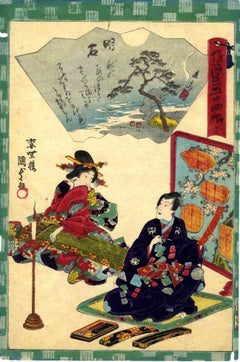
Meeting in Akashi - Woodcut Print by Utagawa Kunisada II - 1864
Located in Roma, IT
Meeting in Akashi is an original modern artwork realized by Utagawa Kunisada II and Hiroshige II in 1864.
Woodcut Print Oban Format.
From the series "Omo...
Category
19th Century Modern Art by Medium: Woodcut
Materials
Woodcut
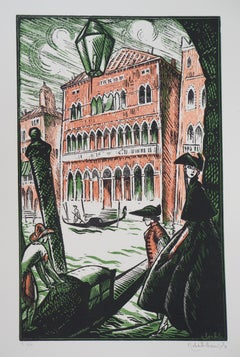
Gondolas on the Grand Canal in Venice - Original wooodcut, Handsigned
Located in Paris, IDF
Robert BONFILS
Gondolas on the Grand Canal in Venice
Original woodcut
Handsigned in pencil
Numbered /154
On vellum 32.5 x 25.5 cm (c. 13 x 10 in)
Bears the blind stamp of the edito...
Category
1920s Modern Art by Medium: Woodcut
Materials
Woodcut
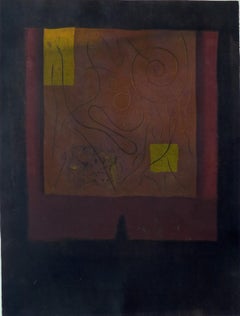
Almanac E
Located in San Francisco, CA
This Japanese woodblock print is by the noted sosaku hanga artist Hiroyuki Tajima (1911-1984). It measures 24 x 18 inches, (25 x 19.5 inches the sheet, 33.25 x 26.25 inches framed). ...
Category
1960s Abstract Art by Medium: Woodcut
Materials
Woodcut
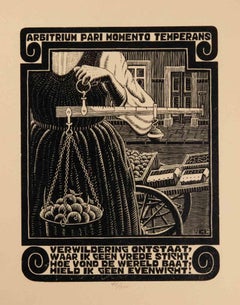
Balance - Woodcut by Maurits Cornelis Escher - 1931
Located in Roma, IT
Woodcut print realized by Escher for the series "Emblemata", and published in 1931.
On Hollande van Gelder paper.
Edition of 300.
Unsigned, as issued. Excellent condition, matted....
Category
1930s Modern Art by Medium: Woodcut
Materials
Woodcut
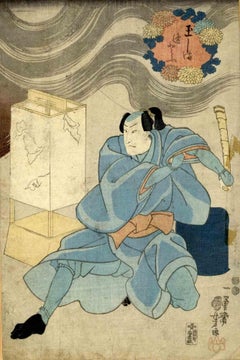
Yakushae Aizurie - Woodcut Print by Utagawa Kuniyoshi - 1840s
Located in Roma, IT
Yakushae Aizurie is an original artwork realized in 1840-1843 by Utagawa Kuniyoshi (January 1, 1798– April 14, 1861).
Woodcut Print.
Actor in the r...
Category
1850s Modern Art by Medium: Woodcut
Materials
Woodcut
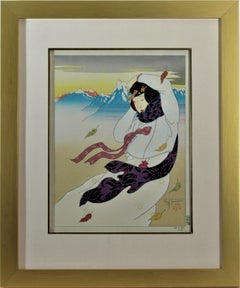
Vent du Nord, Coree
Located in San Francisco, CA
This artwork titled "Vent du Nord, Coree" 1953 is an original color woodcut by French artist Paul Jacoulet, 1896-1960. It is hand signed in pencil by the artis...
Category
Mid-20th Century Realist Art by Medium: Woodcut
Materials
Woodcut
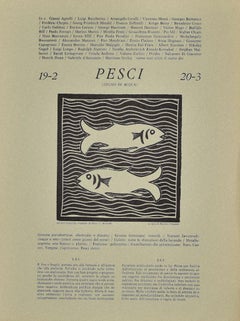
The Two Fishes - Original Woodcut by P. C. Antinori - 20th Century
Located in Roma, IT
Zodiac Signs - The Two Fish is original Black and white woodcut, realized by Italian artist Piero C. Antinori.
Excellent condition.
Written on the lower left; Original woodcut of P...
Category
20th Century Contemporary Art by Medium: Woodcut
Materials
Woodcut
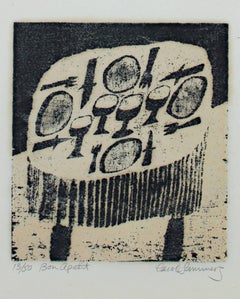
"Bon Apetit, " Original Black and White Woodcut by Carol Summers
Located in Milwaukee, WI
"Bon Apetit" is an original black and white woodcut by Carol Summers. It depicts a table set for four people. The artist signed the piece in t...
Category
1960s Art by Medium: Woodcut
Materials
Woodcut
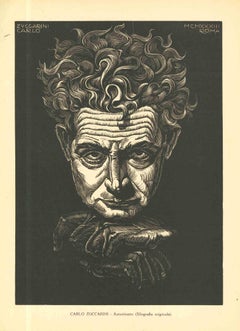
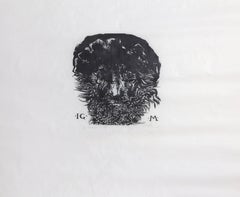
Self-Portrait - Original Woodcut by Carlo Zuccarini - Early 20th Century
Located in Roma, IT
Self-Portrait is an original woodcut print by Carlo Zuccarini in the early 20th Century.
Good conditions.
The artwork is depicted through strong strokes in a well-balanced composition
Category
Early 20th Century Modern Art by Medium: Woodcut
Materials
Woodcut
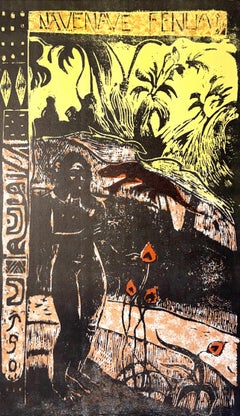
Gauguin, Delightful Land (Nave nave fenua), Gauguin (after)
By Paul Gauguin
Located in Southampton, NY
Woodcut on vélin Utopian paper. Unsigned and unnumbered, as issued. Good Condition. Notes: From the folio, Gauguin, A portfolio of 12 color woodblocks, Paul Gauguin, French, 1848-1903 from the collection of the Museum Of Fine Arts, Boston, 1946. Rendered by Albert Carman (1899-1949); published the Museum Of Fine Arts, Boston and The Studio Publications, Inc., New York and London; printed by Holme Press Inc., New York, in an edition of MMMD. Excerpted from the folio, Paul Gauguin and Emil Bernard at Pont-Aven, Brittany, in 1888, each made a bas-relief, wooden panel to decorate a piece of furniture for a friend. In order to keep a record of their designs, a few inked impressions were made on paper. The illustration at left is a reproduction of a print which is possibly one of the above mentioned. It is further possible that this experiment later gave Gauguin the idea of making woodcuts. Just as his work in painting expressed a revolt against the overemphasis on factual representation of the nineteenth century in favor of decorative pattern and color, so also his woodcuts leaned strongly to the same side of the balance. Ten of the cuts reproduced (all excepting Soyez Amoureuses and Changement de Residence), which constitute the whole of his best known series, were made at Pont-Aven beginning in the fall of 1894, after Gauguin's return from his first trip to Tahiti and after he broke his ankle. They were at first roughly cut with a common carpenter's gouge, and the flat surfaces sandpapered and engraved with a sharp in-strument, perhaps an engraver's burin. A few trial proofs were printed in black ink only. Then the hollows were deepened with a woodcutter's gouge and highlights were added. An edition of thirty to fifty impressions of each subject, with the addition of color blocks (one, two or three), was made by Louis Roy...
Category
1940s Post-Impressionist Art by Medium: Woodcut
Materials
Woodcut
$716 Sale Price
20% Off
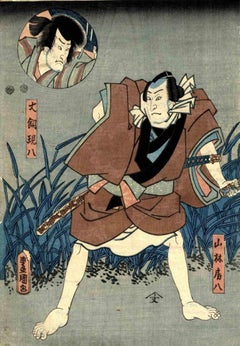
Yamabayashi Fusahachi - Woodcut Print by Utagawa Kunisada - 1860s
Located in Roma, IT
Yamabayashi Fusahachi is an original modern artwork realized by Utagawa Kunisada in 1861.
Woodcut print Oban from a multi-heet, 1861
Actor in the role of Yamabayashi Fusahachi sta...
Category
19th Century Modern Art by Medium: Woodcut
Materials
Woodcut
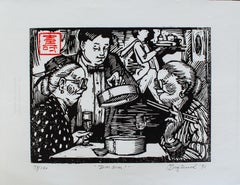
Dim Sum Woodcut by Printmaker Tim Engelland
Located in New York, NY
Tim Engelland (American, 1950-2012)
Dim Sum!, 1991
Woodcut
8 1/2 x 11 in.
Signed dated lower right: T. Engelland, '91
Titled lower middle: Dim Sum!
Numbered lower left: 73/150
A lifelong artist, Engelland specialized in oil portraits and landscapes, and also worked extensively in woodcuts and linocuts. He was born on Jan. 5, 1950, in Ames, Iowa, the son of Charles Wilbur “Will” Engelland and Patricia Fairman Engelland.. Tim grew up in Terre Haute, IN, attending Fairbanks Elementary School and Indiana State University’s Laboratory School. He knew he wanted to be an artist from an early age, and was mentored by Lab School’s John Laska, graduating in 1968.
He received a BFA from Temple University’s Tyler School of Art; was a Norfolk Fellow at Yale University; and received his MFA from Cornell University, teaching there for two years after graduation.
He spent the majority of his career, from 1976-2004, at Deerfield Academy, a prestigious preparatory school in Deerfield, Mass. There he taught art and photography, coached basketball and lacrosse, and served as faculty resident. When the school began accepting female students, Tim designed The Deerfield Girl, a bronze statue to accompany The Deerfield Boy statue standing in the school’s Memorial Building.
Along with John O’Brien and Peter Fallon, Tim founded the Deerfield Press, publisher of limited-edition illustrated poems and stories; James Dickey, John McPhee, and Seamus Heaney are among the authors whom the Press published.
For several decades, Tim served on the faculty at the Advanced Placement Summer Institute in St. Johnsbury, Vt., and as a consultant to the College Board. He spent sabbaticals in New York City and Boston, and he has exhibited in galleries in those cities and many other venues.
His work can be found in the National Library of Ireland, Boston’s Museum of Fine Arts, and in private collections worldwide. In 2004, Tim returned to Indiana. He was married to Susan Karen Carpenter...
Category
1980s Modern Art by Medium: Woodcut
Materials
Woodcut
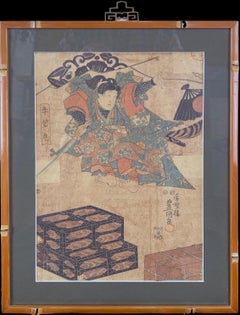
Kumasaka Chōhan to Ushiwakamaru - One of a Diptych Original Woodcut Print
Located in Soquel, CA
Kumasaka Chōhan to Ushiwakamaru is a Japanese Ukiyo-e print created between 1848 and 1854 by artist Utagawa Kunisada (Japanese, 1786-1864). The print is a Diptych, and is part of the...
Category
1850s Realist Art by Medium: Woodcut
Materials
Printer s Ink, Rice Paper, Woodcut
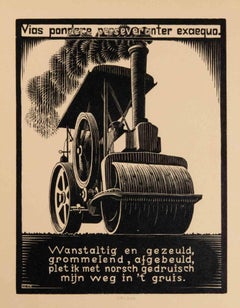
Steamroller - Woodcut by Maurits Cornelis Escher - 1931
Located in Roma, IT
Woodcut print realized by Escher for the series "Emblemata", and published in 1931.
On Hollande van Gelder paper.
Edition of 300.
Unsigned, as issued. Excellent condition, matted....
Category
1930s Modern Art by Medium: Woodcut
Materials
Woodcut
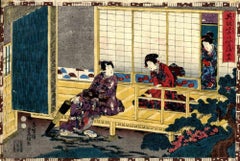
Wakana (Gengjie) - Original Woodcut Print by Utagawa Kunisada - 1850s
Located in Roma, IT
Wakana (Gengjie) is an original modern artwork realized by Utagawa Kunisada in 1850s.
Woodcut print Oban yokoe format
From the series "Sono sugata yukari no utsushie" (Faithful im...
Category
19th Century Modern Art by Medium: Woodcut
Materials
Woodcut
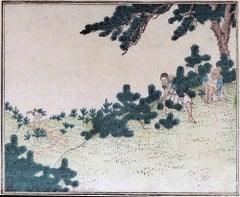
Harvesting Young Cedars - Woodcut by Utagawa Hiroshige - 19th Century
Located in Roma, IT
Harvesting Young Cedars is a lovely original woodcut print from the work of the famous Japanese master Utagawa Hiroshige from an early 19th century edition. It represents an agricult...
Category
19th Century Modern Art by Medium: Woodcut
Materials
Woodcut
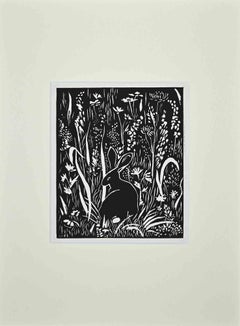
The Rabbit - Original Woodcut by Giselle Hallf - Early 20th Century
Located in Roma, IT
The Rabbit is an original woodcut print by Giselle Hallf in the first half of the 20th Century.
Good conditions.
The artwork is depicted through strong strokes in a well-balanced c...
Category
Early 20th Century Modern Art by Medium: Woodcut
Materials
Woodcut
Mabuse, Woodcut Print on Rice Paper, circa 1950 by Leonard Baskin
Located in Long Island City, NY
This woodcut print was created by American artist Leonard Baskin. Baskin is well known for his somewhat grotesque, intricate, surreal drawings and natural subject matter. This print ...
Category
1950s Surrealist Art by Medium: Woodcut
Materials
Rice Paper, Woodcut
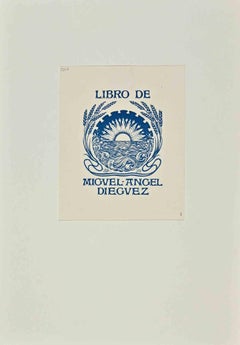
Libro de Miguel Angel Dieguez - Woodcut by Joaquín Diéguez y Díaz - 1903
Located in Roma, IT
Libro de Miguel Angel Dieguez is a Modern Artwork realized in 1903, by the Spanish Artist Joaquín Diéguez y Díaz.
Coloured woodcut on paper. Hand signed on the back
The work is g...
Category
Early 1900s Symbolist Art by Medium: Woodcut
Materials
Woodcut
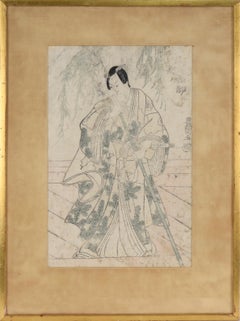
Kabuki Actor with Pine-Patterned Robe - Japanese Woodblock Print
Located in Soquel, CA
Kabuki Actor with Pine-Patterned Robe - Japanese Woodblock Print
Finely detailed woodblock by Utagawa Toyokuni (Japanese, 1769-1825). A kabuki actor is standing on a wooden deck, wearing a robe with a pine-needle pattern. He is holding a sword and a staff. In the background, tree branches hang down from out of frame.
Presented in a gold colored frame with a silk mat.
Frame size: 20"H x 14.25"W
Image size: 14"H x 8.5"W
Utagawa Toyokuni (Japanese, 1769-1825) was born in Edo, the son of Kurahashi Gorobei, a carver of dolls and puppets...
Category
Early 19th Century Impressionist Art by Medium: Woodcut
Materials
Ink, Rice Paper, Woodcut
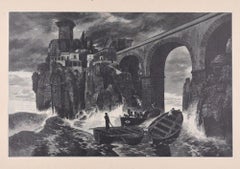
Pirates attack the Castle on the Sea - Original Woodcut by J.J. Weber - 1898
Located in Roma, IT
Image dimensions: 23 x 35 cm.
Original Title: Von Piraten überfallene Burg am Meer
Pirates attack the Castle on the sea is a black and white xylograph on Japon applied on ivory-colored paper, after Arnold Böcklin...
Category
1890s Symbolist Art by Medium: Woodcut
Materials
Woodcut
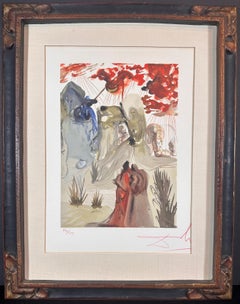
Divine Comedy Purgatory Canto 28
Located in Hollywood, FL
ARTIST: Salvador Dali
TITLE: Divine Comedy Purgatory Canto 28
MEDIUM: Woodblock
SIGNED: Hand Signed by Salvador Dali
EDITION NUMBER: 133/150
MEASUREMENTS: Paper: 13" x 10.5"
Fra...
Category
Mid-20th Century Surrealist Art by Medium: Woodcut
Materials
Woodcut
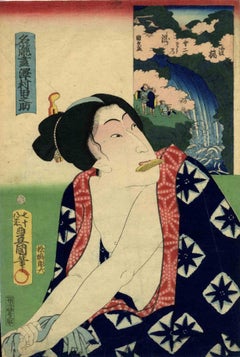
Famous Waterfalls - Woodcut by Utagawa Kunisada - 1850s
Located in Roma, IT
Famous Waterfalls is an original artwork realized in the 1850s by Utagawa Kunisada (1786-1865).
From the series "Meitaki ga". Bust portrait of the actor Sawamura Tanosuke in Onnaga...
Category
1840s Modern Art by Medium: Woodcut
Materials
Woodcut
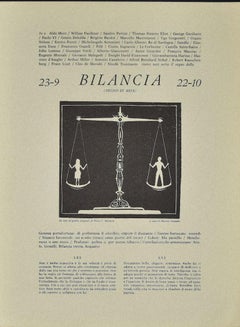
Libra - Original Woodcut by P. C. Antinori - 1970s
Located in Roma, IT
Zodiac Signs - Libra is original Black and white woodcut, realized by Italian artist Piero C. Antinori.
Excellent condition.
Written on the lower left; Original xilography of Piero...
Category
1970s Art by Medium: Woodcut
Materials
Woodcut
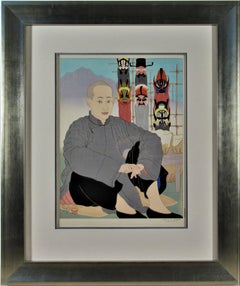
Vendeur de Masques Chinois
Located in San Francisco, CA
This artwork titled "Le Vendeur de Masques Chinois" {The Chinese Masks Seller) 1940 is an original color woodcut by French artist Paul Jacoulet, 1896-1960. It is hand signed in penci...
Category
Mid-20th Century Realist Art by Medium: Woodcut
Materials
Woodcut
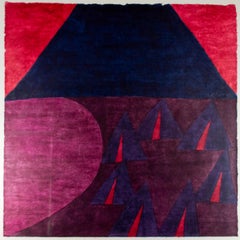
"Little Wolf
s Last Camp, " Colored Woodblock A/P signed by Carol Summers
Located in Milwaukee, WI
"Little Wolf's Last Camp" is a colored woodblock A/P signed by Carol Summers. In the image, a mountain looms over a circle of teat the edge of a lake, a scene likely inspired by the life events of the Northern Cheyenne Chief Little Wolf (c. 1820-1904) and his leadership during the Northern Cheyenne Exodus. The drama of the image is enhanced by Summers' signature printmaking technique, which allows the ink from the woodblock to seep through the paper, blurring the edges of each form.
Frame: 37 x 37 in
This is an artist's proof from the edition of 100
Carol Summers (1925-2016) has worked as an artist throughout the second half of the 20th century and into the first years of the next, outliving most of his mid-century modernist peers. Initially trained as a painter, Summers was drawn to color woodcuts around 1950 and it became his specialty thereafter. Over the years he has developed a process and style that is both innovative and readily recognizable. His art is known for it’s large scale, saturated fields of bold color, semi-abstract treatment of landscapes from around the world and a luminescent quality achieved through a printmaking process he invented.
In a career that has extended over half a century, Summers has hand-pulled approximately 245 woodcuts in editions that have typically run from 25 to 100 in number. His talent was both inherited and learned. Born in 1925 in Kingston, a small town in upstate New York, Summers was raised in nearby Woodstock with his older sister, Mary. His parents were both artists who had met in art school in St. Louis. During the Great Depression, when Carol was growing up, his father supported the family as a medical illustrator until he could return to painting. His mother was a watercolorist and also quite knowledgeable about the different kinds of papers used for various kinds of painting. Many years later, Summers would paint or print on thinly textured paper originally collected by his mother.
From 1948 to 1951, Carol Summers trained in the classical fine and studio arts at Bard College and at the Art Students League of New York. He studied painting with Steven Hirsh and printmaking with Louis Schanker. He admired the shapes and colors favored by early modernists Paul Klee (Sw: 1879-1940) and Matt Phillips (Am: b.1927- ). After graduating, Summers quit working as a part-time carpenter and cabinetmaker (which had supported his schooling and living expenses) to focus fulltime on art. That same year, an early abstract, Bridge No. 1 was selected for a Purchase Prize in a competition sponsored by the Brooklyn Museum.
In 1952, his work (Cathedral, Construction and Icarus) was shown the first time at the Museum of Modern Art in New York City in an exhibition of American woodcuts. In 1954, Summers received a grant from the Italian government to study for a year in Italy. Woodcuts completed soon after his arrival there were almost all editions of only 8 to 25 prints, small in size, architectural in content and black and white in color. The most well-known are Siennese Landscape and Little Landscape, which depicted the area near where he resided. Summers extended this trip three more years, a decision which would have significant impact on choices of subject matter and color in the coming decade.
After returning from Europe, Summers’ images continued to feature historical landmarks and events from Italy as well as from France, Spain and Greece. However, as evidenced in Aetna’s Dream, Worldwind and Arch of Triumph, a new look prevailed. These woodcuts were larger in size and in color. Some incorporated metal leaf in the creation of a collage and Summers even experimented with silkscreening. Editions were now between 20 and 50 prints in number. Most importantly, Summers employed his rubbing technique for the first time in the creation of Fantastic Garden in late 1957.
Dark Vision of Xerxes, a benchmark for Summers, was the first woodcut where Summers experimented using mineral spirits as part of his printmaking process. A Fulbright Grant as well as Fellowships from the Louis Comfort Tiffany Foundation and the Guggenheim Foundation followed soon thereafter, as did faculty positions at colleges and universities primarily in New York and Pennsylvania. During this period he married a dancer named Elaine Smithers with whom he had one son, Kyle. Around this same time, along with fellow artist Leonard Baskin, Summers pioneered what is now referred to as the “monumental” woodcut. This term was coined in the early 1960s to denote woodcuts that were dramatically bigger than those previously created in earlier years, ones that were limited in size mostly by the size of small hand-presses. While Baskin chose figurative subject matter, serious in nature and rendered with thick, striated lines, Summers rendered much less somber images preferring to emphasize shape and color; his subject matter approached abstraction but was always firmly rooted in the landscape.
In addition to working in this new, larger scale, Summers simultaneously refined a printmaking process which would eventually be called the “Carol Summers Method” or the “ Carol Summers Technique”. Summers produces his woodcuts by hand, usually from one or more blocks of quarter-inch pine, using oil-based printing inks and porous mulberry papers. His woodcuts reveal a sensitivity to wood especially its absorptive qualities and the subtleties of the grain. In several of his woodcuts throughout his career he has used the undulating, grainy patterns of a large wood plank to portray a flowing river or tumbling waterfall. The best examples of this are Dream, done in 1965 and the later Flash Flood Escalante, in 2003. In the majority of his woodcuts, Summers makes the blocks slightly larger than the paper so the image and color will bleed off the edge.
Before printing, he centers a dry sheet of paper over the top of the cut wood block or blocks, securing it with giant clips. Then he rolls the ink directly on the front of the sheet of paper and pressing down onto the dry wood block or reassembled group of blocks. Summers is technically very proficient; the inks are thoroughly saturated onto the surface of the paper but they do not run into each other. The precision of the color inking in Constantine’s Dream in 1969 and Rainbow Glacier in 1970 has been referred to in various studio handbooks. Summers refers to his own printing technique as “rubbing”. In traditional woodcut printing, including the Japanese method, the ink is applied directly onto the block. However, by following his own method, Summers has avoided the mirror-reversed image of a conventional print and it has given him the control over the precise amount of ink that he wants on the paper. After the ink is applied to the front of the paper, Summers sprays it with mineral spirits, which act as a thinning agent. The absorptive fibers of the paper draw the thinned ink away from the surface softening the shapes and diffusing and muting the colors. This produces a unique glow that is a hallmark of the Summers printmaking technique. Unlike the works of other color field artists or modernists of the time, this new technique made Summers’ extreme simplification and flat color areas anything but hard-edged or coldly impersonal.
By the 1960s, Summers had developed a personal way of coloring and printing and was not afraid of hard work, doing the cutting, inking and pulling himself. In 1964, at the age of 38, Summers’ work was exhibited for a second time at the Museum of Modern Art. This time his work was featured in a one-man show and then as one of MOMA’s two-year traveling exhibitions which toured throughout the United States. In subsequent years, Summers’ works would be exhibited and acquired for the permanent collections of multiple museums throughout the United States, Europe and Asia. Summers’ familiarity with landscapes throughout the world is firsthand. As a navigator-bombardier in the Marines in World War II, he toured the South Pacific and Asia.
Following college, travel in Europe and subsequent teaching positions, in 1972, after 47 years on the East Coast, Carol Summers moved permanently to Bonny Doon in the Santa Cruz Mountains in Northern California. There met his second wife, Joan Ward Toth, a textile artist who died in 1998; and it was here his second son, Ethan was born. During the years that followed this relocation, Summers’ choice of subject matter became more diverse although it retained the positive, mostly life-affirming quality that had existed from the beginning. Images now included moons, comets, both sunny and starry skies, hearts and flowers, all of which, in one way or another, remained tied to the landscape.
In the 1980s, from his home and studio in the Santa Cruz mountains, Summers continued to work as an artist supplementing his income by conducting classes and workshops at universities in California and Oregon as well as throughout the Mid and Southwest. He also traveled extensively during this period hiking and camping, often for weeks at a time, throughout the western United States and Canada. Throughout the decade it was not unusual for Summers to backpack alone or with a fellow artist into mountains or back country for six weeks or more at a time. Not surprisingly, the artwork created during this period rarely departed from images of the land, sea and sky. Summers rendered these landscapes in a more representational style than before, however he always kept them somewhat abstract by mixing geometric shapes with organic shapes, irregular in outline. Some of his most critically acknowledged work was created during this period including First Rain, 1985 and The Rolling Sea, 1989. Summers received an honorary doctorate from his alma mater, Bard College in 1979 and was selected by the United States Information Agency to spend a year conducting painting and printmaking workshops at universities throughout India. Since that original sabbatical, he has returned every year, spending four to eight weeks traveling throughout that country.
In the 1990s, interspersed with these journeys to India have been additional treks to the back roads and high country areas of Mexico, Central America, Nepal, China and Japan. Travel to these exotic and faraway places had a profound influence on Summers’ art. Subject matter became more worldly and nonwestern as with From Humla to Dolpo, 1991 or A Former Life of Budha, 1996, for example. Architectural images, such as The Pillars of Hercules, 1990 or The Raja’s Aviary, 1992 became more common. Still life images made a reappearance with Jungle Bouquet in 1997. This was also a period when Summers began using odd-sized paper to further the impact of an image.
The 1996 Night, a view of the earth and horizon as it might be seen by an astronaut, is over six feet long and only slightly more than a foot-and-a-half high. From 1999, Revuelta A Vida (Spanish for “Return to Life”) is pie-shaped and covers nearly 18 cubic feet. It was also at this juncture that Summers began to experiment with a somewhat different palette although he retained his love of saturated colors. The 2003 Far Side of Time is a superb example of the new direction taken by this colorist.
At the turn of the millennium in 1999, “Carol Summers Woodcuts...
Category
1970s Contemporary Art by Medium: Woodcut
Materials
Woodcut
$13,500 Sale Price
20% Off
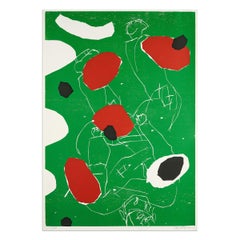
Georg Baselitz, Puck
Located in Hamburg, DE
Georg Baselitz (German, born 1938)
Puck, 1993
Medium: Woodcut on wove paper
Dimensions: 103 x 72 cm
Edition of 300: Hand-signed and numbered
Catalogue raisonné: WVZ 1008
Condit...
Category
Late 20th Century Neo-Expressionist Art by Medium: Woodcut
Materials
Woodcut
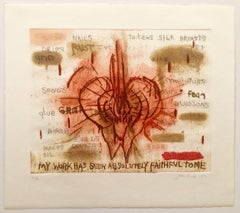
My Work
By Joan Snyder
Located in New York, NY
Joan Snyder has been called an autobiographical, even confessional artist, who draws from her experiences and surroundings to create her paintings. While her subjects vary widely, Sn...
Category
1990s Expressionist Art by Medium: Woodcut
Materials
Etching, Woodcut
$3,500
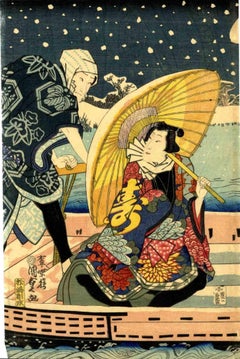
Kabuki - Woodcut by Utagawa Kunisada II - 1862
Located in Roma, IT
Kabuki is an original artwork realized in 1862 by Utagawa Kunisada II (1823-1880).
Boatman with elegant passenger in snowy landscape.
Sign: Kochoro Kuni...
Category
1860s Modern Art by Medium: Woodcut
Materials
Woodcut
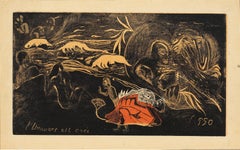
L
Univers est créé
By Paul Gauguin
Located in London, GB
Gauguin came back to Paris in August 1893 from his first stay in Tahiti, In the luggage numerous drawings and preparatory work for a book designed by him. In collaboration with the writer Charles Morice, parts of the text "NOA NOA" were created in Paris in the winter of 1893-1894. The plan was for a preferred edition with 10 almost identical woodcuts, all of which were made in the winter of 1893-1894. According to the individual proto-prints by Gauguin, the artist left the artist to Louis Roy...
Category
1890s Art by Medium: Woodcut
Materials
Woodcut
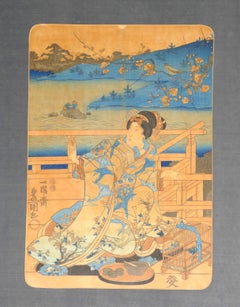
Woman - Woodcut by Utagawa Kunisada - 1830 ca.
Located in Roma, IT
Japanese Woman is a beautiful print realized around 1830 by Utagawa Kunisada.
Original colored woodblock print.
This wonderful modern artwork represents a portrait of a Japan woman...
Category
1830s Modern Art by Medium: Woodcut
Materials
Woodcut
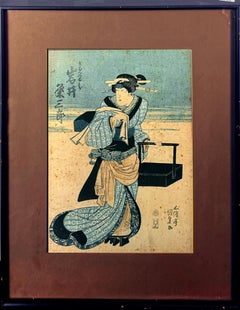
Ichimura Uzaemon XIII - actor as Okaji of Gion, 1862 "The Six Poetry Immortals"
Located in Soquel, CA
Ichimura Uzaemon XIII - actor as Okaji of Gion, 1862 "The Six Poetry Immortals"
A Japanese Ukiyo-e woodcut print created circa 1862 by artist Utagawa Kunisada (Japanese, 1786-1864). ...
Category
1850s Realist Art by Medium: Woodcut
Materials
Printer s Ink, Rice Paper, Woodcut
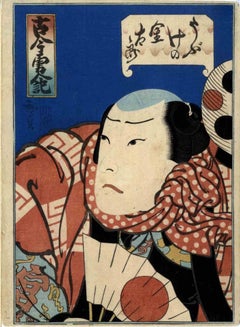
Arashi Rinosuke II - Woodcut Print by Utagawa Hirosada - 1848
Located in Roma, IT
Arashi Rinosuke II is an original modern artwork realized by Utagawa Hirosada (Japanese, active 1825–75) in 1848.
Woodcut Print Chuban format, 1848
From the series "Kokon yujin ki"...
Category
19th Century Modern Art by Medium: Woodcut
Materials
Woodcut
$463 Sale Price
40% Off
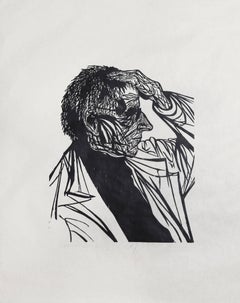
Portrait of an Irishman, Woodcut Print on Rice Paper, circa 1952
Located in Long Island City, NY
This woodcut print was created by American artist Leonard Baskin. Baskin is well known for his somewhat grotesque, intricate, surreal drawings and natural subject matter. This print ...
Category
1950s Surrealist Art by Medium: Woodcut
Materials
Rice Paper, Woodcut
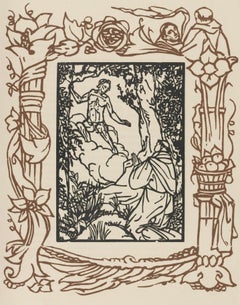
Composition (Morane, N° 100), Les Petites Fleurs de St. Françoise, Émile Bernard
Located in Southampton, NY
Wood engraving on vergé d'Arches paper. Inscription: unsigned and unnumbered, as issued. Good condition. Notes: From the volume, Les Petites Fleurs de St. François, 1928. Published b...
Category
1920s Post-Impressionist Art by Medium: Woodcut
Materials
Woodcut
Sidney Chafetz, The Stroller (Wallace Stevens)
Located in New York, NY
Sidney Chafetz was known for his clever compositions and his many portraits, all made in the most 'difficult to control' medium of woodcut.. This charmi...
Category
1970s American Modern Art by Medium: Woodcut
Materials
Woodcut
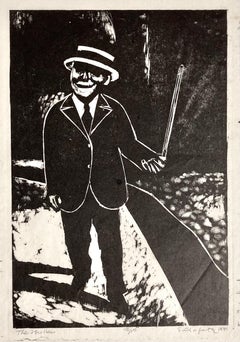
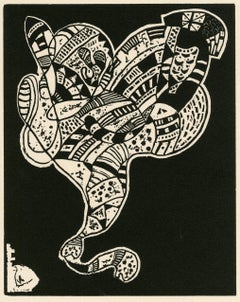
Plate 12
Located in Fairlawn, OH
Plate 12
From: 10 Origi, 1942
Signed in the block with the artist's initials lower left (printed)
From: 10 Origin
Not from the First edition 100, published by Allianz-Verlag, Zurich,...
Category
1970s Expressionist Art by Medium: Woodcut
Materials
Woodcut
Old Samurai - Woodcut Print after Utagawa Kunisada - Late 19th Century
Located in Roma, IT
Old Samurai is a Woodcut print realized in late 19 century after Utagawa Kunisada.
Good condition and Beautiful colored woodblock print, included a cardboard passpartout (46x32 cm...
Category
Late 19th Century Modern Art by Medium: Woodcut
Materials
Woodcut
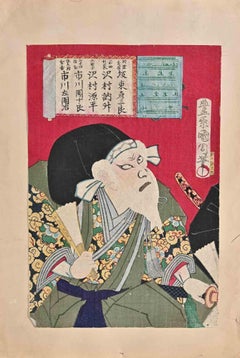
"Sun Saburo Matsugaya" - Mid 19th Century Figurative Japanese Woodblock Print
Located in Soquel, CA
"Sun Saburo Matsugaya" - Mid 19th Century Figurative Japanese Woodblock Print
Beautiful mid 19th century figural Japanese woodblock print of a seated man with lilies in the background by Utagawa Toyokuni III (Kunisada) (Japanese, 1786-1864/5). Artist's chop is in the lower right corner of the piece. The actor is Magosaburo Matsugaya from the play "Katakiuchi Rumors"
Presented in a new grey-blue mat with foamcore backing.
Mat size: 21"H x 16"W
Paper size: 14"H x 9.75"W
During his lifetime Kunisada Utagawa...
Category
1850s Edo Art by Medium: Woodcut
Materials
Paper, Ink, Woodcut
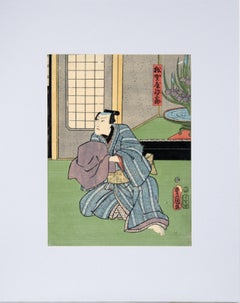
"Nightrise" Public Works Art Color Woodcut
By Ruth Chaney
Located in Soquel, CA
Bold woodblock serigraph by Ruth Chaney (American, 1908-1973). Numbered (#17), titled, signed, and dated along the bottom edge. The Smithsonian American Art Museum has an edition of...
Category
1930s American Impressionist Art by Medium: Woodcut
Materials
Paper, Ink, Woodcut
$1,600 Sale Price
20% Off
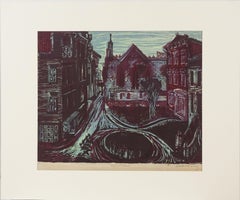
Charles Pont, Splicing
Located in New York, NY
An old sailor is shown at work on a what must be a huge sailing vessel. He's splicing, or joining ropes together -- probably still a useful skill in the mi...
Category
1930s Ashcan School Art by Medium: Woodcut
Materials
Woodcut
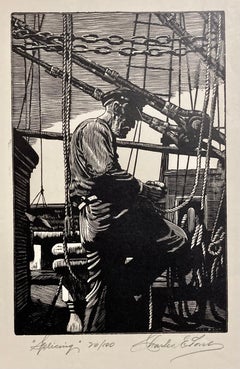
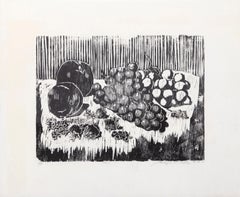
Fruits, Modern Woodcut on thin tissue paper by Biagio Civale
Located in Long Island City, NY
Biagio Civale, Italian/American (1936 - ) - Fruits, Year: 1991, Medium: Woodcut on thin tissue paper, Signed, numbered, and dated in pencil, Edition: A/P, Image Size: 11.5 x 15.5...
Category
1990s Modern Art by Medium: Woodcut
Materials
Woodcut
Henry R. Diamond, Whaler
By Henry R. Diamond
Located in New York, NY
Really a wood engraving rather than a woodcut, Henry R. Diamond's Whaler is majestic. It is signed and titled in pencil.
Category
Early 20th Century American Modern Art by Medium: Woodcut
Materials
Woodcut

Bernard, Composition, Éloge de Émile Bernard (after)
Located in Southampton, NY
Woodcut on vélin d’Arches paper. Inscription: unsigned and unnumbered, as issued. Good condition. Notes: From the volume, Éloge de Émile Bernard, 1962. Published by Editions d'Art Ma...
Category
1960s Post-Impressionist Art by Medium: Woodcut
Materials
Woodcut

$796 Sale Price
20% Off
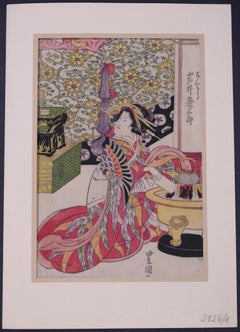
The Japanese Tea Ritual - Woodcut print - 1850s
Located in Roma, IT
The Japanese tea ritual is a breathtaking ukiyo-e, a original woodblock print on paper, realized at the half of trhe 19th century by the great master, Utagawa Toyokuni II...
Category
1850s Modern Art by Medium: Woodcut
Materials
Paper, Woodcut
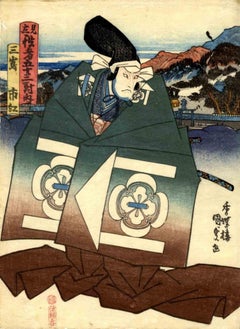
Yakushae - Woodcut Print by Utagawa Kunisada - 1840s
Located in Roma, IT
Yakushae is an original modern artwork realized by Utagawa Kunisada in 1840s
Woodcut print Chuban format.
From the series "Mitate Yakusha gojusan tsui no uchi" (Actors in front of ...
Category
19th Century Modern Art by Medium: Woodcut
Materials
Woodcut
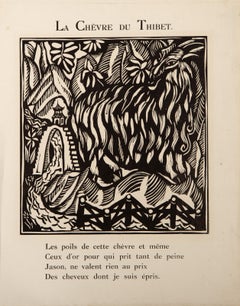
La Chevre Du Thibet, Impressionist Woodblock by Raoul Dufy
By Raoul Dufy
Located in Long Island City, NY
Raoul Dufy, French (1877 - 1953) - La Chevre Du Thibet, Year: circa 1911, Medium: Woodblock, Image Size: 8 x 7.5 inches, Size: 13 x 10 in. (33.02 x 25.4 cm), Description: From the ...
Category
1910s Impressionist Art by Medium: Woodcut
Materials
Woodcut
"Gertrude" - Eleven Color Woodcut on Laid Rice Paper 2/45
Located in Soquel, CA
"Gertrude" - Eleven Color Woodcut on Laid Rice Paper 2/45
Portrait of a woman by artist, Dan Miller (American, b. 1928) made by layers of color in woodcuts in Miller's signature sty...
Category
1980s Contemporary Art by Medium: Woodcut
Materials
Rice Paper, Laid Paper, Woodcut
$440 Sale Price
20% Off
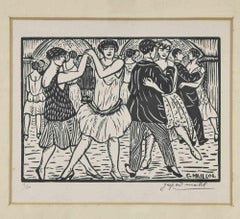
Dance Hall - Woodcut by Gaspard Maillol - Early 20th Century
Located in Roma, IT
Dance hall is a woodcut print realized by Gaspard Maillol (1880-1946).
Hand signed by the artist on the lower margin. Edition 19/160.
Gaspard Maillol , born on July 10 , 1880 in Ba...
Category
Early 20th Century Modern Art by Medium: Woodcut
Materials
Woodcut
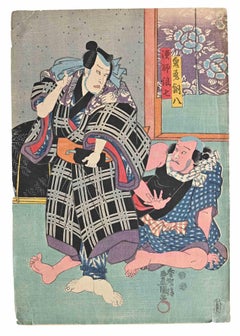
Kabuki Scene - Woodblock Print by Utagawa Kunisada - Mid-19th Century
Located in Roma, IT
Kabuki Scene is an original Woodcut print realized in mid 19 century by Utagawa Kunisada.
Good condition and Beautiful colored woodblock print.
This wonderful modern artwork repr...
Category
Mid-19th Century Modern Art by Medium: Woodcut
Materials
Woodcut
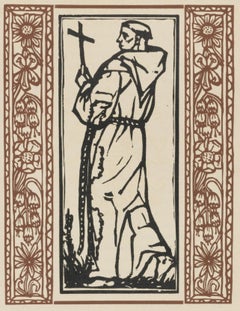
Composition (Morane, N° 100), Les Petites Fleurs de St. Françoise, Émile Bernard
Located in Southampton, NY
Wood engraving on vergé d'Arches paper. Inscription: unsigned and unnumbered, as issued. Good condition. Notes: From the volume, Les Petites Fleurs de St. François, 1928. Published b...
Category
1920s Post-Impressionist Art by Medium: Woodcut
Materials
Woodcut
The Actor Nakamura Shikan II - Woodcut Print by Utagawa Hirosada - 1850
Located in Roma, IT
The Actor Nakamura Shikan II is an original modern artwork realized by Utagawa Hirosada (Japanese, active 1825–75) in 1850.
Original woodcut print chuban format, 1850. Signed Hirosada. Publisher: Kagawa. From the series "Kokon yujin ki" (Transcription on past and present heroes). The actor Nakamura Shikan II as Danshichi Kurobei in the play Natsumatsuri Naniwa kagami.
Excellent impression, fresh in colour, with blindstamping (floral design), visible wood grain (grey kimono...
Category
19th Century Modern Art by Medium: Woodcut
Materials
Woodcut
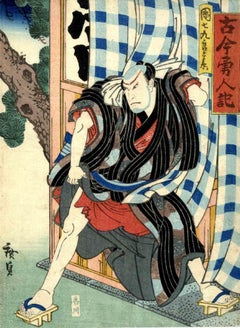
A Rural Genji - Woodcut by Utagawa Kunisada - 1829-1842
Located in Roma, IT
A rural Genji is an original artwork realized in 1829-1842 by Utagawa Kunisada (1786-1865).
Illustrated book in two volumes. Book title "Nise Murasaki Inaka Jenji", 9th instalment....
Category
19th Century Modern Art by Medium: Woodcut
Materials
Woodcut
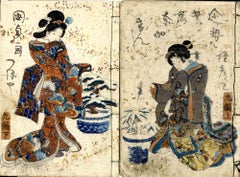
The Garden of Love (after Peter Paul Rubens [1577-1640]
Located in Fairlawn, OH
The Garden of Love (after Peter Paul Rubens [1577-1640])
Woodcut diptych, c. 1633-1636
Each of the two sheets is signed in the plate lower right
A posthumous impression with tiny wor...
Category
17th Century Old Masters Art by Medium: Woodcut
Materials
Woodcut
![The Garden of Love (after Peter Paul Rubens [1577-1640]](https://a.1stdibscdn.com/christoffel-jegher-1596-1652-3-netherlands-prints-works-on-paper-the-garden-of-love-after-peter-paul-rubens-1577-1640-for-sale/a_140/a_147163221719706543029/FA1849_montage_master.jpg?width=240 "Christoffel Jegher - The Garden of Love (after Peter Paul Rubens [1577-1640]")
Blue Trees
Located in Bournemouth, Dorset
Martyn Brewster (b.1952)
'Blue Trees '
Carborundum & relief print
2025
Image 20.0 x20.0 cm
Edition 60
Unframed
Martyn Brewster’s abstract paintings are strongly linked to the Englis...
Category
2010s Abstract Art by Medium: Woodcut
Materials
Woodcut
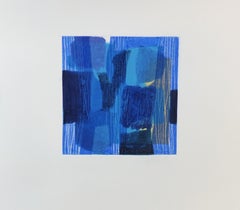
Canna Lily
Located in Fairlawn, OH
Canna Lily
Color woodcut, 1939
Unsigned (as usual)
Publisher: Takemura Hideo
(active Yokohama 1926-1939)
Format: oban
Condition: Excellent
Image/Sheet size: 15 5/8 x 11 inches
Provenance: Robert O. Muller
There is little biographical data available about the Japanese printmaker Hodo Nishimura...
Category
1930s Modern Art by Medium: Woodcut
Materials
Woodcut
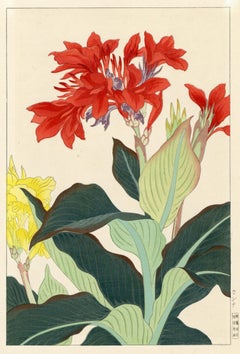
Portrait of the Actor Nakamura Shikan - Woodcut Print by Masunao - 1847
Located in Roma, IT
Half-length portrait of the actor Nakamura Shikan is an original modern artwork realized by Masunao in 1847.
Original Woodcut Print Chuban Format, 1847.
From the series "Shukoku se...
Category
19th Century Modern Art by Medium: Woodcut
Materials
Woodcut
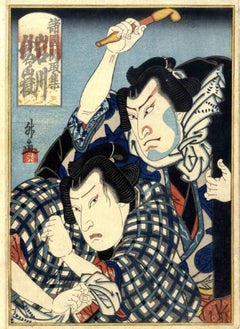
Woodcut art for sale on 1stDibs.
Find a wide variety of authentic Woodcut art available on 1stDibs. While artists have worked in this medium across a range of time periods, art made with this material during the 21st Century is especially popular. If you’re looking to add art created with this material to introduce a provocative pop of color and texture to an otherwise neutral space in your home, the works available on 1stDibs include elements of orange, yellow, purple, blue and other colors. There are many well-known artists whose body of work includes ceramic sculptures. Popular artists on 1stDibs associated with pieces like this include Mino Maccari, Utagawa Kunisada (Toyokuni III), Eric Gill, and Utagawa Hiroshige. Frequently made by artists working in the Modern, Contemporary, all of these pieces for sale are unique and many will draw the attention of guests in your home. Not every interior allows for large Woodcut art, so small editions measuring 0.04 inches across are also available