Art by Medium: Woodcut
to
1,533
3,575
505
329
179
269
Overall Width
to
Overall Height
to
52
746
3,463
602
30
104
438
303
162
215
398
164
163
121
28
2,422
589
250
215
205
115
57
44
42
25
5
3
1
1
3,414
1,301
119
2,341
1,209
888
849
616
471
462
402
392
364
351
272
243
215
212
183
175
147
133
107
4,864
184,751
97,290
78,601
77,690
170
152
57
51
45
392
2,257
1,910
1,865
Medium: Woodcut
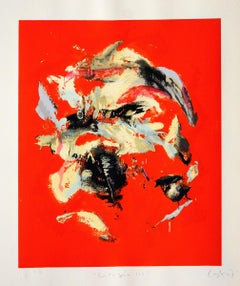
Jose Ignacio Cervantes, ¨Cirugia III¨, 2007, Woodcut, 22.4x18.9 in
Located in Miami, FL
Jose Ignacio Cervantes (Mexico, 1969)
'Cirugia III', 2007
woodcut on paper Guarro Super Alpha 250g.
22.5 x 18.9 in. (57 x 48 cm.)
ID: CEJ-101
Unframed
Category
Early 2000s Contemporary Art by Medium: Woodcut
Materials
Paper, Woodcut
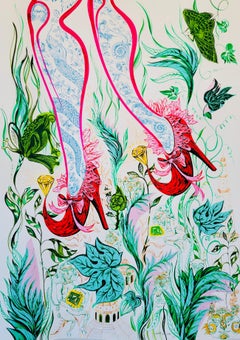
Surrealist Woodblock Print Royal College of Art LGBTQ+ Female Magic Red Shoes
By Isabel Rock
Located in Norfolk, GB
Isabel Rock is a creator of contemporary fairy tales. A graduate of the Royal College of Art in London, her work is an explosion of strange occurrences while a surreal narrative take...
Category
2010s Surrealist Art by Medium: Woodcut
Materials
Archival Ink, Mixed Media, Archival Paper, Woodcut
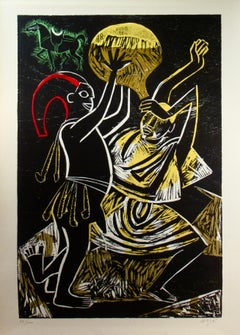
"Lendas Africanas Da Bahia" from the suite.
Located in San Francisco, CA
This artwork titled " Lendas Africanas Da Bahia" from the suite, 1978, is an original colors woodcut by renown Brazilian/Argentinian artist Hector Julio Paride Barnabo Carybe, 1911-1997. It is hand signed and numbered 83/200 in pencil by the artist. The Wood block mark (image) is 23.65 x 15.75 inches, sheet size is 26.75 x 19 inches. It is in excellent condition, has never been framed. It will be shipped in a 8 inches diameter heavy duty tube.
About the artist:
Héctor Julio Páride Bernabó (7 February 1911 – 2 October 1997) was an Argentine-Brazilian artist, researcher, writer, historian and journalist. His nickname and artistic name, Carybé, a type of piranha, comes from his time in the scouts. He died of heart failure after the meeting of a candomblé community's lay board of directors, the Cruz Santa Opô Afonjá Society, of which he was a member.
Quick Facts Born, Died ...
Carybé
Born
Héctor Julio Páride Bernabó
7 February 1911
Lanús, Argentina
Died
2 October 1997 (aged 86)
Salvador, Bahia, Brazil
Nationality
Brazilian
Known for
Painter, engraver, draughtsman, illustrator, potter, sculptor, mural painter, researcher, historian and journalist
Close
He produced thousands of works, including paintings, drawings, sculptures and sketches. He was an Obá de Xangô, an honorary position at Ilê Axé Opô Afonjá.
Orixá Panels in the Afro-Brazilian Museum in Salvador
Some of Carybé's work can be found in the Afro-Brazilian Museum in Salvador: 27 cedar panels representing different orixás or divinities of the Afro-Brazilian religion candomblé. Each panel shows a divinity with their associated implements and animal. The work was commissioned by the former Banco da Bahia S.A., now Banco BBM S.A., which originally installed them in its branch on Avenida Sete de Setembro in 1968.
Murals at Miami International Airport
American Airlines, Odebrecht and the Miami-Dade Aviation Department partnered to install two of Carybé's murals at Miami International Airport. They have been displayed in the American Airlines terminal at John F. Kennedy International Airport in New York since 1960. The 16.5 x 53-foot murals were accredited when Carybé won the first and the second prize in a contest of public art pieces for JFK airport.
As its terminal at that airport was due for demolition, American Airlines donated the murals to Miami-Dade County, and Odebrecht invested in a project to remove, restore, transport and install the murals at Miami International Airport.
The mural "Rejoicing and Festival of the Americas" portrays colorful scenes from popular festivals throughout the Americas, and "Discovery and Settlement of the West" depicts the pioneers’ journey into the American West.
Carybé's Woodcuts in Gabriel García Márquez's Books
Carybé illustrated four books by the Colombian writer Gabriel García Márquez, including One Hundred Years of Solitude, The Autumn of the Patriarch, Chronicle of a Death Foretold, and Love in the Time of Cholera "Carybé: um mestre da cultura baiana". ArqBahia Arquitetura, design, arte e lifestyle (in Brazilian Portuguese). 26 April 2023.. In particular, the woodcuts in One Hundred Years of Solitude are well-known for providing a visual image of the fictional town of Macondo, where the story takes place. The illustrations depict the colorful and winding houses, the railway bridge, and the hot and humid climate of the region, contributing to the reader's immersion in the story.
Carybé's woodcuts are, therefore, an important part of Gabriel García Márquez's literary legacy, bringing a visual dimension to his stories that further enriches the reader's experience.
Timeline
1911 — Birth in Lanús, Argentina.
1919 — Moved to Brazil.
1921 — The name Carybé is first given to him by the Clube do Flamengo scouts group, in Rio de Janeiro.
1925 — Beginning of his artistic endeavours, going to the pottery workshop of his elder brother, Arnaldo Bernabó, in Rio de Janeiro.
1927–1929 — Studies at the National School of Fine Arts, in Rio de Janeiro.
1930 — Worked for the newspaper Noticias Gráficas, in Buenos Aires, Argentina.
1935–1936 — Works with the writer Julio Cortázar and as a draughtsman for the El Diario newspaper.
1938 — Sent to Salvador by newspaper Prégon.
1939 — First collective exhibition, with the artist Clemente Moreau, at the Buenos Aires City Museum of Fine Arts, Argentina; illustrates the book Macumba, Relatos de la Tierra Verde, by Bernardo Kardon, published by Tiempo Nuestro.
1940 — Illustrates the book Macunaíma, by Mário de Andrade.
1941 — Draws the Esso Almanach, the payment for which allows him to set on a long journey through Uruguay, Brazil, Bolivia, and Argentina.
1941–1942 — Study trip around several South American countries.
1942 — Illustration for the book La Carreta by Henrique Amorim, published by El Ateneo (Buenos Aires, Argentina).
1943 — Together with Raul Brié, translates the book Macunaíma, by Mário de Andrade, into Spanish; produces the illustrations for the works Maracatu, Motivos Típicos y Carnavalescos, by Newton Freitas, published by Pigmaleon, Luna Muerta, by Manoel Castilla, published by Schapire, and Amores de Juventud, by Casanova Callabero; also publishes and illustrates Me voy al Norte, for the quarterly magazine Libertad Creadora; awarded First Prize by the Cámara Argentina del Libro (Argentine Book Council) for the illustration of the book Juvenília, by Miguel Cané (Buenos Aires, Argentina).
1944 — Illustrates the books The Complete Poetry of Walt Whitmann and A Cabana do Pai Tomás, both published by Schapire ; as well as and Los Quatro Gigantes del Alma by Mira y Lopez, Salvador BA; attends capoeira classes, visits candomblé meetings and makes drawings and paintings.
1945 — Does the illustrations for Daniel Defoe's Robinson Crusoe, for the Viau publishing house.
1946 — Helps in setting up the Tribuna da Imprensa newspaper, in Rio de Janeiro.
1947 — Works for the O Diário Carioca newspaper, in Rio de Janeiro.
1948 — Produces texts and illustrations for the book Ajtuss, Ediciones Botella al Mar (Buenos Aires, Argentina).
1949–1950 — Invited by Carlos Lacerda to work at the Tribuna da Imprensa, in Rio de Janeiro.
1950 — Invited by the Education Secretary Anísio Teixeira, moves to Bahia, and produces two panels for the Carneiro Ribeiro Education Center (Park School), in Salvador, Bahia.
1950–1997 — Settles in Salvador, Bahia.
1950–1960 — Actively participate in the plastic arts renewal movement, alongside Mário Cravo Júnior, Genaro de Carvalho, and Jenner Augusto.
1951 — Produces texts and illustrations for the works of the Coleção Recôncavo, published by Tipografia Beneditina and illustrations for the book, Bahia, Imagens da Terra e do Povo, by Odorico Tavares, published by José Olímpio in Rio de Janeiro; for the latter work he receives the gold medal at the 1st Biennial of Books and Graphic Arts.
1952 — Makes roughly 1,600 drawings for the scenes of the movie O Cangaceiro, by Lima Barreto; also works as the art director and as an extra on the film (São Paulo, SP).
1953 — Illustrations for the book A Borboleta Amarela, by Rubem Braga, published by José Olímpio (Rio de Janeiro, RJ).
1955 — Illustrates the work O Torso da Baiana, edited by the Modern Art Museum of Bahia.
1957 — Produces etchings, with original designs, for the special edition of Mário de Andrade's Macunaíma, published by the Sociedade dos 100 Bibliófilos do Brasil.
1958 — Makes an oil painting mural for the Petrobras Office in New York, USA; illustrates the book As Três Mulheres de Xangô, by Zora Seljan, published by Editora G. R. D. (Rio de Janeiro, RJ); Receives a scholarship grant in New York, USA.
1959 — Takes part in the competition for the New York International Airport panels project, in New York, USA, winning first and second prizes.
1961 — Illustrates the book Jubiabá, by Jorge Amado, published by Martins Fontes (São Paulo, SP).
1963 — Awarded the title of Honorary Citizen of Salvador, Bahia.
1965 — Illustrates A Muito Leal e Heróica Cidade de São Sebastião do Rio de Janeiro, published by Raymundo Castro Maya (Rio de Janeiro, RJ).
1966 — With Jorge Amado, co-authors Bahia, Boa Terra Bahia, published by Image (Rio de Janeiro, RJ); writes and illustrates the book Olha o Boi, published by Cultrix (São Paulo, SP).
1967 — Receives the Odorico Tavares Prize – Best Plastic Artist of 1967, in a competition ran by the state government to stimulate the development of plastic arts in Bahia; makes the Orixás Panels for the Banco da Bahia (currently at the UFBA Afro-Brazilian Museum) (Salvador, BA).
1968 — Illustrates the books Carta de Pero Vaz de Caminha ao Rei Dom Manuel, published by Sabiá (Rio de Janeiro) and Capoeira Angolana, by Waldeloir Rego, published by Itapoã (Bahia).
1969 — Produces the illustrations for the book Ninguém Escreve ao Coronel, by Gabriel Garcia Marquez, published by Sabiá (Rio de Janeiro, RJ).
1970 — Illustrates the books O Enterro do Diabo and Os Funerais de Mamãe Grande, published by Sabiá (Rio de Janeiro, RJ), Agotimé her Legend, by Judith Gleason, published by Grossman Publishers (New York, USA).
1971 — Illustrates the books One Hundred Years of Solitude, by Gabriel Garcia Marquez and A Casa Verde by Mario Vargas Llosa, both published by Sabiá (Rio de Janeiro, RJ); produces texts and illustrations for the book Candomblé da Bahia, published by Brunner (São Paulo, SP).
1973 — Illustrations for Gabriel Garcia Marquez's A Incrível e Triste História de Cândida Erendira e sua Avó Desalmada (Rio de Janeiro, RJ); paints the mural for the Legislative Assembly and the panel for the Bahia State Secretary of the Treasury.
1974 — Produces woodcuts for the book Visitações da Bahia, published by Onile.
1976 — Illustrates the book O Gato Malhado e a Andorinha Sinhá: uma história de amor, by Jorge Amado (Salvador, BA); receives the title of Knight of the Order of Merit of Bahia.
1977 — Certified with the Honor for Afro-Brazilian Cult Spiritual Merit, Xangô das Pedrinhas ao Obá de Xangô Carybé (Magé, RJ).
1978 — Makes the concrete sculpture Oxóssi, in the Catacumba Park; illustrates the book A Morte e a Morte de Quincas Berro D´Água, by Jorge Amado, published by Edições Alumbramento (Rio de Janeiro, RJ).
1979 — Produces woodcuts for the book Sete Lendas Africanas da Bahia, published by Onile.
1980 — Designs the costumes and scenery for the ballet Quincas Berro D´Água, at the Teatro Municipal in Rio de Janeiro.
1981 — Publication of the book Iconografia dos Deuses Africanos no Candomblé da Bahia (Ed. Raízes), following thirty years of research.
1982 — Receives the title of Honorary Doctor of the Federal University of Bahia.
1983 — Makes the panel for the Brazilian Embassy in Lagos, Nigeria.
1984 — Receives the Jerônimo Monteiro Commendation – Level of Knight (Espírito Santo); receives the Castro Alves Medal of Merit, granted by the UFBA Academy of Arts and Letters; makes the bronze sculpture Homenagem à mulher baiana (Homage to the Bahian woman), at the Iguatemi Shopping Center (Salvador, BA).
1985 — Designs the costumes and sets for the spectacle La Bohème, at the Castro Alves Theater; illustrates the book Lendas Africanas dos Orixás, by Pierre Verger, published by Currupio.
1992 — Illustrates the book O sumiço da santa: uma história de feitiçaria, by Jorge Amado (Rio de Janeiro, RJ).
1995 — Illustration of the book O uso das plantas na sociedade iorubá, by Pierre Verger (São Paulo, SP).
1996 — Making of the short film Capeta Carybé, by Agnaldo Siri Azevedo, adapted from the book O Capeta Carybé, by Jorge Amado, about the artist Carybé, who was born in Argentina and became the most Bahian of all Brazilians.
1997 — Illustration of the book Poesias de Castro Alves.
Exhibitions
ммIndividual Exhibitions:
1943 — Buenos Aires (Argentina) — First individual exhibition, at the Nordiska Gallery
1944 — Salta (Argentina) — at the Consejo General de Educacion
1945 — Salta (Argentina) — Amigos del Arte, Buenos Aires (Argentina) — Motivos de América, at the Amauta Gallery, Rio de Janeiro RJ — individual exhibition at the IAB/RJ
1947 — Salta (Argentina) — Agrupación Cultural Femenina
1950 — Salvador BA — First individual exhibit in Bahia, at the Bar Anjo Azul; São Paulo SP — MASP.
1952 — São Paulo SP — MAM/SP
1954 — Salvador BA — Oxumaré Gallery
1957 — New York (USA) — Bodley Gallery; Buenos Aires (Argentina) — Bonino Gallery * 1958 - New York (USA) — Bodley Gallery
1962 — Salvador BA - MAM/BA
1963 — Rio de Janeiro RJ — Bonino Gallery
1965 — Rio de Janeiro RJ — Bonino Gallery
1966 — São Paulo SP — Astrea Gallery
1967 — Rio de Janeiro RJ — Santa Rosa Gallery
1969 — London (England) — Varig Airlines
1970 — Rio de Janeiro RJ — Galeria da Praça
1971 — Rio de Janeiro RJ — MAM/RJ, São Paulo SP — A Galeria; Belo Horizonte MG, Brasília DF, Curitiba PR, Florianopolis SC, Porto Alegre RS, Rio de Janeiro RJ and São Paulo SP — The Orixás Panel (exhibition tour), at the Casa da Cultura in Belo Horizonte, MAM/DF, the Public Library of Paraná, the Legislative Assembly of Santa Catarina State, the Legislative Assembly of Rio Grande do Sul, MAM/RJ and MAM/SP
1972 — The Orixás Panel in Fortaleza CE — at the Ceará Federal University Art Museum, and in Recife PE — at the Santa Isabel Theater
1973 — São Paulo SP — A Galeria
1976 — Salvador BA — at the Church of the Nossa Senhora do Carmo Convent
1980 — São Paulo SP — A Galeria
1981 — Lisbon (Portugal) — Cassino Estoril
1982 — São Paulo SP — Renot Art Gallery, São Paulo SP — A Galeria
1983 — New York (USA) — Iconografia dos Deuses Africanos no Candomblé da Bahia, The Caribbean Cultural Center
1984 — Philadelphia (USA) — Art Institute of Philadelphia; Mexico — Museo Nacional de Las Culturas; São Paulo SP — Galeria de Arte André
1986 — Lisbon (Portugal) — Cassino Estoril; Salvador BA — As Artes de Carybé, Núcleo de Artes Desenbanco
1989 — Lisbon (Portugal) — Cassino Estoril; São Paulo SP — MASP
1995 — São Paulo SP — Documenta Galeria de Arte, São Paulo SP — Casa das Artes Galeria, Campinas SP — Galeria Croqui, Curitiba PR — Galeria de Arte Fraletti e Rubbo, Belo Horizonte MG — Nuance Galeria de Arte, Foz do Iguaçu PR — Ita Galeria de Arte, Porto Alegre RS — Bublitz Decaedro Galeria de Artes, Cuiabá MT — Só Vi Arte Galeria, Goiânia GO — Época Galeria de Arte, São Paulo SP — Artebela Galeria Arte Molduras, Fortaleza CE — Galeria Casa D'Arte, Salvador BA — Oxum Casa de Arte
Collective Exhibitions:
1939 — Buenos Aires (Argentina) — Carybé and Clemente Moreau Exhibition, at the Museo Municipal de Belas Artes
1943 — Buenos Aires (Argentina) — 29th Salon de Acuarelistas y Grabadores — first prize
1946 — Buenos Aires (Argentina) — Drawings by Argentine Artists, at the Kraft Gallery
1948 — Washington (USA) — Artists of Argentina, at the Pan American Union Gallery
1949 — Buenos Aires (Argentina) — Carybé and Gertrudis Chale, at the Viau Gallery; Salvador BA — Bahian Showroom of Fine Arts, at the Hotel Bahia
1950 — Salvador BA — 2nd Bahian Showroom of Fine Arts; São Paulo SP — MAM/SP
1951 — São Paulo SP — 1st São Paulo Art Biennial, Trianon Pavilion.
1952 — Salvador BA — 3rd Bahian Showroom of Fine Arts, at Belvedere da Sé; São Paulo SP — MAM/SP
1953 — Recife PE — Mario Cravo Júnior and Carybé, at the Santa Isabel Theater; São Paulo SP — 2nd São Paulo Art Biennial, at MAM/SP
1954 — Salvador BA — 4th Bahian Showroom of Fine Arts, at the Hotel Bahia. — Bronze medal
1955 — São Paulo SP — 3rd São Paulo Art Biennial, at MAM/SP — first prize for drawing
1956 — Salvador BA — Modern Artists of Bahia, at the Oxumaré Gallery; Venice (Italy) — 28th Venice Biennial
1957 — Rio de Janeiro RJ — 6th National Modern Art Show — exemption from the jury; São Paulo SP — Artists from Bahia, at the MAM/SP
1958 — San Francisco (USA) — Works by Brazilian Artists, at the Fine Arts Museums of San Francisco, Washington and New York (USA) — Works by Brazilian Artists, at the Pan American Union and the MoMA
1959 — Seattle (USA) — 30th International Exhibition, at the Seattle Art Museum; Salvador BA — Modern Artists of Bahia, at the Dentistry School.
1961 — São Paulo SP — 6th São Paulo Art Biennial, at MAM/SP — special room
1963 — Lagos (Nigeria) — Brazilian Contemporary Artists, at the Nigerian Museum; São Paulo SP — 7th São Paulo Art Biennial Bienal, at the Fundação Bienal
1964 — Salvador BA — Christmas Exhibition, at the Galeria Querino
1966 — Baghdad (Iraq) — collective exhibition sponsored by the Calouste Gulbenkian Foundation; Madrid (Spain) — Artists of Bahia, at the Hispanic Culture Institute; Rome (Italy) — Piero Cartona Palace; Salvador BA — 1st National Biennial of Plastic Arts (Bienal da Bahia) — special room; Salvador BA — Draughtsmen of Bahia, at the Convivium Gallery
1967 — Salvador BA — Christmas Exhibition at the Panorama Art Gallery; São Paulo SP — Artists of Bahia, at the A Gallery
1968 — São Paulo SP — Bahian Artists, at the A Gallery
1969 — London (England) — Tryon Gallery; São Paulo SP — 1st Panorama of Current Brazilian Art at the MAM/SP; São Paulo SP — Carybé, Carlos Bastos...
Category
Late 20th Century Modern Art by Medium: Woodcut
Materials
Woodcut
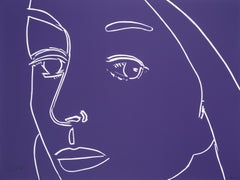
Ada (Purple)
By Alex Katz
Located in Fairfield, CT
Edition of 75
1 Color Woodcut on Somerset Satin White, 300 gsm
Category
2010s Contemporary Art by Medium: Woodcut
Materials
Woodcut
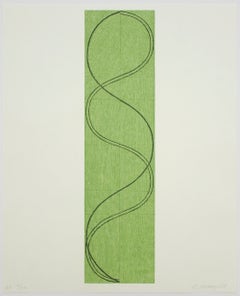
Green Column/Figure
Located in New York, NY
Associated with the Minimalist art movement of the 1960s, Mangold developed a reductive vocabulary based on geometric forms, monochromatic color, and an emphasis on the flatness of t...
Category
21st Century and Contemporary Art by Medium: Woodcut
Materials
Etching, Woodcut
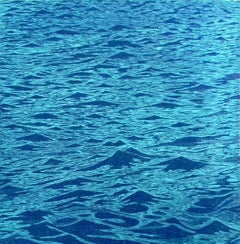
Big Seascape XII Left - Ocean Waves Woodcut Print in Shades of Blue, 2015
By Eve Stockton
Located in Kent, CT
This contemporary woodcut print on paper evokes the peacefulness of ocean waves depicted in bright, cerulean blue and vibrant cobalt. The woodcut print brings to mind the tradition o...
Category
2010s Contemporary Art by Medium: Woodcut
Materials
Archival Ink, Archival Paper, Woodcut
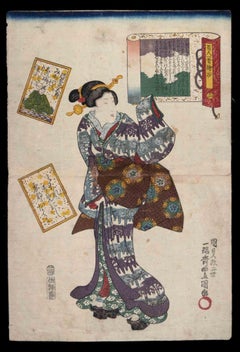
Bijinga - Woodcut print by Utagawa Kunisada - 1844
Located in Roma, IT
Bijinga is an original artwork realized in 1844 by Utagawa Kunisada (1786-1865).
From the series "Hyakunin isshu esho" (Girl's pictures and 100 poets' card games), 14th sheet.
You...
Category
1840s Modern Art by Medium: Woodcut
Materials
Woodcut
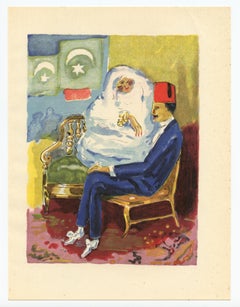
wood engraving for Mille Nuits
Located in Henderson, NV
Medium: wood engraving (after the watercolor). Printed in Paris in 1955 at the atelier Coulouma for "Mille nuits et une nuit" (1001 Nights) which was the last major portfolio by Kees...
Category
1950s Art by Medium: Woodcut
Materials
Engraving, Woodcut
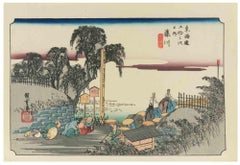
Fujikawa - Woodcut by Utagawa Kunisada - 1832
Located in Roma, IT
Fujikawa is a woodcut print realized by Utagawa Hiroshige in 1833.
It is part of the suite "The Fifty-three Stations of Tokaido".
Very good condition.
Category
1830s Modern Art by Medium: Woodcut
Materials
Woodcut
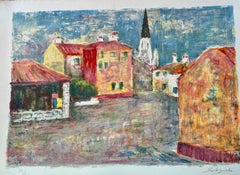
Village of Montmarte, Paris
Located in Belgrade, MT
This piece is part of my private collection since the 1970's. It is an original color lithograph signed and numbered by the Japanese artist Shungo Sekiguchi. In 1935 Shungo Sekiguchi...
Category
Mid-20th Century Modern Art by Medium: Woodcut
Materials
Lithograph, Woodcut

$400 Sale Price
20% Off
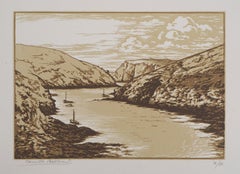
Seascape : Sailboats at Belle Isle - Original wooodcut, Handsigned
Numbered
Located in Paris, IDF
Camille BELTRAND (1877-1951)
Seascape : Sailboats at Belle Isle, 1929
Original woodcut
Handsigned in pencil
Numbered /160
On vellum 32.5 x 25.5 cm (c. 13 x 10 in)
Bears the blind st...
Category
1920s Modern Art by Medium: Woodcut
Materials
Woodcut
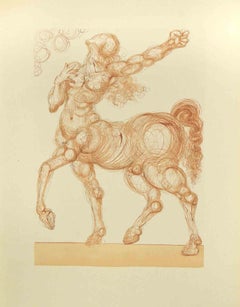
The Centaur - Woodcut - 1963
Located in Roma, IT
The Centaur - Hell, Plate-26 is a woodcut print realized in 1963 for a series illustrating the Medieval poem of the "Divine Comedy" by Dante Alighieri.
Not signed, as issued.
Goo...
Category
1960s Surrealist Art by Medium: Woodcut
Materials
Woodcut
$213 Sale Price
40% Off
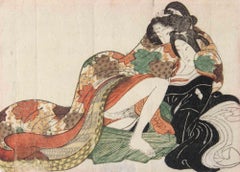
Shunga - Woodcut attr. Keisai Eisen - Mid-19th Century
By Keisai Eisen
Located in Roma, IT
Woodcut shunga print attributed to Keisai Eisen and realized in the early 19th century.
Good condition except for some signs of time.
Category
Mid-19th Century Modern Art by Medium: Woodcut
Materials
Woodcut
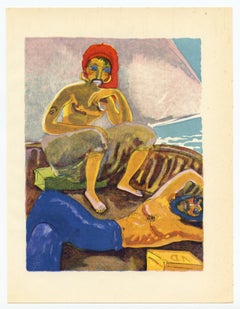
wood engraving for Mille Nuits
Located in Henderson, NV
Medium: wood engraving (after the watercolor). Printed in Paris in 1955 at the atelier Coulouma for "Mille nuits et une nuit" (1001 Nights) which was the last major portfolio by Kees...
Category
1950s Art by Medium: Woodcut
Materials
Engraving, Woodcut
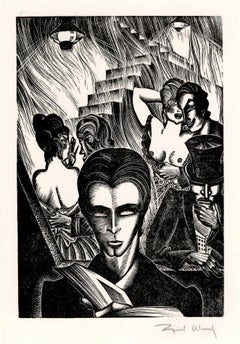
Madman
s Drum (Brothel) —
Story Without Words
Graphic Modernism
By Lynd Ward
Located in Myrtle Beach, SC
Lynd Ward, 'Madman's Drum, Plate 41', wood engraving, 1930, edition small. Signed in pencil. A fine, richly-inked impression, on off-white tissue-thin Japan paper; the full sheet with margins (1 5/8 to 2 1/2 inches); a small paper blemish in the upper right margin, away from the image, otherwise in excellent condition. A scarce, artist-printed, hand-signed proof impression before the published edition. Matted to museum standards, unframed.
Image size 5 1/2 x 3 3/4 inches (140 x 95 mm); sheet size 9 5/8 x 7 1/8 inches (244 x 181 mm).
From Lynd Ward’s book of illustrations without words, 'Madman’s Drum', Jonathan Cape and Harrison Smith, New York, 1930.
Reproduced in 'Storyteller Without Words, the Wood Engravings of Lynd Ward', Harry N. Abrams, New York, 1974.
ABOUT THE ARTIST
Lynd Ward is acknowledged as one of America’s foremost wood engravers and book illustrators of the first half of the twentieth century. His innovative use of narrative printmaking as a stand-alone storytelling vehicle was uniquely successful in reaching a broad audience. The powerful psychological intensity of his work, celebrated for its dynamic design, technical precision, and compelling dramatic content, finds resonance in the literature of Poe, Melville, and Hawthorne. Like these classic American writers, Ward was concerned with the themes of man’s inner struggles and the role of the subconscious in determining his destiny. An artist of social conscience during the Great Depression and World War II, he infused his graphic images with his unique brand of social realism, deftly portraying the problems that challenged the ideals of American society.
The son of a Methodist preacher, Lynd Ward, moved from Chicago to Massachusetts at an early age. He graduated from the Teachers College of Columbia University, New York, in 1926, where he studied illustration and graphic arts. He married May Yonge McNeer in 1936 and left for Europe for their honeymoon in Eastern Europe. After four months, they settled in Leipzig, where Ward studied at the National Academy of Graphic Arts and Bookmaking. Inspired by Belgian expressionist artist Frans Masereel's graphic novel ‘The Sun,’ and another graphic novel by the German artist Otto Nückel, ‘Destiny,’ he determined to create his own "wordless" novel. Upon his return to America, Ward completed his first book, ‘God's Man: A Novel in Woodcuts,’ published in 1929. ‘Gods’ Man’ was a great success for its author and publisher and was reprinted four times in 1930, including a British edition. This book and several which followed it, ‘Madman’s Drum,’ 1930, ‘Wild Pilgrimage...
Category
1930s American Modern Art by Medium: Woodcut
Materials
Woodcut
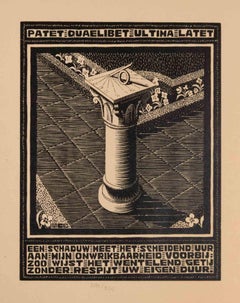
Sundial - Woodcut by Maurits Cornelis Escher - 1931
Located in Roma, IT
Woodcut print realized by Escher for the series "Emblemata", and published in 1931.
On Hollande van Gelder paper.
Edition of 300.
Unsigned, as issued. Excellent condition, matted....
Category
1930s Modern Art by Medium: Woodcut
Materials
Woodcut
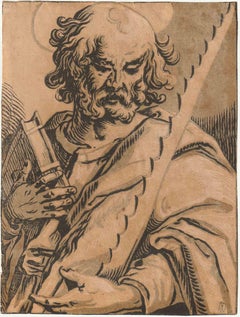
Saint Simon, from Christ and the Apostles
By Ludolf Ludwig Businck
Located in Middletown, NY
Chiaroscuro woodcut on cream laid paper, printed from three blocks in black, olive-green, and yellow ochre, 8 3/16 x 6 1/4 inches (207 x 157 mm), thread margins. Some scattered light discoloration throughout, lightly backed with laid paper, however the sheet retains translucence when viewed through raking light. Trimmed at or near the margin. Archivally sound small repaired corner tear, upper right, with a very minor (1/4 inch) vertical edge split in the center top margin, above the figure's head. All condition issues are consistent with age, and present an exceptionally good example of this truly remarkable work. With the collector's stamp of Friedrich August II, King of Saxony, last King of Poland (1797-1854), Dresden, on the right corner, recto (Lugt 971). This work likely appeared in a well-known posthumous sale of Friedrich August II's private collection, which was handled by C.G. Boerner, and took place in Leipzig, on May 7-9, 1928, presumably this print was presented as lot 1551.
[Stechow 16]
Ludolph Busïnck was born at Hann, Germany around 1590. By about 1620 he was actively working as a printmaker in Paris, collaborating with publisher and celebrated cartographer Melchoir Tavernier. Busïnck may have studied printmaking in the Netherlands, evidenced by the influence of Dutch printmaker Hendrick Goltzius we see in the bold woodcuts he produced in France. Busïnck was the first printmaker to create chiaroscuro woodcuts in France, a technique originated by German artist Hans Burgkmair...
Category
Early 17th Century Old Masters Art by Medium: Woodcut
Materials
Woodcut
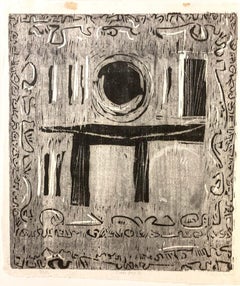
Clinton Hill, Title Page II, 1956, woodcut, landscape/abstraction
By Clinton Hill
Located in New York, NY
Clinton Hill (1922-2003), lived in SoHo, New York, and was a frequent Gallery visitor. Born in Idaho and raised on a working ranch, he joined the US Navy during World War II and beca...
Category
Mid-20th Century Abstract Art by Medium: Woodcut
Materials
Woodcut
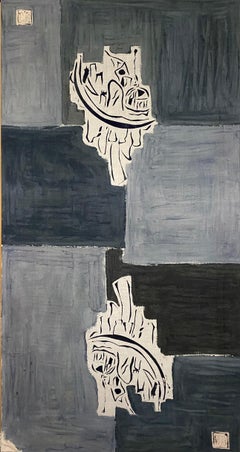
From Matisse to Hokusai-London Skyscape-Original Mono Screen-British awardArtist
Located in London, GB
This artwork was awarded and Pre-select by Bite , the exhibition, London 2012 , at The Mall Galleries, at the centre of London's famous The Mall, an iconic Avenue, in front of Buckin...
Category
2010s Abstract Expressionist Art by Medium: Woodcut
Materials
Fabric, Dye, Printer s Ink, Monoprint, Woodcut
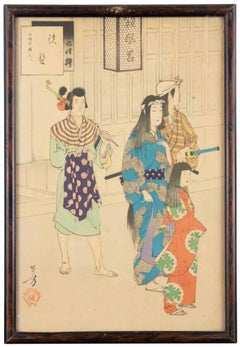
Sanjûroku Kasen... - Woodcut by Mizuno Toshikata - 1893
Located in Roma, IT
Nishiki-e (woodcut print), in vertical oban format (31x20.5) realized by Mizuno Toshikata in 1893 (Meiji 26).
Belongs to the Series "Sanjûroku Kasen" (Thirty-Six Beauties in Compari...
Category
1890s Modern Art by Medium: Woodcut
Materials
Woodcut
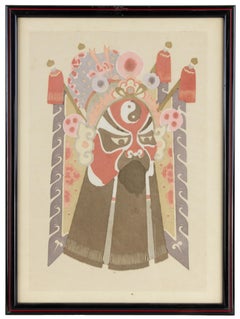
Chinese Theatrical Mask - Woodcut - Mid-20th Century
Located in Roma, IT
Vintage chinese woodcut print depicting a theatrical mask.
Realized in the mid-20th Century.
Framed under glass.
Category
Mid-20th Century Modern Art by Medium: Woodcut
Materials
Woodcut
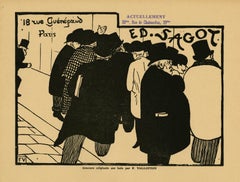
Les Amateurs d
Estampes
Located in Fairlawn, OH
Les Amateurs d'Estampes
Woodcut, 1892
Initialed in the plate lower left
Titled below image: "Gravure originale sur bois par F. Vallotton"
Reference: Valloton and Goerg 107c, with the...
Category
1890s Post-Impressionist Art by Medium: Woodcut
Materials
Woodcut
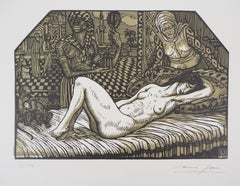
Mythology : Danae Sleeping - Original wooodcut, Handsigned
Numbered
Located in Paris, IDF
Louis JOU (1881-1968)
Mythology : Danae Sleeping, 1921
Original woodcut
Handsigned in pencil
Numbered /125
On vellum 32.5 x 25.5 cm (c. 13 x 10 in)
Bears the blind stamp of the edit...
Category
1920s Modern Art by Medium: Woodcut
Materials
Woodcut
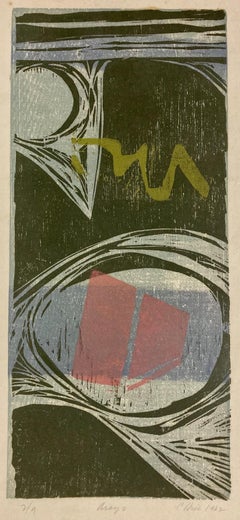
Clinton Hill, Arroyo, 1962, woodcut, landscape/abstraction
By Clinton Hill
Located in New York, NY
Clinton Hill (1922-2003), lived in SoHo, New York, and was a frequent Gallery visitor. Born in Idaho and raised on a working ranch, he joined the US Navy during World War II and beca...
Category
Mid-20th Century Abstract Art by Medium: Woodcut
Materials
Woodcut
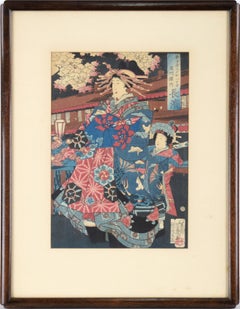
Courtesans at Yoshiwara Edomachi - Figurative Japanese Woodblock Print on Paper
Located in Soquel, CA
Courtesan at Yoshiwara Edomachi - Figurative Japanese Woodblock Print on Paper
Full color woodcut print of two women in elaborate gowns by Utagawa Yoshiiku (Ochiai Yoshiiku) (Japanese, 1833-1904). Two women are dressed in colorful robes with crossed arms. They are underneath a plum blossom tree in bloom, at night. In the background there is a building with many rooms. Valuable polychrome woodblock print of vertical large oban (大判) format made by Utagawa Yoshiiku (歌川芳幾), the famous artist also known as Ochiai Yoshiiku (落合芳幾), and depicting the courtesan Shizuka (しづか), of the house of pleasure Matsumotoro (松本楼), together with her young kamuro (禿) assistant. The couple is escorted by a kanabohiki (金棒引き) watchman holding a lantern and a metal rod with rings to make noise and alert the crowd.
The work, produced in August 1869 by the publisher Tsunajima Kamekichi (綱島亀吉), is taken from the “Twelve Months of Yoshiwara” (よし原十二ヶ月のうち), an elegant series of prints dedicated to the famous red light district of Edo (江戸), and is paired with the “month of leaves” Hazuki (葉月), that is August.
Ochiai Yoshiiku (Japanese, 1833-1904) was an ukiyo-e artist from the end of the Edo Period to the Meiji Period. He has created works which are essential to the history of ukiyo-e, such as“Twenty-eight Famous Murders with Verse”, a series of chimidoro-e (bloody paintings) which Yoshiiku and Tsukioka Yoshitoshi collaborated together, and “Shimbun (newspaper) Nishiki-e” that illustrated Meiji news articles with ukiyo-e.
Born the son of teahouse proprietor Asakusa Tamichi in 1833, Yoshiiku became a student of ukiyo-e artist Utagawa Kuniyoshi toward the end of the 1840s. His earliest known work dates to 1852 when he provided the backgrounds to some actor prints by his master.
Yoshiiku's earliest works were portraits of actors (yakusha-e), beauties (bijin-ga), and warriors (musha-e). He later followed Kuniyoshi into making satirical and humorous pieces, and became the leading name in the field after Kuniyosh's death in 1861. He illustrated the Tokyo Nichi Nichi...
Category
1860s Impressionist Art by Medium: Woodcut
Materials
Paper, Ink, Woodcut
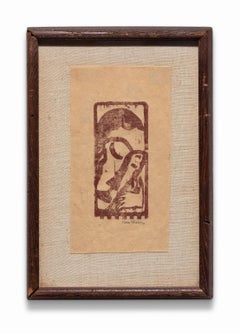
Max Weber Woodcut Print from "Primitives" Poetry Book Signed
By Max Weber
Located in Detroit, MI
ONE WEEK ONLY SALE
This woodcut print is an expressionist print on one of the poems from Max Weber's poetry collection "Primitives: Poems and Woodcuts". This work is signed in penci...
Category
1920s Expressionist Art by Medium: Woodcut
Materials
Woodcut
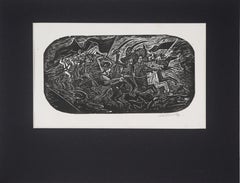
"Charge of the Revolutionist Cavalry" - 1931 Woodcut On Paper
Located in Soquel, CA
"Charge of the Revolutionist Cavalry" - 1931 Woodcut On Paper
1931 Black and white woodcut print titled "Charge of the Revolutionist Cavalry" by Leo...
Category
1930s Contemporary Art by Medium: Woodcut
Materials
India Ink, Laid Paper, Woodcut
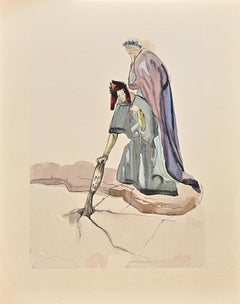
The Traitor of Montaperti - Original Woodcut Print attr. to Salvador Dalì - 1963
Located in Roma, IT
The Traitor of Montaperti from the Series "The Divine Comedy" by Dante Alighieri is an original woodcut print by Salvador Dalì, realized in 1963.
Good conditions. Not signed.
Plate...
Category
1960s Surrealist Art by Medium: Woodcut
Materials
Woodcut
$249 Sale Price
30% Off
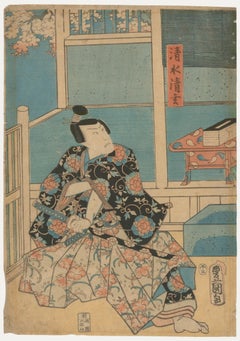
Late 19th Century Japanese Woodblock - Martial Stance
Located in Corsham, GB
Japanese woodblock print by Toyokuni, depicting a man crouching low to the ground with two samurai swords. Signed and inscribed with characters. On paper.
Category
Late 19th Century Art by Medium: Woodcut
Materials
Woodcut
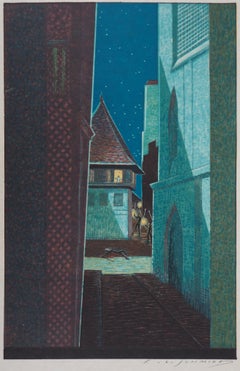
The Alley in the Night - Original Woodcut Print
Located in Paris, IDF
François-Louis SCHMIED (1873-1941)
The Alley in the night, 1938
Original Woodcut Print
Signed with the stamp of the artist
On Japan paper
35 x 24 cm (c. 13.8 x 9.5 inch)
Very good ...
Category
1930s Art Nouveau Art by Medium: Woodcut
Materials
Woodcut
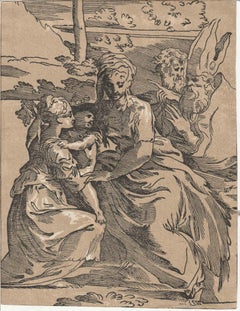
Holy Family with Two Saints, after Parmigianino
By Antonio Da Trento
Located in Middletown, NY
Chiaroscuro woodcut on cream laid paper with a partial anchor in a circle watermark, printed from two blocks in black and olive-green, 10 3/4 x 8 3...
Category
16th Century Old Masters Art by Medium: Woodcut
Materials
Ink, Laid Paper, Woodcut
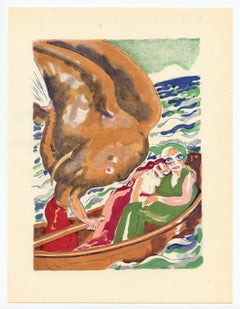
wood engraving for Mille Nuits
Located in Henderson, NV
Medium: wood engraving (after the watercolor). Printed in Paris in 1955 at the atelier Coulouma for "Mille nuits et une nuit" (1001 Nights) which was the last major portfolio by Kees...
Category
1950s Art by Medium: Woodcut
Materials
Engraving, Woodcut
HUNTER HAULING A SEAL - IMPORTANT INUIT PRINT -
Located in Santa Monica, CA
PARR (1893-1969) KINNGAIT (CAPE DORSET)
HUNTER HAULING A SEAL, 1966 #2,
Stonecut, signed, titled numbered 28/50 Dorset 1966. Image 14 x 22 ¼. Full sheet ...
Category
1960s Other Art Style Art by Medium: Woodcut
Materials
Stone

$2,800 Sale Price
20% Off
Sanjûroku Kasen... - Woodcut by Mizuno Toshikata - 1893
Located in Roma, IT
Nishiki-e (woodcut print), in vertical oban format (31x20.5) realized by Mizuno Toshikata in 1893 (Meiji 26).
Belongs to the Series "Sanjûroku Kasen" (Thirty-Six Beauties in Compari...
Category
1890s Modern Art by Medium: Woodcut
Materials
Woodcut
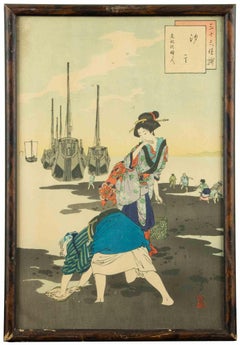
Allegory of Spring - Original wooodcut, Handsigned
Numbered
Located in Paris, IDF
MORIN-JEAN (1877-1940)
Allegory of Spring, 1923
Original woodcut
Handsigned in pencil
Numbered /125
On vellum 32.5 x 25.5 cm (c. 13 x 10 in)
Bears the blind stamp of the editor 'Ima...
Category
1920s Modern Art by Medium: Woodcut
Materials
Woodcut
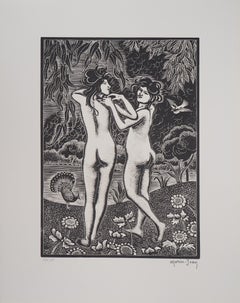
"J.P.
s Trip", Abstract Patterns, Geometric Abstraction, Woodcut Monoprint
Located in Philadelphia, PA
This piece titled "J.P.'s Trip" is an original piece by Alexis Nutini and is made from a woodcut and and found object stencil monoprint mounted on panel ...
Category
21st Century and Contemporary Contemporary Art by Medium: Woodcut
Materials
Found Objects, Panel, Monoprint, Woodcut, Paper
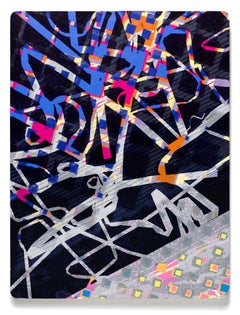
wood engraving for Mille Nuits
Located in Henderson, NV
Medium: wood engraving (after the watercolor). Printed in Paris in 1955 at the atelier Coulouma for "Mille nuits et une nuit" (1001 Nights) which was the last major portfolio by Kees...
Category
1950s Art by Medium: Woodcut
Materials
Engraving, Woodcut
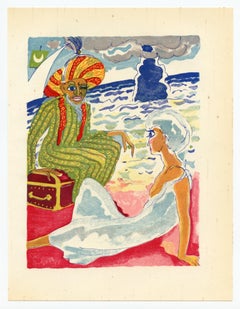
Three Cubist Women - Original wooodcut, Handsigned
Numbered
Located in Paris, IDF
Louis BOUQUET (1885-1952)
Three Cubist Women, 1921
Original woodcut
Handsigned in pencil
Numbered /125
On vellum 32.5 x 25.5 cm (c. 13 x 10 in)
Bears the blind stamp of the editor '...
Category
1920s Modern Art by Medium: Woodcut
Materials
Woodcut
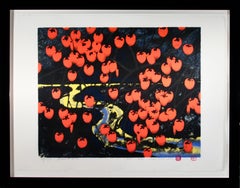
Persimmons
Located in San Francisco, CA
This artwork titled "Persimmons" 1980, is a colors woodcut on wove paper by noted Korean artist Bong Kyu Ahn, b.1938. It is hand signed, dated, titled, and numbered 10/90 in pencil b...
Category
Late 20th Century Realist Art by Medium: Woodcut
Materials
Woodcut
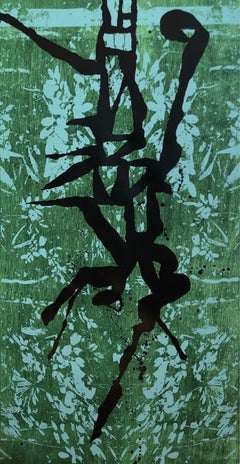
Alberto Castro Leñero, ¨Untitled III¨, 2019, Woodcut, 63x31.5 in
Located in Miami, FL
"Alberto Castro Leñero (Mexico, 1951)
'Untitled III', 2020
woodcut on paper Velin Arches 300 g.
62.6 x 31 in. (159 x 78.5 cm.)
Edition of 30
ID: ...
Category
2010s Contemporary Art by Medium: Woodcut
Materials
Paper, Woodcut
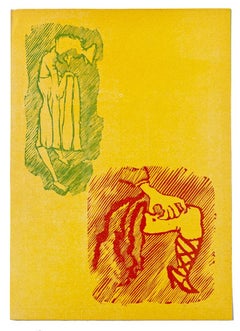
Woman - Woodcut by Mino Maccari - Mid-20th Century
By Mino Maccari
Located in Roma, IT
"Woman" is an original woodcut realized by Mino Maccari (1898-1989).
In good conditions.
This artwork represents a standing woman at the top left and a detailed leg while a hand is...
Category
Mid-20th Century Modern Art by Medium: Woodcut
Materials
Woodcut
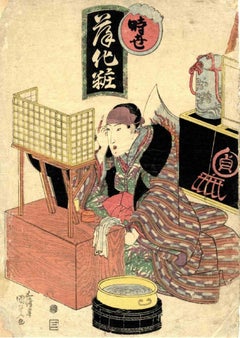
Delicate Makeup in Fashion - Woodcut Print by Utagawa Kunisada - 1830
Located in Roma, IT
Delicate makeup in fashion is an original modern artwork realized by Utagawa Kunisada in 1830s.
Woodcut Print Oban Dyptich Format. From the series "Jisei usugesho" (Delicate makeup in fashion). An actor prepares him self for a rolle as Onnagata in a Shosagoto play, with the ghost characters of the sister Matsukaze and Murasame. He sits in front of a makeup table and applies makeup to his eyebrows, behind him on a black lacquer shelf...
Category
19th Century Modern Art by Medium: Woodcut
Materials
Woodcut
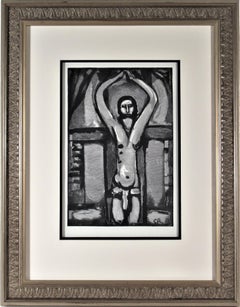
Christ, from La Passion
Located in San Francisco, CA
This artwork "Christ, from La Passion" 1939, is a wood engraving by French artist Georges Rouault, 1871-1958. (Block engraved by Georges Aubert) It is signed in the block as issue. ...
Category
Early 20th Century Modern Art by Medium: Woodcut
Materials
Woodcut
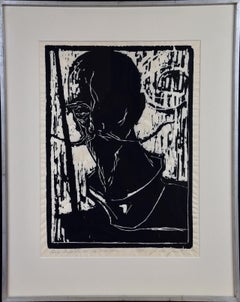
Don Quixote de La Mancha: Signed Limited Edition Woodcut Portrait by De Groat
Located in Alamo, CA
A limited edition woodcut portrait of Don Quixote de la Marcha by George De Groat (1917-1995). Don Quixote is instantly recognizable due to his thin fa...
Category
Late 20th Century American Modern Art by Medium: Woodcut
Materials
Woodcut
$1,260 Sale Price
20% Off
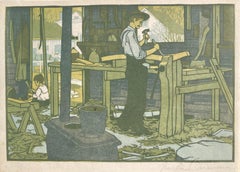
THE WAGON SHOP
Located in Santa Monica, CA
GUSTAVE BAUMANN (1881 – 1971)
THE WAGON SHOP, 1910 (Chamberlain 24)
Color woodcut signed in pencil. Unnumbed from an edition 100 as published in the Hills o’ Brown...
Category
1910s Modern Art by Medium: Woodcut
Materials
Woodcut
$1,800 Sale Price
20% Off
"Lendas Africanas Da Bahia" from the suite.
Located in San Francisco, CA
This artwork titled " Lendas Africanas Da Bahia" from the suite, 1978, is an original colors woodcut by renown Brazilian/Argentinian artist Hector Julio Paride Barnabo Carybe, 1911-1997. It is hand signed and numbered 83/200 in pencil by the artist. The Wood block mark (image) is 23.65 x 15.75 inches, sheet size is 26.75 x 19 inches. It is in excellent condition, has never been framed. It will be shipped in a 8 inches diameter heavy duty tube.
About the artist:
Héctor Julio Páride Bernabó (7 February 1911 – 2 October 1997) was an Argentine-Brazilian artist, researcher, writer, historian and journalist. His nickname and artistic name, Carybé, a type of piranha, comes from his time in the scouts. He died of heart failure after the meeting of a candomblé community's lay board of directors, the Cruz Santa Opô Afonjá Society, of which he was a member.
Quick Facts Born, Died ...
Carybé
Born
Héctor Julio Páride Bernabó
7 February 1911
Lanús, Argentina
Died
2 October 1997 (aged 86)
Salvador, Bahia, Brazil
Nationality
Brazilian
Known for
Painter, engraver, draughtsman, illustrator, potter, sculptor, mural painter, researcher, historian and journalist
Close
He produced thousands of works, including paintings, drawings, sculptures and sketches. He was an Obá de Xangô, an honorary position at Ilê Axé Opô Afonjá.
Orixá Panels in the Afro-Brazilian Museum in Salvador
Some of Carybé's work can be found in the Afro-Brazilian Museum in Salvador: 27 cedar panels representing different orixás or divinities of the Afro-Brazilian religion candomblé. Each panel shows a divinity with their associated implements and animal. The work was commissioned by the former Banco da Bahia S.A., now Banco BBM S.A., which originally installed them in its branch on Avenida Sete de Setembro in 1968.
Murals at Miami International Airport
American Airlines, Odebrecht and the Miami-Dade Aviation Department partnered to install two of Carybé's murals at Miami International Airport. They have been displayed in the American Airlines terminal at John F. Kennedy International Airport in New York since 1960. The 16.5 x 53-foot murals were accredited when Carybé won the first and the second prize in a contest of public art pieces for JFK airport.
As its terminal at that airport was due for demolition, American Airlines donated the murals to Miami-Dade County, and Odebrecht invested in a project to remove, restore, transport and install the murals at Miami International Airport.
The mural "Rejoicing and Festival of the Americas" portrays colorful scenes from popular festivals throughout the Americas, and "Discovery and Settlement of the West" depicts the pioneers’ journey into the American West.
Carybé's Woodcuts in Gabriel García Márquez's Books
Carybé illustrated four books by the Colombian writer Gabriel García Márquez, including One Hundred Years of Solitude, The Autumn of the Patriarch, Chronicle of a Death Foretold, and Love in the Time of Cholera "Carybé: um mestre da cultura baiana". ArqBahia Arquitetura, design, arte e lifestyle (in Brazilian Portuguese). 26 April 2023.. In particular, the woodcuts in One Hundred Years of Solitude are well-known for providing a visual image of the fictional town of Macondo, where the story takes place. The illustrations depict the colorful and winding houses, the railway bridge, and the hot and humid climate of the region, contributing to the reader's immersion in the story.
Carybé's woodcuts are, therefore, an important part of Gabriel García Márquez's literary legacy, bringing a visual dimension to his stories that further enriches the reader's experience.
Timeline
1911 — Birth in Lanús, Argentina.
1919 — Moved to Brazil.
1921 — The name Carybé is first given to him by the Clube do Flamengo scouts group, in Rio de Janeiro.
1925 — Beginning of his artistic endeavours, going to the pottery workshop of his elder brother, Arnaldo Bernabó, in Rio de Janeiro.
1927–1929 — Studies at the National School of Fine Arts, in Rio de Janeiro.
1930 — Worked for the newspaper Noticias Gráficas, in Buenos Aires, Argentina.
1935–1936 — Works with the writer Julio Cortázar and as a draughtsman for the El Diario newspaper.
1938 — Sent to Salvador by newspaper Prégon.
1939 — First collective exhibition, with the artist Clemente Moreau, at the Buenos Aires City Museum of Fine Arts, Argentina; illustrates the book Macumba, Relatos de la Tierra Verde, by Bernardo Kardon, published by Tiempo Nuestro.
1940 — Illustrates the book Macunaíma, by Mário de Andrade.
1941 — Draws the Esso Almanach, the payment for which allows him to set on a long journey through Uruguay, Brazil, Bolivia, and Argentina.
1941–1942 — Study trip around several South American countries.
1942 — Illustration for the book La Carreta by Henrique Amorim, published by El Ateneo (Buenos Aires, Argentina).
1943 — Together with Raul Brié, translates the book Macunaíma, by Mário de Andrade, into Spanish; produces the illustrations for the works Maracatu, Motivos Típicos y Carnavalescos, by Newton Freitas, published by Pigmaleon, Luna Muerta, by Manoel Castilla, published by Schapire, and Amores de Juventud, by Casanova Callabero; also publishes and illustrates Me voy al Norte, for the quarterly magazine Libertad Creadora; awarded First Prize by the Cámara Argentina del Libro (Argentine Book Council) for the illustration of the book Juvenília, by Miguel Cané (Buenos Aires, Argentina).
1944 — Illustrates the books The Complete Poetry of Walt Whitmann and A Cabana do Pai Tomás, both published by Schapire ; as well as and Los Quatro Gigantes del Alma by Mira y Lopez, Salvador BA; attends capoeira classes, visits candomblé meetings and makes drawings and paintings.
1945 — Does the illustrations for Daniel Defoe's Robinson Crusoe, for the Viau publishing house.
1946 — Helps in setting up the Tribuna da Imprensa newspaper, in Rio de Janeiro.
1947 — Works for the O Diário Carioca newspaper, in Rio de Janeiro.
1948 — Produces texts and illustrations for the book Ajtuss, Ediciones Botella al Mar (Buenos Aires, Argentina).
1949–1950 — Invited by Carlos Lacerda to work at the Tribuna da Imprensa, in Rio de Janeiro.
1950 — Invited by the Education Secretary Anísio Teixeira, moves to Bahia, and produces two panels for the Carneiro Ribeiro Education Center (Park School), in Salvador, Bahia.
1950–1997 — Settles in Salvador, Bahia.
1950–1960 — Actively participate in the plastic arts renewal movement, alongside Mário Cravo Júnior, Genaro de Carvalho, and Jenner Augusto.
1951 — Produces texts and illustrations for the works of the Coleção Recôncavo, published by Tipografia Beneditina and illustrations for the book, Bahia, Imagens da Terra e do Povo, by Odorico Tavares, published by José Olímpio in Rio de Janeiro; for the latter work he receives the gold medal at the 1st Biennial of Books and Graphic Arts.
1952 — Makes roughly 1,600 drawings for the scenes of the movie O Cangaceiro, by Lima Barreto; also works as the art director and as an extra on the film (São Paulo, SP).
1953 — Illustrations for the book A Borboleta Amarela, by Rubem Braga, published by José Olímpio (Rio de Janeiro, RJ).
1955 — Illustrates the work O Torso da Baiana, edited by the Modern Art Museum of Bahia.
1957 — Produces etchings, with original designs, for the special edition of Mário de Andrade's Macunaíma, published by the Sociedade dos 100 Bibliófilos do Brasil.
1958 — Makes an oil painting mural for the Petrobras Office in New York, USA; illustrates the book As Três Mulheres de Xangô, by Zora Seljan, published by Editora G. R. D. (Rio de Janeiro, RJ); Receives a scholarship grant in New York, USA.
1959 — Takes part in the competition for the New York International Airport panels project, in New York, USA, winning first and second prizes.
1961 — Illustrates the book Jubiabá, by Jorge Amado, published by Martins Fontes (São Paulo, SP).
1963 — Awarded the title of Honorary Citizen of Salvador, Bahia.
1965 — Illustrates A Muito Leal e Heróica Cidade de São Sebastião do Rio de Janeiro, published by Raymundo Castro Maya (Rio de Janeiro, RJ).
1966 — With Jorge Amado, co-authors Bahia, Boa Terra Bahia, published by Image (Rio de Janeiro, RJ); writes and illustrates the book Olha o Boi, published by Cultrix (São Paulo, SP).
1967 — Receives the Odorico Tavares Prize – Best Plastic Artist of 1967, in a competition ran by the state government to stimulate the development of plastic arts in Bahia; makes the Orixás Panels for the Banco da Bahia (currently at the UFBA Afro-Brazilian Museum) (Salvador, BA).
1968 — Illustrates the books Carta de Pero Vaz de Caminha ao Rei Dom Manuel, published by Sabiá (Rio de Janeiro) and Capoeira Angolana, by Waldeloir Rego, published by Itapoã (Bahia).
1969 — Produces the illustrations for the book Ninguém Escreve ao Coronel, by Gabriel Garcia Marquez, published by Sabiá (Rio de Janeiro, RJ).
1970 — Illustrates the books O Enterro do Diabo and Os Funerais de Mamãe Grande, published by Sabiá (Rio de Janeiro, RJ), Agotimé her Legend, by Judith Gleason, published by Grossman Publishers (New York, USA).
1971 — Illustrates the books One Hundred Years of Solitude, by Gabriel Garcia Marquez and A Casa Verde by Mario Vargas Llosa, both published by Sabiá (Rio de Janeiro, RJ); produces texts and illustrations for the book Candomblé da Bahia, published by Brunner (São Paulo, SP).
1973 — Illustrations for Gabriel Garcia Marquez's A Incrível e Triste História de Cândida Erendira e sua Avó Desalmada (Rio de Janeiro, RJ); paints the mural for the Legislative Assembly and the panel for the Bahia State Secretary of the Treasury.
1974 — Produces woodcuts for the book Visitações da Bahia, published by Onile.
1976 — Illustrates the book O Gato Malhado e a Andorinha Sinhá: uma história de amor, by Jorge Amado (Salvador, BA); receives the title of Knight of the Order of Merit of Bahia.
1977 — Certified with the Honor for Afro-Brazilian Cult Spiritual Merit, Xangô das Pedrinhas ao Obá de Xangô Carybé (Magé, RJ).
1978 — Makes the concrete sculpture Oxóssi, in the Catacumba Park; illustrates the book A Morte e a Morte de Quincas Berro D´Água, by Jorge Amado, published by Edições Alumbramento (Rio de Janeiro, RJ).
1979 — Produces woodcuts for the book Sete Lendas Africanas da Bahia, published by Onile.
1980 — Designs the costumes and scenery for the ballet Quincas Berro D´Água, at the Teatro Municipal in Rio de Janeiro.
1981 — Publication of the book Iconografia dos Deuses Africanos no Candomblé da Bahia (Ed. Raízes), following thirty years of research.
1982 — Receives the title of Honorary Doctor of the Federal University of Bahia.
1983 — Makes the panel for the Brazilian Embassy in Lagos, Nigeria.
1984 — Receives the Jerônimo Monteiro Commendation – Level of Knight (Espírito Santo); receives the Castro Alves Medal of Merit, granted by the UFBA Academy of Arts and Letters; makes the bronze sculpture Homenagem à mulher baiana (Homage to the Bahian woman), at the Iguatemi Shopping Center (Salvador, BA).
1985 — Designs the costumes and sets for the spectacle La Bohème, at the Castro Alves Theater; illustrates the book Lendas Africanas dos Orixás, by Pierre Verger, published by Currupio.
1992 — Illustrates the book O sumiço da santa: uma história de feitiçaria, by Jorge Amado (Rio de Janeiro, RJ).
1995 — Illustration of the book O uso das plantas na sociedade iorubá, by Pierre Verger (São Paulo, SP).
1996 — Making of the short film Capeta Carybé, by Agnaldo Siri Azevedo, adapted from the book O Capeta Carybé, by Jorge Amado, about the artist Carybé, who was born in Argentina and became the most Bahian of all Brazilians.
1997 — Illustration of the book Poesias de Castro Alves.
Exhibitions
ммIndividual Exhibitions:
1943 — Buenos Aires (Argentina) — First individual exhibition, at the Nordiska Gallery
1944 — Salta (Argentina) — at the Consejo General de Educacion
1945 — Salta (Argentina) — Amigos del Arte, Buenos Aires (Argentina) — Motivos de América, at the Amauta Gallery, Rio de Janeiro RJ — individual exhibition at the IAB/RJ
1947 — Salta (Argentina) — Agrupación Cultural Femenina
1950 — Salvador BA — First individual exhibit in Bahia, at the Bar Anjo Azul; São Paulo SP — MASP.
1952 — São Paulo SP — MAM/SP
1954 — Salvador BA — Oxumaré Gallery
1957 — New York (USA) — Bodley Gallery; Buenos Aires (Argentina) — Bonino Gallery * 1958 - New York (USA) — Bodley Gallery
1962 — Salvador BA - MAM/BA
1963 — Rio de Janeiro RJ — Bonino Gallery
1965 — Rio de Janeiro RJ — Bonino Gallery
1966 — São Paulo SP — Astrea Gallery
1967 — Rio de Janeiro RJ — Santa Rosa Gallery
1969 — London (England) — Varig Airlines
1970 — Rio de Janeiro RJ — Galeria da Praça
1971 — Rio de Janeiro RJ — MAM/RJ, São Paulo SP — A Galeria; Belo Horizonte MG, Brasília DF, Curitiba PR, Florianopolis SC, Porto Alegre RS, Rio de Janeiro RJ and São Paulo SP — The Orixás Panel (exhibition tour), at the Casa da Cultura in Belo Horizonte, MAM/DF, the Public Library of Paraná, the Legislative Assembly of Santa Catarina State, the Legislative Assembly of Rio Grande do Sul, MAM/RJ and MAM/SP
1972 — The Orixás Panel in Fortaleza CE — at the Ceará Federal University Art Museum, and in Recife PE — at the Santa Isabel Theater
1973 — São Paulo SP — A Galeria
1976 — Salvador BA — at the Church of the Nossa Senhora do Carmo Convent
1980 — São Paulo SP — A Galeria
1981 — Lisbon (Portugal) — Cassino Estoril
1982 — São Paulo SP — Renot Art Gallery, São Paulo SP — A Galeria
1983 — New York (USA) — Iconografia dos Deuses Africanos no Candomblé da Bahia, The Caribbean Cultural Center
1984 — Philadelphia (USA) — Art Institute of Philadelphia; Mexico — Museo Nacional de Las Culturas; São Paulo SP — Galeria de Arte André
1986 — Lisbon (Portugal) — Cassino Estoril; Salvador BA — As Artes de Carybé, Núcleo de Artes Desenbanco
1989 — Lisbon (Portugal) — Cassino Estoril; São Paulo SP — MASP
1995 — São Paulo SP — Documenta Galeria de Arte, São Paulo SP — Casa das Artes Galeria, Campinas SP — Galeria Croqui, Curitiba PR — Galeria de Arte Fraletti e Rubbo, Belo Horizonte MG — Nuance Galeria de Arte, Foz do Iguaçu PR — Ita Galeria de Arte, Porto Alegre RS — Bublitz Decaedro Galeria de Artes, Cuiabá MT — Só Vi Arte Galeria, Goiânia GO — Época Galeria de Arte, São Paulo SP — Artebela Galeria Arte Molduras, Fortaleza CE — Galeria Casa D'Arte, Salvador BA — Oxum Casa de Arte
Collective Exhibitions:
1939 — Buenos Aires (Argentina) — Carybé and Clemente Moreau Exhibition, at the Museo Municipal de Belas Artes
1943 — Buenos Aires (Argentina) — 29th Salon de Acuarelistas y Grabadores — first prize
1946 — Buenos Aires (Argentina) — Drawings by Argentine Artists, at the Kraft Gallery
1948 — Washington (USA) — Artists of Argentina, at the Pan American Union Gallery
1949 — Buenos Aires (Argentina) — Carybé and Gertrudis Chale, at the Viau Gallery; Salvador BA — Bahian Showroom of Fine Arts, at the Hotel Bahia
1950 — Salvador BA — 2nd Bahian Showroom of Fine Arts; São Paulo SP — MAM/SP
1951 — São Paulo SP — 1st São Paulo Art Biennial, Trianon Pavilion.
1952 — Salvador BA — 3rd Bahian Showroom of Fine Arts, at Belvedere da Sé; São Paulo SP — MAM/SP
1953 — Recife PE — Mario Cravo Júnior and Carybé, at the Santa Isabel Theater; São Paulo SP — 2nd São Paulo Art Biennial, at MAM/SP
1954 — Salvador BA — 4th Bahian Showroom of Fine Arts, at the Hotel Bahia. — Bronze medal
1955 — São Paulo SP — 3rd São Paulo Art Biennial, at MAM/SP — first prize for drawing
1956 — Salvador BA — Modern Artists of Bahia, at the Oxumaré Gallery; Venice (Italy) — 28th Venice Biennial
1957 — Rio de Janeiro RJ — 6th National Modern Art Show — exemption from the jury; São Paulo SP — Artists from Bahia, at the MAM/SP
1958 — San Francisco (USA) — Works by Brazilian Artists, at the Fine Arts Museums of San Francisco, Washington and New York (USA) — Works by Brazilian Artists, at the Pan American Union and the MoMA
1959 — Seattle (USA) — 30th International Exhibition, at the Seattle Art Museum; Salvador BA — Modern Artists of Bahia, at the Dentistry School.
1961 — São Paulo SP — 6th São Paulo Art Biennial, at MAM/SP — special room
1963 — Lagos (Nigeria) — Brazilian Contemporary Artists, at the Nigerian Museum; São Paulo SP — 7th São Paulo Art Biennial Bienal, at the Fundação Bienal
1964 — Salvador BA — Christmas Exhibition, at the Galeria Querino
1966 — Baghdad (Iraq) — collective exhibition sponsored by the Calouste Gulbenkian Foundation; Madrid (Spain) — Artists of Bahia, at the Hispanic Culture Institute; Rome (Italy) — Piero Cartona Palace; Salvador BA — 1st National Biennial of Plastic Arts (Bienal da Bahia) — special room; Salvador BA — Draughtsmen of Bahia, at the Convivium Gallery
1967 — Salvador BA — Christmas Exhibition at the Panorama Art Gallery; São Paulo SP — Artists of Bahia, at the A Gallery
1968 — São Paulo SP — Bahian Artists, at the A Gallery
1969 — London (England) — Tryon Gallery; São Paulo SP — 1st Panorama of Current Brazilian Art at the MAM/SP; São Paulo SP — Carybé, Carlos Bastos...
Category
Late 20th Century Modern Art by Medium: Woodcut
Materials
Woodcut
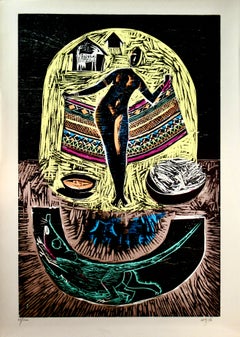
Kabuki Actor in Water Lily Robe with Samurai Sword - Japanese Woodblock Print
Located in Soquel, CA
Kabuki Actor in Water Lily Robe with Samurai Sword- Japanese Woodblock Print
Finely detailed woodblock by Utagawa Toyokuni (Japanese, 1769-1825). A kabuki actor ("Master Haranyuki Sawamura") is standing on stage with mountainous backdrop, wearing a robe in a water lily pattern. He is wearing a samurai sword.
Presented in a gold colored frame with a silk mat.
Frame size: 20"H x 14.25"W
Image size: 14"H x 9"W
Utagawa Toyokuni (Japanese, 1769-1825) was born in Edo, the son of Kurahashi Gorobei, a carver of dolls and puppets...
Category
Early 19th Century Edo Art by Medium: Woodcut
Materials
Ink, Rice Paper, Woodcut
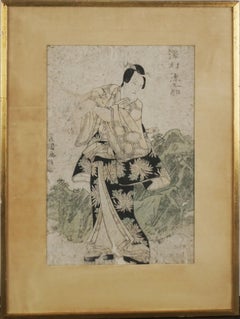
Erotic Scene - Woodcut by Mino Maccari - 1945
By Mino Maccari
Located in Roma, IT
Erotic Scene is an original xilography artwork realized by Mino Maccari in 1945. Hand-signed in the pseudonym of "Jean Baschie" which is the artist's signature in 1944-45 ca. erotic ...
Category
1940s Art by Medium: Woodcut
Materials
Woodcut
$308 Sale Price
35% Off
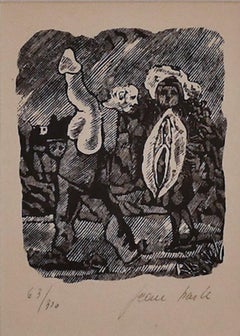
ENCLOSURE 12
By Kunihiro Amano
Located in Portland, ME
Amano, Kunihiro (Japanese, born 1929). ENCLOSURE 12. Color Woodblock, not dated. Edition of 30. Titled, Numbered 21/30, and signed in pencil. 18 x 13 1/2 inches. In excellent condit...
Category
Mid-20th Century Art by Medium: Woodcut
Materials
Woodcut
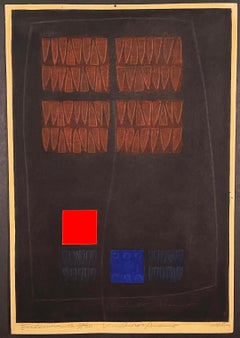
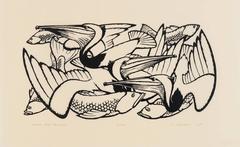
Fishes and Pelicans
Located in Dallas, TX
David Everett was born in Beaumont, Texas, and received both his B.F.A. and M.F.A. from The University of Texas at Austin. Valley House began showing his multi-articulated, painted w...
Category
1990s Contemporary Art by Medium: Woodcut
Materials
Woodcut
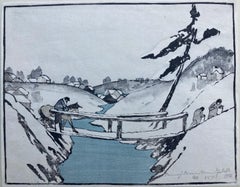
The Bridge
Located in Santa Monica, CA
B. J. O. NORDFELDT (Bror Julius Olsson) 1878-1955)
THE BRIDGE, 1906
Color woodcut signed, dated 1906 and numbered 150 in pencil. Image 8 x 10 - small margins as issued. 4 corners tipped to acid free support board. Nordfelt is one of the most important early twentieth century American Masters of the Color woodcut. This 1906 work predates many of the other woodcut masters. Nordfeldt had a peculiar numbering system. The number is not necessarily the edition number.
Frances H. Gearhart, Blanche Lazzell, William S. Rice, Gustave Baumann, Margaret Patterson, Norma Basset Hall. Waldo Chase.
Category
Early 1900s American Modern Art by Medium: Woodcut
Materials
Woodcut
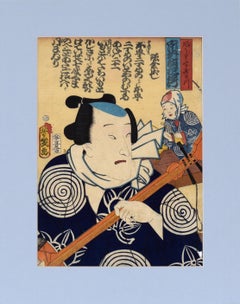
"Candy Seller" Japanese Woodblock on Rice Paper
Located in Soquel, CA
"Candy Seller" (飴売りうずまつ 市村羽左衛門) Japanese Woodblock on Rice Paper
This piece depicts Ichimura Uzaemon as the Candy Peddler Uzumatsu. He is playing a stringed instrument (the shamisen) to attract people to come buy canbdy. The spiral on his clothing is the symbol of the candy seller, along with his crest of the mandarin orange.
This Utagawa Yoshiiku print, titled "Umegoyomi mitate hachi shojin" (梅暦見立八笑人), depicts a scene from the Edo period. The print features a prominent male figure playing a shamisen, a traditional Japanese stringed instrument. The text on the print is in Japanese, and the overall style is characteristic of Ukiyo-e, a genre of Japanese woodblock prints. Utagawa Yoshiiku was a significant artist of the Meiji era, known for his contributions to woodblock printmaking. He was a student of Utagawa Kuniyoshi and worked alongside Tsukioka Yoshitoshi. His works often portray historical events, scenes from Kabuki plays, and contemporary life. This print, in particular, showcases the artist's skill in capturing the details of clothing, facial expressions, and the musical instrument.
Presented in a new blue mat with foam core backing.
Mat size: 18"H x 14"W
Paper size: 16"H x 12"W
Born the son of teahouse proprietor Asakusa Tamichi in 1833, Utagawa Yoshiiku (also known as Ochiai Yoshiiku) became a student of ukiyo-e artist Utagawa Kuniyoshi toward the end of the 1840s. His earliest known work dates to 1852 when he provided the backgrounds to some actor prints by his master.
Yoshiiku's earliest works were portraits of actors (yakusha-e), beauties (bijin-ga), and warriors (musha-e). He later followed Kuniyoshi into making satirical and humorous pieces, and became the leading name in the field after Kuniyosh's death in 1861. He illustrated the Tokyo Nichi Nichi...
Category
1860s Edo Art by Medium: Woodcut
Materials
Ink, Rice Paper, Woodcut
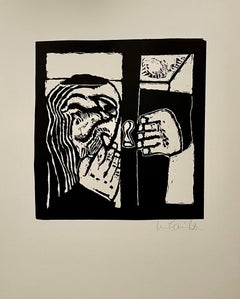
Latin American Judaica Conceptual Chassidic Art Modern Woodcut Luis Camnitzer
Located in Surfside, FL
Luis Camnitzer and Martin Buber (1878-1965),
New York: JMB Publishers Ltd, 1970.
Printed at The New York Graphic Workshop.
Hand signed on Arches paper. (Edition 24/100, numbered on Justification page)
Woodblock prints based on folktales from the Hasidic Jewish tradition in Eastern Europe, selected by Camnitzer from the early masters section of Buber’s Die chassidischen Bücher as translated by Olga Marx. German Expressionist style Jewish woodcuts...
Category
1970s Expressionist Art by Medium: Woodcut
Materials
Woodcut
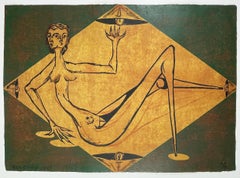
Sueño de un Boy Scout by Ray Smith surreal nude print in green and yellow
By Ray Smith
Located in New York, NY
Ray Smith elucidates the "Dream of a Boy Scout" in this surreal green, red, and yellow wood cut print. A woman with two faces sits nude within a diamond-shaped gold field of color, reaching up with her hand and out with her leg to touch the corners of the diamond, which each nestle a light fixture.
Sueño de un Boy Scout, 1988-9
Woodcut in black, red and green, on oiled Japon, signed and dated in black ink, numbered 1/30 (there were also 3 artist's proofs)
25 x 39 in.
Per the Broad: "Ray Smith’s paintings incorporate surrealistic and animistic tendencies informed by his Latin heritage as well as deep study of the history of modern art. Smith was born near the Texas/Mexico border...
Category
1980s Pop Art Art by Medium: Woodcut
Materials
Woodcut
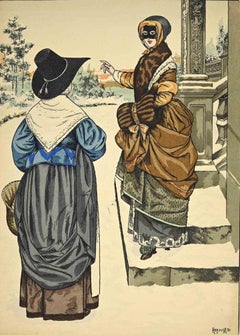
The Lovely Discussion - Woodcut by Mathilde Hérouard - 1920s
Located in Roma, IT
Woodcut print realized by Mathilde Hérouard in the 1920s.
Mounted on paper.
Signed in the plate.
Very good condition.
Category
1920s Modern Art by Medium: Woodcut
Materials
Woodcut
$285 Sale Price
20% Off
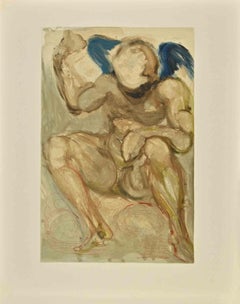
The Angel of Mercy - Woodcut attr. to Salvador Dali- 1963
Located in Roma, IT
The Angel of Mercy - from the Series "The Divine Comedy" is a woodcut print realized in 1963 for a series illustrating the Medieval poem of the "Divine Comedy" by Dante Alighieri. No...
Category
1960s Surrealist Art by Medium: Woodcut
Materials
Woodcut
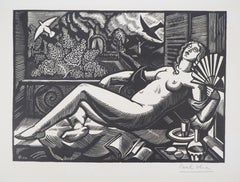
Summer : Nude with a Fan - Original woodcut, Handsigned
By Paul Vera
Located in Paris, IDF
Paul VERA
Summer : Nude with a Fan, 1922
Original woodcut
Handsigned in pencil
Numbered /154
On vellum 32.5 x 25.5 cm (c. 13 x 10 in)
Bears the blind stamp ...
Category
1920s Art Deco Art by Medium: Woodcut
Materials
Woodcut
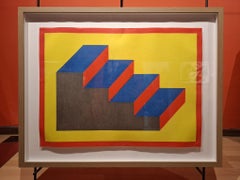
A form driven from a rectangular solid
By Sol LeWitt
Located in BARCELONA, ES
Sol Lewitt
"A form driven from a rectangular solid"
Year: 1.992
Woodcut on Japanese paper
copy 19/75
Signed and justified by hand
Print run of 75 copies.
57,5 x 77 cm.
Category
1990s Cubist Art by Medium: Woodcut
Materials
Woodcut
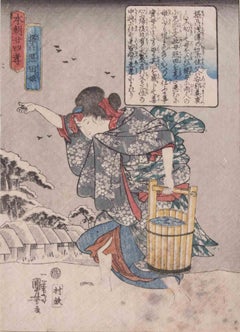
Teruta-hime - Woodcut by Utagawa Kuniyoshi - 1842/43
Located in Roma, IT
Teruta-hime is a woodcut print realized by Utagawa Kuniyoshi in 1842/43.
Lifetime impression of chuban tate-e, it depicts Teruta-hime carrying a bucket of water through the snow, wi...
Category
Mid-19th Century Modern Art by Medium: Woodcut
Materials
Woodcut
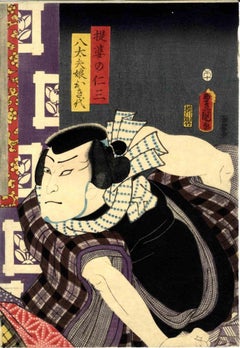
Portrait of Nakamura Fukus - Woodcut Print by Utagawa Kunisada - 1850s
Located in Roma, IT
Portrait of the actor Nakamura Fukusuke I is an original modern artwork realized by Utagawa Kunisada in 1858.
Woodcut print Oban Format from a tryptich.
Portrait of the actor Nakam...
Category
19th Century Modern Art by Medium: Woodcut
Materials
Woodcut
Woodcut art for sale on 1stDibs.
Find a wide variety of authentic Woodcut art available on 1stDibs. While artists have worked in this medium across a range of time periods, art made with this material during the 21st Century is especially popular. If you’re looking to add art created with this material to introduce a provocative pop of color and texture to an otherwise neutral space in your home, the works available on 1stDibs include elements of orange, yellow, purple, blue and other colors. There are many well-known artists whose body of work includes ceramic sculptures. Popular artists on 1stDibs associated with pieces like this include Mino Maccari, Utagawa Kunisada (Toyokuni III), Eric Gill, and Utagawa Hiroshige. Frequently made by artists working in the Modern, Contemporary, all of these pieces for sale are unique and many will draw the attention of guests in your home. Not every interior allows for large Woodcut art, so small editions measuring 0.04 inches across are also available