Art by Medium: Woodcut
to
1,533
3,575
505
329
179
269
Overall Width
to
Overall Height
to
52
746
3,463
602
30
104
438
303
162
215
398
164
163
121
28
2,422
589
250
215
205
115
57
44
42
25
5
3
1
1
3,414
1,301
119
2,341
1,209
888
849
616
471
462
402
392
364
351
272
243
215
212
183
175
147
133
107
4,864
184,752
97,291
78,602
77,690
170
152
57
51
45
392
2,257
1,910
1,865
Medium: Woodcut
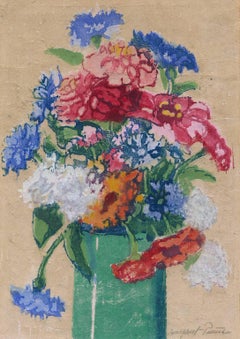
Zinnias and Bachelor Buttons.
Located in New York, NY
Margaret Patterson created this color woodcut print circa 1920. It is signed in pencil at the paper edge, lower right. Printed in areas to the paper edge -sheet size 10 1/16 x 7 1/...
Category
Early 20th Century American Modern Art by Medium: Woodcut
Materials
Woodcut
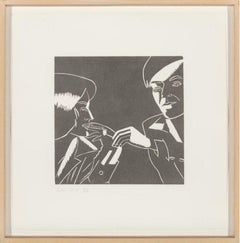
Alex Katz from
A Tremor in the Morning
signed, limited edition woodcut print
By Alex Katz
Located in San Rafael, CA
Alex Katz (b. 1927)
Untitled, from the portfolio 'A Tremor in the Morning', 1986
Woodcut on wove paper
Edition 32/45
Signed and numbered in pencil lower left
Sheet: 20 x 19.75 inches...
Category
1980s Contemporary Art by Medium: Woodcut
Materials
Lithograph, Woodcut
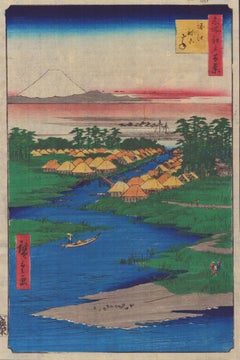
Hiroshige (1797-1858) - Horie and Nekozane - Meisho Edo Hyakkei
Located in BRUCE, ACT
Artist: Utagawa Hiroshige (Hiroshige Ando 1797-1858)
Title: No.96 "Meisho Edo Hyakkei"
Series: One Hundred Famous Views of Edo (名所江戸百景)
Size: O-ban 大判
Age: 1856
Category
1850s Art by Medium: Woodcut
Materials
Woodcut
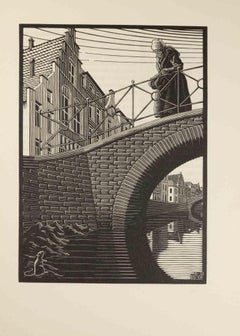
The Bridge - Woodcut by Maurits Cornelis Escher - 1932
Located in Roma, IT
Woodcut print from the Series "Der vreeselijke avonturen vas Scholastica" (The Terrible Adventures of Scholastica).
Edition of 300, published by A. J. van Dishoeck.
Unsigned, ass i...
Category
1930s Modern Art by Medium: Woodcut
Materials
Woodcut
wood engraving for Mille Nuits
Located in Henderson, NV
Medium: wood engraving (after the watercolor). Printed in Paris in 1955 at the atelier Coulouma for "Mille nuits et une nuit" (1001 Nights) which was the last major portfolio by Kees...
Category
1950s Art by Medium: Woodcut
Materials
Engraving, Woodcut
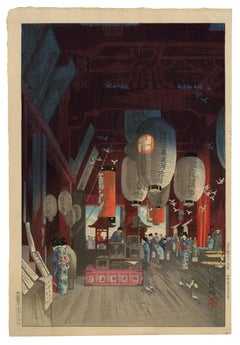
Interior of the Kannon Temple at Asakusa
— Tokyo Landmark, Early Edition
Located in Myrtle Beach, SC
NARAZAKI EISHO (1864-1936), 'Asakusa Kannon-do no naido' (Interior of the Kannon Temple at Asakusa), color woodblock print, 1932. Signed Eisho lower right, with the artist’s red seal beneath. A fine impression with fresh colors; the full sheet with slight overall age toning, a drying tack...
Category
1930s Art by Medium: Woodcut
Materials
Woodcut
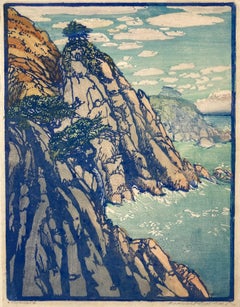
STORM LINED - Large Format Gearhart
Located in Santa Monica, CA
FRANCES H. GEARHART (1869-1958)
STORM LINED c.1936
Color block print, signed and titled in pencil 13 ¼ x 10 1/8, full sheet 14 3/8 x 11 ¼” with deckle edge on her typical fibrous Ja...
Category
1930s Abstract Impressionist Art by Medium: Woodcut
Materials
Color, Woodcut
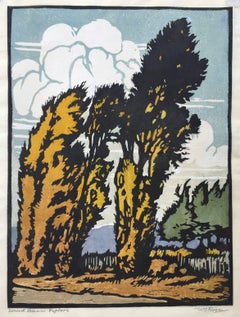
Wind Blown Poplars
Located in Santa Monica, CA
WILLIAM SELTZER RICE (1873 – 1963)
WIND BLOWN POPLARS c. 1915-20
Color woodcut, Signed and titled in pencil. 9 x 12”. On thin paper....
Category
1910s American Impressionist Art by Medium: Woodcut
Materials
Woodcut

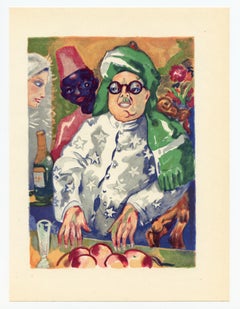
$3,600 Sale Price
20% Off
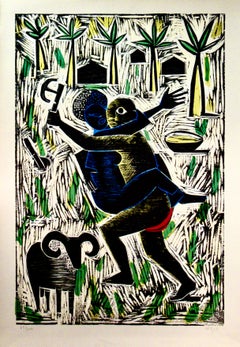
"Lendas Africanas Da Bahia" from the suite.
Located in San Francisco, CA
This artwork titled " Lendas Africanas Da Bahia" from the suite, 1978, is an original colors woodcut by renown Brazilian/Argentinian artist Hector Julio Paride Barnabo Carybe, 1911-1997. It is hand signed and numbered 83/200 in pencil by the artist. The Wood block mark (image) is 23.65 x 15.75 inches, sheet size is 26.75 x 19 inches. It is in excellent condition, has never been framed. It will be shipped in a 8 inches diameter heavy duty tube.
About the artist:
Héctor Julio Páride Bernabó (7 February 1911 – 2 October 1997) was an Argentine-Brazilian artist, researcher, writer, historian and journalist. His nickname and artistic name, Carybé, a type of piranha, comes from his time in the scouts. He died of heart failure after the meeting of a candomblé community's lay board of directors, the Cruz Santa Opô Afonjá Society, of which he was a member.
Quick Facts Born, Died ...
Carybé
Born
Héctor Julio Páride Bernabó
7 February 1911
Lanús, Argentina
Died
2 October 1997 (aged 86)
Salvador, Bahia, Brazil
Nationality
Brazilian
Known for
Painter, engraver, draughtsman, illustrator, potter, sculptor, mural painter, researcher, historian and journalist
Close
He produced thousands of works, including paintings, drawings, sculptures and sketches. He was an Obá de Xangô, an honorary position at Ilê Axé Opô Afonjá.
Orixá Panels in the Afro-Brazilian Museum in Salvador
Some of Carybé's work can be found in the Afro-Brazilian Museum in Salvador: 27 cedar panels representing different orixás or divinities of the Afro-Brazilian religion candomblé. Each panel shows a divinity with their associated implements and animal. The work was commissioned by the former Banco da Bahia S.A., now Banco BBM S.A., which originally installed them in its branch on Avenida Sete de Setembro in 1968.
Murals at Miami International Airport
American Airlines, Odebrecht and the Miami-Dade Aviation Department partnered to install two of Carybé's murals at Miami International Airport. They have been displayed in the American Airlines terminal at John F. Kennedy International Airport in New York since 1960. The 16.5 x 53-foot murals were accredited when Carybé won the first and the second prize in a contest of public art pieces for JFK airport.
As its terminal at that airport was due for demolition, American Airlines donated the murals to Miami-Dade County, and Odebrecht invested in a project to remove, restore, transport and install the murals at Miami International Airport.
The mural "Rejoicing and Festival of the Americas" portrays colorful scenes from popular festivals throughout the Americas, and "Discovery and Settlement of the West" depicts the pioneers’ journey into the American West.
Carybé's Woodcuts in Gabriel García Márquez's Books
Carybé illustrated four books by the Colombian writer Gabriel García Márquez, including One Hundred Years of Solitude, The Autumn of the Patriarch, Chronicle of a Death Foretold, and Love in the Time of Cholera "Carybé: um mestre da cultura baiana". ArqBahia Arquitetura, design, arte e lifestyle (in Brazilian Portuguese). 26 April 2023.. In particular, the woodcuts in One Hundred Years of Solitude are well-known for providing a visual image of the fictional town of Macondo, where the story takes place. The illustrations depict the colorful and winding houses, the railway bridge, and the hot and humid climate of the region, contributing to the reader's immersion in the story.
Carybé's woodcuts are, therefore, an important part of Gabriel García Márquez's literary legacy, bringing a visual dimension to his stories that further enriches the reader's experience.
Timeline
1911 — Birth in Lanús, Argentina.
1919 — Moved to Brazil.
1921 — The name Carybé is first given to him by the Clube do Flamengo scouts group, in Rio de Janeiro.
1925 — Beginning of his artistic endeavours, going to the pottery workshop of his elder brother, Arnaldo Bernabó, in Rio de Janeiro.
1927–1929 — Studies at the National School of Fine Arts, in Rio de Janeiro.
1930 — Worked for the newspaper Noticias Gráficas, in Buenos Aires, Argentina.
1935–1936 — Works with the writer Julio Cortázar and as a draughtsman for the El Diario newspaper.
1938 — Sent to Salvador by newspaper Prégon.
1939 — First collective exhibition, with the artist Clemente Moreau, at the Buenos Aires City Museum of Fine Arts, Argentina; illustrates the book Macumba, Relatos de la Tierra Verde, by Bernardo Kardon, published by Tiempo Nuestro.
1940 — Illustrates the book Macunaíma, by Mário de Andrade.
1941 — Draws the Esso Almanach, the payment for which allows him to set on a long journey through Uruguay, Brazil, Bolivia, and Argentina.
1941–1942 — Study trip around several South American countries.
1942 — Illustration for the book La Carreta by Henrique Amorim, published by El Ateneo (Buenos Aires, Argentina).
1943 — Together with Raul Brié, translates the book Macunaíma, by Mário de Andrade, into Spanish; produces the illustrations for the works Maracatu, Motivos Típicos y Carnavalescos, by Newton Freitas, published by Pigmaleon, Luna Muerta, by Manoel Castilla, published by Schapire, and Amores de Juventud, by Casanova Callabero; also publishes and illustrates Me voy al Norte, for the quarterly magazine Libertad Creadora; awarded First Prize by the Cámara Argentina del Libro (Argentine Book Council) for the illustration of the book Juvenília, by Miguel Cané (Buenos Aires, Argentina).
1944 — Illustrates the books The Complete Poetry of Walt Whitmann and A Cabana do Pai Tomás, both published by Schapire ; as well as and Los Quatro Gigantes del Alma by Mira y Lopez, Salvador BA; attends capoeira classes, visits candomblé meetings and makes drawings and paintings.
1945 — Does the illustrations for Daniel Defoe's Robinson Crusoe, for the Viau publishing house.
1946 — Helps in setting up the Tribuna da Imprensa newspaper, in Rio de Janeiro.
1947 — Works for the O Diário Carioca newspaper, in Rio de Janeiro.
1948 — Produces texts and illustrations for the book Ajtuss, Ediciones Botella al Mar (Buenos Aires, Argentina).
1949–1950 — Invited by Carlos Lacerda to work at the Tribuna da Imprensa, in Rio de Janeiro.
1950 — Invited by the Education Secretary Anísio Teixeira, moves to Bahia, and produces two panels for the Carneiro Ribeiro Education Center (Park School), in Salvador, Bahia.
1950–1997 — Settles in Salvador, Bahia.
1950–1960 — Actively participate in the plastic arts renewal movement, alongside Mário Cravo Júnior, Genaro de Carvalho, and Jenner Augusto.
1951 — Produces texts and illustrations for the works of the Coleção Recôncavo, published by Tipografia Beneditina and illustrations for the book, Bahia, Imagens da Terra e do Povo, by Odorico Tavares, published by José Olímpio in Rio de Janeiro; for the latter work he receives the gold medal at the 1st Biennial of Books and Graphic Arts.
1952 — Makes roughly 1,600 drawings for the scenes of the movie O Cangaceiro, by Lima Barreto; also works as the art director and as an extra on the film (São Paulo, SP).
1953 — Illustrations for the book A Borboleta Amarela, by Rubem Braga, published by José Olímpio (Rio de Janeiro, RJ).
1955 — Illustrates the work O Torso da Baiana, edited by the Modern Art Museum of Bahia.
1957 — Produces etchings, with original designs, for the special edition of Mário de Andrade's Macunaíma, published by the Sociedade dos 100 Bibliófilos do Brasil.
1958 — Makes an oil painting mural for the Petrobras Office in New York, USA; illustrates the book As Três Mulheres de Xangô, by Zora Seljan, published by Editora G. R. D. (Rio de Janeiro, RJ); Receives a scholarship grant in New York, USA.
1959 — Takes part in the competition for the New York International Airport panels project, in New York, USA, winning first and second prizes.
1961 — Illustrates the book Jubiabá, by Jorge Amado, published by Martins Fontes (São Paulo, SP).
1963 — Awarded the title of Honorary Citizen of Salvador, Bahia.
1965 — Illustrates A Muito Leal e Heróica Cidade de São Sebastião do Rio de Janeiro, published by Raymundo Castro Maya (Rio de Janeiro, RJ).
1966 — With Jorge Amado, co-authors Bahia, Boa Terra Bahia, published by Image (Rio de Janeiro, RJ); writes and illustrates the book Olha o Boi, published by Cultrix (São Paulo, SP).
1967 — Receives the Odorico Tavares Prize – Best Plastic Artist of 1967, in a competition ran by the state government to stimulate the development of plastic arts in Bahia; makes the Orixás Panels for the Banco da Bahia (currently at the UFBA Afro-Brazilian Museum) (Salvador, BA).
1968 — Illustrates the books Carta de Pero Vaz de Caminha ao Rei Dom Manuel, published by Sabiá (Rio de Janeiro) and Capoeira Angolana, by Waldeloir Rego, published by Itapoã (Bahia).
1969 — Produces the illustrations for the book Ninguém Escreve ao Coronel, by Gabriel Garcia Marquez, published by Sabiá (Rio de Janeiro, RJ).
1970 — Illustrates the books O Enterro do Diabo and Os Funerais de Mamãe Grande, published by Sabiá (Rio de Janeiro, RJ), Agotimé her Legend, by Judith Gleason, published by Grossman Publishers (New York, USA).
1971 — Illustrates the books One Hundred Years of Solitude, by Gabriel Garcia Marquez and A Casa Verde by Mario Vargas Llosa, both published by Sabiá (Rio de Janeiro, RJ); produces texts and illustrations for the book Candomblé da Bahia, published by Brunner (São Paulo, SP).
1973 — Illustrations for Gabriel Garcia Marquez's A Incrível e Triste História de Cândida Erendira e sua Avó Desalmada (Rio de Janeiro, RJ); paints the mural for the Legislative Assembly and the panel for the Bahia State Secretary of the Treasury.
1974 — Produces woodcuts for the book Visitações da Bahia, published by Onile.
1976 — Illustrates the book O Gato Malhado e a Andorinha Sinhá: uma história de amor, by Jorge Amado (Salvador, BA); receives the title of Knight of the Order of Merit of Bahia.
1977 — Certified with the Honor for Afro-Brazilian Cult Spiritual Merit, Xangô das Pedrinhas ao Obá de Xangô Carybé (Magé, RJ).
1978 — Makes the concrete sculpture Oxóssi, in the Catacumba Park; illustrates the book A Morte e a Morte de Quincas Berro D´Água, by Jorge Amado, published by Edições Alumbramento (Rio de Janeiro, RJ).
1979 — Produces woodcuts for the book Sete Lendas Africanas da Bahia, published by Onile.
1980 — Designs the costumes and scenery for the ballet Quincas Berro D´Água, at the Teatro Municipal in Rio de Janeiro.
1981 — Publication of the book Iconografia dos Deuses Africanos no Candomblé da Bahia (Ed. Raízes), following thirty years of research.
1982 — Receives the title of Honorary Doctor of the Federal University of Bahia.
1983 — Makes the panel for the Brazilian Embassy in Lagos, Nigeria.
1984 — Receives the Jerônimo Monteiro Commendation – Level of Knight (Espírito Santo); receives the Castro Alves Medal of Merit, granted by the UFBA Academy of Arts and Letters; makes the bronze sculpture Homenagem à mulher baiana (Homage to the Bahian woman), at the Iguatemi Shopping Center (Salvador, BA).
1985 — Designs the costumes and sets for the spectacle La Bohème, at the Castro Alves Theater; illustrates the book Lendas Africanas dos Orixás, by Pierre Verger, published by Currupio.
1992 — Illustrates the book O sumiço da santa: uma história de feitiçaria, by Jorge Amado (Rio de Janeiro, RJ).
1995 — Illustration of the book O uso das plantas na sociedade iorubá, by Pierre Verger (São Paulo, SP).
1996 — Making of the short film Capeta Carybé, by Agnaldo Siri Azevedo, adapted from the book O Capeta Carybé, by Jorge Amado, about the artist Carybé, who was born in Argentina and became the most Bahian of all Brazilians.
1997 — Illustration of the book Poesias de Castro Alves.
Exhibitions
ммIndividual Exhibitions:
1943 — Buenos Aires (Argentina) — First individual exhibition, at the Nordiska Gallery
1944 — Salta (Argentina) — at the Consejo General de Educacion
1945 — Salta (Argentina) — Amigos del Arte, Buenos Aires (Argentina) — Motivos de América, at the Amauta Gallery, Rio de Janeiro RJ — individual exhibition at the IAB/RJ
1947 — Salta (Argentina) — Agrupación Cultural Femenina
1950 — Salvador BA — First individual exhibit in Bahia, at the Bar Anjo Azul; São Paulo SP — MASP.
1952 — São Paulo SP — MAM/SP
1954 — Salvador BA — Oxumaré Gallery
1957 — New York (USA) — Bodley Gallery; Buenos Aires (Argentina) — Bonino Gallery * 1958 - New York (USA) — Bodley Gallery
1962 — Salvador BA - MAM/BA
1963 — Rio de Janeiro RJ — Bonino Gallery
1965 — Rio de Janeiro RJ — Bonino Gallery
1966 — São Paulo SP — Astrea Gallery
1967 — Rio de Janeiro RJ — Santa Rosa Gallery
1969 — London (England) — Varig Airlines
1970 — Rio de Janeiro RJ — Galeria da Praça
1971 — Rio de Janeiro RJ — MAM/RJ, São Paulo SP — A Galeria; Belo Horizonte MG, Brasília DF, Curitiba PR, Florianopolis SC, Porto Alegre RS, Rio de Janeiro RJ and São Paulo SP — The Orixás Panel (exhibition tour), at the Casa da Cultura in Belo Horizonte, MAM/DF, the Public Library of Paraná, the Legislative Assembly of Santa Catarina State, the Legislative Assembly of Rio Grande do Sul, MAM/RJ and MAM/SP
1972 — The Orixás Panel in Fortaleza CE — at the Ceará Federal University Art Museum, and in Recife PE — at the Santa Isabel Theater
1973 — São Paulo SP — A Galeria
1976 — Salvador BA — at the Church of the Nossa Senhora do Carmo Convent
1980 — São Paulo SP — A Galeria
1981 — Lisbon (Portugal) — Cassino Estoril
1982 — São Paulo SP — Renot Art Gallery, São Paulo SP — A Galeria
1983 — New York (USA) — Iconografia dos Deuses Africanos no Candomblé da Bahia, The Caribbean Cultural Center
1984 — Philadelphia (USA) — Art Institute of Philadelphia; Mexico — Museo Nacional de Las Culturas; São Paulo SP — Galeria de Arte André
1986 — Lisbon (Portugal) — Cassino Estoril; Salvador BA — As Artes de Carybé, Núcleo de Artes Desenbanco
1989 — Lisbon (Portugal) — Cassino Estoril; São Paulo SP — MASP
1995 — São Paulo SP — Documenta Galeria de Arte, São Paulo SP — Casa das Artes Galeria, Campinas SP — Galeria Croqui, Curitiba PR — Galeria de Arte Fraletti e Rubbo, Belo Horizonte MG — Nuance Galeria de Arte, Foz do Iguaçu PR — Ita Galeria de Arte, Porto Alegre RS — Bublitz Decaedro Galeria de Artes, Cuiabá MT — Só Vi Arte Galeria, Goiânia GO — Época Galeria de Arte, São Paulo SP — Artebela Galeria Arte Molduras, Fortaleza CE — Galeria Casa D'Arte, Salvador BA — Oxum Casa de Arte
Collective Exhibitions:
1939 — Buenos Aires (Argentina) — Carybé and Clemente Moreau Exhibition, at the Museo Municipal de Belas Artes
1943 — Buenos Aires (Argentina) — 29th Salon de Acuarelistas y Grabadores — first prize
1946 — Buenos Aires (Argentina) — Drawings by Argentine Artists, at the Kraft Gallery
1948 — Washington (USA) — Artists of Argentina, at the Pan American Union Gallery
1949 — Buenos Aires (Argentina) — Carybé and Gertrudis Chale, at the Viau Gallery; Salvador BA — Bahian Showroom of Fine Arts, at the Hotel Bahia
1950 — Salvador BA — 2nd Bahian Showroom of Fine Arts; São Paulo SP — MAM/SP
1951 — São Paulo SP — 1st São Paulo Art Biennial, Trianon Pavilion.
1952 — Salvador BA — 3rd Bahian Showroom of Fine Arts, at Belvedere da Sé; São Paulo SP — MAM/SP
1953 — Recife PE — Mario Cravo Júnior and Carybé, at the Santa Isabel Theater; São Paulo SP — 2nd São Paulo Art Biennial, at MAM/SP
1954 — Salvador BA — 4th Bahian Showroom of Fine Arts, at the Hotel Bahia. — Bronze medal
1955 — São Paulo SP — 3rd São Paulo Art Biennial, at MAM/SP — first prize for drawing
1956 — Salvador BA — Modern Artists of Bahia, at the Oxumaré Gallery; Venice (Italy) — 28th Venice Biennial
1957 — Rio de Janeiro RJ — 6th National Modern Art Show — exemption from the jury; São Paulo SP — Artists from Bahia, at the MAM/SP
1958 — San Francisco (USA) — Works by Brazilian Artists, at the Fine Arts Museums of San Francisco, Washington and New York (USA) — Works by Brazilian Artists, at the Pan American Union and the MoMA
1959 — Seattle (USA) — 30th International Exhibition, at the Seattle Art Museum; Salvador BA — Modern Artists of Bahia, at the Dentistry School.
1961 — São Paulo SP — 6th São Paulo Art Biennial, at MAM/SP — special room
1963 — Lagos (Nigeria) — Brazilian Contemporary Artists, at the Nigerian Museum; São Paulo SP — 7th São Paulo Art Biennial Bienal, at the Fundação Bienal
1964 — Salvador BA — Christmas Exhibition, at the Galeria Querino
1966 — Baghdad (Iraq) — collective exhibition sponsored by the Calouste Gulbenkian Foundation; Madrid (Spain) — Artists of Bahia, at the Hispanic Culture Institute; Rome (Italy) — Piero Cartona Palace; Salvador BA — 1st National Biennial of Plastic Arts (Bienal da Bahia) — special room; Salvador BA — Draughtsmen of Bahia, at the Convivium Gallery
1967 — Salvador BA — Christmas Exhibition at the Panorama Art Gallery; São Paulo SP — Artists of Bahia, at the A Gallery
1968 — São Paulo SP — Bahian Artists, at the A Gallery
1969 — London (England) — Tryon Gallery; São Paulo SP — 1st Panorama of Current Brazilian Art at the MAM/SP; São Paulo SP — Carybé, Carlos Bastos...
Category
Late 20th Century Modern Art by Medium: Woodcut
Materials
Woodcut
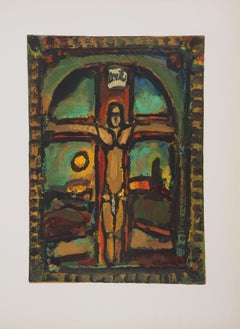
Easter : Crucifixion - Woodcut on Arches vellum - Printed signature
Located in Paris, IDF
Georges Rouault
Crucifixion
Woodcut and embossing (Raymond Jacquet workshop)
Printed signature in the plate
On Arches vellum
15 x 11" (38 x 28 cm)
INFORMATION : Woodcut published i...
Category
Mid-20th Century Modern Art by Medium: Woodcut
Materials
Woodcut
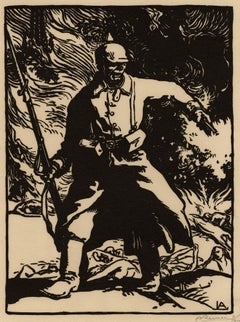
Le Soldat Prussien (The Prussian Soldier)
Located in Middletown, NY
Paris: Sagot, 1898.
Wood engraving on cream wove paper, 8 1/2 x 6 1/4 inches (216 x 158 mm), full margins. Signed and numbered 11/25 in pencil, lower right. With the blindstamp of t...
Category
Late 19th Century French School Art by Medium: Woodcut
Materials
Handmade Paper, Woodcut
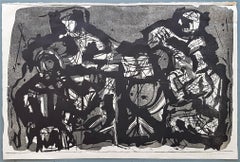
Quartet No. 1
By Eugene Larkin
Located in Kansas City, MO
Eugene Larkin
Quartet No. 1
Woodcut in two colors
Signed and titled by hand
Size: 20 x 29.5 inches
COA provided
Eugene Larkin (1921-2010)
The late Eugene Larkin was an artist who worked in the Twin Cities area for many years and needs little introduction. His works have been shown, collected and appreciated by numerous galleries, museums and collectors throughout the United States.
Larkin was influential both as an artist and as a teacher. He taught at the Minneapolis College of Art and Design between 1954 and 1969, where he was head of printmaking and Chairman of the Division of Fine Arts. From 1969-1991 he was a professor in the Design Department at the University of Minnesota.
Eugene Larkin, a lithographer, teacher and artist who left behind scores of works, some of them in the permanent collections of the Library of Congress and the Museum of Modern Art. He was considered an early promoter of lithography education, Larkin introduced it into arts programs while teaching at the Minneapolis College of Art and Design and the University of Minnesota. He held a prominent place in the art world through decades of working and teaching in Minneapolis. His work depicted a wide range of subjects, from musicians to nature, including a series of woodcuts based on William Blake's ""Songs of Innocence and Experience."
Larkin also wrote a textbook, ""Design: The Search for Unity."" It was his work with lithography, an 18th-century printmaking process, for which he was best known.
His last local exhibit was a retrospective at The University of Minnesota Weisman Museum in 2005. ""Sometimes I start the artistic process from a literary source - Adam and Eve, the Egyptian nature gods, or classical Greek themes but sometimes I start from nature. Trees have always been a favorite subject. I see trees as people, as vertical objects...
Category
15th Century and Earlier Modern Art by Medium: Woodcut
Materials
Woodcut
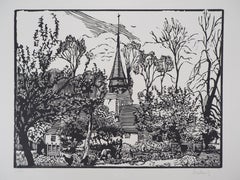
The Old Church - Original wooodcut, Handsigned
Located in Paris, IDF
Georges LE MEILLEUR (1861-1945)
The Old Church, 1922
Original woodcut
Handsigned in pencil
Numbered /160
On vellum 32.5 x 25.5 cm (c. 13 x 10 in)
Bears the blind stamp of the editor...
Category
1920s Art Deco Art by Medium: Woodcut
Materials
Woodcut
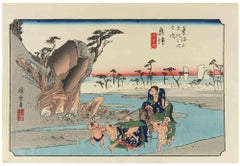
Okitsu-gawa - Woodcut by Utagawa Hiroshige - 1832
Located in Roma, IT
Okitsu-gawa is a woodcut print realized by Utagawa Hiroshige in 1832.
It is part of the suite "The Fifty-three Stations of the Tokaido - Okitsu".
Very good condition.
Category
1830s Modern Art by Medium: Woodcut
Materials
Woodcut
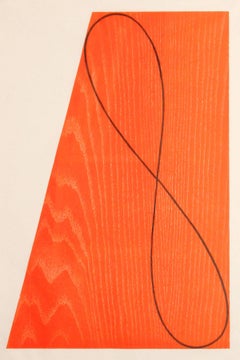
Untitled
Located in New York, NY
Associated with the Minimalist art movement of the 1960s, Mangold developed a reductive vocabulary based on geometric forms, monochromatic color, and an emphasis on the flatness of t...
Category
1990s Abstract Art by Medium: Woodcut
Materials
Woodcut
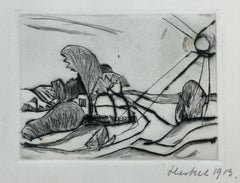
WINTERSONNE
By Erich Heckel
Located in Portland, ME
Heckel, Erich (German, 1883-1970). WINTERSONNE. Dube 318. Drypoint, 1913. Edition size not known. Signed and dated "Heckel 1913" in pencil. Printed on heavy wove paper. 4 3/4 x 6 1/...
Category
1910s Art by Medium: Woodcut
Materials
Woodcut, Drypoint
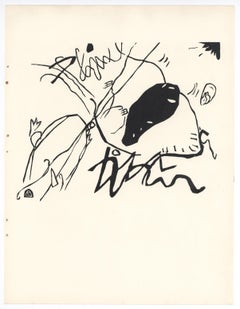
"Schwartzer Fleck" original woodcut
Located in Henderson, NV
Medium: original woodcut. Catalogue reference Roethel 145. Printed in Paris in 1938 for the art revue XXe Siecle (issue number 3). Image size: 7 x 8 1/2 inches (170 x 218 mm). Sheet ...
Category
1930s Expressionist Art by Medium: Woodcut
Materials
Woodcut
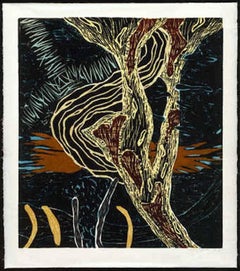
In the Fifth Season
Located in New York, NY
Gregory Amenoff is a painter who lives in New York City and Ulster County, New York. He is the recipient of numerous awards from organizations including the American Academy of Arts ...
Category
Late 20th Century Contemporary Art by Medium: Woodcut
Materials
Woodcut
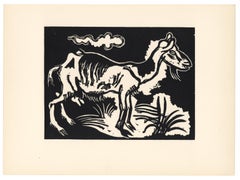
"The Goat" original woodcut
Located in Henderson, NV
Medium: original woodcut. Printed in 1920 for the Deutsche Graphiker der Gegenwart portfolio, and published in Leipzig by Klinkhardt & Biermann in an edition of 500. Image size: 6 1/...
Category
1920s Expressionist Art by Medium: Woodcut
Materials
Woodcut
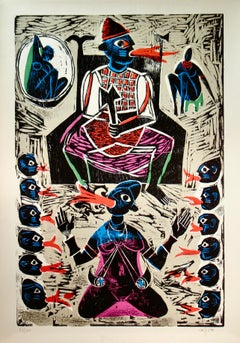
"Lendas Africanas Da Bahia" from the suite.
Located in San Francisco, CA
This artwork titled " Lendas Africanas Da Bahia" from the suite, 1978, is an original colors woodcut by renown Brazilian/Argentinian artist Hector Julio Paride Barnabo Carybe, 1911-1997. It is hand signed and numbered 83/200 in pencil by the artist. The Wood block mark (image) is 23.65 x 15.75 inches, sheet size is 26.75 x 19 inches. It is in excellent condition, has never been framed. It will be shipped in a 8 inches diameter heavy duty tube.
About the artist:
Héctor Julio Páride Bernabó (7 February 1911 – 2 October 1997) was an Argentine-Brazilian artist, researcher, writer, historian and journalist. His nickname and artistic name, Carybé, a type of piranha, comes from his time in the scouts. He died of heart failure after the meeting of a candomblé community's lay board of directors, the Cruz Santa Opô Afonjá Society, of which he was a member.
Quick Facts Born, Died ...
Carybé
Born
Héctor Julio Páride Bernabó
7 February 1911
Lanús, Argentina
Died
2 October 1997 (aged 86)
Salvador, Bahia, Brazil
Nationality
Brazilian
Known for
Painter, engraver, draughtsman, illustrator, potter, sculptor, mural painter, researcher, historian and journalist
Close
He produced thousands of works, including paintings, drawings, sculptures and sketches. He was an Obá de Xangô, an honorary position at Ilê Axé Opô Afonjá.
Orixá Panels in the Afro-Brazilian Museum in Salvador
Some of Carybé's work can be found in the Afro-Brazilian Museum in Salvador: 27 cedar panels representing different orixás or divinities of the Afro-Brazilian religion candomblé. Each panel shows a divinity with their associated implements and animal. The work was commissioned by the former Banco da Bahia S.A., now Banco BBM S.A., which originally installed them in its branch on Avenida Sete de Setembro in 1968.
Murals at Miami International Airport
American Airlines, Odebrecht and the Miami-Dade Aviation Department partnered to install two of Carybé's murals at Miami International Airport. They have been displayed in the American Airlines terminal at John F. Kennedy International Airport in New York since 1960. The 16.5 x 53-foot murals were accredited when Carybé won the first and the second prize in a contest of public art pieces for JFK airport.
As its terminal at that airport was due for demolition, American Airlines donated the murals to Miami-Dade County, and Odebrecht invested in a project to remove, restore, transport and install the murals at Miami International Airport.
The mural "Rejoicing and Festival of the Americas" portrays colorful scenes from popular festivals throughout the Americas, and "Discovery and Settlement of the West" depicts the pioneers’ journey into the American West.
Carybé's Woodcuts in Gabriel García Márquez's Books
Carybé illustrated four books by the Colombian writer Gabriel García Márquez, including One Hundred Years of Solitude, The Autumn of the Patriarch, Chronicle of a Death Foretold, and Love in the Time of Cholera "Carybé: um mestre da cultura baiana". ArqBahia Arquitetura, design, arte e lifestyle (in Brazilian Portuguese). 26 April 2023.. In particular, the woodcuts in One Hundred Years of Solitude are well-known for providing a visual image of the fictional town of Macondo, where the story takes place. The illustrations depict the colorful and winding houses, the railway bridge, and the hot and humid climate of the region, contributing to the reader's immersion in the story.
Carybé's woodcuts are, therefore, an important part of Gabriel García Márquez's literary legacy, bringing a visual dimension to his stories that further enriches the reader's experience.
Timeline
1911 — Birth in Lanús, Argentina.
1919 — Moved to Brazil.
1921 — The name Carybé is first given to him by the Clube do Flamengo scouts group, in Rio de Janeiro.
1925 — Beginning of his artistic endeavours, going to the pottery workshop of his elder brother, Arnaldo Bernabó, in Rio de Janeiro.
1927–1929 — Studies at the National School of Fine Arts, in Rio de Janeiro.
1930 — Worked for the newspaper Noticias Gráficas, in Buenos Aires, Argentina.
1935–1936 — Works with the writer Julio Cortázar and as a draughtsman for the El Diario newspaper.
1938 — Sent to Salvador by newspaper Prégon.
1939 — First collective exhibition, with the artist Clemente Moreau, at the Buenos Aires City Museum of Fine Arts, Argentina; illustrates the book Macumba, Relatos de la Tierra Verde, by Bernardo Kardon, published by Tiempo Nuestro.
1940 — Illustrates the book Macunaíma, by Mário de Andrade.
1941 — Draws the Esso Almanach, the payment for which allows him to set on a long journey through Uruguay, Brazil, Bolivia, and Argentina.
1941–1942 — Study trip around several South American countries.
1942 — Illustration for the book La Carreta by Henrique Amorim, published by El Ateneo (Buenos Aires, Argentina).
1943 — Together with Raul Brié, translates the book Macunaíma, by Mário de Andrade, into Spanish; produces the illustrations for the works Maracatu, Motivos Típicos y Carnavalescos, by Newton Freitas, published by Pigmaleon, Luna Muerta, by Manoel Castilla, published by Schapire, and Amores de Juventud, by Casanova Callabero; also publishes and illustrates Me voy al Norte, for the quarterly magazine Libertad Creadora; awarded First Prize by the Cámara Argentina del Libro (Argentine Book Council) for the illustration of the book Juvenília, by Miguel Cané (Buenos Aires, Argentina).
1944 — Illustrates the books The Complete Poetry of Walt Whitmann and A Cabana do Pai Tomás, both published by Schapire ; as well as and Los Quatro Gigantes del Alma by Mira y Lopez, Salvador BA; attends capoeira classes, visits candomblé meetings and makes drawings and paintings.
1945 — Does the illustrations for Daniel Defoe's Robinson Crusoe, for the Viau publishing house.
1946 — Helps in setting up the Tribuna da Imprensa newspaper, in Rio de Janeiro.
1947 — Works for the O Diário Carioca newspaper, in Rio de Janeiro.
1948 — Produces texts and illustrations for the book Ajtuss, Ediciones Botella al Mar (Buenos Aires, Argentina).
1949–1950 — Invited by Carlos Lacerda to work at the Tribuna da Imprensa, in Rio de Janeiro.
1950 — Invited by the Education Secretary Anísio Teixeira, moves to Bahia, and produces two panels for the Carneiro Ribeiro Education Center (Park School), in Salvador, Bahia.
1950–1997 — Settles in Salvador, Bahia.
1950–1960 — Actively participate in the plastic arts renewal movement, alongside Mário Cravo Júnior, Genaro de Carvalho, and Jenner Augusto.
1951 — Produces texts and illustrations for the works of the Coleção Recôncavo, published by Tipografia Beneditina and illustrations for the book, Bahia, Imagens da Terra e do Povo, by Odorico Tavares, published by José Olímpio in Rio de Janeiro; for the latter work he receives the gold medal at the 1st Biennial of Books and Graphic Arts.
1952 — Makes roughly 1,600 drawings for the scenes of the movie O Cangaceiro, by Lima Barreto; also works as the art director and as an extra on the film (São Paulo, SP).
1953 — Illustrations for the book A Borboleta Amarela, by Rubem Braga, published by José Olímpio (Rio de Janeiro, RJ).
1955 — Illustrates the work O Torso da Baiana, edited by the Modern Art Museum of Bahia.
1957 — Produces etchings, with original designs, for the special edition of Mário de Andrade's Macunaíma, published by the Sociedade dos 100 Bibliófilos do Brasil.
1958 — Makes an oil painting mural for the Petrobras Office in New York, USA; illustrates the book As Três Mulheres de Xangô, by Zora Seljan, published by Editora G. R. D. (Rio de Janeiro, RJ); Receives a scholarship grant in New York, USA.
1959 — Takes part in the competition for the New York International Airport panels project, in New York, USA, winning first and second prizes.
1961 — Illustrates the book Jubiabá, by Jorge Amado, published by Martins Fontes (São Paulo, SP).
1963 — Awarded the title of Honorary Citizen of Salvador, Bahia.
1965 — Illustrates A Muito Leal e Heróica Cidade de São Sebastião do Rio de Janeiro, published by Raymundo Castro Maya (Rio de Janeiro, RJ).
1966 — With Jorge Amado, co-authors Bahia, Boa Terra Bahia, published by Image (Rio de Janeiro, RJ); writes and illustrates the book Olha o Boi, published by Cultrix (São Paulo, SP).
1967 — Receives the Odorico Tavares Prize – Best Plastic Artist of 1967, in a competition ran by the state government to stimulate the development of plastic arts in Bahia; makes the Orixás Panels for the Banco da Bahia (currently at the UFBA Afro-Brazilian Museum) (Salvador, BA).
1968 — Illustrates the books Carta de Pero Vaz de Caminha ao Rei Dom Manuel, published by Sabiá (Rio de Janeiro) and Capoeira Angolana, by Waldeloir Rego, published by Itapoã (Bahia).
1969 — Produces the illustrations for the book Ninguém Escreve ao Coronel, by Gabriel Garcia Marquez, published by Sabiá (Rio de Janeiro, RJ).
1970 — Illustrates the books O Enterro do Diabo and Os Funerais de Mamãe Grande, published by Sabiá (Rio de Janeiro, RJ), Agotimé her Legend, by Judith Gleason, published by Grossman Publishers (New York, USA).
1971 — Illustrates the books One Hundred Years of Solitude, by Gabriel Garcia Marquez and A Casa Verde by Mario Vargas Llosa, both published by Sabiá (Rio de Janeiro, RJ); produces texts and illustrations for the book Candomblé da Bahia, published by Brunner (São Paulo, SP).
1973 — Illustrations for Gabriel Garcia Marquez's A Incrível e Triste História de Cândida Erendira e sua Avó Desalmada (Rio de Janeiro, RJ); paints the mural for the Legislative Assembly and the panel for the Bahia State Secretary of the Treasury.
1974 — Produces woodcuts for the book Visitações da Bahia, published by Onile.
1976 — Illustrates the book O Gato Malhado e a Andorinha Sinhá: uma história de amor, by Jorge Amado (Salvador, BA); receives the title of Knight of the Order of Merit of Bahia.
1977 — Certified with the Honor for Afro-Brazilian Cult Spiritual Merit, Xangô das Pedrinhas ao Obá de Xangô Carybé (Magé, RJ).
1978 — Makes the concrete sculpture Oxóssi, in the Catacumba Park; illustrates the book A Morte e a Morte de Quincas Berro D´Água, by Jorge Amado, published by Edições Alumbramento (Rio de Janeiro, RJ).
1979 — Produces woodcuts for the book Sete Lendas Africanas da Bahia, published by Onile.
1980 — Designs the costumes and scenery for the ballet Quincas Berro D´Água, at the Teatro Municipal in Rio de Janeiro.
1981 — Publication of the book Iconografia dos Deuses Africanos no Candomblé da Bahia (Ed. Raízes), following thirty years of research.
1982 — Receives the title of Honorary Doctor of the Federal University of Bahia.
1983 — Makes the panel for the Brazilian Embassy in Lagos, Nigeria.
1984 — Receives the Jerônimo Monteiro Commendation – Level of Knight (Espírito Santo); receives the Castro Alves Medal of Merit, granted by the UFBA Academy of Arts and Letters; makes the bronze sculpture Homenagem à mulher baiana (Homage to the Bahian woman), at the Iguatemi Shopping Center (Salvador, BA).
1985 — Designs the costumes and sets for the spectacle La Bohème, at the Castro Alves Theater; illustrates the book Lendas Africanas dos Orixás, by Pierre Verger, published by Currupio.
1992 — Illustrates the book O sumiço da santa: uma história de feitiçaria, by Jorge Amado (Rio de Janeiro, RJ).
1995 — Illustration of the book O uso das plantas na sociedade iorubá, by Pierre Verger (São Paulo, SP).
1996 — Making of the short film Capeta Carybé, by Agnaldo Siri Azevedo, adapted from the book O Capeta Carybé, by Jorge Amado, about the artist Carybé, who was born in Argentina and became the most Bahian of all Brazilians.
1997 — Illustration of the book Poesias de Castro Alves.
Exhibitions
ммIndividual Exhibitions:
1943 — Buenos Aires (Argentina) — First individual exhibition, at the Nordiska Gallery
1944 — Salta (Argentina) — at the Consejo General de Educacion
1945 — Salta (Argentina) — Amigos del Arte, Buenos Aires (Argentina) — Motivos de América, at the Amauta Gallery, Rio de Janeiro RJ — individual exhibition at the IAB/RJ
1947 — Salta (Argentina) — Agrupación Cultural Femenina
1950 — Salvador BA — First individual exhibit in Bahia, at the Bar Anjo Azul; São Paulo SP — MASP.
1952 — São Paulo SP — MAM/SP
1954 — Salvador BA — Oxumaré Gallery
1957 — New York (USA) — Bodley Gallery; Buenos Aires (Argentina) — Bonino Gallery * 1958 - New York (USA) — Bodley Gallery
1962 — Salvador BA - MAM/BA
1963 — Rio de Janeiro RJ — Bonino Gallery
1965 — Rio de Janeiro RJ — Bonino Gallery
1966 — São Paulo SP — Astrea Gallery
1967 — Rio de Janeiro RJ — Santa Rosa Gallery
1969 — London (England) — Varig Airlines
1970 — Rio de Janeiro RJ — Galeria da Praça
1971 — Rio de Janeiro RJ — MAM/RJ, São Paulo SP — A Galeria; Belo Horizonte MG, Brasília DF, Curitiba PR, Florianopolis SC, Porto Alegre RS, Rio de Janeiro RJ and São Paulo SP — The Orixás Panel (exhibition tour), at the Casa da Cultura in Belo Horizonte, MAM/DF, the Public Library of Paraná, the Legislative Assembly of Santa Catarina State, the Legislative Assembly of Rio Grande do Sul, MAM/RJ and MAM/SP
1972 — The Orixás Panel in Fortaleza CE — at the Ceará Federal University Art Museum, and in Recife PE — at the Santa Isabel Theater
1973 — São Paulo SP — A Galeria
1976 — Salvador BA — at the Church of the Nossa Senhora do Carmo Convent
1980 — São Paulo SP — A Galeria
1981 — Lisbon (Portugal) — Cassino Estoril
1982 — São Paulo SP — Renot Art Gallery, São Paulo SP — A Galeria
1983 — New York (USA) — Iconografia dos Deuses Africanos no Candomblé da Bahia, The Caribbean Cultural Center
1984 — Philadelphia (USA) — Art Institute of Philadelphia; Mexico — Museo Nacional de Las Culturas; São Paulo SP — Galeria de Arte André
1986 — Lisbon (Portugal) — Cassino Estoril; Salvador BA — As Artes de Carybé, Núcleo de Artes Desenbanco
1989 — Lisbon (Portugal) — Cassino Estoril; São Paulo SP — MASP
1995 — São Paulo SP — Documenta Galeria de Arte, São Paulo SP — Casa das Artes Galeria, Campinas SP — Galeria Croqui, Curitiba PR — Galeria de Arte Fraletti e Rubbo, Belo Horizonte MG — Nuance Galeria de Arte, Foz do Iguaçu PR — Ita Galeria de Arte, Porto Alegre RS — Bublitz Decaedro Galeria de Artes, Cuiabá MT — Só Vi Arte Galeria, Goiânia GO — Época Galeria de Arte, São Paulo SP — Artebela Galeria Arte Molduras, Fortaleza CE — Galeria Casa D'Arte, Salvador BA — Oxum Casa de Arte
Collective Exhibitions:
1939 — Buenos Aires (Argentina) — Carybé and Clemente Moreau Exhibition, at the Museo Municipal de Belas Artes
1943 — Buenos Aires (Argentina) — 29th Salon de Acuarelistas y Grabadores — first prize
1946 — Buenos Aires (Argentina) — Drawings by Argentine Artists, at the Kraft Gallery
1948 — Washington (USA) — Artists of Argentina, at the Pan American Union Gallery
1949 — Buenos Aires (Argentina) — Carybé and Gertrudis Chale, at the Viau Gallery; Salvador BA — Bahian Showroom of Fine Arts, at the Hotel Bahia
1950 — Salvador BA — 2nd Bahian Showroom of Fine Arts; São Paulo SP — MAM/SP
1951 — São Paulo SP — 1st São Paulo Art Biennial, Trianon Pavilion.
1952 — Salvador BA — 3rd Bahian Showroom of Fine Arts, at Belvedere da Sé; São Paulo SP — MAM/SP
1953 — Recife PE — Mario Cravo Júnior and Carybé, at the Santa Isabel Theater; São Paulo SP — 2nd São Paulo Art Biennial, at MAM/SP
1954 — Salvador BA — 4th Bahian Showroom of Fine Arts, at the Hotel Bahia. — Bronze medal
1955 — São Paulo SP — 3rd São Paulo Art Biennial, at MAM/SP — first prize for drawing
1956 — Salvador BA — Modern Artists of Bahia, at the Oxumaré Gallery; Venice (Italy) — 28th Venice Biennial
1957 — Rio de Janeiro RJ — 6th National Modern Art Show — exemption from the jury; São Paulo SP — Artists from Bahia, at the MAM/SP
1958 — San Francisco (USA) — Works by Brazilian Artists, at the Fine Arts Museums of San Francisco, Washington and New York (USA) — Works by Brazilian Artists, at the Pan American Union and the MoMA
1959 — Seattle (USA) — 30th International Exhibition, at the Seattle Art Museum; Salvador BA — Modern Artists of Bahia, at the Dentistry School.
1961 — São Paulo SP — 6th São Paulo Art Biennial, at MAM/SP — special room
1963 — Lagos (Nigeria) — Brazilian Contemporary Artists, at the Nigerian Museum; São Paulo SP — 7th São Paulo Art Biennial Bienal, at the Fundação Bienal
1964 — Salvador BA — Christmas Exhibition, at the Galeria Querino
1966 — Baghdad (Iraq) — collective exhibition sponsored by the Calouste Gulbenkian Foundation; Madrid (Spain) — Artists of Bahia, at the Hispanic Culture Institute; Rome (Italy) — Piero Cartona Palace; Salvador BA — 1st National Biennial of Plastic Arts (Bienal da Bahia) — special room; Salvador BA — Draughtsmen of Bahia, at the Convivium Gallery
1967 — Salvador BA — Christmas Exhibition at the Panorama Art Gallery; São Paulo SP — Artists of Bahia, at the A Gallery
1968 — São Paulo SP — Bahian Artists, at the A Gallery
1969 — London (England) — Tryon Gallery; São Paulo SP — 1st Panorama of Current Brazilian Art at the MAM/SP; São Paulo SP — Carybé, Carlos Bastos...
Category
Late 20th Century Modern Art by Medium: Woodcut
Materials
Woodcut
16th c. woodcut map - Tabula Asiae Vlll
Located in Santa Monica, CA
SEBASTIAN MUNSTER (1488-1652)
ASIAE TABVLA Vlll 1540 (45)
Woodcut from Munster's edition of Geographia Universalis, Basel, Henri Petri. 1545 edit...
Category
16th Century Old Masters Art by Medium: Woodcut
Materials
Woodcut

$950 Sale Price
29% Off
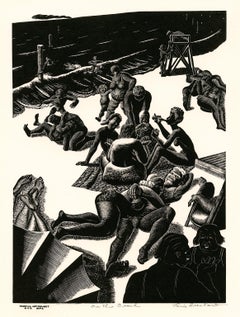
On the Beach (Coney Island, New York) — 1930s Graphic Modernism, WPA
By Lou Barlow
Located in Myrtle Beach, SC
Lou Barlow (Louis Breslow), 'On the Beach' (Coney Island) wood engraving, c. 1937, edition c. 25. Signed and titled in pencil. Stamped 'FEDERAL ART PROJECT NYC WPA' in the bottom left margin. A fine, richly-inked impression, with all the fine lines printing clearly, on cream wove paper, with full margins (1 1/2 to 3 inches), in excellent condition. Matted to museum standards, unframed. Scarce.
Image size 11 x 8 1/8 inches; sheet size 16 x 11 3/8 inches.
Created during the Great Depression for the Works Progress Administration (WPA), Federal Art Project, New York City.
Impressions of this work are in the permanent collections of the Amon Carter Museum of Art, Illinois State Museum, and the New York Public Library.
ABOUT THE IMAGE
Due to Coney Island's proximity to Manhattan, Brooklyn, and other New York boroughs, it began attracting vacationers in the 1830s and 1840s. Most of the vacationers were wealthy and went by carriage roads and steamship services that reduced travel time from a formerly half-day journey to two hours. By the late 1870s, the development of Coney Island's amusement park attractions and hotels drew people from all social classes. When the Brooklyn Rapid Transit Company electrified the steam railroads and connected Brooklyn to Manhattan via the Brooklyn Bridge at the beginning of the 20th century, Coney Island turned rapidly from a resort to an accessible location for day-trippers seeking to escape the summer heat in New York City's tenements. In 1915, the Sea Beach Line was upgraded to a subway line, and the opening of the Stillwell Avenue station in 1919 ushered in Coney Island's busiest era. On the peak summer days, over a million people would travel to Coney Island. In 1937, New York City purchased a 400-foot-wide strip of land along the shoreline to allow the boardwalk to be moved 300 feet inland. At this point, Coney Island was so crowded on summer weekends that parks commissioner Robert Moses...
Category
1930s American Modern Art by Medium: Woodcut
Materials
Woodcut
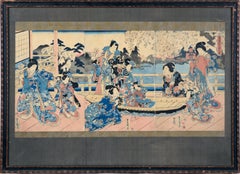
Elegant Amusements of Eastern Genji - Japanese Triptych Woodblock Print on Paper
Located in Soquel, CA
Elegant Amusements of Eastern Genji - Japanese Triptych Woodblock Print on Paper
Dynamic woodblock print with several elegantly dressed figures by Utag...
Category
1850s Edo Art by Medium: Woodcut
Materials
Paper, Ink, Woodcut
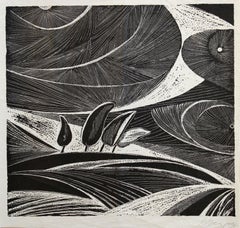
Four trees. Paper, wood carving , 29x29 cm
Located in Riga, LV
Four trees. Paper, wood carving, 29x29 cm
Dzidra Ezergaile (1926-2013)
Born in Riga. School years alternate with summer work in the countryside. In 1...
Category
1970s Abstract Art by Medium: Woodcut
Materials
Paper, Woodcut
$408 Sale Price
20% Off
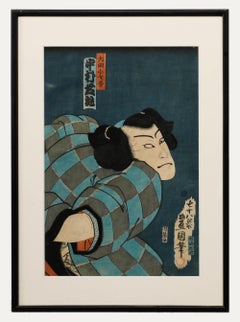
19th Century Japanese Woodblock - Restraint
Located in Corsham, GB
A dynamic Japanese woodblock depicting a woman captured with her hands behind her back. Signed and inscribed with characters. Presented in a contemporary black frame. On paper.
Category
19th Century Art by Medium: Woodcut
Materials
Woodcut
$302 Sale Price
20% Off
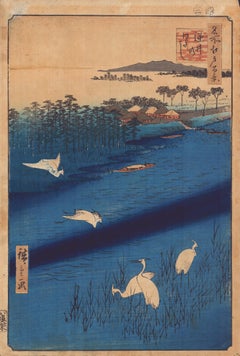
The Ferry at Sakasai - One Hundred Famous Views of EDO 名所江戸百景
Located in BRUCE, ACT
Hiroshige (1797-1858) - One Hundred Famous Views of EDO 名所江戸百景
Artist: 広重 Hiroshige (1797-1858)
Series: One Hundred Famous Views of EDO (名所江戸百景)
Title: The Ferry at Sakasai (逆井のわたし...
Category
1850s Art by Medium: Woodcut
Materials
Woodcut
$2,704 Sale Price
20% Off
original woodcut
Located in Henderson, NV
Medium: original woodcut. This impression on wove paper was printed in 1919 for Das Kestnerbuch, an important collection of original prints published during the height of the German ...
Category
1910s Expressionist Art by Medium: Woodcut
Materials
Woodcut
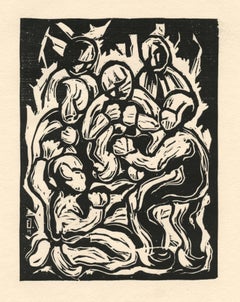
1945 Brazilian Master, Art Deco Nudes Serigraph Woodcut Carnaval Bahia
Located in Surfside, FL
Genre: Brazilian Art Deco, African Diaspora
Bahian Carnival
Subject: Abstract
Medium: Print
Surface: Paper
Country: Brazil
Dimensions of overall paper are listed.
This is from a series of work he did in the 1940's, we sold one called Ritmo Negro, they are about Afro-Brazilian jazz, dance and music.
Odetto Guersoni was born in the city of Jaboticabal, State of São Paulo, in 1924. From 1936 to 1941 he attended the Liceu de Artes de Ofícios in São Paulo, beginning his artistic career in 1945, when he exhibited paintings in the Hall of the Plastic Artists Union . Two years later he was part of the collective group of 19, alongside Aldemir, Charoux, Otavio Araújo, Grassmann, Maria Leontina and several other artists that time would make famous. He then practiced a figurative painting of accentuated Expressionist lauds, characterized by deformation and coloring, raw and Satirical- as, moreover, so many of his fellow exhibitors at the time. As a French government scholar, Odette Guerzoni went to Paris in 1947 and the following year took part in the Peintres et Graveurs Etrangers and Art Libre exhibitions. Student of engraving by Renê Cottet, gradually transformed this expressive medium into his favorite, to the detriment of painting, which he practically abandoned soon after.
In 1947, he participated in the 19 Painters exhibition at the Prestes Maia Gallery together with Lothar Charoux, Maria Leontina,Grassmann, Aldemir Martins, Luiz Sacilotto and hiró. Guersoni was awarded a scholarship by the French government, and traveled to Paris, where he began work in engraving. Back in Brazil, in 1951, he founded the Art Workshop, in São Paulo. In 1954, he returned to Europe for a year, financed by the International Labor Organization (ILO). In Geneva, he studied engraving with René Cottet (1902 - 1992) and worked in Stanley william Hayter's studio, Atelier 17, in Paris (1901 - 1988). From 1956 to 1957, he became director of the Union of Plastic Artists of São Paulo. From 1960, he attended, as a trainee, some art schools in the United States and Japan such as The New York School of Printing and Osaka University. In 1971, also in Japan, he attended the workshop of I. Jokuriti. Two years later, he was voted Best Recorder of the Year by the Paulista Association of Art Critics - APCA. He took part in a special room at the Ibero-American Biennial in Montevideo in 1983. The Pinacoteca do Estado de São Paulo - Pesp presents a retrospective of his work in 1994.
Odetto Guersoni explores the wide spectrum of possibilities of the engraving. In addition to using techniques such as metal etching, lithograph, serigraph, linocut and, especially, woodcut he developed, in the 1950s, the philigraphy, in which the forms he developed gained points of embroidery made by Bonadei (1906 - 1974) . And, in the 1960s, the plastigraphy, in which he makes engravings on pasty surfaces, obtained from gypsum or other soft material. In the 1970s, technical investigations were associated with pictographic, ideographic, archaic symbol searches, Brazilian cave paintings and plant forms. The drawings are reduced to stylized, geometric shapes and transformed into abstract graphic elements. The artist works with few matrices, which, organized in rectangles, squares or circles, become modules to be combined. Guersoni juxtaposes them, adds, changes colors, and thereby composes colorful mandalas and structural geometries. Based on concise compositions, it produces color vibrations through optical illusions. In many of his woodcut works of the 1980s he uses smooth wood, knives, saws, gouges, punches, avoiding the natural textures of wood. In printing, it leaves the vibrant color and employs dosed inks with colorless masses, obtaining transparencies by superpositions. New journeys of study and specialization in engraving techniques took him in 1954 to Switzerland, 1960 to the United States, and in 1966 to Germany and Austria. Today, after having performed more than 40 individuals including 16 abroad and having participated in more than 50 collectives in several countries, Guersoni is considered one of the most notable Brazilian engravers. Conquered awards in several shows.
CHRONOLOGY
Individual exhibitions
1946 - Sao Paulo SP - 10th Salon of the Artists' Union, at the Prestes Maia Gallery
1947 - São Paulo SP - 19 Painters, at the Prestes Maia Gallery
1948 - Paris France - Peintres et Graveurs Etrangers at the École des Beaux-Arts
1949 - São Paulo SP - 13th Salon of the Artists' Union, at the Prestes Maia Gallery
1951 - São Paulo SP - 1st Paulista Salon of Modern Art, at Prestes Maia Gallery - silver medal
1953 - São Paulo SP - 2nd International Biennial of São Paulo, at MAM / SP
1954 - São Paulo SP - 3rd Paulista Salon of Modern Art, in the Prestes Maia Gallery
1955 - Rio de Janeiro RJ - 4th National Salon of Modern Art
1955 - Salvador BA - 5th Baiano Salon of Fine Arts, in Belvedere da Sé - honorable mention
1962 - São Paulo SP - Leirner Prize for Contemporary Art at the Folha Art Gallery - 1st printing award
1963 - Curitiba PR - 20th Salão Paranaense de Belas Artes, at the Public Library of Paraná
1963 - Rio de Janeiro RJ - Individual, no MAM / RJ
1968 - Bradford England - First International Print Biennale
1970 - São Paulo SP - Antonio Henrique Amaral, Odetto Guersoni, Tomie Ohtake, Pedro Tort and Gerda Brentani, in the Alberto Bonfiglioli Gallery
1971 - São Paulo SP - 11th International Biennial of São Paulo, at the Biennial Foundation - acquisition award
1973 - Punta del Este Uruguay - 1st Engraving Meeting of the Prata Basin Countries - International Prize
1977 - São Paulo SP - The Groups: the 40's, at the Lasar Segall Museum
1982 - São Paulo SP - Ismenia Coaracy, Odetto Guersoni and Alice Brill...
Category
1940s Art Deco Art by Medium: Woodcut
Materials
Woodcut
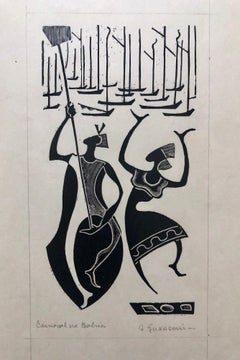
Winter Serenity
—from
Solitude
for Henry David Thoreau
s
Walden
Located in Myrtle Beach, SC
Naoko Matsubara, 'Winter Serenity' for the portfolio 'Solitude', woodcut, 1971, edition 100. Signed and numbered '58/100' in pencil. A fine, richly-inked impression, on cream laid J...
Category
1970s Modern Art by Medium: Woodcut
Materials
Woodcut
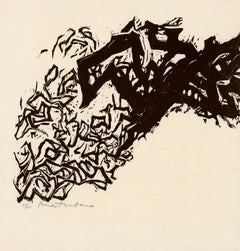
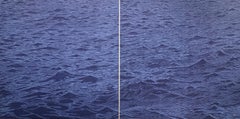
Seascape Diptych Six, Cobalt Blue Horizontal Seascape, Waves Woodcut Print
By Eve Stockton
Located in Kent, CT
This large, horizontal diptych woodcut print on paper evokes the peacefulness of ocean waves depicted in shades of cobalt blue with purple undertones and the artist's addition of wat...
Category
2010s Contemporary Art by Medium: Woodcut
Materials
Archival Ink, Watercolor, Archival Paper, Color Pencil, Woodcut
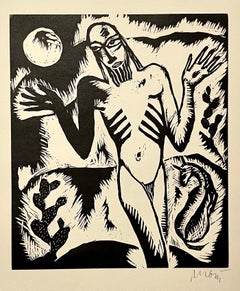
Rare 1923 Cubist Reuven Rubin Woodcut Woodblock Kabbalah Print Israeli Judaica
By Reuven Rubin
Located in Surfside, FL
This is from the original first edition 1923 printing. there was a much later edition done after these originals.
These are individually hand signed in pencil by artist as issued.
This listing is for the one print. the other documentation is included here for provenance and is not included in this listing.
The various images inspired by the Jewish Mysticism and rabbis and mystics of jerusalem and Kabbalah is holy, dramatic and optimistic Rubin succeeded to evoke the spirit of life in Israel in those early days.
They are done in a modern art style influenced by German Expressionism, particularly, Ernst Barlach, Ernst Ludwig Kirchner, and Franz Marc, as introduced to Israel by Jakob Steinhardt, Hermann Struck and Joseph Budko.
Reuven Rubin 1893 -1974 was a Romanian-born Israeli painter and Israel's first ambassador to Romania.
Rubin Zelicovich (later Reuven Rubin) was born in Galati to a poor Romanian Jewish Hasidic family. He was the eighth of 13 children. In 1912, he left for Ottoman-ruled Palestine to study art at Bezalel Academy of Art and Design in Jerusalem. Finding himself at odds with the artistic views of the Academy's teachers, he left for Paris, France, in 1913 to pursue his studies at the École Nationale Supérieure des Beaux-Arts. He was of the well known Jewish artists in Paris along with Marc Chagall and Chaim Soutine,
At the outbreak of World War I, he was returned to Romania, where he spent the war years.
In 1921, he traveled to the United States with his friend and fellow artist, Arthur Kolnik. In New York City, the two met artist Alfred Stieglitz, who was instrumental in organizing their first American show at the Anderson Gallery. Following the exhibition, in 1922, they both returned to Europe. In 1923, Rubin emigrated to Mandate Palestine.
Rubin met his wife, Esther, in 1928, aboard a passenger ship to Palestine on his return from a show in New York. She was a Bronx girl who had won a trip to Palestine in a Young Judaea competition. He died in 1974.
Part of the early generation of artists in Israel, Joseph Zaritsky, Arieh Lubin, Reuven Rubin, Sionah Tagger, Pinchas Litvinovsky, Mordecai Ardon, Yitzhak Katz, and Baruch Agadati; These painters depicted the country’s landscapes in the 1920s rebelled against the Bezalel school of Boris Schatz. They sought current styles in Europe that would help portray their own country’s landscape, in keeping with the spirit of the time. Rubin’s Cezannesque landscapes from the 1920s were defined by both a modern and a naive style, portraying the landscape and inhabitants of Israel in a sensitive fashion. His landscape paintings in particular paid special detail to a spiritual, translucent light. His early work bore the influences of Futurism, Vorticism, Cubism and Surrealism.
In Palestine, he became one of the founders of the new Eretz-Yisrael style. Recurring themes in his work were the bible, the prophet, the biblical landscape, folklore and folk art, people, including Yemenite, Hasidic Jews and Arabs. Many of his paintings are sun-bathed depictions of Jerusalem and the Galilee. Rubin might have been influenced by the work of Henri Rousseau whose naice style combined with Eastern nuances, as well as with the neo-Byzantine art to which Rubin had been exposed in his native Romania. In accordance with his integrative style, he signed his works with his first name in Hebrew and his surname in Roman letters.
In 1924, he was the first artist to hold a solo exhibition at the Tower of David, in Jerusalem (later exhibited in Tel Aviv at Gymnasia Herzliya). That year he was elected chairman of the Association of Painters and Sculptors of Palestine. From the 1930s onwards, Rubin designed backdrops for Habima Theater, the Ohel Theater and other theaters.
His biography, published in 1969, is titled My Life - My Art. He died in Tel Aviv in October 1974, after having bequeathed his home on 14 Bialik Street and a core collection of his paintings to the city of Tel Aviv. The Rubin Museum opened in 1983. The director and curator of the museum is his daughter-in-law, Carmela Rubin. Rubin's paintings are now increasingly sought after. At a Sotheby's auction in New York in 2007, his work accounted for six of the ten top lots. Along with Yaacov Agam and Menashe Kadishman he is among Israel's best known artists internationally. Education
1912 Bezalel Academy of Arts and Design, Jerusalem
1913-14 École des Beaux Arts, Paris and Académie Colarossi, Paris
Select Group Exhibitions
Eged - Palestine Painters Group Eged - Palestine Painters Group, Allenby Street, Tel Aviv 1929
Artists: Chana Orloff, Abraham Melnikoff, Rubin, Reuven Nahum Gutman, Sionah Tagger,Arieh Allweil,
Jewish Artists Association, Levant Fair, Tel Aviv, 1929
Artists: Ludwig Blum,Eliyahu Sigad, Shmuel Ovadyahu, Itzhak Frenel Frenkel,Ozer Shabat, Menahem Shemi...
Category
1920s Abstract Art by Medium: Woodcut
Materials
Woodcut
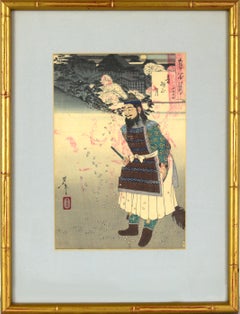
One Hundred Aspects of the Moon, Mt Otawa Moon - Bright God Tamura
Located in Soquel, CA
"Mount Otawa Moon: Bright God Tamura" - Woodblock on Paper by Tsukioka Yoshitoshi
From the series "One Hundred Aspects of the Moon"
This piece depicts the general Sakanoe no Tamura...
Category
1880s Edo Art by Medium: Woodcut
Materials
Paper, Ink, Woodcut
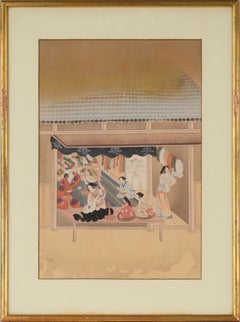
Japanese Artisans - Silk Dying -Japanese Woodblock Print
By Tosa Mitsuyoshi
Located in Soquel, CA
Japanese Artisans - Japanese Woodblock Print J
Japanese woodblock depicting six women, all wearing vibrant kimonos, working on crafts by Tosa Mitsuoki (Japanese, 1617-1691). Japanese,c. 1600. Handcraft depiction (dye works).Section from a painted screen with presentations of handcraft.Kita-in, Saitama.
Stamped lower left.
Presented in a white mat and giltwood frame.
Frame: 19"H x 14"W
Mat: 18.25"H x 13.25"W
Image: 14.5"H x 9.5"W
Tosa Mitsuoki was a Japanese painter, reinvigorating the Yamato style of classical Japanese painting. Yamato-e originated from interest in reproducing early Tang dynasty paintings, and was later reinvented and further refined to fit Japanese cultural perceptions in the late Heian period. Yamato, sometimes referred to as wa or kazu had become synonymous with the Tosa-ha by the Muromachi period as a way for Japanese artist to distinguish their works from those of mainland Chinese paintings, kara-e. Yamato-e incorporated various visual and literary techniques for establishing narrative. Works were not always accompanied with text and may rely on heavily on period specific visual motifs, icons, and symbols to relay a story or theme. Tosa style by the time of Mitsuoki focused heavily on depicting themes of plants and nature, famous places, meisho, the four seasons, shik, bird-and-flower, kacho. Many of these popular symbols and icons from mimicking Chinese practices, treating the original Chinese masterwork as a sort of prototype to improve upon. Popular formats for Mitsuoki's pictures were wall scrolls kakemono, or handscrolls that would be read from right to left with the accompanied story, sliding doors fusuma and folding screen panels byobu that featured up to six panels. Mitsuoki's style incorporated the depth and calligraphy techniques of ink wash brushwork similar to Song dynasty and Yuan dynasty Chinese court paintings...
Category
1920s Edo Art by Medium: Woodcut
Materials
Paper, Ink, Woodcut
$1,240 Sale Price
20% Off
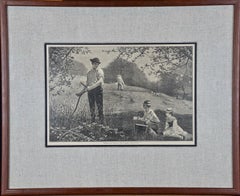
Winslow Homer 19th Century Woodcut Engraving "Making Hay"
Located in Alamo, CA
This Winslow Homer woodcut engraving entitled "Making Hay", was published in Harper's Weekly in the July 6, 1872 edition. It depicts a two men hand cutting high grass on a hill. The man in the foreground is looking at a young boy and a girl (presumably his children), who are sitting on the ground with a picnic basket.
This beautiful Homer woodcut engraving is presented in a brown wood frame and a light beige fabric mat with a black inner mat. The print is in excellent condition.
There are two other Homer woodcut engravings in identical frames and mats that are listed on 1stdibs. See LU117326148332 and LU117326148272. These would make a wonderful display grouping. A discount is available for the purchase of two or all three of these prints.
This Winslow Homer engraving...
Category
1870s American Impressionist Art by Medium: Woodcut
Materials
Engraving, Woodcut
$700 Sale Price
20% Off
Untitled
Located in Kansas City, MO
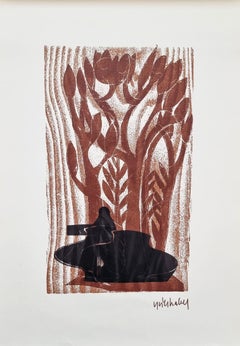
HAP Grieshaber
Untitled
Wood block print in two colors
Year: 1977
Size: 21 x 14 in
Edition: 1,500
Signed in the plate
Publisher: HMK Fine Arts, New Yor...
Category
1970s Modern Art by Medium: Woodcut
Materials
Woodcut
$198 Sale Price
75% Off
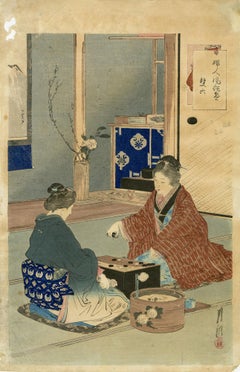
Two Women Playing Sugoroku from "Comparison of the Customs of Beauties."
Located in Middletown, NY
A scene from a vanishing Japan.
Two Women Playing Sugoroku from "Comparison of the Customs of Beauties."; The Customs and Manners of Women
Japan: Matsuki Heikichi, 1891.
Woodblock ...
Category
Late 19th Century Edo Art by Medium: Woodcut
Materials
Watercolor, Handmade Paper, Woodcut
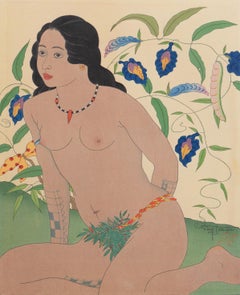
Jeune Fille de Polowat
, Tokyo, Garbo, Queen Elizabeth II, Kyoto, Woodblock
Located in Santa Cruz, CA
Signed lower right in pencil, 'Paul Jacoulet' (French-Japanese, 1902-1960) and stamped with peach seal; titled, lower right margin, 'Jeune Fille de Polowat. Est Carolines' (Young gir...
Category
1940s Post-Impressionist Art by Medium: Woodcut
Materials
Paper, Woodcut
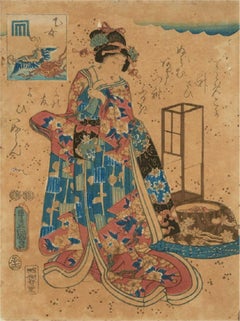
Utagawa Kunisada (1786-1865) - Woodblock, Portrait of a Japanese Lady
Located in Corsham, GB
This intricate woodblock print is a fine demonstration of Kunisada's later works. Depicting a beautiful lady dressing in floral kimono and decorative hair pieces. The signature to th...
Category
19th Century Art by Medium: Woodcut
Materials
Woodcut
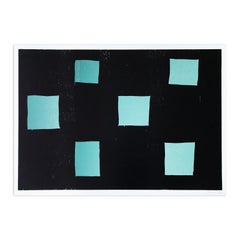
Günther Förg, Six Rectangles - Woodcut in Colors, Abstract Art, Signed Print
By Günther Förg
Located in Hamburg, DE
Günther Förg (Füssen 1952 – 2013 Freiburg)
Six Rectangles, 1991
Medium: Woodcut in colors on card stock
Dimensions: 56 x 80 cm (60 x 84 cm)
Unknown edition size: Hand-signed and date...
Category
Late 20th Century Abstract Art by Medium: Woodcut
Materials
Woodcut
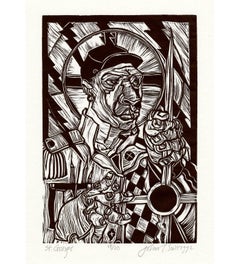
St. George — African American artist
By John Tarrell Scott
Located in Myrtle Beach, SC
John Tarrell Scott, 'St. George', woodcut, edition 20, 1992. Signed, dated, titled, and numbered '18/20' in pencil. A fine, black impression, on off-white, laid Japan paper, with ful...
Category
1990s Contemporary Art by Medium: Woodcut
Materials
Woodcut
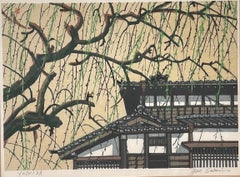
TEAHOUSE AND WILLOW TREE
Located in Portland, ME
Junichiro Sekino (Japanese, 1914-1988). TEAHOUSE AND WILLOW TREE. Color woodblock print, not dated. Edition size not known. Signed in pencil and with the a...
Category
Mid-20th Century Art by Medium: Woodcut
Materials
Woodcut
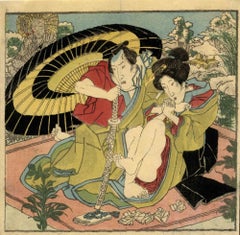
Shunga - Woodcut by Utagawa Kunisada - 1850s
Located in Roma, IT
Shunga is an original artwork realized in the 1850s by Utagawa Kunisada (1786-1865).
Making love in the winter on a terrace, behind the couple stone sculpture of the Jizo-Bosatsu.
...
Category
1850s Modern Art by Medium: Woodcut
Materials
Woodcut
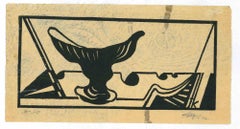
Still Life - Woodcut - 1936
Located in Roma, IT
Still, Life is a woodcut print on paper, realized by an Anonymous artist in 1936
It is monogrammed and dated on the lower with pencil and numbered, rare edition of 1/20 prints.
Goo...
Category
1930s Modern Art by Medium: Woodcut
Materials
Woodcut
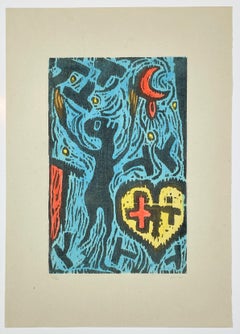
Set of three woodcuts by Victor Mira colorful abstract forms
Located in New York, NY
These lively, colorful works are full of movement and Mira's characteristic mysterious, mythical figures and shapes.
Victor Mira
Set of three woodcuts on buff, textured paper, 1983...
Category
1980s Abstract Art by Medium: Woodcut
Materials
Woodcut
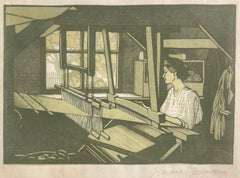
THE RUG WEAVER
Located in Santa Monica, CA
GUSTAVE BAUMANN (1881 – 1971)
THE RUG WEAVER, 1910 (Chamberlain 26)
Color woodcut signed in pencil. Unnumbed from an edition 100 as published in the Hills o’ Brown...
Category
1910s American Modern Art by Medium: Woodcut
Materials
Woodcut
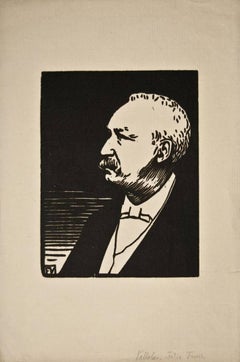
Portrait of Felix Faure - Woodcut Print by F. Vallotton
Located in Roma, IT
Signed on plate with Felix Vallotton's F.V. monogram.
Image Dimensions : 16 x 12.5 cm
Passepartout included : 39.5 x 34.5 cm
This artwork is shipped from Italy. Under existing legis...
Category
Late 19th Century Post-Impressionist Art by Medium: Woodcut
Materials
Woodcut
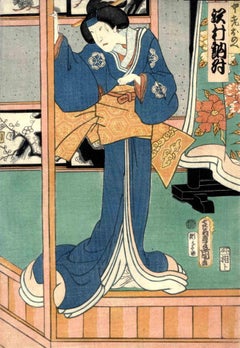
Sawamura Tosho - Woodcut Print by Utagawa Kunisada - 1862
Located in Roma, IT
Sawamura Tosho is an original modern artwork realized by Utagawa Kunisada in 1862.
Woodcut print Oban from a tryptich
Signature Kio Toyokuni ga (77 Toyokuni). Publisher: Soshuya. ...
Category
19th Century Modern Art by Medium: Woodcut
Materials
Woodcut
(after) Édouard Manet - "Olympia" woodcut
Located in Henderson, NV
Medium: color woodcut (engraved by Jacques Beltrand after the Manet painting). This impression was printed on thin japon paper and published by Paul Cassirer in 1923. Size: 7 3/4 x 1...
Category
1920s Art by Medium: Woodcut
Materials
Woodcut
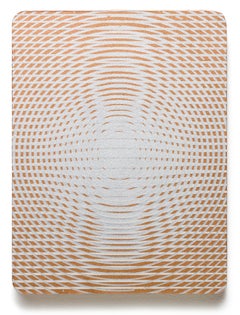
"Portalito", Abstract Patterns, Geometric Abstraction, Woodcut Monoprint
Located in Philadelphia, PA
This piece titled "Portalito" is an original piece by Alexis Nutini and is made from a woodcut monoprint mounted on panel. This piece measures 7.25"h x 9.5"w.
Born in Mexico City, ...
Category
21st Century and Contemporary Contemporary Art by Medium: Woodcut
Materials
Panel, Monoprint, Woodcut
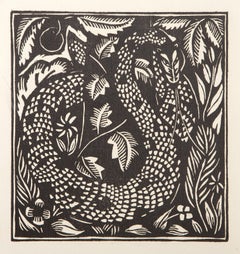
The Serpent, Impressionist Woodcut by Raoul Dufy
By Raoul Dufy
Located in Long Island City, NY
Raoul Dufy, French (1877 - 1953) - The Serpent, Year: c. 1911, Medium: Woodcut on laid paper, Image Size: 8 x 7.5 inches, Size: 11.25 x 8.75 in. (28.58 x 22.23 cm), Description: Fr...
Category
1910s Impressionist Art by Medium: Woodcut
Materials
Woodcut
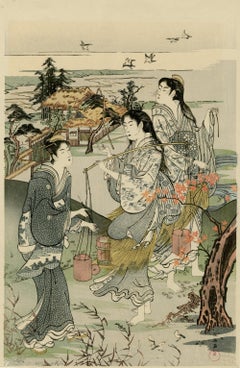
Mu-Tamagawa
Located in Middletown, NY
Woodcut in ink with embossing and hand-coloring in watercolor on laid Japon paper, 16 x 10 inches (406 x 253 mm), ōban tate-e, full margins. Scattered handling wear and toning, other...
Category
Late 19th Century Edo Art by Medium: Woodcut
Materials
Watercolor, Handmade Paper, Woodcut
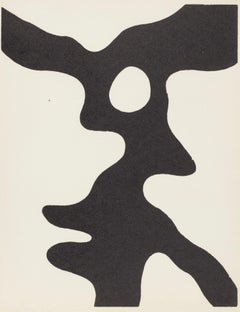
Composition (Arntz 148-175; Hagenbach A 25; Bolliger 54), Dreams and Projects
By Jean Arp
Located in Southampton, NY
Woodcut on vélin d’Arches paper. Inscription: Unsigned and unnumbered, as issued. Good condition. Notes: From the folio, Jean Arp, Dreams and Projects, 1951-1952. Published by Curt V...
Category
1950s Modern Art by Medium: Woodcut
Materials
Woodcut
$5,996 Sale Price
20% Off
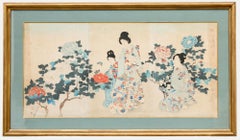
Yoshu Chikanobu (1838-1912) - Japanese Woodblock, Amongst the Flowers Triptych
Located in Corsham, GB
A delightful triptych by the Japanese ukiyo-e artist Yoshu Chikanobu (1838-1912). The three sections combine to make a single image of women in richly decorated kimonos surrounded by...
Category
19th Century Art by Medium: Woodcut
Materials
Woodcut
Well - Woodcut by Maurits Cornelis Escher - 1931
Located in Roma, IT
Woodcut print realized by Escher for the series "Emblemata", and published in 1931.
On Hollande van Gelder paper.
Edition of 300.
Unsigned, as issued. Excellent condition, matted....
Category
1930s Modern Art by Medium: Woodcut
Materials
Woodcut
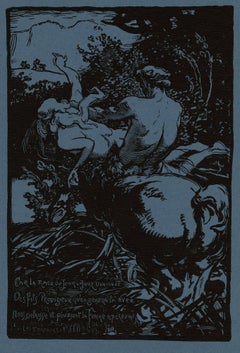
Les Trophées
Located in Middletown, NY
London: The Studio, 1898.
Wood engraving on blue wove paper, 8 x 5 3/8 inches (202 x 137 mm), full margins. As published in The Studio, Volume 12, 1898, with the blindstamp in the l...
Category
Late 19th Century French School Art by Medium: Woodcut
Materials
Handmade Paper, Woodcut
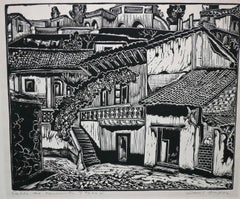
CALLE EX CONVENTO, TASCO.
Located in Portland, ME
Pappe, Carl. CALLE EX CONVENTO, TASCO. Woodcut, c.1940s-60s. Edition unstated. This print is one of a series of 16 images, all of scenes in Taxco, distinguished by the strength of the carving and the richness of the blacks. 12 x 14 1/4 inches (image), 13 1/2 x 15 3/4 (sheet). Titled and signed in pencil. In excellent condition.
Carl Pappe...
Category
1940s Art by Medium: Woodcut
Materials
Woodcut
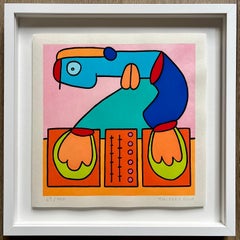
The energy of the dance floor comes straight back to my ears
By Thierry Noir
Located in London, GB
Thierry Noir
The energy of the dance floor comes straight back to my ears, 2025
Ukiyo-e print in colours on kizuki hosho paper hand made by Ichibei Iwano
27.4 x 27.4 cm
35.7 x 35.7 c...
Category
2010s Street Art Art by Medium: Woodcut
Materials
Woodcut
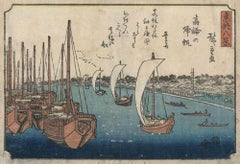
Takanawa no Kihan - Woodblock print by Utagawa Hiroshige - 1843-1847
Located in Roma, IT
Takanawa no kihan is a modern artwork realized between 1843 and 1847 after Utagawa Hiroshige.
Ukiyo-e color woodblock print from the Touto hakkei (The Eight Famous Views of the Capital of the East) series.
Mounted under passepartout.
The artwork depicts the port of Takanawa, a suburb of Minato in southern Tokyo, and is one of the very rare sheets by Utagawa Ando Hiroshige...
Category
Mid-19th Century Modern Art by Medium: Woodcut
Materials
Woodcut
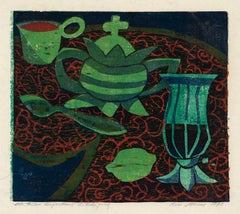
The Green Sugarbowl — Mid-Century Color Woodcut
Located in Myrtle Beach, SC
William Ross Abrams, 'The Green Sugarbowl', color woodcut, 1949, edition 24. Signed, titled, dated, and annotated 'Artist’s proof' in pencil. A fin...
Category
1940s Modern Art by Medium: Woodcut
Materials
Woodcut
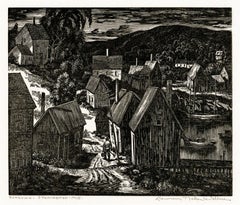
Sundown, Stonington, Maine
— Artist-printed Exhibition Proof
Located in Myrtle Beach, SC
Lawrence Nelson Wilbur (1897-1988), 'Sundown, Stonington, Maine', wood engraving, artist's proof, edition not stated but small, 1969. Signed and titled in pencil. Signed in the block...
Category
1940s American Modern Art by Medium: Woodcut
Materials
Woodcut
Woodcut art for sale on 1stDibs.
Find a wide variety of authentic Woodcut art available on 1stDibs. While artists have worked in this medium across a range of time periods, art made with this material during the 21st Century is especially popular. If you’re looking to add art created with this material to introduce a provocative pop of color and texture to an otherwise neutral space in your home, the works available on 1stDibs include elements of orange, yellow, purple, blue and other colors. There are many well-known artists whose body of work includes ceramic sculptures. Popular artists on 1stDibs associated with pieces like this include Mino Maccari, Utagawa Kunisada (Toyokuni III), Eric Gill, and Utagawa Hiroshige. Frequently made by artists working in the Modern, Contemporary, all of these pieces for sale are unique and many will draw the attention of guests in your home. Not every interior allows for large Woodcut art, so small editions measuring 0.04 inches across are also available