Art by Medium: Woodcut
to
490
3,592
516
329
182
269
Overall Width
to
Overall Height
to
55
736
3,488
615
30
103
436
320
164
217
402
166
163
121
30
2,430
590
249
215
208
114
62
44
42
27
7
3
1
1
3,434
1,311
120
2,349
1,213
896
853
622
471
459
405
389
366
353
272
242
215
211
187
176
145
134
104
4,895
185,070
97,536
79,552
78,311
170
152
57
51
47
394
2,265
1,925
1,890
Medium: Woodcut
Still Life — Mid-century Modern
Located in Myrtle Beach, SC
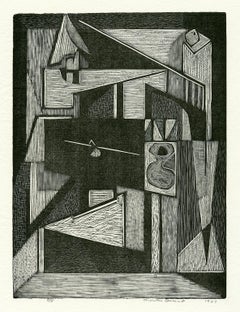
Charles Quest, 'Still Life', 1947, wood engraving, edition 8. Signed, dated, and numbered '3/8' in pencil. Titled and annotated 'wood engraving' in the bottom left margin. A fine impression, on off-white wove paper, with full margins (1 to 2 inches), in excellent condition. Scarce. Matted to museum standards, unframed.
ABOUT THE ARTIST
Charles Quest, painter, printmaker, and fine art instructor, worked in various mediums, including mosaic, stained glass, mural painting, and sculpture. Quest grew up in St. Louis, his talent evident as a teenager when he began copying the works of masters such as Michelangelo on his bedroom walls. He studied at the Washington University School of Fine Arts, where he later taught from 1944 to 1971. He traveled to Europe after his graduation in 1929 and studied at La Grande Chaumière and Academie Colarossi, Paris, continuing to draw inspiration from the works of the Old Masters.
After returning to St. Louis, Quest received several commissions to paint murals in public buildings, schools, and churches, including one from Joseph Cardinal Ritter, to paint a replica of Velasquez's Crucifixion over the main altar of the Old Cathedral in St. Louis. Quest soon became interested in the woodcut medium, which he learned through his study of J. J. Lankes' A Woodcut Manual (1932) and Paul Landacre's articles in American Artist magazine ‘since no artists in St. Louis were working in wood’ at that time. Quest also revealed that for him, wood cutting and engraving were ‘more enjoyable than any other means of expression.’
In the late 1940s, his graphic works began attracting critical attention—several of his woodcuts won prizes and were acquired by major American and European museums. His wood engraving entitled ‘Lovers’ was included in the American Federation of Art's traveling print exhibition in 1947. Two years later, Quest's two prize-winning prints, ‘Still Life with Grindstone’ and ‘Break Forth into Singing’, were exhibited in major American museums in a traveling show organized by the Philadelphia Print Club. His work was included in the Chicago Art Institute's exhibition, ‘Woodcut Through Six Centuries’, and the print ‘Still Life with Vise’ was purchased by the Museum of Modern Art in New York.
In 1951 he was invited by artist-Curator Jacob Kainen to exhibit thirty wood engravings and color woodcuts in a one-person show at the Smithsonian's National Museum (now known as the American History Museum). Kainen's press release praised the ‘technical refinement’ of Quest's work: ‘He obtains a great variety of textural effects through the use of the graver, and these dense or transparent grays are set off against whites or blacks to achieve sparkling results. His work has the handsome qualities characteristic of the craftsman and designer.’
At the time of the Smithsonian exhibition, Quest's work was represented by three New York galleries in addition to one in his home town. He had won 38 prizes, and his prints were in the collections of the Library of Congress, the Chicago Art Institute, the Metropolitan Museum, and the Philadelphia Museum of Art. In cooperation with the Art in Embassies program, his color woodcuts were displayed at the American Embassy in Paris in 1951.
Recognition at home came in 1955 with his first solo exhibition in St. Louis. Press coverage of the show heralded the ‘growth of graphic arts toward rivaling painting and sculpture as a major independent medium’.
An exhibition of his prints at the Bethesda Art Gallery in 1983 attracted Curator Emeritus Joseph A. Haller, S.J., who began purchasing his work for Georgetown University's collection. In 1990 Georgetown University Library's Special Collections Division was the recipient of a large body of Quest's work, including prints, drawings, paintings, sculpture, stained glass, and his archive of correspondence and professional memorabilia. These extensive holdings, including some 260 of his fine prints, provide a rich opportunity for further study and appreciation of this versatile and not-to-be-forgotten mid-Western American artist...
Category
1940s American Modern Art by Medium: Woodcut
Materials
Woodcut
Theater
— 1920s German Expressionism
Located in Myrtle Beach, SC
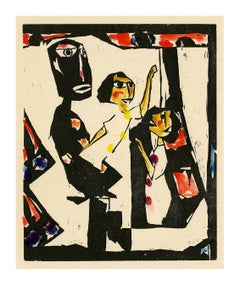
A German Expressionist woodcut, with original hand-coloring in watercolor, depicting a parent and child watching a theatrical production; ...
Category
1920s Expressionist Art by Medium: Woodcut
Materials
Woodcut
Japanese Print, Horse Turning Around - Signed Woodcut
Located in Paris, IDF
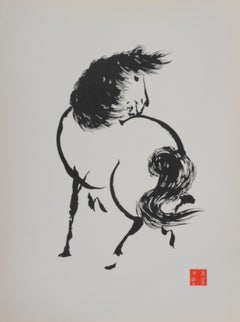
Mokuchu URUSHIBARA
Horse Turning Around, c. 1930
Woodcut after on an ink drawing
Signed with the artist's stamp
On paper 37 x 27 cm (c. 14,5 x 10,6 in)
INFORMATION : Engraving publ...
Category
1930s Modern Art by Medium: Woodcut
Materials
Woodcut
Beauty Otami - Kabuki
Located in Fairlawn, OH
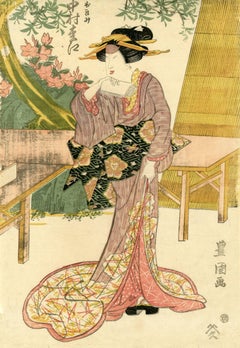
Beauty Otami - Kabuki
Note: Kabuki actor Nakamura Matsue is in the role of courtesan otami. She is standing in front of a small tea shop in a garden.
Color woodblock, c. 1800-1810
Si...
Category
Early 1800s Art by Medium: Woodcut
Materials
Woodcut
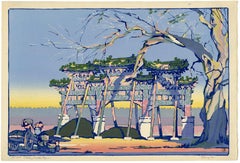
Peking - Paifang Gate
— Mid-Century Watanabe Color Woodcut
By Cyrus Le Roy Baldridge
Located in Myrtle Beach, SC
Cyrus Le Roy Baldridge, 'Peking '25', woodblock print, published 1926. Signed, titled, dated, and annotated 'No 124' in pencil. A fine impression, with fresh, undiminished colors; the full sheet, in excellent condition. Watanabe 6 mm seal, lower right, indicating an impression printed between 1945 and 1957. Archivally sleeved, unmatted.
Image size 9 5/8 x 14 5/16 inches; sheet size 10 7/16 x 15 3/8 inches.
ABOUT THE IMAGE
A 'paifang', also known as a 'pailou', is a traditional style of Chinese architectural arch or gateway structure. It has been theorized that the paifang gate architecture was influenced by Buddhist torana temple gates. Paifang are designed with traditional Chinese architectural motifs including multi-tiered roofs, prominent supporting posts, and gracefully arched openings.
This is an unusual ukiyo-e or 'floating world' woodcut published by Watanabe Shozaburo, Tokyo, in that the subject is of an early 20th-century scene in Peking, China.
ABOUT THE ARTIST
Cyrus Leroy Baldridge...
Category
1920s Showa Art by Medium: Woodcut
Materials
Woodcut
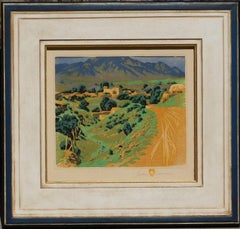
Gustave Baumann Color Woodblock - Rancho de Taos
Located in Phoenix, AZ
“Rancho de Taos” by well-known woodblock artist Gustave Baumann (1881-1971).
The medium is color woodblock. It's a beautiful print in excellent condition.
Baumann's personal Hand and...
Category
Mid-20th Century Art by Medium: Woodcut
Materials
Woodcut
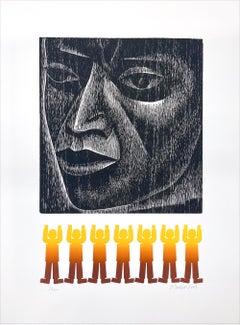
MAN Signed Woodcut, Ethnic Face Portrait, Standing Figures, Mexican Culture
Located in Union City, NJ
MAN is a hand pulled, original limited edition relief print created using woodcut and serigraphy(silkscreen) printmaking techniques on white archival heavyweight paper, 100% acid fre...
Category
Early 2000s Contemporary Art by Medium: Woodcut
Materials
Woodcut
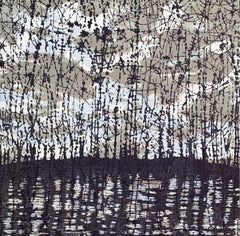
Cloud Trees Variation Two - Stream Forest Landscape Grey Clouds Blue Sky Trees
By Eve Stockton
Located in Kent, CT
This square woodcut print on paper evokes the peacefulness of looking across a stream through a woodland scene in a symmetrical composition. The dark eggplant purple silhouette of th...
Category
2010s Contemporary Art by Medium: Woodcut
Materials
Archival Ink, Archival Paper, Monoprint, Woodcut
2011 Artist Proof Signed Original Woodcut 30x44in Mexican Oaxaca
Located in Miami, FL
"Sergio Hernández (Mexico, 1957)
'Untitled', 2011
woodcut on paper
30 x 41.4 in. (76 x 105 cm.)
P.A I/III (Proof of Artist)
ID: HER-157-1"
Category
2010s Contemporary Art by Medium: Woodcut
Materials
Woodcut
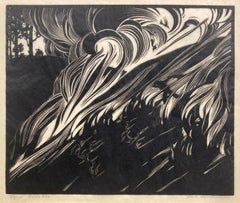
GRASS FIRE. - Very Scarce Early signed Impression
Located in Santa Monica, CA
PAUL LANDACRE (1883 – 1963)
GRASSS FIRE, 1928 (Wien 53)
Wood engraving on tissue thin Japanese paper, signed in pencil and titled with full margins. Thee are only 20 signed, titled,...
Category
1920s Art by Medium: Woodcut
Materials
Woodcut
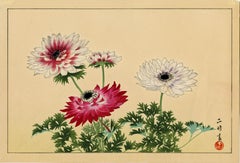
Chrysanthemums
Located in Fairlawn, OH
Chrysanthemums
Color woodcut, c. 1950's
Signed lower right (see photo)
Publisher: Uchida (see photo of red seal)
Note: Chrysanthemums, a symbol of the sun, the Japanese consider the ...
Category
1950s Modern Art by Medium: Woodcut
Materials
Woodcut
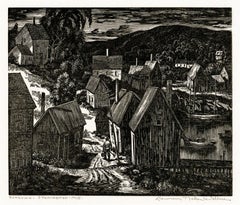
Sundown, Stonington, Maine
— Artist-printed Exhibition Proof
Located in Myrtle Beach, SC
Lawrence Nelson Wilbur (1897-1988), 'Sundown, Stonington, Maine', wood engraving, artist's proof, edition not stated but small, 1969. Signed and titled in pencil. Signed in the block...
Category
1940s American Modern Art by Medium: Woodcut
Materials
Woodcut
Bird Eggs - Antique egg colour woodblock print, 1875
Located in Melbourne, Victoria
Antique bird egg colour woodblock , 1880, from Francis Orpen Morris’, 'A Natural History of the Nests & Eggs of British Birds', 1875. The woodblocks ...
Category
Late 19th Century Naturalistic Art by Medium: Woodcut
Materials
Woodcut
Purgatory 15 : The Envy - Color woodcut - 1963 (Field p 189 à 200)
Located in Paris, IDF
Salvador Dali (1904-1989)
Purgatory 15 - The Envy
From the "Divine Comedy", 1960/63
Wood engraving from "Divine Comedy"
with the signature printed in the plate
On BFK Rives vellum ...
Category
1960s Surrealist Art by Medium: Woodcut
Materials
Woodcut
Easter : Crucifixion - Woodcut on Arches vellum - Printed signature
Located in Paris, IDF
Georges Rouault
Crucifixion
Woodcut and embossing (Raymond Jacquet workshop)
Printed signature in the plate
On Arches vellum
15 x 11" (38 x 28 cm)
INFORMATION : Woodcut published i...
Category
Mid-20th Century Modern Art by Medium: Woodcut
Materials
Woodcut
Stars/Sterren - Woodcut by Maurits Cornelis Escher - 1948
Located in Roma, IT
Woodcut print realized by Escher in 1948.
Hand signed in pencil and annotated in pencil lower right "eigen druck".
Monogrammed and dated in the plate "MCE/X-'48 upper right.
One o...
Category
1940s Modern Art by Medium: Woodcut
Materials
Woodcut
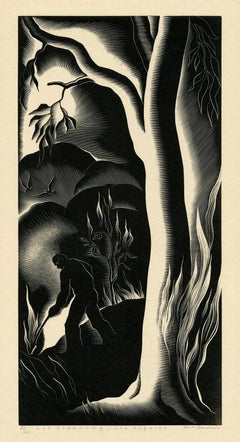
Lot Cleaning, Los Angeles
— 1930s Modernism
Located in Myrtle Beach, SC
'Lot Cleaning, Los Angeles', wood engraving, edition 60, Zeitlin & Ver Brugge 69. Signed, titled and numbered '51/60' in pencil. A brilliant, black impression, on Kitakata Japan pape...
Category
1930s American Modern Art by Medium: Woodcut
Materials
Woodcut
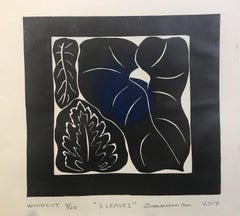
Three leaves (taro) - Landscape Print - Woodcut Print By Marc Zimmerman
Located in Carmel, CA
Minimal image in black ink on buff rice paper. Taro leaves are a simple form inspiring this woodcut print.
Three leaves (taro) - Landscape Print - Woodcut Print By Marc Zimmerman
T...
Category
2010s American Modern Art by Medium: Woodcut
Materials
Woodcut
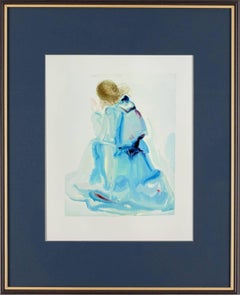
The Paradise, Canto 2 - The Angel
Located in OPOLE, PL
Salvador Dali (1904-1989) - The Paradise, Canto 2 - The Angel
Original woodcut from 1960.
Dimensions of work: 33 x 26.2 cm
Publisher: Les Heures Claires, Paris.
Reference: Catalo...
Category
1960s Modern Art by Medium: Woodcut
Materials
Woodcut
Sergio Hernández,
Untitled
, 2011, Woodcut, 29.5x41.3 in
Located in Miami, FL
Sergio Hernández (Mexico, 1957)
'Untitled', 2011
woodcut on paper Velin Arches 300 g.
29.6 x 41.4 in. (75 x 105 cm.)
Edition of 8
Unframed
Category
2010s Contemporary Art by Medium: Woodcut
Materials
Paper, Woodcut
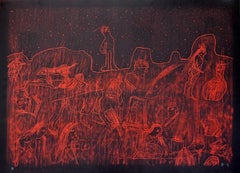
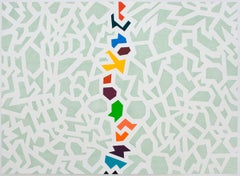
Untitled I
Located in New York, NY
For over thirty years, Nozkowski has practiced his own form of idiosyncratic abstraction, foregoing a signature style or subject matter in favor of seemingly limitless variations in ...
Category
2010s Abstract Art by Medium: Woodcut
Materials
Color, Linocut, Woodcut
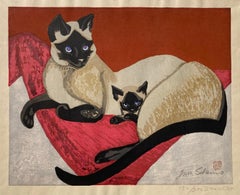
TWO SIAMESE CATS
Located in Santa Monica, CA
JUN'ICHIRO SEKINO (1914-1988)
TWO SIAMESE CATS Japanese Woodblock Print, c. 1960, 1st edition, pencil signed, titled and numbered 90/200 with red Sekino pub...
Category
1960s Modern Art by Medium: Woodcut
Materials
Woodcut
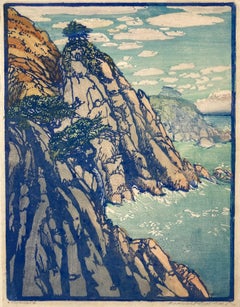
STORM LINED - Large Format Gearhart
Located in Santa Monica, CA
FRANCES H. GEARHART (1869-1958)
STORM LINED c.1936
Color block print, signed and titled in pencil 13 ¼ x 10 1/8, full sheet 14 3/8 x 11 ¼” with deckle edge on her typical fibrous Ja...
Category
1930s Abstract Impressionist Art by Medium: Woodcut
Materials
Color, Woodcut
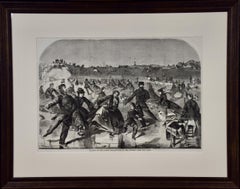
"Skating on Ladies
Pond Central Park": Winslow Homer 19th C. Woodcut Engraving
Located in Alamo, CA
This Winslow Homer woodcut engraving entitled "Skating on the Ladies' Skating-Pond in Central Park, New York", was published in Harper's Weekly in the January 28, 1860 edition. It depicts a large number of men, women and children skating on a recently opened pond in Central Park. At the time of publication of this engraving, Central Park was in the early stages of construction. This engraving documents the very early appearance of Frederick Law Olmstead and Calvert Vaux's masterpiece of landscape design. According to Olmsted, the park was "of great importance as the first real Park made in this century – a democratic development of the highest significance". The people of New York were very proud of the plans for their park. It was stated at the time: "Our Park, which is progressing very satisfactorily under the management of the Commissioners, will undoubtedly be, one of these days, one of the finest place of the kind in the world...Those who saw the Park before the engineers went to work on it are amazed at the beautiful sites which have been contrived with such unpromising materials; all fair persons believe that the enterprise is managed with honesty and good taste."
Skating was rapidly rising in national popularity in part due to the opening of Central Park’s lake to skaters on a Sunday in December 1858 with 300 participants. The following Sunday it attracted ten thousand skaters. By Christmas Day, a reported 50,000 people came to the park, most of them to skate. There were rules governing who could use the skating pond. “The Ladies’ Pond...
Category
1870s American Impressionist Art by Medium: Woodcut
Materials
Engraving, Woodcut
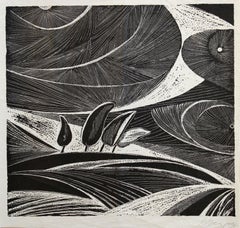
Four trees. Paper, wood carving , 29x29 cm
Located in Riga, LV
Four trees. Paper, wood carving, 29x29 cm
Dzidra Ezergaile (1926-2013)
Born in Riga. School years alternate with summer work in the countryside. In 1...
Category
1970s Abstract Art by Medium: Woodcut
Materials
Paper, Woodcut

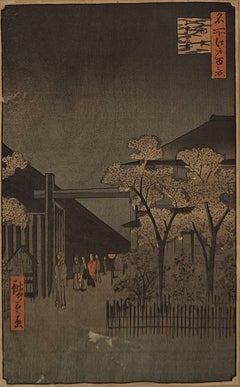
$411 Sale Price
20% Off
"Dawn Inside the Yoshiwara" Utagawa Hiroshige, Japanese Landscape, Ukiyo-e
Located in New York, NY
Utagawa Hiroshige
Dawn Inside the Yoshiwara, circa 1857
Woodblock print
11 x 7 inches
Utagawa Hiroshige is recognized as a master of the ukiyo-e woodblock printing tradition, havin...
Category
1850s Naturalistic Art by Medium: Woodcut
Materials
Paper, Ink, Woodcut
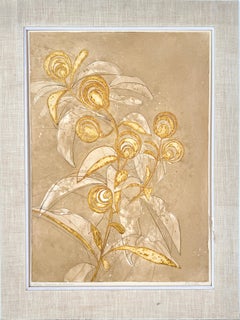
"Pomme d
Amour" Mid-Century Modern Aquatint Floral Original by Anne Walker
By Anne Walker
Located in Soquel, CA
"Pomme d' Amour" Mid-Century Modern Aquatint embossed Floral "Sept Tomate Original by Anne Walker
Mid-Century Modern Aquatint of the Pomme d’amour or ‘Love Apple’ by Anne Walker (Be...
Category
Mid-20th Century Post-War Art by Medium: Woodcut
Materials
Laid Paper, Aquatint, Woodcut
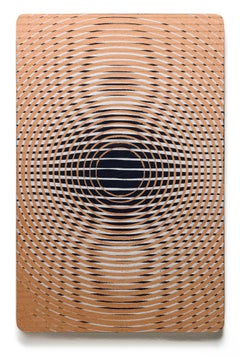
"Portal I", Abstract Patterns, Geometric Abstraction, Woodcut Monoprint on Panel
Located in Philadelphia, PA
This piece titled "Portal I" is an original piece by Alexis Nutini and is made from a woodcut monoprint mounted on panel. This piece measures 14.5"h x 9.5"w.
Born in Mexico City, A...
Category
21st Century and Contemporary Contemporary Art by Medium: Woodcut
Materials
Panel, Monoprint, Woodcut, Paper
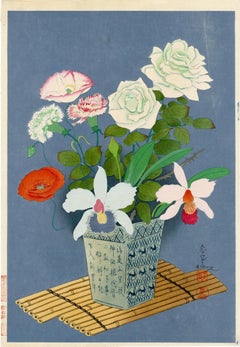
Flower in Vase (Summer)
Located in Fairlawn, OH
Flower in Vase (Summer)
Color woodblock, c. 1950
Signed "B. Ohno" lower right (see photo)
Sealed lower right (see photo)
Series: Flowers of the Four Se...
Category
1950s Other Art Style Art by Medium: Woodcut
Materials
Woodcut
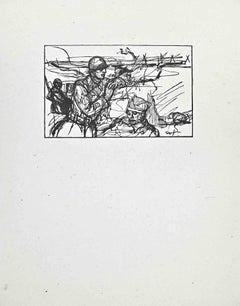
The Disastrous War - Woodcut Print by Paul Baudier - 1930s
Located in Roma, IT
The Disastrous War is a woodcut print on ivory-colored paper realized by Paul Baudier (1881-1962) in the 1930s.
Good conditions.
Paul Baudier, (born October 18, 1881 in Paris and d...
Category
1930s Modern Art by Medium: Woodcut
Materials
Woodcut
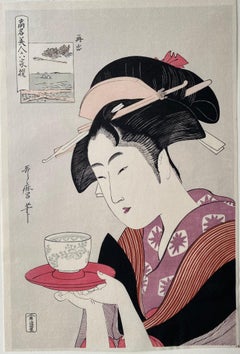
歌麿筆Utamaro Hitsu as Sealed-From Six Houses of Yoshiwara-Publisher Omiya Gonkuro
Located in London, GB
-In light of new tariffs, we’ve applied a 20% discount off the market price of this piece to support our collectors in facing potential added costs. At the gallery, we work closely w...
Category
1990s Edo Art by Medium: Woodcut
Materials
Ink, Washi Paper, Woodcut
The Bead Seller, Modern Woodcut Print by Stephen White
Located in Long Island City, NY
Stephen White - The Bead Seller, Year: 1978, Medium: Woodblock on Japon, signed, dated, titled and numbered in pencil, Edition: 6/150, Size: 26.75 x 24.5 in. (67.95 x 62.23 cm)
Category
1970s Modern Art by Medium: Woodcut
Materials
Woodcut
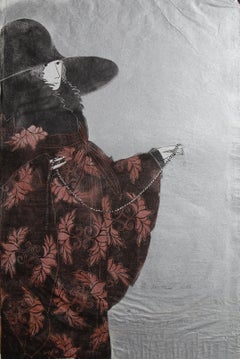
Leaving the Nest
, Japanese, United Nations, Unesco, Tree of Peace
By Keiko Minami
Located in Santa Cruz, CA
Signed lower right, 'Keiko Minami' (Japanese, 1911-2004) and inscribed, lower left, with number and limitation, '26/50'.
Japanese painter and printmaker, Keiko Minami became well kn...
Category
1950s Art by Medium: Woodcut
Materials
Paper, Woodcut
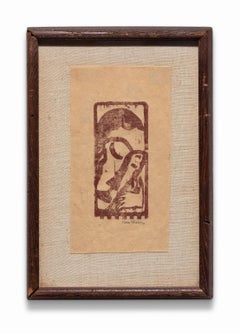
Max Weber Woodcut Print from "Primitives" Poetry Book Signed
By Max Weber
Located in Detroit, MI
ONE WEEK ONLY SALE
This woodcut print is an expressionist print on one of the poems from Max Weber's poetry collection "Primitives: Poems and Woodcuts". This work is signed in penci...
Category
1920s Expressionist Art by Medium: Woodcut
Materials
Woodcut
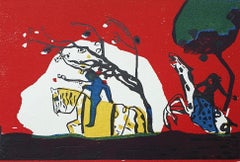
Wassily Kandinsky, Two Riders Against Red, from XXe siecle, 1938
Located in Southampton, NY
This exquisite woodcut by Wassily Kandinsky (1866–1944), titled Zwei Reiter vor Rot (Two Riders Against Red), from the album XXe siecle, Chroniques du jour, 13 rue Valette (5e), Dire...
Category
1930s Modern Art by Medium: Woodcut
Materials
Woodcut
$5,596 Sale Price
20% Off
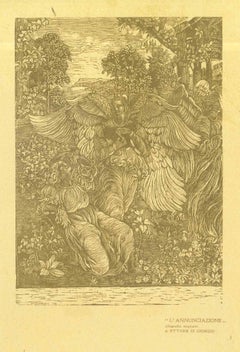
Annunciation - Original Woodcut by Ettore di Giorgio - Early 20th Century
Located in Roma, IT
Annunciation is an Original Woodcut Print on paper realized by Ettore di Giorgio in the Early 20th Century
Good Conditions.
The artwork is depicted through strong strokes in well-b...
Category
Early 20th Century Modern Art by Medium: Woodcut
Materials
Woodcut
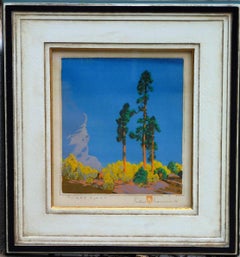
Gustave Baumann Color Woodblock - Three Pines
Located in Phoenix, AZ
“Three Pines” by well-known woodblock artist Gustave Baumann (1881-1971).
The medium is color woodblock. It's a beautiful print in excellent condition.
Baumann's personal Hand and He...
Category
Mid-20th Century Art by Medium: Woodcut
Materials
Paper, Color, Woodcut
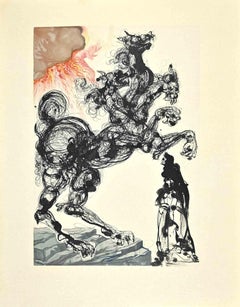
Cerberus - Woodcut print - 1963
Located in Roma, IT
Cerberus - Hell plate 6 is a woodcut print realized in 1963 for a series illustrating the Medieval poem of the "Divine Comedy" by Dante Alighieri.
Good conditions.
Limited editio...
Category
1960s Surrealist Art by Medium: Woodcut
Materials
Woodcut
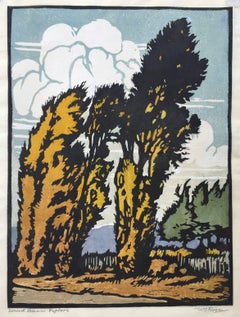
Wind Blown Poplars
Located in Santa Monica, CA
WILLIAM SELTZER RICE (1873 – 1963)
WIND BLOWN POPLARS c. 1915-20
Color woodcut, Signed and titled in pencil. 9 x 12”. On thin paper....
Category
1910s American Impressionist Art by Medium: Woodcut
Materials
Woodcut
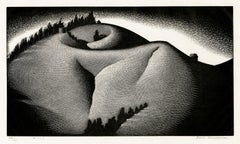
$3,600 Sale Price
20% Off
Hill
— American Modernism, California
Located in Myrtle Beach, SC
Paul Landacre, 'Hill', wood engraving, 1936, edition 60 (only 54 printed); only 2 impressions printed in a second edition of 150. Signed, titled, and numbered '49/60' in pencil. Wien...
Category
1930s American Modern Art by Medium: Woodcut
Materials
Woodcut
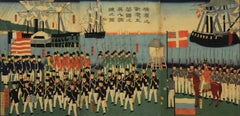
Foreign Soldiers from Five Countries at the Port of Yokohama
Located in Fairlawn, OH
Foreign Soldiers from Five Countries at the Port of Yokohama
Color woodcut triptych, c. 1860's
Signed in the block lower left corner Signed: "Ichimosai Yoshitora ga"
Condition: Mounted to a rose colored silk backing (stable)
Staining (visible) in the joining of the right and center sheets
Colors very slightly faded
Image size: 15 3/8 x 31 3/8 inches (triptysch sheets joined to make one print)
The 1854 Treaty of Kanagawa opened Japan to the West. Curiosity about the never-before-seen foreigners spurred a market in Yokohama-e (Yokohama prints), named for the area to which foreign dignitaries and merchants were confined. Yoshitora became one of the best known and most active artists of the Yokohama-e school.
Utagawa Yoshitora (歌川 芳虎) was a designer of ukiyo-e Japanese woodblock prints and an illustrator of books and newspapers who was active from about 1850 to about 1880. He was born in Edo (modern Tokyo), but neither his date of birth nor date of death is known. However, he was the oldest pupil of Utagawa Kuniyoshi who excelled in prints of warriors, kabuki actors, beautiful women, and foreigners (Yokohama-e). He may not have seen any of the foreign scenes he depicted.
Yoshitora was prolific: he produced over 60 print series and illustrated over 100 books. In 1849 he produced an irreverent print called Dōke musha: Miyo no wakamochi ("Funny Warriors—Our Ruler's New Year's Rice Cakes"), which depicts Oda Nobunaga, Akechi Mitsuhide, and Toyotomi Hideyoshi...
Category
Mid-19th Century Art by Medium: Woodcut
Materials
Woodcut
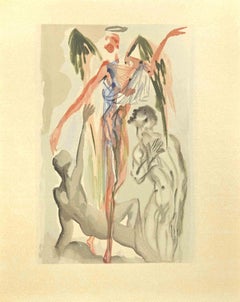
The Earthly Paradise - Woodcut - 1963
Located in Roma, IT
The Earthly Paradise - The Divine Comedy is a woodcut print realized in 1963 for a series illustrating the Medieval poem of the "Divine Comedy" by Dante Alighieri.
Not signed, as i...
Category
1960s Surrealist Art by Medium: Woodcut
Materials
Woodcut
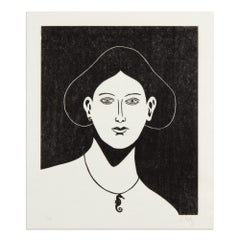
Nicolas Party, Portrait of a Seahorse Necklace - Original Woodcut, Signed Print
Located in Hamburg, DE
Nicolas Party (Swiss, b. 1980)
Portrait of a Seahorse Necklace, 2021
Medium: Woodcut on HM-5 gampi-shi
Dimensions: 28.3 × 24.1 cm (11 1/10 × 9 ½ in)
Edition of 100 + 8 AP: Hand-signe...
Category
21st Century and Contemporary Contemporary Art by Medium: Woodcut
Materials
Woodcut
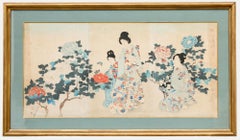
Yoshu Chikanobu (1838-1912) - Japanese Woodblock, Amongst the Flowers Triptych
Located in Corsham, GB
A delightful triptych by the Japanese ukiyo-e artist Yoshu Chikanobu (1838-1912). The three sections combine to make a single image of women in richly decorated kimonos surrounded by...
Category
19th Century Art by Medium: Woodcut
Materials
Woodcut
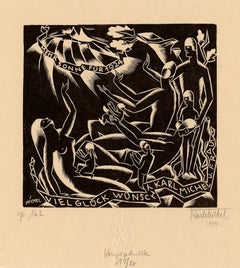
Mehr Sonne fur 1924
(More Sun for 1924)— German Expressionism
By Karl Michel
Located in Myrtle Beach, SC
Karl Michel, 'Mehr Sonne fur 1924. Viel Gluck Wunscht Karl Michel U. Frau', woodcut, 1924, edition 20. Signed, dated, and numbered 'op. 162' and '15/20' in pencil. Signed in the image, lower left. A fine, richly-inked impression on buff wove paper, with full margins (1 1/2 to 2 3/4 inches), in very good condition. Printed by the artist. Scarce. Matted to museum standards, unframed.
New Year's Greeting – English translation: "More Sun for 1924. Good Luck Wishes from Karl Michel and his Wife."
Image size 4 5/8 x 4 3/4 inches (118 x 121 mm); sheet size 7 3/4 x 10 inches (198 x 254 mm).
ABOUT THE ARTIST
Karl Michel (1889-1984) was a noted graphic designer and expressionist printmaker during Germany's pre-Nazi Weimar Republic (1919-1933). Michel’s work was the subject of a feature article in the influential German graphic design magazine Das Plakat...
Category
1920s Expressionist Art by Medium: Woodcut
Materials
Woodcut
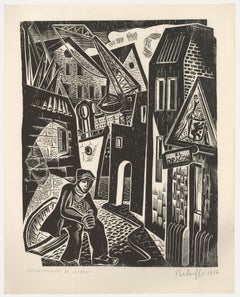
Victor Rebuffo (1903-1983) - 1956 Woodcut, Encantamiento De La Ribera
Located in Corsham, GB
An original woodcut print by the listed Italian-Argentinian artist Victor Luciano Rebuffo (1903-1983). Entitled 'Encantamiento De La Ribera' Riverside Enchantment. Pencil signed, tit...
Category
Mid-20th Century Art by Medium: Woodcut
Materials
Woodcut
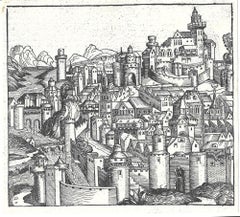
Tolosa (Toulouse); Leaf LXXI from Hartmann Schedel
s Nuremberg Chronicle
Located in Middletown, NY
Woodcut on laid paper, 8 3/8 x 9 1/8 inches (212 x 233 mm), the full sheet. In excellent condition with text and portraits of Empedocles, Sapho, Zeuxis and others on the verso, as is...
Category
15th Century and Earlier Old Masters Art by Medium: Woodcut
Materials
Ink, Handmade Paper, Laid Paper, Woodcut
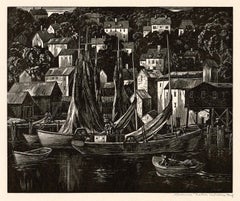
Tranquil Harbor (Gloucester, Massachusetts) — 1950s Cape Ann Regionalism
Located in Myrtle Beach, SC
Lawrence Nelson Wilbur (1897-1988), 'Tranquil Harbor' (Gloucester, Massachusetts), wood engraving, edition 55, 1958. Signed in pencil, and signe...
Category
1950s American Modern Art by Medium: Woodcut
Materials
Woodcut
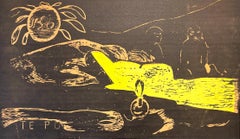
Gauguin, The Long Night (Te Po), Gauguin (after)
By Paul Gauguin
Located in Southampton, NY
Woodcut on vélin Utopian paper. Unsigned and unnumbered, as issued. Good Condition. Notes: From the folio, Gauguin, A portfolio of 12 color woodblocks, Paul Gauguin, French, 1848-1903 from the collection of the Museum Of Fine Arts, Boston, 1946. Rendered by Albert Carman (1899-1949); published the Museum Of Fine Arts, Boston and The Studio Publications, Inc., New York and London; printed by Holme Press Inc., New York, in an edition of MMMD. Excerpted from the folio, Paul Gauguin and Emil Bernard at Pont-Aven, Brittany, in 1888, each made a bas-relief, wooden panel to decorate a piece of furniture for a friend. In order to keep a record of their designs, a few inked impressions were made on paper. The illustration at left is a reproduction of a print which is possibly one of the above mentioned. It is further possible that this experiment later gave Gauguin the idea of making woodcuts. Just as his work in painting expressed a revolt against the overemphasis on factual representation of the nineteenth century in favor of decorative pattern and color, so also his woodcuts leaned strongly to the same side of the balance. Ten of the cuts reproduced (all excepting Soyez Amoureuses and Changement de Residence), which constitute the whole of his best known series, were made at Pont-Aven beginning in the fall of 1894, after Gauguin's return from his first trip to Tahiti and after he broke his ankle. They were at first roughly cut with a common carpenter's gouge, and the flat surfaces sandpapered and engraved with a sharp in-strument, perhaps an engraver's burin. A few trial proofs were printed in black ink only. Then the hollows were deepened with a woodcutter's gouge and highlights were added. An edition of thirty to fifty impressions of each subject, with the addition of color blocks (one, two or three), was made by Louis Roy...
Category
1940s Post-Impressionist Art by Medium: Woodcut
Materials
Woodcut
$716 Sale Price
20% Off
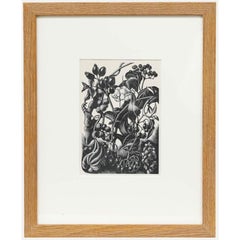
Clare Leighton (1898-1989) - Mid 20th Century Woodcut, Berries
Located in Corsham, GB
A striking botanical woodcut by the well-listed artist Clare Leighton (1898-1989). Beautifully presented in a simple wooden frame with a cream mount. On paper. Image size: 18 x 12.5cm.
Category
20th Century Art by Medium: Woodcut
Materials
Woodcut
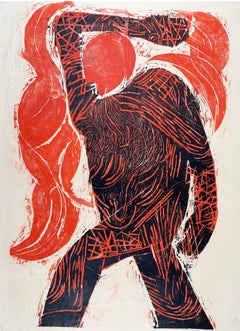
Prometheus — Mythological Figure in Expressive Red and Black by William Wolff
Located in Palm Springs, CA
Wolff’s woodcut of the mythological figure of Prometheus is carved and printed in only two strong colors—black and a fiery red-orange—yet the impact is monumental. The central figure...
Category
1990s Contemporary Art by Medium: Woodcut
Materials
Woodcut
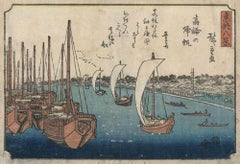
Takanawa no Kihan - Woodblock print by Utagawa Hiroshige - 1843-1847
Located in Roma, IT
Takanawa no kihan is a modern artwork realized between 1843 and 1847 after Utagawa Hiroshige.
Ukiyo-e color woodblock print from the Touto hakkei (The Eight Famous Views of the Capital of the East) series.
Mounted under passepartout.
The artwork depicts the port of Takanawa, a suburb of Minato in southern Tokyo, and is one of the very rare sheets by Utagawa Ando Hiroshige...
Category
Mid-19th Century Modern Art by Medium: Woodcut
Materials
Woodcut
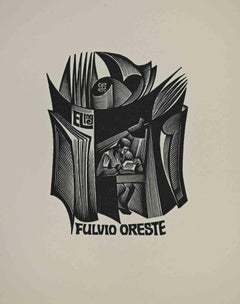
Ex-Libris - Fulvio Oreste - woodcut - Mid 20th Century
Located in Roma, IT
Ex-Libris - Fulvio Oreste is an Artwork realized in Mid 20th Century.
Woodcut on paper.
Good conditions.
The artwork represents a minimalistic, clean design, through preciseness.
Category
Mid-20th Century Modern Art by Medium: Woodcut
Materials
Woodcut
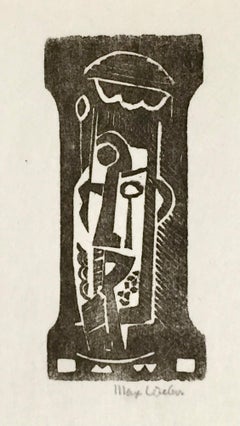
Max Weber, Figure
By Max Weber
Located in New York, NY
One of America's great modernist innovators, Max Weber carved Figure, 1919-20, on the end piece of a wooden cigar box. This Cubist image is composed o...
Category
Early 20th Century Modern Art by Medium: Woodcut
Materials
Woodcut
Victor Rebuffo (1903-1983) - Mid 20th Century Woodcut, Riachuelo
Located in Corsham, GB
An original woodcut print by the listed Italian-Argentinian artist Victor Luciano Rebuffo (1903-1983). Entitled 'Riachuelo'. The print depicts a stylised waterfront scene with buildi...
Category
20th Century Art by Medium: Woodcut
Materials
Woodcut

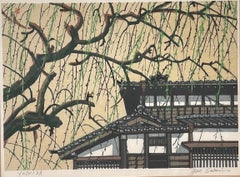
TEAHOUSE AND WILLOW TREE
Located in Portland, ME
Junichiro Sekino (Japanese, 1914-1988). TEAHOUSE AND WILLOW TREE. Color woodblock print, not dated. Edition size not known. Signed in pencil and with the a...
Category
Mid-20th Century Art by Medium: Woodcut
Materials
Woodcut
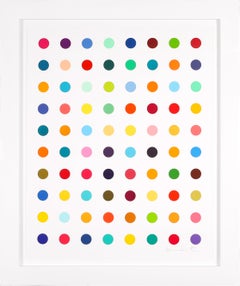
Damien Hirst Minimalist Woodcut Print,
Vertical Spots
IV, 2016
By Damien Hirst
Located in New York, NY
The vertical Spots 'Gly-Gly-Ala' by Damien Hirst is a multi-color woodcut in his signature palette formed with series unique colors. This exquisite piece is created in a limited edit...
Category
2010s Contemporary Art by Medium: Woodcut
Materials
Woodcut
$48,000 Sale Price
20% Off
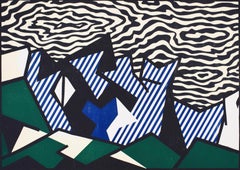
Morton A. Mort, from: Expressionist Woodcut Series - Pop Art Expressionism
Located in London, GB
This original woodcut in colours with embossing is hand signed in pencil "R. Lichtenstein" at the lower right margin. It is dated ‘80’ [1980] next to the signature.
It is also number...
Category
1980s Pop Art Art by Medium: Woodcut
Materials
Woodcut
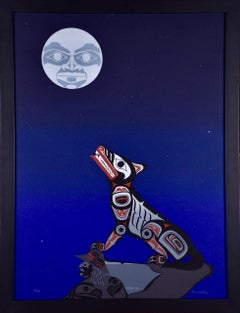
Midnight Wolf: A Limited Edition Clarence Mills Signed Haida Inuit Print
Located in Alamo, CA
"Midnight Wolf" is a framed signed limited edition abstract inuit native people's work by Northwest Coast Haida artist Clarence Mills. The print depicts a st...
Category
Late 20th Century Abstract Art by Medium: Woodcut
Materials
Woodcut
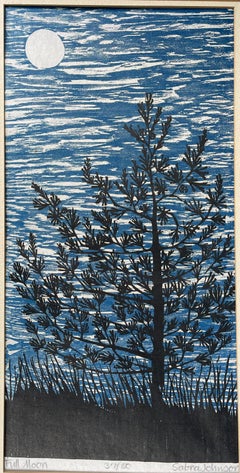
FULL MOON
Located in Portland, ME
Field, Sabra Johnson.(American, born 1935). FULL MOON. Color Woodcut, c. 1968. Edition of 50. Titled, numbered 37/50, and signed in pencil. 16 x 8 3/4 inches (image), 20 5/8 x 12 inc...
Category
1960s Art by Medium: Woodcut
Materials
Woodcut
Woodcut art for sale on 1stDibs.
Find a wide variety of authentic Woodcut art available on 1stDibs. While artists have worked in this medium across a range of time periods, art made with this material during the 21st Century is especially popular. If you’re looking to add art created with this material to introduce a provocative pop of color and texture to an otherwise neutral space in your home, the works available on 1stDibs include elements of orange, yellow, purple, blue and other colors. There are many well-known artists whose body of work includes ceramic sculptures. Popular artists on 1stDibs associated with pieces like this include Mino Maccari, Utagawa Kunisada (Toyokuni III), Eric Gill, and Utagawa Hiroshige. Frequently made by artists working in the Modern, Contemporary, all of these pieces for sale are unique and many will draw the attention of guests in your home. Not every interior allows for large Woodcut art, so small editions measuring 0.04 inches across are also available